



Quinoclamine
Based on 3 publication(s) in Google Scholar
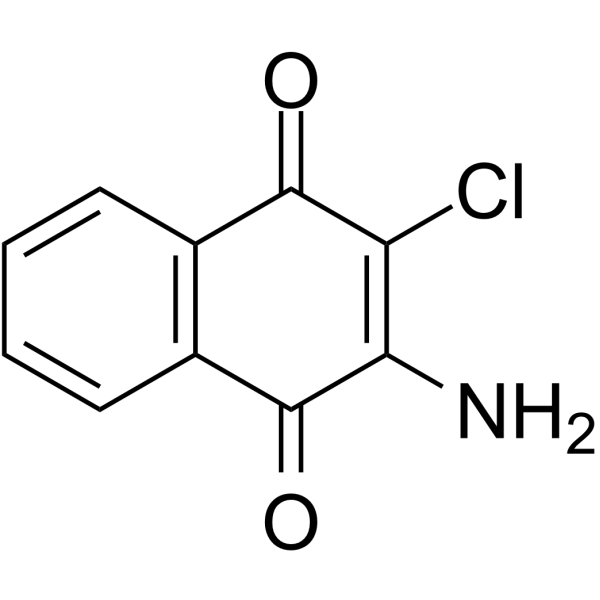
Quinoclamine, a naphthoquinone derivative, is a NF-κB inhibitor. Quinoclamine exhibits anti-cancer activity.
For research use only. We do not sell to patients.
- Purity : 99.55%
- CAS No.: 2797-51-5
- Formula: C10H6ClNO2
- Molecular Weight:207.62
-
Storage:Powder -20°C, 3 years , 4°C, 2 years ; In solvent -80°C, 6 months , -20°C, 1 month

To place orders, for customer services and technical support, please contact: MedChemExpress USA
Tel: 609-228-6898 E-mail: [email protected] [email protected]


-
 Biological Activity
-
Chemical Information
-
Solvent & Solubility
- Protocols
- Purity & Documentation
- References
-
 Help & FAQs


-
HY-W015490
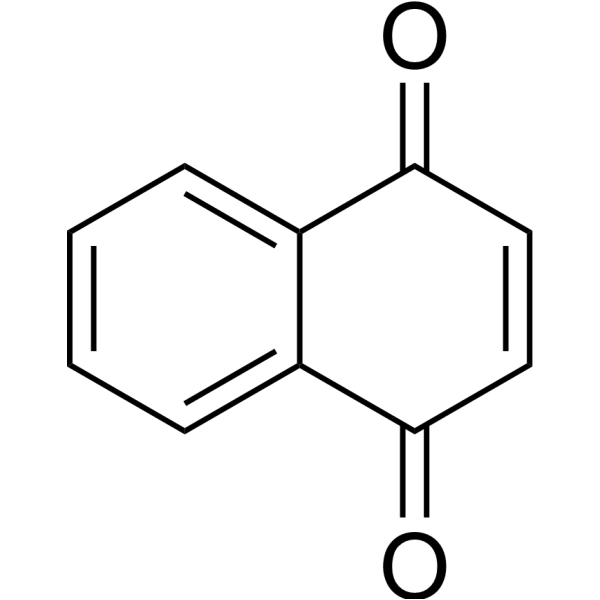
1,4-NaphthoquinoneMAO-A/B Inhibitor -

HY-W585943
6-Methyl-1,4-naphthoquinone -
HY-13982
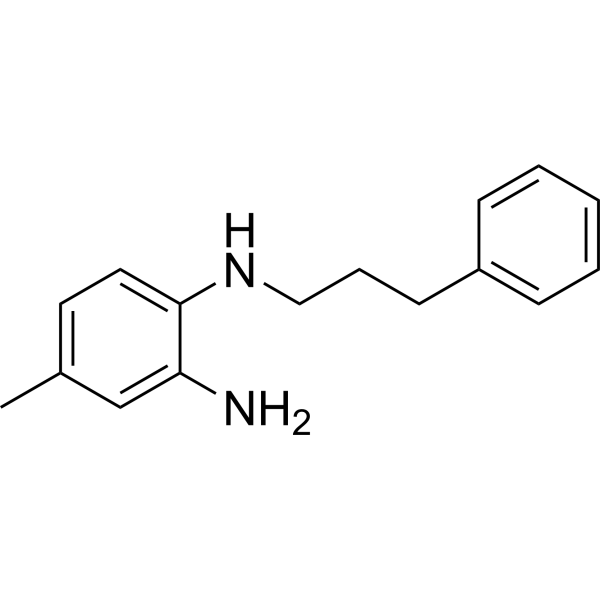
JSH-23NF-κB Inhibitor -

HY-121632R
Quinoclamine (Standard)NF-κB Inhibitor -
HY-N2065
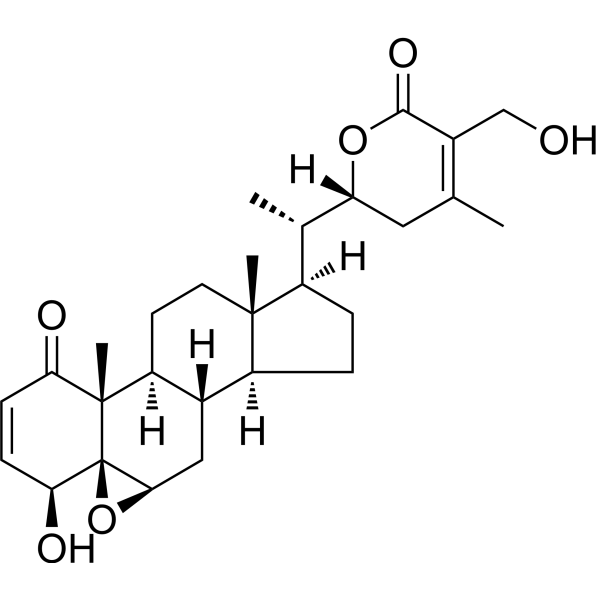
Withaferin ANF-κB Inhibitor -
HY-18738
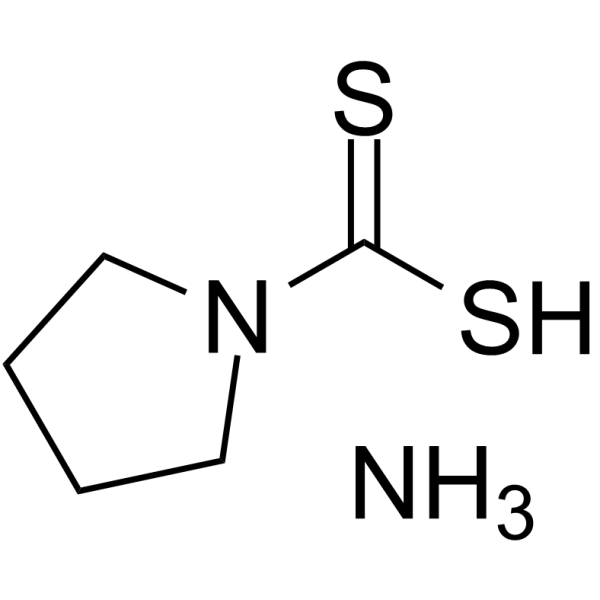
Pyrrolidinedithiocarbamate ammoniumSelective NF-κB Inhibitor -

HY-N2065R
Withaferin A (Standard)NF-κB Inhibitor -
HY-10496
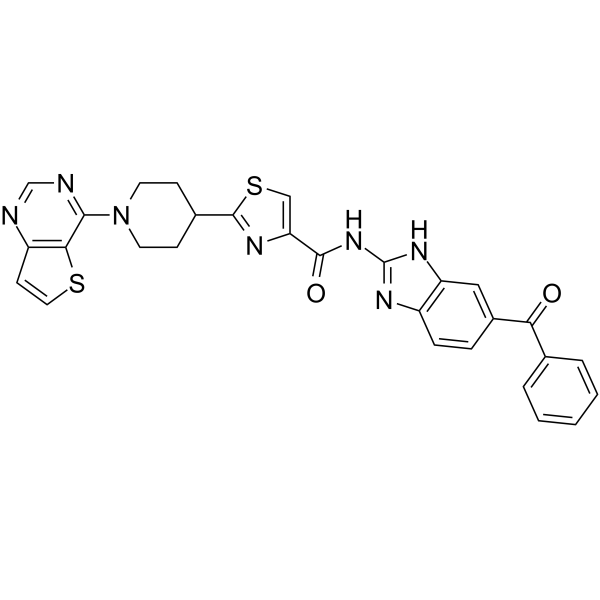
SC75741NF-κB Inhibitor -
HY-134476
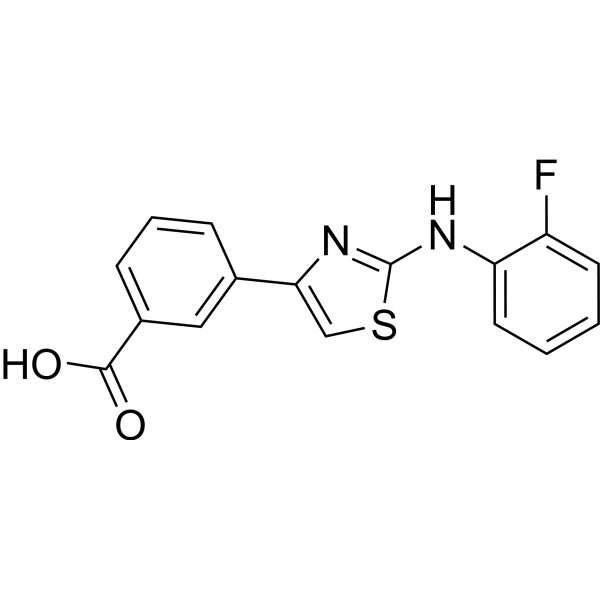
NF-κΒ activator 1NF-κB Activator -
HY-112433
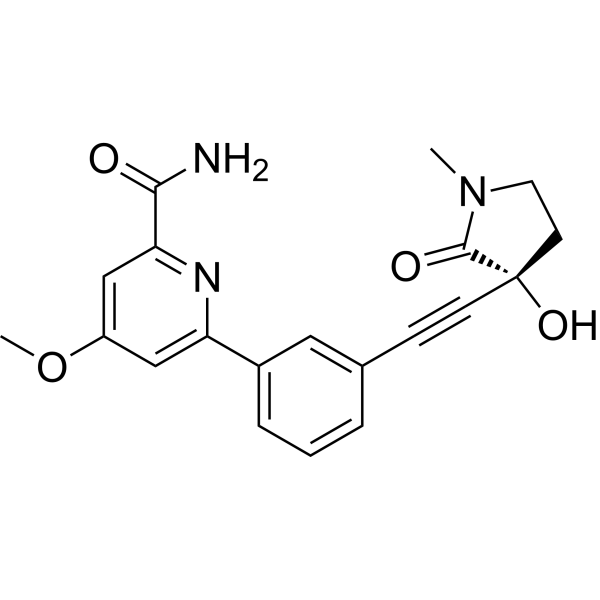
NIK SMI1NF-κB Inhibitor -

HY-P9958
DenosumabRANKL Inhibitor
Publications Citing Use of MedChemExpress (MCE) Quinoclamine
More

Biological Activity
Description
IC50 & Target
NF-κB[2]
In Vitro
Quinoclamine causes differentiation of U-937 cells into macrophage-like cells[1].
Quinoclamine inhibits NF-κB activities in HepG2 cells, with an IC50 of 1.7 μM[2].
Quinoclamine (1-4 μM; 30 minutes ) suppresses endogenous NF-κB activity in HepG2 cells through the inhibition of IκB-α phosphorylation and p65 translocation[2].
Quinoclamine inhibits induced NF-κB activities in lung and breast cancer cell lines[2].
Quinoclamine affects the expression levels of genes involved in cell cycle or apoptosis[2].
Quinoclamine down-regulates the expressions of UDP glucuronosyltransferase genes involved in phase II drug metabolism[2].
MedChemExpress (MCE) has not independently confirmed the accuracy of these methods. They are for reference only. Further protocols information, click here.
-
Cell Line:HepG2 cells
-
Concentration:1 μM, 2 μM, 4 μM, 8 μM, 16 μM, 32 μM, 64 μM
-
Incubation Time:24 hours
-
Result:Inhibited NF-κB activities in HepG2 cells.
-
Cell Line:HepG2 cells
-
Concentration:0 μM, 1 μM, 2 μM, 4 μM
-
Incubation Time:30 minutes
-
Result:Inhibited IκB-α phosphorylation and p65 translocation in HepG2 cells.


Chemical Information
-
CAS No. 2797-51-5
-
Appearance Solid
-
Molecular Weight 207.62
-
Formula C10H6ClNO2
-
Color Light yellow to orange
-
SMILES
O=C(C(Cl)=C(C1=O)N)C2=C1C=CC=C2
-
Shipping
Room temperature in continental US; may vary elsewhere.
-
Storage
Powder -20°C 3 years 4°C 2 years In solvent -80°C 6 months -20°C 1 month


Publications (3)
-
Journal Impact Factor
-
Most Recent
-
Int J Biol Macromol
Identification of Vitamin K3 and its analogues as covalent inhibitors of SARS-CoV-2 3CLpro. [Abstract]2021 Jul 31:183:182-192. PMID: 33901557 -
Anal Chem
Exposome-Scale Investigation of Cl-/Br-Containing Chemicals Using High-Resolution Mass Spectrometry, Multistage Machine Learning, and Cloud Computing. [Abstract]2025 Jun 3;97(21):11099-11109. PMID: 40401576 -
Fish Shellfish Immunol
Diflovidazin damages the hematopoietic stem cells to zebrafish embryos via the TLR4/ NF-κB/ p53 pathway. [Abstract]2023 Apr:135:108672. PMID: 36893927


Solvent & Solubility
In Vitro:
DMSO : 250 mg/mL (1204.12 mM; Need ultrasonic; Hygroscopic DMSO has a significant impact on the solubility of product, please use newly opened DMSO)
Please refer to the solubility information to select the appropriate solvent. Once prepared, please aliquot and store the solution to prevent product inactivation from repeated freeze-thaw cycles.
Storage method and period of stock solution: -80°C, 6 months; -20°C, 1 month. When stored at -80°C, please use it within 6 months. When stored at -20°C, please use it within 1 month.
Please refer to the solubility information to select the appropriate solvent. Once prepared, please aliquot and store the solution to prevent product inactivation from repeated freeze-thaw cycles.
Storage method and period of stock solution: -80°C, 6 months; -20°C, 1 month. When stored at -80°C, please use it within 6 months. When stored at -20°C, please use it within 1 month.
Concentration (start) × Volume (start) = Concentration (final) × Volume (final)
In Vivo:
Select the appropriate dissolution method based on your experimental animal and administration route.
- For the following dissolution methods, please ensure to first prepare a clear stock solution using an In Vitro approach and then sequentially add co-solvents:
- To ensure reliable experimental results, the clarified stock solution can be appropriately stored based on storage conditions. As for the working solution for In Vivo experiments, it is recommended to prepare freshly and use it on the same day.
- The percentages shown for the solvents indicate their volumetric ratio in the final prepared solution. If precipitation or phase separation occurs during preparation, heat and/or sonication can be used to aid dissolution.
Add each solvent one by one: 10% DMSO 40% PEG300 5% Tween-80 45% Saline
Solubility: 2.08 mg/mL (10.02 mM); Clear solution; Need ultrasonic
This protocol yields a clear solution of 2.08 mg/mL.
Taking 1 mL working solution as an example, add 100 μL DMSO stock solution (20.8 mg/mL) to 400 μL PEG300, and mix evenly; then add 50 μL Tween-80 and mix evenly; then add 450 μL Saline to adjust the volume to 1 mL.
Preparation of Saline: Dissolve 0.9 g sodium chloride in ddH₂O and dilute to 100 mL to obtain a clear Saline solution.
In Vivo Dissolution Calculator
Please enter the basic information of animal experiments:
-
-
-
-
Recommended: Prepare an additional quantity of animals to account for potential losses during experiments.
Please enter your animal formula composition:
-
%DMSO +
Recommended: Keep the proportion of DMSO in working solution below 2% if your animal is weak.
-
%+
-
+%Tween-80 + +
-
%Saline +
The co-solvents required include: DMSO, . All of co-solvents are available by MedChemExpress (MCE). , Tween 80. All of co-solvents are available by MedChemExpress (MCE).
Working solution concentration: 0.22 mg/mL
Method for preparing stock solution: mg drug dissolved in μL DMSO. Stock solution concentration: mg/mL.
1. Take μL DMSO stock solution;
2. Add μL .
μL , mix evenly;
3. Then add μL Tween 80, mix evenly;
4. Then add μL
Please ensure that the stock solution in the first step is dissolved to a clear state, and add co-solvents in sequence. You can use ultrasonic heating (ultrasonic cleaner, recommended frequency 20-40 kHz), vortexing, etc. to assist dissolution.

Protocols
-
Research Protocol for Inflammation-related Diseases
The NLRP3 inflammasome is a cytosolic innate immune signaling platform that integrates priming signals and danger-signal activation to promote caspase-1 activation, maturation of IL-1β and IL-18, and gasdermin D-mediated pyroptotic cell death. The core experimental logic is to determine whether inflammatory disease phenotypes are driven by increased NLRP3 expression, ASC-containing inflammasome assembly, caspase-1 cleavage, GSDMD cleavage, and extracellular release of IL-1β/IL-18 rather than by nonspecific cell injury alone. The pathway is strongly linked to inflammation-related disease phenotypes because monosodium urate crystals activate NALP3/NLRP3 inflammasome signaling in gout-like crystal inflammation, cholesterol crystals activate NLRP3 inflammasomes in atherogenesis models, and DSS-induced intestinal inflammation has been reported to involve NLRP3 inflammasome activity. However, experimental colitis studies also show context-dependent protective effects of NLRP3 inflammasome co


Purity & Documentation
-
Data Sheet (278 KB)
-
SDS (623 KB)
- English - EN (623 KB)
- Français - FR (623 KB)
- Deutsch - DE (623 KB)
- Norwegian - NO (623 KB)
- Español - ES (623 KB)
- Swedish - SV (623 KB)
- Italian - IT (623 KB)
- Korean - KR (623 KB)
- Portuguese - PT (623 KB)
-
Handling Instructions (2659 KB)
References
[1]. Kwon H ,et al. Induction of differentiation of U-937 cells by 2-chloro-3-amino-1,4-naphthoquinone. Res Commun Mol Pathol Pharmacol. 1997 Aug;97(2):215-27. [Content Brief]
[2]. Cheng WY, et al. Comprehensive evaluation of a novel nuclear factor-kappaB inhibitor, quinoclamine, by transcriptomic analysis. Br J Pharmacol. 2009 Jul;157(5):746-56. [Content Brief]


Complete Stock Solution Preparation Table
Please refer to the solubility information to select the appropriate solvent. Once prepared, please aliquot and store the solution to prevent product inactivation from repeated freeze-thaw cycles.
Storage method and period of stock solution: -80°C, 6 months; -20°C, 1 month. When stored at -80°C, please use it within 6 months. When stored at -20°C, please use it within 1 month.
| Optional Solvent | Concentration Solvent Mass | 1 mg | 5 mg | 10 mg | 25 mg |
|---|---|---|---|---|---|
| DMSO | 1 mM | 4.8165 mL | 24.0825 mL | 48.1649 mL | 120.4123 mL |
| 5 mM | 0.9633 mL | 4.8165 mL | 9.6330 mL | 24.0825 mL | |
| 10 mM | 0.4816 mL | 2.4082 mL | 4.8165 mL | 12.0412 mL | |
| 15 mM | 0.3211 mL | 1.6055 mL | 3.2110 mL | 8.0275 mL | |
| 20 mM | 0.2408 mL | 1.2041 mL | 2.4082 mL | 6.0206 mL | |
| 25 mM | 0.1927 mL | 0.9633 mL | 1.9266 mL | 4.8165 mL | |
| 30 mM | 0.1605 mL | 0.8027 mL | 1.6055 mL | 4.0137 mL | |
| 40 mM | 0.1204 mL | 0.6021 mL | 1.2041 mL | 3.0103 mL | |
| 50 mM | 0.0963 mL | 0.4816 mL | 0.9633 mL | 2.4082 mL | |
| 60 mM | 0.0803 mL | 0.4014 mL | 0.8027 mL | 2.0069 mL | |
| 80 mM | 0.0602 mL | 0.3010 mL | 0.6021 mL | 1.5052 mL | |
| 100 mM | 0.0482 mL | 0.2408 mL | 0.4816 mL | 1.2041 mL |


Quinoclamine Related Classifications
HY-121632 Related Classifications
 Powered by Bioz