



Platelet Disease
-
Platelet Disease (70)


- Molecular Weight: 51.28 kDa
Efgartigimod alfa (ARGX-113) is a reversibility, humanized Fc receptor antagonist . Efgartigimod alfa is a anti FcRn monoclonal immunoglobulin G (IgG1) Fc fragment. Efgartigimod reduces serum levels of total IgG, including pathogenic autoantibodies, by blocking FcRn function without permanent impairment. Efgartigimod alfa can be used for generalised myasthenia gravis (gMG) and primary immune thrombocytopenia research.

- Formula: C26H45NO5S
- Molecular Weight: 483.70
Taurolithocholic acid is an orally active bile acid and antiviral agent. Taurolithocholic acid upregulates FADS2 by activating the TGR5-PI3K/AKT-SREBP2 signaling axis, inhibits SFTSV-induced ferroptosis (Ferroptosis), viral replication and viral entry of HBV/HDV, while reducing the release of IL-1β, lipid ROS and LDH. While exerting antiviral protective effects, Taurolithocholic acid also stimulates the recycling of hepatocellular membrane transporters, impairs canalicular bile acid secretion function, and induces hepatocyte cholestasis, apoptosis and acute hepatocellular injury. Taurolithocholic acid serves as an experimental model compound for hepatocellular cholestasis. At concentrations ≤200 μM, Taurolithocholic acid shows no cytotoxicity and does not activate the interferon pathway. Taurolithocholic acid not only protects mice from lethal SFTSV infection but also is suitable for studies related to severe fever with thrombocytopenia syndrome and cholestasis.

- Molecular Weight: 59 kDa
Romiplostim is an Fc-peptide fusion protein mimetic of TPO (thrombopoietin protein) and also a c-Mpl agonist. Romiplostim binds to c-Mpl, stimulates megakaryocyte-mediated thrombopoiesis, and activates the same downstream signaling pathways as endogenous TPO. Romiplostim is applicable to research related to hematopoietic acute radiation syndrome and chronic immune thrombocytopenia.
- Formula: C370H583N103O113S
- Molecular Weight: 8314.28
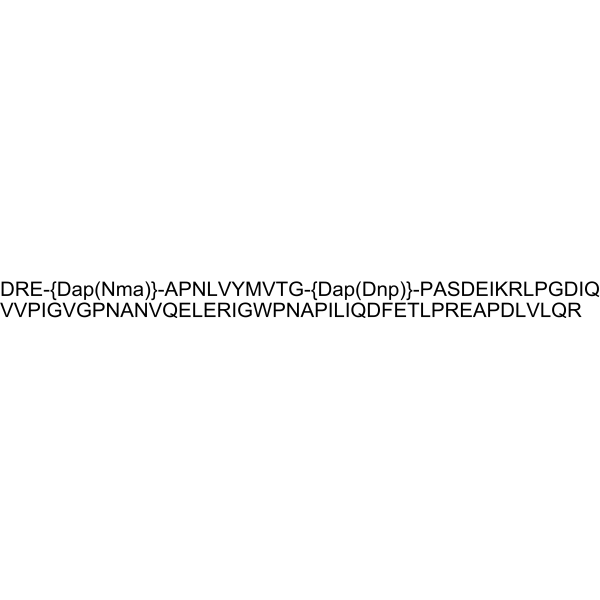
FRETS-VWF73, a 73-amino-acid peptide, is a fluorogenic substrate for ADAMTS13 assay (Ex = 340 nm; Em = 450 nm). FRETS-VWF73 is a predictive tool for thrombotic thrombocytopenic purpura.

- Formula: C22H23N3O3S
- Molecular Weight: 409.50
KB-208 is a phagocytosis inhibitor. KB-208 inhibits phagocytosis of antibody-opsonized blood cells. KB-208 ameliorates thrombocytopenia in a mouse model of passive antibody-induced immune thrombocytopenia. KB-208 can be used for the research of immune thrombocytopenia.

- Formula: C24H30ClNO4
- Molecular Weight: 431.95
Ethaverine hydrochloride is a Papaverine derivative and vasodilator. Ethaverine hydrochloride inhibits Phosphodiesterase, Tyrosine hydroxylase, and MAO-B. Ethaverine hydrochloride blocks L-type Ca2+ channels, reduces intracellular Ca2+ levels, inhibits platelet adhesion and aggregation, regulates cardiac conduction and heart rate, and increases peripheral and cerebral blood flow. Ethaverine hydrochloride alters cochlear microcirculation, intracochlear Po2, CM potential, and EP in guinea pigs, and induces transient hypotension. Ethaverine hydrochloride is used in the research of peripheral vascular diseases.
- Formula: C25H39N7O8
- Molecular Weight: 565.62
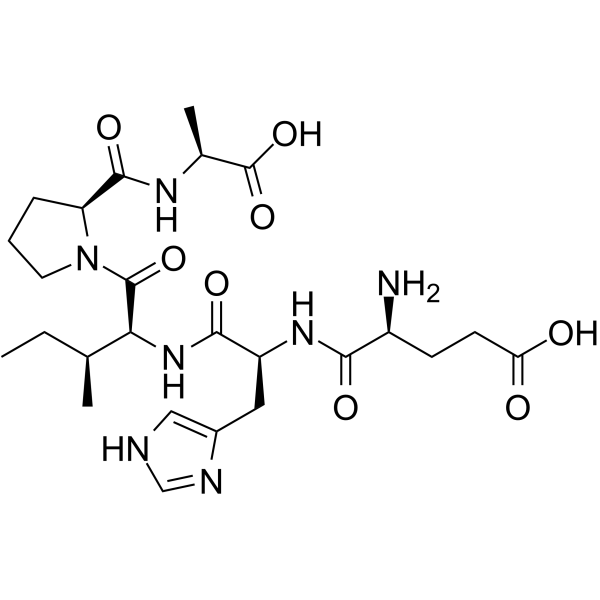
Fibrinogen-Binding Peptide is a Fibrinogen-binding peptide. Fibrinogen-Binding Peptide inhibits platelet adhesion to vitronectin and fibrinogen. Fibrinogen-Binding Peptide inhibits platelet aggregation in ADP-stimulated platelet-rich plasma and in thrombin-stimulated washed platelets. Fibrinogen-Binding Peptide can be used for research on thrombosis.
- Formula: C27H40F3N7O10
- Molecular Weight: 679.64
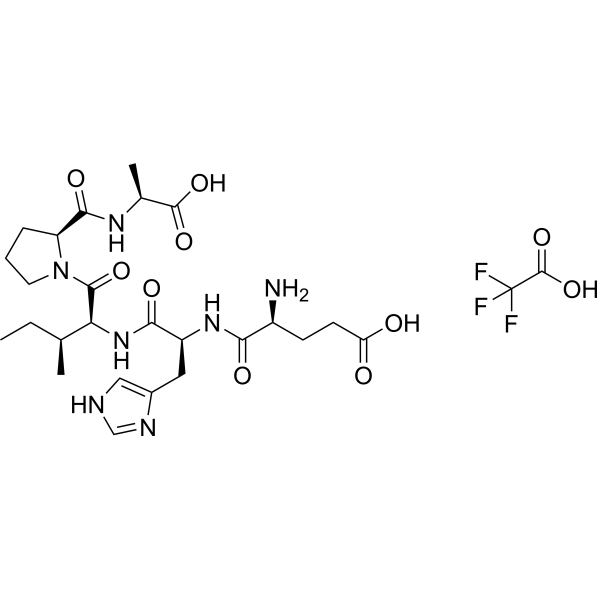
Fibrinogen-Binding Peptide TFA is a Fibrinogen-binding peptide. Fibrinogen-Binding Peptide TFA inhibits platelet adhesion to vitronectin and fibrinogen. Fibrinogen-Binding Peptide TFA inhibits platelet aggregation in ADP-stimulated platelet-rich plasma and in thrombin-stimulated washed platelets. Fibrinogen-Binding Peptide TFA can be used for research on thrombosis.
- Formula: C30H31F3N8O
- Molecular Weight: 576.62
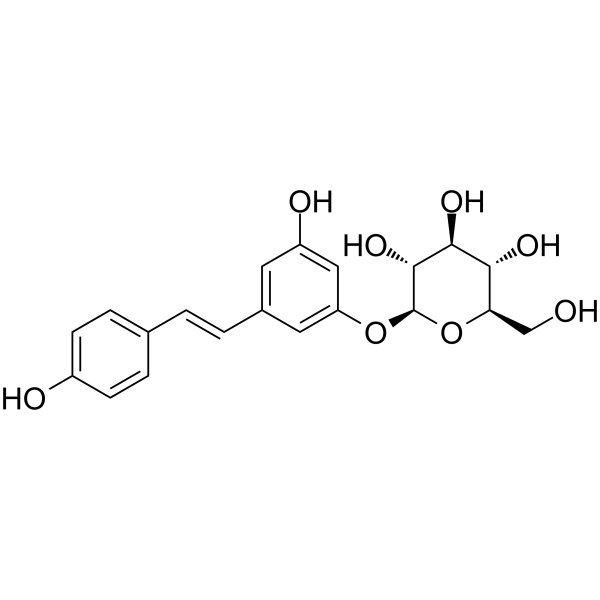
- Formula: C20H22O8
- Molecular Weight: 390.38
(E/Z)-Polydatin ((E/Z)-Piceid) is a mixture of the E/Z configurations of Polydatin (HY-N0120A). Polydatin can be isolated from Polygonum cuspidatum, grapes, peanuts, red wine, hop pellets, cocoa-containing products and chocolate products. Polydatin exhibits multiple biological properties, such as anti-platelet aggregation, anti-low-density lipoprotein oxidation, cardioprotective activity, anti-inflammatory and immunomodulatory functions. Polydatin shows favorable cytotoxic effects against various tumor cell lines, including cervical cancer cells, liver cancer cells, and nasopharyngeal carcinoma cells.
- Formula: C95H110N8O44.H2SO4
- Molecular Weight: 2166.00
Ristomycin sulfate is an antibacterial antibiotic and platelet aggregation inducer. Ristomycin sulfate interacts with the D-alanyl-D-alanine terminus of bacterial cell wall precursors to regulate bacterial cell wall synthesis. Ristomycin sulfate induces platelet aggregation in vitro and inhibits the growth of Gram-positive bacteria. Ristomycin sulfate serves as an in vitro diagnostic compound for detecting von Willebrand factor activity. Ristomycin sulfate is applicable to research related to von Willebrand disease and Bernard-Soulier syndrome.
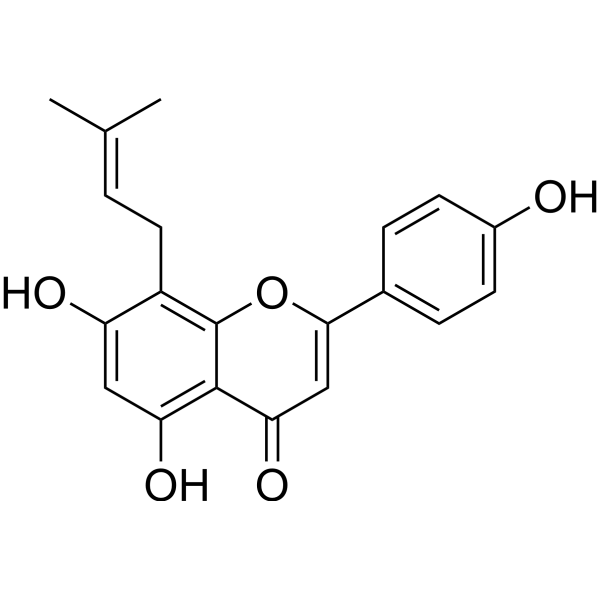
- Formula: C20H18O5
- Molecular Weight: 338.35
Licoflavone C is a broad-spectrum antiviral inhibitor with estrogen-like properties. Licoflavone C binds to viral endonuclease (CEN) and inhibits the replication of various bunyaviruses including severe fever with thrombocytopenia syndrome virus (SFTSV) and lymphocytic choriomeningitis virus in a non-substrate competitive manner. The IC50 values of Licoflavone C against SFTSV CEN and SFTSV CEN are 35.5 μM and 135.8 μM, respectively, and its Kd value against SFTSV CEN is 9.53 μM. After viral entry into cells, Licoflavone C reduces viral loads in mouse tissues in a dose-dependent manner, and exhibits extremely low cytotoxicity and genotoxicity. Licoflavone C induces apoptosis by increasing caspase 3/7 activity, blocks the cell cycle, and alleviates chemotherapy-induced chromosomal damage. Licoflavone C is applicable to the research on severe fever with thrombocytopenia syndrome and related viral infection mechanisms.

- Formula: C95H110N8O44·xH2SO4
- Molecular Weight: 2067.92 (free base)
Ristocetin A (sulfate) (Ristomycin III) is a glycopeptide antibiotic that binds to von Willebrand factor (VWF) and bacterial cell wall components. Ristocetin A (sulfate) interferes with the biosynthesis of bacterial peptidoglycan by inhibiting transpeptidation. As an inducer of platelet adhesion and aggregation, Ristocetin A (sulfate) drives conformational changes by binding to the A1 domain of VWF, thereby activating downstream signaling pathways and promoting cytoskeletal rearrangement. Ristocetin A (sulfate) not only enhances platelet adhesion and spreading on immobilized VWF, but also induces the formation of asymmetric dimers with anticooperativity between platelets and plasma VWF. Ristocetin A (sulfate) is widely used in studies related to thromboembolic diseases and bacterial infections.

- Molecular Weight: 145.46 kDa
Denecimig (Mim8) is a factor VIII-mimetic bispecific antibody with micromolar human binding affinity for Factor X and Factor IXa. Denecimig binds Factor X and Factor IXa, localizes both to the phospholipid surface, enhances the Factor IXa-mediated activation of Factor X to Factor Xa, and stimulates the proteolytic activity of Factor IXa via its monovalent anti-Factor IXa arm. Denecimig is applicable to research related to hemophilia A.
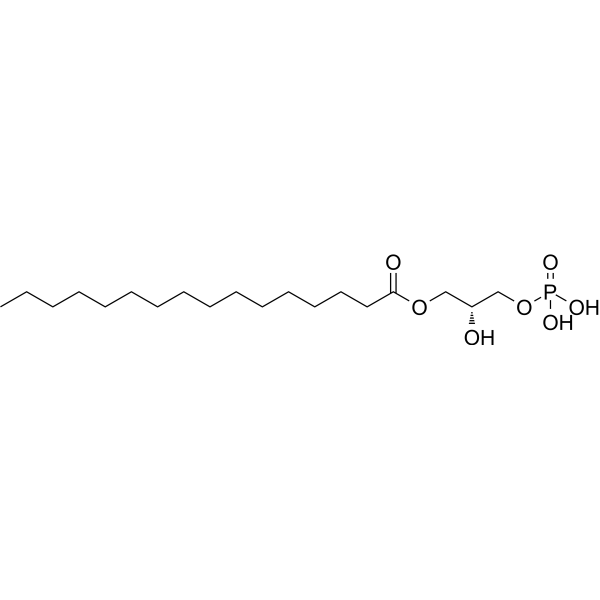
- Formula: C19H39O7P
- Molecular Weight: 410.48
1-Palmitoyl-sn-glycerol 3-phosphate (1-P-GPA) is a phospholipid and lipid membrane precursor. 1-Palmitoyl-sn-glycerol 3-phosphate integrates into POPC liposomes, causing significant changes in membrane curvature. 1-Palmitoyl-sn-glycerol 3-phosphate induces platelet aggregation, but its activity is 30-fold lower than that of 1-hexadecyl-sn-glyceryl-3-phosphate.

- Formula: C47H55ClF3N5O6S3
- Molecular Weight: 974.61
Navitoclax (Standard) (ABT-263 (Standard)) is the analytical standard of Navitoclax (HY-10087). This product is intended for research and analytical applications. Navitoclax (ABT-263 ) is an orally active BH3 mimetic and an inhibitor of Bcl-2, Bcl-xL, and Bcl-w, with a Ki value of <1 nM for each target. Navitoclax triggers endogenous Apoptosis and downregulates the expression of Survivin and TGFβ2. Navitoclax alleviates fibrosis and induces thrombocytopenia. Navitoclax exhibits anticancer activity against a variety of tumors and enhances the efficacy of chemotherapy and radiotherapy. Navitoclax can be used in the research of acute lymphoblastic leukemia, ovarian cancer, and fibrotic diseases.

- Formula: C6H10O6
- Molecular Weight: 178.14
D-Glucono-1,4-lactone is a derivative of D-gluconic acid (HY-Y0569C). D-Glucono-1,4-lactone can be isolated from fruits, vegetables, honey, kombucha and wine. D-Glucono-1,4-lactone inhibits thrombin-induced arachidonic acid peroxidation and platelet activation. D-Glucono-1,4-lactone reduces superoxide anion production in thrombin-activated platelets. D-Glucono-1,4-lactone exerts antioxidant activity on platelets under oxidative stress conditions and prevents excessive platelet activation through antioxidant mechanisms. D-Glucono-1,4-lactone can be used in research related to cardiovascular diseases.
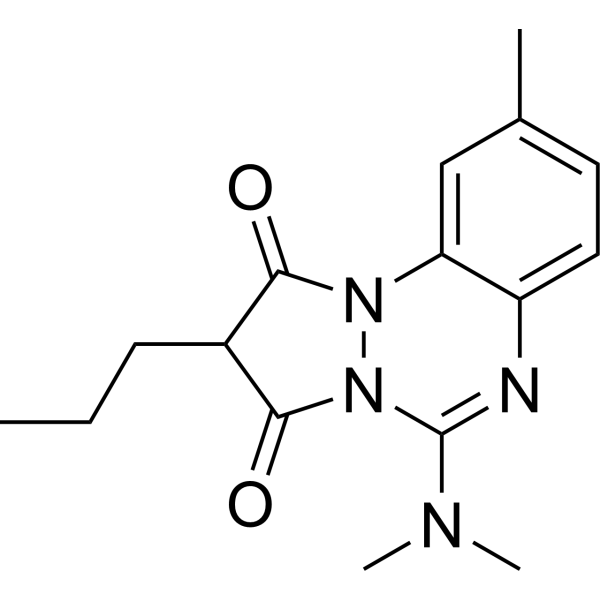
- Formula: C16H20N4O2
- Molecular Weight: 300.36
Azapropazone is an orally active nonsteroidal anti-inflammatory agent. Azapropazone inhibits Xanthine oxidase activity with an IC50 of 70-140 μg/mL. Azapropazone exerts significant cardiomyocyte protective effects on dogs with ischemia-reperfusion injury. Azapropazone reduces arthritis. Azapropazone inhibits Adrenaline-induced platelet aggregation. Azapropazone can be used for the research of myocardial ischemia and reperfusion injury, adjuvant arthritis, and gouty arthritis.

- Molecular Weight: 144.56 kDa
Ripertamab (SCT400) is a recombinant human-mouse chimeric anti-CD20 IgG1κ monoclonal antibody. As an immunomodulator, ripertamab reduces the levels of pathogenic autoantibodies, alleviates immune complex deposition, and blocks the antigen-presenting function of cells. Ripertamab depletes CD20-positive cells. Ripertamab can induce infusion-related reactions, pulmonary toxicity, neutropenia and thrombocytopenia. Ripertamab is applicable to research related to non-Hodgkin's lymphoma, primary membranous nephropathy and idiopathic membranous nephropathy.
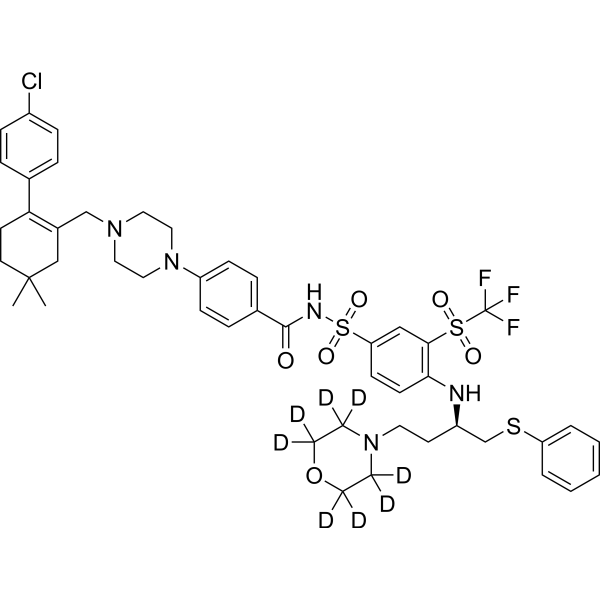
- Formula: C47H47D8ClF3N5O6S3
- Molecular Weight: 982.66
Navitoclax-d8 is the d8-labeled Navitoclax (HY-10087). Navitoclax (ABT-263 ) is an orally active BH3 mimetic and an inhibitor of Bcl-2, Bcl-xL, and Bcl-w, with a Ki value of <1 nM for each target. Navitoclax triggers endogenous Apoptosis and downregulates the expression of Survivin and TGFβ2. Navitoclax alleviates fibrosis and induces thrombocytopenia. Navitoclax exhibits anticancer activity against a variety of tumors and enhances the efficacy of chemotherapy and radiotherapy. Navitoclax can be used in the research of acute lymphoblastic leukemia, ovarian cancer, and fibrotic diseases.



