



Pirlindole mesylate
Pirlindole mesylate is an orally active, selective and reversible MAO-A inhibitor with an IC50 value of 250 nM. Pirlindole mesylate inhibits genomic replication of Enterovirus species B and D, and exhibits moderate activity against enterovirus species A. Pirlindole mesylate inhibits MAO-A-mediated monoamine metabolism, promotes adult hippocampal neurogenesis, rescues stress-induced dendritic atrophy of hippocampal granule neurons, reverses behavioral effects associated with chronic mild stress, and also possesses anticonvulsant, analgesic, local anesthetic, hypotensive, antiplatelet aggregation and antispasmodic activities. Pirlindole mesylate shows no detectable mutagenic, clastogenic or carcinogenic properties. Pirlindole mesylate can be used in research related to depression and enterovirus infections.
For research use only. We do not sell to patients.
- CAS No.: 207572-66-5
- Formula: C16H22N2O3S
- Molecular Weight:322.42
-
Storage:
Please store the product under the recommended conditions in the Certificate of Analysis.

To place orders, for customer services and technical support, please contact: MedChemExpress USA
Tel: 609-228-6898 E-mail: [email protected] [email protected]


-
 Biological Activity
-
Chemical Information
- Protocols
- Purity & Documentation
- References
-
 Help & FAQs


-
HY-101169
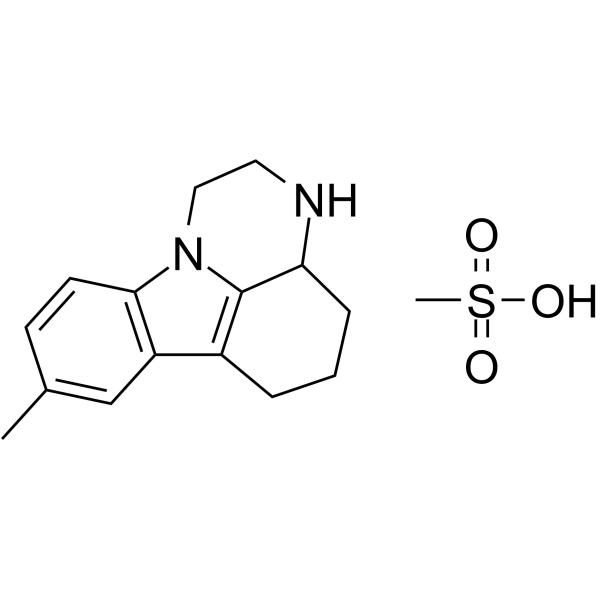
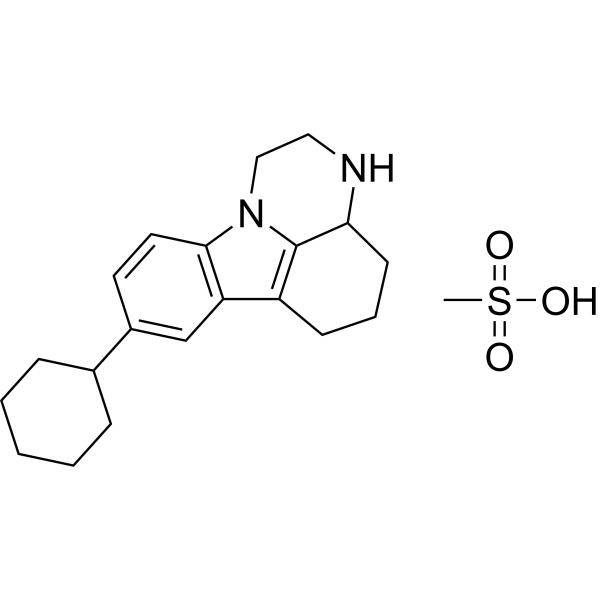
Tetrindole mesylateMAO A Inhibitor -
HY-B1558A
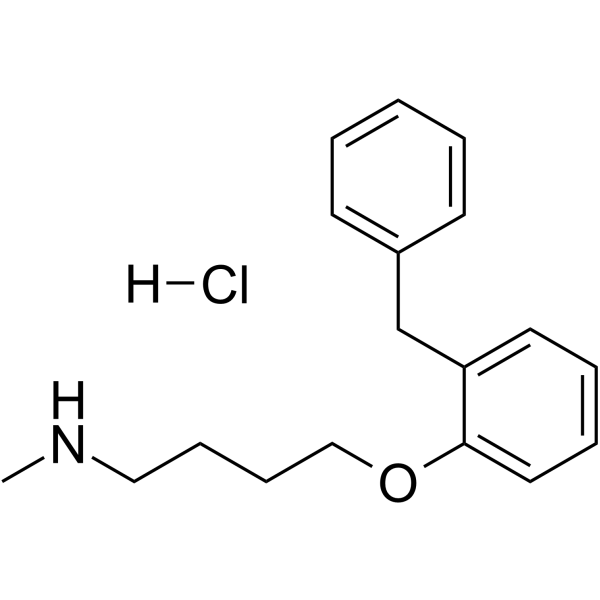
Bifemelane hydrochlorideMAO Inhibitor -
HY-14202
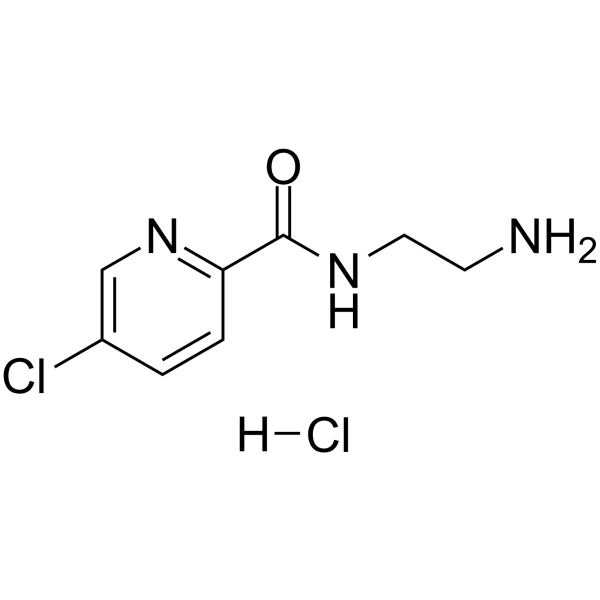
Lazabemide hydrochlorideMAO-B Inhibitor -
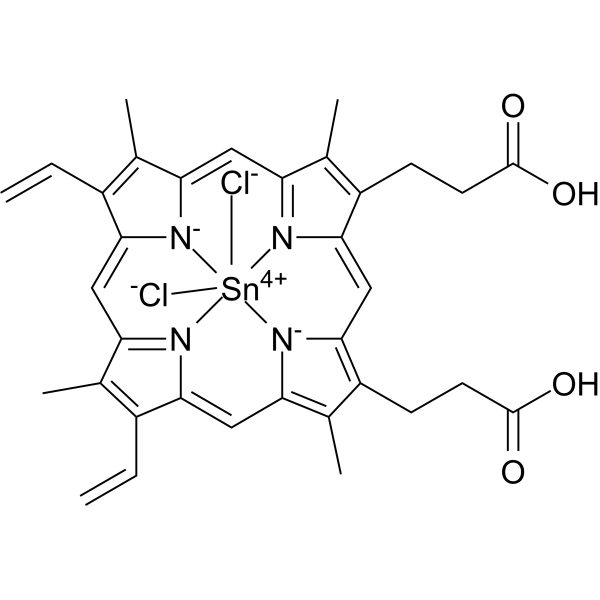
HY-101194
Tin protoporphyrin IX dichlorideHO-1 Inhibitor -
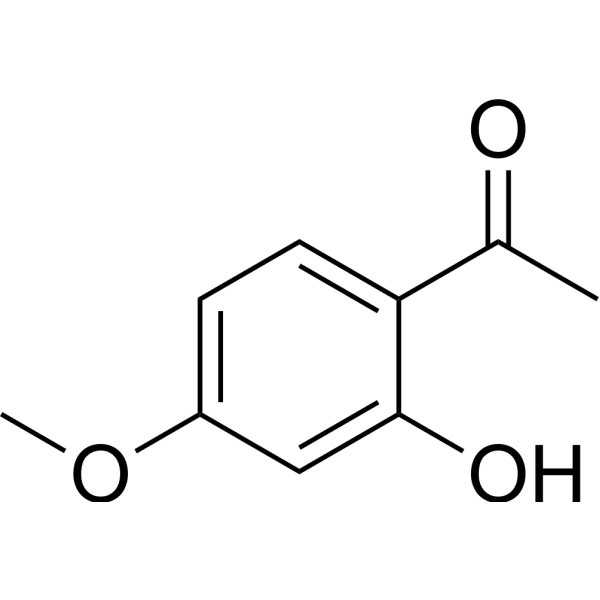
HY-N0159
PaeonolAutophagy Inducer -
HY-Y0882
Hydroxylamine hydrochlorideMAO Inhibitor -
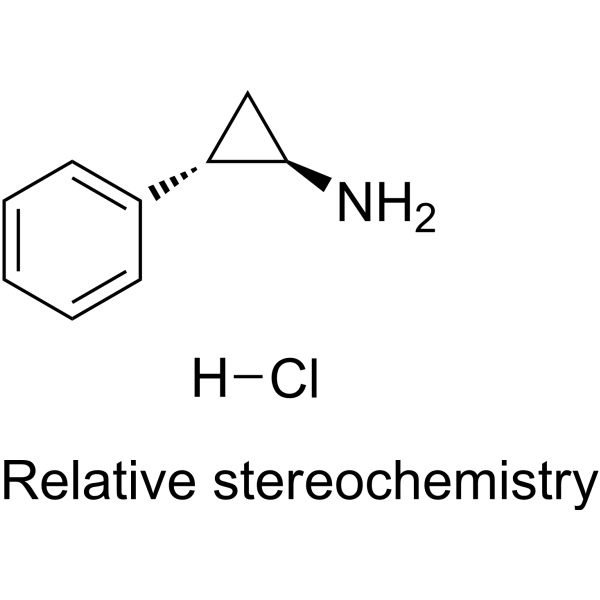
HY-17447A
Tranylcypromine hydrochlorideLSD1/MAO Inhibitor -
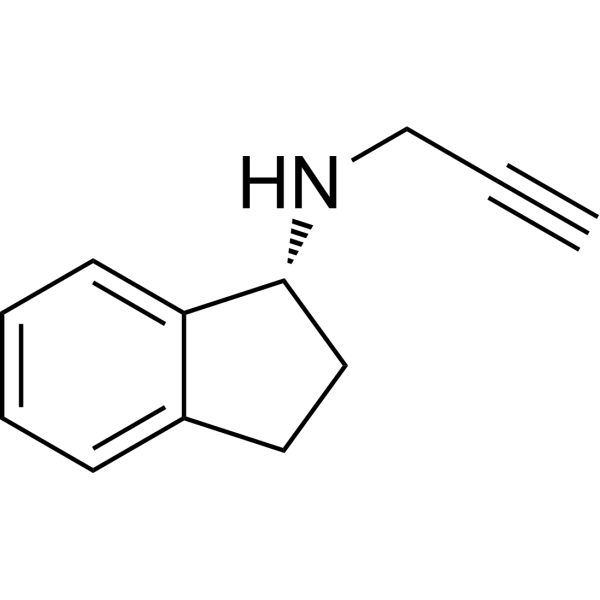
HY-14605A
RasagilineMAO Inhibitor -
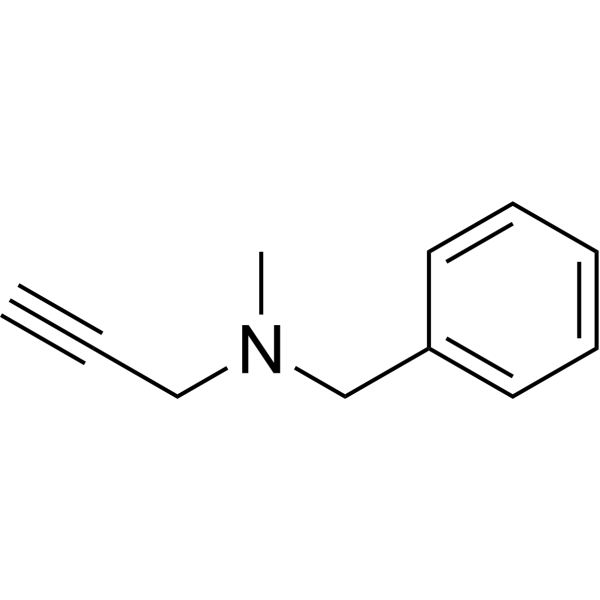
HY-A0091A
PargylineMonoamine Oxidase Inhibitor -
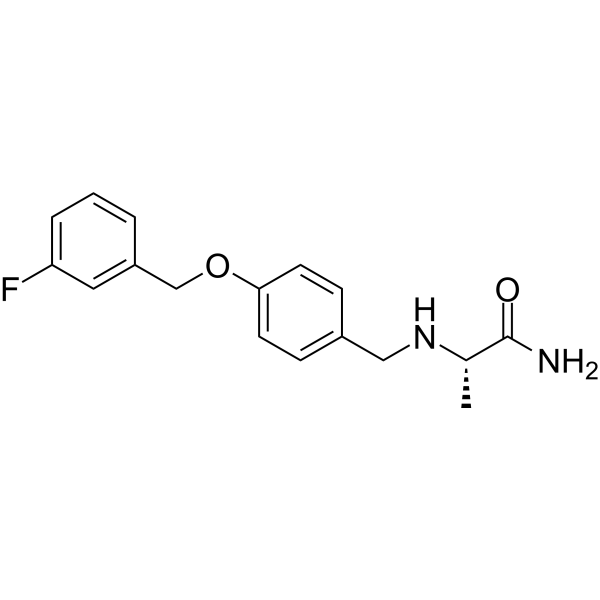
HY-70057
SafinamideMAO-B Inhibitor -
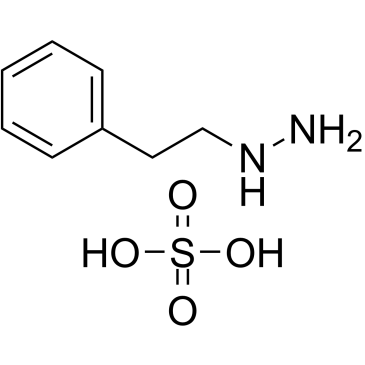
HY-B1018A
Phenelzine sulfateMAO Inhibitor -

HY-N0159R
Paeonol (Standard)Autophagy Inducer


Biological Activity
Description
IC50 & Target
|
MAO-A 250 nM (IC50) |
Cellular Effect
|
Cell Line

|
Type | Value | Description | References |
|---|---|---|---|---|
| RD | CC50 |
19 μM
Compound: Pirlindole mesylate
|
Cytotoxicity against human RD cells after 3 days by neutral red dye-based photometric method
Cytotoxicity against human RD cells after 3 days by neutral red dye-based photometric method
|
[PMID: 30912944] |
In Vitro
Pirlindole mesylate selectively inhibits MAO-A in rat brain with an IC50 value of 250 nM, and its inhibitory potency against MAO-B in rat brain and heart is more than 200-fold lower[3].
Pirlindole (0.1 nM-34 μM) mesylate slightly increases electrically stimulated dopamine release at concentrations of 0.1-10 nM, and doubles electrically induced norepinephrine and serotonin release at concentrations of 4.5 μM and 34 μM, respectively, in rat cortical slices[3].
Pirlindole (3 μg/mL) mesylate prolongs the refractory period of electrically stimulated rabbit atrial contractions[3].
Pirlindole (Up to 0.5 mg per plate) mesylate shows no mutagenic activity in the Ames test using Salmonella typhimurium strains TA 98, TA 1537, TA 100, and TA 1535, with or without metabolic activation[3].
Pirlindole (10 μM) mesylate potently inhibits CV-B3 replication in HeLa R19 cells, as evidenced by a significant reduction in GFP fluorescence intensity and extremely low cytotoxicity[4].
Pirlindole (0.3-30 μM; 8 h postinfection) mesylate inhibits the replication of CV-B3 in BGM cells and EV-D68 in HeLa R19 cells, exhibits moderate activity against EV-A71, and shows no activity against EV-C, rhinoviruses or EMCV[4].
MedChemExpress (MCE) has not independently confirmed the accuracy of these methods. They are for reference only.
In Vivo
Pirlindole (5-25 mg/kg; i.p.; single acute administration or twice daily for 14 consecutive days) mesylate significantly reduces the immobility time of mice in the forced swimming test, with efficacy comparable to that of standard antidepressants[3].
Pirlindole (10 mg/kg; intraperitoneal injection; once daily for 5 consecutive days) mesylate enhances electrical self-stimulation behavior in rats with hypofunction of the reward system induced by internal capsule injury[3].
Pirlindole (administered via i.p. or p.o. at 1-50 mg/kg) mesylate antagonizes reserpine (HY-N0480)-induced ptosis and hypothermia, as well as tetrabenazine (HY-B0590)-induced ptosis in mice[3].
Pirlindole (10-25 mg/kg; p.o.) mesylate antagonizes the sedative effect induced by Diazepam[3].
MedChemExpress (MCE) has not independently confirmed the accuracy of these methods. They are for reference only.
-
Animal Model:Wistar (male, 2 months old, 300-400 g, chronic mild stress model)[1]
-
Dosage:5 mg/kg; 15 mg/kg; 30 mg/kg
-
Administration:i.p.; daily; 21 days
-
Result:Significantly reversed stress-induced anhedonia at 5 mg/kg (P=0.001 vs vehicle-treated stressed rats).
Significantly decreased immobility time at 5 mg/kg and 15 mg/kg (P<0.001 for both doses vs vehicle-treated stressed rats).
Increased latency to immobility at 5 mg/kg (P=0.043 vs vehicle-treated stressed rats) and 15 mg/kg (P<0.001 vs vehicle-treated stressed rats).
Significantly increased adult neurogenesis (percentage of BrdU-positive cells co-labeled with PSA-NCAM) in the hippocampal subgranular zone at 5 mg/kg (P=0.035), 15 mg/kg (P=0.005), and 30 mg/kg (P=0.005) compared to vehicle-treated stressed rats.
Significantly reversed stress-induced reduction in total dendritic length of hippocampal granule neurons at 30 mg/kg (P=0.040 vs vehicle-treated stressed rats).


Chemical Information
-
CAS No. 207572-66-5
-
Molecular Weight 322.42
-
Formula C16H22N2O3S
-
SMILES
CC1=CC2=C(C=C1)N3C4=C2CCCC4NCC3.CS(=O)(O)=O
-
Shipping
Room temperature in continental US; may vary elsewhere.
-
Storage
Please store the product under the recommended conditions in the Certificate of Analysis.


Purity & Documentation
References
[1]. Morais M, et al. The effects of chronic stress on hippocampal adult neurogenesis and dendritic plasticity are reversed by selective MAO-A inhibition. Journal of psychopharmacology (Oxford, England). 2014 Dec;28(12):1178-83. [Content Brief]
[2]. Macedo A, et al. Pirlindole in the treatment of depression: a meta-analysis. Clinical drug investigation. 2011;31(1):61-71. [Content Brief]
[3]. Bruhwyler J, et al. Pirlindole: a selective reversible inhibitor of monoamine oxidase A. A review of its preclinical properties. Pharmacological research. 1997 Jul;36(1):23-33. [Content Brief]
[4]. Ulferts R, et al. Screening of a Library of FDA-Approved Drugs Identifies Several Enterovirus Replication Inhibitors That Target Viral Protein 2C. Antimicrobial agents and chemotherapy. 2016 May;60(5):2627-38. [Content Brief]

Calculators
Concentration (start) × Volume (start) = Concentration (final) × Volume (final)


Pirlindole mesylate Related Classifications
HY-100679A Related Classifications
 Powered by Bioz
Keywords
- Pirlindole
- 207572-66-5
- Monoamine Oxidase
- Enterovirus
- monoamine oxidase subtype A
- Coxsackievirus B3 viral protein 2C
- BGM cells
- hippocampal adult neurogenesis
- noradrenaline reuptake transporters
- HeLa R19 cells
- enterovirus species B
- Salmonella typhimurium
- serotonin reuptake transporters
- enterovirus species D
- Inhibitor
- inhibitor
- inhibit