



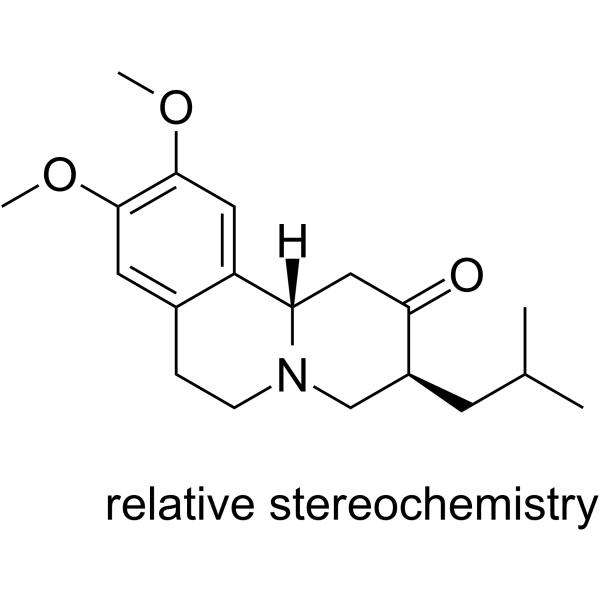
Tetrabenazine
Based on 1 publication(s) in Google Scholar
Tetrabenazine (Ro 1-9569) is a brain-penetrant and orally active VMAT2-selective ligand with human VMAT2 Ki 100 nM. Tetrabenazine binds VMAT2 to block monoamine uptake into synaptic vesicles, potentiates cytoplasmic monoamine degradation. Tetrabenazine weakly blocks dopamine D2 receptors, and increases dopamine turnover via elevated cerebrospinal fluid homovanillic acid. Tetrabenazine can be used for the research of Huntington’s disease, tardive dyskinesia, and Tourette’s syndrome.
For research use only. We do not sell to patients.
- Purity : 99.95%
- CAS No.: 58-46-8
- Formula: C19H27NO3
- Molecular Weight:317.43
-
Storage:Powder -20°C, 3 years , 4°C, 2 years ; In solvent -80°C, 2 years , -20°C, 1 year

To place orders, for customer services and technical support, please contact: MedChemExpress USA
Tel: 609-228-6898 E-mail: [email protected] [email protected]


-
 Biological Activity
-
Chemical Information
-
Solvent & Solubility
- Purity & Documentation
- References
-
 Help & FAQs


-
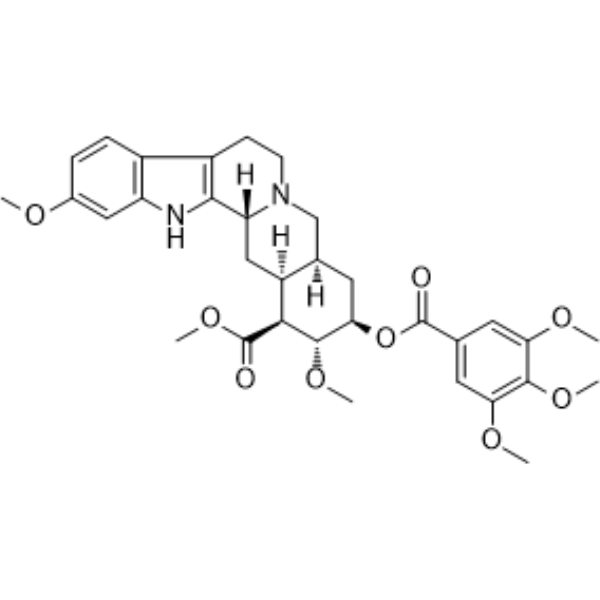
HY-N0480
ReserpineAutophagy Inhibitor -
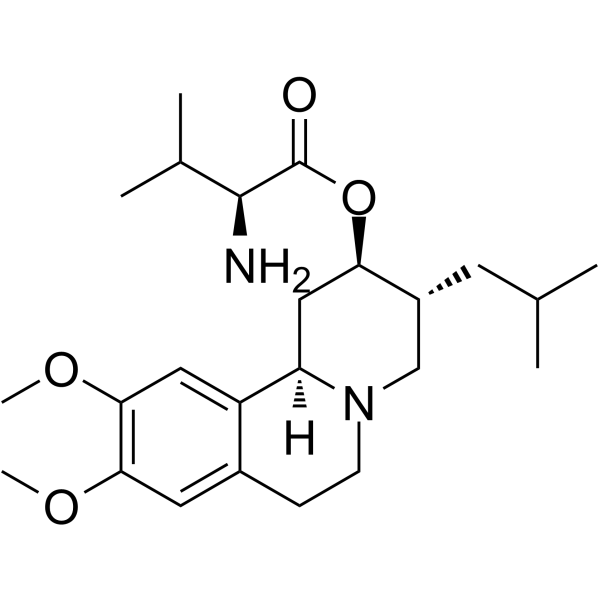
HY-16771
ValbenazineVMAT2 Inhibitor -
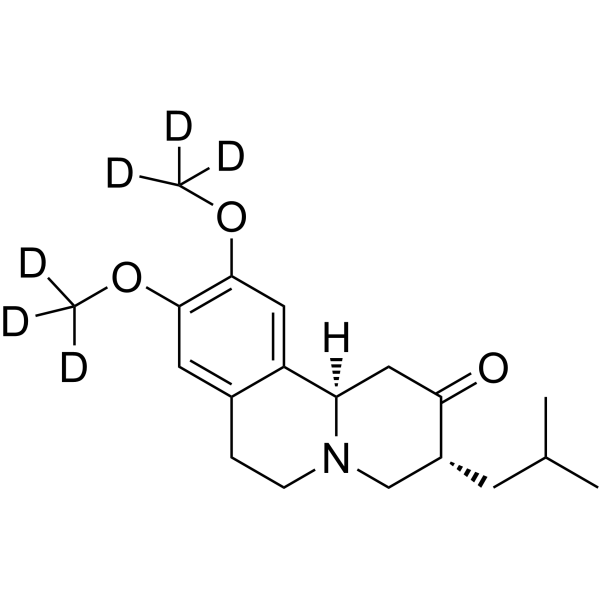
HY-B0590S
Tetrabenazine-d6Deuterium Substitute -
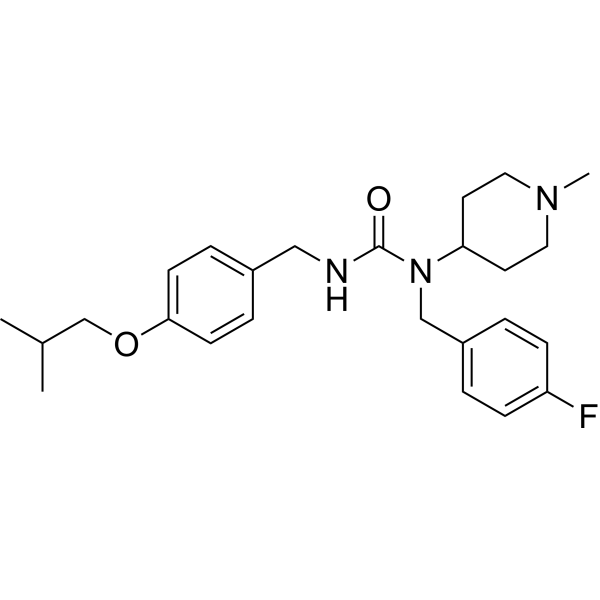
HY-14557
Pimavanserin5-HT2A Inverse Agonist -
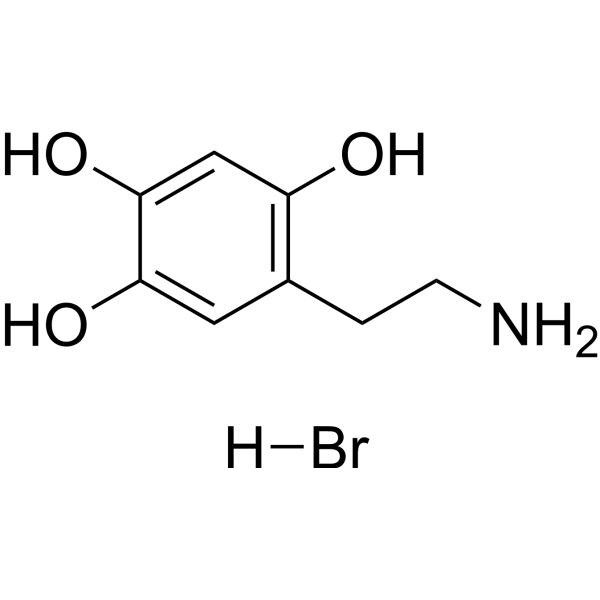
HY-B1081A
Oxidopamine hydrobromideNeurotoxin -
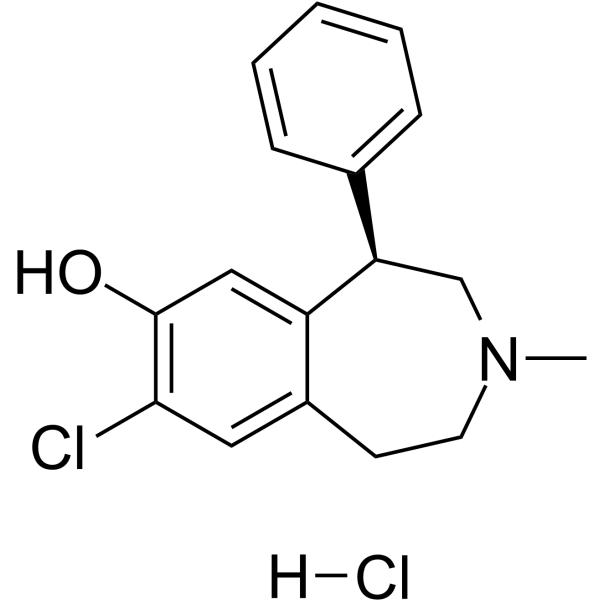
HY-19545A
SCH-23390 hydrochlorideDopamine D1 Receptor Antagonist -
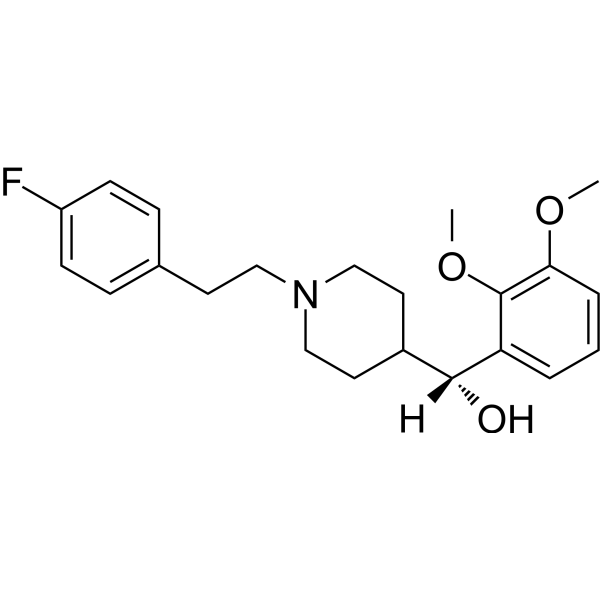
HY-14940
Volinanserin5-HT2 Receptor Antagonist -
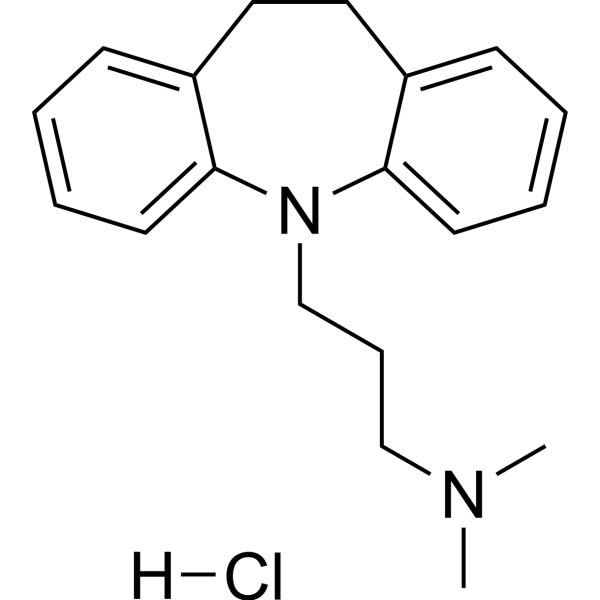
HY-B1490
Imipramine hydrochlorideAntidepressant Agent -
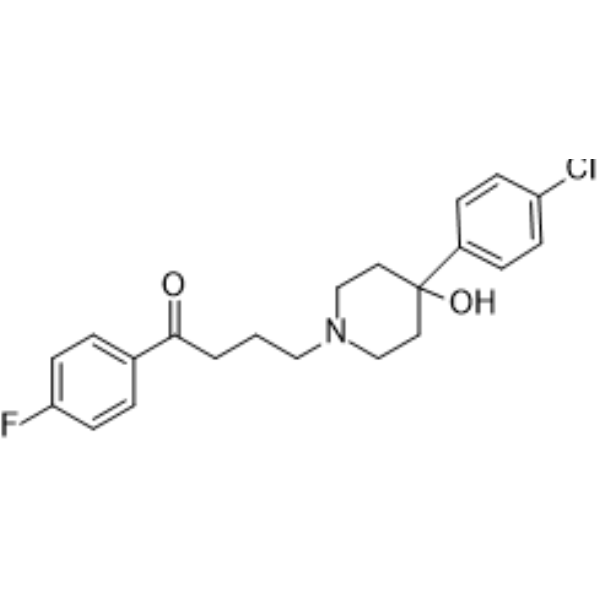
HY-14538
HaloperidolDopamine Receptor Antagonist -
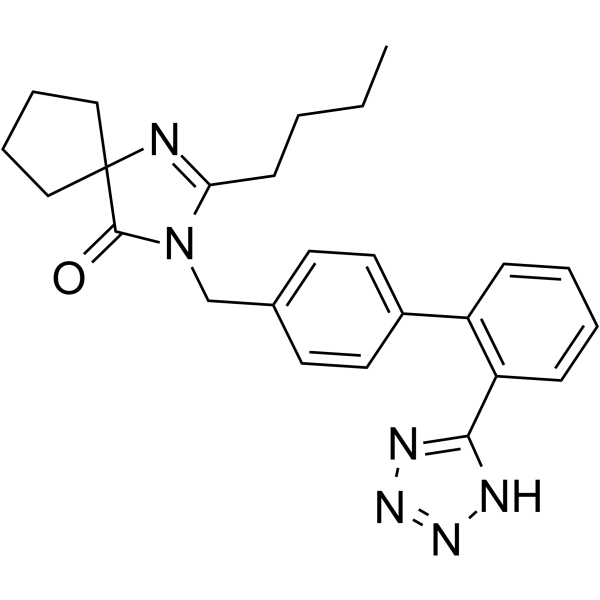
HY-B0202
IrbesartanAT1 Receptor Blocker -
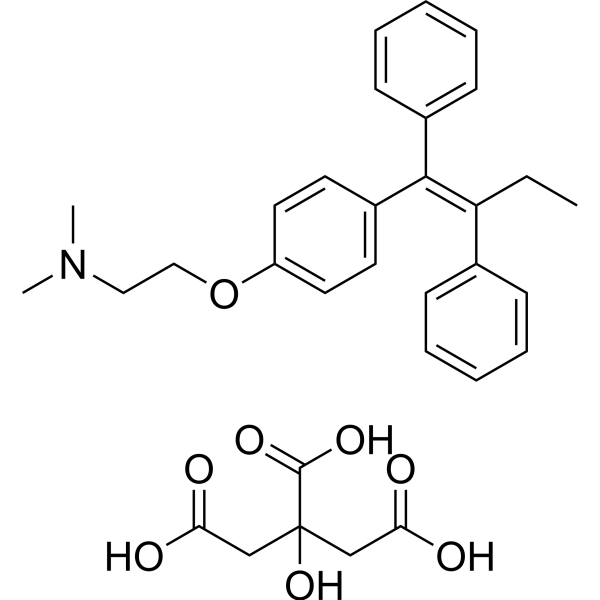
HY-13757
Tamoxifen CitrateEstrogen Receptor Modulator -
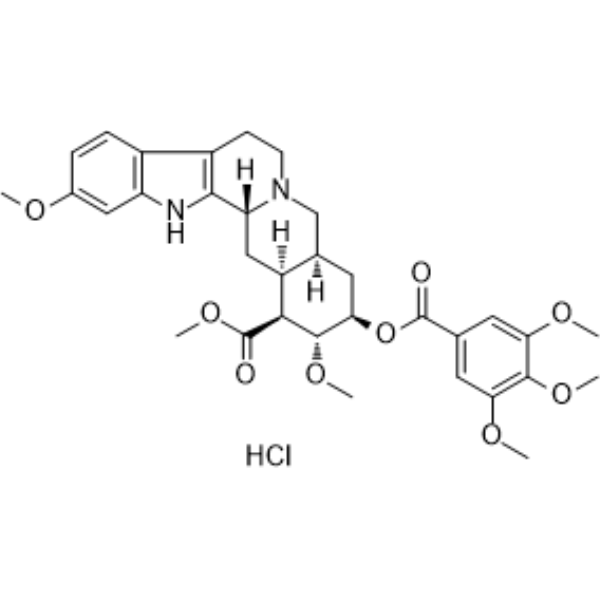
HY-N0480A
Reserpine hydrochlorideVMAT2 Inhibitor
Publications Citing Use of MedChemExpress (MCE) Tetrabenazine
MoreAll Dopamine Receptor Isoforms
More

Biological Activity
Description
IC50 & Target
|
D2 Receptor ~2.1 μM (Ki) |
In Vitro
Tetrabenazine reversibly inhibits human VMAT2 with a Ki of ~100 nM, reducing monoamine uptake into synaptic vesicles and depleting presynaptic monoamine stores[1].
Tetrabenazine inhibits dopamine D2 receptors in striatal membranes with a Ki of ~2.1 μM[1].
Tetrabenazine (0.3-10.0 μg/mL; 4 h) releases serotonin from rabbit blood platelets in vitro in a concentration-dependent manner[3].
Tetrabenazine (5-20 mg/L) is 60% bound to nondiffusible components of rabbit plasma[3].
MedChemExpress (MCE) has not independently confirmed the accuracy of these methods. They are for reference only. .
In Vivo
Tetrabenazine (7 days) causes irreversible locomotor changes and substantia nigra pars compacta neuronal damage in healthy rats[1].
Tetrabenazine (50-150 mg/kg; i.v.; daily for 3-9 days) exhibits short-lived, central nervous system-selective Reserpine (HY-N0480)-like effects in rabbits[3].
MedChemExpress (MCE) has not independently confirmed the accuracy of these methods. They are for reference only.
-
Animal Model:New Zealand White male (~2 kg)[3]
-
Dosage:50 mg/kg; 150 mg/kg
-
Administration:i.v.; daily for 3, 7, 9 days
-
Result:Decreased brain serotonin to ~50% of normal within 1 hour, remained at this level for several hours, and returned to near normal by 18-24 hours.
Declined brain norepinephrine to ~15% of normal over 4 hours, and returned to ~70% of normal by 24 hours.
Did not measurably affect peripheral serotonin in blood platelets and small intestine, and norepinephrine in heart.
Caused <10% depletion of adrenal catecholamines at 4 hours and ~40% depletion at 24 hours.
Reduced plasma drug levels to <3 μg/mL by 6 hours, and made them undetectable by 24 hours.
Reached brain drug levels of ~45 μg/g within 10 minutes, declined to ~1.3 μg/g by 6 hours, and made them undetectable by 24 hours.
Failed to affect intestinal/platelet serotonin or heart norepinephrine, but caused 50% depletion of adrenal catecholamines by the end of infusion with single 150 mg/kg i.v. dose.
Showed no drug accumulation in plasma or tissues 24 hours after the last dose with repeated 50 mg/kg daily i.v. doses.


Chemical Information
-
CAS No. 58-46-8
-
Appearance Solid
-
Molecular Weight 317.43
-
Formula C19H27NO3
-
Color White to off-white
-
SMILES
O=C1[C@@H](CC(C)C)CN2CCC3=CC(OC)=C(OC)C=C3[C@]2([H])C1
-
Synonyms
Ro 1-9569
-
Shipping
Room temperature in continental US; may vary elsewhere.
-
Storage
Powder -20°C 3 years 4°C 2 years In solvent -80°C 2 years -20°C 1 year


Publications (1)
-
Journal Impact Factor
-
Most Recent


Solvent & Solubility
In Vitro:
DMSO : 25 mg/mL (78.76 mM; ultrasonic and warming and heat to 60°C; Hygroscopic DMSO has a significant impact on the solubility of product, please use newly opened DMSO)
H2O : < 0.1 mg/mL (insoluble)
Please refer to the solubility information to select the appropriate solvent. Once prepared, please aliquot and store the solution to prevent product inactivation from repeated freeze-thaw cycles.
Storage method and period of stock solution: -80°C, 2 years; -20°C, 1 year. When stored at -80°C, please use it within 2 years. When stored at -20°C, please use it within 1 year.
Please refer to the solubility information to select the appropriate solvent. Once prepared, please aliquot and store the solution to prevent product inactivation from repeated freeze-thaw cycles.
Storage method and period of stock solution: -80°C, 2 years; -20°C, 1 year. When stored at -80°C, please use it within 2 years. When stored at -20°C, please use it within 1 year.
Concentration (start) × Volume (start) = Concentration (final) × Volume (final)
In Vivo:
Select the appropriate dissolution method based on your experimental animal and administration route.
- For the following dissolution methods, please ensure to first prepare a clear stock solution using an In Vitro approach and then sequentially add co-solvents:
- To ensure reliable experimental results, the clarified stock solution can be appropriately stored based on storage conditions. As for the working solution for In Vivo experiments, it is recommended to prepare freshly and use it on the same day.
- The percentages shown for the solvents indicate their volumetric ratio in the final prepared solution. If precipitation or phase separation occurs during preparation, heat and/or sonication can be used to aid dissolution.
Add each solvent one by one: 10% DMSO 40% PEG300 5% Tween-80 45% Saline
Solubility: ≥ 3.33 mg/mL (10.49 mM); Clear solution
This protocol yields a clear solution of ≥ 3.33 mg/mL (saturation unknown).
Taking 1 mL working solution as an example, add 100 μL DMSO stock solution (33.3 mg/mL) to 400 μL PEG300, and mix evenly; then add 50 μL Tween-80 and mix evenly; then add 450 μL Saline to adjust the volume to 1 mL.
Preparation of Saline: Dissolve 0.9 g sodium chloride in ddH₂O and dilute to 100 mL to obtain a clear Saline solution.
Add each solvent one by one: 10% DMSO 90% (20% SBE-β-CD in Saline)
Solubility: ≥ 3.33 mg/mL (10.49 mM); Clear solution
This protocol yields a clear solution of ≥ 3.33 mg/mL (saturation unknown).
Taking 1 mL working solution as an example, add 100 μL DMSO stock solution (33.3 mg/mL) to 900 μL 20% SBE-β-CD in Saline, and mix evenly.
Preparation of 20% SBE-β-CD in Saline (4°C, storage for one week): 2 g SBE-β-CD powder is dissolved in 10 mL Saline, completely dissolve until clear.
In Vivo Dissolution Calculator
Please enter the basic information of animal experiments:
-
-
-
-
Recommended: Prepare an additional quantity of animals to account for potential losses during experiments.
Please enter your animal formula composition:
-
%DMSO +
Recommended: Keep the proportion of DMSO in working solution below 2% if your animal is weak.
-
%+
-
+%Tween-80 + +
-
%Saline +
The co-solvents required include: DMSO, . All of co-solvents are available by MedChemExpress (MCE). , Tween 80. All of co-solvents are available by MedChemExpress (MCE).
Working solution concentration: 0.22 mg/mL
Method for preparing stock solution: mg drug dissolved in μL DMSO. Stock solution concentration: mg/mL.
1. Take μL DMSO stock solution;
2. Add μL .
μL , mix evenly;
3. Then add μL Tween 80, mix evenly;
4. Then add μL
Please ensure that the stock solution in the first step is dissolved to a clear state, and add co-solvents in sequence. You can use ultrasonic heating (ultrasonic cleaner, recommended frequency 20-40 kHz), vortexing, etc. to assist dissolution.


Purity & Documentation
-
Data Sheet (280 KB)
-
SDS (392 KB)
- English - EN (392 KB)
- Français - FR (392 KB)
- Deutsch - DE (392 KB)
- Norwegian - NO (392 KB)
- Español - ES (392 KB)
- Swedish - SV (392 KB)
- Italian - IT (392 KB)
- Korean - KR (392 KB)
- Portuguese - PT (392 KB)
-
Handling Instructions (2659 KB)
References
[1]. J C Shih, et al. Ketanserin and tetrabenazine abolish aggression in mice lacking monoamine oxidase A. Brain Res. 1999 Jul 24;835(2):104-12. [Content Brief]
[2]. Nobue Kitanaka, et al. Tetrabenazine, a vesicular monoamine transporter-2 inhibitor, attenuates morphine-induced hyperlocomotion in mice through alteration of dopamine and 5-hydroxytryptamine turnover in the cerebral cortex. Pharmacol Biochem Behav. 2018 Sep;172:9-16. doi: 10.1016/j.pbb.2018.07.002. Epub 2018 Jul 12. [Content Brief]
[3]. S J Podurgiel, et al. The vesicular monoamine transporter (VMAT-2) inhibitor tetrabenazine induces tremulous jaw movements in rodents: implications for pharmacological models of parkinsonian tremor. Neuroscience. 2013 Oct 10;250:507-19. doi: 10.1016/j.neuroscience.2013.07.008. Epub 2013 Jul 15. [Content Brief]
[4]. Kenney, C., C. Hunter, and J. Jankovic, Long-term tolerability of tetrabenazine in the treatment of hyperkinetic movement disorders. Mov Disord, 2007. 22(2): p. 193-7. [Content Brief]
[5]. Jankovic, J. and J. Beach, Long-term effects of tetrabenazine in hyperkinetic movement disorders. Neurology, 1997. 48(2): p. 358-62. [Content Brief]
[6]. Ondo, W.G., P.A. Hanna, and J. Jankovic, Tetrabenazine treatment for tardive dyskinesia: assessment by randomized videotape protocol. Am J Psychiatry, 1999. 156(8): p. 1279-81. [Content Brief]


Complete Stock Solution Preparation Table
Please refer to the solubility information to select the appropriate solvent. Once prepared, please aliquot and store the solution to prevent product inactivation from repeated freeze-thaw cycles.
Storage method and period of stock solution: -80°C, 2 years; -20°C, 1 year. When stored at -80°C, please use it within 2 years. When stored at -20°C, please use it within 1 year.
| Optional Solvent | Concentration Solvent Mass | 1 mg | 5 mg | 10 mg | 25 mg |
|---|---|---|---|---|---|
| DMSO | 1 mM | 3.1503 mL | 15.7515 mL | 31.5030 mL | 78.7575 mL |
| 5 mM | 0.6301 mL | 3.1503 mL | 6.3006 mL | 15.7515 mL | |
| 10 mM | 0.3150 mL | 1.5752 mL | 3.1503 mL | 7.8758 mL | |
| 15 mM | 0.2100 mL | 1.0501 mL | 2.1002 mL | 5.2505 mL | |
| 20 mM | 0.1575 mL | 0.7876 mL | 1.5752 mL | 3.9379 mL | |
| 25 mM | 0.1260 mL | 0.6301 mL | 1.2601 mL | 3.1503 mL | |
| 30 mM | 0.1050 mL | 0.5251 mL | 1.0501 mL | 2.6253 mL | |
| 40 mM | 0.0788 mL | 0.3938 mL | 0.7876 mL | 1.9689 mL | |
| 50 mM | 0.0630 mL | 0.3150 mL | 0.6301 mL | 1.5752 mL | |
| 60 mM | 0.0525 mL | 0.2625 mL | 0.5251 mL | 1.3126 mL |


Tetrabenazine Related Classifications
HY-B0590 Related Classifications
 Powered by Bioz