Others
-
Others Related Products (76593)
Related Products (76593)

-
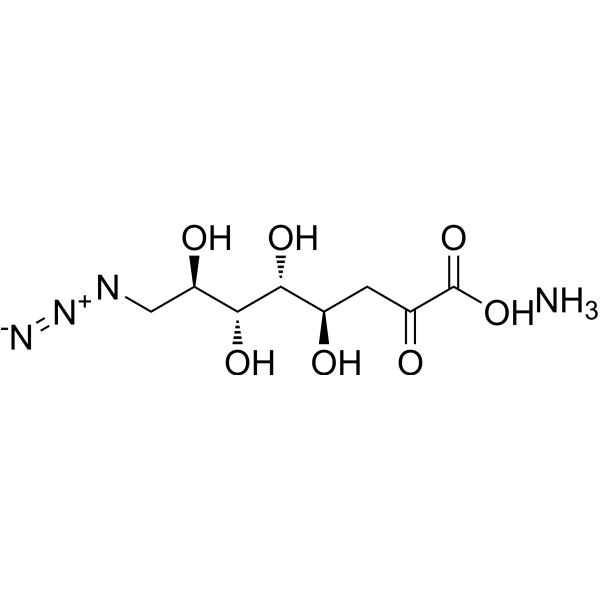
Kdo Azide
 0 Images
Kdo Azide is a click chemistry reagent containing an azide. Kdo Azide is a metabolic labeling reagent. Kdo Azide is a click chemistry reagent, it contains an Azide group and can undergo copper-catalyzed azide-alkyne cycloaddition reaction (CuAAc) with molecules containing Alkyne groups. It can also undergo strain-promoted alkyne-azide cycloaddition (SPAAC) reactions with molecules containing DBCO or BCN groups.
-
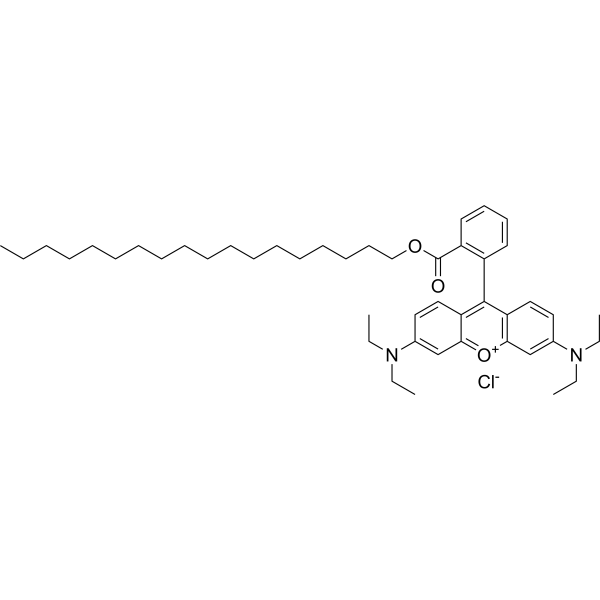
Octadecyl Rhodamine B chloride
 0 Images
Octadecyl Rhodamine B chloride is an amphiphilic fluorescent probe with both membrane-binding ability and fluorescent properties, which easily forms aggregates in aqueous phase leading to self-quenching. Octadecyl Rhodamine B chloride can be used for cell membrane staining and further applied in membrane biology research. The maximum absorption/emission wavelengths of Octadecyl Rhodamine B chloride monomer in Triton X-100 are 565 nm/585 nm; the absorption peaks of aggregates in water are blue-shifted to 524 nm and 574 nm, with significantly quenched fluorescence.
-
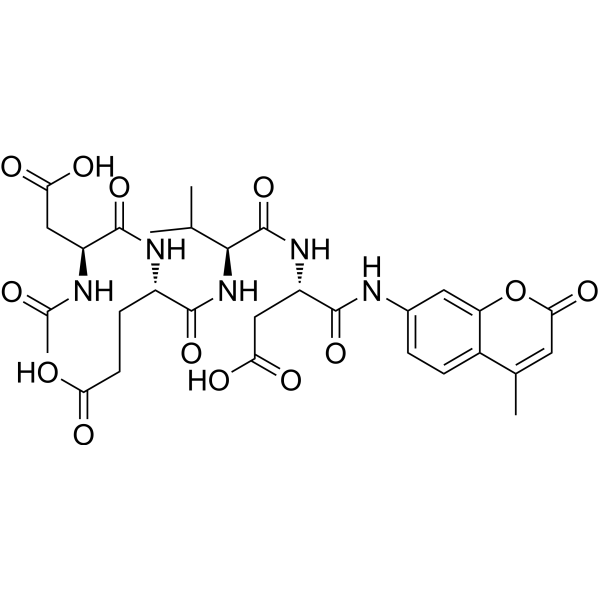
Ac-DEVD-AMC
 0 Images
Ac-DEVD-AMC is a fluorescent substrate of caspase-3/caspase-7. When treating Ac-DEVD-AMC with cell lysate, Ac-DEVD-AMC releases amino-4-methylcoumarin (AMC) for fluorescence detection, with an excitation wavelength of 380 nm and an emission wavelength of 460 nm.
-
Laccase, Microorganisms
 0 ImagesCat. No.: HY-P2890CAS No.: 80498-15-3
Laccase, Microorganisms is a multicopper oxidase. Laccase, Microorganisms catalyzes the oxidation of multiple substrates, including phenolic compounds, polyphenolic compounds, lignin, etc. Laccase, Microorganisms can be used in paper/textile/food industry, bioremediation, biomedicine and agriculture.
-
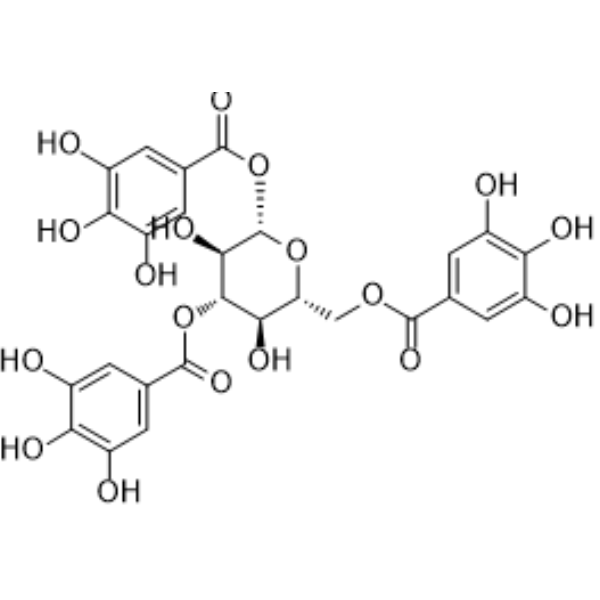
1,3,6-Tri-O-galloyl-beta-D-glucose
 0 ImagesSynonyms: 1,3,6-Tri-O-galloyl-β-D-glucose
1,3,6-Tri-O-galloyl-beta-D-glucose is a non-covalent inhibitor of tyrosinase (TYR), which can block the rate-limiting step of melanin synthesis and inhibit melanin deposition. 1,3,6-Tri-O-galloyl-beta-D-glucose has antioxidant and anti-inflammatory activities and can be used as a natural active ingredient to develop anti-freckle and whitening skin care products.
-
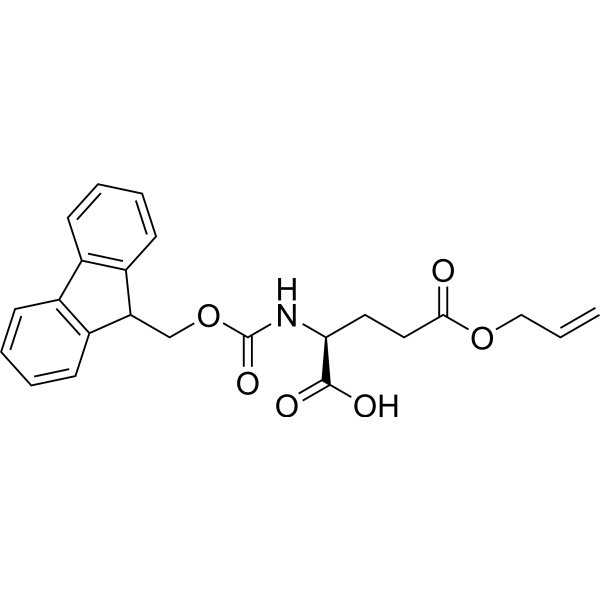
Fmoc-Glu(OAll)-OH
 0 Images
Fmoc-Glu(OAll)-OH is a glutamic acid derivative.
-
4,4′-Dipyridyl
 0 Images
4,4′-Dipyridyl is a heterocyclic compound. 4,4′-Dipyridyl is utilized as an electronic and photosensitive building block and bidentate ligand in supramolecular chemistry. 4,4′-Dipyridyl can also be used as a drug intermediate in the synthesis of paraquat, a widely used herbicide.
-
Ethylene glycol,98%
 0 Images
Ethylene glycol is an organic compound that is often used as an antifreeze agent and coolant. Ethylene glycol lowers the freezing point by forming hydrogen bonds with water molecules, exerting antifreeze activity. Ethylene glycol is also used as a raw material in the synthesis of polymers such as polyester fibers and polyurethanes.
-
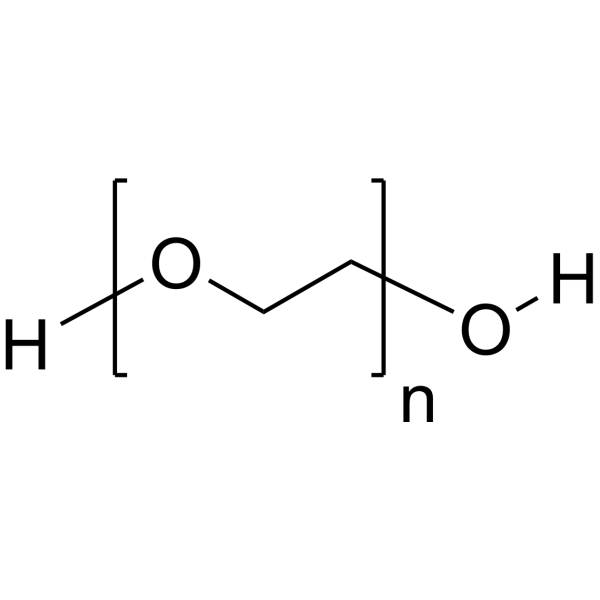
PEG1500
 0 ImagesSynonyms: Polyethylene glycol 1500
PEG1500 can be used as an excipient, such as ointment base, lubricant. Pharmaceutical excipients, or pharmaceutical auxiliaries, refer to other chemical substances used in the pharmaceutical process other than pharmaceutical ingredients. Pharmaceutical excipients generally refer to inactive ingredients in pharmaceutical preparations, which can improve the stability, solubility and processability of pharmaceutical preparations. Pharmaceutical excipients also affect the absorption, distribution, metabolism, and elimination (ADME) processes of co-administered drugs.

-
Azidoacetic Acid
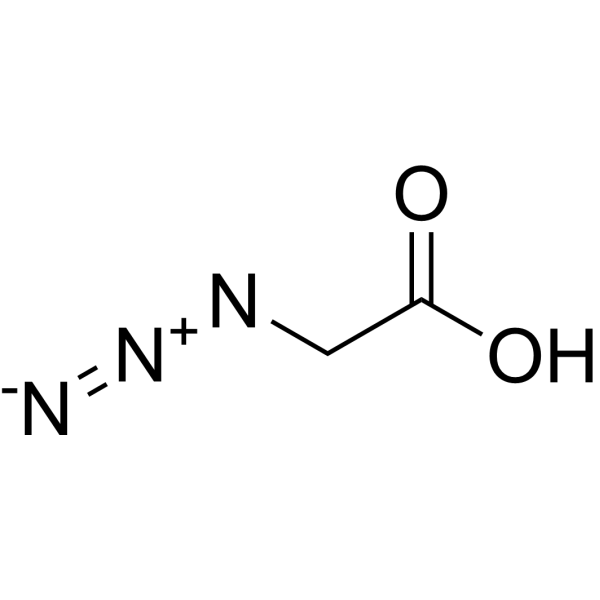 0 ImagesSynonyms: 2-Azidoacetic acid
Azidoacetic Acid (2-Azidoacetic acid) (compound 92-1) is a click chemistry reagent containing an azide group. Azidoacetic Acid can be used as a small molecule tool for the synthesis of PROTAC. It contains an azide group and can undergo copper-catalyzed azide-alkyne cycloaddition (CuAAc) with molecules containing alkyne groups. It can also undergo ring strain-promoted alkyne-azide cycloaddition (SPAAC) with molecules containing DBCO or BCN groups.
-
DAF-2DA
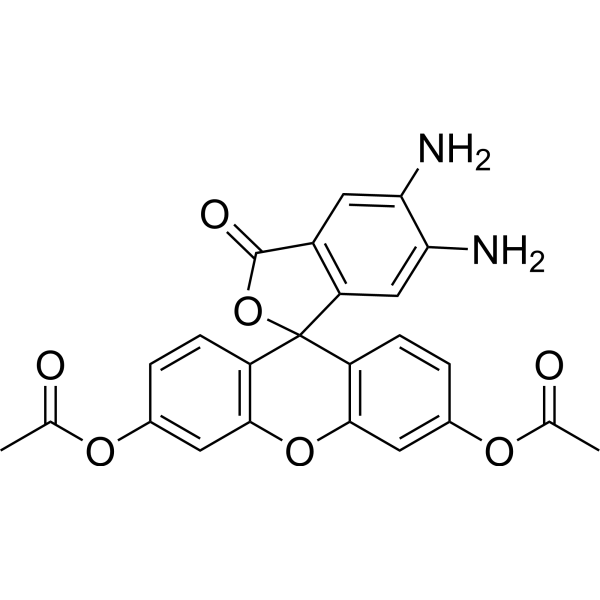 0 ImagesCat. No.: HY-D0032CAS No.: 205391-02-2Synonyms: 5,6-Diaminofluorescein diacetat
DAF-2DA (5,6-Diaminofluorescein diacetat) is most widely probe for NO measurement.
-
Z-Gly-Gly-Arg-AMC acetate
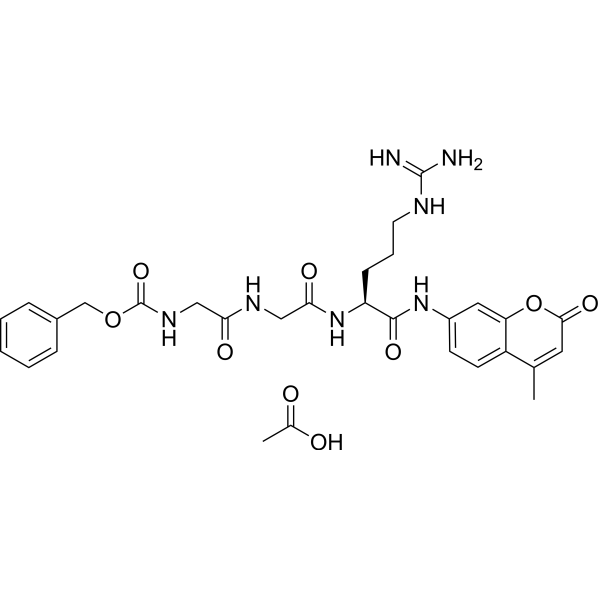 0 Images
Z-Gly-Gly-Arg-AMC acetate is a thrombin-specific fluorogenic substrate for testing of thrombin generation in PRP and platelet-poor plasma (PPP) (Ex/Em = 390/480 nm).
-
Pyronin Y
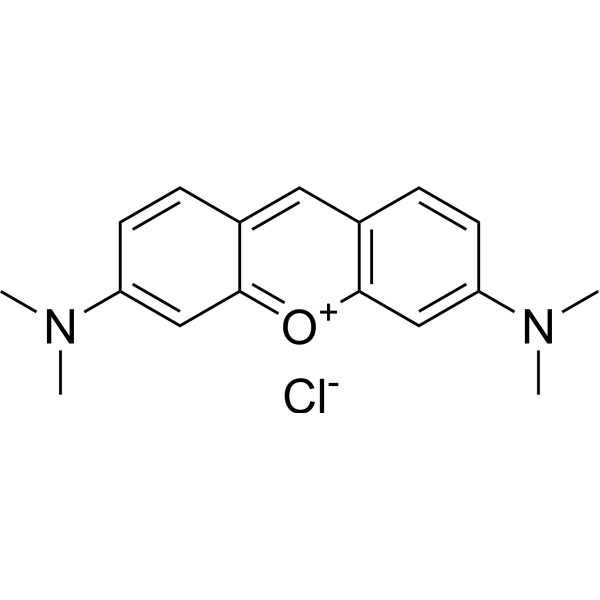 0 Images
Pyronin Y (Pyronine G) is a cationic dye that intercalates RNA and has been used to target cell structures including RNA, DNA and organelles. Pyronin Y forms fluorescent complexes with double-stranded nucleic acids (especially RNA) enabling semi-quantitative analysis of cellular RNA. Pyronin Y can be used to identify specific RNA subspecies of ribonuclear proteins complexes in live cells.
-
Fmoc-Aib-OH
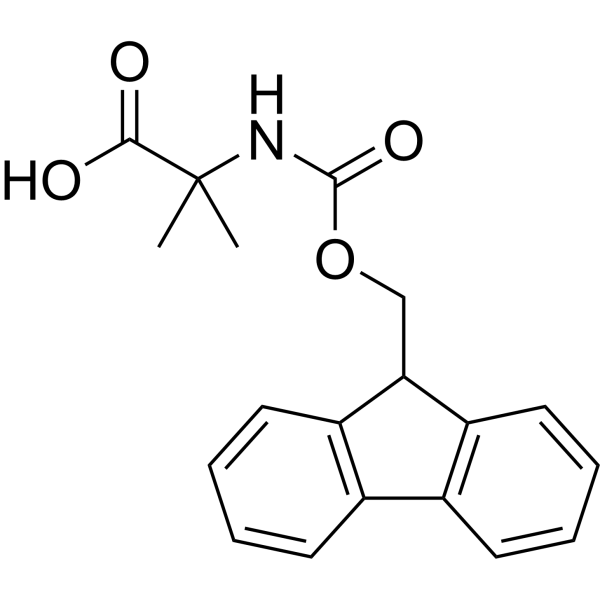 0 Images
Fmoc-Aib-OH is an alanine derivative.
-
Sulfo-CY-5.5 NHS ester tripotassium
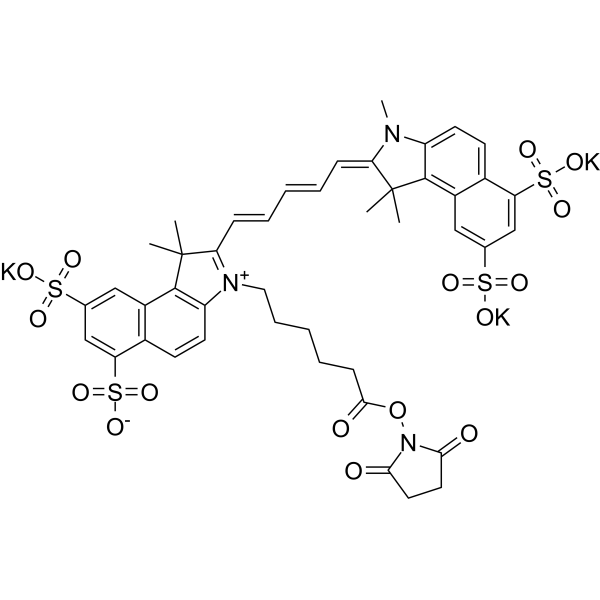 0 ImagesCat. No.: HY-D1389CAS No.: 2419286-92-1Synonyms: Sulfo-Cyanine5.5 NHS ester tripotassium
Sulfo-CY-5.5 NHS ester (Sulfo-Cyanine5.5 NHS ester) tripotassium is an amine-reactive ester of sulfonated far-red Cyanine5.5 fluorophore, which can be used to label antibodies, proteins, etc., as well as for in vivo NIR imaging.
-
BODIPY FL-C16
 0 Images
BODIPY FL-C16 is a BODIPY-labeled analog of Palmitic acid (HY-N0830), which serves as a fluorescent lipid tracer. BODIPY FL-C16 also acts as a ligand for liver fatty acid-binding protein (L-FABP)
-
Tri-tert-butylphosphine tetrafluoroborate
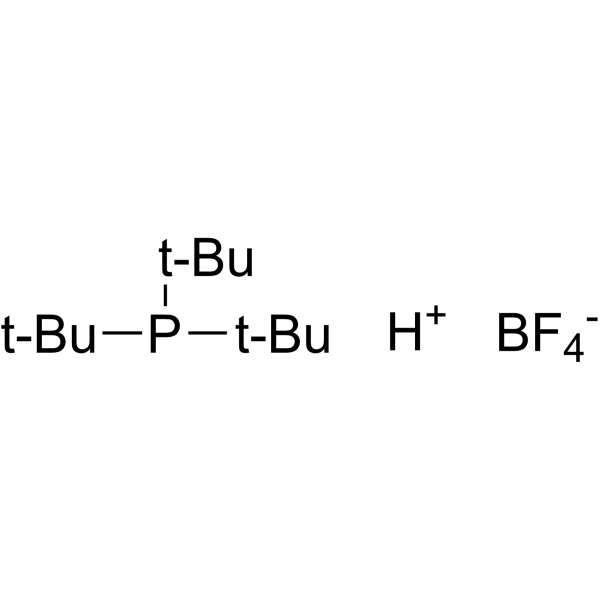 0 Images
Tri-tert-butylphosphine tetrafluoroborate is a biochemical reagent that can be used as a biological material or organic compound for life science related research.
-
Fmoc-His(Boc)-OH
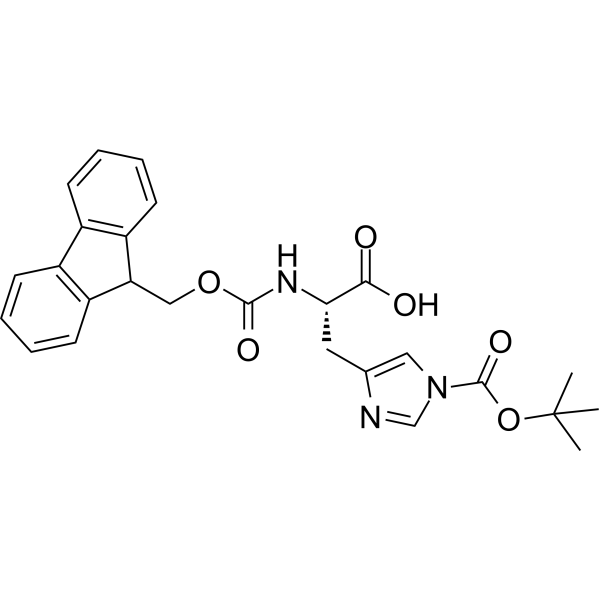 0 Images
Fmoc-His(Boc)-OH is a histidine derivative.