



Zinquin ethyl ester
Based on 2 publication(s) in Google Scholar
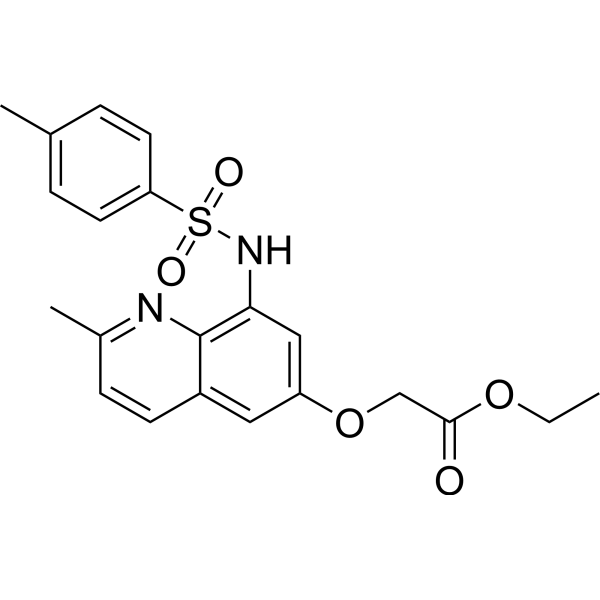
Zinquin ethyl ester is a cell-permeable and lipophilic fluorescent derivative of Zinquin (HY-D0982). Zinquin ethyl ester reacts with protein-bound Zn2+ in cells and forms fluorescent ternary adducts. Zinquin ethyl ester undergoes hydrolysis by intracellular esterases impeding its efflux across the plasma membrane (Ex/Em = 370/470 nm).
For research use only. We do not sell to patients.
- Purity : 99.0%
- CAS No.: 181530-09-6
- Formula: C21H22N2O5S
- Molecular Weight:414.47
-
Storage:
-20°C, protect from light
* In solvent : -80°C, 6 months; -20°C, 1 month (protect from light)

To place orders, for customer services and technical support, please contact: MedChemExpress USA
Tel: 609-228-6898 E-mail: [email protected] [email protected]


-
 Biological Activity
-
Chemical Information
-
Solvent & Solubility
- Purity & Documentation
- References
-
 Help & FAQs


-
HY-13259
MG-132Proteasome Inhibitor -
HY-P1097
Gastrin I, humanCCK2 Agonist -
HY-141511
Coppersensor 1Fluorescent Dye -
HY-119287
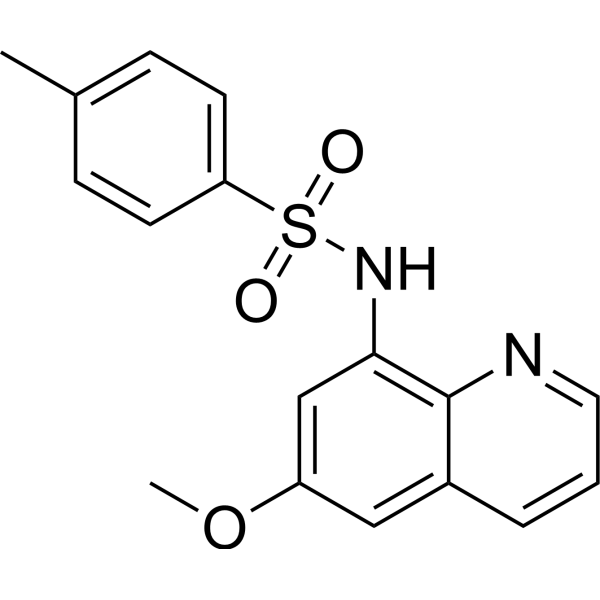
TSQCellular Zinc Fluorescent Sensor -
HY-D1533
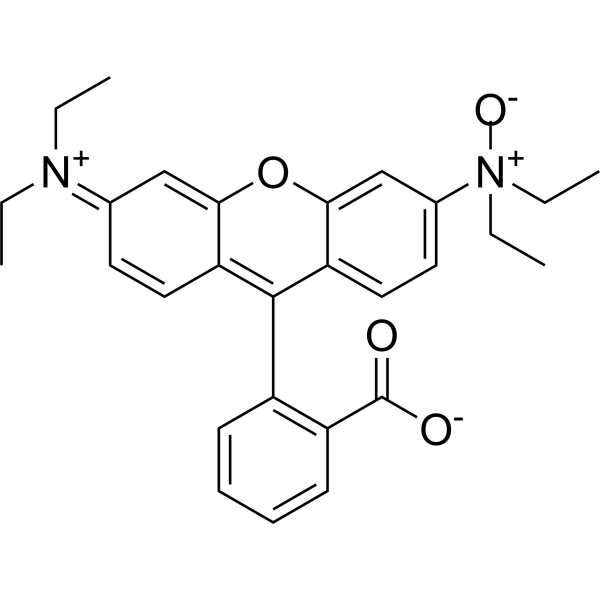
RhoNox-1Fe(II) Ions Dye -
HY-W019823
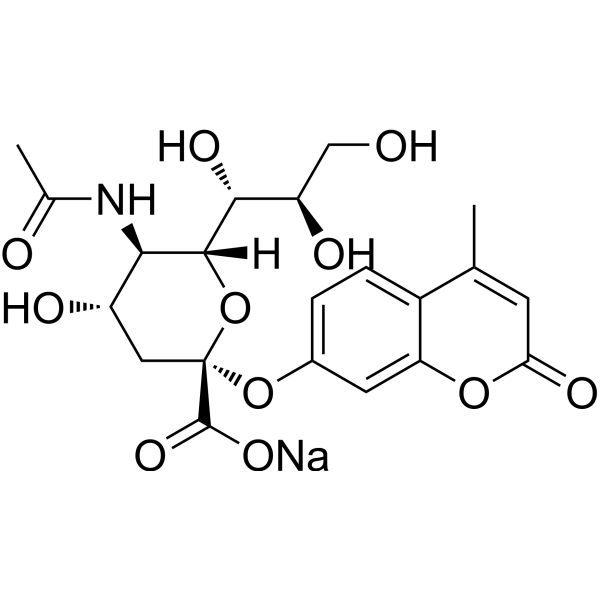
4-MUNANAFluorescent Substrate -
HY-K0202
Protein A/G Magnetic Beads -
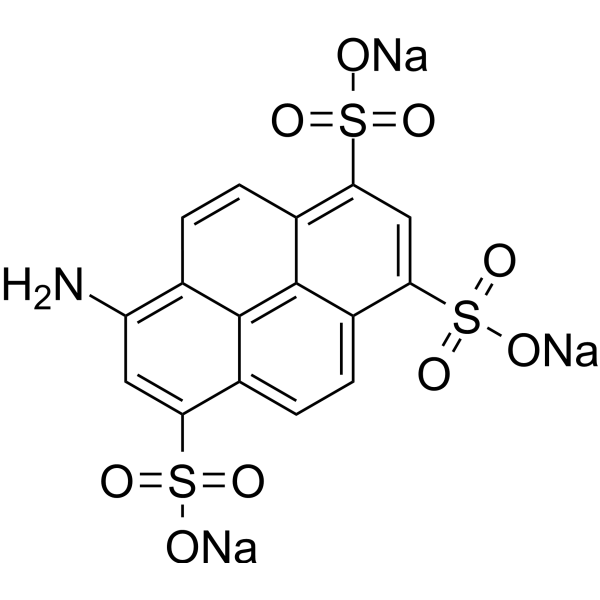
HY-D0031
8-Aminopyrene-1,3,6-trisulfonic acid trisodiumFluorescent dye -
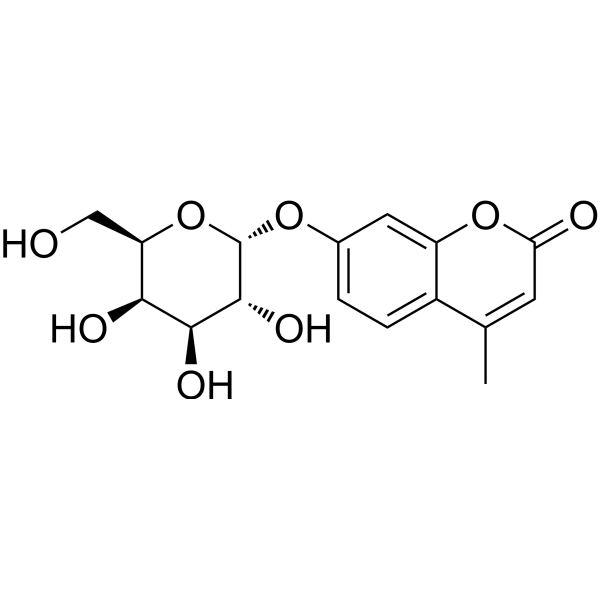
HY-118135
4-Methylumbelliferyl-α-D-galactopyranosideGLA Pro-fluorogenic Substrate -
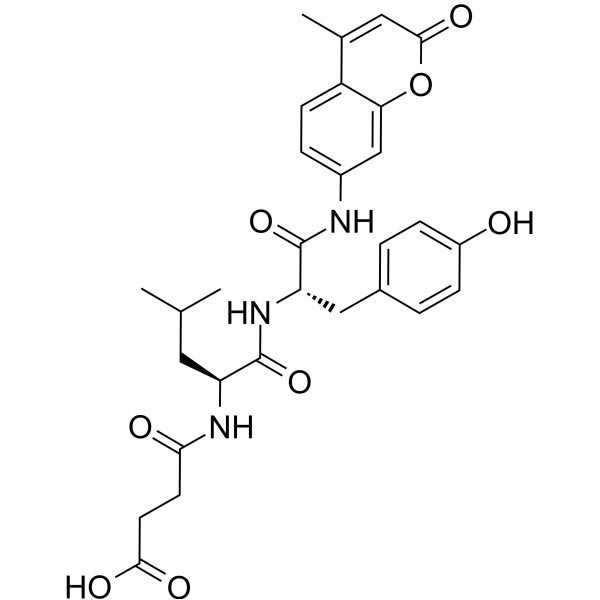
HY-135172
Suc-Leu-Tyr-AMCFluorescent Peptide Substrate -
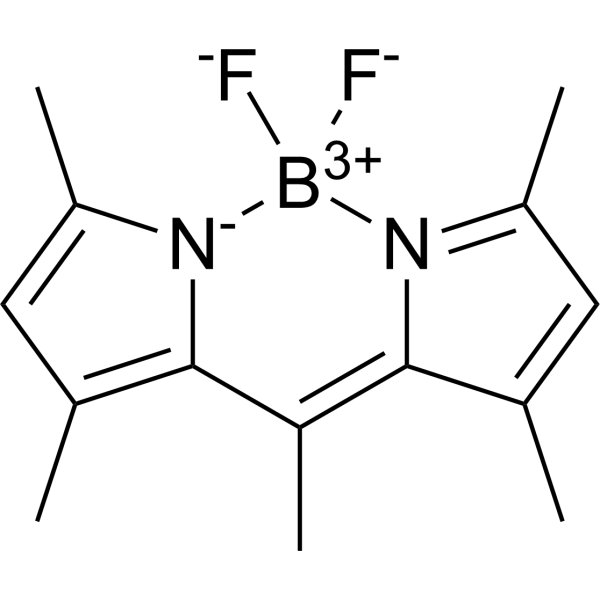
HY-W090090
BODIPY 493/503Neutral Lipid Dye -

HY-DY1034
4-MUNANA (solution)Fluorescent Substrate
Publications Citing Use of MedChemExpress (MCE) Zinquin ethyl ester
More

Biological Activity
Description
In Vitro
Guidelines (The following is our recommended protocol; this protocol serves as a guideline only and should be modified to suit your specific needs.)
1. Preparation of Stock and Working Solutions
a. Prepare a 10 mM Zinquin ethyl ester stock solution in anhydrous DMSO.
b. Dilute the stock solution using pre-warmed, serum-free cell culture medium or PBS to prepare a 25 μM Zinquin ethyl ester working solution.
Note: Please adjust the concentration of the Rhobo6 working solution according to your specific experimental requirements, and prepare it immediately before use.
2. Cell Staining
a. Culture cells on sterile coverslips.
b. Remove the coverslips from the culture medium and aspirate any excess medium.
c. Add the working solution, gently agitating to ensure it completely covers the cells, and incubate at room temperature for 30 minutes.
d. Aspirate the working solution, then wash 2–3 times with culture medium (5 minutes per wash). Observe using a fluorescence microscope or flow cytometer.
Note: If analysis via flow cytometry is required, the cells must be detached using trypsin digestion and resuspended prior to staining.
Zinquin ethyl ester (25 μM; 30 min) forms fluorescent ternary adducts with Zn-proteins in LLC-PK1, TE671, U87 mg, C6, CCRF-CEM, A549, and mouse primary brain cells, producing a characteristic emission maximum near 470 nm with cell-type specific fluorescence intensities[1].
Zinquin ethyl ester (1-20 μM; 15 min) forms fluorescent ternary adducts with the isolated Zn-proteome from TE671 cells[1].
MedChemExpress (MCE) has not independently confirmed the accuracy of these methods. They are for reference only.
Emission (Em)
490
Excitation (Ex)
368


Chemical Information
-
CAS No. 181530-09-6
-
Appearance Solid
-
Molecular Weight 414.47
-
Formula C21H22N2O5S
-
Color White to off-white
-
SMILES
O=C(OCC)COC1=CC(NS(=O)(C2=CC=C(C)C=C2)=O)=C3N=C(C)C=CC3=C1
-
Shipping
Room temperature in continental US; may vary elsewhere.
-
Storage
-20°C, protect from light
* In solvent : -80°C, 6 months; -20°C, 1 month (protect from light)


Publications (2)
-
Journal Impact Factor
-
Most Recent
-
Adv Sci (Weinh)
TME/NIR Dual-Responsive Zinc-Based Targeted Nanoagonist for Multimodal Amplification of STING-Mediated Cancer Immunotherapy. [Abstract]2026 Jun 9:e23182. PMID: 42261811 -
Colloids Surf B Biointerfaces
Antitumour and anti-angiogenesis efficacy of a multifunctional self-oxygenated active-targeting drug delivery system by encapsulating biological and chemotherapeutic drugs. [Abstract]2025 Jun:250:114549. PMID: 39965481


Solvent & Solubility
In Vitro:
DMSO : ≥ 50 mg/mL (120.64 mM; Hygroscopic DMSO has a significant impact on the solubility of product, please use newly opened DMSO)
H2O : < 0.1 mg/mL (insoluble)
* "≥" means soluble, but saturation unknown.
Please refer to the solubility information to select the appropriate solvent. Once prepared, please aliquot and store the solution to prevent product inactivation from repeated freeze-thaw cycles.
Storage method and period of stock solution: -80°C, 6 months; -20°C, 1 month (protect from light). When stored at -80°C, please use it within 6 months. When stored at -20°C, please use it within 1 month.
Please refer to the solubility information to select the appropriate solvent. Once prepared, please aliquot and store the solution to prevent product inactivation from repeated freeze-thaw cycles.
Storage method and period of stock solution: -80°C, 6 months; -20°C, 1 month (protect from light). When stored at -80°C, please use it within 6 months. When stored at -20°C, please use it within 1 month.
Concentration (start) × Volume (start) = Concentration (final) × Volume (final)


Purity & Documentation
-
Data Sheet (276 KB)
-
SDS (252 KB)
- English - EN (252 KB)
- Français - FR (252 KB)
- Deutsch - DE (252 KB)
- Norwegian - NO (252 KB)
- Español - ES (252 KB)
- Swedish - SV (252 KB)
- Italian - IT (252 KB)
- Korean - KR (252 KB)
- Portuguese - PT (252 KB)
-
Handling Instructions (2659 KB)
References


Complete Stock Solution Preparation Table
Please refer to the solubility information to select the appropriate solvent. Once prepared, please aliquot and store the solution to prevent product inactivation from repeated freeze-thaw cycles.
Storage method and period of stock solution: -80°C, 6 months; -20°C, 1 month (protect from light). When stored at -80°C, please use it within 6 months. When stored at -20°C, please use it within 1 month.
| Optional Solvent | Concentration Solvent Mass | 1 mg | 5 mg | 10 mg | 25 mg |
|---|---|---|---|---|---|
| DMSO | 1 mM | 2.4127 mL | 12.0636 mL | 24.1272 mL | 60.3180 mL |
| 5 mM | 0.4825 mL | 2.4127 mL | 4.8254 mL | 12.0636 mL | |
| 10 mM | 0.2413 mL | 1.2064 mL | 2.4127 mL | 6.0318 mL | |
| 15 mM | 0.1608 mL | 0.8042 mL | 1.6085 mL | 4.0212 mL | |
| 20 mM | 0.1206 mL | 0.6032 mL | 1.2064 mL | 3.0159 mL | |
| 25 mM | 0.0965 mL | 0.4825 mL | 0.9651 mL | 2.4127 mL | |
| 30 mM | 0.0804 mL | 0.4021 mL | 0.8042 mL | 2.0106 mL | |
| 40 mM | 0.0603 mL | 0.3016 mL | 0.6032 mL | 1.5079 mL | |
| 50 mM | 0.0483 mL | 0.2413 mL | 0.4825 mL | 1.2064 mL | |
| 60 mM | 0.0402 mL | 0.2011 mL | 0.4021 mL | 1.0053 mL | |
| 80 mM | 0.0302 mL | 0.1508 mL | 0.3016 mL | 0.7540 mL | |
| 100 mM | 0.0241 mL | 0.1206 mL | 0.2413 mL | 0.6032 mL |


Zinquin ethyl ester Related Classifications
HY-124171 Related Classifications
 Powered by Bioz