



Vitamin A

Based on 1 Customer Validation
Vitamin A (Vitamin A1) is an endogenous metabolite.
For research use only. We do not sell to patients.
- Purity : 99.18%
- CAS No.: 68-26-8
- Formula: C20H30O
- Molecular Weight:286.45
-
Storage:
-20°C, protect from light, stored under nitrogen
* The compound is unstable in solutions, freshly prepared is recommended.


To place orders, for customer services and technical support, please contact: MedChemExpress USA
Tel: 609-228-6898 E-mail: [email protected] [email protected]


-
 Biological Activity
-
Chemical Information
-
Solvent & Solubility
- Purity & Documentation
- References
-
 Help & FAQs


-
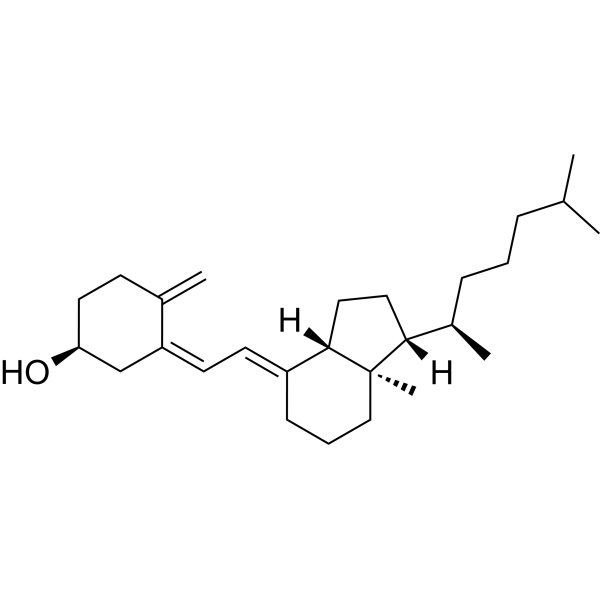
HY-15398
Vitamin D3Vitamin -
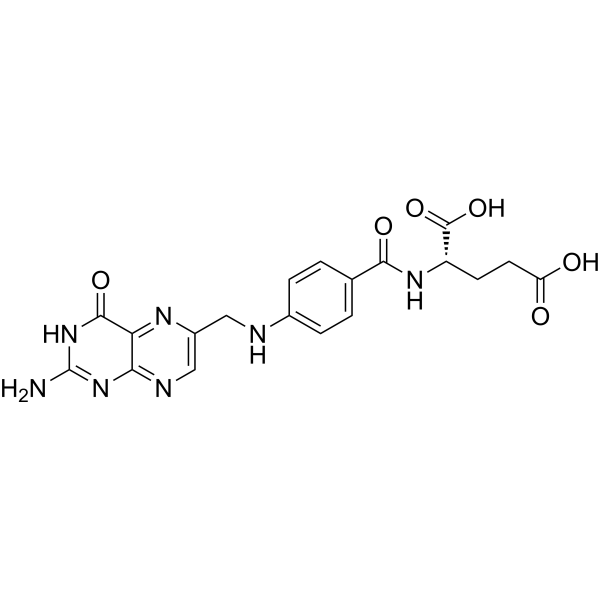
HY-16637
Folic acidB complex -
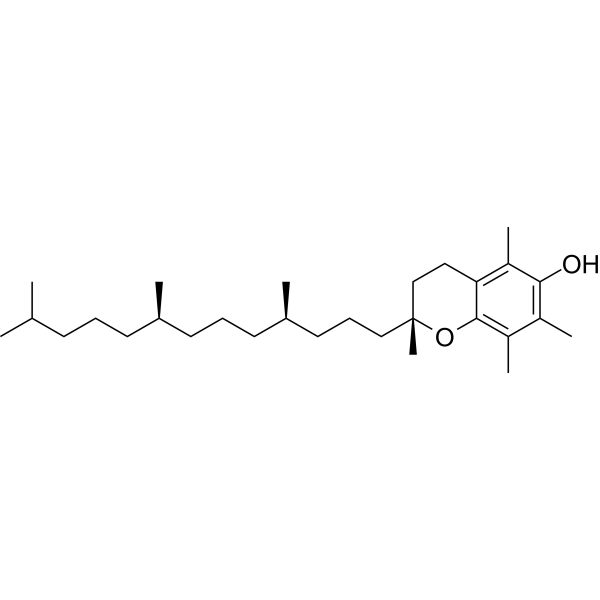
HY-N0683
α-Vitamin EAntioxidant -
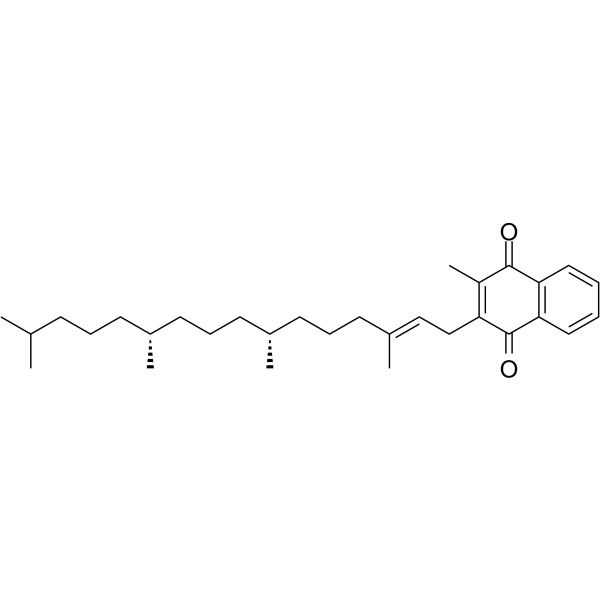
HY-N0684
Vitamin K1Endogenous Metabolite -
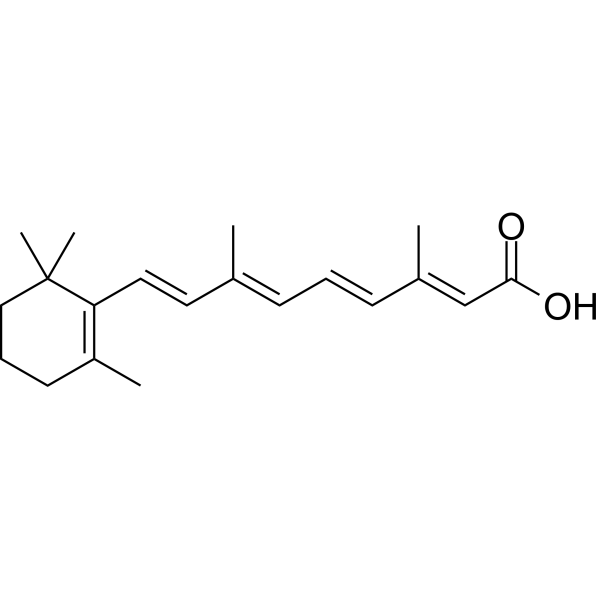
HY-14649
Retinoic acidRAR Agonist -
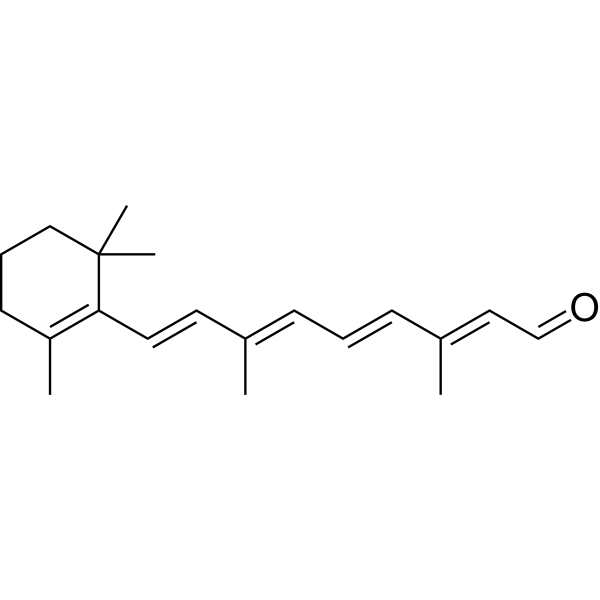
HY-W004500
All-trans-retinalVitamin A Metabolite -
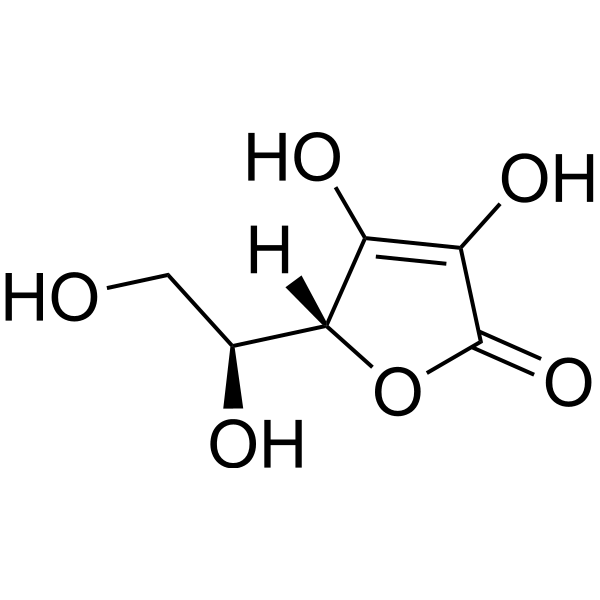
HY-B0166
L-Ascorbic acidAntioxidant -
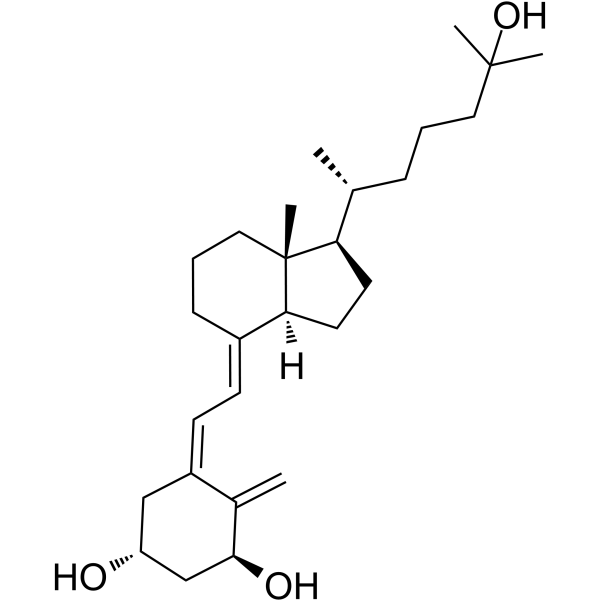
HY-10002
CalcitriolVDR Agonist -
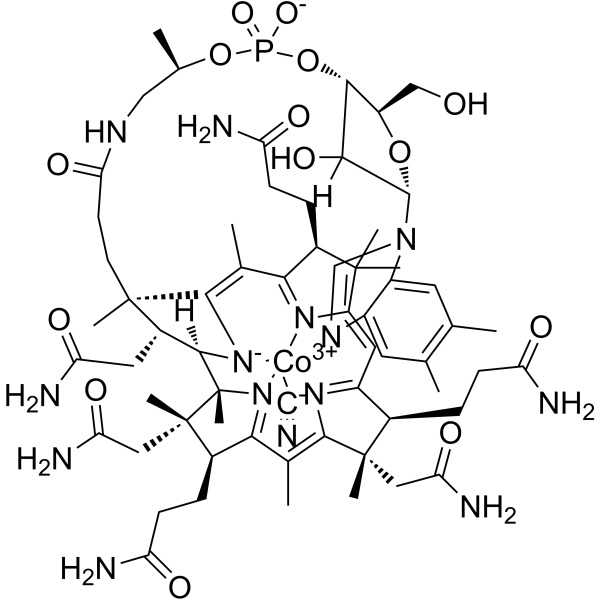
HY-B0315
Vitamin B12Endogenous Metabolite -
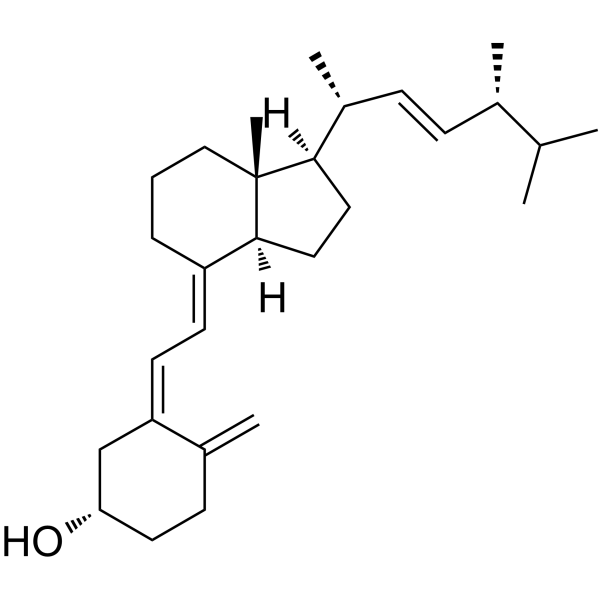
HY-76542
Vitamin D2Vitamin D Supplement -
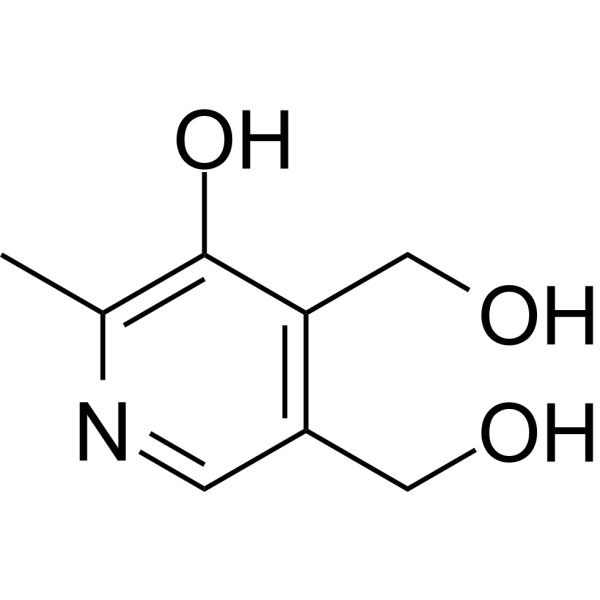
HY-B1328
PyridoxinePyridine Derivative -
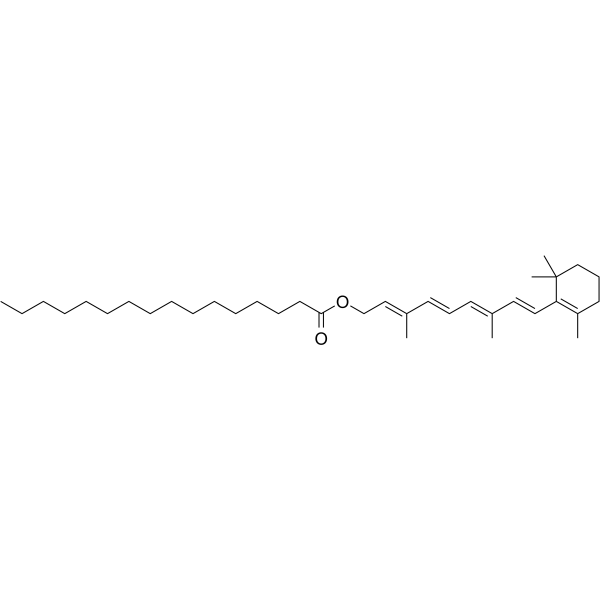
HY-B1384
Retinyl palmitateEndogenous Metabolite
All Endogenous Metabolite Isoforms
More

Biological Activity
Description
IC50 & Target
|
Human Endogenous Metabolite |
Cellular Effect
|
Cell Line

|
Type | Value | Description | References |
|---|---|---|---|---|
| Fibroblast | IC50 |
25 μM
Compound: 2, retinol
|
Cytotoxicity against human normal fibroblast after 1 day by MTT assay
Cytotoxicity against human normal fibroblast after 1 day by MTT assay
|
[PMID: 18511283] |
| Fibroblast | IC50 |
50 μM
Compound: Retinol
|
Toxicity against human dermal fibroblasts
Toxicity against human dermal fibroblasts
|
[PMID: 19036585] |
| Panel NCI-60 (60 carcinoma cell lines) | GI50 |
28 nM
Compound: Vitamin A
|
Growth inhibitory activity against human cancer cell line in the NCI's anticancer drug screening program
Growth inhibitory activity against human cancer cell line in the NCI's anticancer drug screening program
|
[PMID: 15743190] |
In Vitro
It is found that contribution of hepatic microsomes (RDHs) to Retinol metabolism is greater than that of cytosol (ADHs), evidenced by higher Clint (Vmax/Km) of Vitamin A formation in microsomes than in cytosol[1].
MedChemExpress (MCE) has not independently confirmed the accuracy of these methods. They are for reference only.
In Vivo
MedChemExpress (MCE) has not independently confirmed the accuracy of these methods. They are for reference only.
Clinical Trial
| NCT Number | Sponsor | Condition | Start Date |
Phase
|
|---|---|---|---|---|
| NCT01329991 | Plexxikon| | 2011-05 | PHASE1 |


Chemical Information
-
CAS No. 68-26-8
-
Appearance Solid
-
Molecular Weight 286.45
-
Formula C20H30O
-
Color Off-white to yellow
-
SMILES
CC(/C=C/C=C(/C=C/C1=C(CCCC(C)1C)C)C)=C\CO
-
Synonyms
Vitamin A1; all-trans-Retinol
-
Structure Classification
-
Initial Source
-
Shipping
Room temperature in continental US; may vary elsewhere.
-
Storage
-20°C, protect from light, stored under nitrogen
* The compound is unstable in solutions, freshly prepared is recommended.


Solvent & Solubility
In Vitro:
Ethanol : 100 mg/mL (349.10 mM; Need ultrasonic)
Please refer to the solubility information to select the appropriate solvent. The compound is unstable in solutions, freshly prepared is recommended.
Please refer to the solubility information to select the appropriate solvent. The compound is unstable in solutions, freshly prepared is recommended.
Concentration (start) × Volume (start) = Concentration (final) × Volume (final)
In Vivo:
Select the appropriate dissolution method based on your experimental animal and administration route.
- For the following dissolution methods, please ensure to first prepare a clear stock solution using an In Vitro approach and then sequentially add co-solvents:
- To ensure reliable experimental results, the clarified stock solution can be appropriately stored based on storage conditions. As for the working solution for In Vivo experiments, it is recommended to prepare freshly and use it on the same day.
- The percentages shown for the solvents indicate their volumetric ratio in the final prepared solution. If precipitation or phase separation occurs during preparation, heat and/or sonication can be used to aid dissolution.
Add each solvent one by one: 10% EtOH 40% PEG300 5% Tween-80 45% Saline
Solubility: ≥ 5 mg/mL (17.46 mM); Clear solution
This protocol yields a clear solution of ≥ 5 mg/mL (saturation unknown).
Taking 1 mL working solution as an example, add 100 μL EtOH stock solution (50.0 mg/mL) to 400 μL PEG300, and mix evenly; then add 50 μL Tween-80 and mix evenly; then add 450 μL Saline to adjust the volume to 1 mL.
Preparation of Saline: Dissolve 0.9 g sodium chloride in ddH₂O and dilute to 100 mL to obtain a clear Saline solution.
Add each solvent one by one: 10% EtOH 90% Corn Oil
Solubility: ≥ 2.5 mg/mL (8.73 mM); Clear solution
This protocol yields a clear solution of ≥ 2.5 mg/mL (saturation unknown). If the continuous dosing period exceeds half a month, please choose this protocol carefully.
Taking 1 mL working solution as an example, add 100 μL EtOH stock solution (25.0 mg/mL) to 900 μL Corn oil, and mix evenly.
In Vivo Dissolution Calculator
Please enter the basic information of animal experiments:
-
-
-
-
Recommended: Prepare an additional quantity of animals to account for potential losses during experiments.
Working solution concentration: 0.22 mg/mL


Purity & Documentation
-
Data Sheet (271 KB)
-
SDS (762 KB)
- English - EN (762 KB)
- Français - FR (762 KB)
- Deutsch - DE (762 KB)
- Norwegian - NO (762 KB)
- Español - ES (762 KB)
- Swedish - SV (762 KB)
- Italian - IT (762 KB)
- Korean - KR (762 KB)
- Portuguese - PT (762 KB)
-
Handling Instructions (2659 KB)
References
[1]. Zhang M, et al. High-fat diet enhanced retinal dehydrogenase activity, but suppressed retinol dehydrogenase activity in liver of rats. J Pharmacol Sci. 2015 Apr;127(4):430-8. [Content Brief]
[2]. Miyazaki H, et al. Retinol status and expression of retinol-related proteins in methionine-choline deficient rats. J Nutr Sci Vitaminol (Tokyo). 2014;60(2):78-85. [Content Brief]


Complete Stock Solution Preparation Table
Please refer to the solubility information to select the appropriate solvent. The compound is unstable in solutions, freshly prepared is recommended.
| Optional Solvent | Concentration Solvent Mass | 1 mg | 5 mg | 10 mg | 25 mg |
|---|---|---|---|---|---|
| Ethanol | 1 mM | 3.4910 mL | 17.4551 mL | 34.9101 mL | 87.2753 mL |
| 5 mM | 0.6982 mL | 3.4910 mL | 6.9820 mL | 17.4551 mL | |
| 10 mM | 0.3491 mL | 1.7455 mL | 3.4910 mL | 8.7275 mL | |
| 15 mM | 0.2327 mL | 1.1637 mL | 2.3273 mL | 5.8184 mL | |
| 20 mM | 0.1746 mL | 0.8728 mL | 1.7455 mL | 4.3638 mL | |
| 25 mM | 0.1396 mL | 0.6982 mL | 1.3964 mL | 3.4910 mL | |
| 30 mM | 0.1164 mL | 0.5818 mL | 1.1637 mL | 2.9092 mL | |
| 40 mM | 0.0873 mL | 0.4364 mL | 0.8728 mL | 2.1819 mL | |
| 50 mM | 0.0698 mL | 0.3491 mL | 0.6982 mL | 1.7455 mL | |
| 60 mM | 0.0582 mL | 0.2909 mL | 0.5818 mL | 1.4546 mL | |
| 80 mM | 0.0436 mL | 0.2182 mL | 0.4364 mL | 1.0909 mL | |
| 100 mM | 0.0349 mL | 0.1746 mL | 0.3491 mL | 0.8728 mL |


Vitamin A Related Classifications
HY-B1342 Related Classifications
 Powered by Bioz