



12-LOX
12-Lipoxygenase (12-LOX) catalyzes the oxygenation of arachidonic acid and other polyunsaturated fatty acids, generating bioactive lipid mediators that regulate cellular signaling and inflammation[1][2]. Mechanistically, platelet 12-LOX is activated via the collagen receptor glycoprotein VI (GPVI) and downstream src-tyrosine kinases, PI3-kinase, and Ca2+ mobilization, while PKC inhibition potentiates its activity[3]. 12-LOX exhibits isoform-specific functions distinct from 15-LOX and 5-LOX, including intrinsic hepoxilin A3 synthase activity and selective platelet oxylipin production[4][5][6]. In disease models, 12-LOX contributes to diabetes pathogenesis through modulation of β-cell inflammation and to neuroinflammation by activating NLRP3 inflammasomes[1][7][8][2]. Isoform-targeted inhibitors, such as ML351 for 12/15-LOX, reduce ischemia-induced lipid peroxidation, cytokine release, and inflammasome activation, highlighting its experimental relevance[7][8]. Additionally, dietary polyunsaturated fatty acids, including dihomo-γ-linolenic acid, serve as substrates for 12-LOX-mediated generation of anti-thrombotic oxylipins, providing mechanistic insight into vascular protection[5]. Comparative studies indicate that 12-LOX activity is distinct in substrate specificity, signaling regulation, and physiological outcomes from related LOX isoforms, facilitating selective pharmacological intervention and functional studies in cellular and animal models[9][4][5][7].
References:
- [1]. Coffey MJ, et al. Platelet 12-lipoxygenase activation via glycoprotein VI: involvement of multiple signaling pathways in agonist control of H(P)ETE synthesis. Circ Res. 2004 Jun 25;94(12):1598-605. [Content Brief]
- [2]. Dobrian AD, et al. Role of the 12-lipoxygenase pathway in diabetes pathogenesis and complications. Pharmacol Ther. 2019 Mar;195:100-110. [Content Brief]
- [3]. Cabezas F, et al. Docking, steered molecular dynamics, and QSAR studies as strategies for studying isoflavonoids as 5-, 12-, and 15-lipoxygenase inhibitors. J Biomol Struct Dyn. 2019 Apr;37(6):1511-1519. [Content Brief]
- [4]. Nigam S, et al. The rat leukocyte-type 12-lipoxygenase exhibits an intrinsic hepoxilin A3 synthase activity. J Biol Chem. 2004 Jul 9;279(28):29023-30. [Content Brief]
- [5]. Yeung J, et al. 12(S)-HETrE, a 12-Lipoxygenase Oxylipin of Dihomo-γ-Linolenic Acid, Inhibits Thrombosis via Gαs Signaling in Platelets. Arterioscler Thromb Vasc Biol. 2016 Oct;36(10):2068-77. [Content Brief]
- [6]. Cakir-Aktas C, et al. 12/15-lipoxygenase inhibition attenuates neuroinflammation by suppressing inflammasomes. Front Cell Neurosci. 2023 Sep 26;17:1277268. [Content Brief]
- [7]. Yamaguchi A, et al. Fatty acids negatively regulate platelet function through formation of noncanonical 15-lipoxygenase-derived eicosanoids. Pharmacol Res Perspect. 2023 Feb;11(1):e01056. [Content Brief]
- [8]. Kusche Y, et al. THU0067 NLRP3 inflammasome activity in monocytes is regulated by 12/15-lipoxygenase. Annals of the Rheumatic Diseases. 2017;76:223-224.
- [9]. Luo P, et al. Eicosanoids, β-cell function, and diabetes. Prostaglandins Other Lipid Mediat. 2011 Aug;95(1-4):1-10. [Content Brief]
-
12-LOX Related Products (8)
Related Products (8)

-
Onvoloxastat
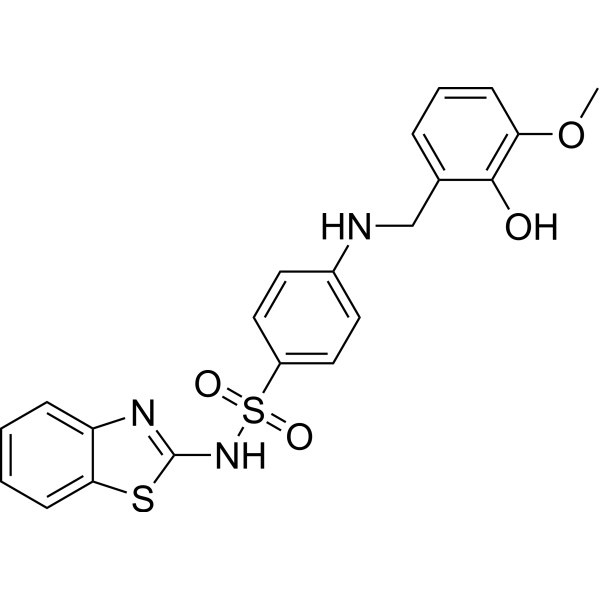 0 ImagesSynonyms: ML355Onvoloxastat (ML355) is an orally active selective 12-LOX inhibitor with an IC50 of 0.34 μM. Onvoloxastat inhibits platelet activation by blocking thrombin- or thromboxane A2-induced phosphorylation of Akt, PI3K and Erk1/2. At low doses (1-20 μM), it mainly acts by reducing ROS levels, while at high doses (50 μM), it functions via activating the cAMP pathway. Onvoloxastat can be used in research related to thrombosis and diabetes.
-
Mirificin
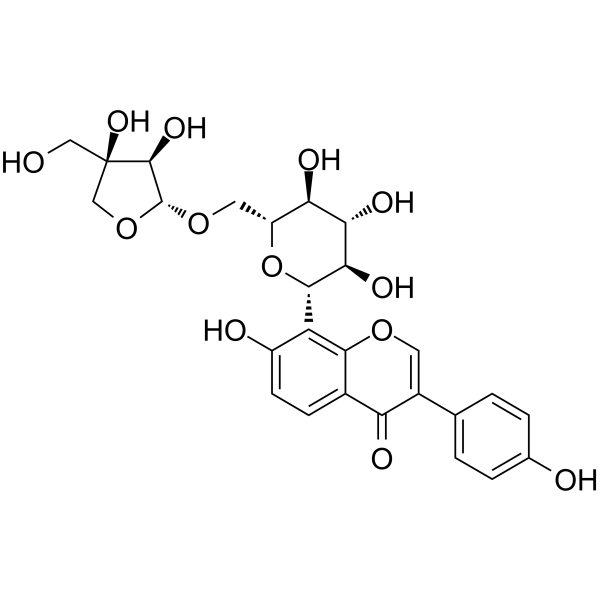 0 ImagesSynonyms: Puerarin apiosideMirificin (Puerarin apioside) is a blood-brain barrier-permeable tyrosinase inhibitor, with an IC50 value of 12.66 μM against mushroom tyrosinase. Mirificin reduces the expression of ALOX12 in cardiomyocytes and alleviates hypoxia/reoxygenation-induced apoptosis. The neuroprotective effect of Mirificin depends on the activation of VEGFR2 and HSP1A1, which reduces cerebral infarct size and improves neurological function. Mirificin can be used in the research of hyperpigmentation, acute myocardial infarction and ischemic stroke.
-
trans-2-Nonenal
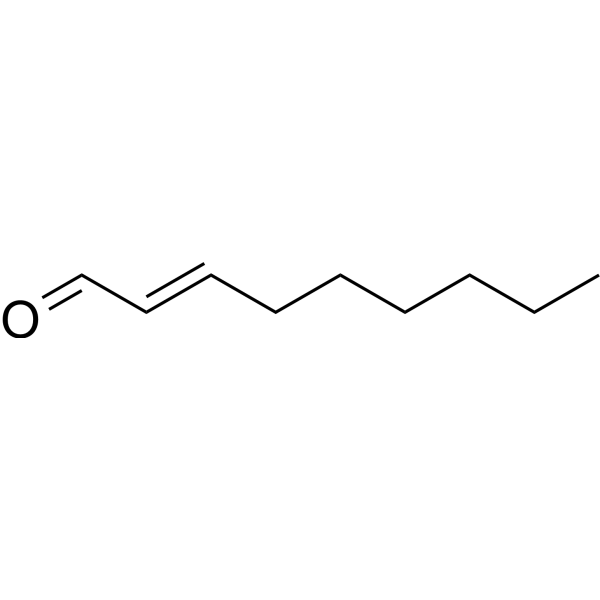 0 ImagesSynonyms: trans-2-Nonen-1-altrans-2-Nonenal (trans-2-Nonen-1-al) is an endogenous peroxidation product of polyunsaturated fatty acids, acting as an inhibitor of COX and 12-LOX, as well as an inducer of apoptosis. trans-2-Nonenal is also a malodorous compound secreted by the human body, and its content gradually increases with aging. trans-2-Nonenal inhibits the activities of multiple enzymes such as platelet membrane-bound PTPase, preferentially covalently modifies proteins at lysine residues to form immunogenic adducts, and regulates platelet Arachidonic acid (HY-109590) metabolism. trans-2-Nonenal also exhibits significant cytotoxicity, reduces the viability of keratinocytes, promotes their apoptosis, and effectively decreases the thickness of epidermal models and the number of proliferating cells. trans-2-Nonenal is commonly used in studies of thrombotic, atherosclerotic diseases, renal adenocarcinoma, etc..
-
NCTT-956
 0 ImagesCat. No.: HY-139055CAS No.: 438575-88-3NCTT-956 is a very effective platelet 12-lipoxygenase (12-LOX) activity-specific inhibitor.
-
CGS 24891
 0 ImagesCat. No.: HY-182696CAS No.: 134823-10-2CGS 24891 is an orally active 5-lipoxygenase (5-LO) inhibitor, with an IC50 value of 0.051 μM in guinea pigs and 0.11 μM in dogs. CGS 24891 inhibits the production of 5-hydroxyeicosatetraenoic acid (5-HETE) and leukotriene B4 (LTB4) from arachidonic acid. CGS 24891 weakly inhibits 12-lipoxygenase (12-LO) with an IC50 of 0.41 μM. CGS 24891 is applicable to research on inflammation and allergic reactions.

-
MLS000099089
 0 ImagesCat. No.: HY-175970CAS No.: 423735-70-0
-
6,7-Dehydroferruginol
 0 ImagesCat. No.: HY-N16694CAS No.: 34539-84-96,7-Dehydroferruginol is a diterpenoid compound that can be isolated from the dichloromethane extract of Juniperus communis wood. At a concentration of 100 μg/mL, 6,7-Dehydroferruginol showed no inhibitory activity against 12(S)-LOX and did not inhibit the production of 12(S)-HETE.



