



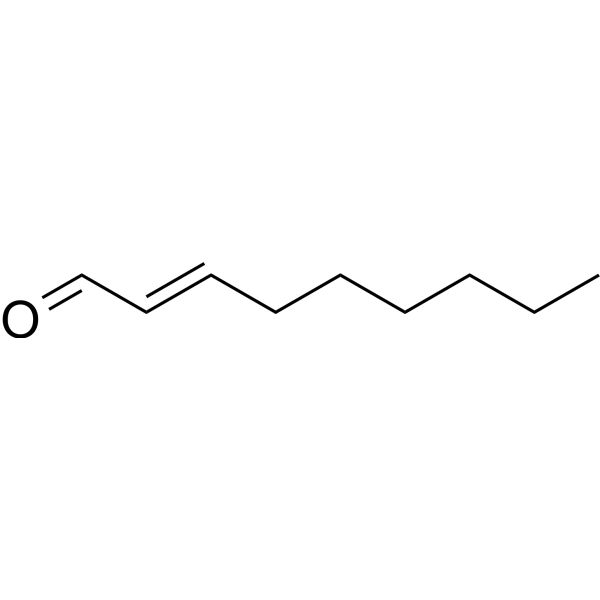
trans-2-Nonenal

Based on 1 Customer Validation
trans-2-Nonenal (trans-2-Nonen-1-al) is an endogenous peroxidation product of polyunsaturated fatty acids, acting as an inhibitor of COX and 12-LOX, as well as an inducer of apoptosis. trans-2-Nonenal is also a malodorous compound secreted by the human body, and its content gradually increases with aging. trans-2-Nonenal inhibits the activities of multiple enzymes such as platelet membrane-bound PTPase, preferentially covalently modifies proteins at lysine residues to form immunogenic adducts, and regulates platelet Arachidonic acid (HY-109590) metabolism. trans-2-Nonenal also exhibits significant cytotoxicity, reduces the viability of keratinocytes, promotes their apoptosis, and effectively decreases the thickness of epidermal models and the number of proliferating cells. trans-2-Nonenal is commonly used in studies of thrombotic, atherosclerotic diseases, renal adenocarcinoma, etc..
For research use only. We do not sell to patients.
- Purity : 98.99%
- CAS No.: 18829-56-6
- Formula: C9H16O
- Molecular Weight:140.22
-
Storage:
4°C, stored under nitrogen
* In solvent : -80°C, 6 months; -20°C, 1 month (stored under nitrogen)

To place orders, for customer services and technical support, please contact: MedChemExpress USA
Tel: 609-228-6898 E-mail: [email protected] [email protected]


-
 Biological Activity
-
Chemical Information
-
Solvent & Solubility
- Protocols
- Purity & Documentation
- References
-
 Help & FAQs


-

HY-W089800R
trans-2-Nonenal (Standard)Biochemical Assay Reagent -
HY-N0098
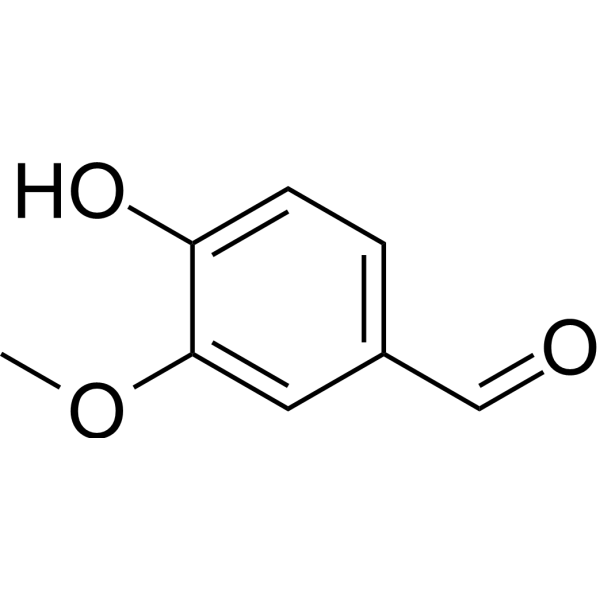
VanillinPhenolic Aldehyde -
HY-W015551
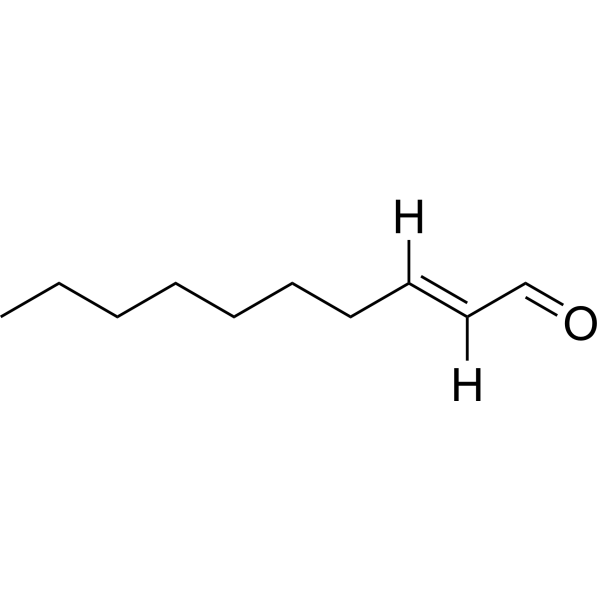
trans-2-DecenalHelicobacter pylori urease Inhibitor -
HY-N0098R
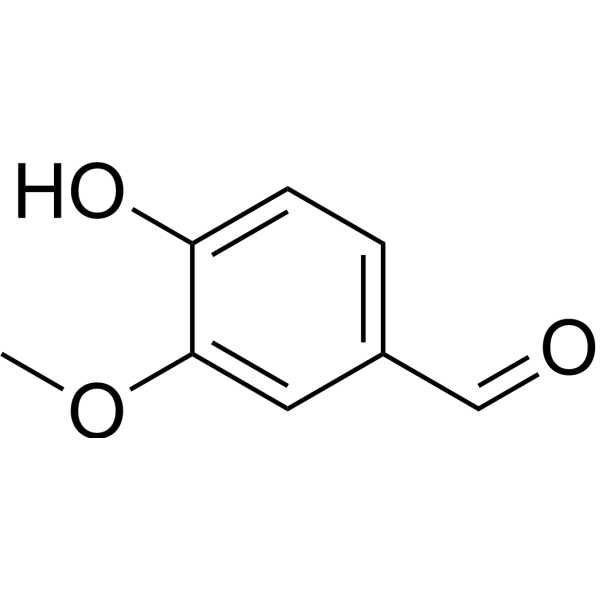
Vanillin (Standard) -
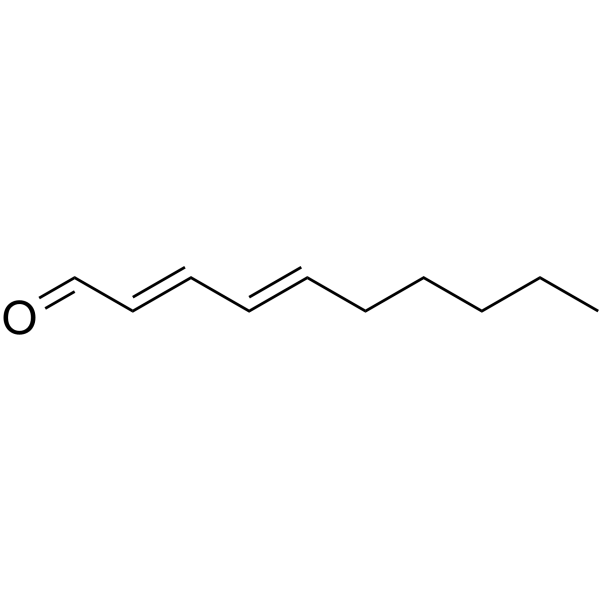
HY-W013627
trans,trans-2,4-DecadienalLipid Peroxidation Product -
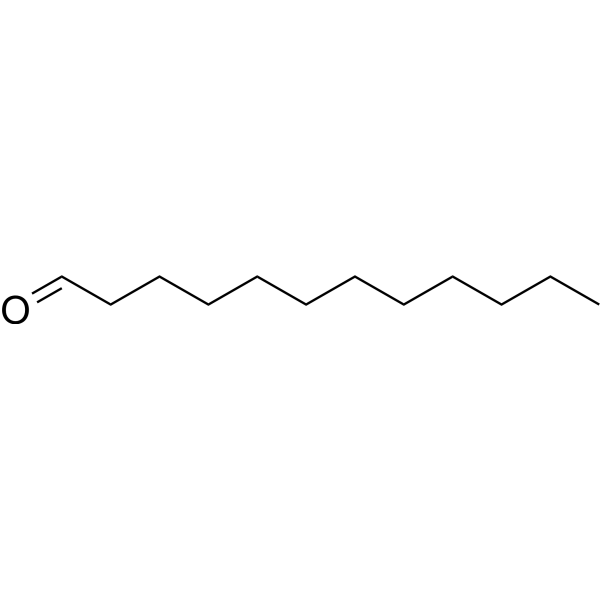
HY-W004301
DodecanalEndogenous Metabolite -
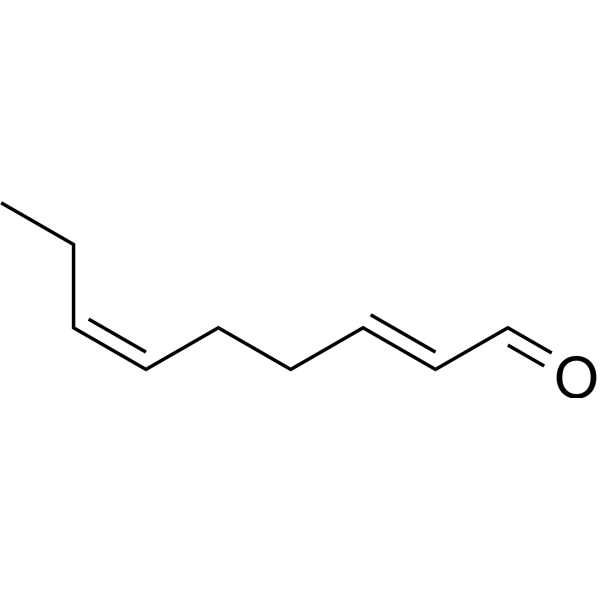
HY-W127515
Trans-2,cis-6-NonadienalBiochemical Assay Reagent -
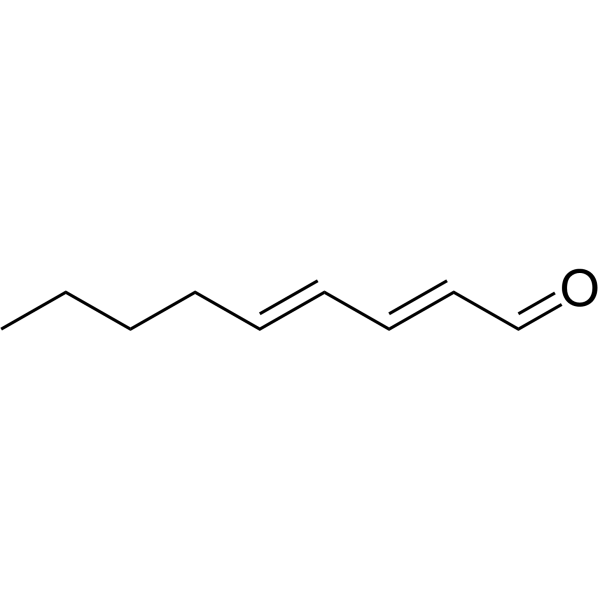
HY-W127521
trans,trans-2,4-NonadienalBiochemical Assay Reagent -
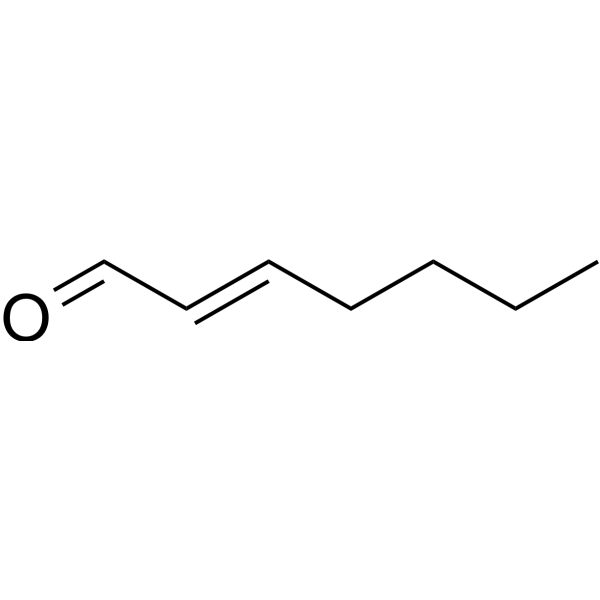
HY-W127398
trans-2-HeptenalBiochemical Assay Reagent -

HY-W015551R
trans-2-Decenal (Standard)Standard -

HY-W127515R
trans-2,cis-6-Nonadienal (Standard)Biochemical Assay Reagent


Biological Activity
Description
IC50 & Target
|
12-LOX |
In Vitro
trans-2-Nonenal (0.25-2 μM; 5 min) potently inhibits COX and 12-LOX activities in washed rabbit platelets, with an IC50 of approximately 0.25 μM for suppressing the production of TXB2, HHT and 12-HETE from exogenous arachidonic acid[1].
trans-2-Nonenal (200 mM; 72 h) reacts with Nα-acetyl-L-lysine in vitro, producing two novel pyridinium-containing adducts, cis- and trans-Nα-acetyl-HHP-lysine, at a ratio of 1:1.4[2].
trans-2-Nonenal (5-50 μM; 24 h) reduces the viability of normal human epidermal keratinocytes (NHEKs) derived from neonatal foreskins in a dose-dependent manner[3].
trans-2-Nonenal (5-50 μM; 6 h) promotes apoptosis in normal human epidermal keratinocytes (NHEKs) derived from neonatal foreskin. Specifically, concentrations of 5 μM and 25 μM induce apoptosis, while 50 μM induces late apoptosis or necrosis[3].
MedChemExpress (MCE) has not independently confirmed the accuracy of these methods. They are for reference only.
-
Cell Line:normal human epidermal keratinocytes (NHEKs) from neonatal foreskin
-
Concentration:5 μM, 25 μM, 50 μM
-
Incubation Time:24 h
-
Result:Reduced NHEK viability to 66.2% of control at 5 μM.
Reduced NHEK viability to 39.6% of control at 25 μM.
Reduced NHEK viability to 17.4% of control at 50 μM.
Exhibited a significant and dose-dependent reduction effect.
-
Cell Line:normal human epidermal keratinocytes (NHEKs) from neonatal foreskin
-
Concentration:5 μM, 25 μM, 50 μM
-
Incubation Time:6 h
-
Result:Increased the rate of apoptosis relative to control at 5 μM and 25 μM.
Did not increase necrosis rate relative to control at 5 μM and 25 μM.
Increased the rate of late apoptosis or necrosis relative to control at 50 μM.
In Vivo
MedChemExpress (MCE) has not independently confirmed the accuracy of these methods. They are for reference only.
- Detection of Apoptosis
- TUNEL staining for apoptotic DNA fragmentation
- Ki-67 Immunostaining Proliferation Assay
- Cell Cytotoxicity Assay
- Mammalian live/dead viability and cytotoxicity staining
- Annexin V plus membrane-impermeant dye apoptosis staining
- Apoptosis Solutions
- Cell Viability Determination by MTT Colorimetric Assay


Chemical Information
-
CAS No. 18829-56-6
-
Appearance Liquid (Density: 0.846 g/cm3)
-
Molecular Weight 140.22
-
Formula C9H16O
-
Color Colorless to light yellow
-
SMILES
CCCCCC/C=C/C=O
-
Synonyms
trans-2-Nonen-1-al
-
Shipping
Room temperature in continental US; may vary elsewhere.
-
Storage
4°C, stored under nitrogen
* In solvent : -80°C, 6 months; -20°C, 1 month (stored under nitrogen)


Solvent & Solubility
In Vitro:
DMSO : 200 mg/mL (1426.33 mM; Need ultrasonic; Hygroscopic DMSO has a significant impact on the solubility of product, please use newly opened DMSO)
Please refer to the solubility information to select the appropriate solvent. Once prepared, please aliquot and store the solution to prevent product inactivation from repeated freeze-thaw cycles.
Storage method and period of stock solution: -80°C, 6 months; -20°C, 1 month (stored under nitrogen). When stored at -80°C, please use it within 6 months. When stored at -20°C, please use it within 1 month.
Please refer to the solubility information to select the appropriate solvent. Once prepared, please aliquot and store the solution to prevent product inactivation from repeated freeze-thaw cycles.
Storage method and period of stock solution: -80°C, 6 months; -20°C, 1 month (stored under nitrogen). When stored at -80°C, please use it within 6 months. When stored at -20°C, please use it within 1 month.
Concentration (start) × Volume (start) = Concentration (final) × Volume (final)
In Vivo:
Select the appropriate dissolution method based on your experimental animal and administration route.
- For the following dissolution methods, please ensure to first prepare a clear stock solution using an In Vitro approach and then sequentially add co-solvents:
- To ensure reliable experimental results, the clarified stock solution can be appropriately stored based on storage conditions. As for the working solution for In Vivo experiments, it is recommended to prepare freshly and use it on the same day.
- The percentages shown for the solvents indicate their volumetric ratio in the final prepared solution. If precipitation or phase separation occurs during preparation, heat and/or sonication can be used to aid dissolution.
Add each solvent one by one: 10% DMSO 40% PEG300 5% Tween-80 45% Saline
Solubility: ≥ 5 mg/mL (35.66 mM); Clear solution
This protocol yields a clear solution of ≥ 5 mg/mL (saturation unknown).
Taking 1 mL working solution as an example, add 100 μL DMSO stock solution (50.0 mg/mL) to 400 μL PEG300, and mix evenly; then add 50 μL Tween-80 and mix evenly; then add 450 μL Saline to adjust the volume to 1 mL.
Preparation of Saline: Dissolve 0.9 g sodium chloride in ddH₂O and dilute to 100 mL to obtain a clear Saline solution.
Add each solvent one by one: 10% DMSO 90% (20% SBE-β-CD in Saline)
Solubility: ≥ 5 mg/mL (35.66 mM); Clear solution
This protocol yields a clear solution of ≥ 5 mg/mL (saturation unknown).
Taking 1 mL working solution as an example, add 100 μL DMSO stock solution (50.0 mg/mL) to 900 μL 20% SBE-β-CD in Saline, and mix evenly.
Preparation of 20% SBE-β-CD in Saline (4°C, storage for one week): 2 g SBE-β-CD powder is dissolved in 10 mL Saline, completely dissolve until clear.
In Vivo Dissolution Calculator
Please enter the basic information of animal experiments:
-
-
-
-
Recommended: Prepare an additional quantity of animals to account for potential losses during experiments.
Please enter your animal formula composition:
-
%DMSO +
Recommended: Keep the proportion of DMSO in working solution below 2% if your animal is weak.
-
%+
-
+%Tween-80 + +
-
%Saline +
The co-solvents required include: DMSO, . All of co-solvents are available by MedChemExpress (MCE). , Tween 80. All of co-solvents are available by MedChemExpress (MCE).
Working solution concentration: 0.22 mg/mL
Method for preparing stock solution: mg drug dissolved in μL DMSO. Stock solution concentration: mg/mL. * In solvent : -80°C, 6 months; -20°C, 1 month (stored under nitrogen)
1. Take μL DMSO stock solution;
2. Add μL .
μL , mix evenly;
3. Then add μL Tween 80, mix evenly;
4. Then add μL
Please ensure that the stock solution in the first step is dissolved to a clear state, and add co-solvents in sequence. You can use ultrasonic heating (ultrasonic cleaner, recommended frequency 20-40 kHz), vortexing, etc. to assist dissolution.


Purity & Documentation
-
Data Sheet (283 KB)
-
SDS (393 KB)
- English - EN (393 KB)
- Français - FR (393 KB)
- Deutsch - DE (393 KB)
- Norwegian - NO (393 KB)
- Español - ES (393 KB)
- Swedish - SV (393 KB)
- Italian - IT (393 KB)
- Korean - KR (393 KB)
- Portuguese - PT (393 KB)
-
Handling Instructions (2659 KB)
References


Complete Stock Solution Preparation Table
Please refer to the solubility information to select the appropriate solvent. Once prepared, please aliquot and store the solution to prevent product inactivation from repeated freeze-thaw cycles.
Storage method and period of stock solution: -80°C, 6 months; -20°C, 1 month (stored under nitrogen). When stored at -80°C, please use it within 6 months. When stored at -20°C, please use it within 1 month.
| Optional Solvent | Concentration Solvent Mass | 1 mg | 5 mg | 10 mg | 25 mg |
|---|---|---|---|---|---|
| DMSO | 1 mM | 7.1317 mL | 35.6583 mL | 71.3165 mL | 178.2913 mL |
| 5 mM | 1.4263 mL | 7.1317 mL | 14.2633 mL | 35.6583 mL | |
| 10 mM | 0.7132 mL | 3.5658 mL | 7.1317 mL | 17.8291 mL | |
| 15 mM | 0.4754 mL | 2.3772 mL | 4.7544 mL | 11.8861 mL | |
| 20 mM | 0.3566 mL | 1.7829 mL | 3.5658 mL | 8.9146 mL | |
| 25 mM | 0.2853 mL | 1.4263 mL | 2.8527 mL | 7.1317 mL | |
| 30 mM | 0.2377 mL | 1.1886 mL | 2.3772 mL | 5.9430 mL | |
| 40 mM | 0.1783 mL | 0.8915 mL | 1.7829 mL | 4.4573 mL | |
| 50 mM | 0.1426 mL | 0.7132 mL | 1.4263 mL | 3.5658 mL | |
| 60 mM | 0.1189 mL | 0.5943 mL | 1.1886 mL | 2.9715 mL | |
| 80 mM | 0.0891 mL | 0.4457 mL | 0.8915 mL | 2.2286 mL | |
| 100 mM | 0.0713 mL | 0.3566 mL | 0.7132 mL | 1.7829 mL |


trans-2-Nonenal Related Classifications
HY-W089800 Related Classifications
 Powered by Bioz
Keywords
- trans-2-Nonenal
- 18829-56-6
- trans-2-Nonen-1-al
- COX
- Lipoxygenase
- Apoptosis
- normal human epidermal keratinocytes
- platelet membrane-bound phosphotyrosine phosphatase
- rat kidney
- liver microsomal glucose-6-phosphatase
- three-dimensional epidermal equivalent model
- renal proximal tubular cell
- human keratinocyte
- LOX-1
- cyclooxygenase
- 12-lipoxygenase
- Inhibitor
- inhibitor
- inhibit