



COX-3
Cyclooxygenase-3 (COX-3) is a splice variant derived from the PTGS1 (COX-1) gene and was initially identified through retention of intron 1 within the COX-1 transcript[3]. COX-3 belongs to the cyclooxygenase family that regulates the conversion of arachidonic acid into prostaglandins, a rate-limiting step in prostanoid biosynthesis and inflammatory signaling pathways[1]. Mechanistically, the proposed COX-3 transcript retains structural features of COX-1 while exhibiting distinct splicing characteristics, leading to early interest in its potential contribution to central nervous system prostaglandin regulation and analgesic responses[3][4]. In experimental studies, COX-3 expression was reported in canine cerebral cortex and was suggested to be sensitive to inhibition by acetaminophen and several analgesic or antipyretic compounds[3]. Compared with the classical isoforms, COX-1 is constitutively expressed in multiple tissues, whereas COX-2 is inducible by inflammatory stimuli; COX-3 differs primarily through alternative splicing of the COX-1 gene rather than expression from a distinct gene locus[1][2]. However, subsequent molecular analyses demonstrated that retention of intron 1 in human transcripts produces a frameshifted product lacking typical cyclooxygenase activity, raising substantial uncertainty regarding the existence of a functional human COX-3 enzyme and its contribution to prostaglandin-mediated physiological processes[2][5]. Therefore, current research applications of COX-3 are largely focused on alternative splicing mechanisms, cyclooxygenase gene regulation, and species-specific pharmacological responses rather than validation as an independent therapeutic target[2][5].
References:
- [1]. sciencedirect.topics.
- [2]. Hersh EV, et al. Update on cyclooxygenase inhibitors: has a third COX isoform entered the fray? Curr Med Res Opin. 2005 Aug;21(8):1217-26. [Content Brief]
- [3]. Warner TD, et al. Cyclooxygenase-3 (COX-3): filling in the gaps toward a COX continuum? Proc Natl Acad Sci U S A. 2002;99(21):13371-13373. [Content Brief]
- [4]. Chandrasekharan NV, et al. COX-3, a cyclooxygenase-1 variant inhibited by acetaminophen and other analgesic/antipyretic drugs: cloning, structure, and expression. Proc Natl Acad Sci U S A. 2002 Oct 15;99(21):13926-31. [Content Brief]
- [5]. Wikipedia.
All Product Categories
-
COX-3 Related Products (3)
Related Products (3)

-
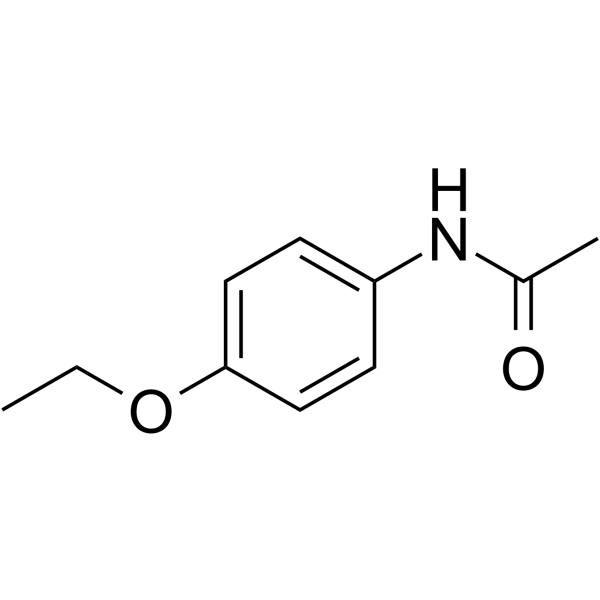
Phenacetin (Standard)
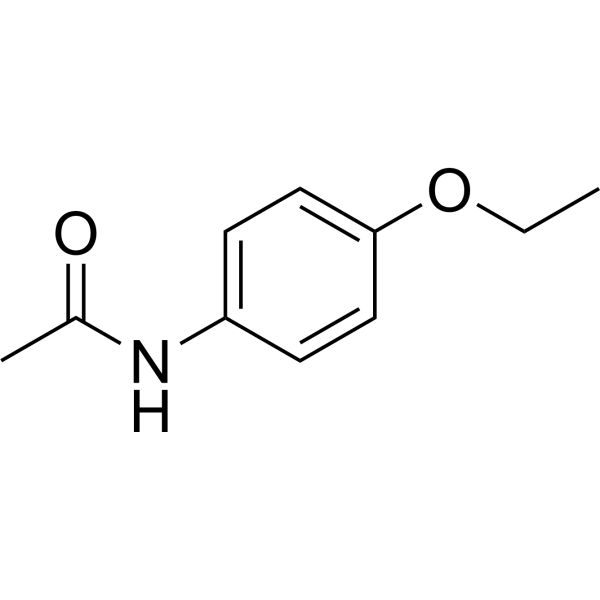 0 ImagesPhenacetin (Standard) is the analytical standard of Phenacetin. This product is intended for research and analytical applications. Phenacetin (Acetophenetidin) is a non-opioid analgesic/antipyretic agent. Phenacetin is a selective COX-3 inhibitor. Phenacetin is used as probe of cytochrome P450 enzymes CYP1A2 in human liver microsomes and in rats.
-
ATP Synthesis-IN-4
 0 ImagesCat. No.: HY-181602ATP Synthesis-IN-4 is a mitochondria-targeted small-molecule ligand that inhibits ATP synthesis. ATP Synthesis-IN-4 binds to mtDNA G4s in melanoma cells, thereby inducing changes in mitochondrial metabolism and inhibiting cell proliferation. ATP Synthesis-IN-4 suppresses the translation of key mitochondrial respiratory chain proteins (CYTB, ATP8, COX1, COX3, ND2) in melanoma cells, downregulates the expression of OXPHOS complexes, activates the phosphorylation of AMPK, and induces metabolic reprogramming to upregulate glycolysis. ATP Synthesis-IN-4 is applicable to relevant research on melanoma.



