



Adrenergic Receptor
Beta Receptor
Adrenergic receptors are a class of G protein-coupled receptors that are targets of the catecholamines, especially norepinephrine and epinephrine. Many cells possess these receptors, and the binding of a catecholamine to the receptor will generally stimulate the sympathetic nervous system. The sympathetic nervous system is responsible for the fight-or-flight response, which includes widening the pupils of the eye, mobilizing energy, and diverting blood flow from non-essential organs to skeletal muscle. There are two main groups of adrenergic receptors, α and β, with several subtypes. α receptors have the subtypes α1 and α2. β receptors have the subtypes β1, β2 and β3. All three are linked to Gs proteins, which in turn are linked to adenylate cyclase. Agonist binding thus causes a rise in the intracellular concentration of the second messenger cAMP. Downstream effectors of cAMP include cAMP-dependent protein kinase (PKA), which mediates some of the intracellular events following hormone binding.
Adrenergic Receptor Isoform Specific Products
All Product Categories
-
Adrenergic Receptor Inhibitors
(267)
View all products
-
Adrenergic Receptor Agonists
(512)
View all products
-
Adrenergic Receptor Antagonists
(555)
View all products
-
Adrenergic Receptor Activators
(45)
View all products
-
Adrenergic Receptor Modulators
(21)
View all products
-
Adrenergic Receptor Degraders
(2)
View all products
-
Adrenergic Receptor Controls
(8)
View all products
-
Adrenergic Receptor Substrates
(3)
View all products
-
Adrenergic Receptor Ligands
(18)
View all products
-
Adrenergic Receptor Related Products (1649)
Related Products (1649)

-
Antibodies (4)
-
Adrenergic Receptor Isoform Comparison
-
Dabuzalgron
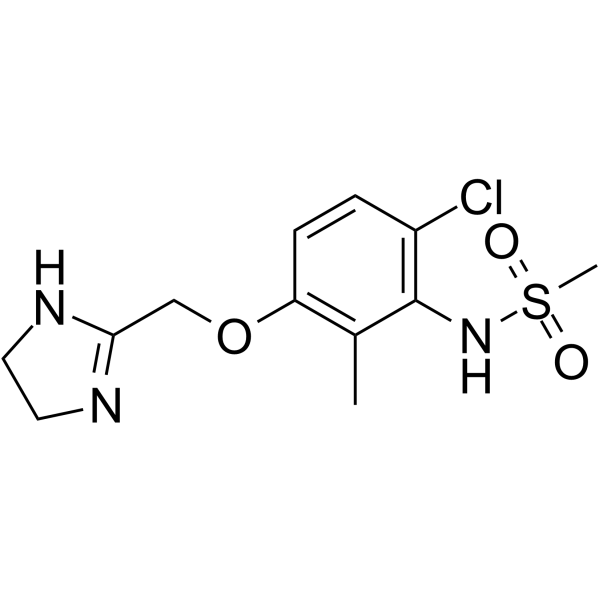 0 ImagesSynonyms: Ro 115-1240Dabuzalgron (Ro 115-1240) is an orally active and selective α-1A adrenergic receptor agonist for the treatment of urinary incontinence. Dabuzalgron protects against Doxorubicin-induced cardiotoxicity by preserving mitochondrial function.
-
Metaraminol tartrate
 0 ImagesSynonyms: Metaradrine tartrateMetaraminol tartrate?(Metaradrine tartrate) is an α-adrenergic agonist. Metaraminol tartrate is a sympathomimetic amine that directly and indirectly affects adrenergic receptors, with alpha effects being predominant.Metaraminol tartrate acts as a vasopressor agent.
-
Hydrocortisone 17-butyrate
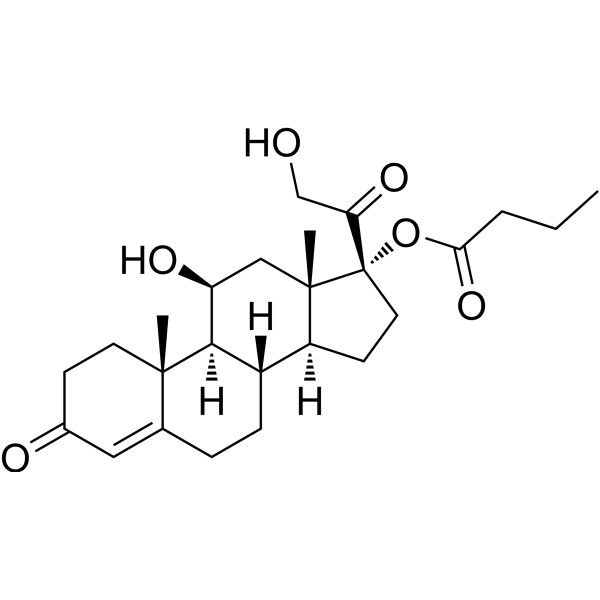 0 ImagesSynonyms: Cortisol 17-butyrate; Hydrocortisone butyrateHydrocortisone 17-butyrate is a non-fluorinated topical corticosteroid for use in psoriasis, eczema, and other inflammatory dermatoses. Hydrocortisone 17-butyrate inhibits granuloma formation in rats. Hydrocortisone 17-butyrate can induce vasoconstriction.
-
Lofexidine
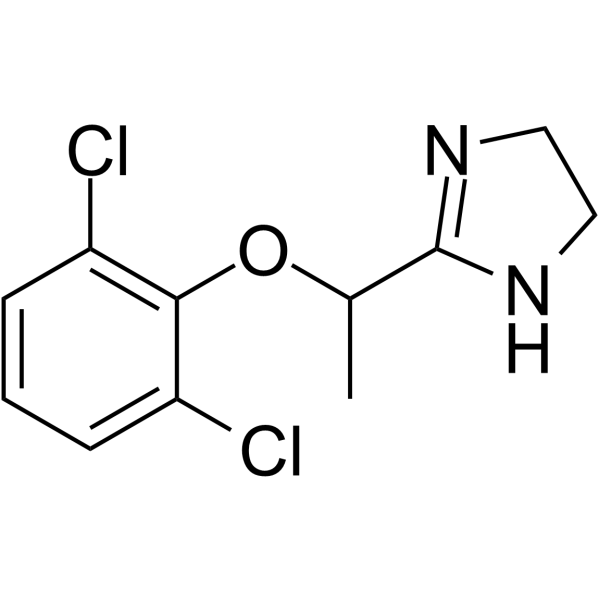 0 ImagesSynonyms: Baq-168 free base; MDL-14042 free baseLofexidine (Baq-168 free base) is an orally active agonist of the imidazoline I1 receptor (imidazoline I1 receptor) (Ki: 1.9 nM) and α2-adrenergic receptor (α2-adrenergic receptor). Lofexidine binds to the α2A-adrenergic receptor, reduces sympathetic outflow, lowers blood pressure, and exhibits vasoconstrictive effects. Lofexidine regulates the expression of c-fos and alleviates opioid withdrawal symptoms. Lofexidine is applicable to research on opioid addiction and withdrawal.
-
N-Methyltyramine hydrochloride
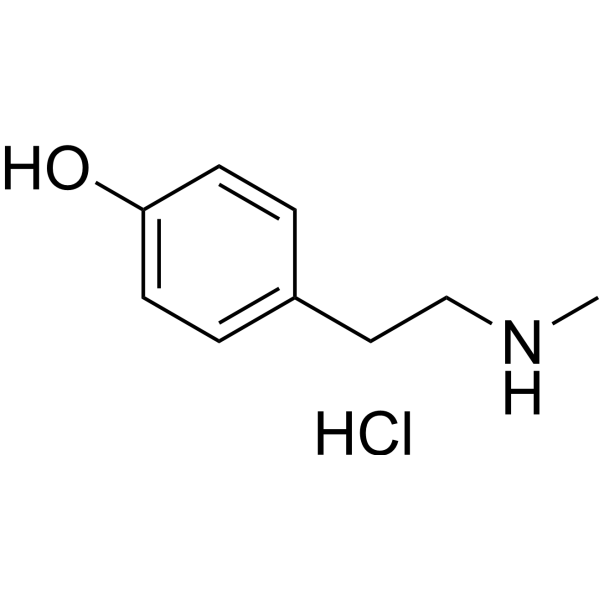 0 ImagesN-Methyltyramine hydrochloride is an orally active α2-adrenoreceptor antagonist with an IC50 value of 5.53 μM against rat targets. N-Methyltyramine hydrochloride blocks α2-adrenoreceptors, while inhibiting lipolysis, hyperactivity responses and small intestinal peristalsis in mice. N-Methyltyramine hydrochloride promotes gastrin release and pancreatic juice secretion, upregulates appetite, blood pressure, myocardial contraction frequency and contraction intensity, and increases renal blood flow, renal vascular resistance and mean peripheral arterial resistance. N-Methyltyramine hydrochloride relaxes mouse small intestinal smooth muscle and undergoes biotransformation in vivo to produce adrenaline. N-Methyltyramine hydrochloride can be used in studies related to gastrointestinal diseases.
-
Rilmenidine
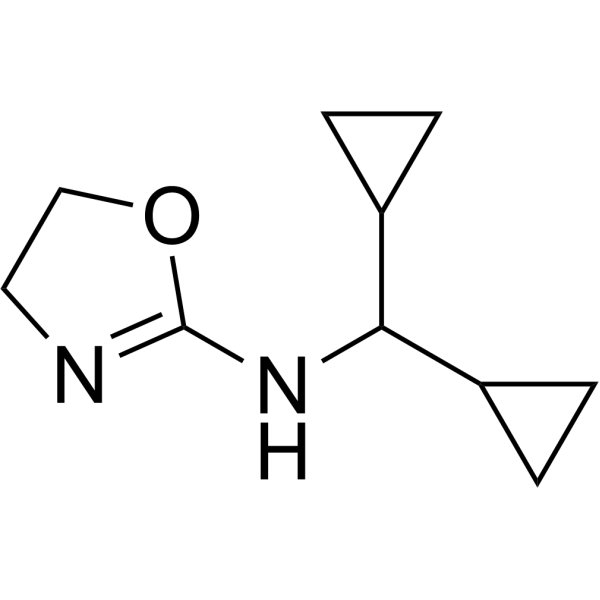 0 ImagesRilmenidine, an innovative antihypertensive agent, is an orally active, selective I1 imidazoline receptor agonist. Rilmenidine is an alpha 2-adrenoceptor agonist. Rilmenidine induces autophagy. Rilmenidine acts both centrally by reducing sympathetic overactivity and in the kidney by inhibiting the Na+/H+ antiport. Rilmenidine modulates proliferation and stimulates the proapoptotic protein Bax thus inducing the perturbation of the mitochondrial pathway and apoptosis in human leukemic K562 cells.
-
Ractopamine hydrochloride
 0 ImagesSynonyms: LY031537Ractopamine hydrochloride (LY031537) is a potent and orally active β-adrenergic receptor (βAR) agonist with Kd value of ~25 nM for pig β1AR and β2AR. Ractopamine hydrochloride also is a mTAAR1 agonist with an EC50 of 16 μM. Ractopamine hydrochloride promotes muscle mass development, limits fat deposition, reduces feed consumption, increases total cellular protein synthesis, and improves growth rate and feed efficiency in finishing swine. Ractopamine hydrochloride can be used for researching to increase lean tissue growth and improve production efficiency in pigs.
-
8-O-Acetylharpagide
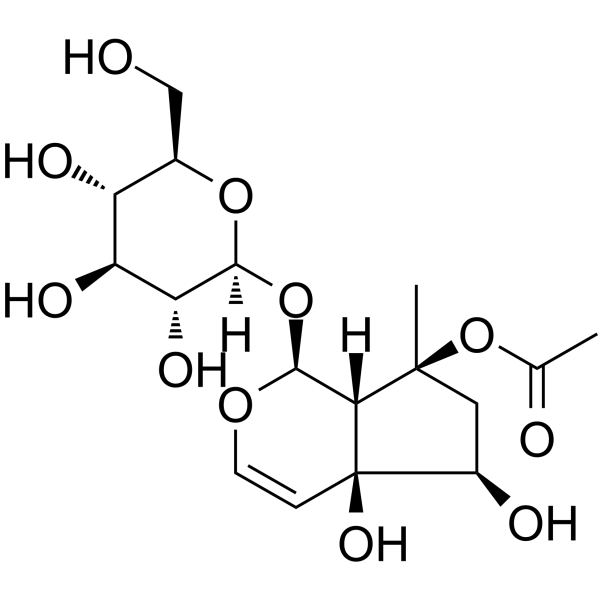 0 Images8-O-Acetylharpagide is an orally active iridoid glycoside compound. 8-O-Acetylharpagide exhibits anti-aging activity at low doses and anticancer activity at high doses. 8-O-Acetylharpagide induces late-stage apoptosis and necrosis-like death in cancer cells, and downregulates anti-apoptotic proteins such as Akt, p-Akt and Bcl-2. 8-O-Acetylharpagide is mainly metabolized in rats via demethylation, hydrolysis and glucuronidation, and its active metabolites downregulate the AKT/NF-κB/MMP9 signaling axis. 8-O-Acetylharpagide exerts vasoconstrictive effects by activating vascular α-adrenoceptor.
-
Octopamine hydrochloride (Standard)
 0 ImagesSynonyms: (±)-p-Octopamine hydrochloride (Standard)Octopamine (hydrochloride) (Standard) is the analytical standard of Octopamine (hydrochloride). This product is intended for research and analytical applications. Octopamine ((±)-p-Octopamine) hydrochloride, a biogenic monoamine structurally related to noradrenaline, acts as a neurohormone, a neuromodulator and a neurotransmitter in invertebrates. Octopamine hydrochloride can stimulate alpha2-adrenoceptors (ARs) in Chinese hamster ovary cells transfected with human alpha2-ARs. Octopamine hydrochloride increased glycogenolysis, glycolysis, oxygen uptake, gluconeogenesis and the portal perfusion pressure.
-
Protokylol hydrochloride
 0 ImagesProtokylol hydrochloride (Caytine hydrochloride; JB-251 hydrochloride) is the hydrochloride salt form of Protokylol (HY-114630). Protokylol hydrochloride is an agonist for β2-adrenergic receptor and TRPV1. Protokylol hydrochloride exhibits activity as a bronchodilator.
-
Methyldopa hydrate
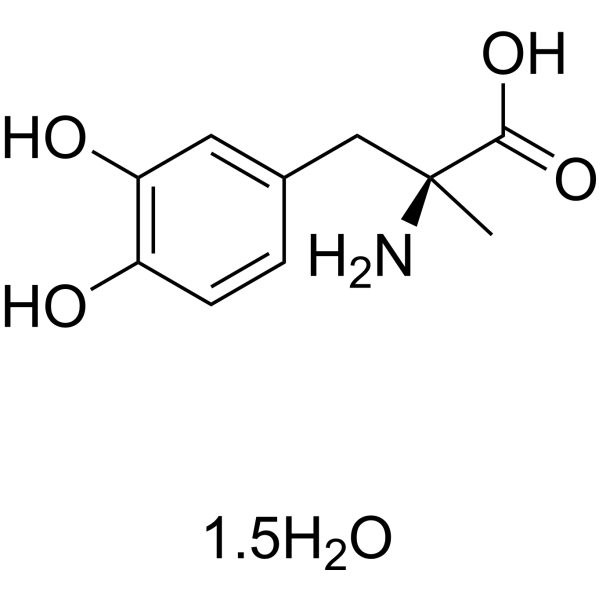 0 ImagesSynonyms: L-(-)-α-Methyldopa hydrate; MK-351 hydrateMethyldopa hydrate (L-(-)-α-Methyldopa hydrate), a potent antihyoertensive agent, is an alpha-adrenergic agonist (selective for α2-adrenergic receptors). Methyldopa hydrate is a proagent and is metabolized (α-Methylepinephrine) in the central nervous system.
-
Carmoterol hydrochloride
 0 ImagesCarmoterol hydrochloride is a highly potent, selective and long-acting β2-adrenoceptor agonist with the pEC50 of 10.19. Carmoterol has 53 times higher affinity for the β2-adrenoceptors than for the β1-adrenoceptors. Carmoterol hydrochloride can be used for the research of asthma and chronic obstructive pulmonary disease (COPD).
-
Tizanidine hydrochloride
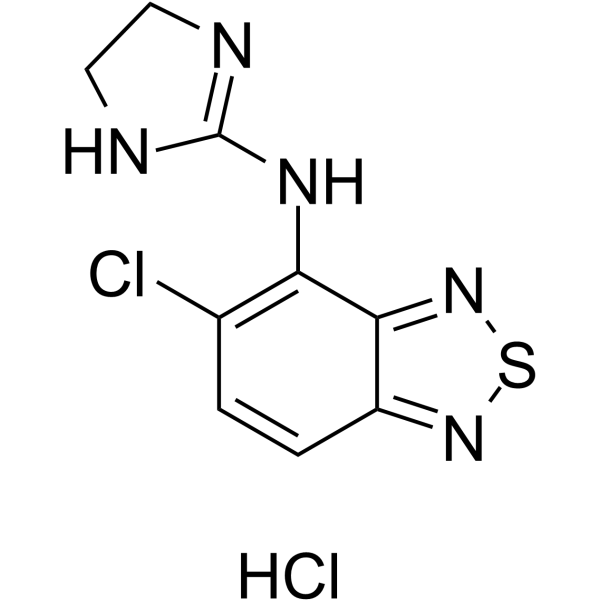 0 ImagesTizanidine hydrochloride, a skeletal muscle relaxant, is an orally effective central α2-adrenoceptor agonist (IC50 = 6.9 nmol). Tizanidine hydrochloride primarily exerts muscle relaxation effects by inhibiting the release of excitatory amino acids (glutamate and aspartate) from the presynaptic terminals of spinal cord interneurons. Tizanidine hydrochloride has anti-injury activity and can inhibit gastrointestinal (GI) transport. Tizanidine hydrochloride can inhibit the proliferation, migration, and invasion of lung cancer cells and induce cell apoptosis by upregulating Nischarin and inhibiting the AKT and Wnt3a/β-catenin signaling pathways. Tizanidine hydrochloride can be used to treat spasticity caused by diseases such as multiple sclerosis (MS), stroke, and spinal cord injury (SCI).
-
Isoxsuprine hydrochloride
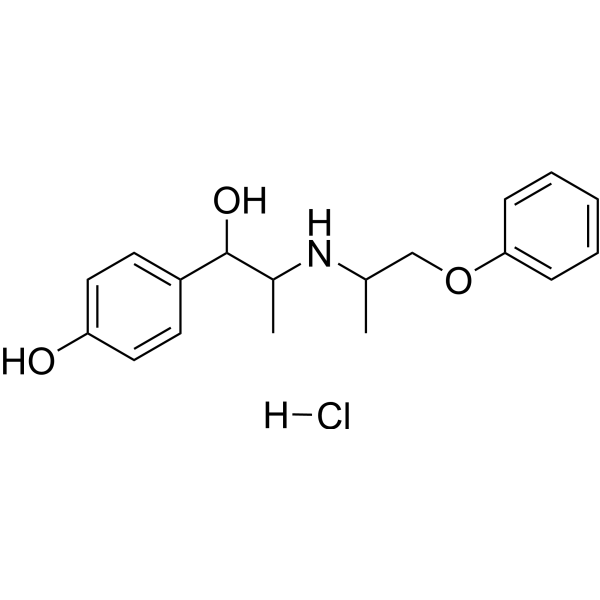 0 ImagesIsoxsuprine hydrochloride is a beta-adrenergic receptor agonist with Kis of 13.65 μΜ and 3.48 μΜ for myometrial and placcntal beta-adrenergic receptor, respectively. Isoxsuprine hydrochloride is also a NMDA receptor antagonist.
-
Phenylephrine (Standard)
 0 ImagesSynonyms: (R)-(-)-Phenylephrine (Standard); L-Phenylephrine (Standard)Phenylephrine (Standard) is the analytical standard of Phenylephrine. This product is intended for research and analytical applications. (R)-(-)-Phenylephrine is a selective α1-adrenoceptor agonist primarily used as a decongestant.
-
Indacaterol maleate (Standard)
 0 ImagesSynonyms: QAB149 (Standard)Indacaterol (maleate) (Standard) is the analytical standard of Indacaterol (maleate). This product is intended for research and analytical applications. Indacaterol maleate (QAB149) is an orally active ultra-long-acting β2 adrenergic receptor (ADRB2) agonist. Indacaterol maleate inhibits NF-κB activity in a β-arrestin2-dependent manner, preventing further lung damage and improving lung function in COPD (chronic obstructive pulmonary disorder). Indacaterol maleate can also be used in cardiovascular disease research.
-
Tizanidine-d4
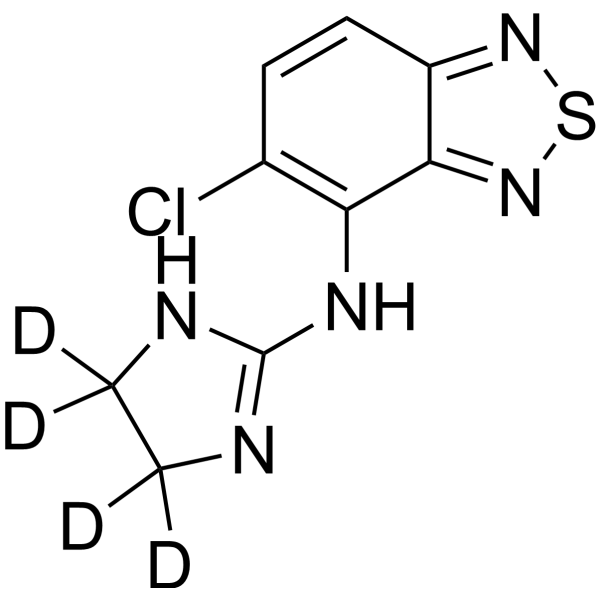 0 ImagesTizanidine-d4 is the deuterium labeled Tizanidine (HY-B0194). Tizanidine, a skeletal muscle relaxant, is an orally effective central α2-adrenoceptor agonist (IC50 = 6.9 nmol). Tizanidine primarily exerts muscle relaxation effects by inhibiting the release of excitatory amino acids (glutamate and aspartate) from the presynaptic terminals of spinal cord interneurons. Tizanidine has anti-injury activity and can inhibit gastrointestinal (GI) transport. Tizanidine can inhibit the proliferation, migration, and invasion of lung cancer cells and induce cell apoptosis by upregulating Nischarin and inhibiting the AKT and Wnt3a/β-catenin signaling pathways. Tizanidine can be used to treat spasticity caused by diseases such as multiple sclerosis (MS), stroke, and spinal cord injury (SCI).
-
Etilefrine hydrochloride
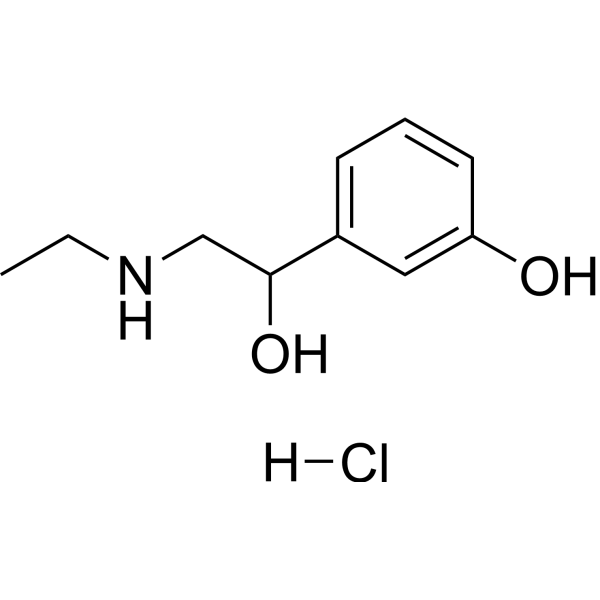 0 ImagesEtilefrine hydrochloride is a sympathetic nerve agonist and AMPK activator that selectively targets α1/β1 adrenergic receptors. Etilefrine hydrochloride stimulates α1 adrenergic receptors, leading to contraction of vascular smooth muscle and increased peripheral resistance. Etilefrine hydrochloride also stimulates β1 receptors to enhance myocardial contractility and increase heart rate, thereby increasing blood pressure and improving cardiac output. Etilefrine hydrochloride also bidirectionally regulates the AMPK/Akt pathway and modulates the phosphorylation levels. Etilefrine hydrochloride can be used in cardiovascular research, such as postural hypotension, chylothorax, and improving low cardiac output.
-
LM-189 free base
 0 ImagesCat. No.: HY-171978APurity: 99.70%LM-189 free base, a G protein alpha subunit I (Gαi)-biased agonist, is a Gαi-biased ligand of β2-adrenergic receptor (β2AR). LM-189 free base stabilizes a distinct conformation in TM6 and increases the dynamics of ICL2. LM-189 free base can be used to develop the Gαi-biased β2AR agonists.
-
Methyldopate
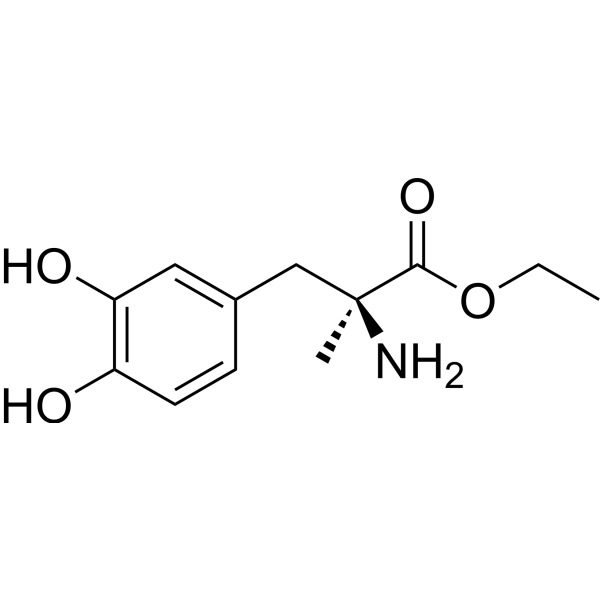 0 ImagesMethyldopate is an ethyl ester proagent of α-Methyldopa (α-MD; HY-B0225). Methyldopa (L-(-)-α-Methyldopa) is an α-adrenergic agonist (selective for α2-adrenergic receptors). Methyldopate has the potential for severe hypertension research .




