



Apoptosis
Apoptosis
Apoptosis is a distinctive form of cell death exhibiting specific morphological and biochemical characteristics, including cell membrane blebbing, chromatin condensation, genomic DNA fragmentation, and exposure of specific phagocytosis signaling molecules on the cell surface. Cells undergoing apoptosis differ from those dying through necrosis. Necrotic cells are usually recognized by the immune system as a danger signal and, thus, resulting in inflammation; in contrast, apoptotic death is quiet and orderly.
There are two major pathways of apoptotic cell death induction: The intrinsic pathway, also called the Bcl-2-regulated or mitochondrial pathway, is activated by various developmental cues or cytotoxic insults, such as viral infection, DNA damage and growth-factor deprivation, and is strictly controlled by the BCL-2 family of proteins. The extrinsic or death-receptor pathway is triggered by ligation of death receptors (members of the tumor necrosis factor (TNF) receptor family, such as Fas or TNF receptor-1 (TNFR1)) that contain an intracellular death domain, which can recruit and activate caspase-8 through the adaptor protein Fas-associated death domain (FADD; also known as MORT1) at the cell surface. This recruitment causes subsequent activation of downstream (effector) caspases, such as caspase-3, -6 or -7, without any involvement of the BCL-2 family.
Studies suggest that alterations in cell survival contribute to the pathogenesis of a number of human diseases, including cancer, viral infections, autoimmune diseases, neurodegenerative disorders, and AIDS (acquired immunodeficiency syndrome). Treatments designed to specifically alter the apoptotic threshold may have the potential to change the natural progression of some of these diseases.
All Product Categories
-
Apoptosis Inhibitors
(883)
View all products
-
Apoptosis Agonists
(7)
View all products
-
Apoptosis Antagonists
(9)
View all products
-
Apoptosis Activators
(361)
View all products
-
Apoptosis Modulators
(59)
View all products
-
Apoptosis Inducers
(7792)
View all products
-
Apoptosis Degrader
(1)
View all products
-
Apoptosis Controls
(33)
View all products
-
Apoptosis Related Products (9705)
Related Products (9705)

-
Antibodies (120)

-
Triglycidyl isocyanurate (Standard)
 0 ImagesSynonyms: TGIC (Standard)Triglycidyl isocyanurate (Standard) is the analytical standard of Triglycidyl isocyanurate. This product is intended for research and analytical applications. Triglycidyl isocyanurate (TGIC; Teroxirone) is a triazene triepoxide with antiangiogenic and antineoplastic activities. Triglycidyl isocyanurate inhibits the growth of non-small-cell-lung cancer cells via?p53 activation. Triglycidyl isocyanurate induces cell apoptosis. Triglycidyl isocyanurate can be used for cancer research.
-
Anticancer agent 67
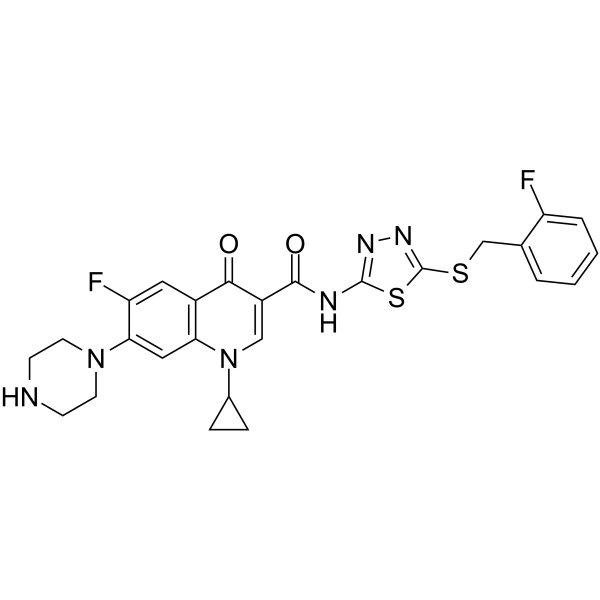 0 ImagesCat. No.: HY-147782CAS No.: 2691895-66-4Anticancer agent 67 (Compound 13g) is an anti-cancer agent. Anticancer agent 67 induces apoptosis and increases sub-G1 cell population in MCF-7 cells. Anticancer agent 67 is a ciprofloxacin analog.
-
Apoptosis inducer 41
 0 ImagesCat. No.: HY-175567CAS No.: 3085940-57-1Apoptosis inducer 41 is an apoptosis inducer that induces apoptosis through the mitochondrial pathway. Apoptosis inducer 41 exhibits remarkable inhibitory effects against MCF-7 cells (IC50 = 6.2 μM). Apoptosis inducer 41 significantly arrests MCF-7 cells in the G2/M phase, increases ROS accumulation, induces mitochondrial membrane potential depolarization. Apoptosis inducer 41 can used for the study of breast cancer.
-
MEK-IN-10
 0 ImagesCat. No.: HY-183674CAS No.: 3096958-11-8MEK-IN-10 is an orally active pan-MEK/RAF non-degrading molecular glue with an IC50 of 782 nM against human MEK1. MEK-IN-10 blocks the phosphorylation of MEK and ERK, induces and stabilizes the MEK1-RAF complex, and disrupts the RAS-MAPK signaling pathway. MEK-IN-10 induces apoptosis in cancer cells and arrests cells at the G0/G1 phase. MEK-IN-10 induces tumor growth inhibition in mouse xenograft models. MEK-IN-10 can be used in the research of RAS-driven cancers, such as colorectal cancer and pancreatic cancer.
-
SC-60
 0 ImagesCat. No.: HY-W717425CAS No.: 1421677-31-7SC-60 is a derivative of Sorafenib (HY-10201). SC-60 exerts its anti-tumor effect by activating the phosphatase activity of SHP-1, thereby inhibiting the STAT3 signaling pathway. SC-60 exhibits strong proliferation inhibitory activity in various hepatocellular carcinoma (HCC) cell lines. SC-60 downregulates the expression of downstream anti-apoptotic proteins (such as Bcl-2, Cyclin D1, Survivin), ultimately inducing caspase-dependent apoptosis. SC-60 significantly inhibits tumor growth in xenograft tumor models. SC-60 can be used for the study of HCC.
-
MT-3724
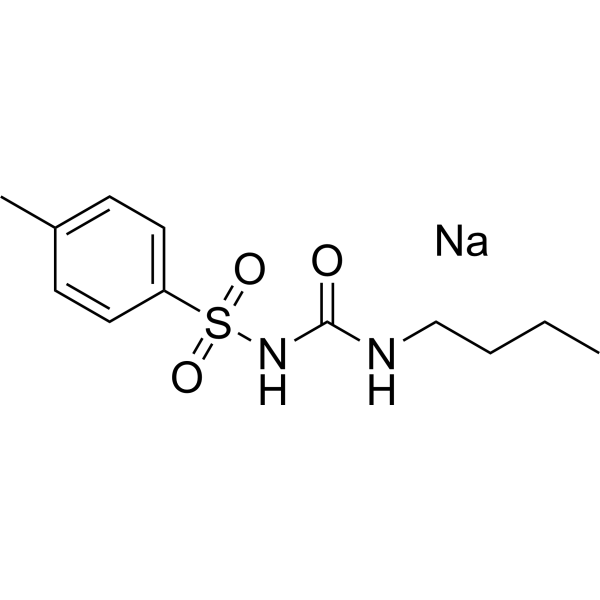
 0 ImagesCat. No.: HY-P992417MT-3724 is a CD20-targeted endotoxin B. MT-3724 binds to CD20, triggers receptor internalization, traffics to the endoplasmic reticulum, and induces permanent ribosomal inactivation to mediate cell killing. MT-3724 can inhibit protein synthesis and promote tumor cell apoptosis. MT-3724 can be used for the research of relapsed or refractory B-cell non-Hodgkin’s lymphomas and diffuse large B-cell lymphoma.
-
CRX 527
 0 ImagesCat. No.: HY-155801CAS No.: 216014-14-1CRX 527 is a TLR4 agonist. CRX 527 activates the MyD88-dependent, TRIF-dependent, and TRAF6/NF-κB signaling pathways downstream of TLR4, mimics lipid A, and regulates antigen processing and presentation by dendritic cells. CRX 527 stimulates innate immune responses and enhances vaccine efficacy. CRX 527 maintains the structural integrity of hematopoietic tissues, spleen and intestine, alleviates radiation-induced damage, preserves intestinal homeostasis, and inhibits apoptosis, inflammatory responses, oxidative stress and DNA damage. CRX 527 can be used in the research of acute radiation syndrome, melanoma, HPV-related tumors and intracerebral hemorrhage.
-
Tubulin polymerization-IN-6
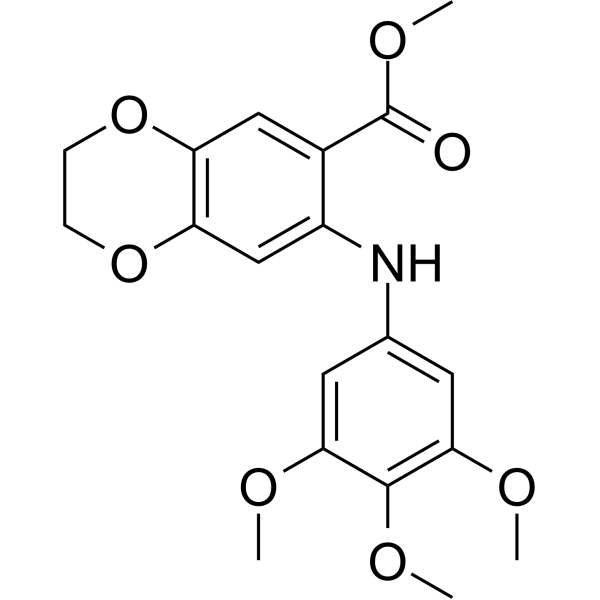 0 ImagesCat. No.: HY-146505CAS No.: 2768613-52-9Tubulin polymerization-IN-6 (compound 5f) is a potent tubulin polymerization inhibitor, with an IC50 of 1.09 μM. Tubulin polymerization-IN-6 inhibits cell migration and tube formation and contributes to the anti-angiogenesis. Tubulin polymerization-IN-6 can greatly inhibit tumor growth on HT29 xenograft Balb/c nude mice.
-
HJ-4
 0 ImagesHJ-4 is a Piperine (HY-N0144) derivative. HJ-4 potently inhibits the proliferation of CRC cells by dose-dependently reducing colony formation and DNA synthesis. HJ-4 markedly suppresses the adhesion, migration, invasion and induces apoptosis of CRC cells. HJ-4 demonstrates anti-tumor efficacy in chicken embryo chorioallantoic membrane (CAM) model implanted with HCT116/SW480 tumor spheroids. HJ-4 can be used for the study of colorectal cancer (CRC).
-
Calcimycin hemimagnesium
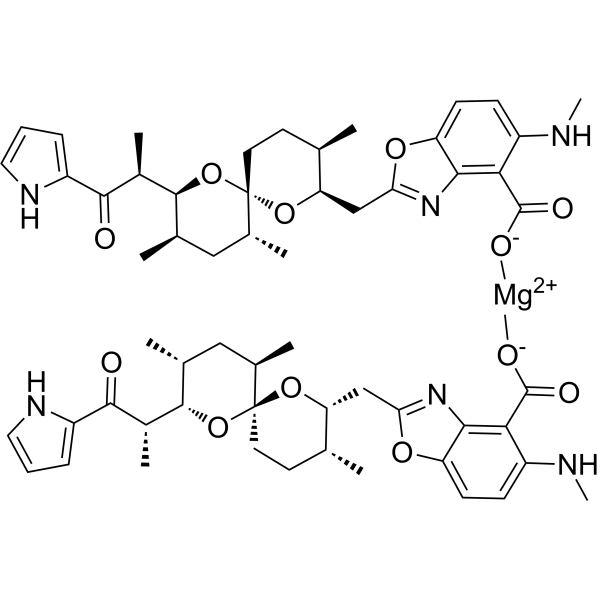 0 ImagesCat. No.: HY-N6687BCAS No.: 72124-77-7Synonyms: A-23187 hemimagnesium; Antibiotic A-23187 hemimagnesiumCalcimycin (A-23187) hemimagnesium is an antibiotic and a unique divalent cation ionophore (like calcium and magnesium). Calcimycin hemimagnesium induces Ca2+-dependent cell death by increasing intracellular calcium concentration. Calcimycin hemimagnesium inhibits the growth of Gram-positive bacteria and some fungi. Calcimycin hemimagnesium also inhibits the activity of ATPase and uncouples oxidative phosphorylation (OXPHOS) of mammalian cells. Calcimycin hemimagnesium induces apoptosis and autophagy.
-
Trichodermamide C
 0 ImagesCat. No.: HY-N13052CAS No.: 1036712-09-0

-
SKLB-C05
 0 ImagesCat. No.: HY-122860CAS No.: 2300981-68-2SKLB-C05 is a novel selective, orally active TOPK inhibitor, with an IC50 of 0.5 nM. SKLB-C05 selectively inhibit TOPK kinase. SKLB-C05 induces Apoptosis, downregulates c-Myc, γ-H2AX, activates p53, blocks FAK/Src medicated migration-related signaling. SKLB-C05 disturbs cell mitosis. SKLB-C05 shows anticancer activity only against TOPK-positive colorectal cancer.
-
Hepatoprotective agent-1
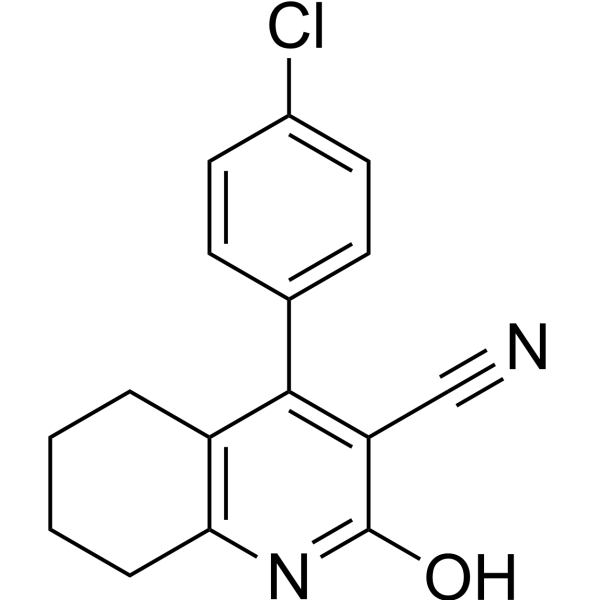 0 ImagesCat. No.: HY-162137CAS No.: 1225971-07-2Hepatoprotective agent-1 (compound 1b) is a hepatoprotective agenrt. Hepatoprotective agent-1 shows anti-inflammatory, antiapoptotic and antifibrotic effects.
-
Nur77 modulator 6
 0 ImagesCat. No.: HY-183758Nur77 modulator 6 is a Nur77 modulator with a Kd of 0.40 μM. Nur77 modulator 6 functionally modulates Nur77 to induce mitotic arrest and apoptosis in colorectal tumor cells. Nur77 modulator 6 suppresses colorectal cancer cell proliferation via Nur77-dependent mitotic arrest induction. Nur77 modulator 6 exhibits anti-proliferative activity against colorectal tumor cells. Nur77 modulator 6 can be used for the research of colorectal cancer.
-
9-cis-Retinoic acid (Standard)
 0 Images9-cis-Retinoic acid (Standard) is the analytical standard of 9-cis-Retinoic acid. This product is intended for research and analytical applications. 9-cis-Retinoic acid (ALRT1057), a vitamin A derivative, is a potent RAR/RXR agonist. 9-cis-Retinoic acid induces apoptosis, regulates cell cycle and has anticancer, anti-inflammatory and neuroprotection activities[1][2][3][4][5].
-
Sophoraflavanone G (Standard)
 0 ImagesSynonyms: Kushenol F (Standard)Sophoraflavanone G (Standard) is the analytical standard of Sophoraflavanone G. This product is intended for research and analytical applications. Sophoraflavanone G (Kushenol F) is iaolated from Sophora flavescens and shows anti-tumor and anti-inflammatory properties. Sophoraflavanone G (Kushenol F) induces MDA-MB-231 and HL-60 cells apoptosis through suppression of MAPK-related pathways.
-
NCO-90
 0 ImagesCat. No.: HY-183870CAS No.: 1382354-18-8NCO-90 is a selective SIRT2 inhibitor with an IC50 of 1.0 μM. NCO-90 induces Apoptosis via Caspase activation and mitochondrial superoxide anion production, and also induces Autophagic cell death by increasing LC3-II levels and autophagosome accumulation. NCO-90 exhibits anticancer activity against leukemia. NCO-90 can be used in research related to acute lymphoblastic leukemia and acute myeloid leukemia.




