



Apoptosis
Apoptosis
Apoptosis is a distinctive form of cell death exhibiting specific morphological and biochemical characteristics, including cell membrane blebbing, chromatin condensation, genomic DNA fragmentation, and exposure of specific phagocytosis signaling molecules on the cell surface. Cells undergoing apoptosis differ from those dying through necrosis. Necrotic cells are usually recognized by the immune system as a danger signal and, thus, resulting in inflammation; in contrast, apoptotic death is quiet and orderly.
There are two major pathways of apoptotic cell death induction: The intrinsic pathway, also called the Bcl-2-regulated or mitochondrial pathway, is activated by various developmental cues or cytotoxic insults, such as viral infection, DNA damage and growth-factor deprivation, and is strictly controlled by the BCL-2 family of proteins. The extrinsic or death-receptor pathway is triggered by ligation of death receptors (members of the tumor necrosis factor (TNF) receptor family, such as Fas or TNF receptor-1 (TNFR1)) that contain an intracellular death domain, which can recruit and activate caspase-8 through the adaptor protein Fas-associated death domain (FADD; also known as MORT1) at the cell surface. This recruitment causes subsequent activation of downstream (effector) caspases, such as caspase-3, -6 or -7, without any involvement of the BCL-2 family.
Studies suggest that alterations in cell survival contribute to the pathogenesis of a number of human diseases, including cancer, viral infections, autoimmune diseases, neurodegenerative disorders, and AIDS (acquired immunodeficiency syndrome). Treatments designed to specifically alter the apoptotic threshold may have the potential to change the natural progression of some of these diseases.
All Product Categories
-
Apoptosis Inhibitors
(903)
View all products
-
Apoptosis Agonists
(7)
View all products
-
Apoptosis Antagonists
(9)
View all products
-
Apoptosis Activators
(362)
View all products
-
Apoptosis Modulators
(60)
View all products
-
Apoptosis Inducers
(7899)
View all products
-
Apoptosis Degrader
(1)
View all products
-
Apoptosis Controls
(33)
View all products
-
Apoptosis Related Products (9835)
Related Products (9835)

-
Antibodies (120)
-
Beta-Zearalanol-d5
 0 ImagesCat. No.: HY-N6740S2Beta-Zearalanol-d5 is the deuterium labeled Beta-Zearalanol (HY-N6740). Beta-Zearalenol is an mycotoxin produced by Fusarium spp, which causes apoptosis and oxidative stress in mammalian reproductive cells. Beta-Zearalenol is the derivative of Zearalenone (HY-103447) which can conjugate with glucuronic acid.
-
Gracillin (Standard)
 0 ImagesGracillin (Standard) is the analytical standard of Gracillin. This product is intended for research and analytical applications. Gracillin is a steroidal saponin that can be extracted from the roots of the plant and has anti-tumor properties. Gracillin can induce cancer cell apoptosis and autophagy.
-
Tubulin polymerization-IN-5
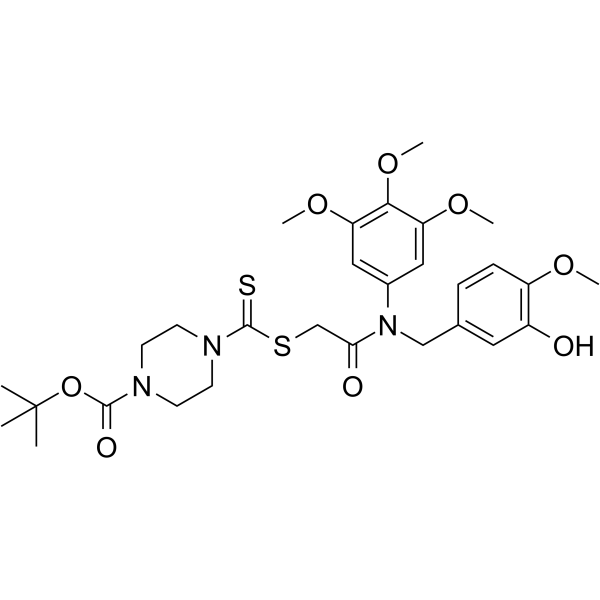 0 ImagesCat. No.: HY-144299CAS No.: 3033213-12-3Tubulin polymerization-IN-5 (compound 20q) is a potent tubulin inhibitor with potential anticancer activities. Tubulin polymerization-IN-5 can arrest ESCC cells at G2/M phase and cause cells apoptosis.
-
TC8026
 0 ImagesCat. No.: HY-181573TC8026 is an allosteric-covalent inhibitor targeting protein disulfide isomerase (PDI), with an IC50 of 7 μM against human PDI. TC8026 induces endoplasmic reticulum stress-mediated apoptosis. TC8026 is a hit compound with PDI inhibitory activity identified via high-throughput screening, and it can be used for the research of glioblastoma.
-
FGFR1/VEGFR2-IN-2
 0 ImagesCat. No.: HY-161995FGFR1/VEGFR2-IN-2 (compound 6l) is a VEGFR2/FGFR1 dual inhibitor. The IC50 values for VEGFR2 and FGFR1 are 0.025 µM and 0.026 µM respectively, and for EGFR and PDGFR-β, the IC50 values are 0.106 µM and 0.077 µM. FGFR1/VEGFR2-IN-2 showes significant anti-cancer activity (GI=60.38%) on NCI-60 cell line, with an IC50 of 8.51 µM in T-47D cell line and anti-migration. FGFR1/VEGFR2-IN-2 acts to arrest cells in the G1 phase and promote apoptosis and necrosis; the IC50 for MCF-7 cell line exceeds 100 µM, and the IC50 for MDA-MB-231 is 69.17 µM, non-toxic to normal cells.
-
Metoprolol tartrate (Standard)
 0 ImagesMetoprolol (tartrate) (Standard) is the analytical standard of Metoprolol (tartrate). This product is intended for research and analytical applications. Metoprolol tartrate is an orally active, selective β1-adrenoceptor antagonist. Metoprolol tartrate shows anti-inflammation, antitumor and anti-angiogenic properties.
-
PQ32
 0 ImagesCat. No.: HY-175265PQ32 is an antitumor agent that targets c-MYC Pu27 and KRAS G-quadruplexes. PQ32 inhibits tumor cell proliferation, arrests the cell cycle at the G2 phase, and induces apoptosis. PQ32 inhibits the expression of c-MYC and KRAS genes. PQ32 can inhibit tumor growth in mice and is used in the study of lymphoma, breast cancer, lung cancer, hepatocellular carcinoma, colorectal cancer, and other cancers.
-
Nivalenol (Standard)
 0 ImagesCat. No.: HY-N6801RCAS No.: 23282-20-4Nivalenol (Standard) is the analytical standard of Nivalenol (HY-N6801). This product is intended for research and analytical applications. Nivalenol, a trichothecene mycotoxin that can be produced by Fusarium graminearum, is a fungal metabolite present in agricultural product. Nivalenol modulates apoptotic pathway, cell cycle regulation, Bax, ERK, caspase-3, and poly-ADP-ribose synthase activity in macrophages. Nivalenol inhibits ribosomal peptidyltransferase site, protein synthesis, DNA synthesis, and cell proliferation. Nivalenol induces late-stage apoptotic morphological changes, reduces cellular metabolism, and decreases cell proliferation in erythroleukemia cells. Nivalenol induces lymphocyte apoptosis in murine thymus, spleen, and Peyer's patches. Nivalenol can be used for the research of erythroleukemia.
-
Betamethasone-d5-1
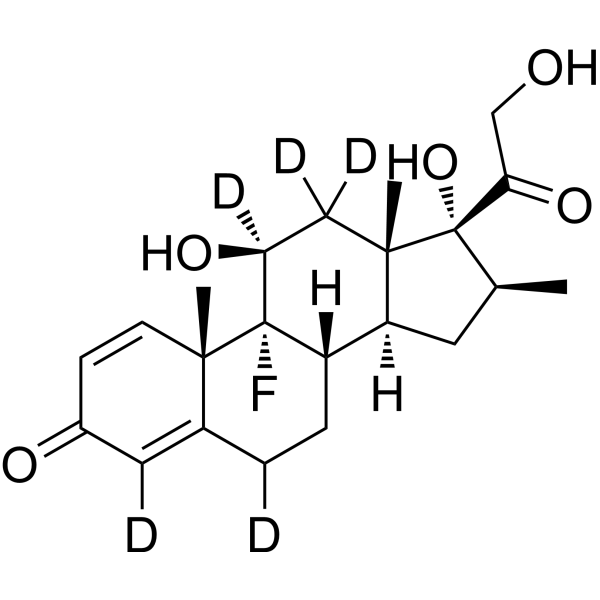 0 ImagesCat. No.: HY-13570S1CAS No.: 2244574-92-1Betamethasone-d5-1 is deuterium labeled Betamethasone. Betamethasone is a synthetic glucocorticoid with anti-inflammatory and immunosuppressive activities. Betamethasone accelerates fetal lung maturation and induces gene expression and apoptosis.
-
Quinidine hydrochloride
 0 ImagesCat. No.: HY-W115674CAS No.: 1668-99-1Quinidine hydrochloride is an orally active antiarrhythmic agent. Quinidine hydrochloride reduces the expression level of P-gp, inhibits P-gp-mediated efflux, increases the intracellular accumulation of P-gp substrates, induces PARP cleavage and Caspase-3 activation, and elevates the proportion of Apoptotic cells at the sub-G1 phase. Quinidine hydrochloride exerts sustained block and open-channel block effects on IK(f). Quinidine hydrochloride alters the urinary metabolic ratio of Amphetamine, modulates the Pentylenetetrazol-induced seizure threshold, and regulates the anticonvulsant effect of Dextromethorphan. Quinidine hydrochloride can be used in studies related to uterine sarcoma and seizures.
-
Tubulin inhibitor 47
 0 ImagesCat. No.: HY-162625CAS No.: 3048072-30-3Tubulin inhibitor 47 (compound C11) is a potent tubulin inhibitor. Tubulin inhibitor 47 induces apoptosis and cell cycle arrest at the M phase. Tubulin inhibitor 47 shows anti-tumor activity.
-
Thalidomide-piperidine-O-piperidine-C2-OH
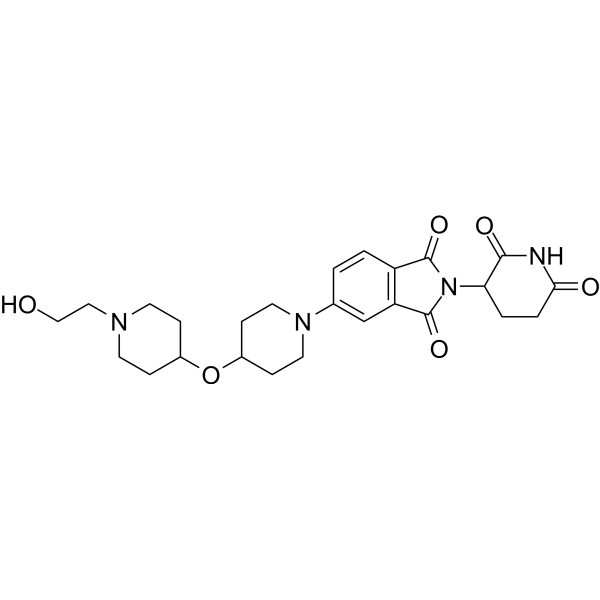 0 ImagesCat. No.: HY-161202Thalidomide-piperidine-O-piperidine-C2-OH is a conjugate of E3 ligase ligand and linker, consisting of Thalidomide (HY-14658) and the corresponding Linker. Thalidomide-piperidine-O-piperidine-C2-OH can serve as a Cereblon ligand to recruit CRBN protein and serve as a key intermediate for the synthesis of complete PROTAC molecules.
-
Decursin-d6
 0 ImagesCat. No.: HY-18981SSynonyms: (+)-Decursin-d6Decursin-d6 ((+)-Decursin-d6) is the deuterium labeled Decursin (HY-18981). Decursin ((+)-Decursin) is a potent anti-tumor agent. Decursin also is a cytotoxic agent and a potent protein kinase C activator. Decursin induces apoptosis and cell cycle arrest at G1 phase. Decursin decreases the expression of CDK2, CDK4, CDK6, cyclin D1 protein at 48 h. Decursin inhibits cell proliferation and migration. Decursin shows anti-tumor, anti-inflammatory and analgesic activities.
-
GPS167
 0 ImagesCat. No.: HY-183831CAS No.: 3034312-19-8GPS167 is a CLK kinase inhibitor that potently and selectively inhibits recombinant human CLK1, CLK2 and CLK4. By inhibiting CLK-mediated phosphorylation of SRSF10, GPS167 upregulates the protein-binding ability of CLK1 and CLK4 with SRSF10, downregulates oncogenic BCLAF1-L and upregulates tumor-suppressive BCLAF1-S, regulates alternative splicing of genes such as MDM2 and MDM4, stabilizes p53 protein and induces DNA damage, ultimately triggering tumor cell apoptosis. GPS167 can block the epithelial-mesenchymal transition process of tumors, activate intracellular double-stranded RNA-mediated antiviral immune responses, and produce synergistic cytotoxicity when combined with microtubule-targeting drugs. GPS167 can be used in research related to various cancers including colorectal cancer.
-
5-Methoxyindole-d3
 0 ImagesCat. No.: HY-W007328SCAS No.: 90663-68-65-Methoxyindole-d3 is the deuterated-labeled 5-Methoxyindole (HY-W007328). 5-Methoxyindole is an L-tryptophan metabolite with antifungal activity, and also serves as a pharmaceutical intermediate. Metabolites of 5-Methoxyindole exhibit COX-2 inhibitory, anti-inflammatory and anti-tumor activities. 5-Methoxyindole induces morphological distortion of hyphae and conidia, ROS accumulation, apoptosis and cell death in Gaeumannomyces graminis. 5-Methoxyindole can be used in studies related to fungal infections and organic synthesis.
-
Vitamin K5
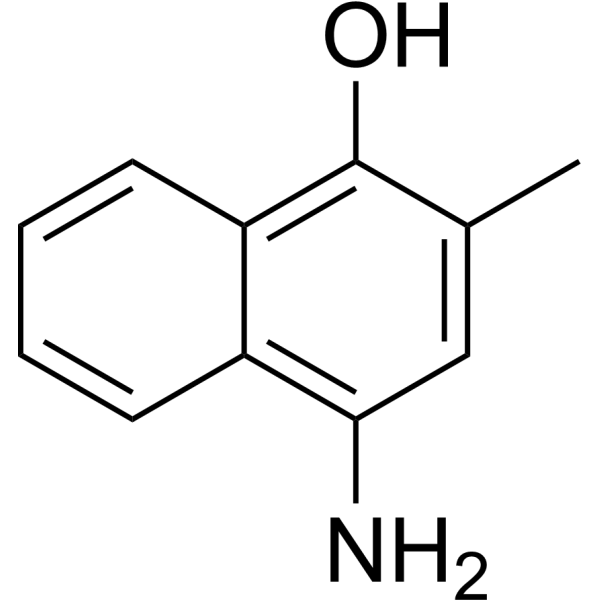 0 ImagesVitamin K5 (Synkamin) is a photosensitizer and a antimicrobial agent. Vitamin K5 is a specific PKM2 inhibitor with IC50 values of 28, 191 and 120 μM for PKM2, PKM1 and PKL. Vitamin K5 induces apoptosis of colon 26 cells. Vitamin K5 can be used for the research of infection and cancer, and it also can be used as a preservative for pharmaceuticals, foods, and beverages.
-
FGFR-IN-17
 0 ImagesCat. No.: HY-172251FGFR-IN-17 (Compound 12l) is an orally active irreversible inhibitor of FGFR, which has a strong inhibitory effect on FGFR and its mutants. FGFR-IN-17 can inhibit the proliferation and migration, and induce apoptosis of non-small cell lung cancer cells. FGFR-IN-17 has anti-tumor activity.
-
Actisomide
 0 ImagesCat. No.: HY-121598CAS No.: 96914-39-5Synonyms: SC-36602Actisomide (SC-36602) is an antiarrhythmic agent. Absorption of actisomide in rats and its in vitro uptake in CaCo-2 cells are pH-dependent.
-
CP-654577
 0 ImagesCat. No.: HY-118900CAS No.: 639087-64-2CP-654577 is a selective ErbB2 inhibitor with an IC50 of 11 nM. CP-654577 downregulates the Notch1 signaling pathway. CP-654577 upregulates p27kip1, reduces the levels of Cyclins D and E, and inhibits G1 phase progression of the cell cycle. CP-654577 induces cell Apoptosis, downregulates activated Akt, and suppresses tumor growth in athymic mice. CP-654577 can be used in breast cancer-related research.
-
STAT3/CAIX-IN-1
 0 ImagesCat. No.: HY-174457CAS No.: 3053583-60-8STAT3/CAIX-IN-1 is a dual-target inhibitor of STAT3 (Kd: 60.03 μM) and CAIX (IC50: 80.45 nM). STAT3/CAIX-IN-1 induces ferroptosis by increases the levels of reactive oxygen species (ROS) and lipid peroxides. STAT3/CAIX-IN-1 inhibits cell migration, induces apoptosis, and causes cell cycle arrest in MDA-MB-231 cells. STAT3/CAIX-IN-1 can be used for the study of triple-negative breast cancer (TNBC).




