



Autophagy
Autophagy is a conserved cellular degradation and recycling process in the lysosome. In mammalian cells, there are three primary types of autophagy: microautophagy, macroautophagy, and chaperone-mediated autophagy (CMA). Microphagy captures cargoes by means of invaginations or protrusions of the lysosomal membrane directly, CMA uses chaperones to identify cargo proteins and then unfolds and transfers them into the lysosomal, while macroautophagy sequesters cargo by autophagosomes-de novo synthesized of double-membrane vesicles-and subsequently transport it to the lysosome.
Macroautophagy is the best studied and it occurs at a low level constitutively and can also be further induced under stress conditions, such as nutrient or energy starvation with a salient feature of autophagy protein degradation. Stress-induced macrophagy plays an important role in protein catabolism with another key protein degradation pathway, the ubiquitin–proteasome system (UPS).
As the study progressed, autophagy gains its importance under basal, nutrient-rich conditions, and is now recognized as a critical housekeeping pathway in catabolism of diverse cellular constituents, such as protein aggregates (aggrephagy), lipid droplets (lipophagy), iron complex (Ferritinophagy) and carbohydrate. Except for macromolecules, autophagy can also target several organelles and structures, such as mitochondria (mitophagy), peroxisome (pexophagy), endoplasmic reticulum (reticulophagy or ER-phagy), ribosome (ribophagy), spermatozoon-inherited organelles following fertilization (allophagy), secretory granules within pancreatic cells (zymophagy) and intracellular pathogens (xenophagy).
Autophagy and its dysfunction are associated with a variety of human pathologies, including ageing, cancer, neurodegenerative disease, heart disease and metabolic diseases, such as diabetes. Plenty of drugs and natural products are involved in autophagy modulation through multiple signaling pathways. Small molecules that can regulate autophagy seem to have great potential to intervene such diseases in animal models or clinical courses.
All Product Categories
-
Autophagy Inhibitors
(488)
View all products
-
Autophagy Agonists
(6)
View all products
-
Autophagy Activators
(124)
View all products
-
Autophagy Modulators
(59)
View all products
-
Autophagy Chemicals
(2)
View all products
-
Autophagy Inducers
(2206)
View all products
-
Autophagy Controls
(5)
View all products
-
Autophagy Ligand
(1)
View all products
-
Autophagy Related Products (3425)
Related Products (3425)

-
Antibodies (31)
-
Autophagy Signaling Pathway
-
TBHQ-d12
 0 ImagesCat. No.: HY-100489SSynonyms: tert-Butylhydroquinone-d12TBHQ-d12 (tert-Butylhydroquinone-d12) is the deuterium labeled TBHQ (HY-100489). TBHQ (tert-Butylhydroquinone) is a widely used Nrf2 activator, protects against Doxorubicin (DOX)-induced cardiotoxicity through activation of Nrf2. TBHQ (tert-Butylhydroquinone) is also an ERK activator; rescues Dehydrocorydaline (DHC)-induced cell proliferation inhibitionin melanoma[2].
-
Actein (Standard)
 0 ImagesCat. No.: HY-N6872RCAS No.: 18642-44-9Actein (Standard) is the analytical standard of Actein. This product is intended for research and analytical applications. Actein, a triterpene glycoside, shows an inhibitory effect on cancer cells, which is isolated from the rhizomes of Cimicifuga foetida. Actein suppresses cell proliferation, induces autophagy and apoptosis through promoting ROS/JNK activation, and blunting AKT pathway in bladder cancer. Actein has little toxicity in vivo.
-
Vitamin CK3 (Standard)
 0 ImagesVitamin CK3 (Standard) is the combination of Vitamin C and vitamin K3 (100:1 ratio). Vitamin CK3 (Standard) can decrease MMP activity. Vitamin CK3 (Standard) can reactivate DNases and cause cell autophagy. Vitamin CK3 (Standard) can be used for the research of cancer, such as lung cancer.
-
AICAR-13C2,15N
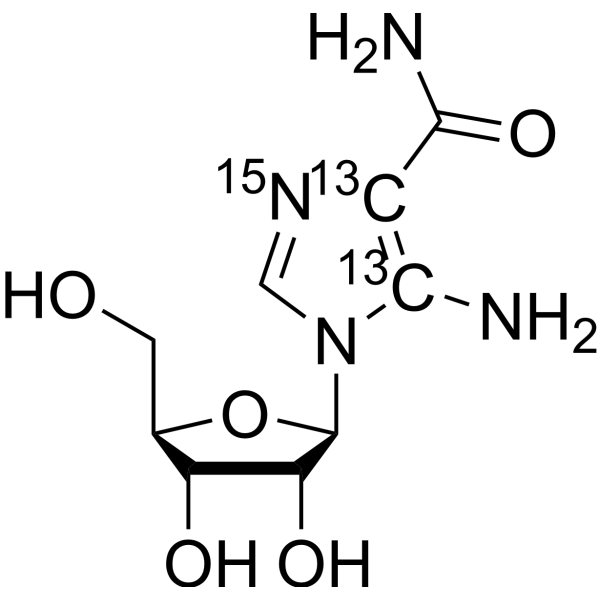 0 ImagesCat. No.: HY-13417SCAS No.: 1609374-70-0Synonyms: Acadesine-13C2,15N; AICA Riboside-13C2,15NAICAR-13C2,15N (Acadesine-13C2,15N; AICA Riboside-13C2,15N) is the 13C and 15N labeled AICAR (HY-13417). AICAR (Acadesine) is an adenosine analog and a AMPK activator. AICAR regulates the glucose and lipid metabolism, and inhibits proinflammatory cytokines and iNOS production. AICAR is also an autophagy, YAP and mitophagy inhibitor.
-
α-Costic acid
 0 ImagesCat. No.: HY-N16388CAS No.: 28399-17-9α-Costic acid is a plant sesquiterpene that can induce oxidative stress and autophagy in tomatoes. α-Costic acid has acaricidal activity.
-
MTP
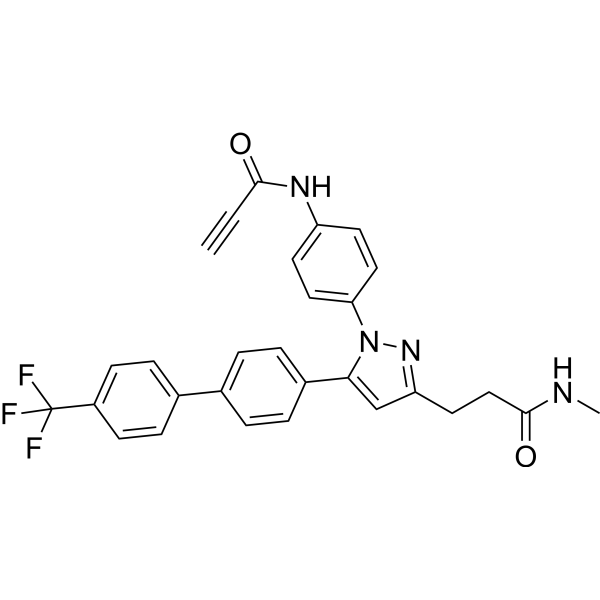 0 ImagesCat. No.: HY-155785CAS No.: 2377372-62-6
-
Thalidomide-piperazine-C-azetidine-C2-OH
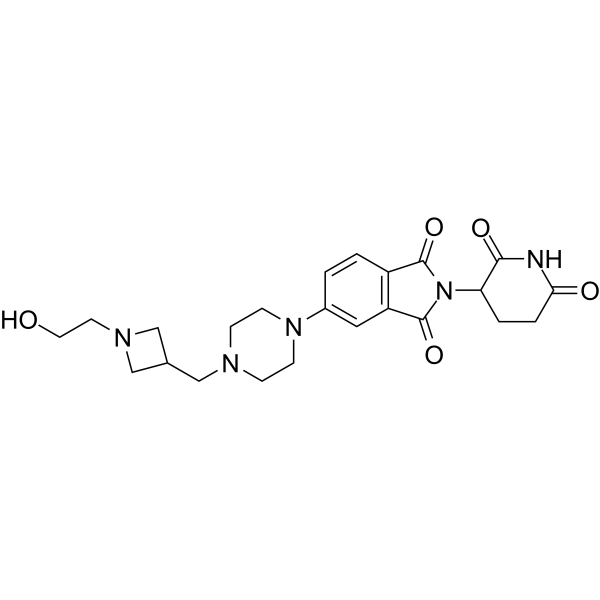 0 ImagesCat. No.: HY-161200Thalidomide-piperazine-C-azetidine-C2-OH is a conjugate of E3 ligase ligand and linker, consisting of Thalidomide (HY-14658) and the corresponding Linker. Thalidomide-piperazine-C-azetidine-C2-OH can serve as a Cereblon ligand to recruit CRBN protein and serve as a key intermediate for the synthesis of complete PROTAC molecules.
-
Thalidomide-5-O-C12-NH2 hydrochloride
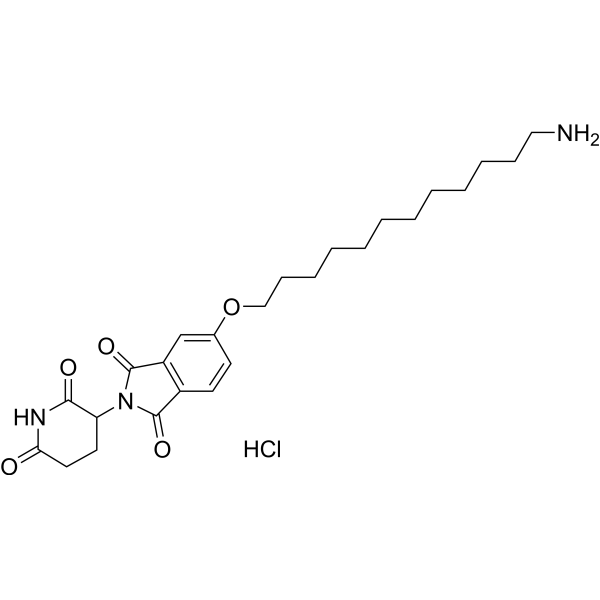 0 ImagesCat. No.: HY-149569Purity: 99.90%Thalidomide-5-O-C12-NH2 hydrochloride is the Thalidomide (HY-10984)-based cereblon ligand used in the recruitment of CRBN protein.Thalidomide-5-O-C12-NH2 hydrochloride can be connected to the ligand for protein by a linker to form PROTACs.
-
2-Methylbiphenyl-oxadiazole-NH-Ph-CHO
 0 ImagesCat. No.: HY-169365CAS No.: 2766689-18-12-Methylbiphenyl-oxadiazole-NH-Ph-CHO is a PD-L1 ligand. 2-Methylbiphenyl-oxadiazole-NH-Ph-CHO serves as the PD-L1 ligand of AUTAC PDL1 degrader-2 (HY-169363). 2-Methylbiphenyl-oxadiazole-NH-Ph-CHO activates the autophagy-lysosome system and upregulates autophagy-lysosome-related genes. 2-Methylbiphenyl-oxadiazole-NH-Ph-CHO is applicable for cancer research.
-
HDAC-IN-62
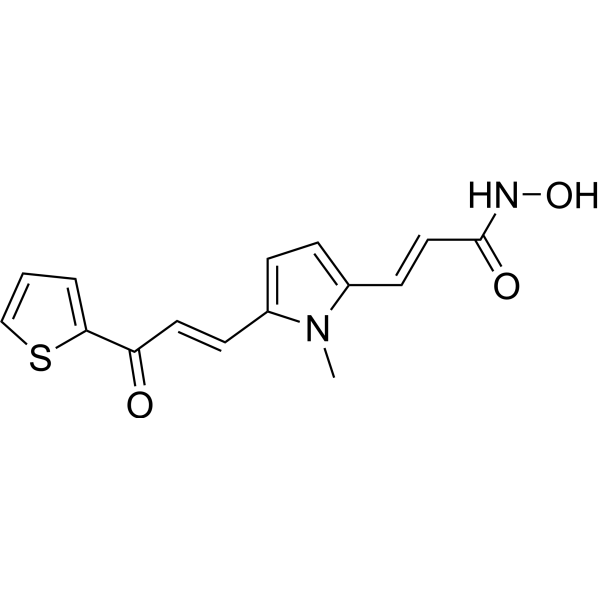 0 ImagesCat. No.: HY-155182HDAC-IN-62 (Compound 5) a HDAC inhibitor, with IC50s of 0.78, 1.0, 1.2? μM for HDAC6/8/11 respectively. HDAC-IN-62 inhibits-induced microglial activation by the initiation of autophagy, and inhibits nitric oxide production. HDAC-IN-62 has anti-inflammatory and anti-depressant effects. HDAC-IN-62 inhibits microglial activation in mouse brain.
-
HDAC6-IN-79
 0 ImagesCat. No.: HY-182747HDAC6-IN-79 is a HDAC6 inhibitor with an IC50 of 98.40 nM, and it also exhibits inhibitory activity against other HDAC subtypes (HDAC1: 639.0 nM, HDAC2: 798.9 nM, HDAC8: 865.7 nM, HDAC4: 1187 nM). HDAC6-IN-79 induces acetylation of α-tubulin and histone H3, reduces the viability of cancer cells, activates the autophagy pathway and induces apoptosis. HDAC6-IN-79 can be used for research related to urothelial carcinoma (bladder cancer).
-
Cilostazol-d4
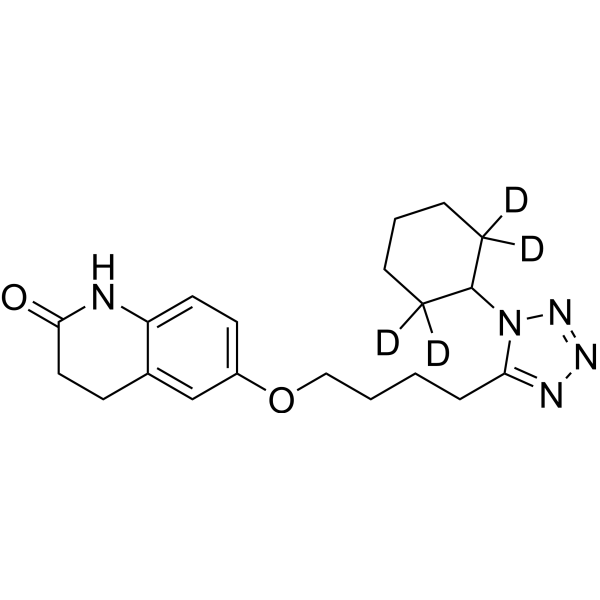 0 ImagesCat. No.: HY-17464S1CAS No.: 1215541-47-1Synonyms: OPC-13013-d4Cilostazol-d4 is deuterium labeled Cilostazol. Cilostazol (OPC 13013) is a potent and selective inhibitor of phosphodiesterase (PDE) 3A, the isoform of PDE 3 in the cardiovascular system, with an IC50 of 0.2 μM.
-
Daucosterol (Standard)
 0 ImagesSynonyms: Eleutheroside A (Standard); β-Sitosterol β-D-glucoside (Standard)Daucosterol (Standard) is the analytical standard of Daucosterol. This product is intended for research and analytical applications. Daucosterol is an orally active natural sterol compound, which has anti-inflammatory, anticancer and immunomodulatory activities. Daucosterol inhibits cancer cell proliferation by inducing autophagy through ROS-dependent manner. Daucosterol also inhibits colon cancer growth by inducing apoptosis, inhibiting cell migration and invasion and targeting caspase signalling pathway.
-
Pseudolaric Acid B (Standard)
 0 ImagesPseudolaric Acid B (Standard) is the analytical standard of Pseudolaric Acid B. This product is intended for research and analytical applications. Pseudolaric Acid B is an orally active diterpene acid. Pseudolaric Acid B has anti-fungal, anti-fertility, anti-angiogenesis and anticancer activity, and can induce tumor cell apoptosis and autophagy. In addition, Pseudolaric Acid B can inhibit the secretion of hepatitis B virus (HBV) and has immunosuppressive effect, selectively inhibiting the proliferation of T lymphocytes and the production of IL-2.
-
23-Hydroxybetulinic acid (Standard)
 0 ImagesCat. No.: HY-N0566RCAS No.: 85999-40-2Synonyms: Anemosapogenin (Standard)23-Hydroxybetulinic acid (Standard) is the analytical standard of 23-Hydroxybetulinic acid (HY-N0566). This product is intended for research and analytical applications. 23-Hydroxybetulinic acid (Anemosapogenin) is an orally active triterpenoid with broad-spectrum anticancer activity. 23-Hydroxybetulinic acid reduces the levels of Bcl-2 and survivin, elevates the level of Bax, promotes the cleavage/activation of caspase-3 and caspase-9, and induces apoptosis via the endogenous mitochondrial pathway involving cytochrome C release and mitochondrial membrane potential disruption. 23-Hydroxybetulinic acid arrests the cell cycle at S and G1 phases, inhibits cancer cell proliferation, blocks the MAPK signaling pathway, regulates MMP2, and induces autophagic apoptosis by upregulating beclin-1. 23-Hydroxybetulinic acid inhibits the activity and efflux function of P-gp, increases the intracellular accumulation of chemotherapeutic drugs, and synergistically enhances cytotoxicity with Doxorubicin (HY-15142). 23-Hydroxybetulinic acid inhibits the phosphorylation and nuclear translocation of STAT6, blocks M2 macrophage polarization, and reduces M2 macrophage-mediated apoptosis resistance of colon cancer cells. 23-Hydroxybetulinic acid can be used in related studies on chronic myeloid leukemia, hepatocellular carcinoma, sarcoma 180, multidrug-resistant breast cancer, leukemia, Doxorubicin-induced cardiotoxicity, and colorectal cancer.
-
Sildenafil citrate-d8
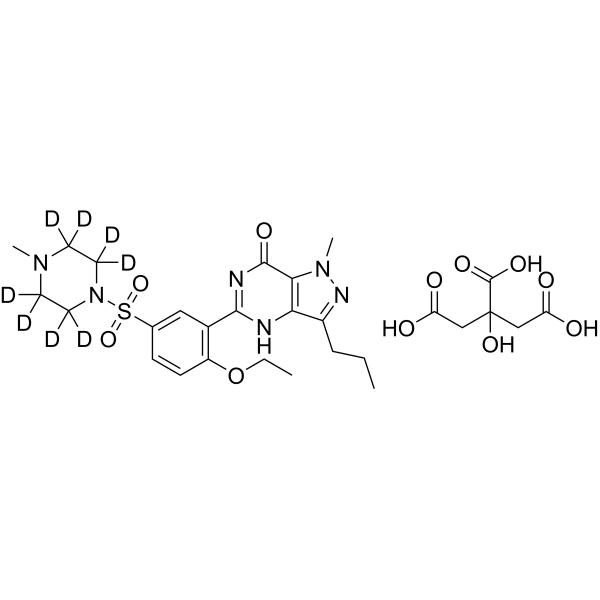 0 ImagesCat. No.: HY-15025ASCAS No.: 1215071-03-6Synonyms: UK-92480 citrate-d8Sildenafil (citrate)-d8 is the deuterium labeled Sildenafil citrate. Sildenafil citrate is a potent phosphodiesterase type 5 (PDE5) inhibitor with IC50 of 5.22 nM.
-
Thalidomide-PEG3-NH2 hydrochloride
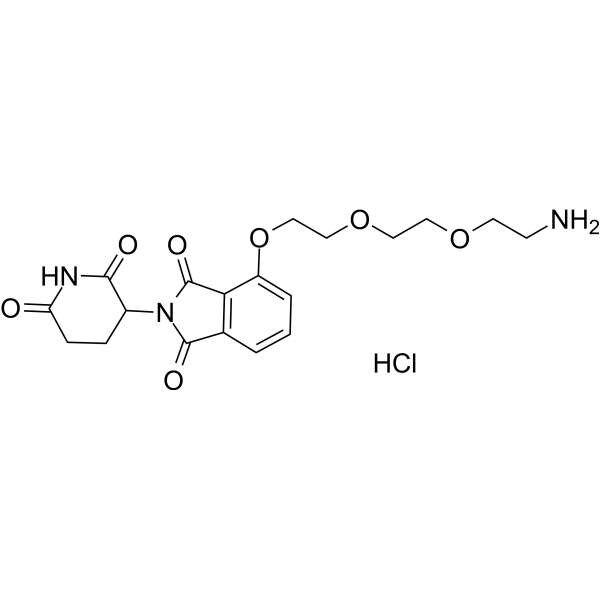 0 ImagesCat. No.: HY-130965BCAS No.: 2983036-20-8Thalidomide-PEG3-NH2 hydrochloride is the Thalidomide (HY-10984)-based cereblon ligand used in the recruitment of CRBN protein.Thalidomide-PEG3-NH2 hydrochloride can be connected to the ligand for protein by a linker to form PROTACs.
-
Streptozotocin (Standard)
 0 ImagesCat. No.: HY-13753RCAS No.: 18883-66-4Synonyms: Streptozocin (Standard); NSC-85998 (Standard); U 9889 (Standard)Streptozotocin (Standard) is the analytical standard of Streptozotocin (HY-13753). This product is intended for research and analytical applications. Streptozotocin (Streptozocin; STZ) is an antibiotic widely used in experimental animal models of induced diabetes. Streptozotocin enters B cells via the glucose transporter (GLUT2) and causes the alkylation of DNA ( DNA-methylating ). Streptozotocin can induce the apoptosis of β cells.
-
KRC-108
 0 ImagesCat. No.: HY-123237CAS No.: 1146944-35-5KRC-108, an aminopyridine, is an orally active multiple kinase inhibitor with IC50s of 80 nM, 23 nM, 3 nM, 70 nM, 30 nM, 39 nM for c-Met, c-Met M1250T, c-Met Y1230D, Ron, Flt3 and TrkA, respectively. KRC-108 induces cell cycle arrest, apoptotic cell death, and autophagy. KRC-108 exhibits anti-tumor activity in vivo in HT29 colorectal cancer, NCI-H441 lung cancer xenograft models in athymic BALB/c nu/nu mice.




