



Bacterial
Anything that destroys bacteria or suppresses their growth or their ability to reproduce. Heat, chemicals such as chlorine, and antibiotic drugs all have antibacterial properties. Many antibacterial products for cleaning and handwashing are sold today. Such products do not reduce the risk for symptoms of viral infectious diseases in otherwise healthy persons. This does not preclude the potential contribution of antibacterial products to reducing symptoms of bacterial diseases in the home.
All Product Categories
-
Bacterial Inhibitors
(7547)
View all products
-
Bacterial Agonists
(3)
View all products
-
Bacterial Antagonists
(9)
View all products
-
Bacterial Activators
(25)
View all products
-
Bacterial Modulators
(27)
View all products
-
Bacterial Chemicals
(2)
View all products
-
Bacterial Inducers
(6)
View all products
-
Bacterial Controls
(14)
View all products
-
Bacterial Substrates
(2)
View all products
-
Bacterial Ligand
(1)
View all products
-
Bacterial Related Products (8884)
Related Products (8884)

-
Antibodies (14)
-
Related Compound Screening Libraries (1)
-
Celastramycin A
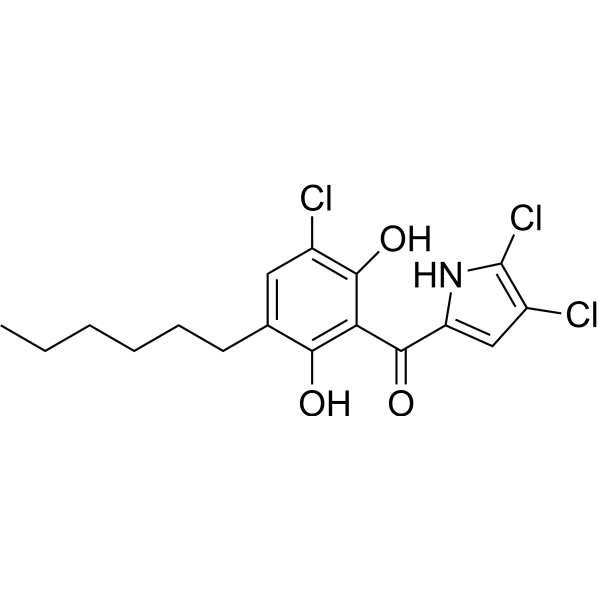 0 ImagesCelastramycin A is an antibiotic isolated from Streptomyces MaB-QuH-8, which exhibits antimicrobial activity against series of gram-negative bacteria and mycobacteria, with MICs between 0.05-3.1 μg/ml. Celastramycin A exhibits immunosuppressing efficacy in ex vivo Drosophila through immune deficiency pathway (IC50 of 0.008 μg/ml), inhibits the immunoresponse in human innate immunity through TNF-α signaling, inhibits IL-8 production in HUEVCs with IC50 of 0.06 μg/ml.
-
DNA ligase-IN-1
 0 ImagesCat. No.: HY-150330CAS No.: 68302-07-8DNA ligase-IN-1 (Compound 1) is an inhibitor of bacterial NAD+-dependent DNA ligase (LigA). DNA ligase-IN-1 effectively inhibits the growth of Staphylococcus aureus in vitro.

-
1-Hydroxy-3,5-dimethoxyxanthone
 0 Images1-Hydroxy-3,5-dimethoxyxanthone is a xanthone and Antibacterial agent. 1-Hydroxy-3,5-dimethoxyxanthone can be isolated from Lomatogonium rotatum. 1-Hydroxy-3,5-dimethoxyxanthone inhibits the growth of Pseudomonas aeruginosa ATCC27853 and Escherichia coli ATCC25923 with an MIC of 640 μg/mL. 1-Hydroxy-3,5-dimethoxyxanthone exhibits anticancer activity against cervical cancer, breast cancer, melanoma, liver cancer, and gastric cancer.
-
hLF (28-34)
 0 ImagesCat. No.: HY-P11131Synonyms: Human lactoferrin (28-34)hLF (28-34) (Human lactoferrin (28-34)) is a loop region of human lactoferrin (hLF) that is essential for the high-affinity binding of LPS. hLF (28-34) is a key site responsible for its high-affinity binding to E. coli 055B5 lipopolysaccharide. hLF (28-34) can be used for antibacterial research.
-
Lemongrass oil
 0 ImagesLemongrass oil is an essential oil extracted from lemongrass. It has anti-frustration, antibacterial, sterilizing, deodorizing, mold killing, insect killing and disease prevention effects.
-
Evernia prunastri extract
 0 ImagesCat. No.: HY-N18662CAS No.: 90028-68-5
-
CBR-6672
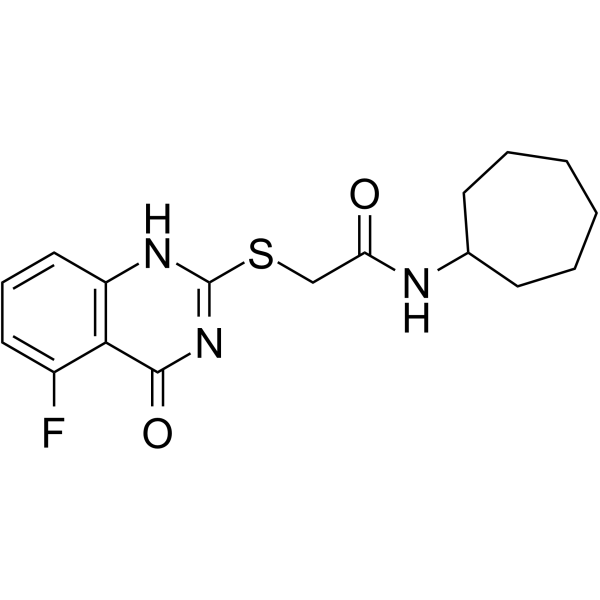 0 ImagesCat. No.: HY-145986CAS No.: 2225885-40-3CBR-6672 is a mycobacterium tuberculosis (Mtb) type II NADH dehydrogenase inhibitor, with the MIC of 0.14 μM against Mtb.
-
Friulimicin D
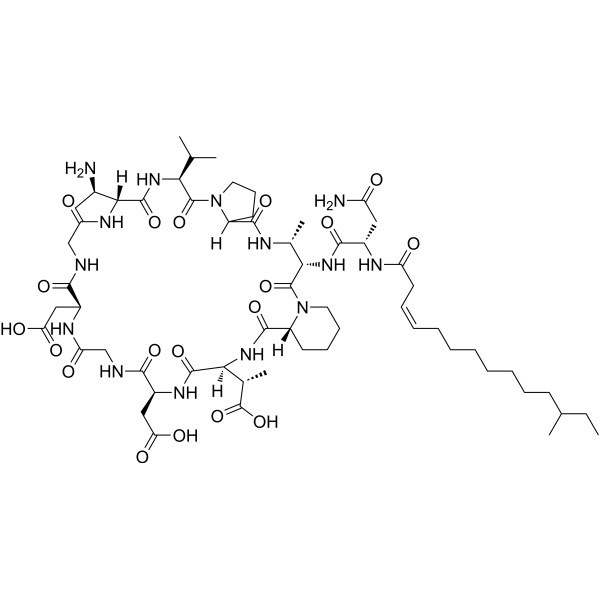 0 ImagesCat. No.: HY-P3511CAS No.: 302327-42-0Friulimicin D, a lipopeptide antibiotic, like Friulimicin B, is isolated from the actinomycete Actinoplanes friuliensis.
-
SP2
 0 ImagesCat. No.: HY-P10604CAS No.: 678138-45-9SP2 is a 14-amino acid long active peptide that can induce growth arrest in MTLa cells of the mating type locus of Candida albicans.
-
Mansonone F
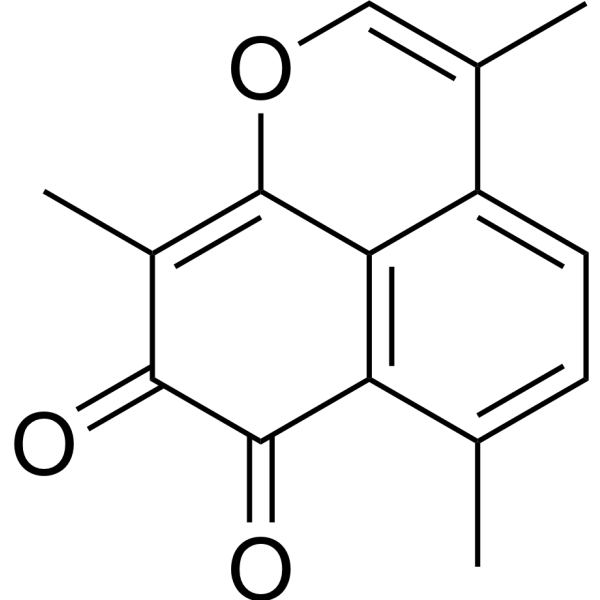 0 ImagesMansonone F acts as an estrogen receptor antagonist and an antimicrobial agent. Mansonone F effectively inhibits 17β-estradiol-induced β-galactosidase activity. Derivatives of Mansonone F also exhibit antioxidant and anti-Staphylococcus aureus biological activities. Mansonone F can be used in studies related to Staphylococcus aureus infections and methicillin-resistant Staphylococcus aureus (MRSA) infections.
-
4-Ethyloctane
 0 ImagesCat. No.: HY-N12553CAS No.: 15869-86-04-Ethyloctane is an active ingredient that can be extracted from peony. 4-Ethyloctane has strong antibacterial activity against Staphylococcus aureus (MIC = 0.04 mg/mL). 4-Ethyloctane can be used for research on bacterial infections.
-
DNA Gyrase-IN-8
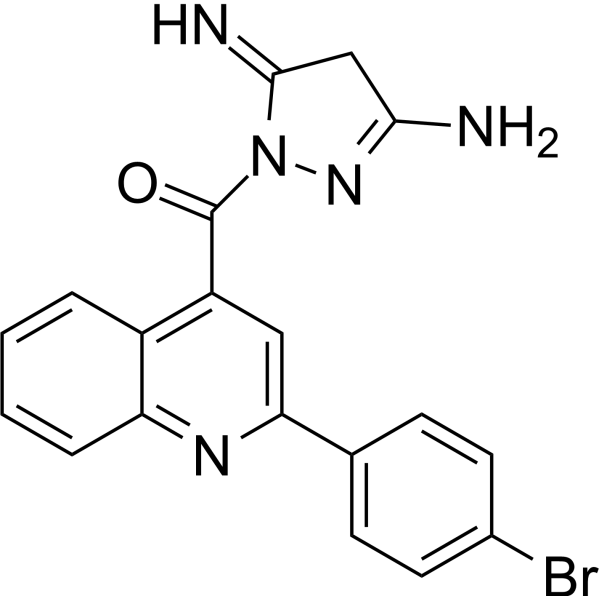 0 ImagesCat. No.: HY-149294CAS No.: 2925308-76-3DNA Gyrase-IN-8 is a potent DNA gyrase inhibitor with an IC50 value of 8.45 µM. DNA Gyrase-IN-8 shows antimicrobial activity.
-
BING
 0 ImagesCat. No.: HY-P10411CAS No.: 2396407-35-3BING is an antimicrobial peptide that can be isolated from Japanese medaka fish. BING shows a broad-spectrum toxicity against pathogenic bacteria including drug-resistant strains. BING induces a deregulation of periplasmic peptidyl-prolyl isomerases in gram-negative bacteria, and reduces the RNA level of cpxR, which plays a crucial role in the development of antimicrobial resistance.
-
ChMAP-28
 0 ImagesCat. No.: HY-P11182ChMAP-28 is an antimicrobial peptide. ChMAP-28 can be derived from goat Capra hircus. ChMAP-28 can initiate necrotic death. ChMAP-28 is effective in killing many bacteria, including strains resistant to Polymyxin and Meropenem (HY-13678). ChMAP-28 shows antitumor activity against acute promyelocytic leukemia, epidermoid carcinoma, melanoma, breast adenocarcinoma.
-
3,9-Dihydroxypterocarpan
 0 ImagesCat. No.: HY-N8762CAS No.: 61135-91-9Synonyms: Demethylmedicarpin3,9-Dihydroxypterocarpan (Demethylmedicarpin) is a Steroids product that can be isolated from the herbs of Nerium indicum Mill..
-
Fumaramidmycin
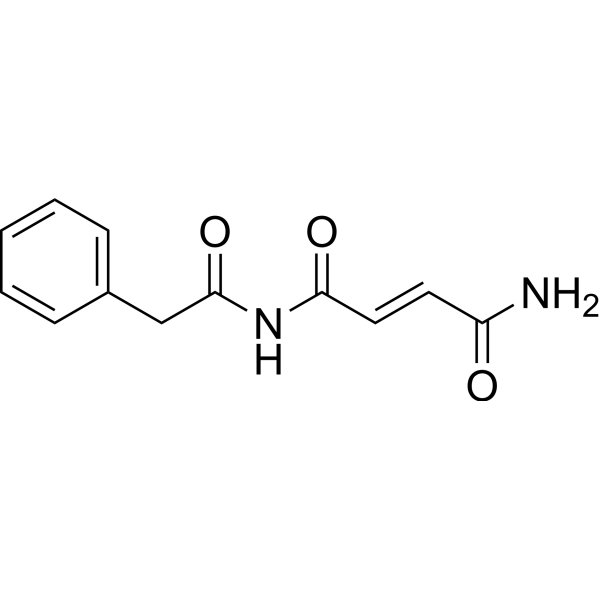 0 ImagesCat. No.: HY-114938CAS No.: 57687-92-0Fumaramidmycin is an antibiotic found in Streptomyces kurssanovii NR-7GG1. Fumaramidmycin shows an antimicrobial activity against both Gram-positive and Gram-negative bacteria.
-
8-Hydroxy-9,10-diisobutyryloxythymol
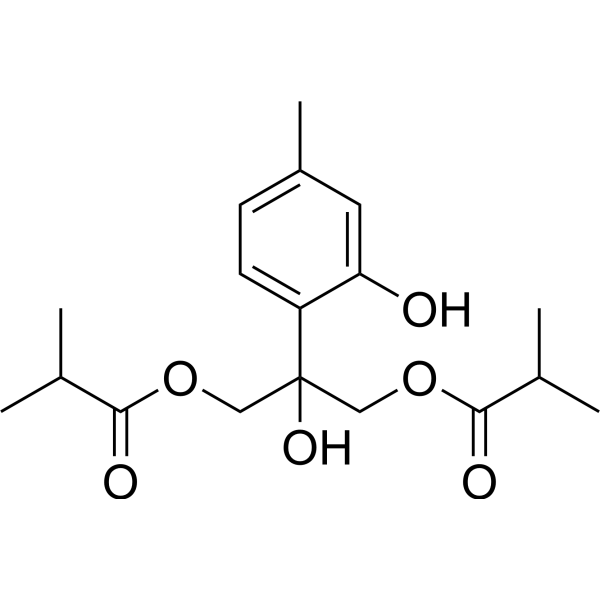 0 ImagesCat. No.: HY-N9735CAS No.: 22518-08-78-Hydroxy-9,10-diisobutyryloxythymol is a natural monoterpenoid with antibacterial properties. 8-Hydroxy-9,10-diisobutyryloxythymol against S. aureus, S. flexneri, and S. paratyphi-B with MIC values of 6.25 μg/mL.
-
Psoracorylifol C
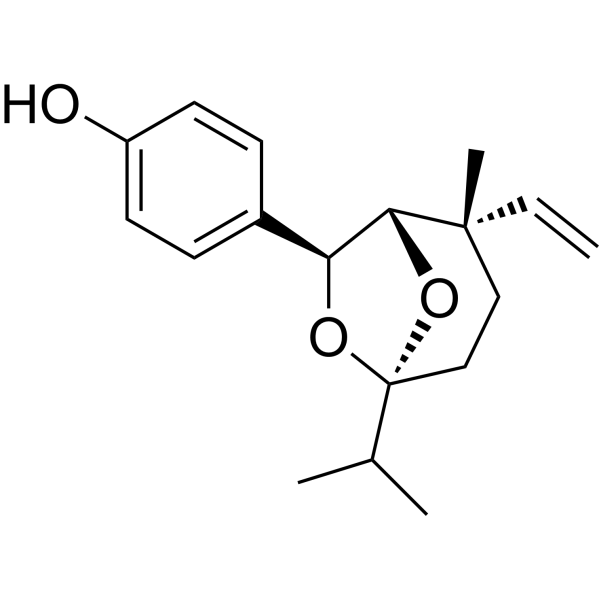 0 ImagesCat. No.: HY-N10820CAS No.: 879290-99-0Psoracorylifol C is a natural product. Psoracorylifol C has important activity against Helicobacter pylori. Psoracorylifol C can be isolated from the seeds of Psoralea corylifolia.
-
Antibacterial agent 108
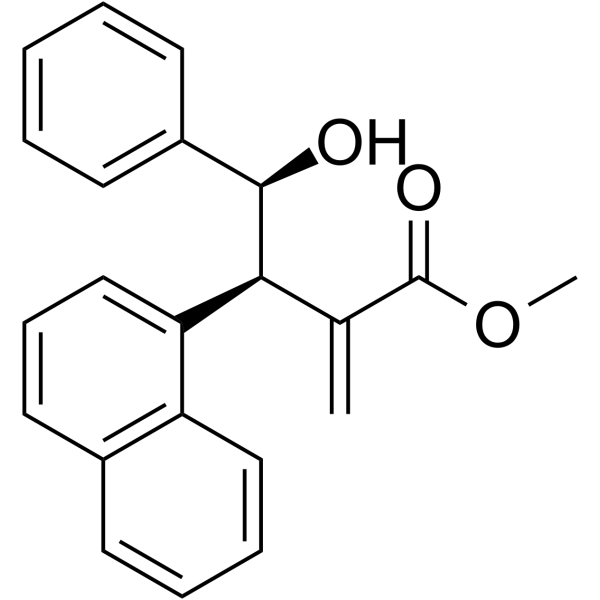 0 ImagesCat. No.: HY-146199CAS No.: 900784-30-7Antibacterial agent 108 (Compound 1h) is a potent antibacterial agent with a MIC of both 3 μM against MRSA and antibiotic resistance strains.




