



HSV
Herpes simplex virus
HSV (Herpes simplex virus) can be spread when an infected person is producing and shedding the virus. Herpes simplex can be spread through contact with saliva, such as sharing drinks. Symptoms of herpes simplex virus infection include watery blisters in the skin or mucous membranes of the mouth, lips or genitals. Lesions heal with ascab characteristic of herpetic disease. As neurotropic and neuroinvasive viruses, HSV-1 and -2 persist in the body by becoming latent and hiding from the immune system in the cell bodies of neurons. After the initial or primary infection, some infected people experience sporadic episodes of viral reactivation or outbreaks.
HSV Isoform Specific Products
All Product Categories
-
HSV Related Products (362)
Related Products (362)

-
HSV Isoform Comparison
-
Famciclovir-d4
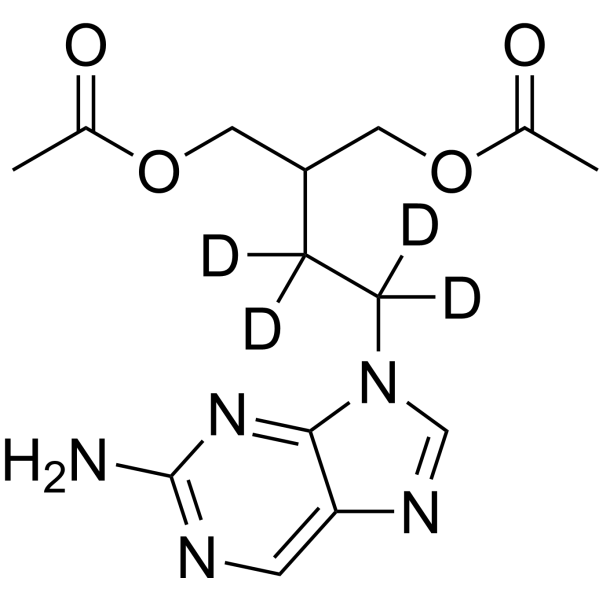 0 ImagesCat. No.: HY-17426SCAS No.: 1020719-42-9Synonyms: BRL 42810-d4
-
HBA(111–142)
 0 ImagesCat. No.: HY-P5693HBA(111-142), an antimicrobial peptide, is a C-terminal 32-mer fragment of alpha-hemoglobin. HBA(111-142) has antibacterial activity against the ESKAPE panel of pathogens. HBA(111-142) forms amyloid fibrils, and has antiviral activities. HBA(111-142) inhibits measles and herpes viruses (HSV-1, HSV-2, HCMV).
-
Phosphonoacetic acid sodium
 0 ImagesCat. No.: HY-128744ACAS No.: 36983-81-0Phosphonoacetic acid sodium is a potent antiviral agent. Phosphonoacetic acid sodium inhibits a variety of herpesviruses, orthopoxviruses, and retroviruses. Phosphonoacetic acid sodium strongly inhibits viral and cellular DNA polymerase, reverse transcriptase, and terminal deoxynucleotidyl transferase activities in a non-competitive or uncompetitive manner by binding to the pyrophosphate site of the enzyme. Phosphonoacetic acid sodium is useful for research related to lymphoid leukemia, herpesvirus infection, and vaccinia virus skin lesions.

-
7-Oxodehydroabietinol
 0 ImagesCat. No.: HY-122973CAS No.: 33980-71-17-Oxodehydroabietinol is a selective inhibitor targeting the human herpesvirus HHV-2. 7-Oxodehydroabietinol can be used in anti-herpesvirus drug development to target HHV-2 infection.

-
Scopadulciol
 0 ImagesCat. No.: HY-183390CAS No.: 136565-26-9Scopadulciol is an orally effective β-catenin degrader, HSV-TK activator and proton pump inhibitor. By inducing β-catenin degradation, Scopadulciol downregulates the expression of downstream target genes such as cyclin D1, c-myc, and survivin; it also upregulates DR4/DR5 and downregulates Bcl-2, thereby exerting cytotoxicity and inducing apoptosis in cancer cells. Scopadulciol enhances the tumor-killing and bystander effects of prodrugs via activating HSV-TK, and can inactivate HSV-1. It shows synergistic antiviral effects when combined with Acyclovir (HY-17422) or Ganciclovir (HY-13637), with no cytotoxicity as a single agent. Scopadulciol can be applied in research related to bladder cancer, cervical cancer, glioblastoma, and digestive system cancers.
-
Vidarabine phosphate (Standard)
 0 ImagesCat. No.: HY-B0277ARCAS No.: 29984-33-6Synonyms: ara-AMP (Standard); ara-A 5'-monophosphate (Standard)Vidarabine phosphate (ara-AMP; ara-A 5'-monophosphate) (Standard) is the analytical standard of Vidarabine phosphate. This product is intended for research and analytical applications. Vidarabine phosphate is a purine nucleoside antiviral agent and a prodrug of Vidarabine (HY-B0277). Vidarabine phosphate is rapidly converted into the antiviral active Vidarabine in vivo, which selectively inhibits viral DNA polymerase and cellular ribonucleotide reductase, thereby blocking viral replication. Vidarabine phosphate also exhibits antifungal activity, induces late-stage cellular apoptosis, and causes cell cycle arrest. Vidarabine phosphate can be used in research related to severe chronic active Epstein-Barr virus (EBV) infection, herpes infection, and candidiasis.
-
Lepodisiran sodium scrambled negative control
 0 ImagesCat. No.: HY-177640BLepodisiran sodium scrambled negative control is the sequence scrambled negative control of Lepodisiran sodium.
-
Cangorinine E-1
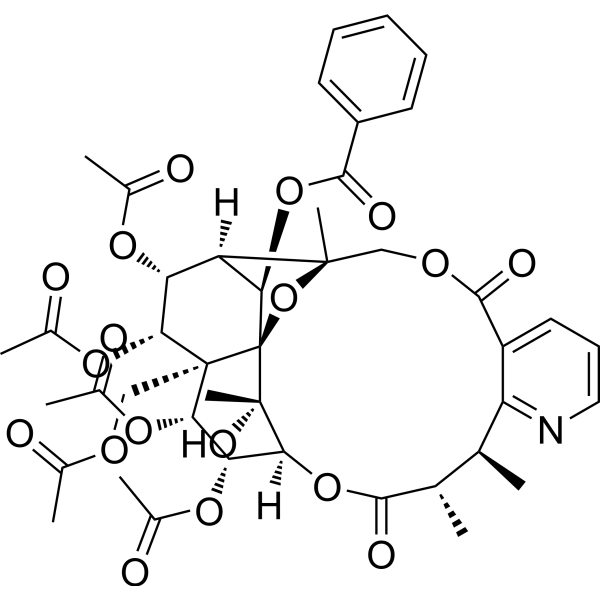 0 ImagesCat. No.: HY-N12191CAS No.: 155944-24-4Cangorinine E-1 (compound 11) is a dihydroagarofuran derivative of the sesquiterpenoid family. Cangorinine E-1 exhibits weak inhibitory effects on herpes simplex virus type II (HSV).
-
Surfen
 0 ImagesSurfen is a potent heparan sulfate antagonist. Surfen inhibits FGF2 binding and signal transduction. Surfen binds to glycosaminoglycans and reduces tau hyperphosphorylation. Surfen inhibits the activity of recombinant uronyl 2-O-sulfotransferase with an IC50 of approximately 2 μM. Surfen inhibits HSV-1 viral infection. Surfen inhibits neural differentiation, delays remyelination, and alleviates EAE.
-
Phosphonoacetic acid (Standard)
 0 ImagesCat. No.: HY-128744RCAS No.: 4408-78-0Phosphonoacetic acid Standard is the analytical standard of Phosphonoacetic acid (HY-128744). This product is intended for research and analytical applications. Phosphonoacetic acid is a potent antiviral agent. Phosphonoacetic acid inhibits a variety of herpesviruses, orthopoxviruses, and retroviruses. Phosphonoacetic acid strongly inhibits viral and cellular DNA polymerase, reverse transcriptase, and terminal deoxynucleotidyl transferase activities in a non-competitive or uncompetitive manner by binding to the pyrophosphate site of the enzyme. Phosphonoacetic acid is useful for research related to lymphoid leukemia, herpesvirus infection, and vaccinia virus skin lesions.
-
9-Carboxymethoxymethylguanine-13C2,15N
 0 ImagesCat. No.: HY-W7706779-Carboxymethoxymethylguanine-13C2,15N is the 13C- and 15N-labeled 9-Carboxymethoxymethylguanine (HY-137181). 9-Carboxymethoxymethylguanine is the main metabolite of Aciclovir. Acyclovir (Aciclovir) is a guanosine analogue and an orally active antiviral agent.
-
16,16-Dimethyl prostaglandin A1
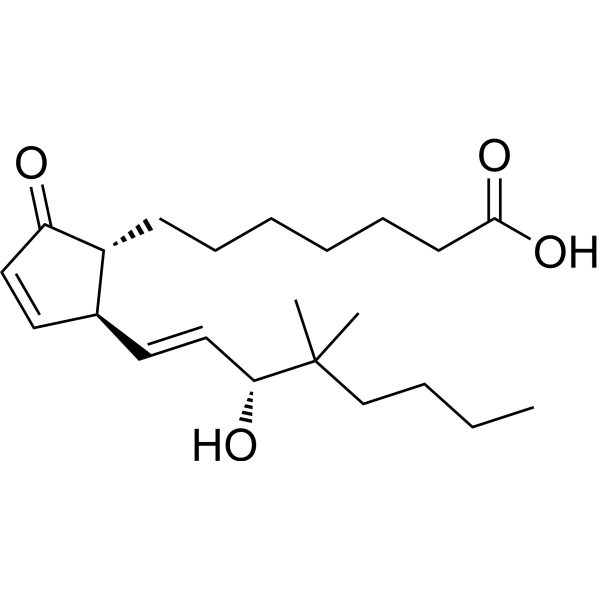 0 ImagesCat. No.: HY-116758CAS No.: 41692-24-4Synonyms: di-Me-PGA1
-
Trifluridine-13C,15N2
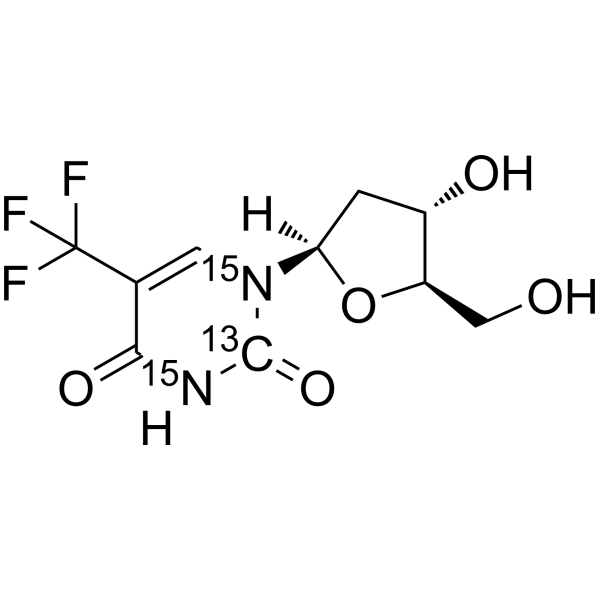 0 ImagesCat. No.: HY-A0061SCAS No.: 2086328-10-9Synonyms: Trifluorothymidine-13C,15N2; 5-Trifluorothymidine-13C,15N2; TFT-13C,15N2Trifluridine-13C,15N2 is the 13C and 15N labeled Trifluridine. Trifluridine (Trifluorothymidine;5-Trifluorothymidine;TFT) is an irreversible thymidylate synthase inhibitor, and thereby suppresses DNA synthesis. Trifluridine is an antiviral agent for herpes simplex virus (HSV) infection. Trifluorothymidine also has anti-orthopoxvirus activity.
-
9-Carboxymethoxymethylguanine
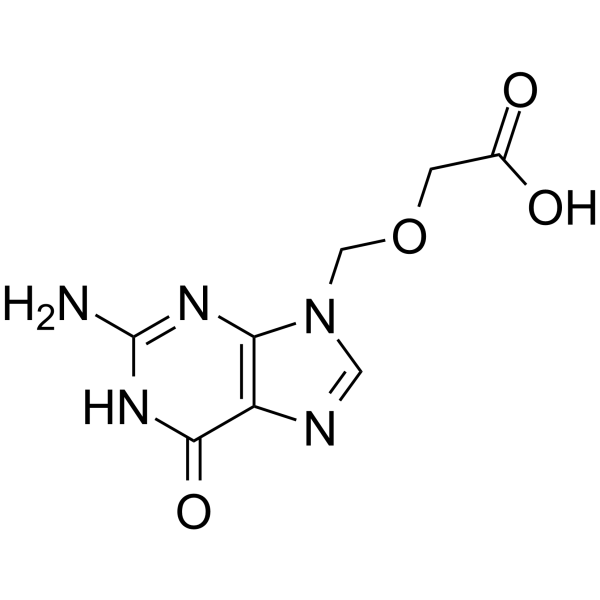 0 ImagesCat. No.: HY-137181CAS No.: 80685-22-9
-
Adenosine monophosphate-13C10,15N5,d12 dilithium
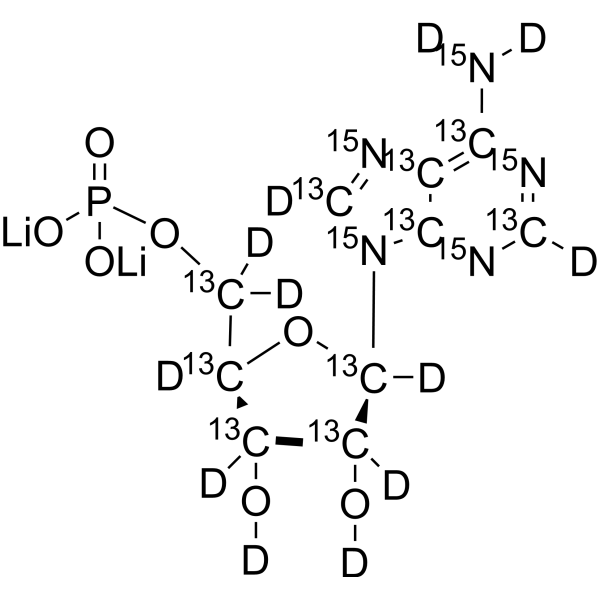 0 ImagesCat. No.: HY-A0181S4Synonyms: AMP-13C10,15N5,d12 dilithiumAdenosine monophosphate-13C10,15N5,d12 (AMP-13C10,15N5,d12) dilithium is 13C and 15N-labeled Adenosine monophosphate (HY-A0181). Adenosine monophosphate is an adenosine A1 receptor agonist. Adenosine monophosphate has significant antiviral activity against HSV-1 and HSV-2. Adenosine monophosphate is a key cellular metabolite regulating energy homeostasis and signal transduction.
-
(Rac)-Adibelivir hydrochloride
 0 ImagesCat. No.: HY-150306CCAS No.: 2954725-84-7Synonyms: (Rac)-IM-250 hydrochloride(Rac)-Adibelivir hydrochloride ((Rac)-IM-250 hydrochloride) is a blood-brain barrier-penetrant HSV helicase-primase inhibitor and metabolic stabilizer with antiviral activity. (Rac)-Adibelivir hydrochloride is also effective against Acyclovir (HY-17422)-resistant strains, and its deuterated structure exhibits enhanced metabolic stability, reducing the formation of hydroxylated metabolites. (Rac)-Adibelivir prolongs in vivo half-life, reduces administration dosage, improves oral bioavailability, and achieves higher brain exposure in mice. (Rac)-Adibelivir hydrochloride can be used in the research of herpes simplex infection, herpes encephalitis and Alzheimer's disease.
-
Oxytetracycline-d6
 0 ImagesCat. No.: HY-B0275SOxytetracycline-d6 is deuterium labeled Oxytetracycline. Oxytetracycline is an antibiotic belonging to the tetracycline class. Oxytetracycline potent inhibits Gram-negative and Gram-positive bacteria. Oxytetracycline is a protein synthesis inhibitor and prevents the binding from aminoacil-tRNA to the complex m-ribosomal RNA. Oxytetracycline also possesses anti-HSV-1 activity.



