



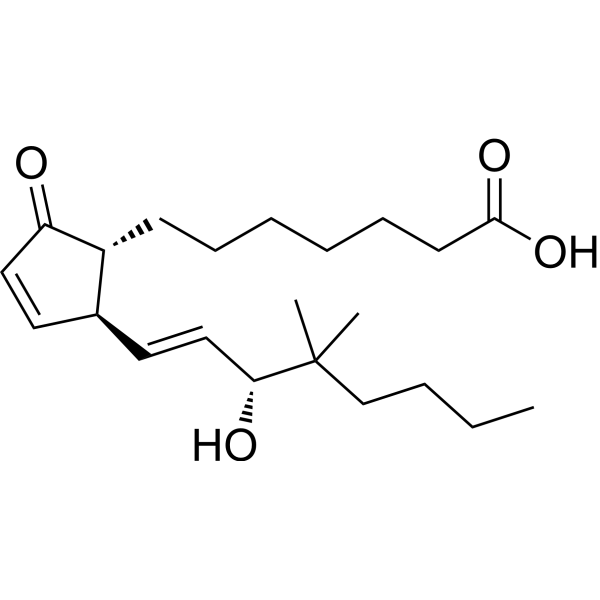
16,16-Dimethyl prostaglandin A1
16,16-Dimethyl prostaglandin A1 (di-Me-PGA1) is a prostaglandin analog that can inhibit DNA synthesis in Lewis lung carcinoma and B 16 amelanotic melanoma cells. 16,16-Dimethyl prostaglandin A1 also inhibits viral replication in both HSV and HIV-1 infection systems.
For research use only. We do not sell to patients.
- CAS No.: 41692-24-4
- Formula: C22H36O4
- Molecular Weight:364.52
-
Storage:
Please store the product under the recommended conditions in the Certificate of Analysis.

To place orders, for customer services and technical support, please contact: MedChemExpress USA
Tel: 609-228-6898 E-mail: [email protected] [email protected]


-
 Biological Activity
-
Chemical Information
- Protocols
- Purity & Documentation
- References
-
 Help & FAQs


-
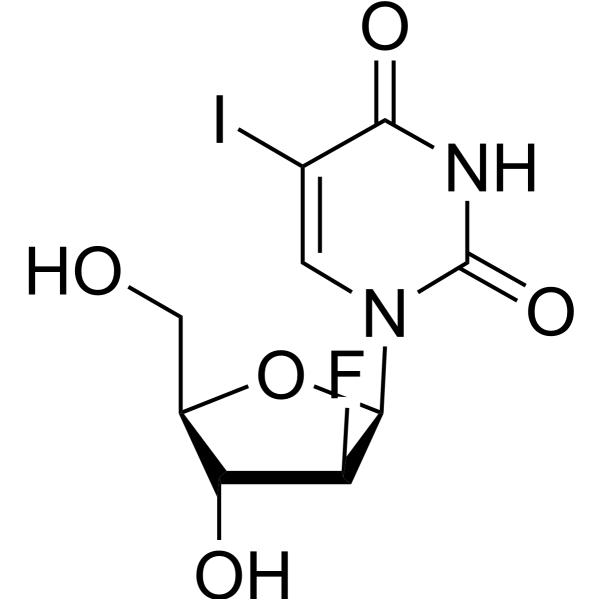
HY-118122
FialuridineAntiviral Agent -
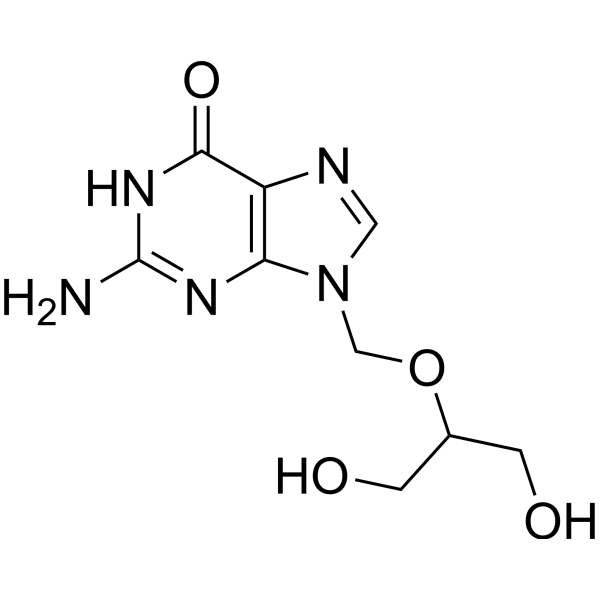
HY-13637
GanciclovirAntiviral Agent -

HY-13637R
Ganciclovir (Standard)Antiviral Agent -
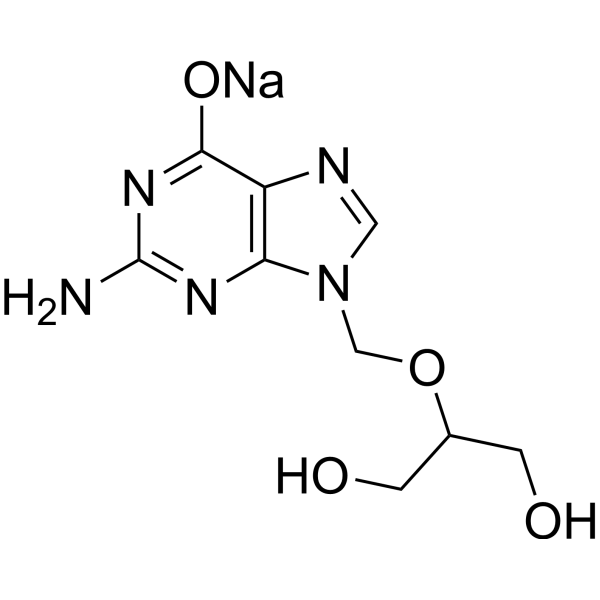
HY-13637A
Ganciclovir sodiumAntiviral Agent -
HY-N6972
CepharanthineAnti-infection Agent -
HY-18944
FIT-039CDK9 Inhibitor -
HY-N0039
Ginsenoside Rb1Autophagy Inducer -
HY-B1583
(Z)-CapsaicinTRP Channel Agonist -
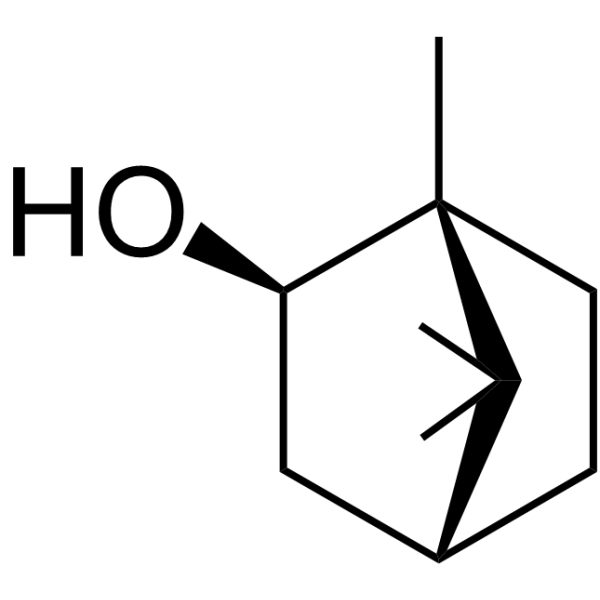
HY-N2004
IsoborneolHSV Inhibitor -
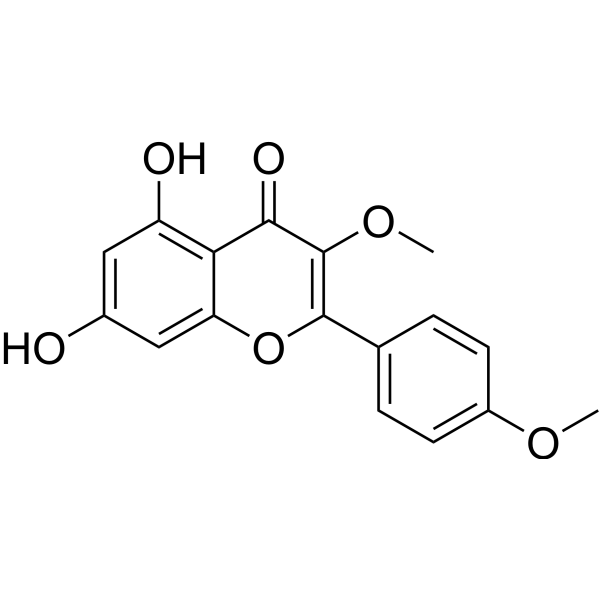
HY-N3848
ErmaniniNOS/COX-2 Inhibitor -
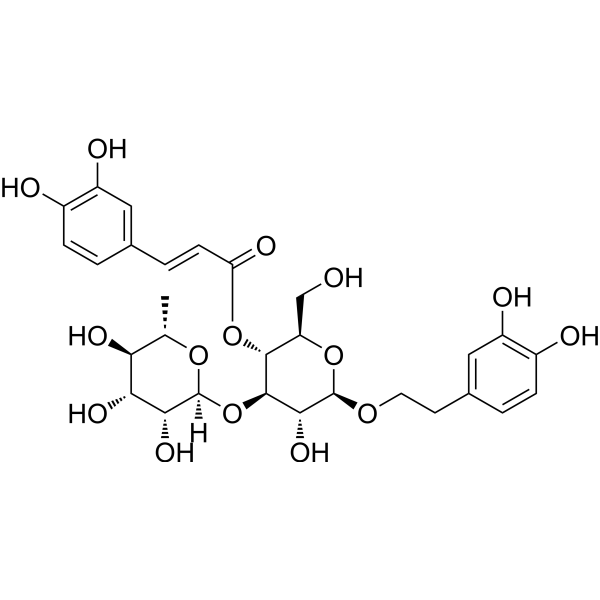
HY-N0021
VerbascosideBacterial Inhibitor -
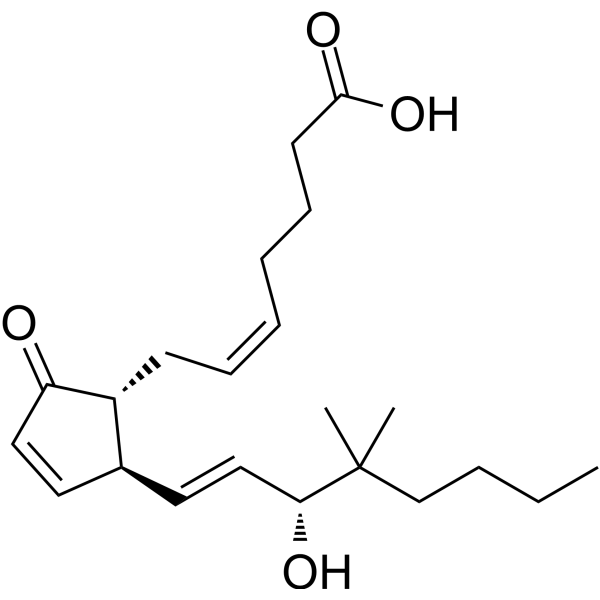
HY-137270
16,16-Dimethyl PGA2Prostaglandin Analog
All DNA/RNA Synthesis Isoforms
More

Biological Activity
Description


Chemical Information
-
CAS No. 41692-24-4
-
Molecular Weight 364.52
-
Formula C22H36O4
-
SMILES
CCCCC(C)(C)[C@H](O)/C=C/[C@@H]1[C@H](C(C=C1)=O)CCCCCCC(O)=O
-
Synonyms
di-Me-PGA1
-
Shipping
Room temperature in continental US; may vary elsewhere.
-
Storage
Please store the product under the recommended conditions in the Certificate of Analysis.

Protocols
-
EdU Incorporation Assay (Click Chemistry-Based DNA Synthesis Measurement)
The EdU incorporation assay measures DNA synthesis by adding the thymidine analog 5-ethynyl-2′-deoxyuridine to cells or tissues, where it is incorporated into newly synthesized DNA during S phase. Incorporated EdU is detected by copper-catalyzed azide-alkyne cycloaddition, in which a fluorescent azide covalently reacts with the ethynyl group on EdU, allowing S-phase cells to be detected by fluorescence microscopy, flow cytometry, or high-content imaging. EdU detection does not require DNA denaturation or anti-BrdU antibody access, which preserves sample structure and improves compatibility with immunostaining and multiparameter cytometry compared with BrdU-based detection. EdU can be cytotoxic in a cell-type- and exposure-dependent manner, so pulse duration, concentration, and continuous-labeling designs should be validated for each cell type.
-
Research Protocol for Infectious Diseases
Infectious-disease experiments test how pathogens interact with host barriers, innate immune receptors, inflammatory signaling, pathogen replication, and tissue injury; pattern-recognition receptors such as TLRs, RIG-I-like receptors, NOD-like receptors, and inflammasomes detect microbial molecules and activate NF-κB, interferon, and cytokine responses. The central hypothesis is that infection severity reflects the balance between pathogen burden and host response: protective inflammation restricts pathogen growth, whereas excessive or mislocalized inflammation contributes to tissue damage and disease phenotype. Unresolved questions include which host pathways are protective versus pathogenic, why some infection models fail to translate to human disease, and which combined readouts best predict clinically relevant infection outcomes.
-
BrdU Incorporation Assay
Bromodeoxyuridine (BrdU) incorporation assay is based on the principle that BrdU, a thymidine analog, is incorporated into newly synthesized DNA during the S phase of the cell cycle, thereby serving as a marker of DNA replication and cellular proliferation. Incorporated BrdU can be detected using anti-BrdU antibodies following DNA denaturation, enabling visualization or quantification of proliferating cells through immunochemical detection methods such as immunofluorescence or immunohistochemistry.


Purity & Documentation
References
[1]. K V Honn, et al. Prostaglandin analogs as inhibitors of tumor cell DNA synthesis. Proc Soc Exp Biol Med. 1981 Apr;166(4):562-7. [Content Brief]
[2]. M Hughes-Fulford, et al. Effects of dimethyl prostaglandin A1 on herpes simplex virus and human immunodeficiency virus replication. Antimicrob Agents Chemother. 1992 Oct;36(10):2253-8. [Content Brief]

Calculators
Concentration (start) × Volume (start) = Concentration (final) × Volume (final)


16,16-Dimethyl prostaglandin A1 Related Classifications
HY-116758 Related Classifications
 Powered by Bioz