



H2 Receptor
Histamine H2 receptor (H2R, HRH2) is a class A G protein-coupled receptor that mediates key histamine-dependent physiological responses and is best known for regulating gastric acid secretion through Gs-dependent activation of adenylyl cyclase, elevation of intracellular cAMP, and subsequent protein kinase A (PKA) signaling[1]. Mechanistically, H2R signaling extends beyond gastric physiology and influences cellular survival, receptor desensitization, internalization, and ERK1/2 pathway activation, highlighting its broader role in signal transduction and tissue homeostasis[1]. In cardiovascular systems, H2R participates in histamine-mediated regulation of atrial natriuretic peptide (ANP) release and cardiac function, and altered H2R signaling has been investigated in heart failure and related experimental models[2][3]. Compared with related histamine receptor isoforms, H2R is distinguished by its predominant coupling to Gs/cAMP signaling, whereas H1 receptors primarily activate phospholipase C pathways, H3 receptors function mainly as inhibitory presynaptic receptors, and H4 receptors are associated with immune cell regulation[1][4]. For experimental applications, selective agonists and antagonists have been widely used to dissect H2R-dependent signaling networks; notably, ligands such as famotidine can exhibit pathway-selective or biased signaling properties, differentially affecting cAMP and ERK signaling outputs and thereby providing useful pharmacological tools for mechanistic studies[1].
References:
- [1]. Alonso N, et al. Physiological implications of biased signaling at histamine H2 receptors. Front Pharmacol. 2015 Mar 10;6:45. [Content Brief]
- [2]. Li D, et al. Cardiac mast cells regulate myocyte ANP release via histamine H2 receptor in beating rabbit atria. Regul Pept. 2009 Jun 5;155(1-3):33-8. [Content Brief]
- [3]. Saheera S, et al. Histamine 2 receptors in cardiovascular biology: A friend for the heart. Drug Discov Today. 2022 Jan;27(1):234-245. [Content Brief]
-
H2 Receptor Related Products (64)
Related Products (64)

-
Zolantidine dimaleate
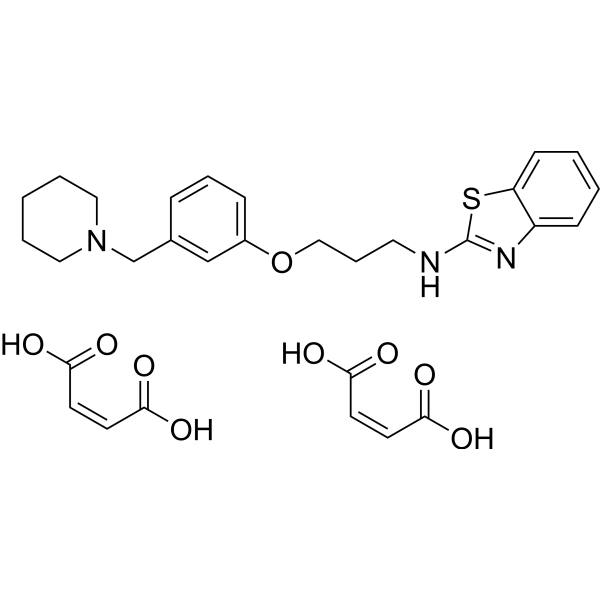 0 ImagesSynonyms: SKF 95282 dimaleateZolantidine dimaleate (SKF 95282 dimaleate) is a potent, selective and cross the blood-brain barrier histamine H2 antagonist. Zolantidine dimaleate induces antinociception.
-
Metiamide
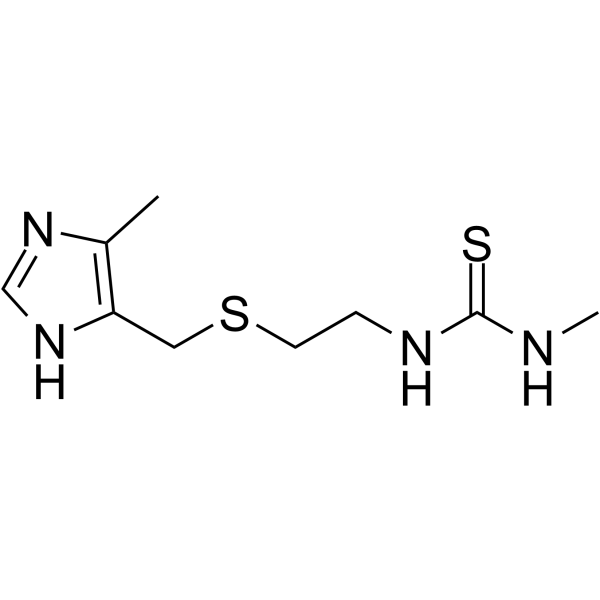 0 ImagesCat. No.: HY-15540CAS No.: 34839-70-8Synonyms: SK&F 92058Metiamide (SK&F 92058) is a histamine H2-receptor antagonist developed from another H2 antagonist, burimamide.
-
Famotidine (Standard)
 0 ImagesSynonyms: MK-208 (Standard)Famotidine (Standard) (MK-208 (Standard)) is the analytical standard of Famotidine (HY-B0377). This product is intended for research and analytical applications. Famotidine (MK-208) is an orally active and highly selective histamine H2 receptor antagonist. It inhibits gastric acid secretion by blocking the Gs signaling pathway, and regulates intracellular cAMP and ERK pathways. Famotidine inhibits TLR3-mediated inflammatory pathways, and reduces the expression of various inflammatory mediators and interferon-related genes. Famotidine scavenges DPPH and nitric oxide free radicals, alleviates oxidative stress damage in gastric tissue, inhibits proMMP-9, improves vascular endothelial permeability, and restores the normal physiological functions of neutrophils and eosinophils. Famotidine crosses intestinal epithelial cells via facilitated diffusion and passive diffusion, blocks paracellular cation transport, and increases intestinal transepithelial electrical resistance. Famotidine reduces serum levels of transaminases and alkaline phosphatase, exerts analgesic effects and gastric protective effects simultaneously. Famotidine can be used in studies related to COVID-19, liver injury and acute gastric ulcer.
-
Aminopotentidine
 0 ImagesAminopotentidine is a histamine H2 receptor antagonist with KB values of 220 nM and 280 nM for human and guinea pig H2 receptors, respectively. It can also serve as a precursor for the synthesis of [125I] iodo derivatives.
-
Roxatidine
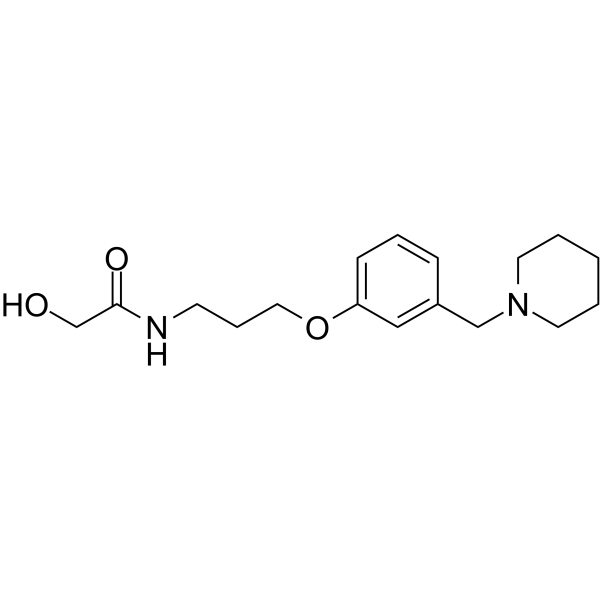 0 ImagesRoxatidine is an active metabolite of Roxatidine acetate hydrochloride, is an orally active histamine H2-receptor antagonist. Roxatidine, an anti-ulcer agent, suppresses histamine release (thus inhibiting proton secretion) and inhibits the production of VEGF-1, an important marker of inflammation and angiogenesis. Anti-allergic inflammatory effect. Roxatidine is promising for research of gastric and duodenal ulcers.
-
Carcinine dihydrochloride
 0 ImagesSynonyms: β-Alanylhistamine dihydrochlorideCarcinine (β-Alanylhistamine) dihydrochloride is the dihydrochloride salt of Carcinine (HY-107567). Carcinine is a selective and orally active histamine H3 receptor antagonist with a Ki of 0.2939 μM. Carcinine can reduce histamine content. Carcinine exhibits anti-oxidant activity and neuroprotective effects. Carcinine shows positive inotropic effect and can reduce blood sugar and blood lipid levels. Carcinine can be used for the researches of inflammation, neurological, cardiovascular and metabolic disease, such as retinal damage, seizure and diabetes.
-
Betazole dihydrochloride
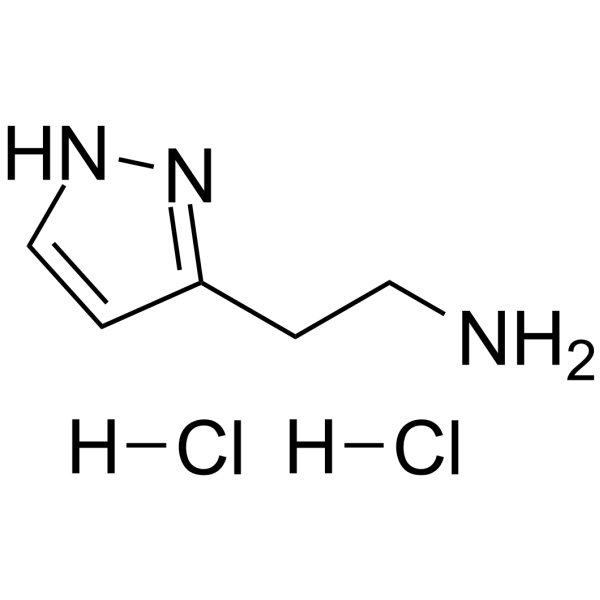 0 ImagesBetazole (Ametazole) dihydrochloride, a pyrazole analogue of histamine, is an orally active H2 receptor agonist. Betazole dihydrochloride induces gastric acid secretion, and causes an immediate and significant increase in common bile duct pressure. Betazole dihydrochloride has been used as a diagnostic agent known as histalog, for investigating gastric acid secretory capacity.
-
Zaltidine
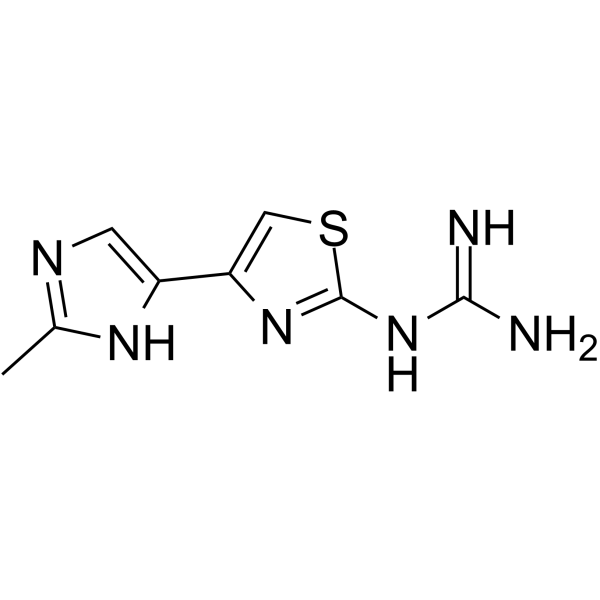 0 ImagesSynonyms: CP-57361Zaltidine dihydrochloride (CP-5736 dihydrochloride) is a highly specific H2 receptor antagonist with antisecretion activity. Zaltidine dihydrochloride reduces the stimulant effect of histamine on gastric acid secretion by binding to histamine H2 receptors on gastric parietal cells, thus reducing gastric acid production. Zaltidine dihydrochloride can be used in the study of gastric acid-related diseases such as duodenal ulcers.
-
Cimetidine hydrochloride
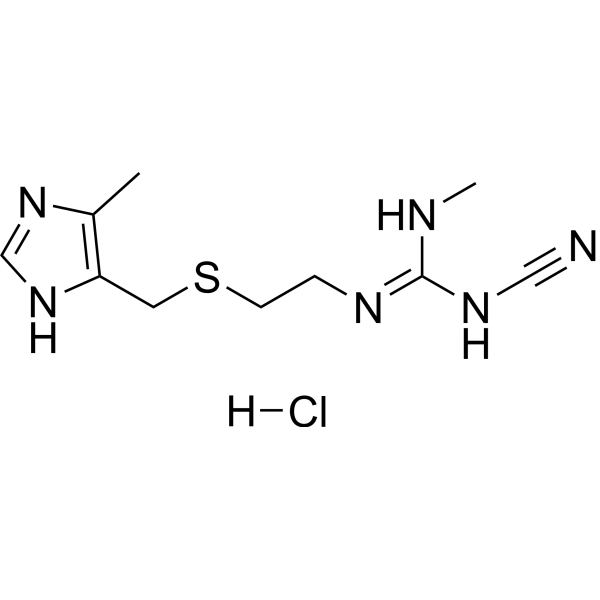 0 ImagesCat. No.: HY-14289ACAS No.: 70059-30-2Synonyms: SKF-92334 hydrochlorideCimetidine (SKF-92334) hydrochloride is an orally active, inverse and BBB-permeable histamine H2 receptor antagonist with a Ki of 0.6 μM. Cimetidine hydrochloride is a gastric acid reducer, and can be used for duodenal and gastric ulcers research. Cimetidine hydrochloride has anti-cancer and anti-inflammatory activity.
-
Cimetidine-d3
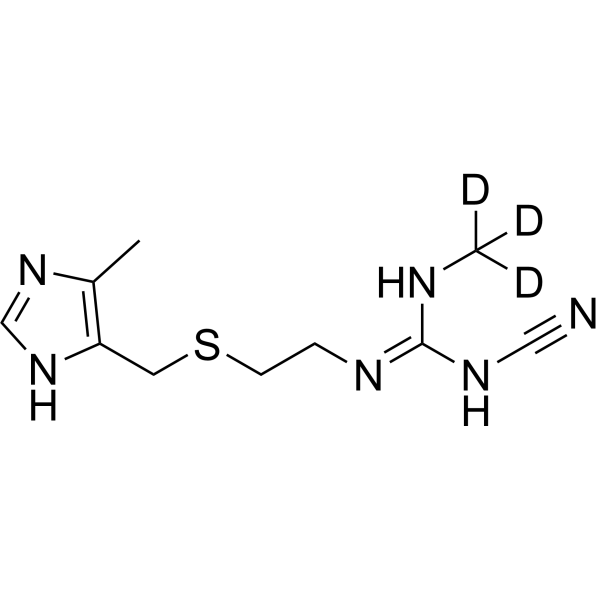 0 ImagesCat. No.: HY-14289SCAS No.: 1185237-29-9Synonyms: SKF-92334-d3Cimetidine-d3 is the deuterium labeled Cimetidine. Cimetidine (SKF-92334) is an orally active and inverse histamine H2 receptor antagonist with a Ki of 0.6 μM. Cimetidine is an inverse agonist. Cimetidine has anti-cancer and anti-inflammatory activity.
-
Nizatidine-d3
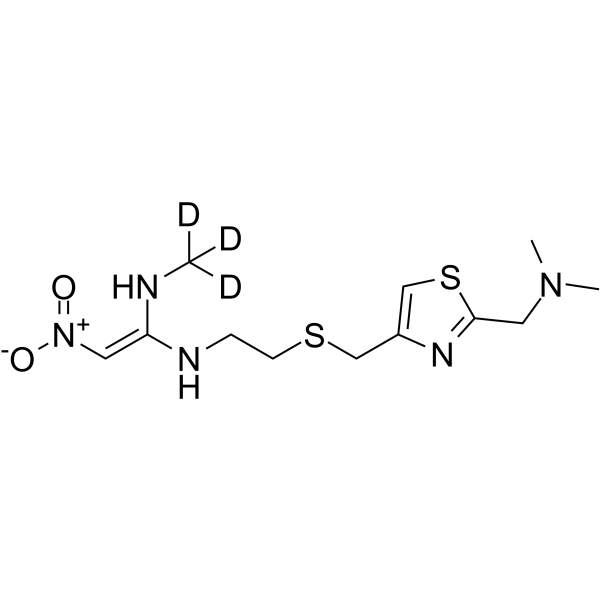 0 ImagesNizatidine-d3 is the deuterium labeled Nizatidine. Nizatidine is a potent and orally active histamine H2 receptor antagonist, can be used for the research of stomach?and?intestines ulcers. Nizatidine works by decreasing the secretion of gastric?acid the stomach makes and prevent ulcers from coming back after they have healed in animal models.
-
ROS 234 dioxalate
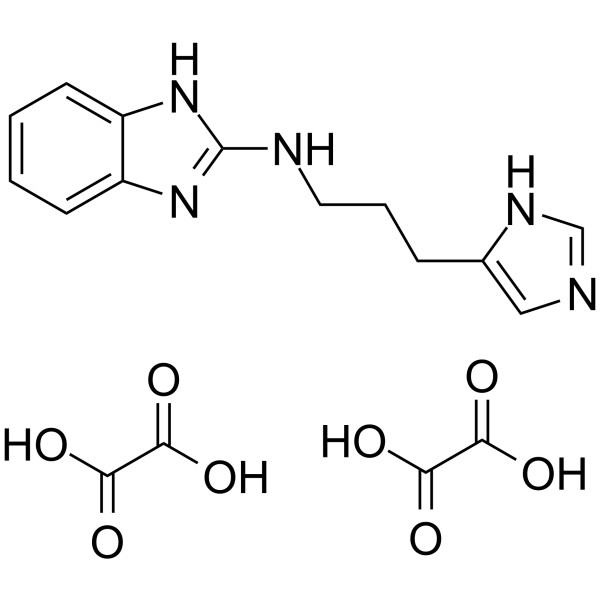 0 ImagesCat. No.: HY-107563ACAS No.: 1781941-93-2ROS 234 dioxalate is a potent H3 antagonist, with a pKB of 9.46 for Guinea-pig ileum H3-receptor, a pKi of 8.90 for Rat cerebral cortex H3-receptor, and a ED50 of 19.12 mg/kg (ip) in ex vivo of Rat cerebral cortex. ROS 234 dioxalate diaplays poor central access.
-
Betazole hydrochloride
 0 ImagesBetazole hydrochloride (Ametazole hydrochloride), a pyrazole analogue of histamine, is an orally active histamine H2 receptor agonist. Betazole induces gastric acid secretion and causes an immediate and significant increase in common bile duct pressure. Betazole is used as a diagnostic agent known as histalog for investigating gastric acid secretory capacity.
-
ICI 162846
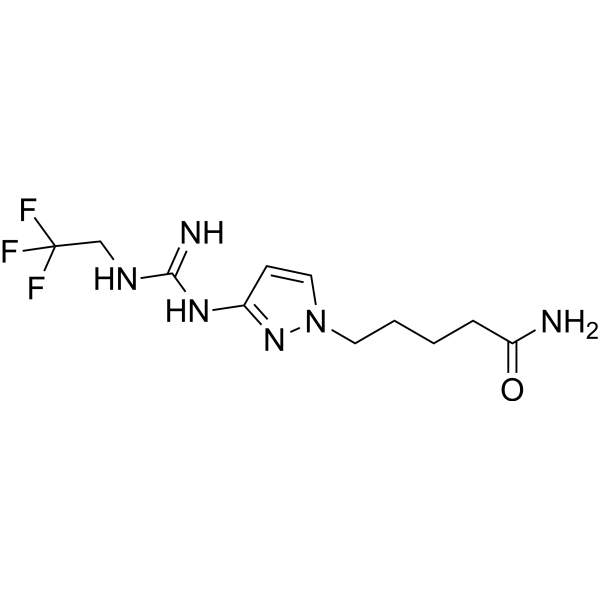 0 ImagesCat. No.: HY-101234CAS No.: 84545-30-2ICI 162846 is an orally active antagonist of H2 receptor. ICI 162846 inhibits acid production accompanied by an increase in the secretion of histamine in chronic duodenal ulcer (CDU) models. ICI 162846 is effective in preventing CDU.
-
Ranitidine bismuth citrate
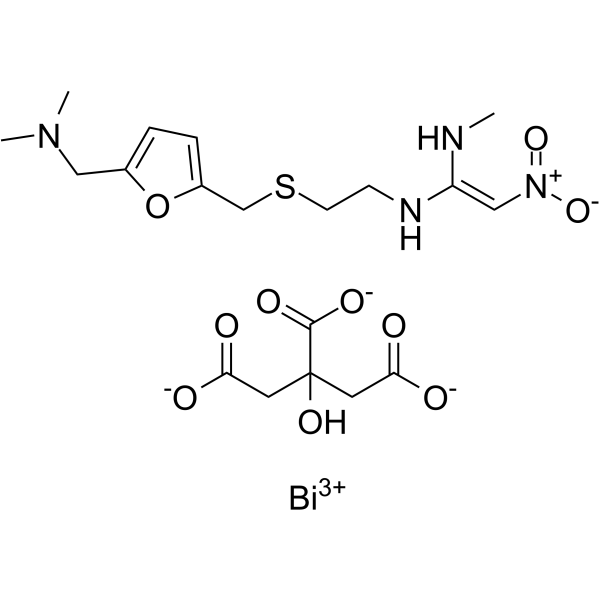 0 ImagesCat. No.: HY-B0693ACAS No.: 128345-62-0Ranitidine bismuth citrate is a potent, selective and orally active histamine H2-receptor antagonist that inhibits gastric secretion. Ranitidine bismuth citrate antagonizes Histamine (HY-B1204)-induced increases of the guinea-pig isolated rat atrium and Histamine-induced relaxations of the rat isolated uterine horn, with pA2 values of 7.2 and 6.95, respectively. Ranitidine bismuth citrate has selectivity for SARS-CoV-2-infected cells. Ranitidine bismuth citrate also has anti-Helicobacter pylori infection. Ranitidine bismuth citrate inhibits breast tumor development and spread in mice.
-
Etintidine hydrochloride
 0 ImagesCat. No.: HY-105535CAS No.: 71807-56-2Synonyms: BL-5641 hydrochlorideEtintidine (BL-5641) hydrochloride is a potent orally active histamine H2-receptor antagonist. Etintidine hydrochloride can be used for gastrointestinal ulcer diseases research.
-
Famotidine-13C3
 0 ImagesCat. No.: HY-W777002CAS No.: 1185241-48-8Synonyms: MK-208-13C3Famotidine-13C3 (MK-208-13C3) is the 13C3-labeled Famotidine (HY-B0377). Famotidine (MK-208) is an orally active and highly selective histamine H2 receptor antagonist. It inhibits gastric acid secretion by blocking the Gs signaling pathway, and regulates intracellular cAMP and ERK pathways. Famotidine inhibits TLR3-mediated inflammatory pathways, and reduces the expression of various inflammatory mediators and interferon-related genes. Famotidine scavenges DPPH and nitric oxide free radicals, alleviates oxidative stress damage in gastric tissue, inhibits proMMP-9, improves vascular endothelial permeability, and restores the normal physiological functions of neutrophils and eosinophils. Famotidine crosses intestinal epithelial cells via facilitated diffusion and passive diffusion, blocks paracellular cation transport, and increases intestinal transepithelial electrical resistance. Famotidine reduces serum levels of transaminases and alkaline phosphatase, exerts analgesic effects and gastric protective effects simultaneously. Famotidine can be used in studies related to COVID-19, liver injury and acute gastric ulcer.
-
Orf 17910
 0 ImagesCat. No.: HY-180397CAS No.: 87107-94-6ORF 17910 is a potent, long-acting, orally active histamine H2 receptor antagonist. ORF 17910 exhibits significant and prolonged acid-suppressing activity in dogs and rats. However, the cardiac depressant effect of ORF 17910 cannot be completely overcome at high concentrations. ORF 17910 may be used to study diseases such as gastric ulcers.
-
Famotidine-d4
 0 ImagesCat. No.: HY-W707517CAS No.: 2707433-64-3Synonyms: MK-208-d4Famotidine-d4 (MK-208-d4) is the deuterated-labeled Famotidine (HY-B0377). Famotidine (MK-208) is an orally active and highly selective histamine H2 receptor antagonist. It inhibits gastric acid secretion by blocking the Gs signaling pathway, and regulates intracellular cAMP and ERK pathways. Famotidine inhibits TLR3-mediated inflammatory pathways, and reduces the expression of various inflammatory mediators and interferon-related genes. Famotidine scavenges DPPH and nitric oxide free radicals, alleviates oxidative stress damage in gastric tissue, inhibits proMMP-9, improves vascular endothelial permeability, and restores the normal physiological functions of neutrophils and eosinophils. Famotidine crosses intestinal epithelial cells via facilitated diffusion and passive diffusion, blocks paracellular cation transport, and increases intestinal transepithelial electrical resistance. Famotidine reduces serum levels of transaminases and alkaline phosphatase, exerts analgesic effects and gastric protective effects simultaneously. Famotidine can be used in studies related to COVID-19, liver injury and acute gastric ulcer.
-
Oxmetidine
 0 ImagesCat. No.: HY-106078CAS No.: 72830-39-8Synonyms: SKF 92994Oxmetidine (SKF 92994) is an orally active H2-receptor antagonist, and is an anti-ulcer agent.



