



MDM2
Murine double minute 2 (MDM2) is an E3 ubiquitin ligase that functions as a primary negative regulator of the tumor suppressor p53[1][2]. Mechanistically, MDM2 ubiquitinates p53, targeting it for proteasomal degradation, while also regulating additional transcription factors and post-transcriptional processes independently of p53[1][2][3]. MDM2 interacts with its homolog MDM4 (MDMX) through RING domain heterodimers, modulating protein stability and p53 activity[1][4]. Compared with MDM4, MDM2 possesses intrinsic E3 ligase activity and can degrade p53 even in the absence of MDM4, whereas MDM4 stabilizes the heterodimer complex without ubiquitin ligase function[1][4][5]. Dysregulation of MDM2 contributes to oncogenesis across multiple malignancies, including leukemia, neuroblastoma, breast cancer, and Theileria parva-induced lymphoproliferative disorders[4][6][7][8][9]. In experimental models, inhibition of MDM2 with small molecules such as RG7112, MI-63, CGM097, or XR-2 stabilizes p53, induces apoptosis, and can synergize with other pathway modulators to enhance anti-tumor activity[6][9][10][11][12]. Recent strategies exploit protein-protein interfaces, such as the MDM2-CK1α interaction, to induce targeted protein modifications and p53 activation independently of p53 status, providing tools for mechanistic studies and therapeutic design[13][14]. MDM2 inhibitors and dual MDM2/MDM4-targeting agents demonstrate isoform-specific effects, highlighting the importance of distinguishing functional contributions of MDM2 versus MDM4 in both experimental and therapeutic contexts[15][16][17].
References:
- [1]. Zhu IY, et al. Structure and function of MDM2 and MDM4 in health and disease. Biochem J. 2025 Feb 17;482(4):BCJ20240757. [Content Brief]
- [2]. Biderman L, et al. Mdm2 and MdmX as Regulators of Gene Expression. Genes Cancer. 2012 Mar;3(3-4):264-73. [Content Brief]
- [3]. Thomasova D, et al. p53-independent roles of MDM2 in NF-κB signaling: implications for cancer therapy, wound healing, and autoimmune diseases. Neoplasia. 2012 Dec;14(12):1097-101. [Content Brief]
- [4]. Lama R, et al. Small molecule MMRi62 targets MDM4 for degradation and induces leukemic cell apoptosis regardless of p53 status. Front Oncol. 2022 Aug 5;12:933446. [Content Brief]
- [5]. Strachan GD, et al. A transcriptionally inactive E2F-1 targets the MDM family of proteins for proteolytic degradation. J Biol Chem. 2001 Dec 7;276(49):45677-85. [Content Brief]
- [6]. Mitobe Y, et al. Antagonizing MDM2 Overexpression Induced by MDM4 Inhibitor CEP-1347 Effectively Reactivates Wild-Type p53 in Malignant Brain Tumor Cells. Cancers (Basel). 2023 Aug 30;15(17):4326. [Content Brief]
- [7]. Hayashida K, et al. MDM2 regulates a novel form of incomplete neoplastic transformation of Theileria parva infected lymphocytes. Exp Mol Pathol. 2013 Feb;94(1):228-38. [Content Brief]
- [8]. Qin JJ, et al. Experimental Therapy of Advanced Breast Cancer: Targeting NFAT1-MDM2-p53 Pathway. Prog Mol Biol Transl Sci. 2017;151:195-216. [Content Brief]
- [9]. Maser T, et al. The MDM2 inhibitor CGM097 combined with the BET inhibitor OTX015 induces cell death and inhibits tumor growth in models of neuroblastoma. Cancer Med. 2020 Nov;9(21):8144-8158. [Content Brief]
- [10]. Daniele S, et al. Long lasting inhibition of Mdm2-p53 interaction potentiates mesenchymal stem cell differentiation into osteoblasts. Biochim Biophys Acta Mol Cell Res. 2019 May;1866(5):737-749. [Content Brief]
- [11]. Li Y, et al. Nonsense-mediated mRNA decay inhibition synergizes with MDM2 inhibition to suppress TP53 wild-type cancer cells in p53 isoform-dependent manner. Cell Death Discov. 2022;8(1):402. [Content Brief]
- [12]. Gu D, et al. Inhibition of the MDM2 E3 Ligase induces apoptosis and autophagy in wild-type and mutant p53 models of multiple myeloma, and acts synergistically with ABT-737. PLoS One. 2014 Sep 2;9(9):e103015. [Content Brief]
- [13]. Huart AS, et al. Exploiting the MDM2-CK1 alpha protein-protein interface to develop novel biologics that induce UBL-kinase-modification and inhibit cell growth. PLoS One. 2012;7:e51426.
- [14]. Huart AS, et al. Exploiting the MDM2-CK1α protein-protein interface to develop novel biologics that induce UBL-kinase-modification and inhibit cell growth. PLoS One. 2012;7(8):e43391. [Content Brief]
- [15]. Surmiak E, et al. A Unique Mdm2-Binding Mode of the 3-Pyrrolin-2-one- and 2-Furanone-Based Antagonists of the p53-Mdm2 Interaction. ACS Chem Biol. 2016 Dec 16;11(12):3310-3318. [Content Brief]
- [16]. Mitobe Y, et al. 10014-CBMS-2 Concurrent targeting of MDM4 and MDM2 using CEP-1347 as an effective therapeutic strategy for p53 wild-type malignant brain tumors. Neuro-Oncology Advances. 2023;5(Supplement_5):v2-v3.
- [17]. Jiang L, et al. Protoporphyrin IX is a dual inhibitor of p53/MDM2 and p53/MDM4 interactions and induces apoptosis in B-cell chronic lymphocytic leukemia cells. Cell Death Discov. 2019 Mar 11;5:77. [Content Brief]
All Product Categories
-
MDM2 Related Products (8)
Related Products (8)

-
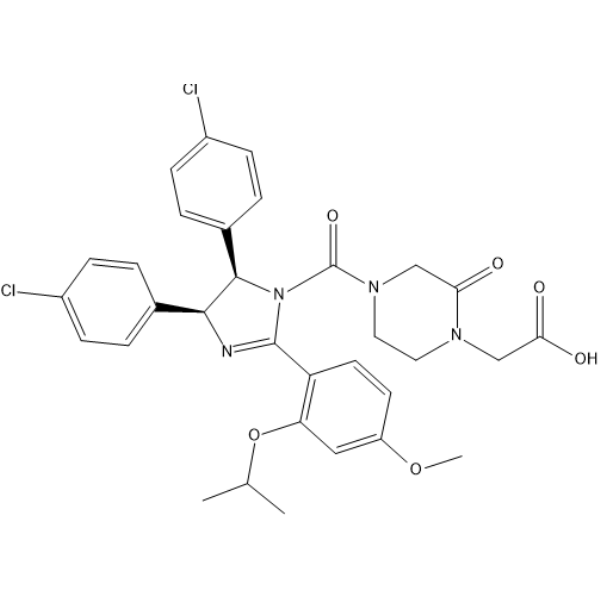
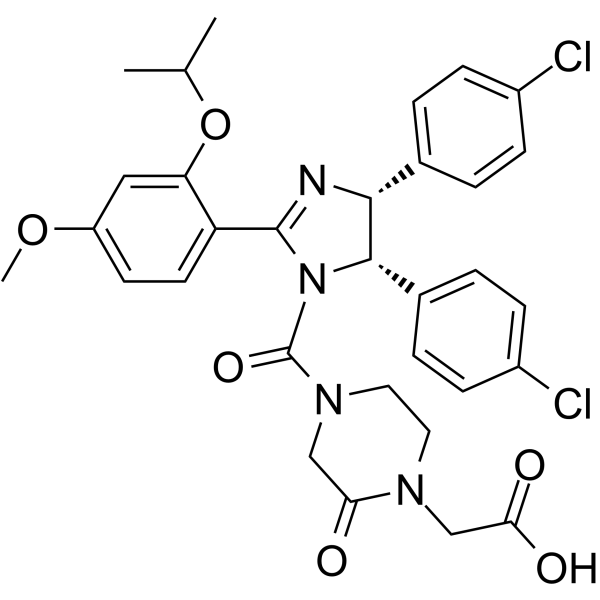
(rel)-Nutlin carboxylic acid
 0 ImagesCat. No.: HY-128837ACAS No.: 2760669-71-2
-
MEL23
 0 ImagesCat. No.: HY-148106CAS No.: 642072-49-9




