



Endogenous Metabolite
Endogenous metabolites refer to the collective set of small-molecule chemical substances present within organelles, cells, organs, biological fluids, or entire organisms; their molecular weights are typically less than 1500 Da. These endogenous metabolites—including lipids, amino acids, short peptides, nucleic acids, carbohydrates, alcohols, and organic acids—not only participate in signal transduction governing genomic function but also receive upstream signals from the environment, thereby bridging the interrelationships among genotype, environment, and phenotype.
Based on their biological functions, microbial endogenous metabolites can be broadly classified into two categories: primary metabolites and secondary metabolites. Primary metabolites are the core molecules essential for supporting microbial growth and proliferation; they serve to provide energy to the microbes or act as precursors and cofactors for the synthesis of biological macromolecules. In contrast, microbial secondary metabolites are a class of low-molecular-weight products that are not strictly essential for microbial growth. Nevertheless, microbial secondary metabolites include numerous substances—such as antibiotics, anti-tumor agents, and cholesterol-lowering agents—that are of critical importance to human health[1][2][3]. Furthermore, the metabolome of a biological organism is influenced by a variety of endogenous factors, including age, sex, body composition, genetic background, and underlying pathological states. The small-molecule metabolites within an organism are diverse and highly distinct; their levels are typically subject to the synergistic regulation of a vast array of enzymes and transport proteins, undergoing processes of synthesis, transformation, degradation, and compartmentalized distribution. Metabolomics research based on endogenous metabolites has been widely applied in the fields of metabolic disorders, neurodegenerative diseases, cancer, cardiovascular diseases, and infectious diseases, where these metabolites hold potential utility as biomarkers or therapeutic targets[1][2][3].
References:
- [1]. Seyedsayamdost MR. Toward a global picture of bacterial secondary metabolism. J Ind Microbiol Biotechnol. 2019 Mar;46(3-4):301-311. [Content Brief]
- [2]. Ruiz B, et al. Production of microbial secondary metabolites: regulation by the carbon source. Crit Rev Microbiol. 2010 May;36(2):146-67. [Content Brief]
- [3]. Wishart DS. Metabolomics for Investigating Physiological and Pathophysiological Processes. Physiol Rev. 2019 Oct 1;99(4):1819-1875. [Content Brief]
Endogenous Metabolite Isoform Specific Products
All Product Categories
-
Endogenous Metabolite Related Products (8420)
Related Products (8420)

-
Antibodies (477)
-
Endogenous Metabolite Isoform Comparison
-
Glucosamine sulfate sodium chloride
 0 ImagesCat. No.: HY-139207ACAS No.: 1296149-13-7Glucosamine sulfate sodium chloride is an amino sugar and a prominent precursor in the biochemical synthesis of glycosylated proteins and lipids, is used as a dietary supplement. Glucosamine sulfate sodium chloride also is a natural constituent of glycosaminoglycans in the cartilage matrix and synovial fluid, which when administered exogenously, exerts pharmacological effects on osteoarthritic cartilage and chondrocytes.
-
DL-Mevalonolactone-d4
 0 ImagesCat. No.: HY-W752587CAS No.: 349553-98-6Synonyms: (±)-Mevalonolactone-d4; Mevalolactone-d4DL-Mevalonolactone-d4 ( (±)-Mevalonolactone-d4) is the deuterium labeled DL-Mevalonolactone (HY-107855). DL-Mevalonolactone ((±)-Mevalonolactone;Mevalolactone) is the δ-lactone form of mevalonic acid, a precursor in the mevalonate pathway. DL-Mevalonolactone is orally active against HMGCR mutation and statin caused myopathy. DL-Mevalonolactone induces inflammation and oxidative stress response with decreased mitochondrial membrane potential (MMP) and induces mitochondrial swelling.
-
N-Acetylglucosaminyltransferase IVa
 0 ImagesCat. No.: HY-E70297Synonyms: MGAT4AN-Acetylglucosaminyltransferase IVa (MGAT4A) is a glycosyltransferase that can enhance the migration, invasion, and adhesion abilities of cancer cells, and increase β1,4GlcNAc branched glycans on integrin β1 (ITGB1), a tumor-associated glycoprotein closely related to cell motility.
-
Retrohelioxanthin
 0 ImagesCat. No.: HY-N21708CAS No.: 32502-02-6Retrohelioxanthin (compound 3) is an aryldihydronaphthalene lignan that can be isolated and extracted from the aerial parts of Linum perenne L. Retrohelioxanthin is an isomer of Helioxanthin (HY-16678). Retrohelioxanthin can be used for antiviral research.
-
4-Hydroxyphenylacetic acid-d2
 0 ImagesCat. No.: HY-N1902S24-Hydroxyphenylacetic acid-d2 is the deuterium labeled 4-Hydroxyphenylacetic acid (HY-N1902). 4-hydroxyphenylacetic acid, a major microbiota-derived metabolite of polyphenols, is involved in the antioxidative action. 4-hydroxyphenylacetic acid induces expression of Nrf2.
-
Lysinoalanine
 0 ImagesCat. No.: HY-125409CAS No.: 18810-04-3Lysinoalanine is an amino acid that can be isolated from native and dinitrophenylated forms of ribonuclease after treated with alkali.
-
L-Asparagine-13C4
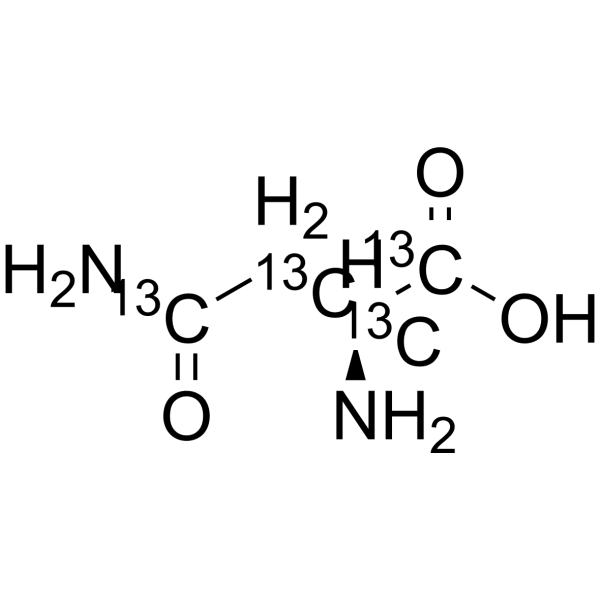 0 ImagesCat. No.: HY-W017443S4CAS No.: 768348-44-3Synonyms: (-)-Asparagine-13C4; Asn-13C4; Asparamide-13C4L-Asparagine-13C4 ((-)-Asparagine-13C4; Asn-13C4) monohydrate is the 13C labeled labeled L-Asparagine monohydrate (HY-W017443). L-Asparagine monohydrate is an essential amino acid for leukemic cells and a substrate for L-Asparaginase. L-Asparaginase is a potent anti-leukemic enzyme that promotes asparagine (Asn) and glutamine (Gln) depletion and inhibits protein biosynthesis in lymphoblasts. Removal of L-asparagine from plasma by L-Asparaginase results in inhibition of RNA and DNA synthesis and subsequent apoptosis. L-Asparaginase has cell-killing ability in vitro and in vivo, and selectively inhibits the growth of cancer cells with low asparagine synthetase (AASNS) expression. L-Asparagine monohydrate can be used as a biomarker and sensor for the study of childhood acute lymphoblastic leukemia.
-
2'-Deoxyuridine 5'-monophosphate disodium (Standard)
 0 ImagesSynonyms: dUMP disodium (Standard)2'-Deoxyuridine 5'-monophosphate (disodium) (Standard) is the analytical standard of 2'-Deoxyuridine 5'-monophosphate (disodium) (HY-W011142). This product is intended for research and analytical applications. 2'-Deoxyuridine 5'-monophosphate (dUMP) disodium is a deoxynucleotide that is reductively methylated to dTMP (2'-deoxythymidine 5'-monophosphate) by bisubstrate enzyme thymidylate synthase (TS). dTMP is a nucleotide required for DNA synthesis.
-
Desloratadine-d4 hydrobromide
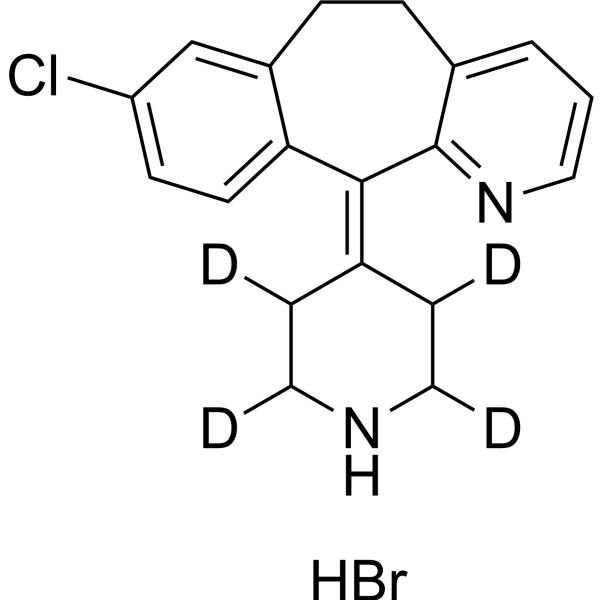 0 ImagesCat. No.: HY-B0539S4Synonyms: Sch34117-d4 hydrobromideDesloratadine-d4 hydrobromide is deuterated labeled Desloratadine (HY-B0539). Desloratadine (Sch34117) is the orally active major metabolite of the nonsedating H1-antihistamine Loratadine. Desloratadine is a selective H1-receptor antagonist that has anti-allergic and anti-inflammatory activities.
-
Solanesol (Standard)
 0 ImagesCat. No.: HY-N0576RCAS No.: 13190-97-1Solanesol (Standard) is the analytical standard of Solanesol (HY-N0576). This product is intended for research and analytical applications. Solanesol is an orally active aliphatic terpene alcohol. Solanesol is mainly found in tobacco and other Solanaceae plants. Solanesol induces HO-1 and Hsp70 expression, activates p38 and Akt signaling pathways, and inhibits Apoptosis (reduces caspase-3 and PARP cleavage). Solanesol has antioxidant, anti-inflammatory, and neuroprotective activities. Solanesol can be used in the research of Huntington's disease, alcoholic liver disease, chronic inflammatory pain, anxiety, Alzheimer's disease, and bipolar disorder.
-
Apigenin triacetate
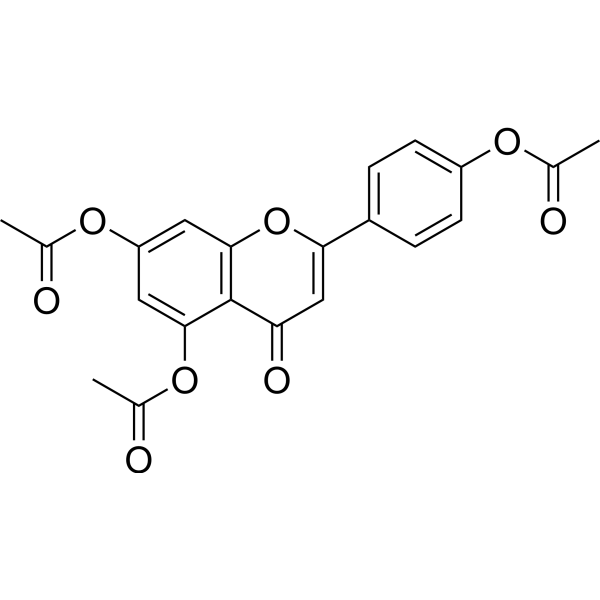 0 ImagesCat. No.: HY-W748594CAS No.: 3316-46-9Apigenin triacetate is a metabolite of F. graminearum. Apigenin triacetate can be downregulated in F. graminearum by chitosan treatment. Apigenin triacetate derives from apigenin.
-
Retrobradykinin
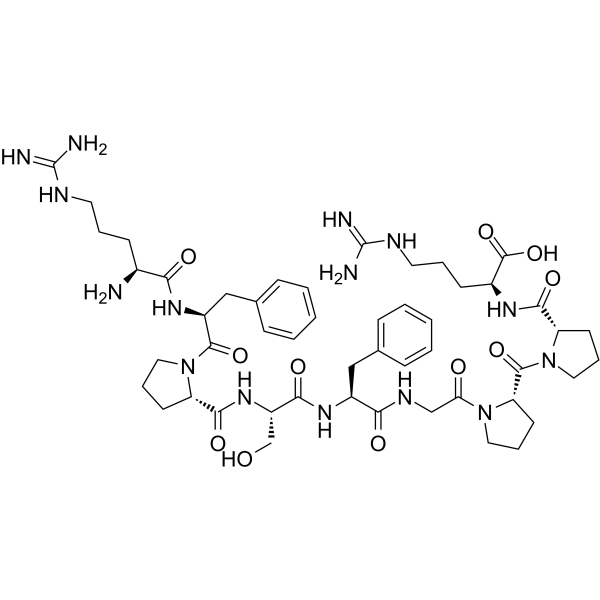 0 ImagesRetrobradykinin has the reverse sequence of Bradykinin (HY-P0206). Retrobradykinin exhibits no kinin activity and can be used as a negative control for Bradykinin.
-
Propionyl CoA-d5
 0 ImagesCat. No.: HY-141467SCAS No.: 607721-34-6Propionyl CoA-d5 is the deuterium labeled Propionyl CoA (HY-141467). Propionyl CoA serves as a common intermediate in the catabolic pathways of 1,2-propanediol and propionate in Salmonella enterica serovar Typhimurium LT2, and also functions as a precursor for 2-methylcitrate. Propionyl CoA is utilized as a substrate for the 2-methylcitrate synthase (PrpC) enzyme to synthesize 2-methylcitrate.
-
Oleoyl proline
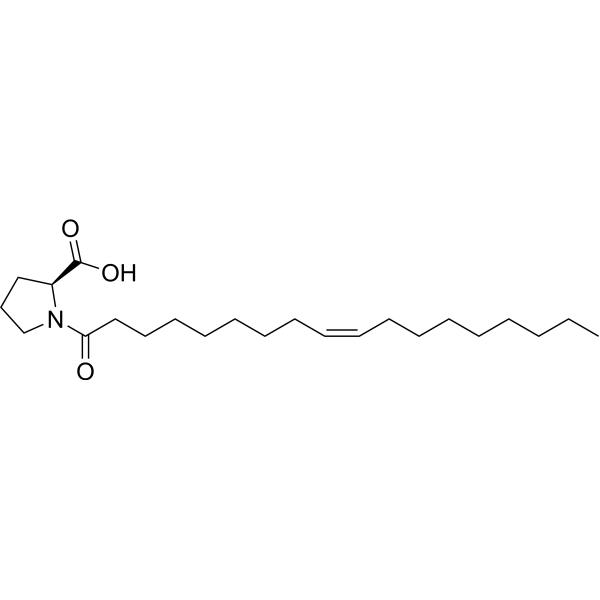 0 ImagesCat. No.: HY-115387CAS No.: 107432-37-1Oleoyl proline is a novel N-acyl amine compound.
-
Polypectate sodium
 0 ImagesCat. No.: HY-W250315CAS No.: 9049-37-0Synonyms: pectate sodiumPolypectate sodium is a major component of cell wall polysaccharides (pectins) and is used as a carbon source and inducer of polygalacturonase. Polypectate sodium can also be used to evaluate alkaline active and alkaline stable pectate lyases from Streptomyces spp. and to study the optimization of polygalacturonase production from Xanthophyllum spp. and reaction conditions.
-
L-Tyrosine-d1
 0 ImagesCat. No.: HY-178277SCAS No.: 63570-47-8L-Tyrosine-d1 is the deuterium labeled L-Tyrosine (HY-N0473). L-Tyrosine is a non-essential amino acid which can inhibit citrate synthase activity in the posterior cortex.
-
Pregnenolone monosulfate sodium-13C2,d2
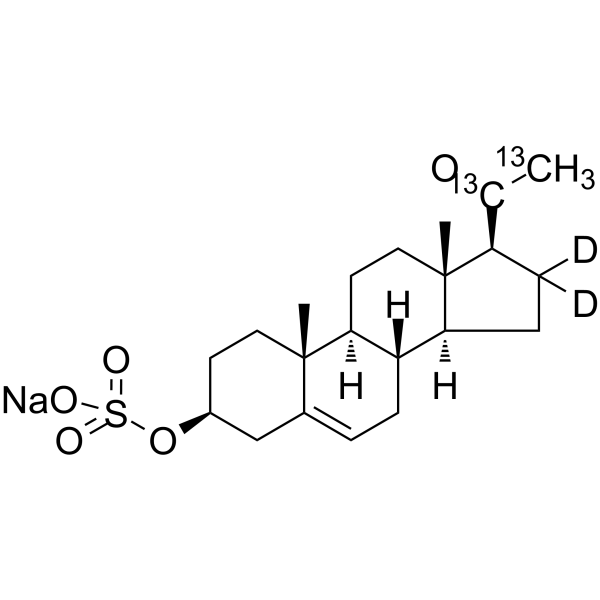 0 ImagesCat. No.: HY-110189SCAS No.: 2483824-22-0Synonyms: 3β-Hydroxy-5-pregnen-20-one monosulfate sodium-13C2,d2Pregnenolone monosulfate (sodium)-13C2,d2 is the 13C- and deuterium labeled Pregnenolone monosulfate sodium. Pregnenolone monosulfate sodium (3β-Hydroxy-5-pregnen-20-one monosulfate sodium) is a powerful neurosteroid, the main precursor of various steroid hormones including steroid ketones. Pregnenolone monosulfate sodium salt acts as a signaling-specific inhibitor of cannabinoid CB1 receptor, inhibits the effects of tetrahydrocannabinol (THC) that are mediated by the CB1 receptors. Pregnenolone monosulfate sodium salt can protect the brain from cannabis intoxication. Pregnenolone monosulfate sodium salt is also a TRPM3 channel activator, and also can weakly activate TRPM1 channels.
-
Glycocholic acid sodium (Standard)
 0 ImagesCat. No.: HY-N1423ARCAS No.: 863-57-0Glycocholic acid (sodium) (Standard) is the analytical standard of Glycocholic acid sodium (HY-N1423A). This product is intended for research and analytical applications. Glycocholic acid sodium is a bile acid derivative. Glycocholic acid downregulates MDR1, Bcl-2, MRP1, MRP2 and FXR, upregulates Bax, p53, caspase-9, caspase-3, TGR5 and S1PR2. Glycocholic acid sodium inhibits multidrug resistance and efflux pumps, induces mitochondrial apoptosis, and enhances chemosensitivity. Glycocholic acid sodium modulates related bile acid receptor signaling. Glycocholic acid sodium suppresses growth and conjugation of Enterobacteriaceae and increases their antibiotic susceptibility. Glycocholic acid sodium can be used for the research of colon adenocarcinoma and cholangiocarcinoma (CCA).
-
Tigloyl-L-carnitine chloride
 0 ImagesCat. No.: HY-W654372
-
15-Hydroxy-3,11,23-trioxolanost-8,20-dien-26-oic acid
 0 ImagesCat. No.: HY-N15224CAS No.: 1309931-88-115-Hydroxy-3,11,23-trioxolanost-8,20-dien-26-oic acid (comound 35) is a triterpenoid that can be isolated from Ganoderma lucidum.




