



Endogenous Metabolite
Endogenous metabolites refer to the collective set of small-molecule chemical substances present within organelles, cells, organs, biological fluids, or entire organisms; their molecular weights are typically less than 1500 Da. These endogenous metabolites—including lipids, amino acids, short peptides, nucleic acids, carbohydrates, alcohols, and organic acids—not only participate in signal transduction governing genomic function but also receive upstream signals from the environment, thereby bridging the interrelationships among genotype, environment, and phenotype.
Based on their biological functions, microbial endogenous metabolites can be broadly classified into two categories: primary metabolites and secondary metabolites. Primary metabolites are the core molecules essential for supporting microbial growth and proliferation; they serve to provide energy to the microbes or act as precursors and cofactors for the synthesis of biological macromolecules. In contrast, microbial secondary metabolites are a class of low-molecular-weight products that are not strictly essential for microbial growth. Nevertheless, microbial secondary metabolites include numerous substances—such as antibiotics, anti-tumor agents, and cholesterol-lowering agents—that are of critical importance to human health[1][2][3]. Furthermore, the metabolome of a biological organism is influenced by a variety of endogenous factors, including age, sex, body composition, genetic background, and underlying pathological states. The small-molecule metabolites within an organism are diverse and highly distinct; their levels are typically subject to the synergistic regulation of a vast array of enzymes and transport proteins, undergoing processes of synthesis, transformation, degradation, and compartmentalized distribution. Metabolomics research based on endogenous metabolites has been widely applied in the fields of metabolic disorders, neurodegenerative diseases, cancer, cardiovascular diseases, and infectious diseases, where these metabolites hold potential utility as biomarkers or therapeutic targets[1][2][3].
References:
- [1]. Seyedsayamdost MR. Toward a global picture of bacterial secondary metabolism. J Ind Microbiol Biotechnol. 2019 Mar;46(3-4):301-311. [Content Brief]
- [2]. Ruiz B, et al. Production of microbial secondary metabolites: regulation by the carbon source. Crit Rev Microbiol. 2010 May;36(2):146-67. [Content Brief]
- [3]. Wishart DS. Metabolomics for Investigating Physiological and Pathophysiological Processes. Physiol Rev. 2019 Oct 1;99(4):1819-1875. [Content Brief]
Endogenous Metabolite Isoform Specific Products
All Product Categories
-
Endogenous Metabolite Related Products (8420)
Related Products (8420)

-
Antibodies (477)
-
Endogenous Metabolite Isoform Comparison
-
D-Ribose 5-phosphate
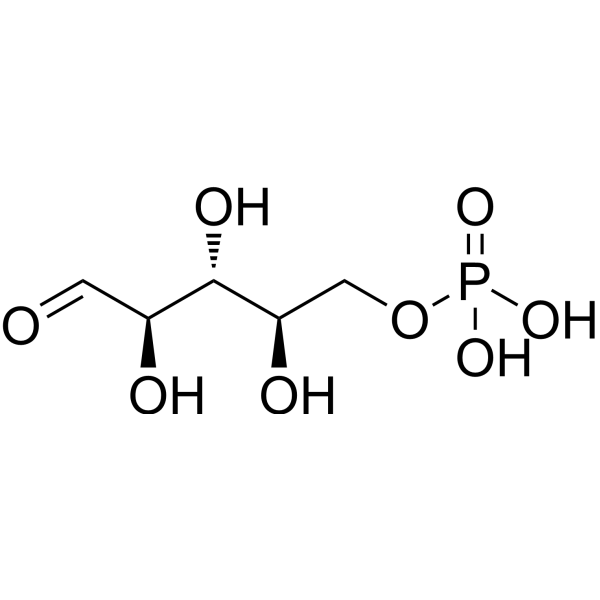 0 ImagesCat. No.: HY-W009371ACAS No.: 4300-28-1D-Ribose 5-phosphate is an intermediate of the oxidative branch of the pentose phosphate pathway (PPP) and an end product of the nonoxidative branch of the PPP. D-Ribose 5-phosphate is used in the synthesis of nucleotides and nucleic acids.
-
Maximiscin
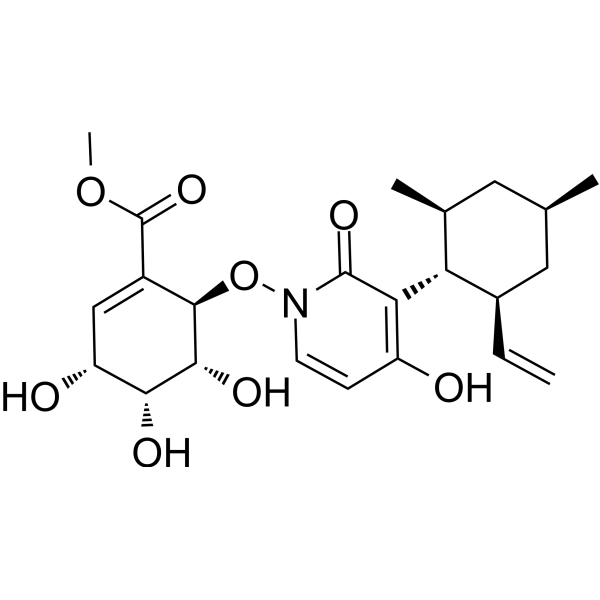 0 ImagesCat. No.: HY-142908CAS No.: 1612154-44-5Maximiscin, a fungal metabolite, induces DNA damage and shows selective cytotoxic activity against a subtype of triple-negative breast cancer.
-
DPPC-d13
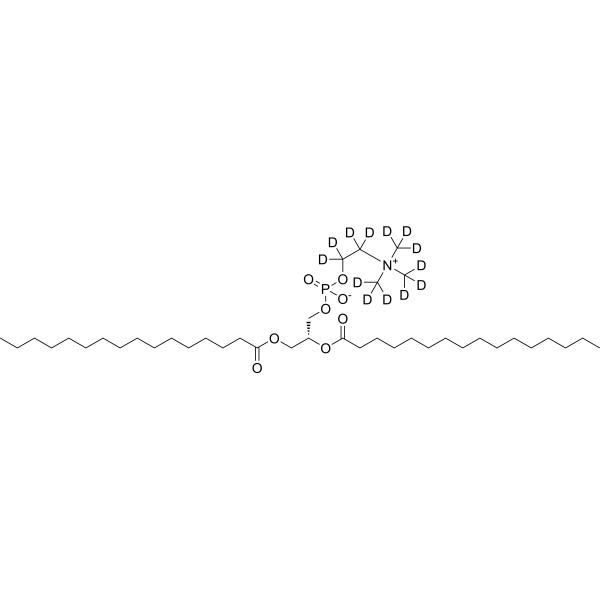 0 ImagesCat. No.: HY-109506S5CAS No.: 86531-55-7Synonyms: 129Y83-d13DPPC-d13 is deuterium labeled DPPC. DPPC (129Y83) is a zwitterionic phosphoglyceride that can be used for the preparation of liposomal monolayers. DPPC-liposome serves effectively as a delivery vehicle for inducing immune responses against GSL antigen in
-
1-Dodecanol-d1
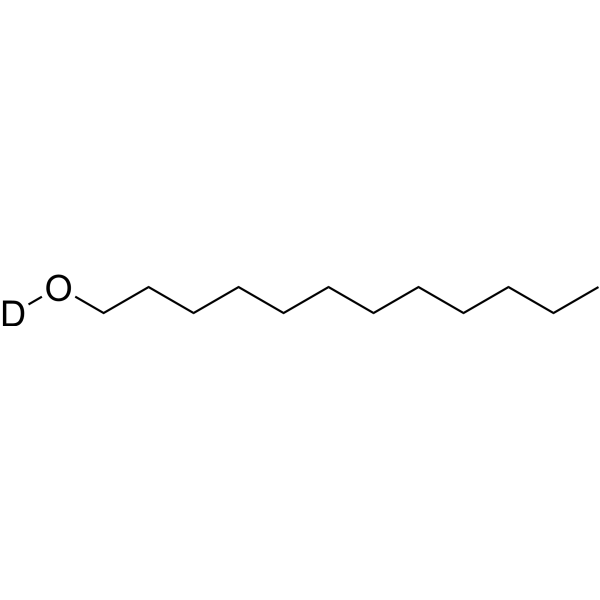 0 ImagesCat. No.: HY-Y0289S3CAS No.: 14848-65-81-Dodecanol-d1 is the deuterium labeled 1-Dodecanol. 1-Dodecanol is an endogenous metabolite.
-
DL-Phenylalanine-d5 hydrochloride
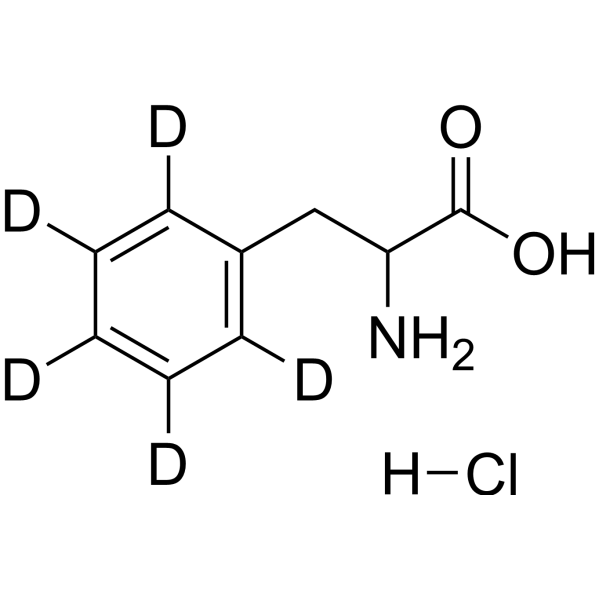 0 ImagesCat. No.: HY-N0215S6Synonyms: 2-Amino-3-phenylpropionic acid-d5 hydrochlorideDL-Phenylalanine-d5 (hydrochloride) is the deuterium labeled DL-Phenylalanine hydrochloride. L-Phenylalanine hydrochloride is an essential amino acid isolated from Escherichia coli. L-Phenylalanine hydrochloride is a α2δ subunit of voltage-dependent Ca+ channels antagonist with a Ki of 980 nM. L-phenylalanine hydrochloride is a competitive antagonist for the glycine- and glutamate-binding sites of N-methyl-D-aspartate receptors (NMDARs) (KB of 573 μM ) and non-NMDARs, respectively. L-Phenylalanine hydrochloride is widely used in the production of food flavors and pharmaceuticals.
-
Herbaridine B
 0 ImagesCat. No.: HY-N9717CAS No.: 1151511-05-5Herbaridine B is a potential fungal secondary metabolite that can be extracted from the fungus Anteaglonium FL0768. This fungus was isolated as an endophyte from the photosynthetic tissue of Selaginella arenicola.
-
Uric acid-13C
 0 ImagesCat. No.: HY-W780166CAS No.: 139290-36-1Uric acid-13C is the 13C-labeled Uric acid (HY-B2130). Uric acid is an orally active oxygen free radical scavenger that helps maintain stable blood pressure and combat oxidative stress. Uric acid can scavenge ROS, such as singlet oxygen and peroxynitrite, and inhibit lipid peroxidation. Uric acid can be used as a modeling agent in research on hyperuricemia-induced hypertension models.

-
Meclofenamic acid (Standard)
 0 ImagesCat. No.: HY-117275RCAS No.: 644-62-2Synonyms: Meclofenamate (Standard)Meclofenamic acid (Standard) is the analytical standard of Meclofenamic acid. This product is intended for research and analytical applications. Meclofenamic acid (Meclofenamate) is a non-steroidal anti-inflammatory agent. Meclofenamic acid is a highly selective FTO (fat mass and obesity-associated) enzyme inhibitor. Meclofenamic acid competes with FTO binding for the m(6)A-containing nucleic acid. Meclofenamic acid is a non-selective gap-junction blocker. Meclofenamic acid inhibits hKv2.1 and hKv1.1, with IC50 values of 56.0 and 155.9 μM, respectively.

-
Propionyl CoA-d5 sodium
 0 ImagesCat. No.: HY-141467S1Propionyl CoA-d5 sodium is the deuterium labeled Propionyl CoA. Propionyl CoA serves as a common intermediate in the catabolic pathways of 1,2-propanediol and propionate in Salmonella enterica serovar Typhimurium LT2, and also functions as a precursor for 2-methylcitrate. Propionyl CoA is utilized as a substrate for the 2-methylcitrate synthase (PrpC) enzyme to synthesize 2-methylcitrate.
-
L-Glutamine-5-13C
 0 ImagesCat. No.: HY-W766574CAS No.: 2714331-41-4L-Glutamine-5-13C Hydrochloride is the 13C-labeled L-Glutamine (HY-N0390). L-Glutamine (L-Glutamic acid 5-amide) is a non-essential amino acid present abundantly throughout the body and involved in many metabolic processes. L-Glutamine provides a source of carbons for oxidation in some cells.
-
Glycerol-d1
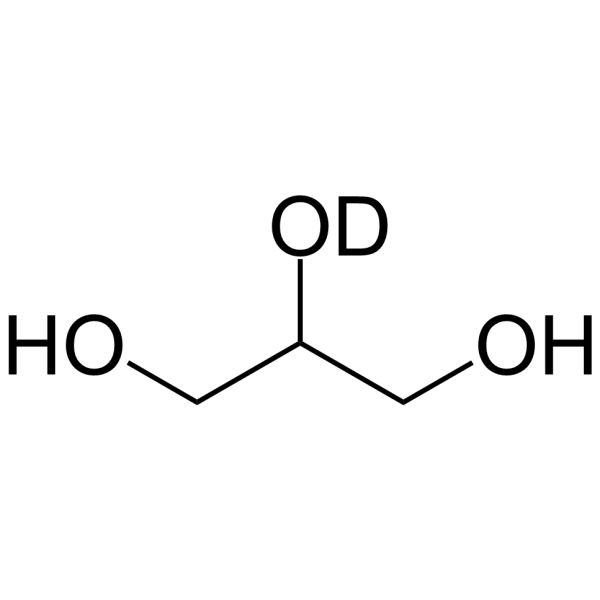 0 ImagesCat. No.: HY-B1659S3Synonyms: Trihydroxypropane-d1Glycerol-d is the deuterium labeled Glycerol. Glycerol is used in sample preparation and gel formation for polyacrylamide gel electrophoresis.

-
Ursocholic acid (Standard)
 0 ImagesCat. No.: HY-113212RCAS No.: 2955-27-3Ursocholic acid (Standard) is the analytical standard of Ursocholic acid. This product is intended for research and analytical applications. Ursocholic acid, a bile acid present in mammalian bile, is converted to deoxycholic acid (UDC) by the mouse intestinal flora. Ursocholic acid acts as a gallstone dissolving agent in the liver through anti-apoptosis, anti-inflammatory, immunomodulatory, bile regulation, and coordinated changes in mitochondrial integrity and cell signaling, Ursocholic acid also has favorable effects on bones in patients with chronic cholestasis[1][2][3][4][5].
-
U-62162
 0 ImagesCat. No.: HY-N21846CAS No.: 82516-67-4U-62162 is an Antibiotic. U-62162 is found in Streptomyces verdensis. U-62162 inhibits the growth of Gram-positive bacteria. U-62162 exhibits no in vivo protective effect in animals with experimental S. aureus infection.
-
Sclerotioramine
 0 ImagesCat. No.: HY-135535CAS No.: 34695-81-3Sclerotioramine (Compound 1), a red pigment, is an antioxidant compound. Sclerotioramine can be isolated from the endolichenic fungus Penicillium sp.-strain 1322P. Sclerotioramine has potent antibacterial activity with MICs of 3.125, 3.125 and 6.25 μg/mL for Bacillus subtilis, Bacillus megaterium and Shigella dysentery, respectively. Sclerotioramine also has significant antifungal activity against Pestalotiopsis theae, Cochliobolus miyabeanus and Exserohilum turcicum.
-
Protein-arginine deiminase
 0 ImagesCat. No.: HY-P2966CAS No.: 75536-80-0Protein-arginine deiminase is a unique family of enzymes that catalyzes the hydrolysis of peptidyl-arginine to form peptidyl-citrulline.
-
Mycophenolic acid sodium (Standard)
 0 ImagesSynonyms: Mycophenolate sodium (Standard)Mycophenolic acid (sodium) (Standard) is the analytical standard of Mycophenolic acid (sodium). This product is intended for research and analytical applications. Mycophenolic acid sodium is a potent uncompetitive inosine monophosphate dehydrogenase (IMPDH) inhibitor with an EC50 of 0.24 μM. Mycophenolic acid sodium demonstrates antiviral effects against a wide range of RNA viruses including influenza. Mycophenolic acid sodium is an immunosuppressive agent. Antiangiogenic and antitumor effects.
-
Yeast 6-Phosphogluconic Dehydrogenase
 0 ImagesCat. No.: HY-E70922Yeast 6-Phosphogluconic Dehydrogenase (EC 1.1.1.44) belongs to the oxidoreductase family. It is an oxidoreductase that acts on the CH-OH group of the donor molecule and uses NAD+ or NADP+ as the acceptor. Yeast 6-Phosphogluconic Dehydrogenase has two substrates: 6-phosphate-D-gluconic acid and NADP+, and three products: D-ribulose-5-phosphate, CO2, and NADPH.




