



Endogenous Metabolite
Endogenous metabolites refer to the collective set of small-molecule chemical substances present within organelles, cells, organs, biological fluids, or entire organisms; their molecular weights are typically less than 1500 Da. These endogenous metabolites—including lipids, amino acids, short peptides, nucleic acids, carbohydrates, alcohols, and organic acids—not only participate in signal transduction governing genomic function but also receive upstream signals from the environment, thereby bridging the interrelationships among genotype, environment, and phenotype.
Based on their biological functions, microbial endogenous metabolites can be broadly classified into two categories: primary metabolites and secondary metabolites. Primary metabolites are the core molecules essential for supporting microbial growth and proliferation; they serve to provide energy to the microbes or act as precursors and cofactors for the synthesis of biological macromolecules. In contrast, microbial secondary metabolites are a class of low-molecular-weight products that are not strictly essential for microbial growth. Nevertheless, microbial secondary metabolites include numerous substances—such as antibiotics, anti-tumor agents, and cholesterol-lowering agents—that are of critical importance to human health[1][2][3]. Furthermore, the metabolome of a biological organism is influenced by a variety of endogenous factors, including age, sex, body composition, genetic background, and underlying pathological states. The small-molecule metabolites within an organism are diverse and highly distinct; their levels are typically subject to the synergistic regulation of a vast array of enzymes and transport proteins, undergoing processes of synthesis, transformation, degradation, and compartmentalized distribution. Metabolomics research based on endogenous metabolites has been widely applied in the fields of metabolic disorders, neurodegenerative diseases, cancer, cardiovascular diseases, and infectious diseases, where these metabolites hold potential utility as biomarkers or therapeutic targets[1][2][3].
References:
- [1]. Seyedsayamdost MR. Toward a global picture of bacterial secondary metabolism. J Ind Microbiol Biotechnol. 2019 Mar;46(3-4):301-311. [Content Brief]
- [2]. Ruiz B, et al. Production of microbial secondary metabolites: regulation by the carbon source. Crit Rev Microbiol. 2010 May;36(2):146-67. [Content Brief]
- [3]. Wishart DS. Metabolomics for Investigating Physiological and Pathophysiological Processes. Physiol Rev. 2019 Oct 1;99(4):1819-1875. [Content Brief]
Endogenous Metabolite Isoform Specific Products
All Product Categories
-
Endogenous Metabolite Related Products (8400)
Related Products (8400)

-
Antibodies (477)
-
Endogenous Metabolite Isoform Comparison
-
19(R)-Hydroxy prostaglandin F1α
 0 ImagesCat. No.: HY-168800CAS No.: 81371-59-719(R)-Hydroxy prostaglandin F1α is an ω-1 hydroxylase metabolite of PGF1α.
-
rel-(1S,2R)-Dihydro bupropion-d9
 0 ImagesCat. No.: HY-W777138CAS No.: 1217684-77-9rel-(1S,2R)-Dihydro bupropion-d9 is the deuterium labeled rel-(1S,2R)-Dihydro bupropion (HY-178240). rel-(1S,2R)-Dihydro bupropion is a metabolite of bupropion. rel-(1S,2R)-Dihydro bupropion can promote endogenous IL-10 production and inhibit Th1 cytokines (IL-12 and TNF-α). rel-(1S,2R)-Dihydro bupropion can induce immune response transition from Th1 to Th2. rel-(1S,2R)-Dihydro bupropion can be used for research on inflammatory conditions.
-
16(R)-HETE
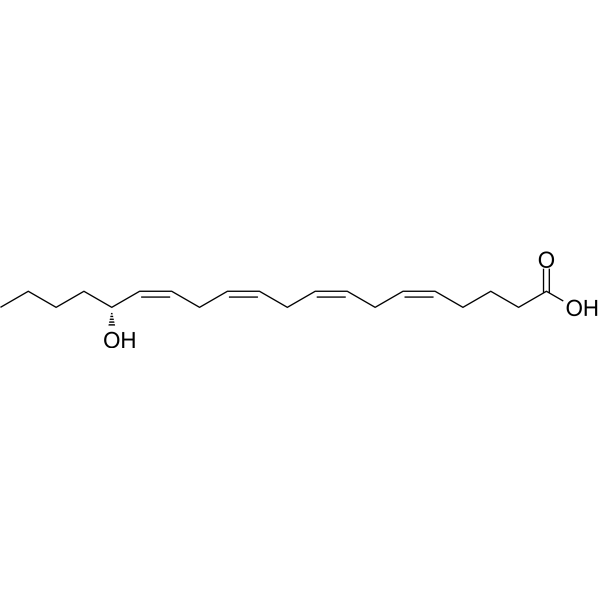 0 ImagesCat. No.: HY-120894CAS No.: 183509-22-016(R)-HETE, a metabolite of the cytochrome P450 branch of the arachidonate cascade, is a vasodilator.
-
Morocromen
 0 ImagesCat. No.: HY-124458CAS No.: 35843-07-3Morocromen is a new 2-oco-benzopyranylcarboxamide with strong coronary activity.
-
D-Ala-D-Ala TFA
 0 ImagesCat. No.: HY-W015450ACAS No.: 87155-77-9Synonyms: D-Alanyl-D-alanine TFA; H-D-Ala-D-Ala-OH TFAD-Ala-D-Ala TFA is a bacterial endogenous metabolite. D-Ala-D-Ala TFA constitutes the terminus of the peptide part of the peptidoglycan monomer unit and is involved in the transpeptidation reaction as the substrate. D-Ala-D-Ala TFA is catalyzed by D-Alanine-D-Alanine ligase.
-
(+)-Potassium Ds-threo-isocitrate monobasic
 0 Images(+)-Potassium Ds-threo-isocitrate monobasic is a biologically active compound that has the activity of promoting cellular metabolism and regulating energy production. (+)-Potassium Ds-threo-isocitrate monobasic can also be used to study the regulation of metabolic pathways and enzyme activities. (+)-Potassium Ds-threo-isocitrate monobasic is widely used in biochemical research to explore its potential role in cellular function and disease processes.
-
SPD-2
 0 ImagesCat. No.: HY-123615CAS No.: 1643781-40-1SPD-2 is a photo-controlled hydrogen sulfide (H2S) donor that can generate hydrogen sulfide (H2S) upon UVA irradiation (325-385 nm). SPD-2 enables photo-controlled, site-specific H2S release in living cells.
-
Isosorbide mononitrate-13C6
 0 ImagesCat. No.: HY-W777418CAS No.: 1217604-00-6Synonyms: Isosorbide-5-mononitrate-13C6Isosorbide mononitrate-13C6 (Isosorbide-5-mononitrate-13C6) is 13C-labeled Isosorbide mononitrate (HY-B0642).
-
Asticolorin C
 0 ImagesCat. No.: HY-N14879CAS No.: 93395-44-9Asticolorin C is a mycotoxin metabolite from Aspergillus multicolor.
-
4-Cholenic acid-3-one
 0 Images4-Cholenic acid-3-one is an antifeedant steroid metabolite formed via anaerobic biotransformation of Lithocholic acid (HY-B0172) by Pseudomonas sp. strain NCIB 10590.
-
Sarcinapterin
 0 ImagesCat. No.: HY-125340CAS No.: 89157-12-0Sarcinapterin is a L-glutamyl derivative coenzyme of methanopterin. Sarcinapterin can be extracted from Methanosarcina barkeri.
-
2,6-Dimethylhydroquinone (Standard)
 0 ImagesSynonyms: M-Xylohydroquinone (Standard)2,6-Dimethylhydroquinone (Standard) is an analytical standard for 2,6-Dimethylhydroquinone (HY-W004874). This product is intended for research and analytical applications. 2,6-Dimethylhydroquinone is a key metabolic intermediate in the degradation of 2,6-xylenol by Mycobacterium strain DM1. 2,6-Dimethylhydroquinone can be used as an early indicator of failure in biological treatment systems.
-
(±)9-HODE cholesteryl ester
 0 ImagesCat. No.: HY-123016ACAS No.: 33783-76-5(±)9-HODE cholesteryl ester is originally extracted from atherosclerotic lesions1 and shown to be produced by Cu2+-catalyzed oxidation of LDL.2 Later studies determined that 15-LO from rabbit reticulocytes and human monocytes were able to metabolize cholesteryl linoleate, a major component of LDL, to 9-HODE cholesteryl ester.
-
3-Hydroxymandelic Acid (Standard)
 0 ImagesCat. No.: HY-W015326RCAS No.: 17119-15-23-Hydroxymandelic Acid (Standard) is the analytical standard of 3-Hydroxymandelic Acid (HY-W015326). This product is intended for research and analytical applications. 3-Hydroxymandelic Acid, a metabolite of Phenylephrine, Phenylephrine is a α-receptor agonist.

-
Ala-Ala-Phe-AMC
 0 ImagesAla-Ala-Phe-AMC serves as a fluorogenic substrate that exhibits positively charged properties, making it suitable for assessing proteolytic activity.
-
D-2-Phosphoglyceric acid
 0 ImagesCat. No.: HY-128736BCAS No.: 3443-57-0D-2-Phosphoglyceric acid is an intermediate product of glycolysis and gluconeogenesis, and its level changes are associated with the glycolysis pathway regulated by MCT4. The intracellular level of D-2-Phosphoglyceric acid decreases in hypoxic glioblastoma stem cells after MCT4 knockdown. D-2-Phosphoglyceric acid can be used in the research of glioblastoma.
-
Guanidinosuccinic acid (Standard)
 0 ImagesCat. No.: HY-113373RCAS No.: 6133-30-8Guanidinosuccinic acid (Standard) is the analytical standard of Guanidinosuccinic acid. This product is intended for research and analytical applications. Guanidinosuccinic acid is a nitrogenous metabolite.
-
(±)14(15)-EpEDE
 0 ImagesCat. No.: HY-165022CAS No.: 351533-80-7Synonyms: (±)14,15-Epoxyeicosadienoic acid(±)14(15)-EpEDE is a a polyunsaturated fatty acid and can be found in DCU (HY-W013989) -treated porcine coronary endothelial cells.
-
Phenazine (Standard)
 0 ImagesPhenazine (Standard) is the analytical standard of Phenazine (HY-W016477). This product is intended for research and analytical applications. Phenazine belongs to the family of N-heterocyclic compounds. Phenazine can be found in terrestrial and marine microorganisms. Phenazine attracts attention due to its diverse biological activities, including Antimicrobial and enzyme inhibitory properties. Phenazine can be used in breast cancer research.




