



Endogenous Metabolite
Endogenous metabolites refer to the collective set of small-molecule chemical substances present within organelles, cells, organs, biological fluids, or entire organisms; their molecular weights are typically less than 1500 Da. These endogenous metabolites—including lipids, amino acids, short peptides, nucleic acids, carbohydrates, alcohols, and organic acids—not only participate in signal transduction governing genomic function but also receive upstream signals from the environment, thereby bridging the interrelationships among genotype, environment, and phenotype.
Based on their biological functions, microbial endogenous metabolites can be broadly classified into two categories: primary metabolites and secondary metabolites. Primary metabolites are the core molecules essential for supporting microbial growth and proliferation; they serve to provide energy to the microbes or act as precursors and cofactors for the synthesis of biological macromolecules. In contrast, microbial secondary metabolites are a class of low-molecular-weight products that are not strictly essential for microbial growth. Nevertheless, microbial secondary metabolites include numerous substances—such as antibiotics, anti-tumor agents, and cholesterol-lowering agents—that are of critical importance to human health[1][2][3]. Furthermore, the metabolome of a biological organism is influenced by a variety of endogenous factors, including age, sex, body composition, genetic background, and underlying pathological states. The small-molecule metabolites within an organism are diverse and highly distinct; their levels are typically subject to the synergistic regulation of a vast array of enzymes and transport proteins, undergoing processes of synthesis, transformation, degradation, and compartmentalized distribution. Metabolomics research based on endogenous metabolites has been widely applied in the fields of metabolic disorders, neurodegenerative diseases, cancer, cardiovascular diseases, and infectious diseases, where these metabolites hold potential utility as biomarkers or therapeutic targets[1][2][3].
References:
- [1]. Seyedsayamdost MR. Toward a global picture of bacterial secondary metabolism. J Ind Microbiol Biotechnol. 2019 Mar;46(3-4):301-311. [Content Brief]
- [2]. Ruiz B, et al. Production of microbial secondary metabolites: regulation by the carbon source. Crit Rev Microbiol. 2010 May;36(2):146-67. [Content Brief]
- [3]. Wishart DS. Metabolomics for Investigating Physiological and Pathophysiological Processes. Physiol Rev. 2019 Oct 1;99(4):1819-1875. [Content Brief]
Endogenous Metabolite Isoform Specific Products
All Product Categories
-
Endogenous Metabolite Related Products (8420)
Related Products (8420)

-
Antibodies (477)
-
Endogenous Metabolite Isoform Comparison
-
Trihexosylceramide (d18:1/24:0)
 0 ImagesCat. No.: HY-N11157CAS No.: 82005-99-0Trihexosylceramide (d18:1/24:0) is a globotriaosylceramide (Gb3) subtype with an unmodified d18:1 sphingosine moiety and a saturated C24:0 fatty acid chain, which serves as a biomarker for Fabry disease. Trihexosylceramide (d18:1/24:0) is applicable to the research of Fabry disease.

-
Triricinolein
 0 ImagesCat. No.: HY-W751375CAS No.: 2540-54-7Triricinolein is a triacylglycerol composed entirely of ricinoleic acid residues, and it is a fatty acid component of Malaysian castor oil.
-
SKF 104976
 0 ImagesCat. No.: HY-117219CAS No.: 136209-43-3SKF 104976 is a 3,2-carboxylic acid derivative with potent 14-alpha-demethylase (14 alpha DM) inhibitory activity. SKF 104976 inhibited 14 alpha DM activity by 50% at 2 nM in Hep G2 cell extracts. SKF 104976 inhibited the incorporation of [14C]acetate into cholesterol in intact cells at similar concentrations, accompanied by accumulation of lanosterol, and resulted in a 40-70% decrease in 3-hydroxy-3-methylglutaryl-CoA reductase (HMGR) activity. SKF 104976 did not affect the uptake and degradation of low-density lipoprotein in Hep G2 cells, indicating that HMGR and low-density lipoprotein receptor activities are not coordinately regulated under these conditions. The inhibitory effect of SKF 104976 on HMGR activity remained unchanged even when the flux of carbon units in the sterol synthesis pathway was reduced by 80%. SKF 104976 did not inhibit HMGR activity under conditions where sterol synthesis was almost completely blocked by lovastatin.
-
Isariin C
 0 ImagesCat. No.: HY-125040CAS No.: 80111-96-2Isariin C is a flavonoid glycoside with antioxidant activity. Isariin C activates angiogenesis. Isariin C exhibits insecticidal activity in certain insects.


-
(R,R,S)-GAT107
 0 ImagesCat. No.: HY-167922CAS No.: 1426240-47-2(R,R,S)-GAT107 is a fully agonistic positive modulator of α7 nicotinic receptors with significant biological activity. Its activity is entirely present in its (+)-isomer 1b, while (-)-isomer 1a does not affect its activity when used together. Studies have shown that (R,R,S)-GAT107 is the most potent ago-PAM for α7 nicotinic receptors currently known and has the potential for further in vivo evaluation.
-
9(R)-HODE
 0 ImagesCat. No.: HY-113545CAS No.: 10075-11-3Synonyms: 9(R)-Hydroxyoctadecadienoic acid9(R)-HODE is a monohydroxy fatty acid and metabolite of linoleic acid. It is formed from linoleic acid by COX and lipoxygenase (LO).9(R)-HODE induces chemotaxis, increases the levels of chemokine (C-C motif) receptor 9 (CCR9) and chemokine (C-X-C motif) receptor 4 (CXCR4), and inhibits IL-6 release in primary human monocytes. It inhibits CD3α- and CD28-induced proliferation of isolated human peripheral blood lymphocytes when used at a concentration of 25 μg/mL.
-
Piperin-d10
 0 ImagesCat. No.: HY-W654320Synonyms: Bioperine-d10; 1-Piperoylpiperidine-d10Piperin-d10 is deuterium labeled Piperine. Piperine is an alkaloid, can be isolated from pepper. Piperine can inhibit the activity of P-glycoprotein and CYP3A4. Piperine inhibits HeLa cells with an IC50 of 61.94±0.054 μg/mL.
-
1-PalMitoyl-2-arachidoyllecithin-d9-1
 0 ImagesCat. No.: HY-141636SCAS No.: 1872379-11-7Synonyms: 1-Palmitoyl-2-arachidonoyl-sn-glycero-3-phosphocholine-d9-1; PAPC-d9-1; PC(16:0/20:4)-d9-11-PalMitoyl-2-arachidoyllecithin-d9-1 (1-Palmitoyl-2-arachidonoyl-sn-glycero-3-phosphocholine-d9-1) is deuterium labeled 1-PalMitoyl-2-arachidoyllecithin. 1-Palmitoyl-2-arachidonoyl-sn-glycero-3-PC (PAPC) is a phospholipid containing palmitic acid (16:0) and arachidonic acid (20:4) at the sn-1 and sn-2 positions, respectively, that is found in biological membranes. PAPC is oxidized in vivo, and its oxidation products are involved in chronic inflammation and vascular disease. PAPC has been used to study signaling of oxidized phospholipids. Levels of PAPC are decreased in isolated human multiple myeloma cells.
-
Chenodeoxycholic acid-d2
 0 ImagesCat. No.: HY-76847S4CAS No.: 57770-00-0Synonyms: CDCA-d2Chenodeoxycholic acid-d2 (CDCA-d2) is deuterium labeled Chenodeoxycholic Acid. Chenodeoxycholic Acid is a hydrophobic primary bile acid that activates nuclear receptors (FXR) involved in cholesterol metabolism.
-
D-myo-Inositol-1-phosphate cyclohexyl ammonium salt
 0 ImagesCat. No.: HY-175385ASynonyms: Ins(1)P1 cyclohexyl ammonium salt; 1-IP1 cyclohexyl ammonium saltD-myo-Inositol-1-phosphate (Ins(1)P1) cyclohexyl ammonium is a member of the inositol phosphate molecular family.
-
Cotinine (Standard)
 0 ImagesSynonyms: (-)-Cotinine (Standard); (S)-Cotinine (Standard); NIH-10498 (Standard)Cotinine (Standard) is the analytical standard of Cotinine. This product is intended for research and analytical applications. Cotinine ((-)-Cotinine), an alkaloid in tobacco and a major metabolite of nicotine, is used as a biological indicator to measure the composition of tobacco smoke
-
H-Ser-His-OH (Standard)
 0 ImagesH-Ser-His-OH (Standard) is the analytical standard of H-Ser-His-OH. This product is intended for research and analytical applications. H-Ser-His-OH is a short peptide with hydrolysis cleavage activity, an endogenous metabolite.
-
Vitamin C solution
 0 ImagesCat. No.: HY-FLB0166CAS No.: 50-81-7Vitamin C solution is mainly composed of L-Ascorbic acid (HY-B0166). L-Ascorbic acid (L-Ascorbate), an electron donor, is an endogenous antioxidant agent. L-Ascorbic acid inhibits selectively Cav3.2 channels with an IC50 of 6.5 μM. L-Ascorbic acid is also a collagen deposition enhancer and an elastogenesis inhibitor. L-Ascorbic acid exhibits anti-cancer effects through the generation of reactive oxygen species (ROS) and selective damage to cancer cells.
-
1-Heptadecanoyl-2-hydroxy-sn-glycero-3-phosphocholine-d5
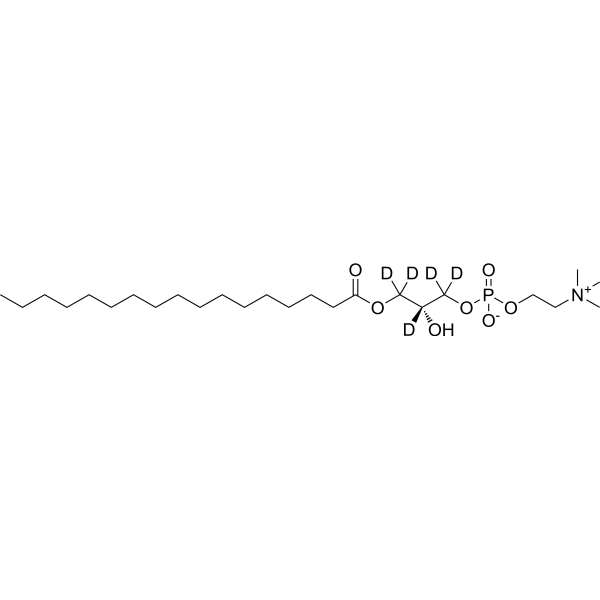 0 ImagesCat. No.: HY-141616SCAS No.: 2342575-12-41-Heptadecanoyl-2-hydroxy-sn-glycero-3-phosphocholine-d5 is deuterium labeled 1-Heptadecanoyl-2-hydroxy-sn-glycero-3-phosphocholine.
-
D-α-Hydroxyglutaric acid disodium (Standard)
 0 ImagesCat. No.: HY-100542RCAS No.: 103404-90-6Synonyms: Disodium (R)-2-hydroxyglutarate (Standard)D-α-Hydroxyglutaric acid (disodium) (Standard) is the analytical standard of D-α-Hydroxyglutaric acid (disodium). This product is intended for research and analytical applications. D-α-Hydroxyglutaric acid disodium (Disodium (R)-2-hydroxyglutarate) is the principal metabolite accumulating in neurometabolic disease D-2-hydroxyglutaric aciduria. D-α-Hydroxyglutaric acid disodium is a weak competitive antagonist of α-ketoglutarate (α-KG) and inhibits multiple α-KG-dependent dioxygenases with a Ki of 10.87 mM. D-α-Hydroxyglutaric acid disodium increases reactive oxygen species (ROS) production. D-α-Hydroxyglutaric acid disodium binds and inhibits ATP synthase and inhibits mTOR signaling.
-
(+)-Adomeglivant
 0 ImagesCat. No.: HY-19904BCAS No.: 872260-19-0Synonyms: (+)-LY2409021(+)-Adomeglivant ((+)-LY2409021) is a potent and selective glycogenotropin receptor antagonist with glucose-lowering activity. (+)-Adomeglivant reduces fasting blood glucose levels in both healthy subjects and patients with type 2 diabetes. The use of (+)-Adomeglivant can help investigate the mechanisms of hyperglycemia in type 2 diabetes. The antagonistic effect of (+)-Adomeglivant makes it challenging to assess the metabolic consequences of postprandial hyperglycemia.
-
18:0 Cardiolipin
 0 ImagesCat. No.: HY-160203CAS No.: 64069-64-318:0 Cardiolipin (CL) is a polyglycerophospholipid synthesized in mitochondria, playing a crucial role in mitochondrial bioenergetics and signaling. Exclusively found in the inner mitochondrial membrane of eukaryotes, 18:0 CL exhibits a complex structure characterized by its unique chain length and degree of saturation, along with the specific arrangements of its four fatty acid substituents.




