



P-glycoprotein
P-gp; Pgp; Multidrug resistance protein 1; MDR1; ATP-binding cassette sub-family B member 1; ABCB1; Cluster of differentiation 243; CD243
P-glycoprotein (P-gp) also known as multidrug resistance protein 1 (MDR1) is an important protein of the cell membrane that pumps many foreign substances out of cells. More formally, it is an ATP-dependent efflux pump with broad substrate specificity. P-gp is extensively distributed and expressed in the intestinal epithelium where it pumps xenobiotics (such as toxins or drugs) back into the intestinal lumen, in liver cells where it pumps them into bile ducts, in the cells of the proximal tubular of the kidney where it pumps them into urine-conducting ducts, and in the capillary endothelial cells comprising the blood–brain barrier and blood-testis barrier, where it pumps them back into the capillaries. Some cancer cells also express large amounts of P-gp, which renders these cancers multi-drug resistant. P-gp is an ATP-dependent drug efflux pump for xenobiotic compounds with broad substrate specificity. It is responsible for decreased drug accumulation in multidrug-resistant cells and often mediates the development of resistance to anticancer drugs. This protein also functions as a transporter in the blood–brain barrier.
All Product Categories
-
P-glycoprotein Inhibitors
(279)
View all products
-
P-glycoprotein Agonists
(2)
View all products
-
P-glycoprotein Antagonist
(1)
View all products
-
P-glycoprotein Activators
(4)
View all products
-
P-glycoprotein Modulators
(24)
View all products
-
P-glycoprotein Inducer
(1)
View all products
-
P-glycoprotein Controls
(3)
View all products
-
P-glycoprotein Substrates
(23)
View all products
-
P-glycoprotein Ligands
(2)
View all products
-
P-glycoprotein Related Products (382)
Related Products (382)

-
Antibodies (3)
-
Risperidone-d4-1
 0 ImagesCat. No.: HY-11018S1Synonyms: R 64 766-d4-1Risperidone-d4-1 (R 64 766-d4-1) is the deuterium labeled Risperidone (HY-11018). Risperidone is a serotonin 5-HT2 receptor blocker, P-Glycoprotein inhibitor and potent dopamine D2 receptor antagonist, with Kis of 4.8, 5.9 nM for 5-HT2A and dopamine D2 receptor, respectively.
-
Tubulin-IN-66
 0 ImagesCat. No.: HY-182753CAS No.: 3110538-32-1Tubulin-IN-66 is a tubulin (tubulin) and P-gp inhibitor with antiproliferative activity against cancer cells. Tubulin-IN-66 covalently binds to the Colchicine (HY-16569)-binding site at Cys239 of the β-tubulin subunit, inhibits tubulin polymerization and disrupts the microtubule network. Tubulin-IN-66 inhibits P-gp function to overcome multidrug resistance. Tubulin-IN-66 arrests the cell cycle at the G2/M phase and induces apoptosis (apoptosis). Tubulin-IN-66 inhibits colony formation and migration of cancer cells. Tubulin-IN-66 can be used in the research of tumors such as breast cancer.
-
Caspase-3 activator 5
 0 ImagesCat. No.: HY-180849Caspase-3 activator 5 (Compound 11) is a caspase-3 activator. Caspase-3 activator 5 reduces MRP1 levels and induces Apoptosis through Caspase-3 activation. Caspase-3 activator 5 exhibits anticancer activity against leukemia, cervical cancer, and breast cancer. Caspase-3 activator 5 shows no antibacterial or antifungal effects.
-
Lss-11
 0 ImagesCat. No.: HY-183143CAS No.: 1392014-36-6Lss-11 is a topoisomerase inhibitor. LSS-11 enhances cell death in cancer cells by inducing apoptosis through increasing the DR5 protein level and PARP1 cleavage. LSS-11 dose-dependently reduces STAT3 phosphorylation, downregulates its target genes MDR1 and MRP1, reduces P-gp protein expressionwithout affecting P-gp transport function. Lss-11 is a chemosensitizer and shows synergistic anticancer effect with Paclitaxel (HY-B0015). Lss-11 can be used for the research of paclitaxel-resistant lung cancer.
-
ABCB1/ABCG2-IN-1
 0 ImagesCat. No.: HY-174435ABCB1/ABCG2-IN-1 (Compound (S,Z)-4b) is an inhibitor of ABCB1 and ABCB2 transporters. ABCB1/ABCG2-IN-1 shows moderate activity in SW620M, -V, and –Mito variants (IC50 ≈ 50 μM). ABCB1/ABCG2-IN-1 affects methotrexate resistance in vitro. ABCB1/ABCG2-IN-1 can be studied in anticancer research.
-
P-gp inhibitor 21
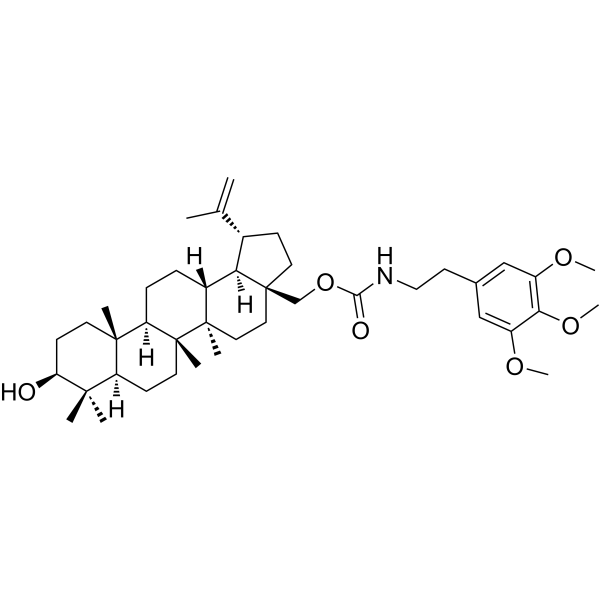
 0 ImagesCat. No.: HY-162396P-gp inhibitor 21 (Compound 56) is an inhibitor for P-glycoprotein (P-gp) transport, which reverses P-gp-mediated multidrug resistance (MDR) and exhibits antitumor efficacy in mice without significant cytotoxicity.
-
Tenacigenoside A
 0 ImagesCat. No.: HY-N7917CAS No.: 920502-42-7Tenacigenoside A is a multidrug resistance reversal agent and apoptosis inducer that selectively acts on P-glycoprotein and apoptosis-related proteins (BCL2, BCL-XL, BID). Tenacigenoside A exerts its key activity by regulating the expression of apoptosis-related proteins and inhibiting P-gp function, thereby inhibiting tumor cell proliferation, inducing tumor cell apoptosis, and reversing multidrug resistance in tumors. Tenacigenoside A can be used in research on malignant tumors such as lymphoma.
-
FM04
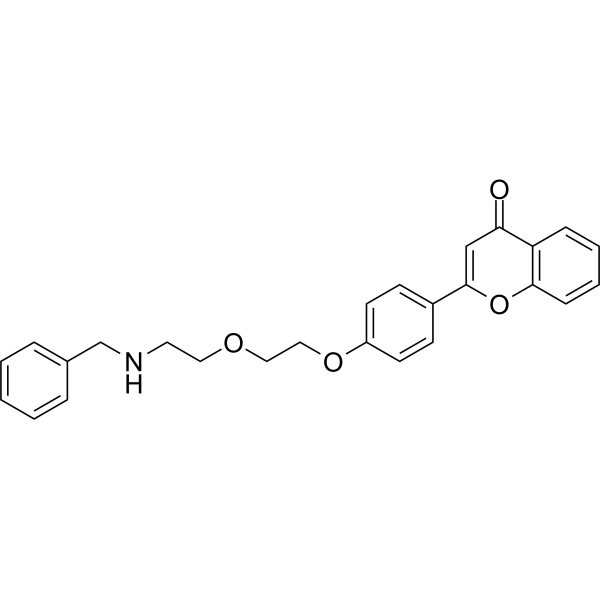 0 ImagesFM04 is a potent P-glycoprotein (P-gp) inhibitor (EC50=83 nM). FM04 inhibits P-gp in 2 mechanism: (1)FM04 binds to Q1193, followed by interacting with the functionally critical residues H1195 and T1226; or (2)FM04 binds to I1115 (a functionally critical residue itself), disrupting the R262-Q1081-Q1118 interaction pocket and uncoupling ICL2-NBD2 interaction and thereby inhibiting P-gp.
-
Hapalosin
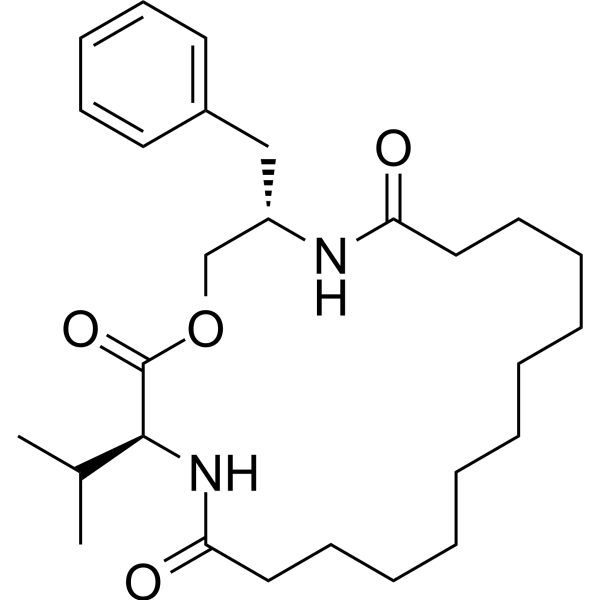
 0 ImagesCat. No.: HY-182633CAS No.: 159542-04-8Hapalosin is a multidrug resistance reversal agent and chemosensitizer with mild cytotoxicity against cancer cells. Hapalosin inhibits the ATP-dependent drug efflux pump function of P-glycoprotein and antagonizes multidrug resistance-associated proteins. Hapalosin reverses multidrug resistance mediated by P-glycoprotein and multidrug resistance-associated proteins, increases the intracellular accumulation of drugs transported by P-glycoprotein, and enhances the cytotoxicity of these drugs against cancer cells overexpressing P-glycoprotein. Hapalosin can be used in the research of multidrug-resistant cancers.
-
Cajanol
 0 ImagesCat. No.: HY-N10342CAS No.: 61020-70-0Cajanol is an isoflavanone that can be isolated from the roots of Cajanus cajan (L.) Millsp.. Cajanol inhibits cancer cell proliferation and induces cancer cell apoptosis. Cajanol promotes the expression of Bax, inhibits the expression of Bcl-2, activates caspase-9 and caspase-3, induces PARP cleavage, arrests the cell cycle at the G2/M phase, generates ROS, disrupts mitochondrial membrane potential and triggers cytochrome c release. Cajanol induces bacterial DNA damage, disrupts bacterial cell membranes, and exerts antibacterial activity in vitro. Cajanol reduces the expression of PI3K, inhibits the phosphorylation of Akt and NF-κB, downregulates the expression and transport function of P-gp, restores the sensitivity of drug-resistant cancer cells to Paclitaxel, and inhibits the growth of Paclitaxel-resistant metastatic ovarian tumors. Cajanol is applicable to research related to breast cancer, ovarian cancer and bacterial infections.
-
P-gp inhibitor 3
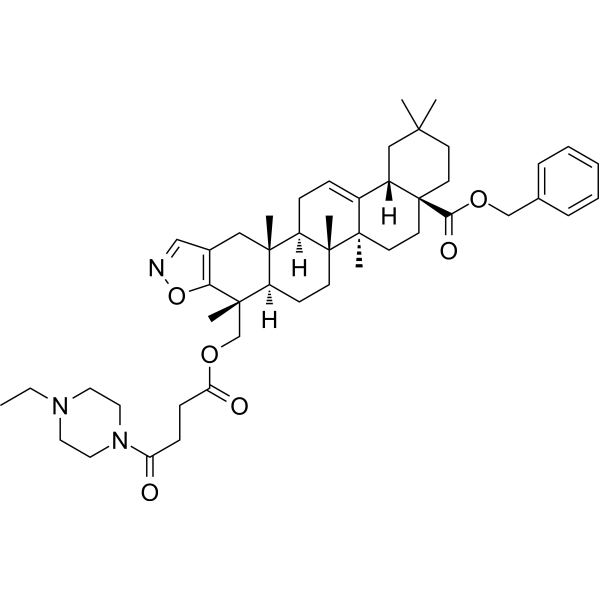 0 ImagesCat. No.: HY-144366CAS No.: 2766451-11-8P-gp inhibitor 3 is an effective P-glycoprotein (P-gp) inhibitor. P-gp inhibitor 3 inhibits the efflux function of P-gp by activating P-gp ATPase. P-gp inhibitor 3 has relatively stronger multidrug resistance (MDR) reversal ability and enhances the anti-tumor activity of Paclitaxel.
-
P-gp inhibitor 20
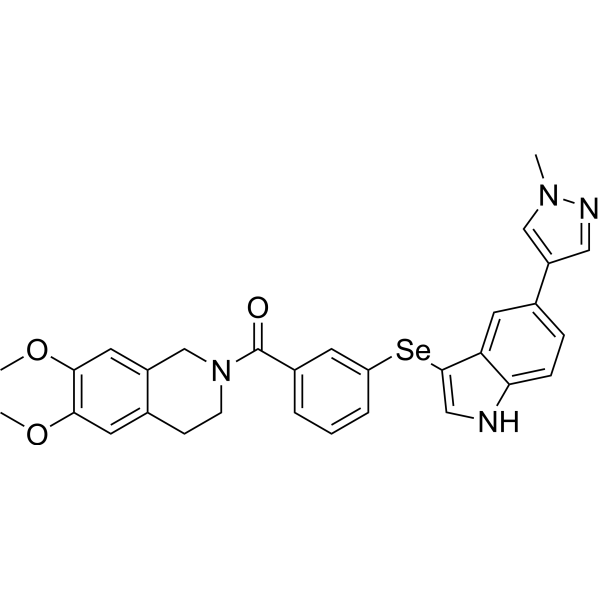 0 ImagesCat. No.: HY-161260CAS No.: 3040917-33-4P-gp inhibitor 20 (compound H27) is a low cytotoxicity P-glycoprotein (P-gp) inhibitor. P-gp inhibitor 20 inhibits the efflux function of P-gp in a dose-dependent manner (without affecting the expression of P-gp), thereby reversing the multidrug resistance (MDR) of MCF-7/ADR cells, with an IC50 value of 46.6 nM. P-gp inhibitor 20 can be used for cancer research.
-
P-gp inhibitor 29
 0 ImagesCat. No.: HY-173401CAS No.: 3082344-99-5P-gp inhibitor 29 (41) is a highly potent P-gp inhibitor and apoptosis inducer, with an IC50 of 8.9 nM in Eca109/VCR cells. P-gp inhibitor 29 (41) can be used in the research for Esophageal Cancer.
-
P-gp-IN-32
 0 ImagesCat. No.: HY-175838CAS No.: 2918249-59-7P-gp-IN-32 is a P-glycoprotein (P-gp) inhibitor. P-gp-IN-32 exhibits low cytotoxicity and potent multidrug resistance (MDR) reversal activity against Doxorubicin (HY-15142A) in MCF7/ADR cells (IC50 = 0.11 μM, reversal fold (RF) = 215.9). P-gp-IN-32 can bind to P-gp directly, induce a conformation change of P-gp and inhibit the efflux function. P-gp-IN-32 can be used for the research of cancer, such as breast cancer.
-
Spongionellol A analog 1
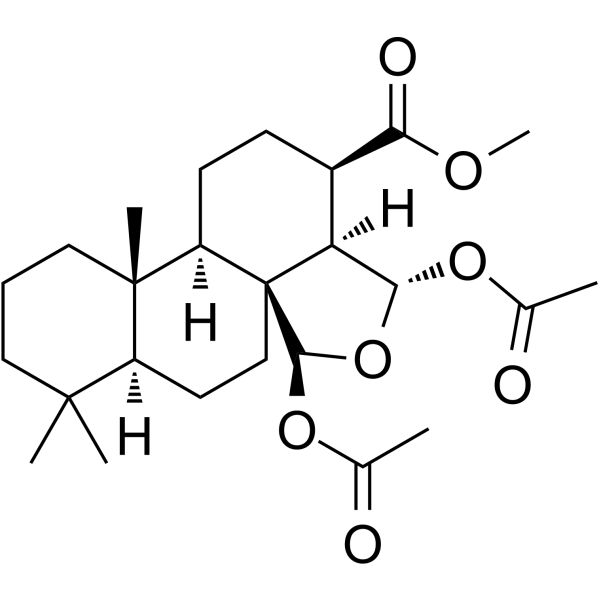 0 ImagesCat. No.: HY-N10492Spongionellol A analog 1, an analog of Spongionellol A (HY-10491), is a MDR1 (p-glycoprotein) inhibitor. Spongionellol A analog 1 has high cytotoxic activity and selectivity in prostate cancer cells by inducing caspase?dependent apoptosis. Spongionellol A analog 1 can be used in the research of cancers, such as prostate cancer.
-
CP-100356
 0 ImagesCat. No.: HY-108347ACAS No.: 142716-85-6CP-100356 is an orally active dual MDR1 (P-gp)/BCRP inhibitor, with an IC50s of 0.5 and 1.5 µM for inhibiting MDR1-mediated Calcein-AM transport and BCRP-mediated Prazosin transport, respectively. CP-100356 is also a weak inhibitor of OATP1B1 (IC50 = ∼66 µM). CP-100356 is devoid of inhibition against MRP2 and major human P450 enzymes (IC50 > 15 µM).
-
BRAFV600E/ABL2-IN-2
 0 ImagesCat. No.: HY-181726BRAFV600E/ABL2-IN-2 is a dual BRAFV600E and ABL2 kinase inhibitor, with an IC50 of 0.088 μM against human BRAFV600E and an IC50 of 0.3 μM against human ABL2. BRAFV600E/ABL2-IN-2 reduces the phosphorylation levels of downstream ERK1/2 and CrkL in melanoma cells. BRAFV600E/ABL2-IN-2 decreases the expression of P-glycoprotein (P-glycoprotein) in melanoma cells. BRAFV600E/ABL2-IN-2 induces G1 cell cycle arrest and apoptosis (Apoptosis) in melanoma cells. BRAFV600E/ABL2-IN-2 is applicable to relevant research on melanoma.
-
C2 Adamantanyl globotriaosylceramide (d18:1/2:0)
 0 ImagesCat. No.: HY-156207CAS No.: 261155-87-7Synonyms: AdaGb3; Adamantyl Gb3; C2 Adamantanyl Ceramide Trihexoside (d18:1/2:0)C2 Adamantanyl globotriaosylceramide (d18:1/2:0) (AdaGb3), a water-soluble globotriaosylceramide analog, is a bioactive sphingolipid. C2 Adamantanyl globotriaosylceramide (d18:1/2:0) reverses MDR1-MDCK cell drug resistance. C2 Adamantanyl globotriaosylceramide (d18:1/2:0) has high affinity for verotoxin (VT).
-
P-gp inhibitor 2
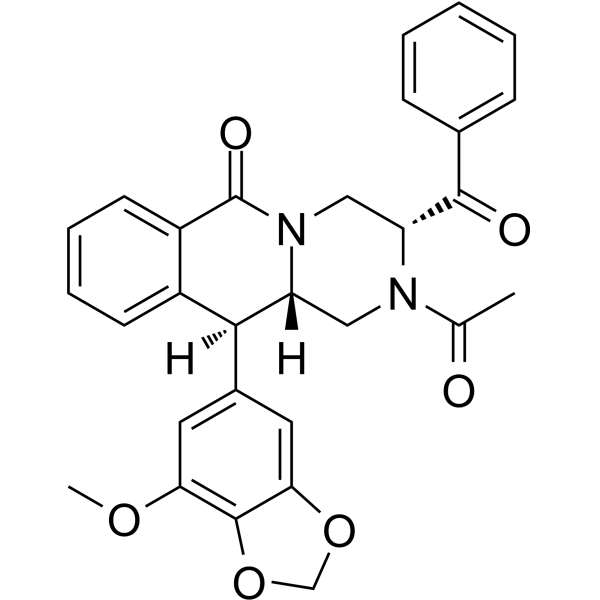 0 ImagesCat. No.: HY-N144114CAS No.: 2408406-89-1P-gp inhibitor 2 is a potent P-gp inhibitor. P-gp inhibitor 2 shows reverse Doxorubicin resistance (IC50=0.22 µM) in P-gp overexpressing human colorectal carcinoma cells (SW600 Ad300).




