



P-glycoprotein
P-gp; Pgp; Multidrug resistance protein 1; MDR1; ATP-binding cassette sub-family B member 1; ABCB1; Cluster of differentiation 243; CD243
P-glycoprotein (P-gp) also known as multidrug resistance protein 1 (MDR1) is an important protein of the cell membrane that pumps many foreign substances out of cells. More formally, it is an ATP-dependent efflux pump with broad substrate specificity. P-gp is extensively distributed and expressed in the intestinal epithelium where it pumps xenobiotics (such as toxins or drugs) back into the intestinal lumen, in liver cells where it pumps them into bile ducts, in the cells of the proximal tubular of the kidney where it pumps them into urine-conducting ducts, and in the capillary endothelial cells comprising the blood–brain barrier and blood-testis barrier, where it pumps them back into the capillaries. Some cancer cells also express large amounts of P-gp, which renders these cancers multi-drug resistant. P-gp is an ATP-dependent drug efflux pump for xenobiotic compounds with broad substrate specificity. It is responsible for decreased drug accumulation in multidrug-resistant cells and often mediates the development of resistance to anticancer drugs. This protein also functions as a transporter in the blood–brain barrier.
All Product Categories
-
P-glycoprotein Inhibitors
(279)
View all products
-
P-glycoprotein Agonists
(2)
View all products
-
P-glycoprotein Antagonist
(1)
View all products
-
P-glycoprotein Activators
(4)
View all products
-
P-glycoprotein Modulators
(24)
View all products
-
P-glycoprotein Inducer
(1)
View all products
-
P-glycoprotein Controls
(3)
View all products
-
P-glycoprotein Substrates
(22)
View all products
-
P-glycoprotein Ligands
(2)
View all products
-
P-glycoprotein Related Products (381)
Related Products (381)

-
Antibodies (3)
-
DVL1/P-gp-IN-1
 0 ImagesCat. No.: HY-184469DVL1/P-gp-IN-1 is a DVL1 inhibitor (lC50 of 0.97 μM) and a P-glycoprptein (P-gp) inhibitor. DVL1/P-gp-IN-1 specific binds to the PDZ domain of the DVL1 protein of the Wnt/β-catenin pathway and inhibition of the P-gp. DVL1/P-gp-IN-1 reduces β-catenin expression, suppresses colon cancer cells proliferation, and induces apoptosis both in vitro and in xenograft models. DVL1/P-gp-IN-1 can be used in colorectal cancer research.
-
P-gp inhibitor 5
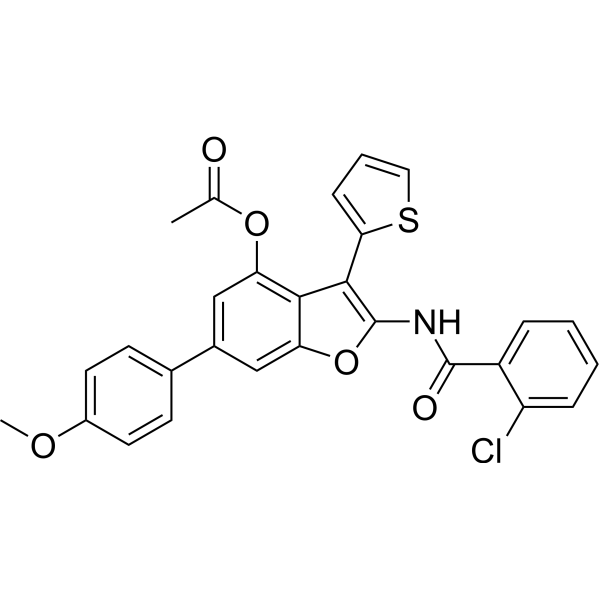 0 ImagesCat. No.: HY-150565CAS No.: 2451298-06-7P-gp inhibitor 5 is a potent P-glycoprotein (P-gp) inhibitor. P-gp inhibitor 5 has antiproliferative activity against certain cancer cell lines. P-gp inhibitor 5 is effective in reversing the multidrug resistance (MDR) phenotype in ABCB1/Flp-InTM-293 and KBvin cells by restoring their sensitivity to Vincristine (HY-N0488A) and Paclitaxel (HY-B0015).
-
KR30031
 0 ImagesCat. No.: HY-123384CAS No.: 205535-74-6KR30031, a Verapamil (HY-14275) analog, is an orally active P-glycoprotein (P-gp) inhibitor. KR30031 enhances the cytotoxicity of anticancer agents by inhibiting P-gp with fewer cardiovascular adverse effects. KR30031 can be used to study multidrug resistance (MDR) reversal in cancer.
-
Quinidine polygalacturonate
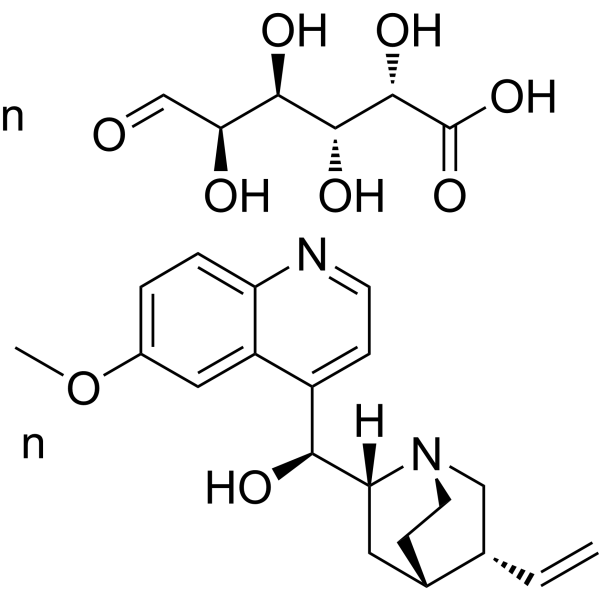 0 ImagesCat. No.: HY-B1751ECAS No.: 27555-34-6Quinidine polygalacturonate is an orally active antiarrhythmic agent. Quinidine polygalacturonate reduces the expression level of P-gp, inhibits P-gp-mediated efflux, increases the intracellular accumulation of P-gp substrates, induces PARP cleavage and Caspase-3 activation, and elevates the proportion of Apoptotic cells at the sub-G1 phase. Quinidine polygalacturonate exerts sustained block and open-channel block effects on IK(f). Quinidine polygalacturonate alters the urinary metabolic ratio of Amphetamine, modulates the Pentylenetetrazol-induced seizure threshold, and regulates the anticonvulsant effect of Dextromethorphan. Quinidine polygalacturonate can be used in studies related to uterine sarcoma and seizures.
-
VEGFR-2/P-gp-IN-2
 0 ImagesCat. No.: HY-189263VEGFR-2/P-gp-IN-2 is a VEGFR-2 inhibitor (IC50 = 126.4 nM) and P-glycoprotein inhibitor. VEGFR-2/P-gp-IN-2 induces G1 phase cell cycle arrest and Apoptosis. VEGFR-2/P-gp-IN-2 can be used for research on cervical cancer.
-
Boeravinone B (Standard)
 0 ImagesCat. No.: HY-N2947RCAS No.: 114567-34-9Boeravinone B (Standard) is the analytical standard of Boeravinone B. This product is intended for research and analytical applications. Boeravinone B, a dual inhibitor of NorA bacterial efflux pump of Staphylococcus aureus and human P-Glycoprotein, reduces the biofilm formation and intracellular invasion of bacteria. Boeravinone B act as anti-aging and anti-apoptosis phyto-molecules during oxidative stress.
-
P-gb-IN-1
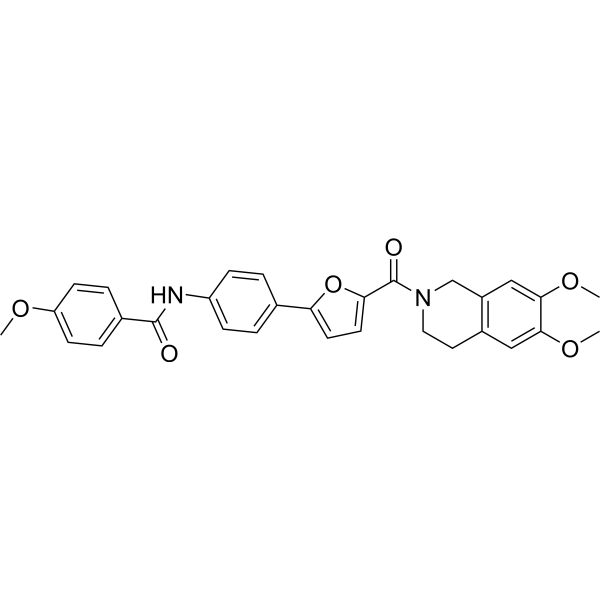 0 ImagesCat. No.: HY-149360CAS No.: 2632874-49-6P-gb-IN-1 (compound Ⅲ-8), a 2,5-disubstituted furan derivative, is a highly effective, broadspectrum P-glycoprotein (P-gp) inhibitor. P-gb-IN-1 displayed the reversal activity by inhibiting P-gp efflux. P-gb-IN-1 has a potent affinity to P-gp by forming H-bond interactions with residues Asn 721 and Met 986. P-gb-IN-1 possesses broad-spectrum reversal activity and low toxicity in MCF-7/ADR cells.
-
P-gp modulator-7
 0 ImagesCat. No.: HY-176193P-gp modulator-7 (Compound 9e) is a P-glycoprotein (P-gp) inhibitor. P-gp modulator-7 occupies the channel entrance of P-gp with a unique T-shaped configuration, hindering the peristaltic extrusion mechanism of transmembrane domains TM12 and TM9, thereby inhibiting P-gp from pumping drugs out of cells and reversing the multidrug resistance (MDR) of tumor cells. P-gp modulator-7 is promising for research of cancers.
-
P-gp inhibitor 14
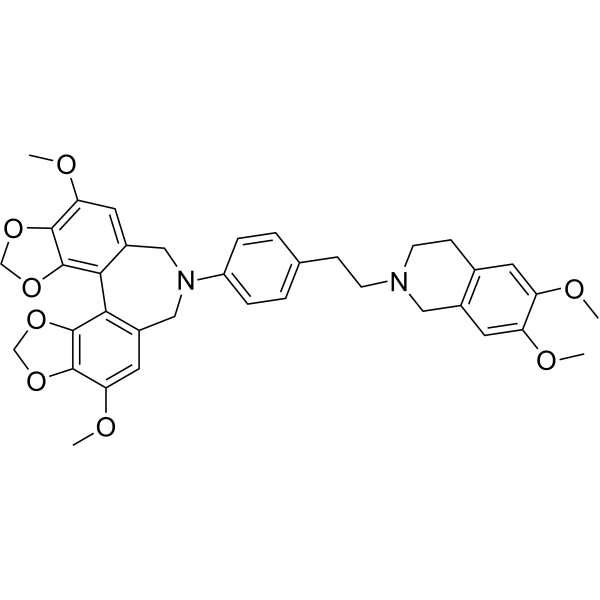 0 ImagesCat. No.: HY-149813CAS No.: 2892571-47-8P-gp inhibitor 14 (Compound 8a) is a high affinity P-gp inhibitor. P-gp inhibitor 14 reverses P-gp-mediated multidrug resistance (EC50=48.74 nM). P-gp inhibitor 14 has a weak inhibitory effect on CYP3A4 activity.
-
Risperidone (Standard)
 0 ImagesSynonyms: R 64 766 (Standard)Risperidone (Standard) is the analytical standard of Risperidone. This product is intended for research and analytical applications. Risperidone is a serotonin 5-HT2 receptor blocker, P-Glycoprotein inhibitor and potent dopamine D2 receptor antagonist, with Kis of 4.8, 5.9 nM for 5-HT2A and dopamine D2 receptor, respectively.
-
ABCB1-IN-3
 0 ImagesCat. No.: HY-168921ABCB1-IN-3 (Compound K27) is an orally active inhibitor of ABCB1, and induces apoptosis. ABCB1-IN-3 directly binds to ABCB1 to inhibit efflux function, ensuring stable intracellular concentration of Paclitaxel (PTX) (HY-B0015) without affecting ABCB1 normal expression. ABCB1-IN-3 significantly increases the sensitivity of ABCB1-mediated multidrug resistance (MDR) to Paclitaxel in vitro, enhances cell cycle arrest, and inhibits proliferation. BCB1-IN-3 combined with Paclitaxel exhibits potent tumor suppression in vivo without generating toxicity.
-
Clausarin
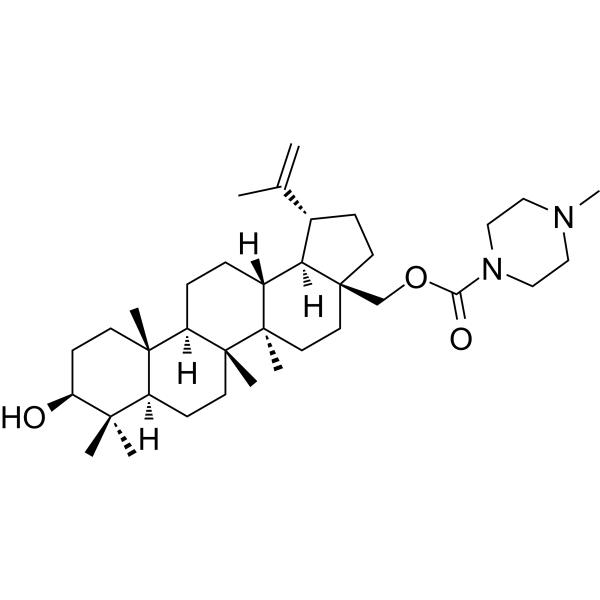
 0 ImagesCat. No.: HY-N16684CAS No.: 62770-67-6Clausarin is a selective inhibitor of P-glycoprotein (P-gp), inhibiting P-gp-mediated drug efflux. Clausarin significantly inhibits Daunorubicin (HY-13062A) efflux in K562/R7 human leukemia cells overexpressing P-gp (with Cyclosporin A (HY-B0579) as a positive control). Clausarin can be naturally extracted from the roots of Citrus sinensis (sweet orange) and can be used in research related to overcoming multidrug resistance (MDR) in tumors.
-
Multi-target kinase inhibitor 4
 0 ImagesCat. No.: HY-172771Multi-target kinase inhibitor 4 (Compound 2) is a PI3K/DNA-PK inhibitor and potent chemosensitizer that can increase the amount of DNA double strand breaks induced by Doxorubicin (HY-15142A). Multi-target kinase inhibitor 4, is an efficient inhibitor of multidrug resistance (MDR) that exhibits inhibitory activity toward P-glycoprotein-mediated drug efflux. Multi-target kinase inhibitor 4 can be loaded into PEG-coated LNPs.
-
Coccinine
 0 ImagesCoccinine ((-)-Coccinine) is a weak inhibitor of SERT (IC50: 196.3 μM; Ki: 106.8 μM) and P-gp (IC50: 0.96 mM). Coccinine exhibits significant anti-tumor activity against various cancer cell lines, such as breast cancer (MCF7, Hs578T, MDA-MB-231), colon cancer (HCT-15), and lung cancer (A549). Coccinine can be used in the research of tumors and neurological diseases.
-
Sinapine hydroxide
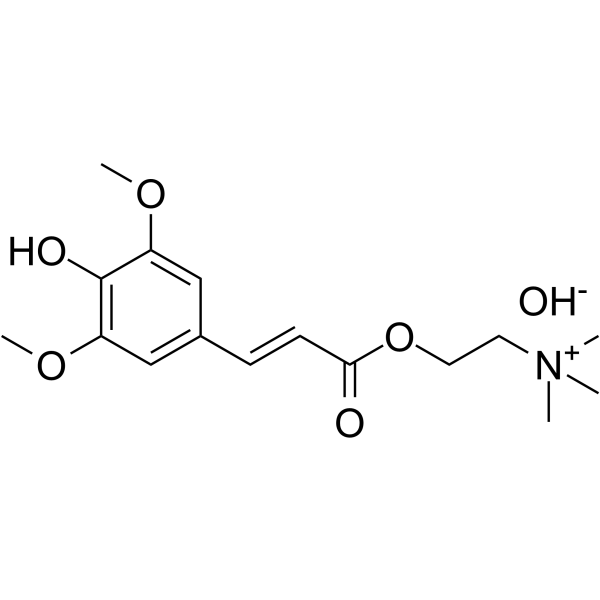 0 ImagesSinapine hydroxide is an alkaloid isolated from seeds of the cruciferous species. Sinapine hydroxide exhibits anti-inflammatory, anti-oxidant, anti-tumor, anti-angiogenic and radio-protective effects. Sinapine hydroxide is also an acetylcholinesterase (AChE) inhibitor and can be used for the research of Alzheimer’s disease, ataxia, myasthenia gravis, and Parkinson’s disease.
-
CYP1B1-IN-14 TFA
 0 ImagesCat. No.: HY-181550ACYP1B1-IN-14 TFA is a metabolically stable hCYP1B1 competitive inhibitor with an IC50 of 1.32 nM and a Ki of 0.72 μM. CYP1B1-IN-14 TFA reverses the resistance of cancer cells to Paclitaxel (HY-B0015). CYP1B1-IN-14 TFA acts synergistically with Paclitaxel (HY-B0015) to inhibit tumor growth in xenograft models without obvious toxicity. CYP1B1-IN-14 TFA can be used for the research of cancers such as paclitaxel-resistant lung cancer.
-
P-gp inhibitor 16
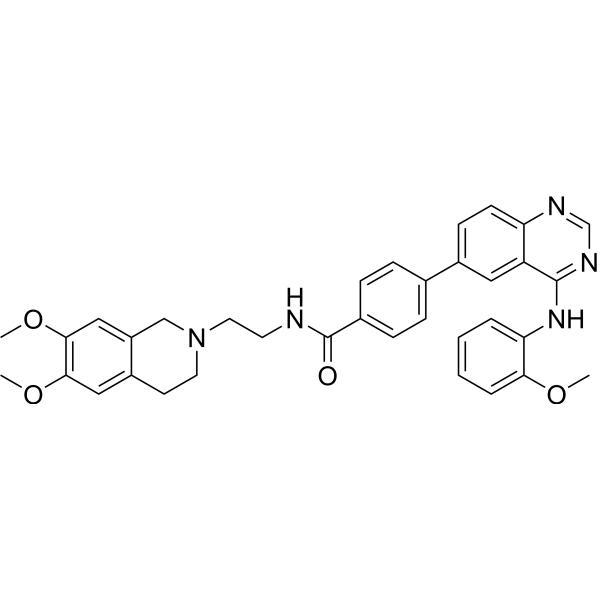 0 ImagesCat. No.: HY-157330CAS No.: 3048432-96-5P-gp inhibitor 16 (compound 14) is a p-glycoprotein inhibitor. P-gp inhibitor 16 significantly increases Doxorubicin-induced apoptosis and shows anticancer effects.
-
P-gp inhibitor 22
 0 ImagesCat. No.: HY-162447CAS No.: 1226674-74-3P-gp inhibitor 22 is a P-glycoprotein (P-gp) inhibitor that effectively inhibits P-pg and efflux function. P-gp inhibitor 22 induces apoptosis and accumulation of MCF-7/ADR cells processed in the S phase.
-
1-Monopalmitin (Standard)
 0 ImagesSynonyms: Glyceryl palmitate (Standard)1-Monopalmitin (Glyceryl palmitate) (Standard) is the analytical standard of 1-Monopalmitin (HY-W009141). This product is intended for research and analytical applications. 1-Monopalmitin (Glyceryl palmitate) is an activator of the PI3K/Akt pathway and an inhibitor of P-glycoprotein (P-gp). 1-Monopalmitin can induce G2/M arrest and caspase-dependent apoptosis in cancer cells, while inhibiting IAPs protein expression. 1-Monopalmitin can increase drug accumulation by inhibiting P-gp activity in intestinal Caco-2 cells. 1-Monopalmitin has the ability to induce protective autophagy and apoptosis of lung cancer cells (IC50=50-58 μg/mL), with low toxicity to normal cells.




