Alkyl/ether Linkers
Alkyl/ether linkers are widely used molecular spacers in chemical biology, medicinal chemistry, antibody-drug conjugates (ADCs), and proteolysis-targeting chimeras (PROTACs), where they connect functional ligands while modulating physicochemical and biological properties of the resulting molecules[1][2]. Mechanistically, linker composition influences molecular flexibility, spatial orientation, and effective distance between functional domains, thereby affecting target engagement, ternary-complex formation, and overall biological activity[1][2]. Among commonly used linker classes, alkyl chains and polyethylene glycol (PEG)-derived ether linkers have dominated linker design because they are synthetically accessible, flexible, and readily tuned in length[1][3]. Ether-containing PEG linkers introduce polarity and hydrogen-bond-accepting oxygen atoms that can improve aqueous solubility and biocompatibility, making them valuable for conjugation and drug-delivery applications[1][4]. In contrast, alkyl linkers provide a more hydrophobic scaffold with fewer heteroatoms, which can enhance membrane permeability and alter pharmacokinetic behavior in cellular systems[1][2]. Compared with PEG-based ether linkers, alkyl linkers generally contribute lower polarity, whereas PEG-containing linkers offer greater hydrophilicity and broader opportunities for tuning solubility-related properties[1][4]. Therefore, the choice between alkyl and ether linker architectures is frequently guided by the balance required among molecular flexibility, polarity, permeability, and application-specific performance[1][2][3]. For experimental applications, systematic variation of linker length and composition remains a common strategy for optimizing molecular recognition, intracellular activity, and structure-activity relationships during compound development[1][2].
References:
- [1]. Troup RI, et al. Current strategies for the design of PROTAC linkers: a critical review. Explor Target Antitumor Ther. 2020;1(5):273-312. [Content Brief]
- [2]. Dong Y, et al. Characteristic roadmap of linker governs the rational design of PROTACs. Acta Pharm Sin B. 2024 Oct;14(10):4266-4295. [Content Brief]
- [3]. Wikipedia.
-
Alkyl/ether Linkers Related Products (493)
Related Products (493)

-
EGNHS
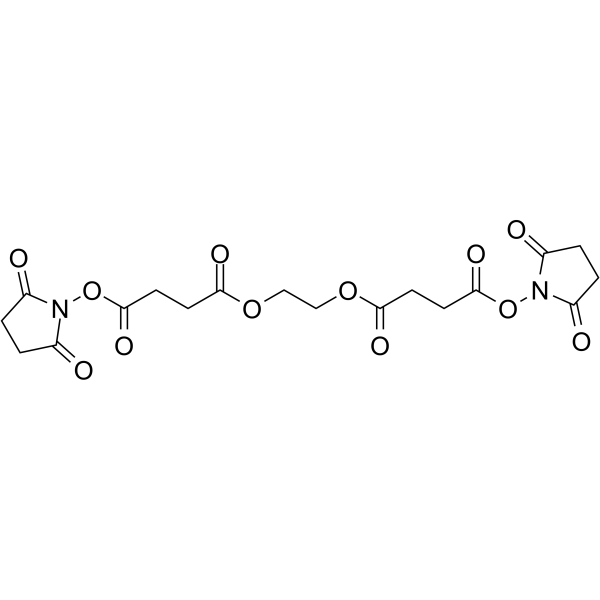 0 ImagesCat. No.: HY-130458CAS No.: 70539-42-3Synonyms: EGS crosslinker
-
3-Mercaptopropionic acid NHS ester
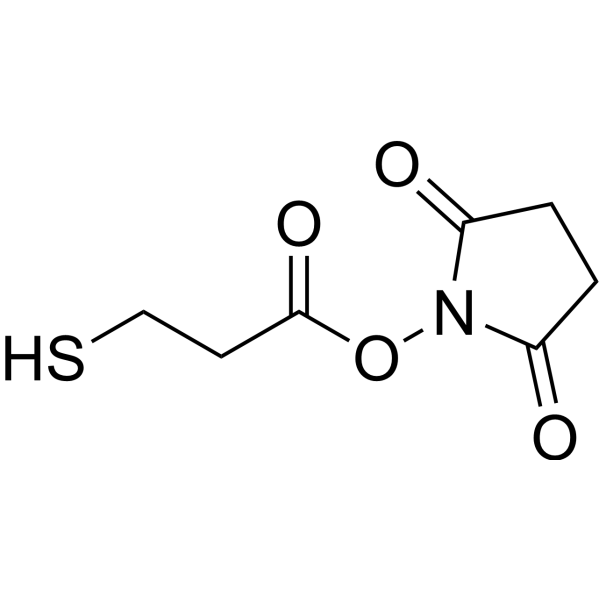 0 ImagesCat. No.: HY-136159CAS No.: 117235-10-6
-
Azido-PEG4-NHS-ester
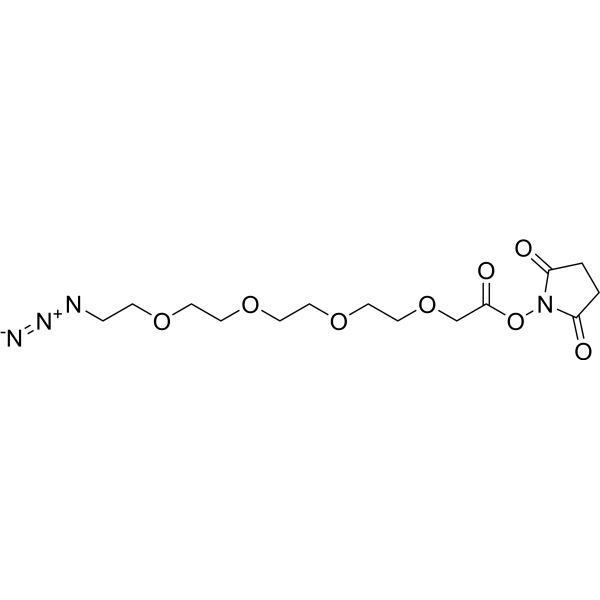 0 ImagesAzido-PEG4-NHS-ester is a PEG-based PROTAC linker that can be used in the synthesis of PROTACs. Azido-PEG4-NHS-ester is a click chemistry reagent, it contains an Azide group and can undergo copper-catalyzed azide-alkyne cycloaddition reaction (CuAAc) with molecules containing Alkyne groups. It can also undergo strain-promoted alkyne-azide cycloaddition (SPAAC) reactions with molecules containing DBCO or BCN groups.
-
N-Boc-piperazine
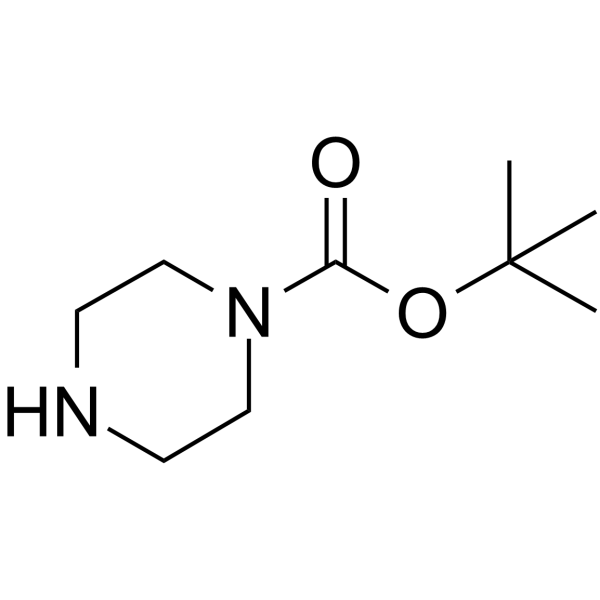 0 ImagesN-Boc-piperazine is a Alkyl/ether-based PROTAC linker that can be used in the synthesis of PROTAC PD-1/PD-L1 degrader-1 (HY-131183).
-
Methyltetrazine-Ph-NHS ester
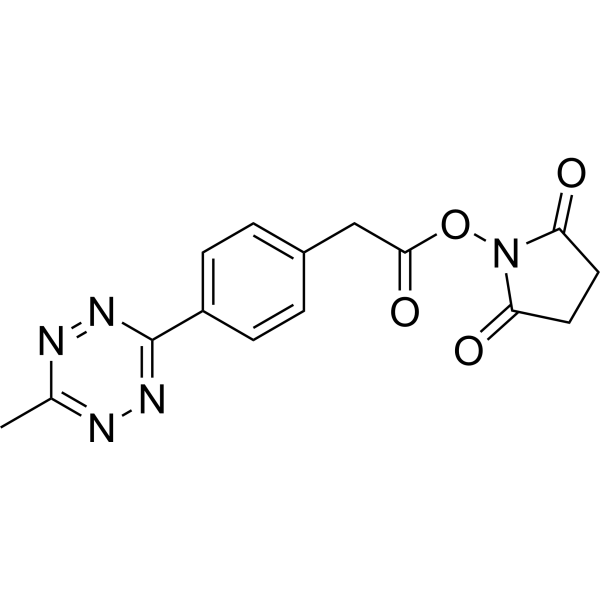 0 ImagesMethyltetrazine-Ph-NHS ester is an alkyl/ether-based PROTAC linker that can be used in the synthesis of PROTACs. Methyltetrazine-Ph-NHS ester is a click chemistry reagent, it contains a Tetrazine group that can undergo an inverse electron demand Diels-Alder reaction (iEDDA) with molecules containing TCO groups.
-
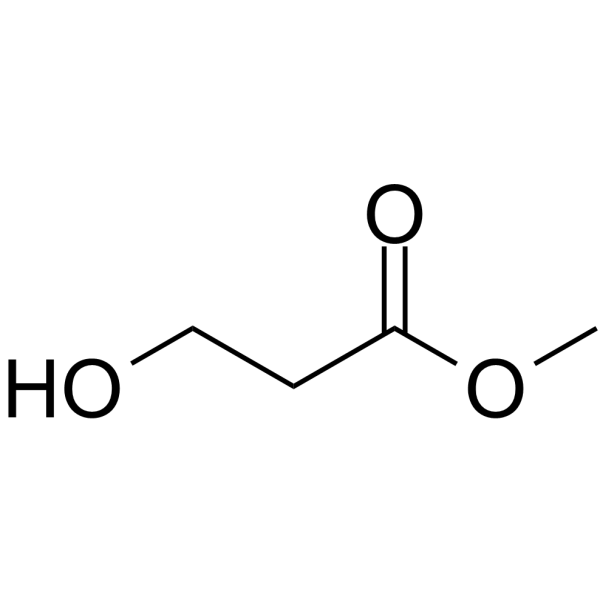
Br-C3-methyl ester
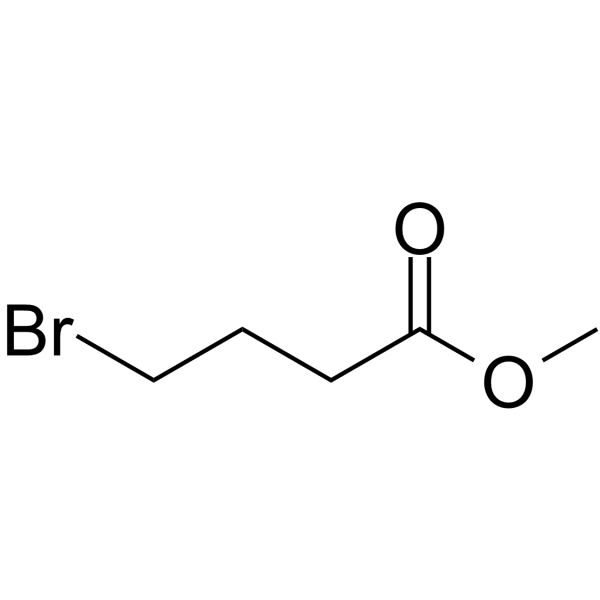 0 ImagesBr-C3-methyl ester is a Alkyl/ether-based PROTAC linker that can be used in the synthesis of PROTAC PD-1/PD-L1 degrader-1 (HY-131183).
-
N-Boc-serinol
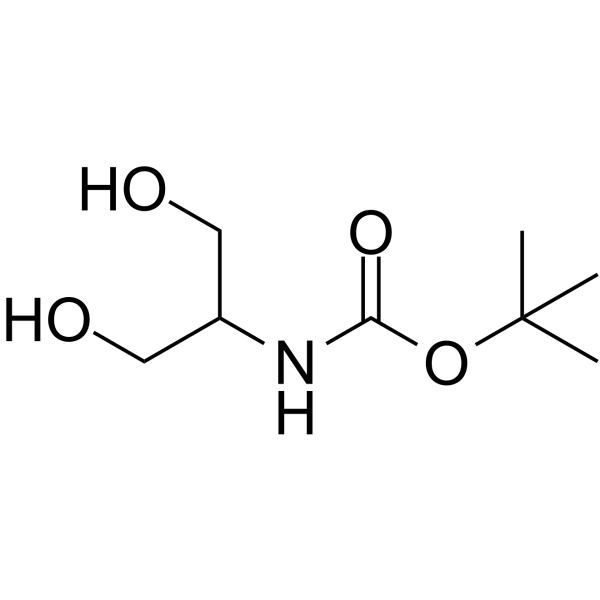 0 ImagesCat. No.: HY-W018464CAS No.: 125414-41-7
-
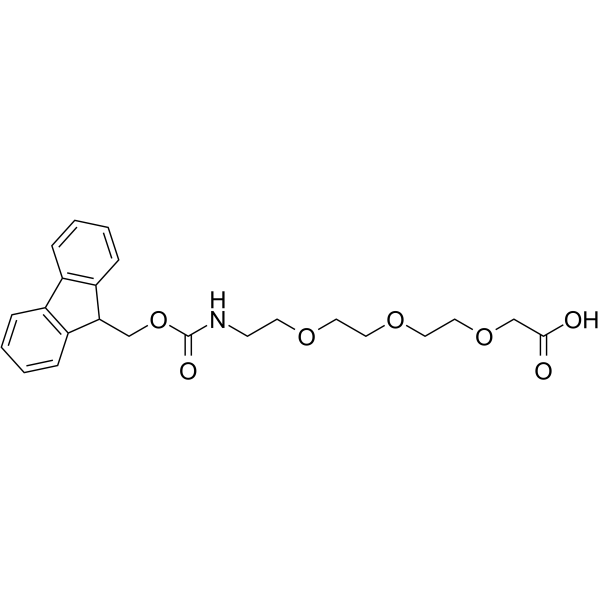
Fmoc-8-amino-3,6-dioxaoctanoic acid
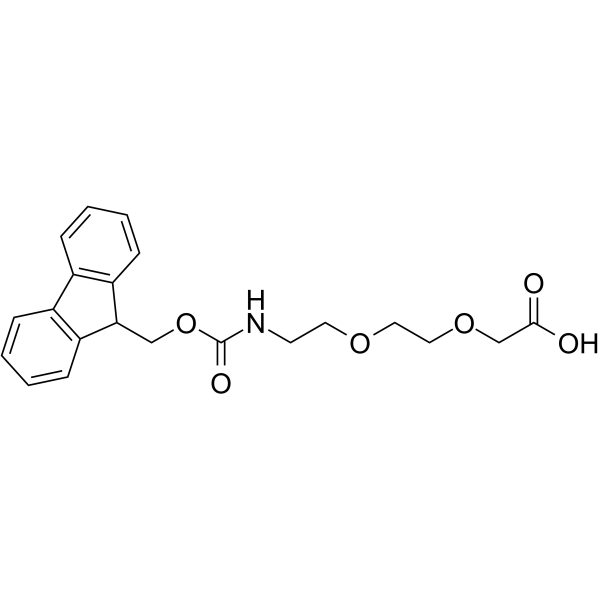 0 ImagesSynonyms: Fmoc-NH-PEG2-CH2COOHFmoc-8-amino-3,6-dioxaoctanoic acid (Fmoc-NH-PEG2-CH2COOH) is a cleavable ADC linker used in the synthesis of antibody-drug conjugates (ADCs). Fmoc-8-amino-3,6-dioxaoctanoic acid is also a PEG-based PROTAC linker that can be used in the synthesis of PROTACs.
-
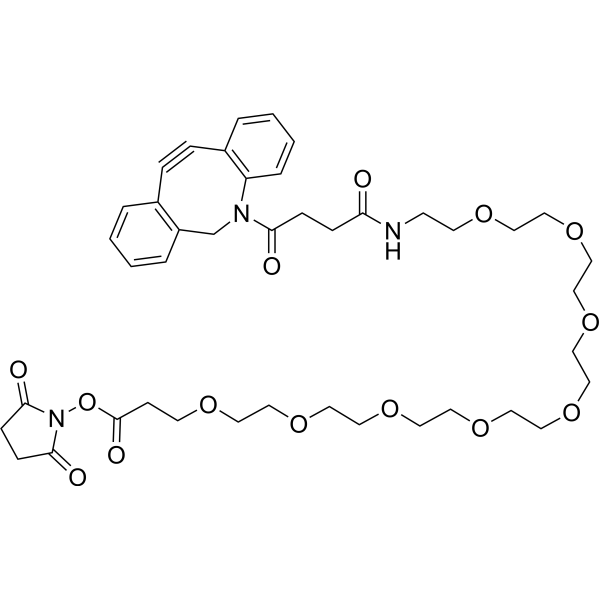
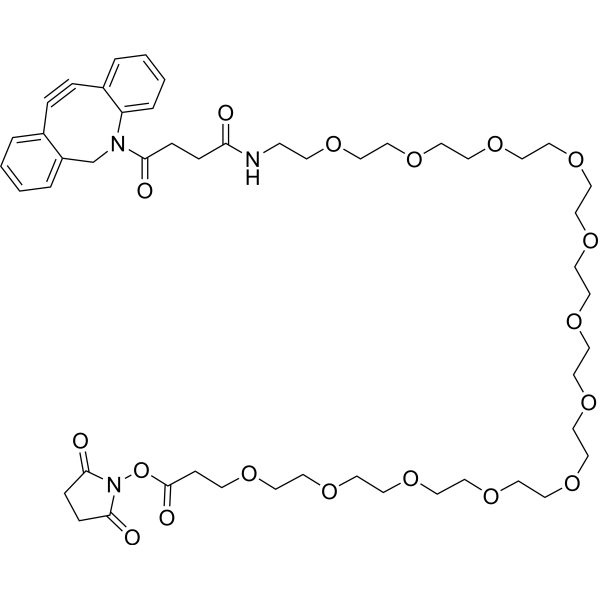
DBCO-PEG5-NHS ester
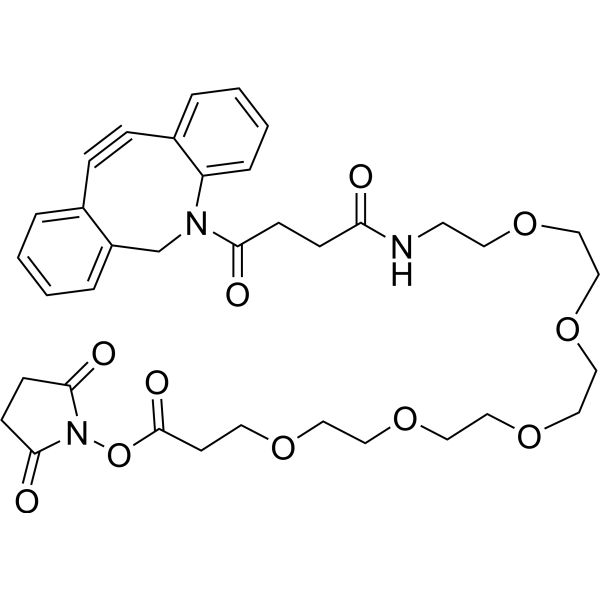 0 ImagesCat. No.: HY-126885CAS No.: 2144395-59-3DBCO-PEG5-NHS ester is a PEG/Alkyl/ether-based PROTAC linker can be used in the synthesis of PROTACs. DBCO-PEG5-NHS ester is a cleavable ADC linker used in the synthesis of antibody-drug conjugates (ADCs). DBCO-PEG5-NHS ester is a click chemistry reagent, it contains a DBCO group that can undergo strain-promoted alkyne-azide cycloaddition (SPAAC) with molecules containing Azide groups.
-
Aeide-C1-NHS ester
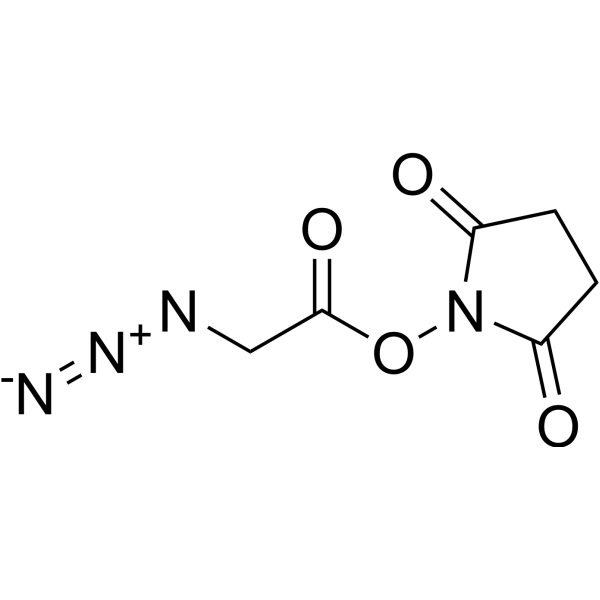 0 ImagesAeide-C1-NHS ester is an alkyl/ether-based PROTAC linker that can be used in the synthesis of PROTACs. Aeide-C1-NHS ester is a click chemistry reagent, it contains an Azide group and can undergo copper-catalyzed azide-alkyne cycloaddition reaction (CuAAc) with molecules containing Alkyne groups. It can also undergo strain-promoted alkyne-azide cycloaddition (SPAAC) reactions with molecules containing DBCO or BCN groups.
-
Azido-PEG8-NHS ester
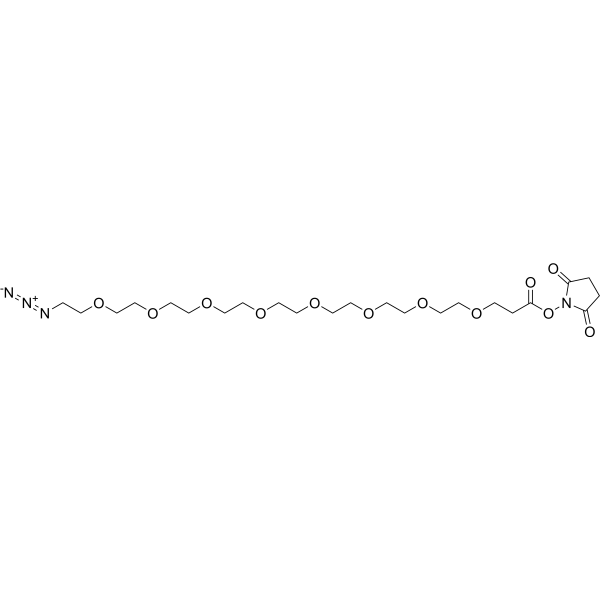 0 ImagesAzido-PEG8-NHS ester is a cleavable 8 unit PEG ADC linker used in the synthesis of antibody-drug conjugates (ADCs). Azido-PEG8-NHS ester is also a PEG- and Alkyl/ether-based PROTAC linker that can be used in the synthesis of PROTACs. Azido-PEG8-NHS ester is a click chemistry reagent, it contains an Azide group and can undergo copper-catalyzed azide-alkyne cycloaddition reaction (CuAAc) with molecules containing Alkyne groups. It can also undergo strain-promoted alkyne-azide cycloaddition (SPAAC) reactions with molecules containing DBCO or BCN groups.
-
Boc-NH-PEG4-CH2CH2NH2
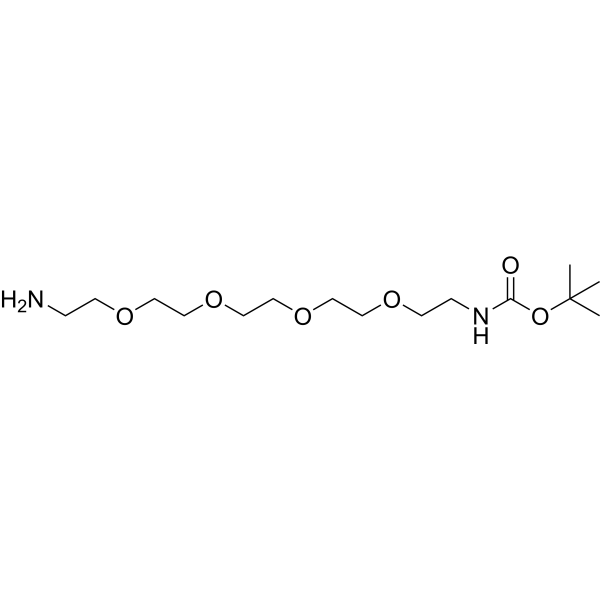 0 ImagesCat. No.: HY-W008352CAS No.: 811442-84-9Boc-NH-PEG4-CH2CH2NH2 a cleavable 5 unit PEG ADC linker used in the synthesis of antibody-drug conjugates (ADCs). Boc-NH-PEG4-CH2CH2NH2 is also a PEG-based PROTAC linker that can be used in the synthesis of PROTACs.
-
Bis-PEG9-NHS ester
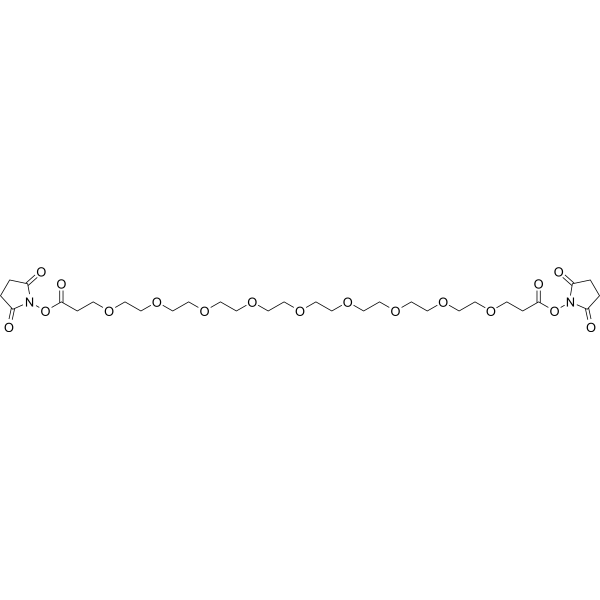 0 ImagesBis-PEG9-NHS ester is a PEG/Alkyl/ether-based PROTAC linker can be used in the synthesis of PROTACs. Bis-PEG9-NHS ester is a cleavable ADC linker used in the synthesis of antibody-drug conjugates (ADCs).
-
TCO-NHS ester
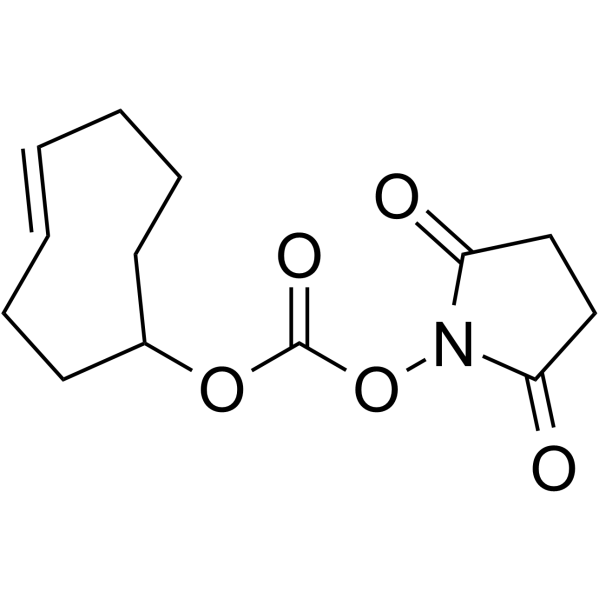 0 ImagesCat. No.: HY-141165CAS No.: 1191901-33-3
-
Bis-PEG5-NHS ester
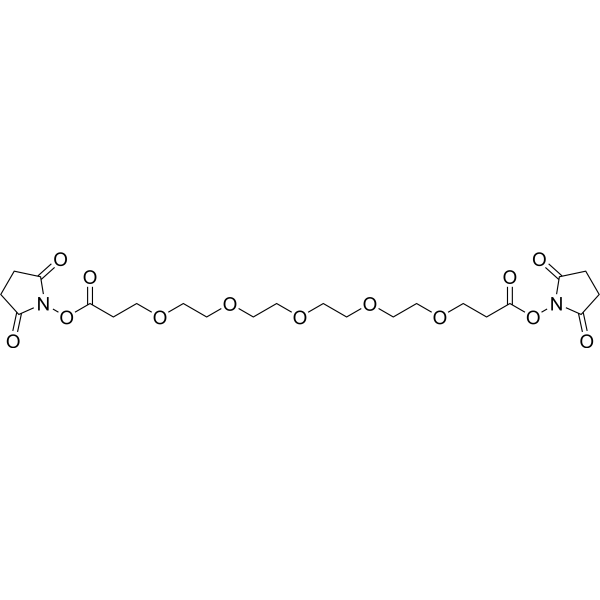 0 ImagesBis-PEG5-NHS ester is a PEG/Alkyl/ether-based PROTAC linker can be used in the synthesis of PROTACs. Bis-PEG5-NHS ester is a cleavable ADC linker used in the synthesis of antibody-drug conjugates (ADCs).
-
α-Lipoic acid-NHS
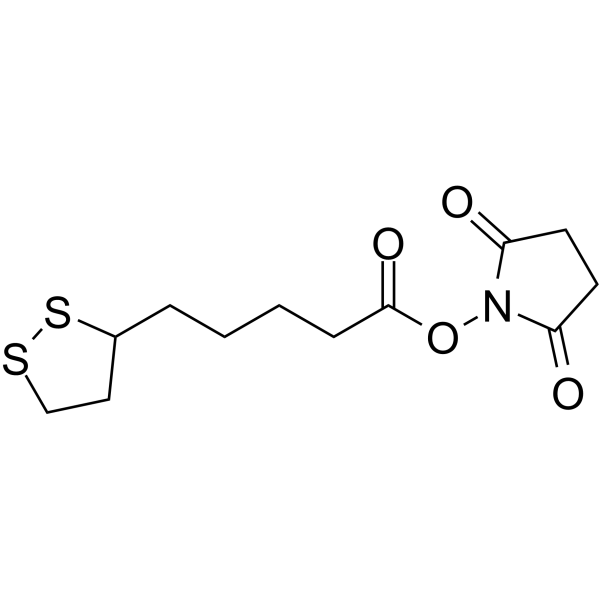 0 ImagesSynonyms: DL-α-Lipoic acid-NHS