



Wnt
The Wnt signaling pathways are a group of signal transduction pathways made of proteins that pass signals from outside of a cell through cell surface receptors to the inside of the cell. Three Wnt signaling pathways have been characterized: the canonical Wnt pathway, the noncanonical planar cell polarity pathway, and the noncanonical Wnt/calcium pathway. All three Wnt signaling pathways are activated by the binding of a Wnt-protein ligand to a Frizzled family receptor, which passes the biological signal to the protein Dishevelled inside the cell. The canonical Wnt pathway leads to regulation of gene transcription, the noncanonical planar cell polarity pathway regulates the cytoskeleton that is responsible for the shape of the cell, and the noncanonical Wnt/calcium pathway regulates calcium inside the cell. The clinical importance of Wnt signaling pathway has been demonstrated by mutations that lead to a variety of diseases, including breast and prostate cancer, glioblastoma, type II diabetes.
Wnt Isoform Specific Products
All Product Categories
-
Wnt Related Products (441)
Related Products (441)

-
Antibodies (26)
-
Wnt Isoform Comparison
-
Pamidronic acid sodium
 0 ImagesCat. No.: HY-B0012BCAS No.: 89131-02-2Pamidronic acid sodium, the second-generation nitrogen-containing bisphosphonate, is an inhibitor of bone loss. Pamidronic acid sodium significantly inhibits subchondral bone loss in early osteoarthritis by upregulating the expression of osteoprotegerin in cartilage and subchondral bone, and inhibiting the expression of RANKL and MMP-9 in both tissues, as well as TLR-4 in cartilage, thereby alleviating cartilage degeneration. Additionally, Pamidronic acid sodium can inhibit the signaling of Wnt and β-catenin, and is applicable for research on osteoporosis and osteosarcoma.
-
β-catenin-IN-7
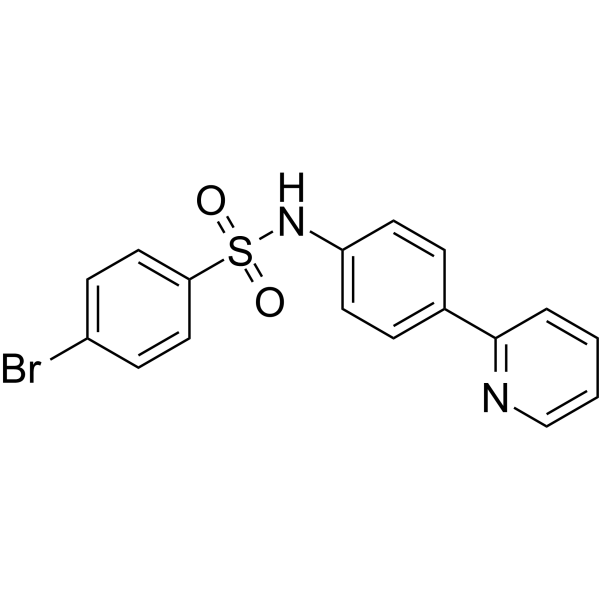 0 ImagesCat. No.: HY-149858CAS No.: 2952779-17-6
-
Viridicatol (Standard)
 0 ImagesCat. No.: HY-116474RCAS No.: 14484-44-7Viridicatol (Standard) is the analytical standard of Viridicatol (HY-116474). This product is intended for research and analytical applications. Viridicatol is a quinolone alkaloid with anti-inflammatory, antibacterial, antifungal, osteogenic and chondrogenic activities. Viridicatol reduces the phosphorylation levels of ERK, JNK, p38 and STAT6; inhibits MMP-2, MMP-9, NF-κB signaling pathway and PTP1B; downregulates genes related to mast cell activation; and binds to SHN3 to activate the Wnt/SHN3 signaling pathway. Viridicatol inhibits the expression of pro-inflammatory mediators and cytokines, and promotes osteogenic/chondrogenic differentiation. Viridicatol can be used in studies related to fibrosarcoma, allergy, bacterial infection, fungal infection and osteoporosis.
-
Combretastatin A-1 phosphate tetrasodium
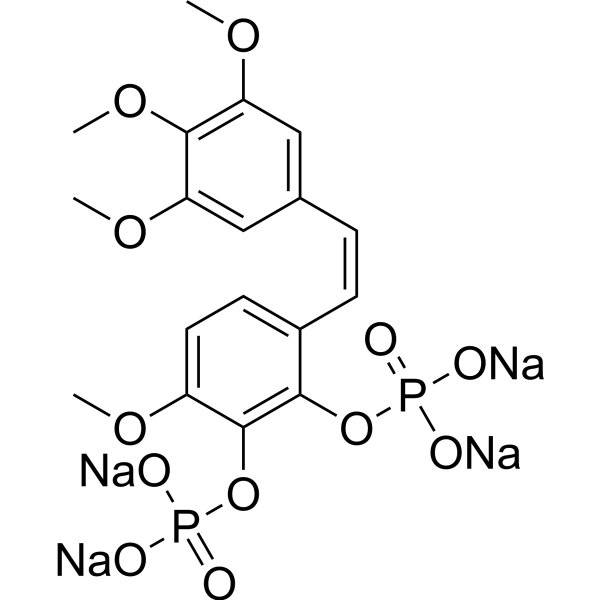 0 ImagesCat. No.: HY-16146CAS No.: 288847-34-7Synonyms: OXi-4503 tetrasodiumCombretastatin A-1 phosphate (OXi-4503) tetrasodium, a proagent of Combretastatin A-1, is a microtubule polymerization inhibitor that binds to the colchicine-binding site of tubulin. Combretastatin A-1 phosphate tetrasodium inhibits the Wnt/β-catenin pathway through tubulin depolymerization mediated AKT deactivation. Combretastatin A-1 phosphate tetrasodium exhibits anti-tumor and anti-vascular effects.
-
RR-171
 0 ImagesCat. No.: HY-P11935CAS No.: 2410535-57-6RR-171 is an amino acid polypeptide and an inhibitor of the Wnt signaling pathway. RR-171 reduces the expression levels of Wnt-1, GSK3β and β-catenin. RR-171 induces apoptosis (Apoptosis) in pancreatic cancer cells, which is characterized by an increased Bax/Bcl-2 ratio, activation of Caspase-3/7/9, and increased Cleaved-PARP; this pro-apoptotic effect can be partially reversed by Z-VAD-FMK (HY-16658B). RR-171 also induces pyroptosis (Pyroptosis) in pancreatic cancer cells, which is manifested by activation of the NLRP-3 inflammasome, activation of Caspase-1, cleavage of GSDMD, upregulation of IL-1β and IL-18, and increased LDH release; this pro-pyroptotic effect can be partially reversed by VX-765 (HY-13205). RR-171 inhibits the viability, proliferation and colony formation of pancreatic cancer cells, with low cytotoxicity against normal cells. RR-171 downregulates the expression of Ki-67 and PCNA in tumor tissues in vivo, with favorable biosafety. RR-171 can be used in studies related to pancreatic cancer.
-
TWS119 TFA
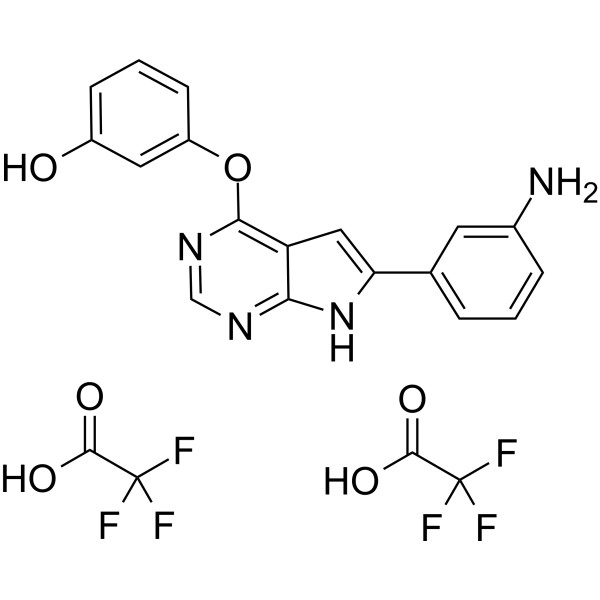 0 ImagesCat. No.: HY-110074CAS No.: 1507095-58-0TWS119 TFA is a specific inhibitor of GSK-3β, with an IC50 of 30 nM, and activates the wnt/β-catenin pathway.
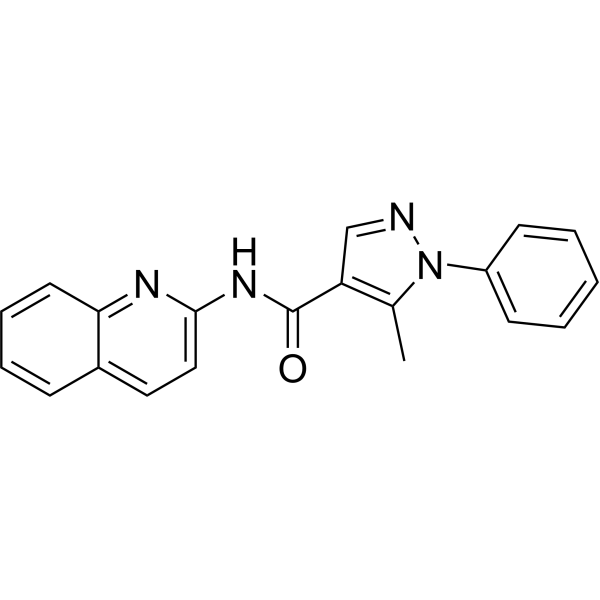
-
hsBCL9CT-24
 0 ImagesCat. No.: HY-P10652CAS No.: 2094604-98-3
-
PI3Kα-IN-16
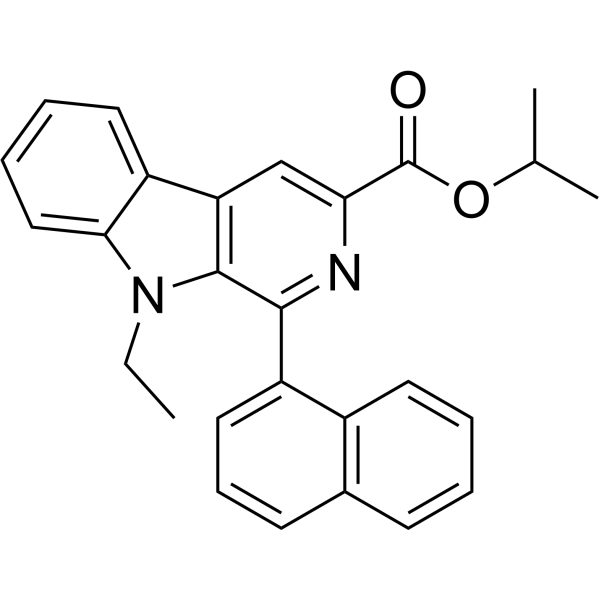 0 ImagesCat. No.: HY-161140CAS No.: 1448711-61-2
-
CDK8-IN-11 hydrochloride
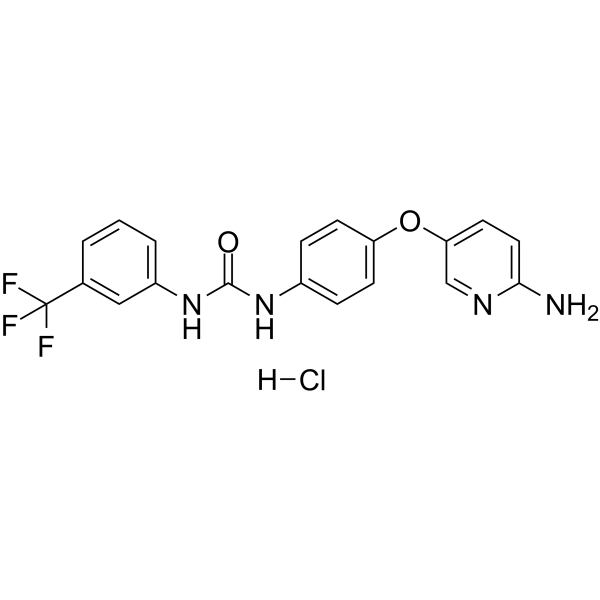 0 ImagesCat. No.: HY-151463A
-
Methyl vanillate (Standard)
 0 ImagesMethyl vanillate (Standard) is the analytical standard of Methyl vanillate. This product is intended for research and analytical applications. Methyl vanillate, one of the ingredients in Oryza sativa Linn., is a Wnt/β-catenin pathway activator[1]. A benzoate ester that is the methyl ester of vanillic acid. It has a role as an antioxidant and a plant metabolite.
-
UM206_C
 0 ImagesCat. No.: HY-P11867ACAS No.: 1242439-01-5UM206_C is a circular Wnt fragment peptide derived from conserved Wnt3a/Wnt5a sequences, inactive in soluble form but capable of activating canonical Wnt/β-catenin signaling when conjugated to magnetic nanoparticles and exposed to a high-gradient, time-varying magnetic field or immobilized on glass surfaces.

-
Wnt/β-catenin-IN-1
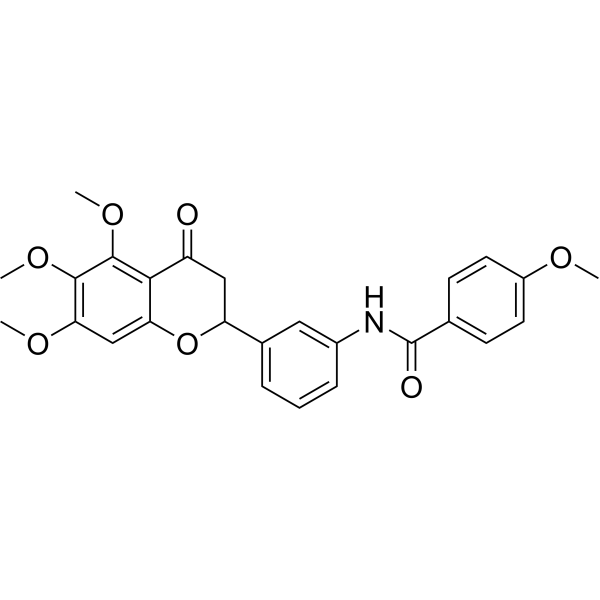 0 ImagesCat. No.: HY-157990Wnt/β-catenin-in-1 (compounds 17) is a Wnt/β-catenin signaling pathway inhibitor. Wnt/β-catenin-IN-1 can induce apoptosis of colon cancer cells, has broad-spectrum anticancer activity, and can be used for the reseach of a variety of solid tumors.
-
Withanolide B (Standard)
 0 ImagesCat. No.: HY-129566RCAS No.: 56973-41-2Withanolide B (Standard) is the analytical standard of Withanolide B. This product is intended for research and analytical applications. Withanolide B is an active component of W. somnifera Dunal. Withanolide B promotes osteogenic differentiation of hBMSCs via ERK1/2 and Wnt/β-catenin signaling pathways. Withanolide B exhibits neuroprotective, anti-arthritic, anti-aging and anti-cancer effects.
-
Tizanidine-d4 hydrochloride
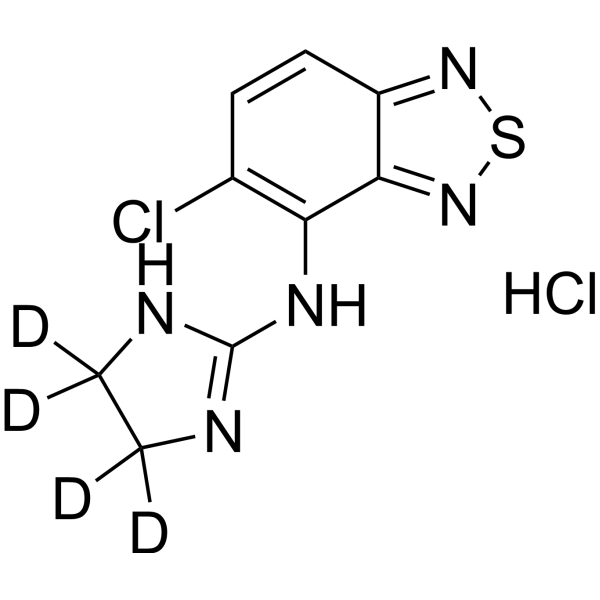 0 ImagesCat. No.: HY-B0194ASCAS No.: 1188263-51-5Tizanidine-d4 hydrochloride is deuterium labeled Tizanidine hydrochloride (HY-B0194A). Tizanidine hydrochloride, a skeletal muscle relaxant, is an orally effective central α2-adrenoceptor agonist (IC50 = 6.9 nmol). Tizanidine hydrochloride primarily exerts muscle relaxation effects by inhibiting the release of excitatory amino acids (glutamate and aspartate) from the presynaptic terminals of spinal cord interneurons. Tizanidine hydrochloride has anti-injury activity and can inhibit gastrointestinal (GI) transport. Tizanidine hydrochloride can inhibit the proliferation, migration, and invasion of lung cancer cells and induce cell apoptosis by upregulating Nischarin and inhibiting the AKT and Wnt3a/β-catenin signaling pathways. Tizanidine hydrochloride can be used to treat spasticity caused by diseases such as multiple sclerosis (MS), stroke, and spinal cord injury (SCI).
-
Orcinol glucoside (Standard)
 0 ImagesOrcinol glucoside (Standard) is the analytical standard of Orcinol glucoside. This product is intended for research and analytical applications. Orcinol glucoside (OG) is an active constituent isolated from Curculigo orchioides, with antidepressant effects. Orcinol glucoside facilitates the shift of MSC fate to osteoblast and prevents adipogenesis via Wnt/β-catenin signaling pathway.
-
Wnt/β-catenin-IN-7
 0 ImagesCat. No.: HY-148951CAS No.: 1198780-43-6
-
1(R),2(S)-epoxy Cannabidiol
 0 ImagesCat. No.: HY-168364CAS No.: 2345666-26-21(R),2(S)-epoxy Cannabidiol (Compound 2a) is a structural analogue of phytocannabinoidsphytocannabinoids. 1(R),2(S)-epoxy Cannabidiol exhibits potent inhibitory activity against Wnt/β-catenin pathway. 1(R),2(S)-epoxy Cannabidiol is promising for research of neuroprotective agents.
-
PMED-1
 0 ImagesCat. No.: HY-164520CAS No.: 491828-75-2PMED-1 is a β-catenin inhibitor that significantly reduces β-catenin activity in hepatoblastoma cells and various HCC cells, with an IC50 value ranging from 4.87 to 32 μM. PMED-1 affects Wnt signaling by decreasing the interaction between β-catenin and CREB binding protein, thereby inhibiting cell proliferation. PMED-1 has potential applications in cancer research.




