



c-Met/HGFR
c-Met (hepatocyte growth factor receptor, HGFR) is a protein possesses tyrosine kinase activity. The primary single chain precursor protein is post-translationally cleaved to produce the alpha and beta subunits, which are disulfide linked to form the mature receptor. c-Met is a membrane receptor that is essential for embryonic development and wound healing. Hepatocyte growth factor (HGF) is the only known ligand of the c-Met receptor. c-Met is normally expressed by cells of epithelial origin, while expression of HGF is restricted to cells of mesenchymalorigin. Upon HGF stimulation, c-Met induces several biological responses that collectively give rise to a program known as invasive growth.
All Product Categories
-
c-Met/HGFR Inhibitors
(236)
View all products
-
c-Met/HGFR Agonist
(1)
View all products
-
c-Met/HGFR Activators
(4)
View all products
-
c-Met/HGFR Modulators
(2)
View all products
-
c-Met/HGFR Degraders
(11)
View all products
-
c-Met/HGFR Ligands
(4)
View all products
-
c-Met/HGFR Proteins
(48)
View all products
-
c-Met/HGFR Related Products (281)
Related Products (281)

-
Recombinant Proteins (48)
-
Antibodies (7)
-
c-Met-IN-14
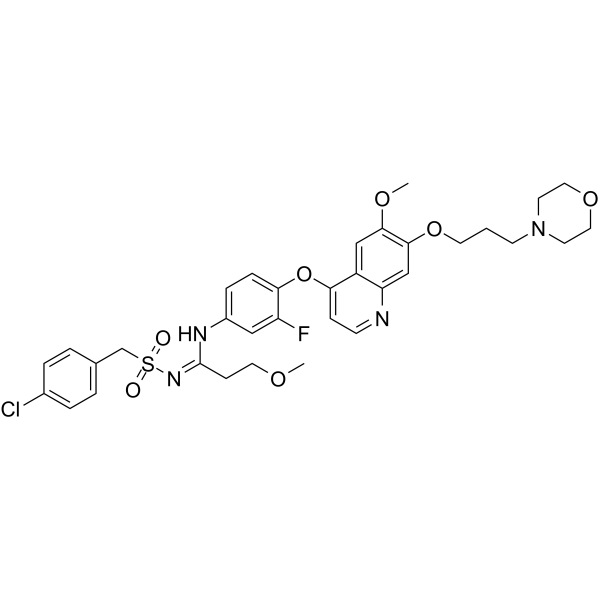 0 ImagesCat. No.: HY-150582CAS No.: 2443380-34-3c-Met-IN-14 (compound 26af) is a selective inhibitor of c-Met kinase from N-sulfonylamidine-based derivatives, with an IC50 value of 2.89 nM. c-Met-IN-14 shows anticancer activity by blocking phosphorylation of c-Met, and arrests cell cycle at G2/M phase. c-Met-IN-14 induces apoptosis of A549 cells in a dose-dependent manner.
-
VEGFR-2/c-Met/EGFR-IN-1
 0 ImagesCat. No.: HY-181775VEGFR-2/c-Met/EGFR-IN-1 is a VEGFR-2/c-Met/EGFR inhibitor with IC50 values of 0.014 μM, 0.072 μM, and 0.94 μM, respectively. c-Met-IN-27 inhibits neovascularization in the chick chorioallantoic membrane (CAM) assay and exhibits in vivo anti-angiogenic activity. c-Met-IN-27 can be used in angiogenesis-related research.

-
C-Met/Axl-IN-1
 0 ImagesCat. No.: HY-170954C-Met/Axl-IN-1 (Compound 22a) is an orally active and selective type II c-Met/Axl inhibitor with IC50 values of 1 nM and 10 nM, respectively. C-Met/Axl-IN-1 can inhibit proliferation, induce cell cycle arrest and apoptosis of tumor cells. C-Met/Axl-IN-1 has strong anti-tumor activity.
-
GPVGPS
 0 ImagesCat. No.: HY-P11890CAS No.: 1154403-54-9GPVGPS is a low-molecular-weight fish collagen peptide. GPVGPS upregulates the expression of vascular endothelial growth factor (VEGF), PCNA, hepatocyte growth factor, epidermal growth factor (EGF) , and insulin-like growth factor 1 (IGF-1), and downregulates the expression of negative regulatory proteins associated with hair health. GPVGPS inhibits MMP-1, MMP-2, and MMP-9, increases skin water content, reduces wrinkles, and improves oxidative stress status and pro-inflammatory cytokine levels. GPVGPS can be used in studies related to hair loss and UVB-induced skin photoaging.
-
Mal-PEG2-Val-Arg-PABC-OMe-Eribulin
 0 ImagesCat. No.: HY-177953CAS No.: 2676196-79-3Mal-PEG2-Val-Arg-PABC-OMe-Eribulin (Compound L-1) is a drug-linker conjugate composed of O-Me Eribulin (HY-159576) and the linker Mal-PEG2-Val-Cit-PAB-OH (HY-130222). Mal-PEG2-Val-Arg-PABC-OMe-Eribulin can be used to synthesize anti-HER3/MET antibody-drug conjugates (ADCs).
-
MET/PDGFRA-IN-2
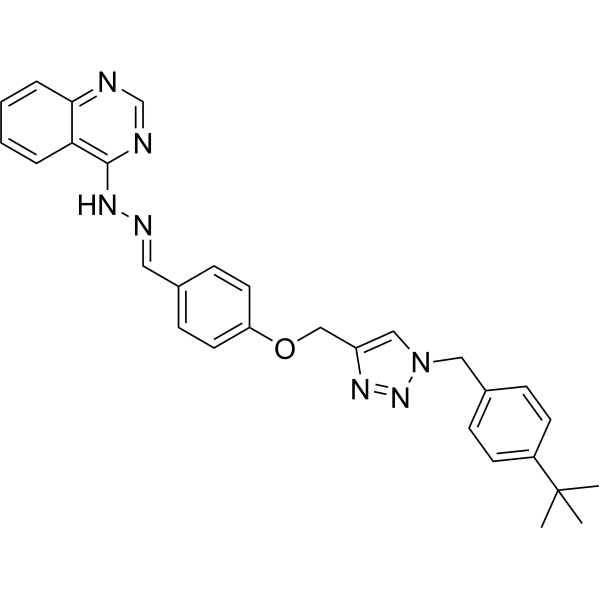 0 ImagesCat. No.: HY-149511CAS No.: 3125694-57-4MET/PDGFRA-IN-2 (compound 8h) is a MET and PDGFRA protein inhibitor. MET/PDGFRA-IN-2 induces cell apoptosis. MET/PDGFRA-IN-2 inhibits proliferation of MET-positive cells (IC50s: 9.7, 6.1, 12.0, 11.5, 8.6, 34.4 μM for AsPc-1, EBC-1, MKN-45, Mia-Paca-2, HT-29, K562 cells respectively).
-
c-Met-IN-17
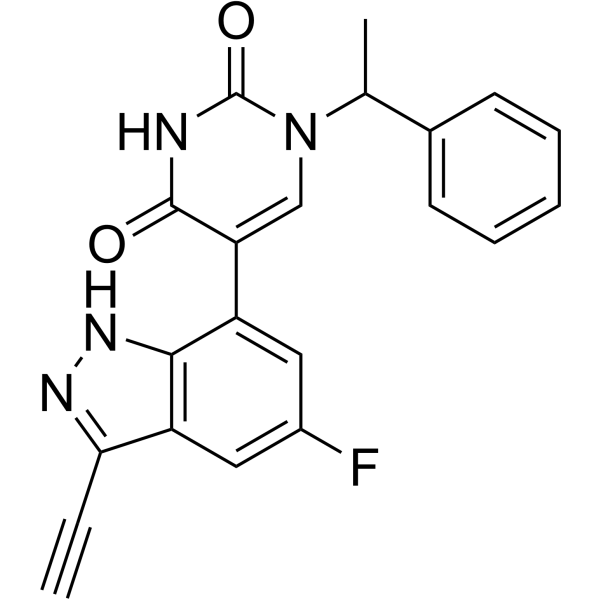 0 ImagesCat. No.: HY-153831CAS No.: 3034863-55-0c-Met-IN-17 is a potent c-Met kinase inhibitor with an IC50 of 0.031 μM. c-Met-IN-17 can be used in anticancer research.. c-Met-IN-17 is a click chemistry reagent, it contains an Alkyne group and can undergo copper-catalyzed azide-alkyne cycloaddition (CuAAc) with molecules containing Azide groups.
-
STA-1474
 0 ImagesCat. No.: HY-13752CAS No.: 1118915-78-8STA-1474 is an orally active and highly selective HSP90 inhibitor, as well as a phosphate prodrug of the HSP90 inhibitor STA-9090 (HY-15205). STA-1474 disrupts the chaperone function of HSP90 and promotes the degradation of client proteins. STA-1474 inhibits the phosphorylation of Met, Akt and STAT3, thereby blocking related signaling pathways. STA-1474 induces apoptosis and inhibits proliferation of osteosarcoma cells, and triggers the up-regulation of HSP70 and HSP90. STA-1474 induces tumor regression and caspase-3 activation in mouse osteosarcoma xenograft models. STA-1474 can be used in the research of osteosarcoma.
-
SHR-A1403 Antibody
 0 ImagesCat. No.: HY-P992464SHR-A1403 Antibody is an anti-c-Met monoclonal antibody. SHR-A1403 Antibody down-regulates phosphorylated c-Met, Akt, ERK, weakens intracellular signal cascades, and mediates antibody-c-Met complex endocytosis. SHR-A1403 Antibody can be used for the research of c-met-overexpressing cancers and pancreatic ductal adenocarcinoma.
-
MET D1228N Recombinant Human Active Protein Kinase
 0 ImagesCat. No.: HY-E70749Mesenchymal-to-epithelial transition (MET) is a receptor tyrosine kinase for hepatocyte growth factor (HGF). MET overactivation is strongly associated with angiogenesis, cellular motility, growth, and invasion. Aberrant MET signaling can drive tumorigenesis in several cancer types through various molecular mechanisms, including MET amplification, MET exon 14 skipping mutation, MET overexpression, and MET fusions. MET D1228N is a mutant of MET. MET D1228N Recombinant Human Active Protein Kinase is a recombinant MET D1228N protein that can be used to study MET D1228N-related functions.
-
PP487
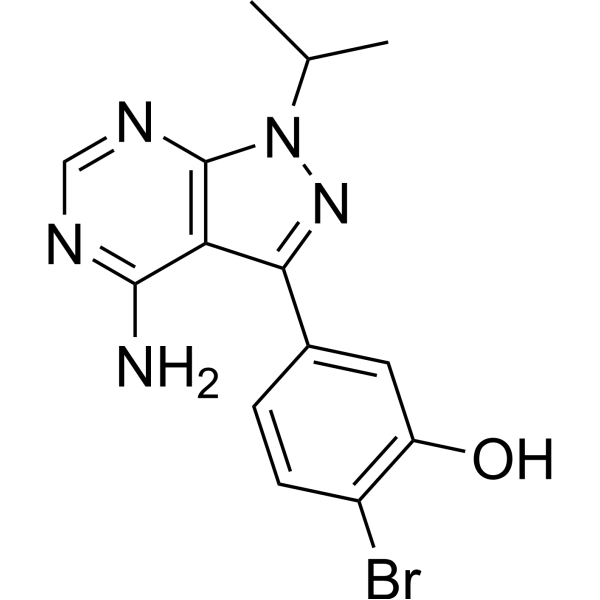 0 ImagesCat. No.: HY-15268CAS No.: 1092787-12-6
-
MET D1228H Recombinant Human Active Protein Kinase
 0 ImagesCat. No.: HY-E70748Mesenchymal-to-epithelial transition (MET) is a receptor tyrosine kinase for hepatocyte growth factor (HGF). MET overactivation is strongly associated with angiogenesis, cellular motility, growth, and invasion. Aberrant MET signaling can drive tumorigenesis in several cancer types through various molecular mechanisms, including MET amplification, MET exon 14 skipping mutation, MET overexpression, and MET fusions. MET D1228H is a mutant of MET. MET D1228H Recombinant Human Active Protein Kinase is a recombinant MET D1228H protein that can be used to study MET D1228H-related functions.

-
Tyrosine kinase-IN-11
 0 ImagesTyrosine kinase-IN-11 (Compound 4b) is a tyrosine kinase inhibitor. Tyrosine kinase-IN-11 decreases general tyrosine kinase activity, selectively inhibits PDGFR-β, SRC, and c-MET kinases. Tyrosine kinase-IN-11 induces apoptosis, accompanied by reduced ERK signalings. Tyrosine kinase-IN-11 exhibits selective anticancer activity against pancreatic cancer and renal cancer.
-
PROTAC c-Met Degrader-4
 0 ImagesCat. No.: HY-171824CAS No.: 2959535-15-8PROTAC c-Met Degrader-4 (compound D15) is a potent orally active PROTAC c-MET degrader. PROTAC c-Met Degrader-4 demonstrates excellent intracellular degradation potency with a DC50 < 0.5 nM. PROTAC c-Met Degrader-4 induces cell cycle arrest and apoptosis, inhibits cell invasion and migration, thereby suppressing cell proliferation. PROTAC c-Met Degrader-4 inhibits the growth of Hs746T xenograft tumors in nude mice. PROTAC c-Met Degrader-4 can be used for cancer research, such as non-small cell lung cancer and gastric cancer.
-
AC-386
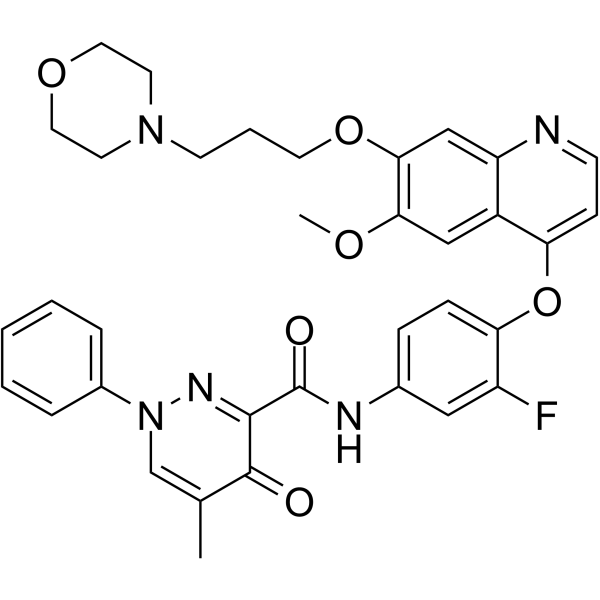 0 ImagesCat. No.: HY-143463CAS No.: 1902910-89-7AC-386 is a highly potent c-Met inhibitor with IC50 value of 7.42 nM. AC-386 has antiproliferative activities against certain cancer cell lines. AC-386 can be used for researching anti-cancer resistance.
-
EGFR/c-Met-IN-2
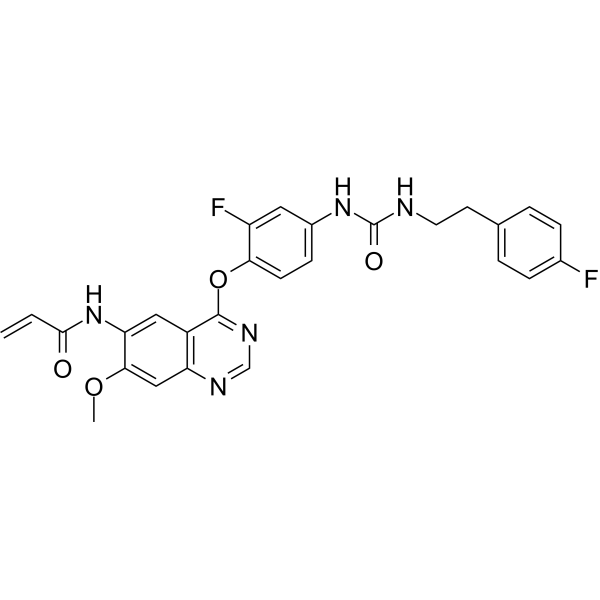 0 ImagesCat. No.: HY-161141CAS No.: 2761180-01-0EGFR/ C-Met-in-2 (Compound H-22) is a dual inhibitor of EGFR/c-Met. EGFR/c-Met-IN-2 inhibits cell proliferation by arresting G2/M phase. EGFR/c-Met-IN-2 has antitumor activity.
-
MET Y1230C Recombinant Human Active Protein Kinase
 0 ImagesCat. No.: HY-E70755Mesenchymal-to-epithelial transition (MET) is a receptor tyrosine kinase for hepatocyte growth factor (HGF). MET overactivation is strongly associated with angiogenesis, cellular motility, growth, and invasion. Aberrant MET signaling can drive tumorigenesis in several cancer types through various molecular mechanisms, including MET amplification, MET exon 14 skipping mutation, MET overexpression, and MET fusions. MET Y1230C is a mutant of MET. MET Y1230C Recombinant Human Active Protein Kinase is a recombinant MET Y1230C protein that can be used to study MET Y1230C-related functions.
-
PROTAC c-Met degrader-2
 0 ImagesCat. No.: HY-170335CAS No.: 2254608-80-3PROTAC c-Met degrader-2 (PROTAC2) is a PROTAC-based c-Met degrader, with a DC50 of 50 nM.




