



c-Met/HGFR
c-Met (hepatocyte growth factor receptor, HGFR) is a protein possesses tyrosine kinase activity. The primary single chain precursor protein is post-translationally cleaved to produce the alpha and beta subunits, which are disulfide linked to form the mature receptor. c-Met is a membrane receptor that is essential for embryonic development and wound healing. Hepatocyte growth factor (HGF) is the only known ligand of the c-Met receptor. c-Met is normally expressed by cells of epithelial origin, while expression of HGF is restricted to cells of mesenchymalorigin. Upon HGF stimulation, c-Met induces several biological responses that collectively give rise to a program known as invasive growth.
All Product Categories
-
c-Met/HGFR Inhibitors
(237)
View all products
-
c-Met/HGFR Agonist
(1)
View all products
-
c-Met/HGFR Activators
(4)
View all products
-
c-Met/HGFR Modulators
(3)
View all products
-
c-Met/HGFR Degraders
(11)
View all products
-
c-Met/HGFR Ligands
(4)
View all products
-
c-Met/HGFR Proteins
(48)
View all products
-
c-Met/HGFR Related Products (283)
Related Products (283)

-
Recombinant Proteins (48)
-
Antibodies (7)
-
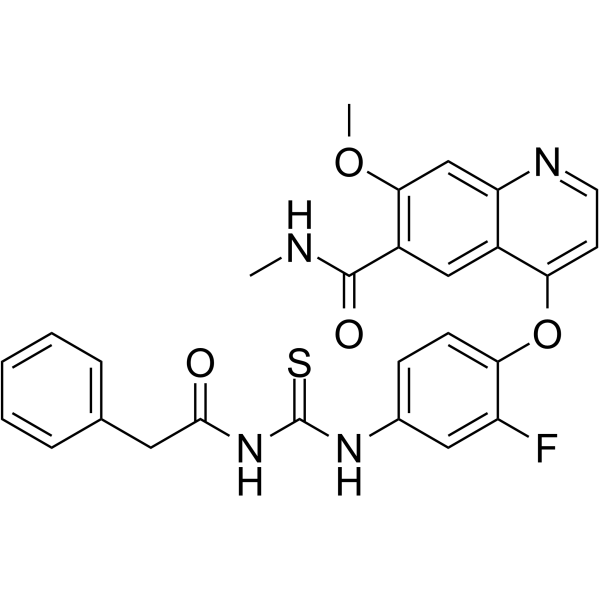
Cabozantinib (Standard)
 0 ImagesSynonyms: XL184 (Standard); BMS-907351 (Standard)Cabozantinib (Standard) is the analytical standard of Cabozantinib. This product is intended for research and analytical applications. Cabozantinib is a potent and orally active inhibitor of VEGFR2 and MET, with IC50 values of 0.035, and 1.3 nM, respectively. Cabozantinib displays strong inhibition of KIT, RET, AXL, TIE2, and FLT3 (IC50=4.6, 5.2, 7, 14.3, and 11.3 nM, respectively). Cabozantinib shows antiangiogenic activity. Cabozantinib disrupts tumor vasculature and promotes tumor and endothelial cell apoptosis.
-
Zurletrectinib
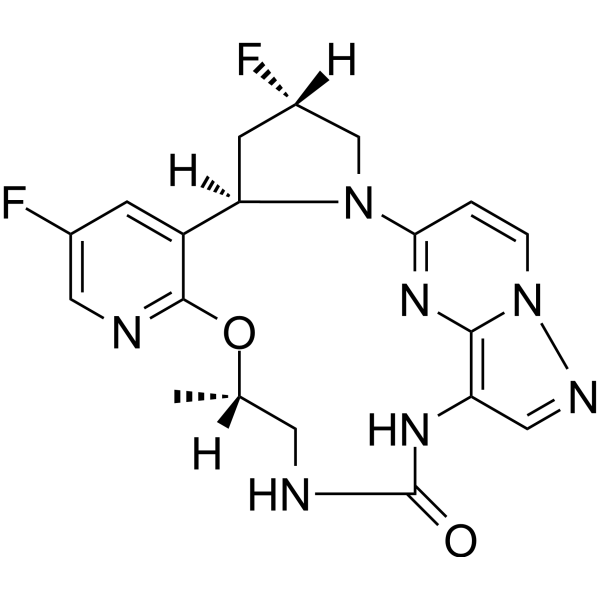 0 ImagesSynonyms: ICP-723Zurletrectinib is a brain-penetrant, orally active TRK inhibitor (TRKA IC50 = 0.81 nM; TRKB IC50 = 0.145 nM; TRKC IC50 = 0.184 nM). Zurletrectinib exhibits stronger activity as a consequence of its augmented binding affinity for TRK kinases. Zurletrectinib exhibits higher activity against most TRK inhibitor resistance mutations (13 out of 18 mutations). Zurletrectinib can be used for the study of glioma.
-
Pamufetinib
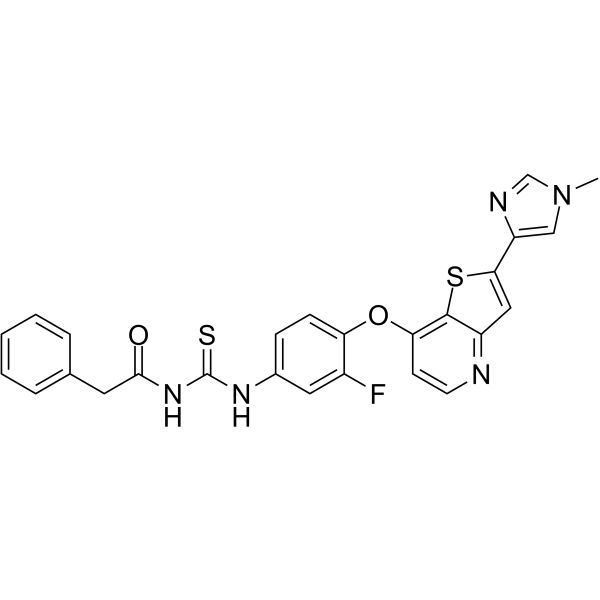
 0 ImagesSynonyms: TAS-115Pamufetinib (TAS-115) is a potent VEGFR and hepatocyte growth factor receptor (c-Met/HGFR)-targeted kinase inhibitor with IC50s of 30 and 32 nM for rVEGFR2 and rMET, respectively.
-
MK-2461
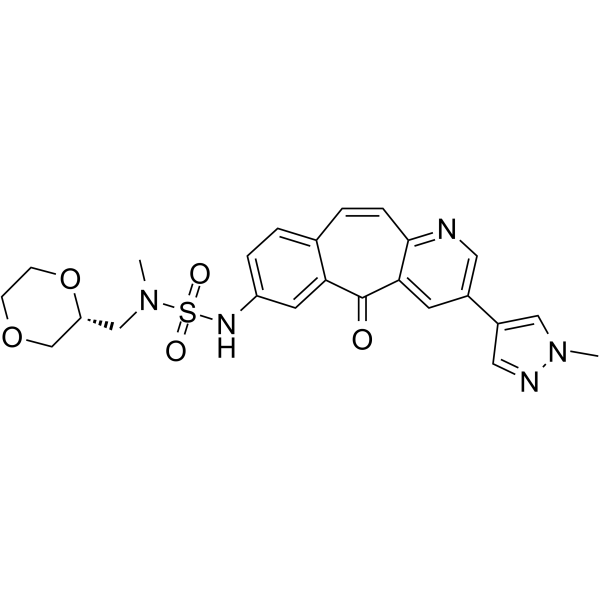 0 ImagesMK-2461 is an ATP-competitive, selective and orally active wild-type and mutant c-Met inhibitor (IC50s: 0.4-2.5 nM). MK-2461 also inhibits Ron (IC50 of 7 nM) and Flt1 (IC50 of 10 nM), MK-2461 shows selective for c-MET over other kinases (lC50s = 22-7800 nM). MK-2461 can be used for the study of cancer, such as gastric cancer.
-
7-Methoxy-1-tetralone
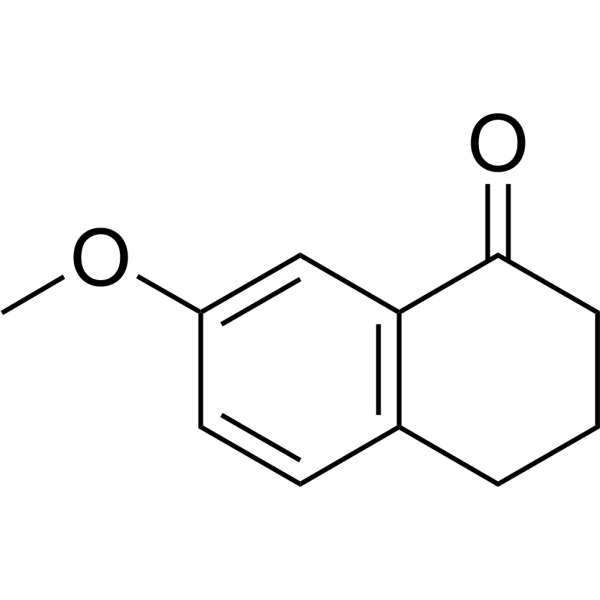 0 Images7-Methoxy-1-tetralone is a potent antitumor agent. 7-Methoxy-1-tetralone inhibits cancer cell proliferation and migration, and induces hepatocellular carcinoma cell (HCC) apoptosis. 7-Methoxy-1-tetralone decreased the protein levels of NF-κB, matrix metallopeptidase 2 (MMP2)/MMP9, and p-AKT. 7-Methoxy-1-tetralone showed antitumor activity in nude mice and had no effect on body weight and liver, spleen and organ index.
-
LMTK3-IN-1
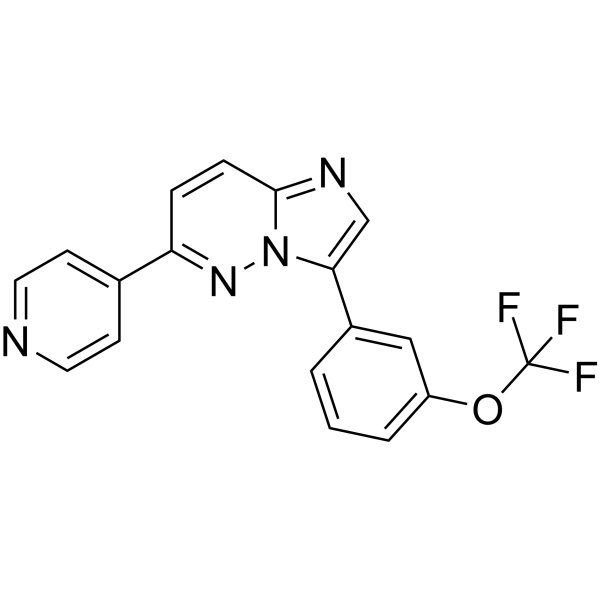 0 ImagesLMTK3-IN-1 (compound C28) is an ATP-competitive inhibitor of lemur tyrosine kinase 3 (LMTK3) (Kd=2.5 μM),that acts by degrading LMTK3 via the ubiquitin-proteasome pathway. LMTK3-IN-1 shows anticancer activity in a variety of cancer cell lines and in vivo BC mouse models. LMTK3-IN-1 induces apoptosis in BC cell lines at 10-20 μM.
-
Capmatinib hydrochloride
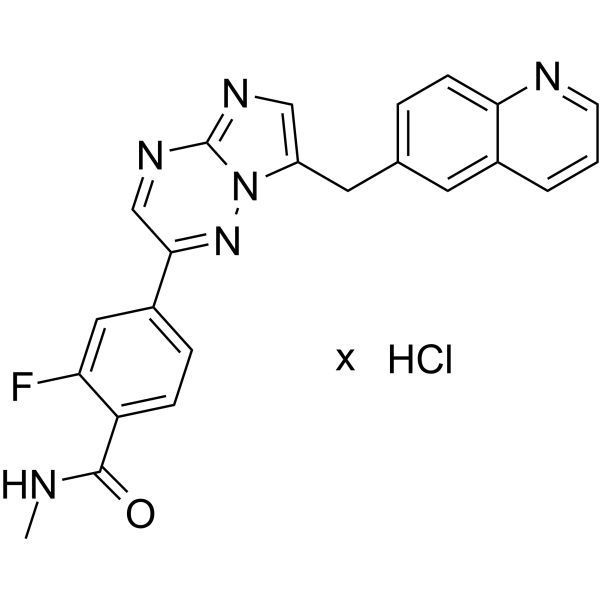 0 ImagesSynonyms: INC280 hydrochloride; INCB-28060 hydrochlorideCapmatinib (INC280; INCB28060) hydrochloride is a potent, orally active, selective, and ATP competitive c-Met kinase inhibitor (IC50=0.13 nM). Capmatinib hydrochloride can inhibit phosphorylation of c-MET as well as c-MET pathway downstream effectors such as ERK1/2, AKT, FAK, GAB1, and STAT3/5. Capmatinib hydrochloride potently inhibits c-MET-dependent tumor cell proliferation and migration and effectively induces apoptosis. Antitumor activity. Capmatinib hydrochloride is largely metabolized by CYP3A4 and aldehyde oxidase.
-
(Z)-Semaxanib
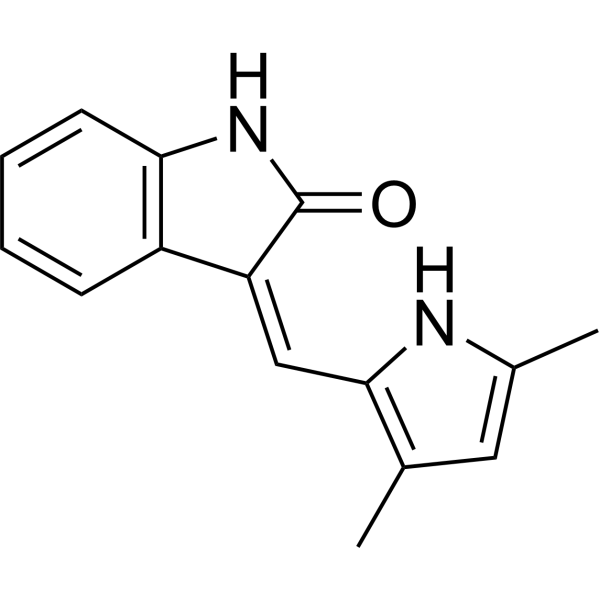 0 ImagesSynonyms: (Z)-SU5416(Z)-Semaxanib (compound (z)-1) is a potent tyrosine kinase inhibitor. (Z)-Semaxanib shows cytotoxicity for TAMH and HepG2 cells with IC50s of 6.28 µM and 8.17 µM, respectively.
-
Narnatumab
 0 ImagesSynonyms: IMC-RON8; LY3012219; Anti-MSPR/RON/CD136 Reference Antibody (narnatumab)Narnatumab (IMC-RON8) is a neutralizing human monoclonal antibody that blocks RON binding to its ligand, macrophage-stimulating protein (MSP), with a Kd of 32 pM. Narnatumab can be used for the research of cancer.
-
MK-8033
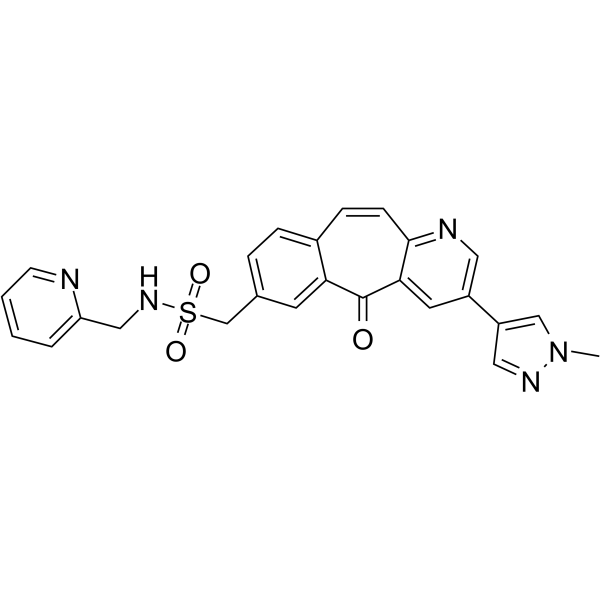 0 ImagesMK-8033 is an orally active ATP competitive c-Met/Ron dual inhibitor (IC50s: 1 nM (c-Met),7 nM (Ron)), with preferential binding to the activated kinase conformation. MK-8033 can be used in the research of cancers, such as breast and bladder cancers, non-small cell lung cancers (NSCLCs).
-
Dalmelitinib
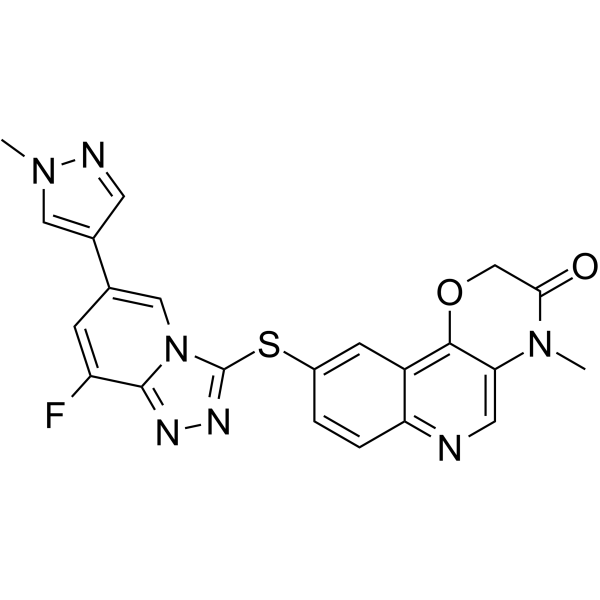 0 ImagesDalmelitinib is an orally active selective c-Met kinase inhibitor (IC50: 2.9 nM) that binds to the ATP-binding region of c-Met. Dalmelitinib induces the phosphorylation of MET, partially or completely inhibits the phosphorylation of AKT and ERK. Dalmelitinib potently inhibits cancer cell (c-Met oncogene amplification) proliferation, and is used for the research of cancers like human non-small cell lung cancer (NSCLC).
-
PROTAC c-Met degrader-1
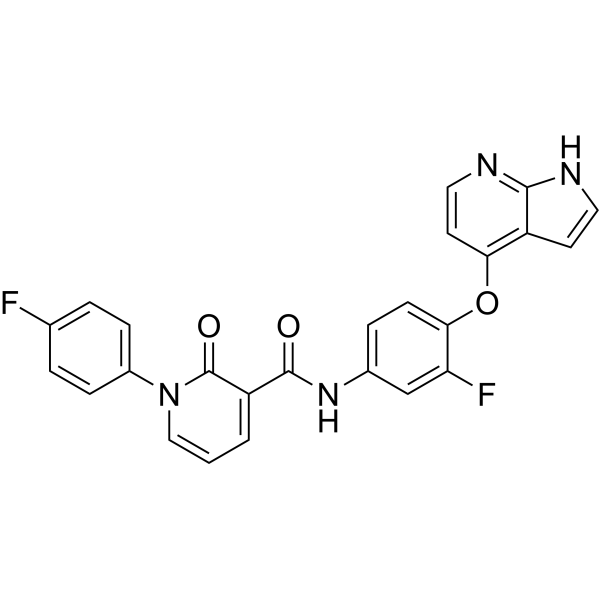
 0 ImagesPROTAC c-Met degrader-1 is a selective and orally active c-Met PROTAC degrader with a DC50 of 6.21 nM against c-Met. PROTAC c-Met degrader-1 induces CRBN-dependent ubiquitination and proteasomal degradation of c-Met. PROTAC c-Met degrader-1 induces G0/G1 phase arrest in c-Met-dependent cancer cells. PROTAC c-Met degrader-1 kills c-Met-dependent cancer cells. PROTAC c-Met degrader-1 inhibits tumor growth in animal models. PROTAC c-Met degrader-1 can be used for the research of gastric cancer.
-
Crizotinib-d5
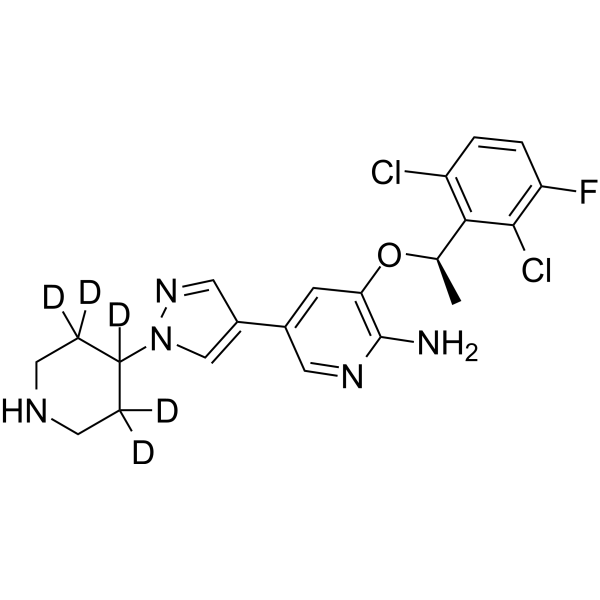 0 ImagesSynonyms: PF-02341066-d5Crizotinib-d5 is the deuterium labeled Crizotinib. Crizotinib (PF-02341066) is an orally bioavailable, ATP-competitive ALK and c-Met inhibitor with IC50s of 20 and 8 nM, respectively. Crizotinib inhibits tyrosine phosphorylation of NPM-ALK and tyrosine phosphorylation of c-Met with IC50s of 24 and 11 nM in cell-based assays, respectively. Crizotinib is also a ROS1 inhibitor. Crizotinib has effective tumor growth inhibition.
-
PF-04217903 mesylate
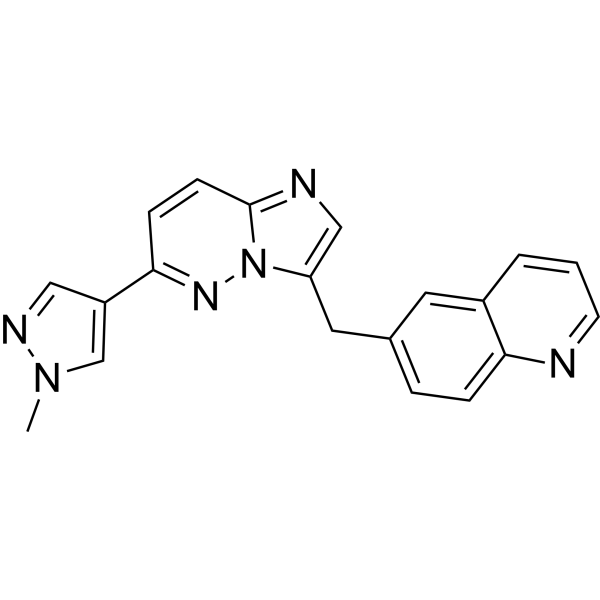
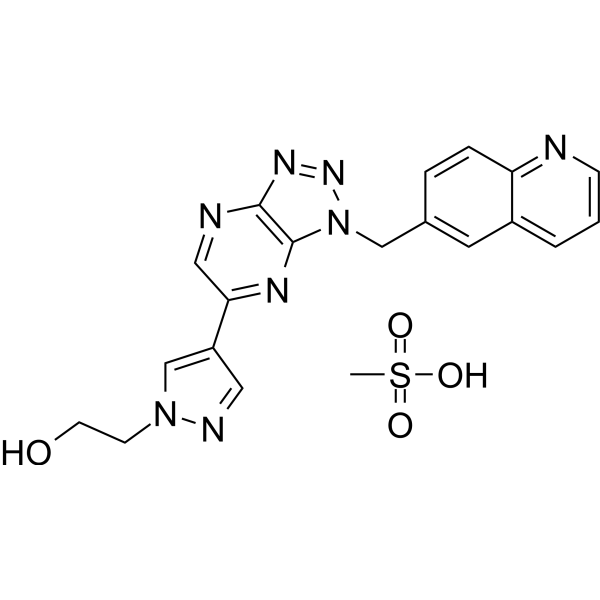 0 ImagesPF-04217903 mesylate is an orally active, highly selective ATP-competitive c-Met kinase inhibitor with a Ki value of 4.8 nM and a Kd value of 4.5 nM. PF-04217903 mesylate blocks c-Met and HGF signaling pathways, inhibits MET phosphorylation, and blocks downstream MAPK, PI3K/AKT and PLCγ1 pathways. PF-04217903 mesylate suppresses tumor proliferation, survival, migration, invasion, angiogenesis and metastasis, induces apoptosis, and enhances efferocytosis, Annexin A1 expression and resolution of inflammation. PF-04217903 mesylate retains activity against several c-Met mutants (M1131T, V1220I, H1094R). PF-04217903 mesylate increases the incidence of subarachnoid hemorrhage and reduces survival rate without altering aneurysm formation, and also prevents lymph node metastasis induced by VEGF inhibition. PF-04217903 mesylate is applicable to research related to tumors (pancreas, stomach, lung, brain, colon, breast, kidney, melanoma, etc.), intracranial aneurysms and inflammatory diseases (gouty arthritis, neutrophilic pleuritis).




