



Zurletrectinib

Based on 1 Customer Validation
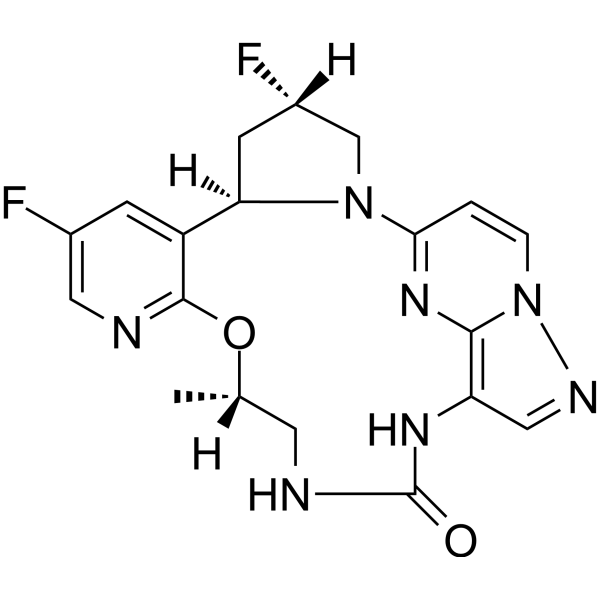
Zurletrectinib is a brain-penetrant, orally active TRK inhibitor (TRKA IC50 = 0.81 nM; TRKB IC50 = 0.145 nM; TRKC IC50 = 0.184 nM). Zurletrectinib exhibits stronger activity as a consequence of its augmented binding affinity for TRK kinases. Zurletrectinib exhibits higher activity against most TRK inhibitor resistance mutations (13 out of 18 mutations). Zurletrectinib can be used for the study of glioma.
For research use only. We do not sell to patients.
- Purity : 99.32%
- CAS No.: 2403703-30-8
- Formula: C19H19F2N7O2
- Molecular Weight:415.40
-
Storage:Powder -20°C, 3 years , 4°C, 2 years ; In solvent -80°C, 6 months , -20°C, 1 month

To place orders, for customer services and technical support, please contact: MedChemExpress USA
Tel: 609-228-6898 E-mail: [email protected] [email protected]


-
 Biological Activity
-
Chemical Information
-
Solvent & Solubility
- Purity & Documentation
- References
-
 Help & FAQs


-
HY-137455
Terevalefimc-Met Receptor Activator -
HY-114363A
SRI 31215 TFAMatriptase/Hepsin/HGFA Inhibitor -
HY-132814
Fosgonimetonc-Met Agonist -
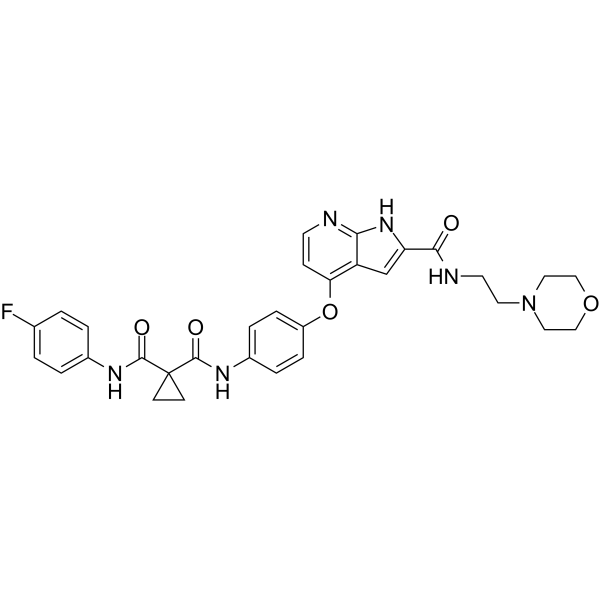
HY-10421
Tyrosine kinase inhibitorTyrosine kinase inhibitor -
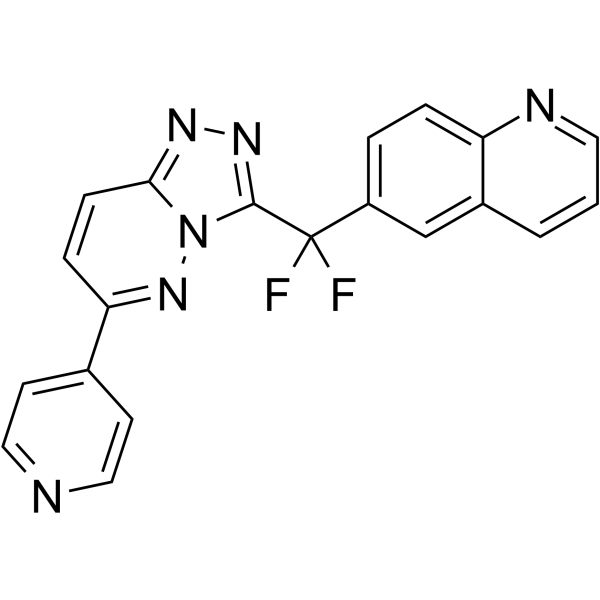
HY-111050
JNJ-38877618c-Met/HGFR Inhibitor -
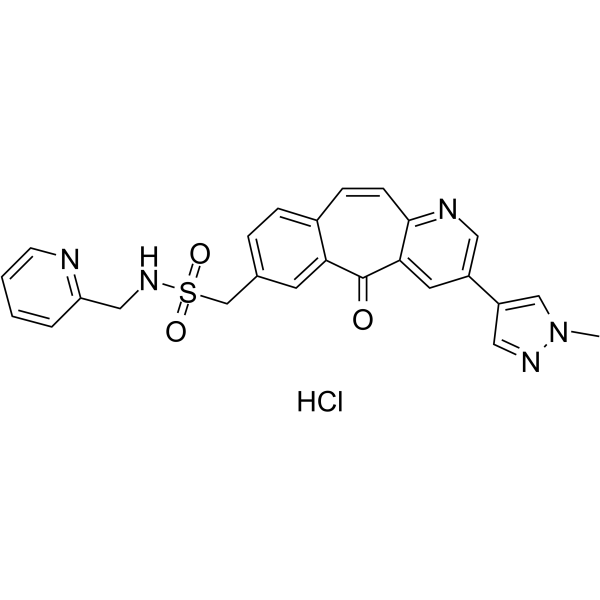
HY-13299A
MK-8033 hydrochloridec-Met/Ron Inhibitor -
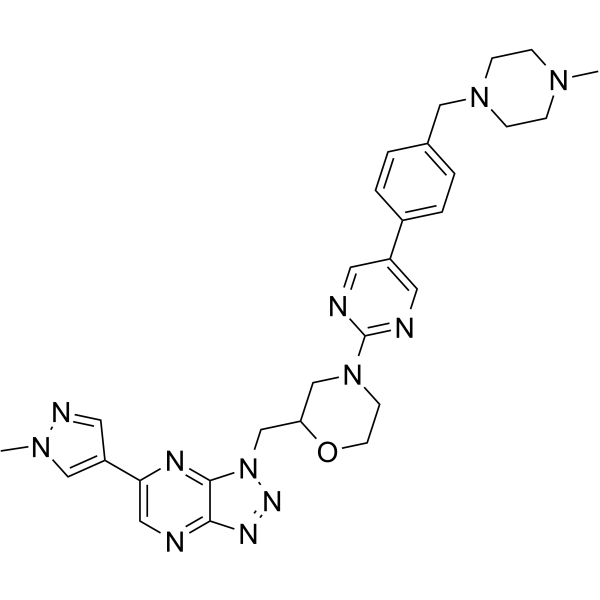
HY-147040
ABN401c-MET Inhibitor -

HY-18711
SCR-1481B1GSDMD Inhibitor -
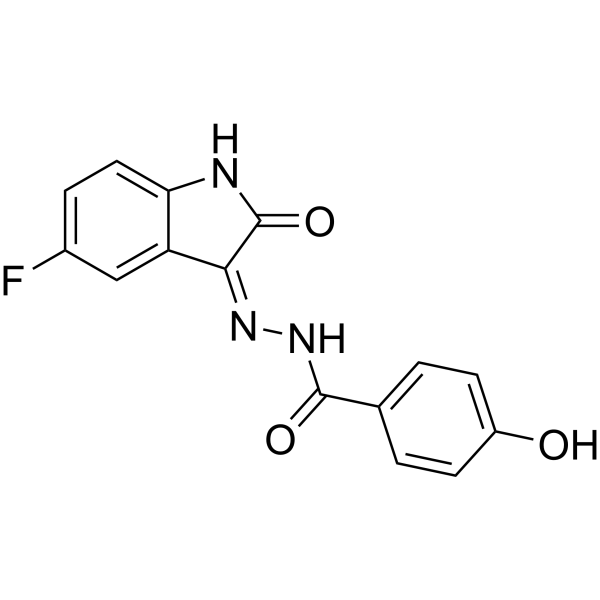
HY-148279
c-Met-IN-15c-Met Kinase Inhibitor -
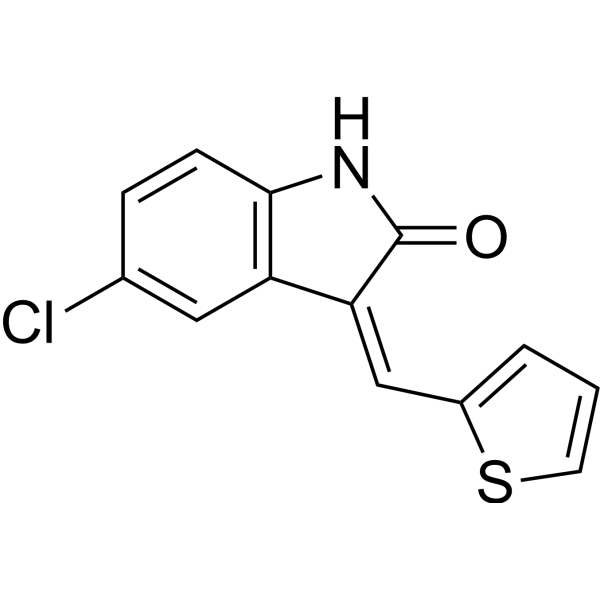
HY-153227
SU 5616Indolinone Compound -
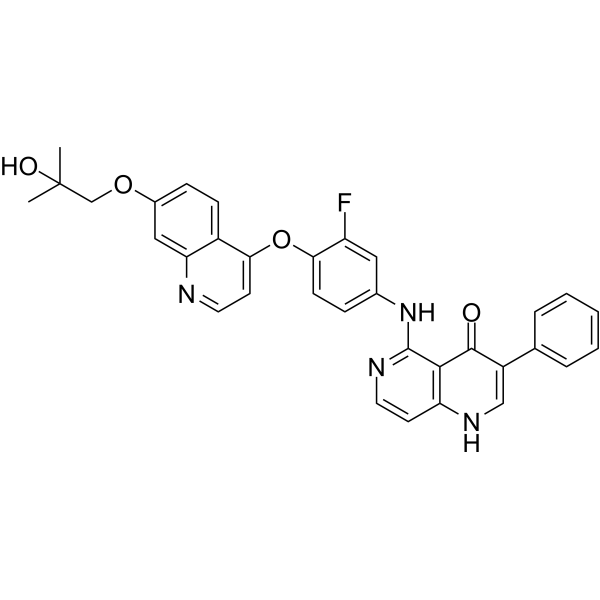
HY-131065
MET kinase-IN-2MET Kinase Inhibitor -
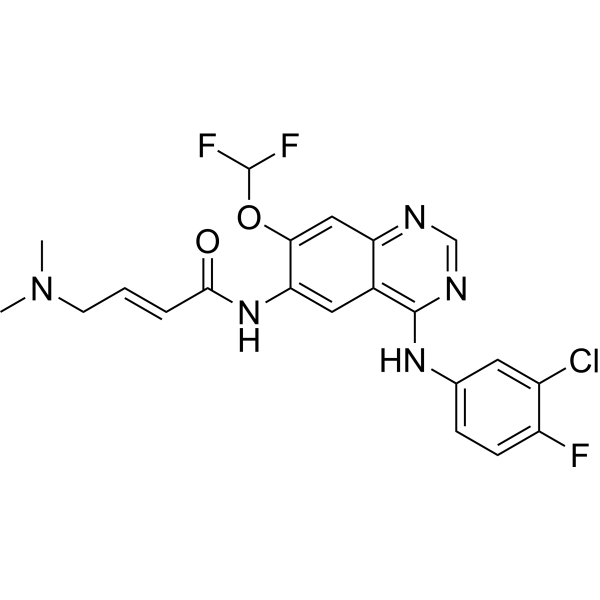
HY-152852
Mefatinib free baseEGFR/HER2 Kinase Inhibitor


Biological Activity
Description
IC50 & Target
[1]|
TrkA 0.81 nM (IC50) |
TrkB 0.145 nM (IC50) |
TrkC 0.184 nM (IC50) |
In Vitro
Zurletrectinib (72 h) shows IC50 values of 0.47 nM and 7.2 nM against IRC (LMNA-NTRK1) and Kor1 (TPM3-NTRK1) cell lines, respectively[1].
Zurletrectinib remains active against resistance mutations to first-generation TRK inhibitors (such as G595R), but is less effective against certain xDFG mutations (such as G667C)[1].
Zurletrectinib (72 h) can inhibit the growth of IRC (LMNA-NTRK1) single mutant G595R cell lines and TRK phosphorylation, but its effect on double mutants (G595R/G667C) is limited[1].
Zurletrectinib has inhibitory activity against NLS (Bcan-Ntrk1) single mutations (such as G598R) and double mutations (such as G598R/G670A)[1].
MedChemExpress (MCE) has not independently confirmed the accuracy of these methods. They are for reference only.
In Vivo
Zurletrectinib (15 mg/kg, bid) demonstrates potent antitumor activity against tumors, particularly TRK double-mutant tumors, in a mouse intracranial Bcan–Ntrk1 orthotopic transplantation model[1].
MedChemExpress (MCE) has not independently confirmed the accuracy of these methods. They are for reference only.
-
Animal Model:KM12 and Ba/F3 LMNA-NTRK1, TRKA G595R xenografts were generated by subcutaneous injection of five and six million cells into the right flank of 6–8 weeks old BALB/c nude female mice, respectively[1].
-
Dosage:KM12: 0.1 mg/kg, 0.3 mg/kg, 1 mg/kg
Ba/F3 LMNA-NTRK1, TRKA G595R: 0.3 mg/kg, 1 mg/kg, 3 mg/kg
-
Administration:p.o., BID, 10-23 days
-
Result:1 mg/kg significantly inhibited KM12 tumor growth.
No significant weight loss or toxicity was observed.
Low-dose administration significantly inhibited Ba/F3 LMNA-NTRK1, TRKA G595R tumor growth.
Remained potent against TRKA G595R-resistant models.
Clinical Trial
| NCT Number | Sponsor | Condition | Start Date |
Phase

|
|---|---|---|---|---|
| NCT01329991 | Plexxikon| | 2011-05 | PHASE1 |


Chemical Information
-
CAS No. 2403703-30-8
-
Appearance Solid
-
Molecular Weight 415.40
-
Formula C19H19F2N7O2
-
Color Light yellow to yellow
-
SMILES
O=C1NC2=C3N=C(N4[C@@](C[C@@](F)([H])C4)([H])C5=CC(F)=CN=C5O[C@](C)([H])CN1)C=CN3N=C2
-
Synonyms
ICP-723
-
Shipping
Room temperature in continental US; may vary elsewhere.
-
Storage
Powder -20°C 3 years 4°C 2 years In solvent -80°C 6 months -20°C 1 month


Solvent & Solubility
In Vitro:
DMSO : 10 mg/mL (24.07 mM; ultrasonic and warming and heat to 60°C; Hygroscopic DMSO has a significant impact on the solubility of product, please use newly opened DMSO)
Please refer to the solubility information to select the appropriate solvent. Once prepared, please aliquot and store the solution to prevent product inactivation from repeated freeze-thaw cycles.
Storage method and period of stock solution: -80°C, 6 months; -20°C, 1 month. When stored at -80°C, please use it within 6 months. When stored at -20°C, please use it within 1 month.
Please refer to the solubility information to select the appropriate solvent. Once prepared, please aliquot and store the solution to prevent product inactivation from repeated freeze-thaw cycles.
Storage method and period of stock solution: -80°C, 6 months; -20°C, 1 month. When stored at -80°C, please use it within 6 months. When stored at -20°C, please use it within 1 month.
Concentration (start) × Volume (start) = Concentration (final) × Volume (final)
In Vivo:
Select the appropriate dissolution method based on your experimental animal and administration route.
- For the following dissolution methods, please ensure to first prepare a clear stock solution using an In Vitro approach and then sequentially add co-solvents:
- To ensure reliable experimental results, the clarified stock solution can be appropriately stored based on storage conditions. As for the working solution for In Vivo experiments, it is recommended to prepare freshly and use it on the same day.
- The percentages shown for the solvents indicate their volumetric ratio in the final prepared solution. If precipitation or phase separation occurs during preparation, heat and/or sonication can be used to aid dissolution.
Add each solvent one by one: 10% DMSO 40% PEG300 5% Tween-80 45% Saline
Solubility: ≥ 1 mg/mL (2.41 mM); Clear solution
This protocol yields a clear solution of ≥ 1 mg/mL (saturation unknown).
Taking 1 mL working solution as an example, add 100 μL DMSO stock solution (10.0 mg/mL) to 400 μL PEG300, and mix evenly; then add 50 μL Tween-80 and mix evenly; then add 450 μL Saline to adjust the volume to 1 mL.
Preparation of Saline: Dissolve 0.9 g sodium chloride in ddH₂O and dilute to 100 mL to obtain a clear Saline solution.
In Vivo Dissolution Calculator
Please enter the basic information of animal experiments:
-
-
-
-
Recommended: Prepare an additional quantity of animals to account for potential losses during experiments.
Please enter your animal formula composition:
-
%DMSO +
Recommended: Keep the proportion of DMSO in working solution below 2% if your animal is weak.
-
%+
-
+%Tween-80 + +
-
%Saline +
The co-solvents required include: DMSO, . All of co-solvents are available by MedChemExpress (MCE). , Tween 80. All of co-solvents are available by MedChemExpress (MCE).
Working solution concentration: 0.22 mg/mL
Method for preparing stock solution: mg drug dissolved in μL DMSO. Stock solution concentration: mg/mL.
1. Take μL DMSO stock solution;
2. Add μL .
μL , mix evenly;
3. Then add μL Tween 80, mix evenly;
4. Then add μL
Please ensure that the stock solution in the first step is dissolved to a clear state, and add co-solvents in sequence. You can use ultrasonic heating (ultrasonic cleaner, recommended frequency 20-40 kHz), vortexing, etc. to assist dissolution.


Purity & Documentation
-
Data Sheet (278 KB)
-
SDS (252 KB)
- English - EN (252 KB)
- Français - FR (252 KB)
- Deutsch - DE (252 KB)
- Norwegian - NO (252 KB)
- Español - ES (252 KB)
- Swedish - SV (252 KB)
- Italian - IT (252 KB)
- Korean - KR (252 KB)
- Portuguese - PT (252 KB)
-
Handling Instructions (2659 KB)
References


Complete Stock Solution Preparation Table
Please refer to the solubility information to select the appropriate solvent. Once prepared, please aliquot and store the solution to prevent product inactivation from repeated freeze-thaw cycles.
Storage method and period of stock solution: -80°C, 6 months; -20°C, 1 month. When stored at -80°C, please use it within 6 months. When stored at -20°C, please use it within 1 month.
| Optional Solvent | Concentration Solvent Mass | 1 mg | 5 mg | 10 mg | 25 mg |
|---|---|---|---|---|---|
| DMSO | 1 mM | 2.4073 mL | 12.0366 mL | 24.0732 mL | 60.1830 mL |
| 5 mM | 0.4815 mL | 2.4073 mL | 4.8146 mL | 12.0366 mL | |
| 10 mM | 0.2407 mL | 1.2037 mL | 2.4073 mL | 6.0183 mL | |
| 15 mM | 0.1605 mL | 0.8024 mL | 1.6049 mL | 4.0122 mL | |
| 20 mM | 0.1204 mL | 0.6018 mL | 1.2037 mL | 3.0091 mL |


Zurletrectinib Related Classifications
HY-148811 Related Classifications
 Powered by Bioz