



MK-2461
Based on 1 publication(s) in Google Scholar
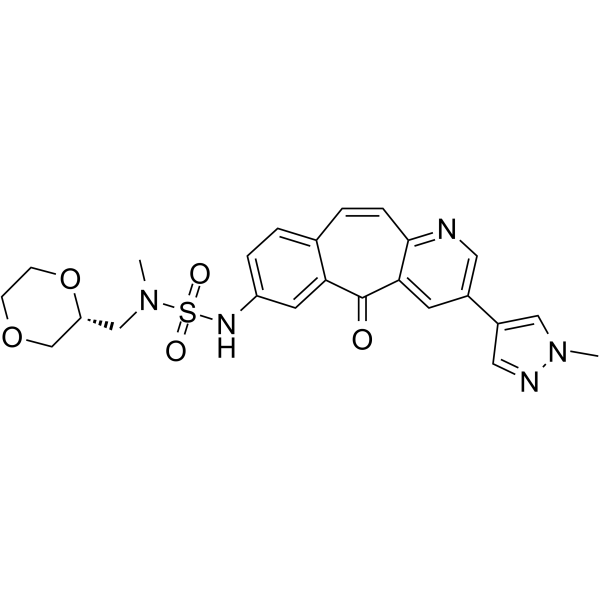
MK-2461 is an ATP-competitive, selective and orally active wild-type and mutant c-Met inhibitor (IC50s: 0.4-2.5 nM). MK-2461 also inhibits Ron (IC50 of 7 nM) and Flt1 (IC50 of 10 nM), MK-2461 shows selective for c-MET over other kinases (lC50s = 22-7800 nM). MK-2461 can be used for the study of cancer, such as gastric cancer.
For research use only. We do not sell to patients.
- Purity : 99.28%
- CAS No.: 917879-39-1
- Formula: C24H25N5O5S
- Molecular Weight:495.55
-
Storage:Powder -20°C, 3 years , 4°C, 2 years ; In solvent -80°C, 2 years , -20°C, 1 year

To place orders, for customer services and technical support, please contact: MedChemExpress USA
Tel: 609-228-6898 E-mail: [email protected] [email protected]


-
 Biological Activity
-
Chemical Information
-
Solvent & Solubility
- Protocols
- Purity & Documentation
- References
-
 Help & FAQs


-
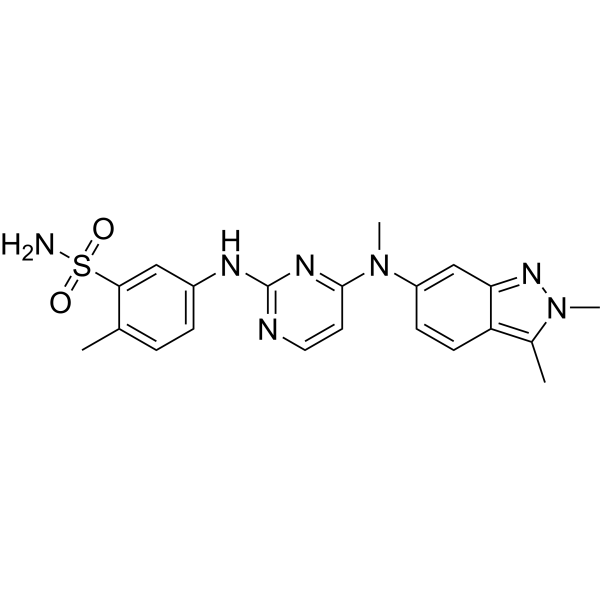
HY-10208
PazopanibVEGFR Inhibitor -
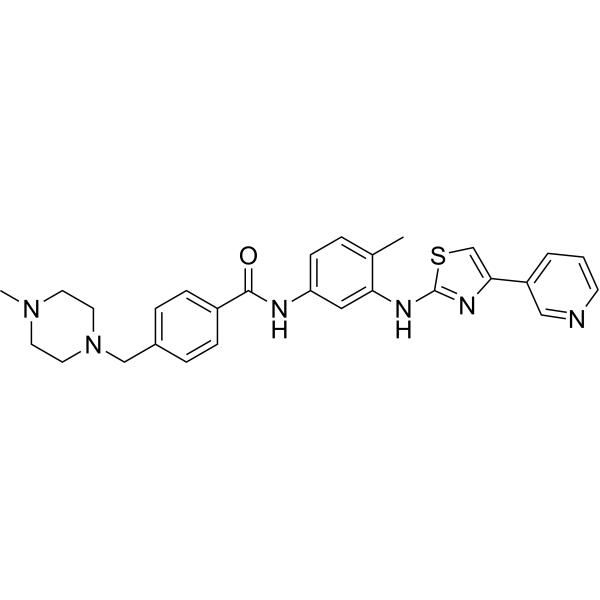
HY-10209
Masitinibc-Kit Inhibitor -
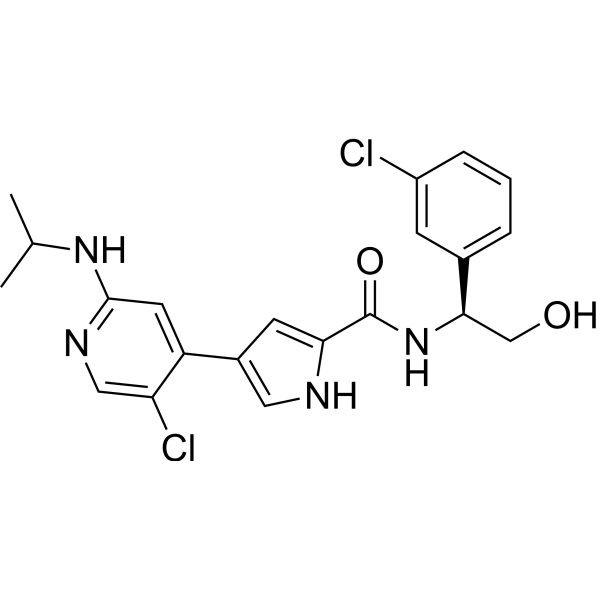
HY-15816
UlixertinibERK1/2 Inhibitor -
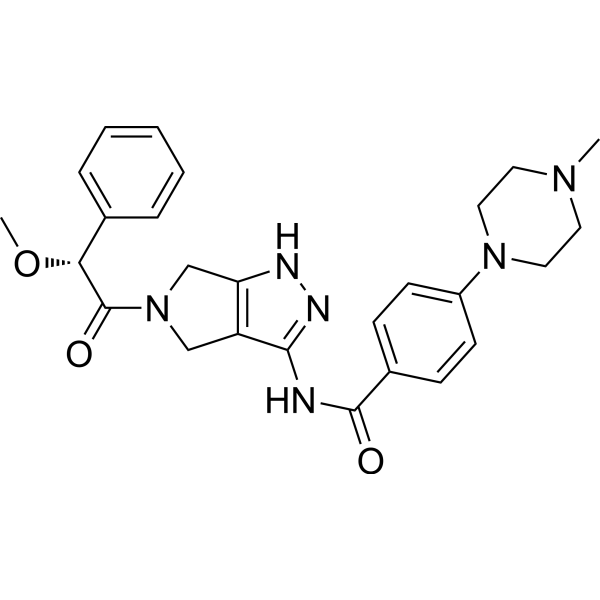
HY-10179
DanusertibAurora Kinase Inhibitor -
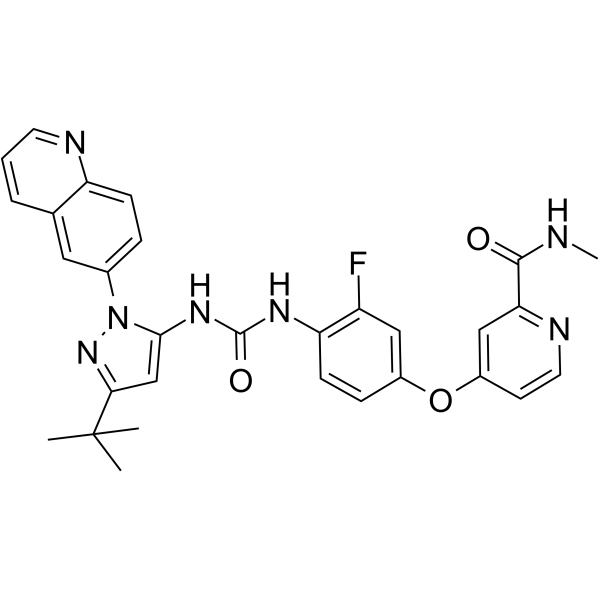
HY-13024
RebastinibKinase Inhibitor -
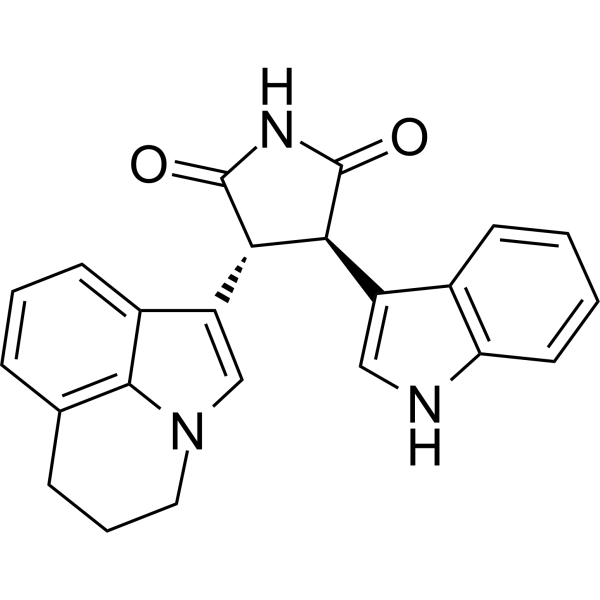
HY-50686
Tivantinibc-Met Inhibitor -
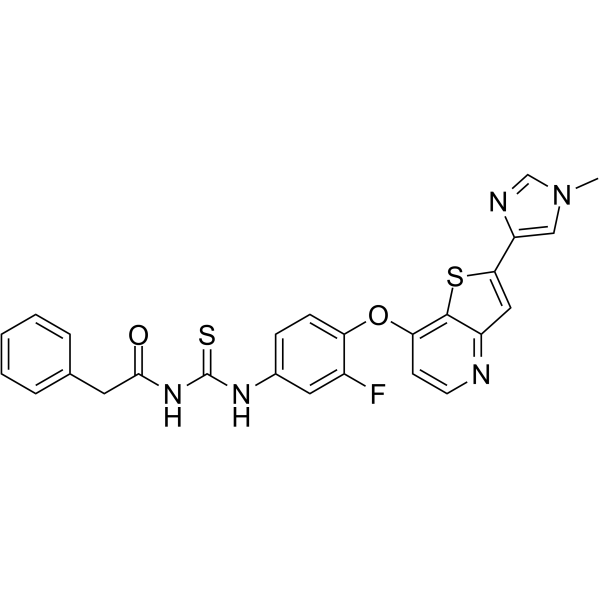
HY-10991
MGCD-265 analogc-Met/VEGFR2 Inhibitor -
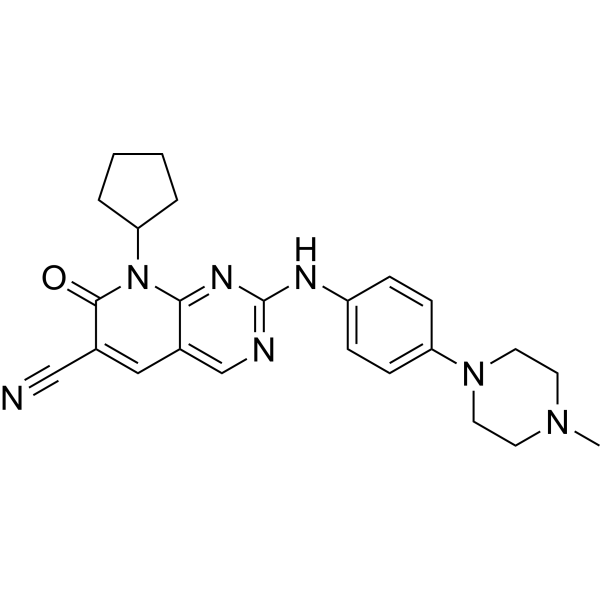
HY-12624
NarazaciclibCDK4/ARK5 Inhibitor -
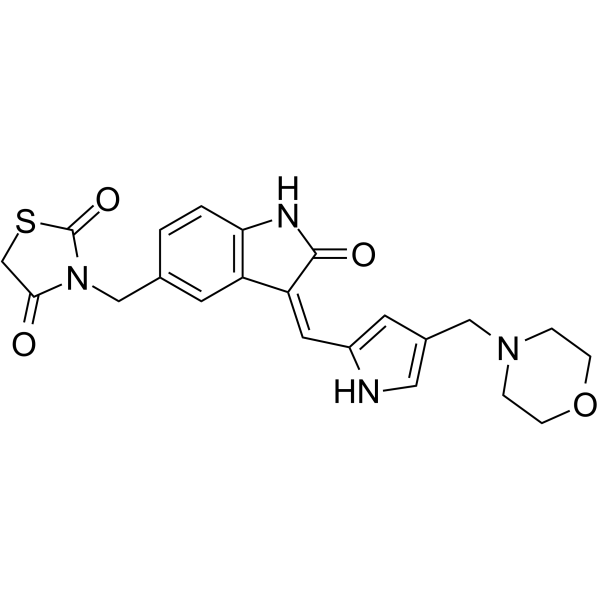
HY-12965
S49076 -
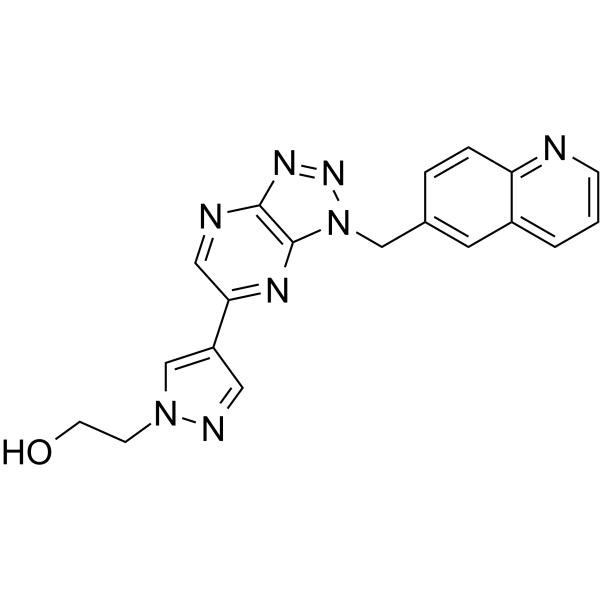
HY-12017
PF-04217903c-Met Kinase Inhibitor -
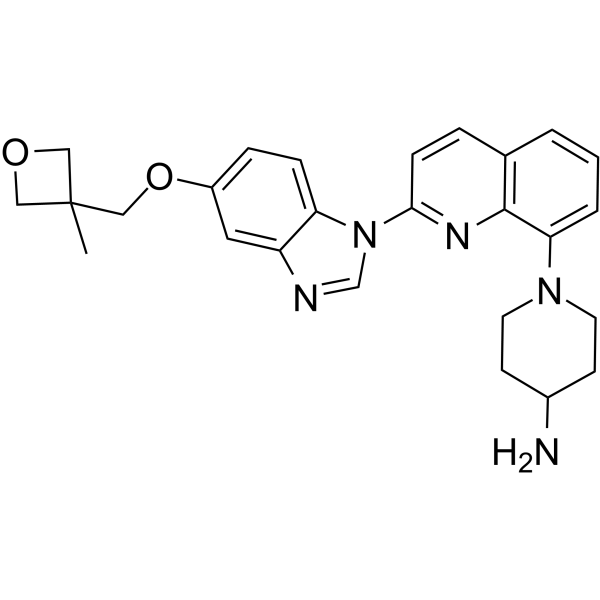
HY-13223
CrenolanibFLT3 Inhibitor -
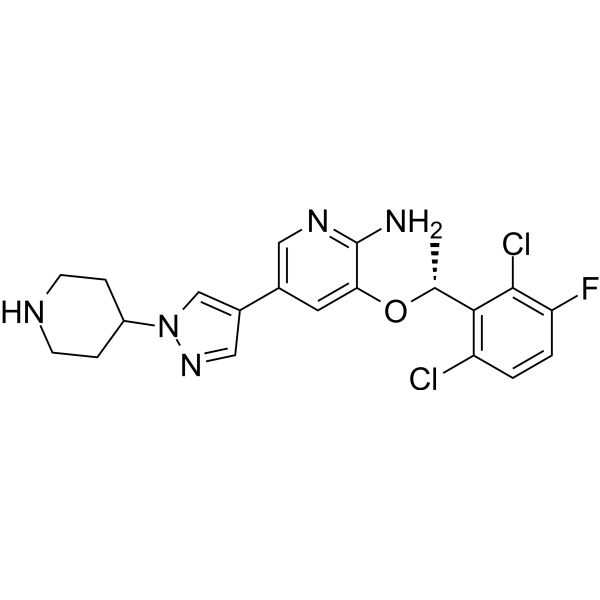
HY-50878
CrizotinibALK/c-Met/ROS1 Inhibitor
Publications Citing Use of MedChemExpress (MCE) MK-2461
More

Biological Activity
Description
Cellular Effect
|
Cell Line

|
Type | Value | Description | References |
|---|---|---|---|---|
| GTL 16 cell line | IC50 |
440 nM
Compound: 81, MK-2461
|
Antiproliferative activity against human GTL16 cells after 72 hrs
Antiproliferative activity against human GTL16 cells after 72 hrs
|
[PMID: 21608528] |
In Vitro
MK-2461 (0.61-10000 nM; 2 h) inhibits the phosphorylation of the juxtamembrane domain (Y1003) and the COOH-terminal docking site (Y1349/Y1365) of c-Met and phosphorylation of AKT (S473) and ERK1/2 (T202/Y204)[1].
MK-2461 is substantially more potent against the autophosphorylation of Y1349 (IC50 of ~100 nM) and Y1365 (IC50 of ~26 nM) in the COOH-terminal docking site than the autophosphorylation of the activation loop (IC50 of ~900 nM)[1].
MK-2461 potently inhibits the phosphorylation of three nonactivation loop tyrosine residues of c-Met, Y1003 in the juxtamembrane domain and Y1349 and Y1365 in the COOH-terminal docking site (IC50 of ~50 nM). MK-2461 also inhibits the phosphorylation of AKT (S473) and ERK1/2 (T202/Y204). In contrast, MK-2461 has little effect on c-Met activation loop (Y1234/Y1235) phosphorylation[1].
In the presence of 50 μM ATP (HY-B2176), MK-2461 is equally or more potent against the five mutants (Y1230C, Y1230H, Y1235D, M1250T, and N1100Y) (mean IC50 ranging from 0.4 to 1.5 nM) compared with the wild-type c-Met (mean IC50 = 2.5 nM)[1].
MK-2461 potently inhibits phosphorylation of the activation loop of FGFR2 (Y653/Y654) and PDGFR-α (Y849) in KATO III cells with IC50 <300 nM[1].
MK-2461 inhibits HGF-induced mitogenesis of 4MBr-5 monkey lung epithelial cells and HPAF II cells with IC50s of 204 nM and 416 nM, respectively[1].
MK-2461 potently inhibits IL-3-independent growth of 32D/Tpr-Met and 32D/Tpr-Met (Y362C) cells (IC50 of ~100 nM)[1].
MedChemExpress (MCE) has not independently confirmed the accuracy of these methods. They are for reference only. Further protocols information, click here.
-
Cell Line:GTL-16 gastric cancer cells
-
Concentration:0.61 nM, 2.4 nM, 9.8 nM, 39 nM, 156 nM, 625 nM, 2500 nM, 10000 nM
-
Incubation Time:2 h
-
Result:Suppressed the phosphorylation of the juxtamembrane domain (Y1003) and the COOH-terminal docking site (Y1349/Y1365) of c-Met and phosphorylation of AKT (S473) and ERK1/2 (T202/Y204) without inhibiting c-Met activation loop (Y1234/35) phosphorylation in GTL-16 gastric cancer cells.
In Vivo
MK-2461 (134 mg/kg; oral gavage; twice daily; for 21 days) inhibits tumor growth in a model of tumors formed by s.c. injection of mouse NIH-3T3 cells expressing oncogenic c-Met mutants[1].
MedChemExpress (MCE) has not independently confirmed the accuracy of these methods. They are for reference only.
-
Animal Model:Female nude CD-1 nu/nu mice inoculated s.c. with GTL-16 cells to establish c-Met-dependent gastric cancer xenograft model[1].
-
Dosage:10, 50, or 100 mg/kg, 200 mg/kg
-
Administration:Oral gavage, twice daily (10, 50, or 100 mg/kg), once daily (200 mg/kg), for 21 days
-
Result:At 10, 50, 100 mg/kg, and 200 mg/kg, inhibited tumor growth by 62%, 77%, 75%, and 90%, respectively. Dose-dependent inhibition of phosphorylation of tumor c-Met (Y1349) was observed.
-
Animal Model:Female nude CD-1 nu/nu mice inoculated s.c. with mouse NIH-3T3 cells transformed by c-Met single nucleotide mutants T3936C or T3997C[1].
-
Dosage:134 mg/kg
-
Administration:Oral gavage, twice daily, for 21 days
-
Result:Inhibited growth of T3936C and T3997C tumors by 78% and 62% respectively, and the growth-inhibitory effects were statistically significant.
Clinical Trial
| NCT Number | Sponsor | Condition | Start Date |
Phase
|
|---|---|---|---|---|
| NCT01329991 | Plexxikon| | 2011-05 | PHASE1 |


Chemical Information
-
CAS No. 917879-39-1
-
Appearance Solid
-
Molecular Weight 495.55
-
Formula C24H25N5O5S
-
Color Light yellow to yellow
-
SMILES
O=S(N(C)C[C@H]1OCCOC1)(NC2=CC=C3C=CC(C(C(C3=C2)=O)=C4)=NC=C4C5=CN(N=C5)C)=O
-
Shipping
Room temperature in continental US; may vary elsewhere.
-
Storage
Powder -20°C 3 years 4°C 2 years In solvent -80°C 2 years -20°C 1 year


Publications (1)
-
Journal Impact Factor
-
Most Recent
-
Sci Transl Med
PP2A inhibition is a druggable MEK inhibitor resistance mechanism in KRAS-mutant lung cancer cells. [Abstract]2018 Jul 18;10(450):eaaq1093. PMID: 30021885


Solvent & Solubility
In Vitro:
DMSO : ≥ 31 mg/mL (62.56 mM; Hygroscopic DMSO has a significant impact on the solubility of product, please use newly opened DMSO)
* "≥" means soluble, but saturation unknown.
Please refer to the solubility information to select the appropriate solvent. Once prepared, please aliquot and store the solution to prevent product inactivation from repeated freeze-thaw cycles.
Storage method and period of stock solution: -80°C, 2 years; -20°C, 1 year. When stored at -80°C, please use it within 2 years. When stored at -20°C, please use it within 1 year.
Please refer to the solubility information to select the appropriate solvent. Once prepared, please aliquot and store the solution to prevent product inactivation from repeated freeze-thaw cycles.
Storage method and period of stock solution: -80°C, 2 years; -20°C, 1 year. When stored at -80°C, please use it within 2 years. When stored at -20°C, please use it within 1 year.
Concentration (start) × Volume (start) = Concentration (final) × Volume (final)
In Vivo:
Select the appropriate dissolution method based on your experimental animal and administration route.
- For the following dissolution methods, please ensure to first prepare a clear stock solution using an In Vitro approach and then sequentially add co-solvents:
- To ensure reliable experimental results, the clarified stock solution can be appropriately stored based on storage conditions. As for the working solution for In Vivo experiments, it is recommended to prepare freshly and use it on the same day.
- The percentages shown for the solvents indicate their volumetric ratio in the final prepared solution. If precipitation or phase separation occurs during preparation, heat and/or sonication can be used to aid dissolution.
Add each solvent one by one: 10% DMSO 40% PEG300 5% Tween-80 45% Saline
Solubility: ≥ 2.5 mg/mL (5.04 mM); Clear solution
This protocol yields a clear solution of ≥ 2.5 mg/mL (saturation unknown).
Taking 1 mL working solution as an example, add 100 μL DMSO stock solution (25.0 mg/mL) to 400 μL PEG300, and mix evenly; then add 50 μL Tween-80 and mix evenly; then add 450 μL Saline to adjust the volume to 1 mL.
Preparation of Saline: Dissolve 0.9 g sodium chloride in ddH₂O and dilute to 100 mL to obtain a clear Saline solution.
Add each solvent one by one: 10% DMSO 90% (20% SBE-β-CD in Saline)
Solubility: ≥ 2.5 mg/mL (5.04 mM); Clear solution
This protocol yields a clear solution of ≥ 2.5 mg/mL (saturation unknown).
Taking 1 mL working solution as an example, add 100 μL DMSO stock solution (25.0 mg/mL) to 900 μL 20% SBE-β-CD in Saline, and mix evenly.
Preparation of 20% SBE-β-CD in Saline (4°C, storage for one week): 2 g SBE-β-CD powder is dissolved in 10 mL Saline, completely dissolve until clear.
In Vivo Dissolution Calculator
Please enter the basic information of animal experiments:
-
-
-
-
Recommended: Prepare an additional quantity of animals to account for potential losses during experiments.
Please enter your animal formula composition:
-
%DMSO +
Recommended: Keep the proportion of DMSO in working solution below 2% if your animal is weak.
-
%+
-
+%Tween-80 + +
-
%Saline +
The co-solvents required include: DMSO, . All of co-solvents are available by MedChemExpress (MCE). , Tween 80. All of co-solvents are available by MedChemExpress (MCE).
Working solution concentration: 0.22 mg/mL
Method for preparing stock solution: mg drug dissolved in μL DMSO. Stock solution concentration: mg/mL.
1. Take μL DMSO stock solution;
2. Add μL .
μL , mix evenly;
3. Then add μL Tween 80, mix evenly;
4. Then add μL
Please ensure that the stock solution in the first step is dissolved to a clear state, and add co-solvents in sequence. You can use ultrasonic heating (ultrasonic cleaner, recommended frequency 20-40 kHz), vortexing, etc. to assist dissolution.

Protocols
-
Cell Cytotoxicity Assay
Cytotoxicity assays are usually based on the assessment of cell membrane damage, which can also be indirectly detected by measuring cell viability. Detection methods include MTT assay, CKK-8 assay, LDH assay and ATP assay, etc.


Purity & Documentation
-
Data Sheet (279 KB)
-
SDS (393 KB)
- English - EN (393 KB)
- Français - FR (393 KB)
- Deutsch - DE (393 KB)
- Norwegian - NO (393 KB)
- Español - ES (393 KB)
- Swedish - SV (393 KB)
- Italian - IT (393 KB)
- Korean - KR (393 KB)
- Portuguese - PT (393 KB)
-
Handling Instructions (2659 KB)
References


Complete Stock Solution Preparation Table
Please refer to the solubility information to select the appropriate solvent. Once prepared, please aliquot and store the solution to prevent product inactivation from repeated freeze-thaw cycles.
Storage method and period of stock solution: -80°C, 2 years; -20°C, 1 year. When stored at -80°C, please use it within 2 years. When stored at -20°C, please use it within 1 year.
| Optional Solvent | Concentration Solvent Mass | 1 mg | 5 mg | 10 mg | 25 mg |
|---|---|---|---|---|---|
| DMSO | 1 mM | 2.0180 mL | 10.0898 mL | 20.1796 mL | 50.4489 mL |
| 5 mM | 0.4036 mL | 2.0180 mL | 4.0359 mL | 10.0898 mL | |
| 10 mM | 0.2018 mL | 1.0090 mL | 2.0180 mL | 5.0449 mL | |
| 15 mM | 0.1345 mL | 0.6727 mL | 1.3453 mL | 3.3633 mL | |
| 20 mM | 0.1009 mL | 0.5045 mL | 1.0090 mL | 2.5224 mL | |
| 25 mM | 0.0807 mL | 0.4036 mL | 0.8072 mL | 2.0180 mL | |
| 30 mM | 0.0673 mL | 0.3363 mL | 0.6727 mL | 1.6816 mL | |
| 40 mM | 0.0504 mL | 0.2522 mL | 0.5045 mL | 1.2612 mL | |
| 50 mM | 0.0404 mL | 0.2018 mL | 0.4036 mL | 1.0090 mL | |
| 60 mM | 0.0336 mL | 0.1682 mL | 0.3363 mL | 0.8408 mL |


MK-2461 Related Classifications
HY-50703 Related Classifications
 Powered by Bioz