



c-Met/HGFR
c-Met (hepatocyte growth factor receptor, HGFR) is a protein possesses tyrosine kinase activity. The primary single chain precursor protein is post-translationally cleaved to produce the alpha and beta subunits, which are disulfide linked to form the mature receptor. c-Met is a membrane receptor that is essential for embryonic development and wound healing. Hepatocyte growth factor (HGF) is the only known ligand of the c-Met receptor. c-Met is normally expressed by cells of epithelial origin, while expression of HGF is restricted to cells of mesenchymalorigin. Upon HGF stimulation, c-Met induces several biological responses that collectively give rise to a program known as invasive growth.
All Product Categories
-
c-Met/HGFR Inhibitors
(236)
View all products
-
c-Met/HGFR Agonist
(1)
View all products
-
c-Met/HGFR Activators
(3)
View all products
-
c-Met/HGFR Modulators
(2)
View all products
-
c-Met/HGFR Degraders
(11)
View all products
-
c-Met/HGFR Ligands
(4)
View all products
-
c-Met/HGFR Proteins
(48)
View all products
-
c-Met/HGFR Related Products (280)
Related Products (280)

-
Recombinant Proteins (48)
-
Antibodies (7)
-
c-Met-IN-26
 0 ImagesCat. No.: HY-168268CAS No.: 1635406-97-1c-Met-IN-26 (compound 1-170) is a potent inhibitor of c-Met, with the IC50 of 1.6 nM. c-Met-IN-26 palys an important role in cancer research.
-
Antitumor agent-111
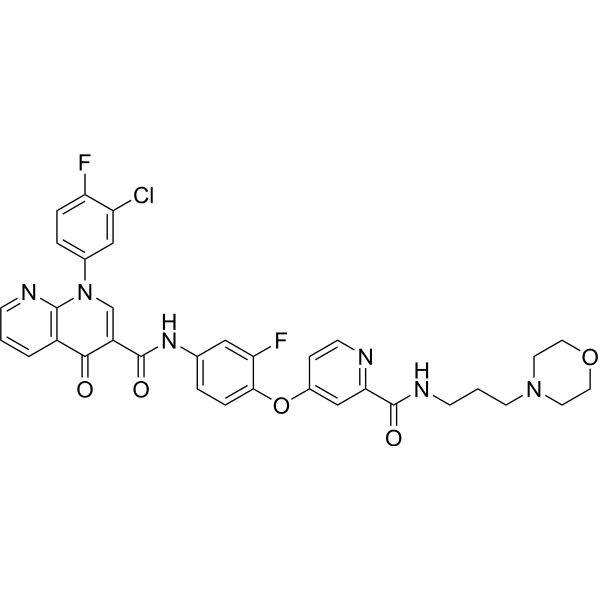 0 ImagesCat. No.: HY-155544CAS No.: 3049618-45-0Antitumor agent-111 (compound 46) is an c-Met kinase inhibitor (IC50=46 nM) with antitumor and antiproliferative activity. Antitumor agent-111 arrests cell cycle at G0/G1 phase, and induces apoptosis.
-
PARP1/c-Met-IN-3
 0 ImagesCat. No.: HY-181928CAS No.: 3123529-62-1PARP1/c-Met-IN-3 (Compound L19) is a selective c-Met and PARP1 inhibitor, with an IC50 of 5.4 nM against c-Met and an IC50 of 3.7 nM against PARP1. PARP1/c-Met-IN-3 inhibits PARP2 enzymatic activity with an IC50 of 4.52 nM, and shows no specificity for PARP1 and PARP2. PARP1/c-Met-IN-3 induces cell cycle arrest and apoptosis. PARP1/c-Met-IN-3 exhibits anti-tumor activity against triple-negative breast cancer.
-
EGFR/c-Met-IN-1
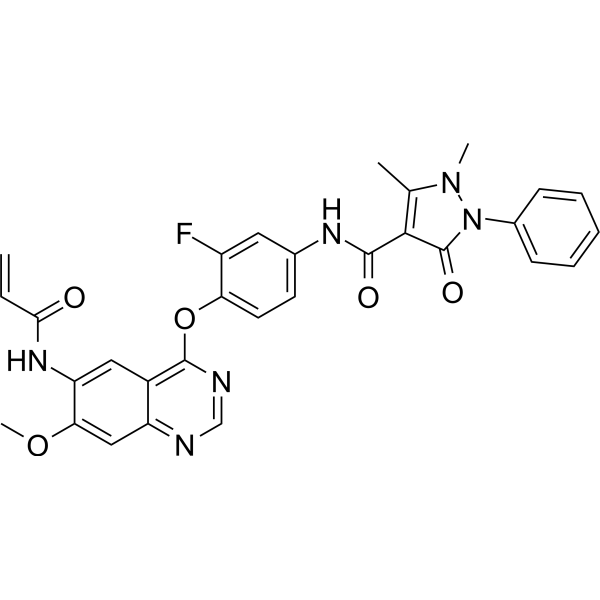 0 ImagesCat. No.: HY-163006CAS No.: 3020728-68-8EGFR/c-Met-IN-1 (compound TS-41) is a dual-target inhibitor of EGFR/c-Met. The IC50 for inhibiting EGFRL858R and c-Met is 68.1 nM and 0.26 nM respectively. . EGFR/c-Met-IN-1 induces apoptosis and cell cycle arrest in A549-P cells, downregulating the phosphorylation of EGFR, c-Met, and downstream AKT. EGFR/c-Met-IN-1 inhibits tumor growth in vitro and in vivo.
-
c-Met-IN-1
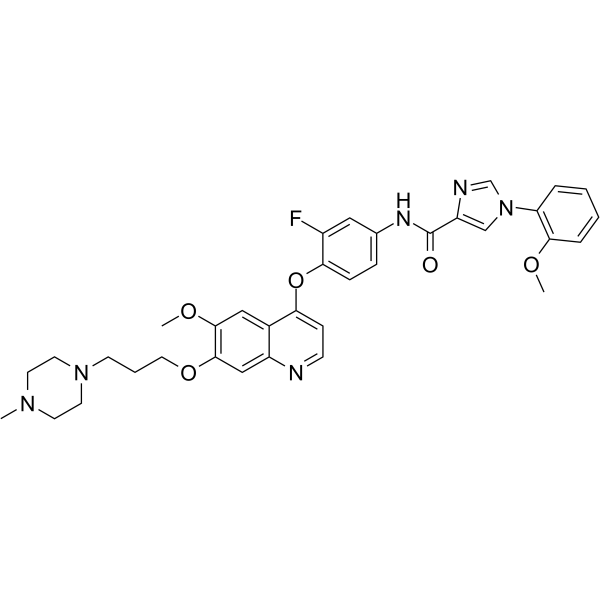 0 ImagesCat. No.: HY-101031CAS No.: 2084836-84-8c-met-IN-1 (compound 16) is a potent and selective c-Met inhibitor, with IC50 of 1.1 nM, with antitumor activity..
-
SU11606
 0 ImagesCat. No.: HY-123262CAS No.: 669764-17-4SU11606 is a Met inhibitor, with an average IC50 of 0.17 μM. SU11606 shows inhibitory activity on Ron, FLK-1, with IC50s of 2.5 μM and 0.18 μM, respectively. SU11606 can be used in the research of tumors.
-
MET Y1230D Recombinant Human Active Protein Kinase
 0 ImagesCat. No.: HY-E70756Mesenchymal-to-epithelial transition (MET) is a receptor tyrosine kinase for hepatocyte growth factor (HGF). MET overactivation is strongly associated with angiogenesis, cellular motility, growth, and invasion. Aberrant MET signaling can drive tumorigenesis in several cancer types through various molecular mechanisms, including MET amplification, MET exon 14 skipping mutation, MET overexpression, and MET fusions. MET Y1230D is a mutant of MET. MET Y1230D Recombinant Human Active Protein Kinase is a recombinant MET Y1230D protein that can be used to study MET Y1230D-related functions.
-
Crizotinib-d9 hydrochloride
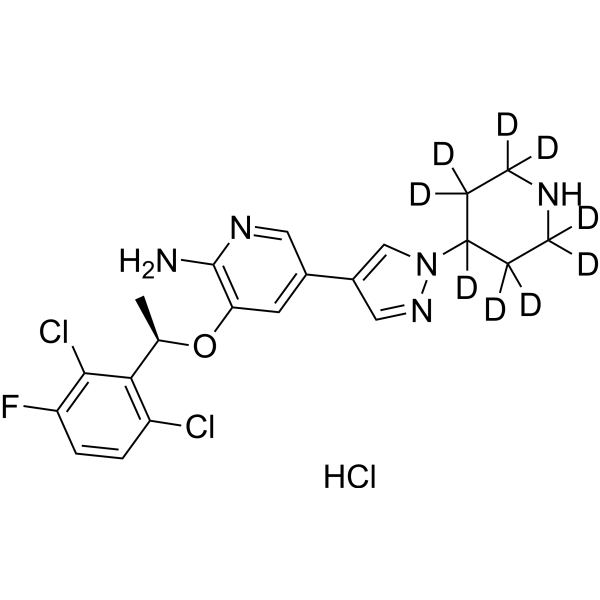 0 ImagesCat. No.: HY-50878ASSynonyms: PF-02341066-d9 hydrochlorideCrizotinib-d9 hydrochloride is deuterated labeled Crizotinib hydrochloride (HY-50878A). Crizotinib hydrochloride (PF-02341066 hydrochloride) is an orally bioavailable, selective, and ATP-competitive dual ALK and c-Met inhibitor with IC50s of 20 and 8 nM, respectively. Crizotinib hydrochloride (PF-02341066 hydrochloride) inhibits tyrosine phosphorylation of NPM-ALK and tyrosine phosphorylation of c-Met with IC50s of 24 and 11 nM in cell-based assays, respectively. It is also a ROS proto-oncogene 1 (ROS1) inhibitor. Crizotinib hydrochloride (PF-02341066 hydrochloride) has effective tumor growth inhibition.
-
LAH-1
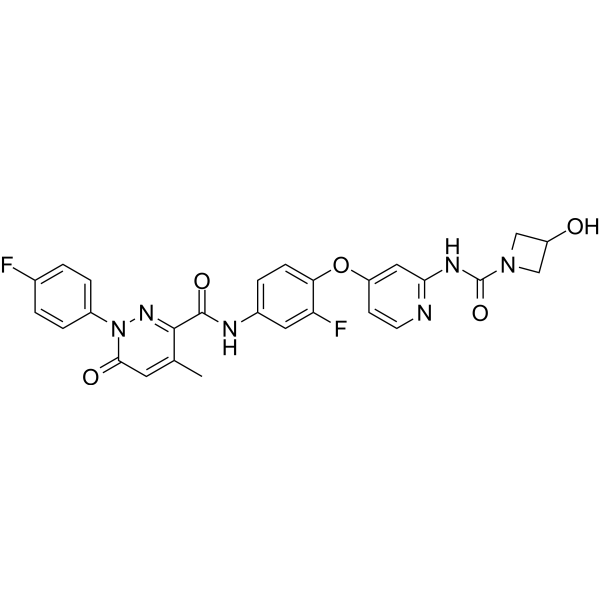 0 ImagesCat. No.: HY-157519CAS No.: 3018150-68-7LAH-1 is a c-Met inhibitor with oral activity and membrane permeability with an IC50 of 49 nM. LAH-1 has anticancer activity and can induce apoptosis, migration, and invasion.

-
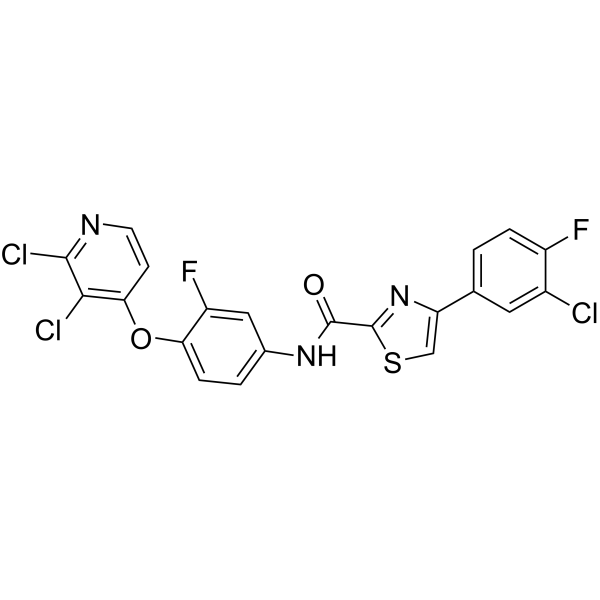
Taligantinib
 0 ImagesCat. No.: HY-177134CAS No.: 2243235-80-3Taligantinib (Compound Example 70) is an orally active and selective dual inhibitor targeting vascular endothelial growth factor receptor 2 (VEGFR-2) and hepatocyte growth factor receptor (c-Met). Taligantinib suppresses tumor angiogenesis and cell proliferation. Taligantinib is promising for research of solid tumors such as non-small cell lung cancer and hepatocellular carcinoma.
-
KIN-8741
 0 ImagesCat. No.: HY-174387CAS No.: 2941104-53-4KIN-8741 is a highly selective Type IIb c-Met inhibitor. KIN-8741 has broad activity against c-Met kinase mutations. KIN-8741 shows antitumor activity in MET gene amplified and exon 14 deleted non-small cell lung cancer models. KIN-8741 can be used in the research of c-Met driven cancers, especially advanced tumors carrying MET exon 14 jump mutations, acquired drug resistance mutations, etc.
-
Tyrosine kinase-IN-6
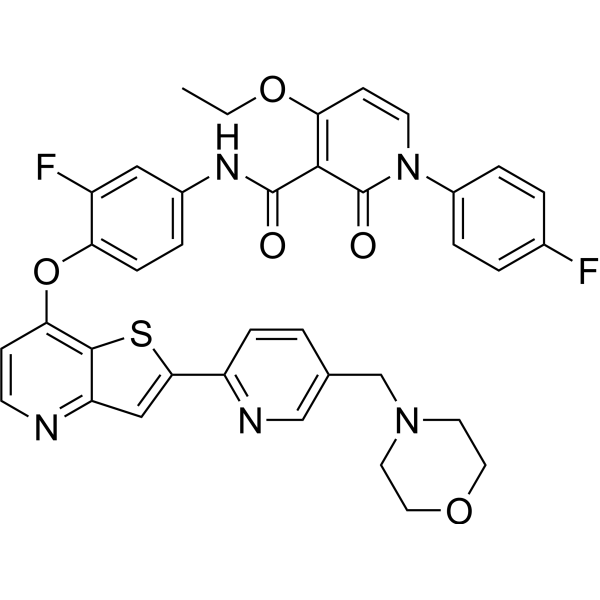 0 ImagesCat. No.: HY-155812CAS No.: 2377507-01-0Tyrosine kinase-IN-6 is a potent and promising RON splice variants inhibitor with anti-cancer and o?antineoplastic effects.
-
CE-355621
 0 ImagesCat. No.: HY-P991565CE-355621 is a humanized anti-c-Met IgG1 monoclonal antibody. CE-355621 can effectively bind with human c-Met (KD = 200 pM, IC50 = 466 pM) in A549 cells and cyno c-Met (KD = 610 pM) in cynomolgus kidney cells. CE-355621 inhibits the c-Met signaling pathway by blocking HGF binding. CE-355621 significantly inhibits the growth of tumors dependent on the c-Met/HGF pathway. CE-355621 can be used for research on cancer such as glioblastoma and gastric cancer.
-
OSI-296
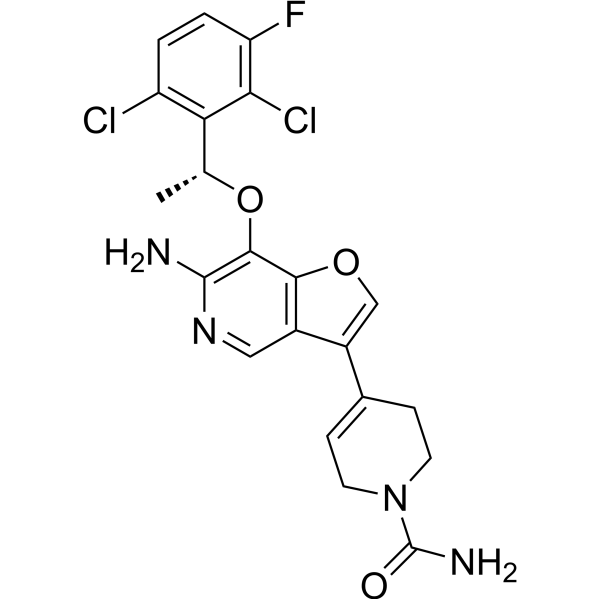 0 ImagesCat. No.: HY-118269CAS No.: 1175296-94-2OSI-296 is a potent, oral and selective inhibitor of cMET and RON kinases. OSI-296 shows in vivo efficacy in MKN45 tumor xenografts models and well tolerated.

-
MET Transcription-IN-1
 0 ImagesCat. No.: HY-174384CAS No.: 3082125-66-1MET Transcription-IN-1 (Compound C3) is an orally active MET transcription inhibitor. MET Transcription-IN-1 can efficiently bind and stabilize the G-quadruplex in the MET promoter region, thereby inhibiting c-Met expression. MET Transcription-IN-1 can also overcome drug resistance caused by specific c-Met mutations. MET Transcription-IN-1 is capable of inhibiting tumor cell proliferation, migration, and invasion, as well as inducing cell cycle arrest and apoptosis. MET Transcription-IN-1 has antitumor activity, and can be used in the research of tumors such as non-small cell lung cancer.
-
OZD-MET 01
 0 ImagesCat. No.: HY-177893CAS No.: 3048497-38-4OZD-MET 01 is a chaperone-med iatedprotein PROTAC-type MET degrader. OZD-MET 01 can inhibit proliferation of H596 and H1437 cells with IC50 values of 3.07 and 3.5 μM. OZD-MET 01 can be used for the research of cancer, such as non-small cell lung cancer. (Structure Note: Pink: MET ligand (HY-50878); Blue: chaperone ligand (HY-112078); MET ligand-Linker: (HY-176950))
-
MET Y1235D Recombinant Human Active Protein Kinase
 0 ImagesCat. No.: HY-E70758Mesenchymal-to-epithelial transition (MET) is a receptor tyrosine kinase for hepatocyte growth factor (HGF). MET overactivation is strongly associated with angiogenesis, cellular motility, growth, and invasion. Aberrant MET signaling can drive tumorigenesis in several cancer types through various molecular mechanisms, including MET amplification, MET exon 14 skipping mutation, MET overexpression, and MET fusions. MET Y1235D is a mutant of MET. MET Y1235D Recombinant Human Active Protein Kinase is a recombinant MET Y1235D protein that can be used to study MET Y1235D-related functions.




