



Drug Derivative
Drug derivative
Drug derivatives are derived from parent compounds. They replace or add atoms and groups through chemical reactions to optimize the various properties of the parent compound and reduce side effects. The application of drug derivatives provides a diverse compound library for drug research and development and accelerates the discovery of new drugs. For example, urea derivatives Glibenclamide can prolong the blood sugar-lowering effect of anti-diabetic drugs.
References:
- [1]. Vardanyan RS, et al. Fentanyl-related compounds and derivatives: current status and future prospects for pharmaceutical applications. Future Med Chem. 2014 Mar;6(4):385-412.x
- [2]. Ghosh AK, et al. Urea Derivatives in Modern Drug Discovery and Medicinal Chemistry. J Med Chem. 2020 Mar 26;63(6):2751-2788.x
All Product Categories
-
Drug Derivative Inhibitors
(12)
View all products
-
Drug Derivative Agonist
(1)
View all products
-
Drug Derivative Activator
(1)
View all products
-
Drug Derivative Chemical
(1)
View all products
-
Drug Derivative Inducer
(1)
View all products
-
Drug Derivative Controls
(38)
View all products
-
Drug Derivative Substrate
(1)
View all products
-
Drug Derivative Related Products (4032)
Related Products (4032)

-
Octoclothepin maleate salt
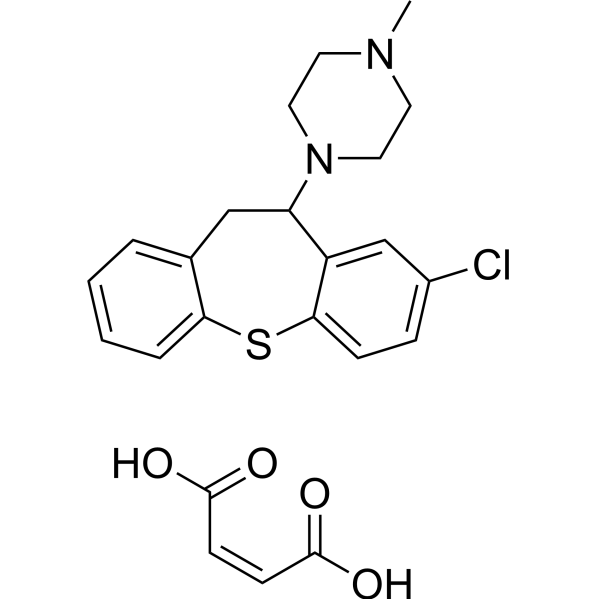 0 ImagesSynonyms: Clorotepine maleate saltOctoclothepin (Clorotepine) maleate salt is a D2 dopamine receptor antagonist and 5-HT2 serotonin receptor antagonist , with Ki values of 0.67 nM, 0.57 nM, and 0.19 nM for the dopamine D2, 5-HT2A, and 5-HT2C receptors, respectively. Octoclothepin maleate salt also binds to adrenergic receptors, with Ki values of 0.66 nM, 0.56 nM, and 0.77 nM for α1a, α1b, and α1d, respectively. Octoclothepin maleate salt can be used in schizophrenia research.
-
Griffonilide
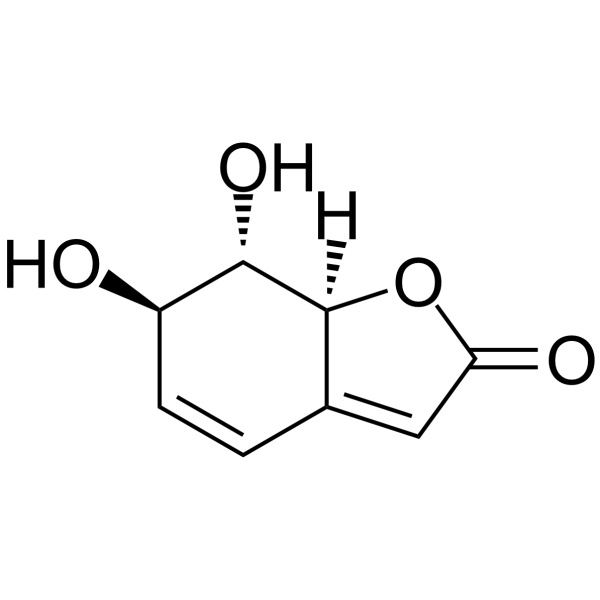 0 ImagesGriffonilide is a steroidal compound that can be isolated from the roots of Semiaquilegia adoxoides.
-
K-8012
 0 ImagesK-8012 is a Sulindac (HY-B0008) analog and RXRα antagonist with an IC50 of 9.2 µM. K-8012 inhibits the activation of AKT. K-8012 induces Apoptosis, redirecting the TNFα signaling pathway from survival to death. K-8012 exerts anticancer activity against lung cancer, prostate cancer, and breast cancer. K-8012 can be used in research related to lung cancer, prostate cancer, breast cancer, and hepatocellular carcinoma.
-
trans-4-Bromocinnamaldehyde
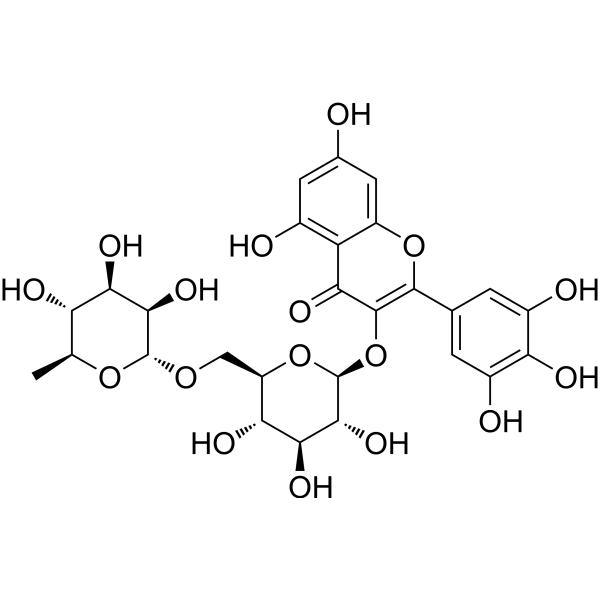
 0 Imagestrans-4-Bromocinnamaldehyde (Compound 6d) is an (E)-α,β-unsaturated aldehyde and cinnamaldehyde derivative. trans-4-Bromocinnamaldehyde serves as a starting material for the synthesis of α-aryl substituted phosphinomycin analogs. trans-4-Bromocinnamaldehyde can be used in the research of tuberculosis.
-
5,6-Dihydropyridin-2(1H)-one
 0 ImagesSynonyms: 1,5,6-Trihydropyridin-2-one5,6-Dihydropyridin-2(1H)-one (1,5,6-Trihydropyridin-2-one) is a Sesquiterpenoids product that can be isolated from the leaves of Alpinia intermedia.
-
Tiopronin-cysteine disulfide
 0 ImagesCat. No.: HY-131516CAS No.: 77591-18-5
-
3-Hydroxyhexanoic acid
 0 ImagesCat. No.: HY-113836CAS No.: 10191-24-93-Hydroxyhexanoic acid is an ester product.
-
L-Homotyrosine
 0 ImagesL-Homotyrosine is a tyrosine derivative that can be used for solid-phase peptide synthesis.
-
(Z)-Hexadec-9-enamide
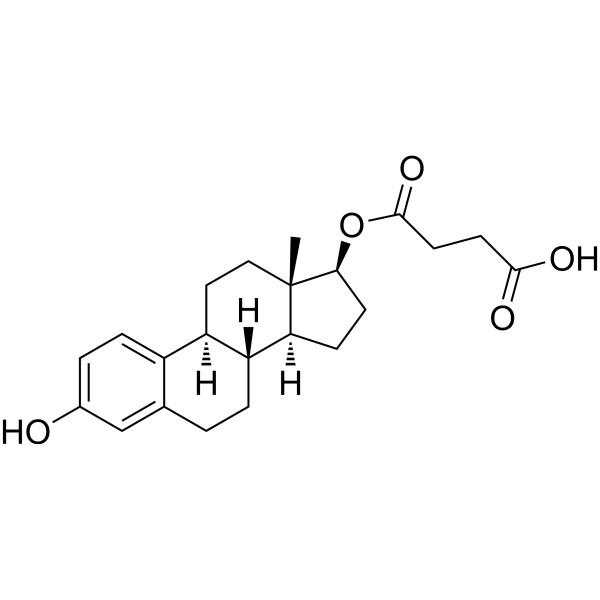
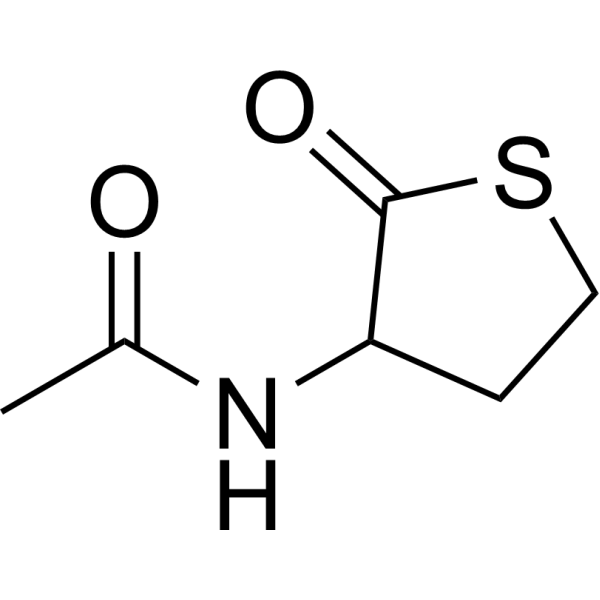
 0 ImagesCat. No.: HY-W398166CAS No.: 106010-22-4Synonyms: Palmitoleamide(Z)-Hexadec-9-enamide (Palmitoleamide) is an ester product.


-
Phenyl salicylate
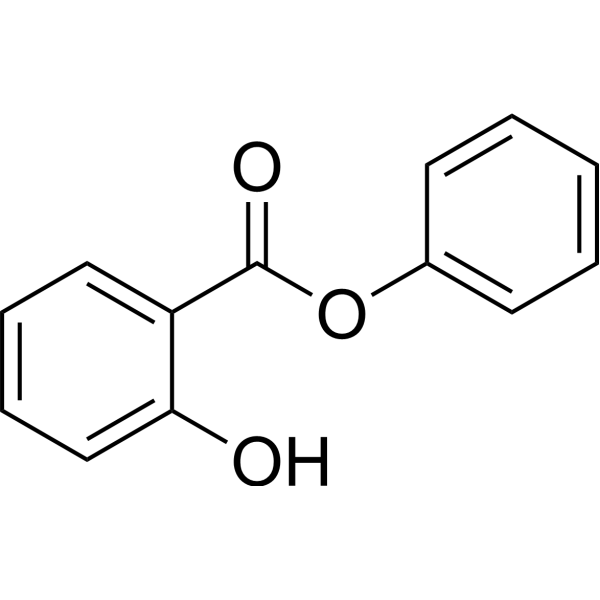 0 ImagesPhenyl salicylate is an ester derivative of Salicylic acid (HY-B0167) that exhibits no antimycobacterial activity. Phenyl salicylate can cross-sensitize with Resorcinol monobenzoate. Phenyl salicylate is used in research related to contact dermatitis.
-
Hidrosmin (mixture)
 0 ImagesCat. No.: HY-105946ACAS No.: 115960-14-0Hidrosmin (mixture) is a mixture of 3,5-di-O-(hydroxyethyl)diosmin and 3'-mono-O-(hydroxyethyl)diosmin.
-
C24:1-Dihydro-ceramide
 0 ImagesC24:1-Dihydro-ceramide is an ester product.
-
Glucosylceramide, plant
 0 ImagesSynonyms: GluCer (Soy)Glucosylceramide, plant (GluCer (Soy)) is an orally active, plant-derived glucosylceramide. Glucosylceramide, plant inhibits lipopolysaccharide-induced cytokine production and Apoptosis. Glucosylceramide, plant suppresses DSS-induced body weight loss, colonic crypt damage and intestinal inflammation in mice. Glucosylceramide, plant can be used in research related to inflammatory bowel disease and colon cancer.
-
Pergolide
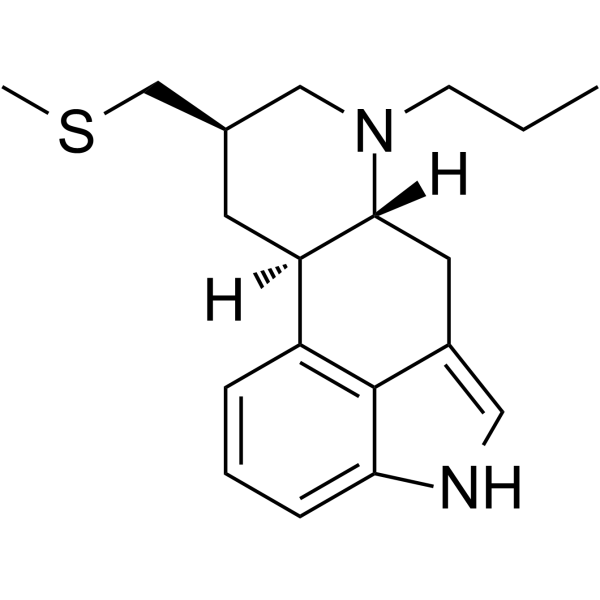 0 ImagesSynonyms: LY127809 free basePergolide (LY127809 free base), an Ergoline derivative, is a potent and orally active dopamine D1 and D2 receptor agonist. Pergolide can be used for Parkinson's disease and hyperprolactinaemia research.
-
7-(2-Aminoethyl)camptothecin TFA
 0 ImagesCat. No.: HY-159162APurity: 99.56%Synonyms: 7CPT TFA7-(2-Aminoethyl)camptothecin TFA (7CPT TFA) is the TFA salt form of Camptothecin (HY-16560) derivative 7-(2-Aminoethyl)camptothecin (HY-159162). 7-(2-Aminoethyl)camptothecin TFA can be used for synthesis of conjugate with triple helix-forming oligonucleotides (TFOs) and camptothecin (CPT). The TFO-CPT conjugate is used for DNA cleavage.



