



Fluorescent Dye
Fluorescence is a phenomenon of photoluminescence in luminescence. When an atom is irradiated by light, some electrons around the nucleus jump from their original orbitals to higher energy orbitals under the influence of light energy, i.e., from the ground state to the first or second excited single-line state, etc. Due to the instability of the first or second excited singlet state, the electron returns from the excited singlet state to the ground state accompanied by released energy, resulting in fluorescence.
Fluorescent dyes can be covalently bound or physically adsorbed in the structure of the substance. The fluorescence properties allow for the characterization, localization and quantitative analysis of the labeled object. Fluorescent dyes have shown great potential for the detection of proteins, nucleic acids, cells, and immunoassays, attributed to the advantages in non-radioactive contamination, simple experimental operation and easy observation.
Fluorescent dyes have penetrated many fields such as pharmacology, physiology, environmental science, and information science, as well as functional studies of proteins and drug screening.
All Product Categories
-
Fluorescent Dye Related Products (4888)
Related Products (4888)

-
Antibodies (4)

-
5(6)-Carboxy-2',7'-dichlorofluorescein diacetate N-succinimidyl ester
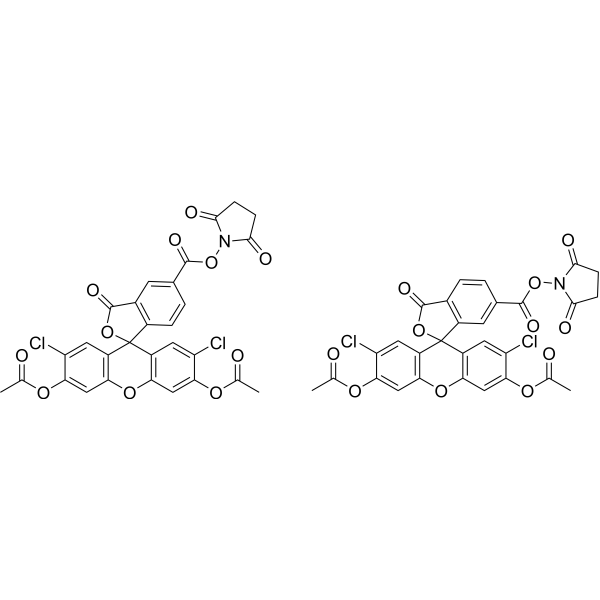 0 ImagesCat. No.: HY-D0050CAS No.: 147265-60-95(6)-Carboxy-2',7'-dichlorofluorescein diacetate N-succinimidyl ester (cDCFDASE) is a fluorescent probe. 5(6)-Carboxy-2',7'-dichlorofluorescein diacetate N-succinimidyl ester can be used to evaluate the intracellular pH (pHin) of living cells at a medium pH (pHex).
-
DCIA
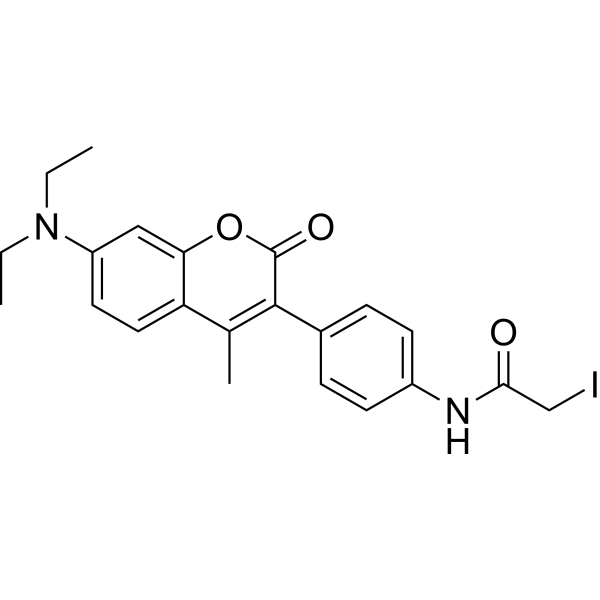 0 ImagesCat. No.: HY-D0078CAS No.: 76877-34-4DCIA is a fluorescent dye. DCIA contains a coumarin fluorophore and conjugates specifically with free cysteines in the protein.
-
5(6)-SFX ,SE
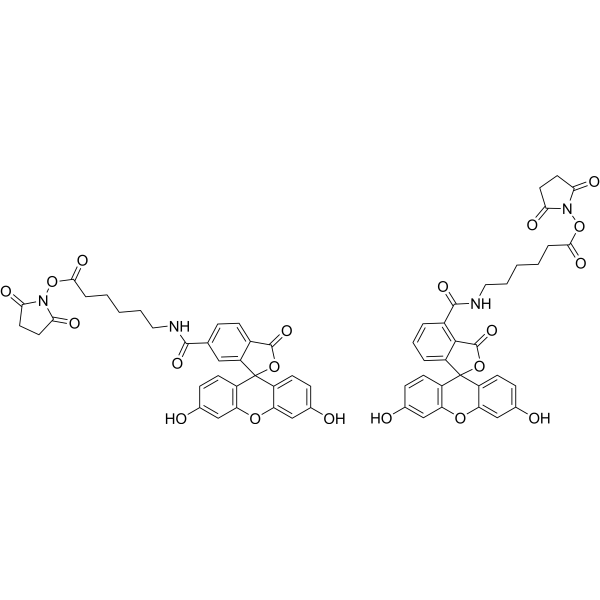 0 ImagesCat. No.: HY-D1109CAS No.: 114616-31-85(6)-SFX ,SE (Compound SFX-SE) is a fluorescent dye for labeling primary amines and nascent proteins.
-
Vari Fluor 594 SE
 0 ImagesCat. No.: HY-D1796Synonyms: VF 594 SEVari Fluor 594 SE (VF 594 SE) is a dye marker of the Vari Fluor SE series (Ex/Em=585 nm/609 nm). The Vari Fluor SE series of dyes are a class of fluorescent dyes containing NHS ester groups used to label free amines (-NHX) on antibodies, proteins, peptides, amine-modified oligonucleotides and other biomolecules.
-
4-Methylumbelliferyl-α-L-iduronide 2-sulfate sodium
 0 ImagesSynonyms: 4-MU-α-idoa 2-sulfate sodium4-Methylumbelliferyl-α-L-iduronide 2-sulfate (4-MU-α-idoa 2-sulfate) sodium is a fluorogenic substrate of iduronate-2-sulfatase (I2S). 4-Methylumbelliferyl-α-L-iduronide 2-sulfate sodium can be hydrolyzed by lysosomal enzyme α-l-iduronidase (IDUA) and release the fluorophore 4-Methylumbelliferone (HY-N0187). 4-Methylumbelliferyl-α-L-iduronide 2-sulfate sodium can be used to detect Hurler syndrome.
-
12-(1-Pyrenyl)dodecanoic acid
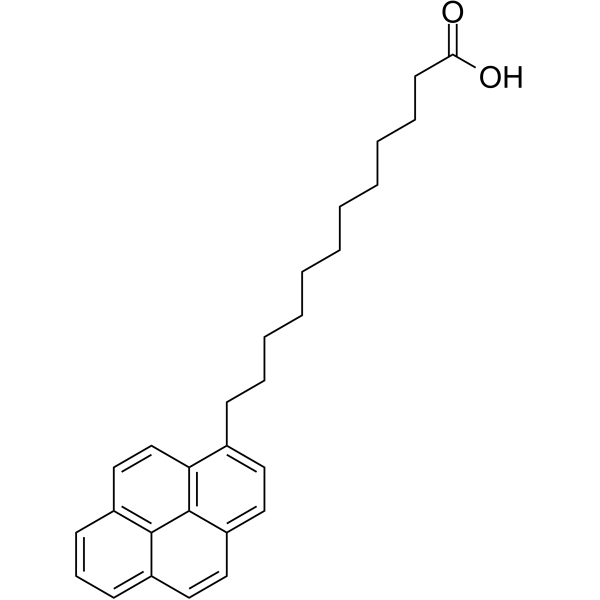 0 Images12-(1-Pyrenyl)dodecanoic acid is a fluorescence probe.

-
NFQ1
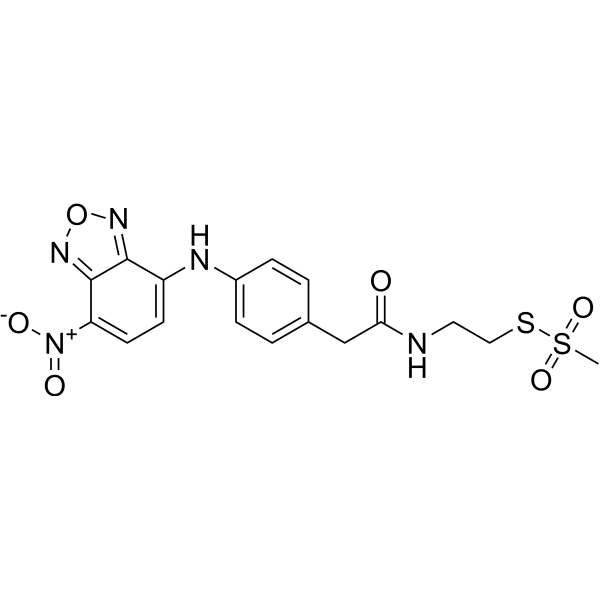 0 ImagesNFQ1 is a non-fluorescent quencher (absorption wavelength: 474 nm), and is used for a new type of One Sample Fluorescence Resonance Energy Transfer (OS-FRET) method. OS-FRET enable measurement of unquenched donor emission in the same sample. NFQ1 shows broad absorption spectrum ensuring its utility as a dark acceptor for many donors.
-
Mito-laurdan bromide
 0 ImagesMito-laurdan (bromide) is a Fluorescent dye for mitochondrial membrane fluidity and packing measurement. It depends on membrane potential for targeting: it contains a cationic triphenylphosphonium moiety that accumulates at the inner mitochondrial membrane due to the membrane's negative potential, connected via a 3-carbon linker. As a solvatochromic dye derived from Laurdan (HY-D0080), it retains the characteristic mechanism where fluorescence emission shifts based on membrane packing: in more fluid, loosely packed membranes, greater water penetration leads to increased dipolar relaxation and a bathochromic red shift in emission, while more ordered membranes show a blue-shifted emission; these shifts are quantified using generalized polarization, calculated from emission intensities in ordered and disordered spectral windows. Its excitation wavelength is 352 nm, with emission detected in ordered (409-463 nm) and disordered (473-516 nm) spectral windows. It localizes specifically to mitochondria in HeLa cells, showing high signal overlap with MitoTracker Deep Red, and can detect changes in inner mitochondrial membrane fluidity.
-
Genistein 7-sulfate
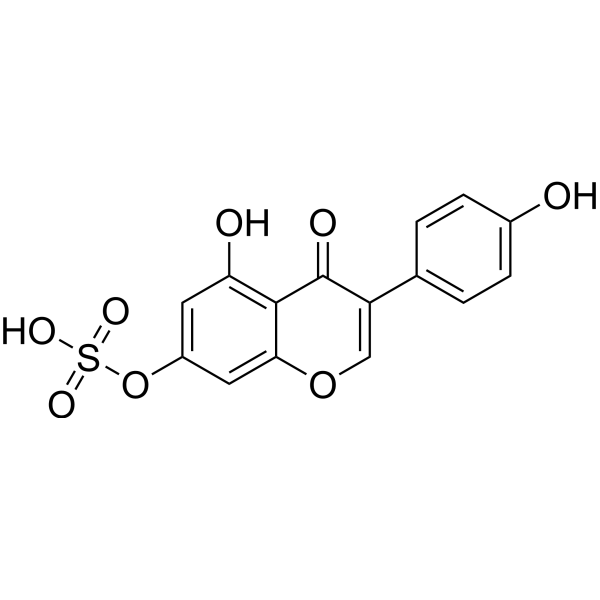 0 ImagesCat. No.: HY-137099CAS No.: 182322-62-9Genistein 7-sulfate is a metabolite of genistein that can reduce the activity of estrogen agonists in MCF-7 cells. Genistein 7-sulfate can promote the growth of MCF-7 cells at concentrations of 10 μM and above.
-
FAM labled Nusinersen sodium
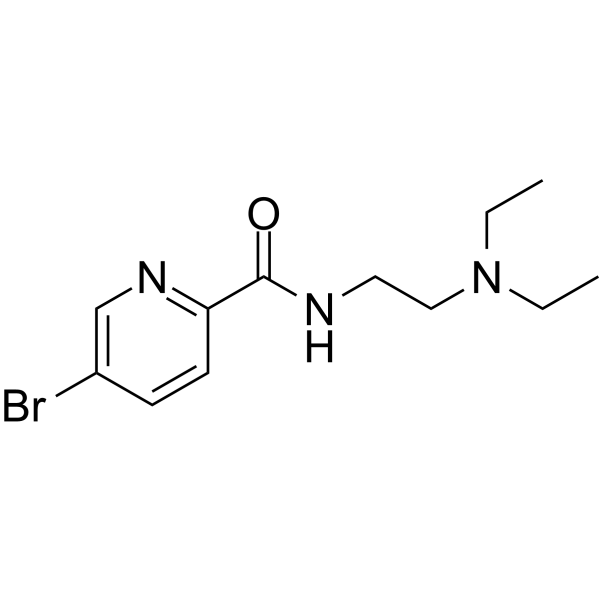
 0 ImagesCat. No.: HY-112980DFAM labled Nusinersen sodiumis a FAM labled Nusinersen sodium.
-
DCP-Bio3
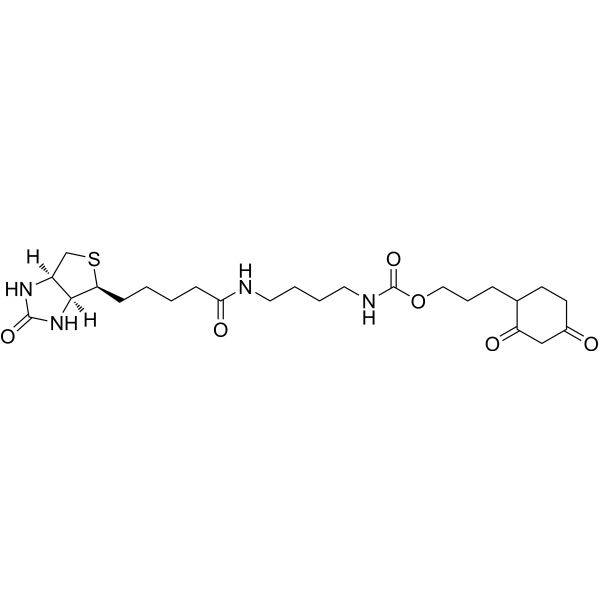 0 ImagesDCP-Bio3 is a biotinylated probe that can detect labeled proteins in polyacrylamide gels. DCP-Bio3 can be used in research for the identification of oxidized and modified proteins.
-
ATTO 390 NHS ester
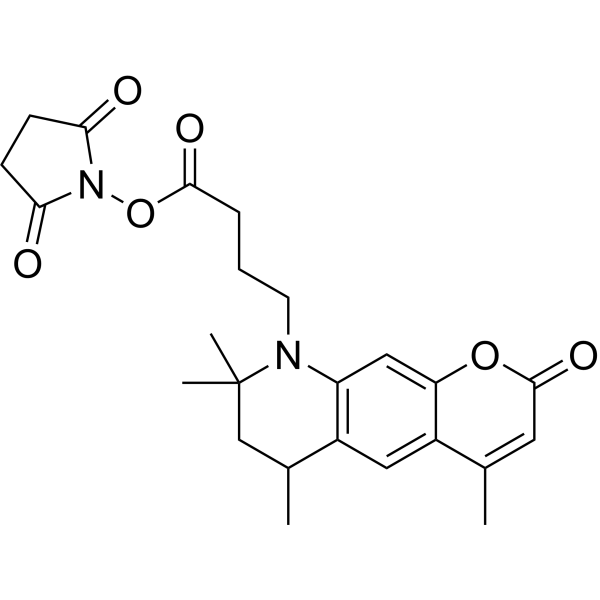 0 ImagesATTO 390 NHS ester is a new fluorescent marker based on the Rhodamine structure. It has strong absorption, high fluorescence quantum yield, high thermal stability and photochemical stability, and is suitable for single molecule detection and high-resolution microscopy. ATTO 390 NHS ester is an NHS ester derivative of ATTO 390 that can be used to label proteins or antibodies.
-
Orange I
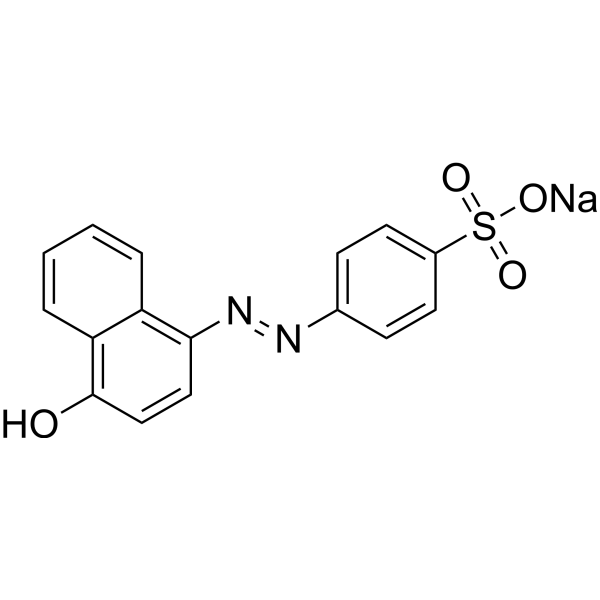 0 ImagesOrange I (α-Naphthol Orange) is an anionic azo dye that can form a complex with Methylene blue (HY-14536) and cause fluorescence quenching. The equilibrium constant of the complex of Orange I and Methylene blue is 79900 mol-1·dm3. Orange I can change the absorption spectrum of itself and Methylene blue.
-
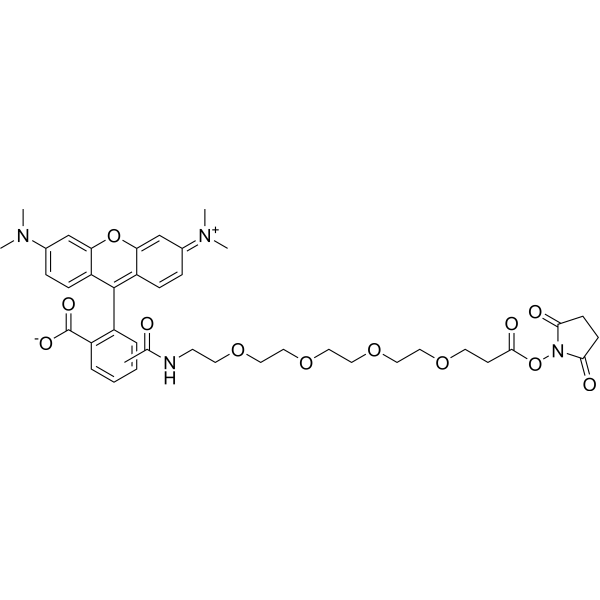
AF 350 NHS Ester
 0 ImagesCat. No.: HY-D3323AF 350 NHS ester is a fluorescent dye AF 350 derivative exhibits high fluorescence quantum yield and high photostability. AF 350 NHS ester can form an ester bond with ammonia via the NHS group, and can be used to label proteins, amine-modified oligonucleotides, and other primary amines (R-NH2) containing amine molecules (Ex/Em = 346/445 nm).
-
Acridine yellow G
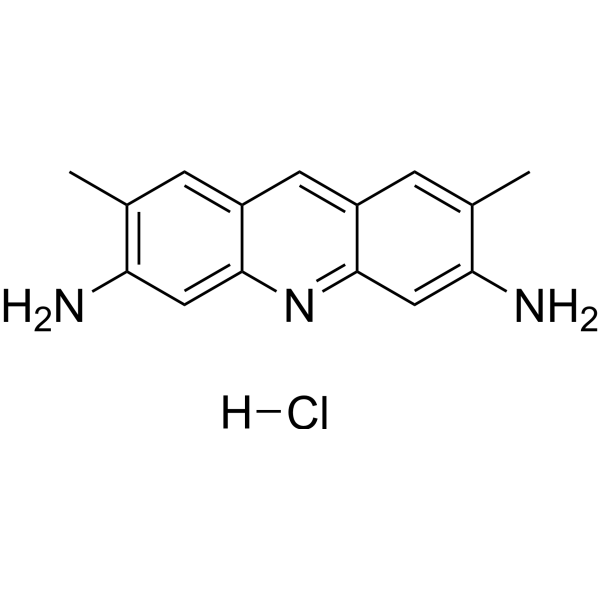 0 ImagesAcridine yellow G is a multifunctional dye. Dyes are important tools in biological experiments. They can help researchers observe and analyze cell structures, track biomolecules, evaluate cell functions, distinguish cell types, detect biomolecules, study tissue pathology and monitor microorganisms. Their applications range from basic scientific research to clinical A wide range of diagnostics. Dyes are also widely used in traditional fields such as textile dyeing, as well as in emerging fields such as functional textile processing, food pigments and dye-sensitized solar cells.
-
4-Methylumbelliferyl-β-D-galactopyranoside 6-sulfate
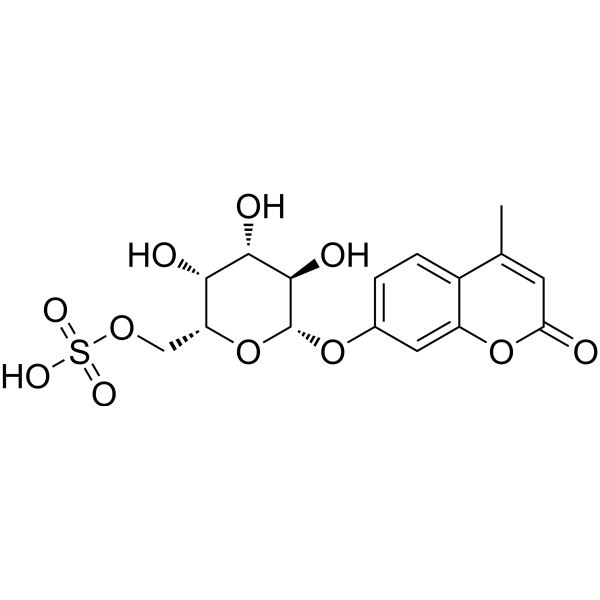 0 ImagesCat. No.: HY-D1633CAS No.: 126938-14-54-Methylumbelliferyl-β-D-galactopyranoside 6-sulfate is a fluorescent dye. 4-Methylumbelliferyl-β-D-galactopyranoside 6-sulfate undergoes desulphation by galactose-6-sulphate sulphatase to form 4-methylumbelliferyl-β-D-galactopyranoside, which is cleaved by β-galactosidase to release fluorescent 4-methylumbelliferone. 4-Methylumbelliferyl-β-D-galactopyranoside 6-sulfate interacts with N-acetylgalactosamine-6-sulfate sulfatase (GALNS) via hydrogen bonds, electrostatic interactions, and steric interactions. 4-Methylumbelliferyl-β-D-galactopyranoside 6-sulfate serves as a substrate in assays measuring galactose-6-sulphate sulphatase and GALNS activity. 4-Methylumbelliferyl-β-D-galactopyranoside 6-sulfate can be used for the research of Morquio disease type A (mucopolysaccharidosis IV A).




