



iGluR
Ionotropic glutamate receptors
iGluR (ionotropic glutamate receptor) is a ligand-gated ion channel that is activated by the neurotransmitter glutamate. iGluR are integral membrane proteins compose of four large subunits that form a central ion channel pore. Sequence similarity among all known glutamate receptor subunits, including the AMPA, kainate, NMDA, and δ receptors.
AMPA receptors are the main charge carriers during basal transmission, permitting influx of sodium ions to depolarise the postsynaptic membrane. NMDA receptors are blocked by magnesium ions and therefore only permit ion flux following prior depolarisation. This enables them to act as coincidence detectors for synaptic plasticity. Calcium influx through NMDA receptors leads to persistent modifications in the strength of synaptic transmission.
iGluR Isoform Specific Products
All Product Categories
-
iGluR Inhibitors
(131)
View all products
-
iGluR Agonists
(131)
View all products
-
iGluR Antagonists
(347)
View all products
-
iGluR Activators
(35)
View all products
-
iGluR Modulators
(94)
View all products
-
iGluR MDM2 Inhibitor
(1)
View all products
-
iGluR Controls
(5)
View all products
-
iGluR Ligands
(3)
View all products
-
iGluR Related Products (830)
Related Products (830)

-
Antibodies (11)
-
iGluR Isoform Comparison
-
CFM-2
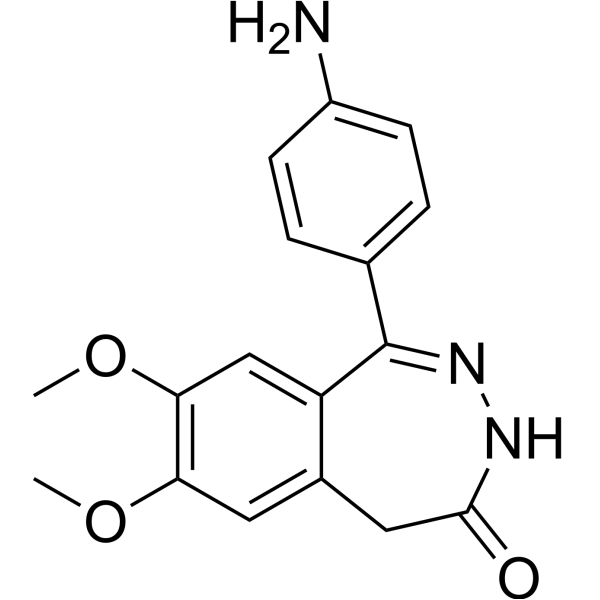 0 ImagesCFM-2 is a potent and selective non-competitive AMPAR antagonist. CFM-2 possesses anticonvulsant activity in various models of seizures.
-
4,5,6,7-Tetrahydroindazole
 0 ImagesCat. No.: HY-W066579CAS No.: 2305-79-54,5,6,7-Tetrahydroindazole acts as an Antimicrobial agent, an interleukin-2-induced T-cell kinase inhibitor, a positive allosteric modulator of AMPA receptors, and a ligand for CYP2E1, with a Kd1 value of 0.023 μM for its binding to rabbit-derived CYP2E1. 4,5,6,7-Tetrahydroindazole scavenges DPPH free radicals. It exhibits anti-tumor, anti-tuberculosis, and anti-inflammatory activities.
-
Orphenadrine hydrochloride
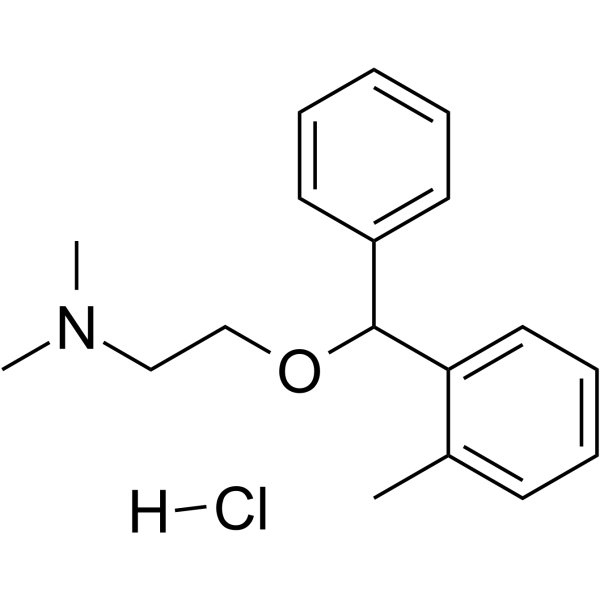 0 ImagesOrphenadrine hydrochloride is an orally active and non-competitive NMDA receptor antagonist (crosses the blood-brain barrier) with a Ki of 6.0 μM. Orphenadrine hydrochloride relieves stiffness, pain and discomfort due to muscle strains, sprains or other injuries. Orphenadrine hydrochloride is also used to relieve tremors associated with parkinson's disease. Orphenadrine citrate has good neuroprotective properties, can be used in studies of neurodegenerative diseases.
-
PYD-106
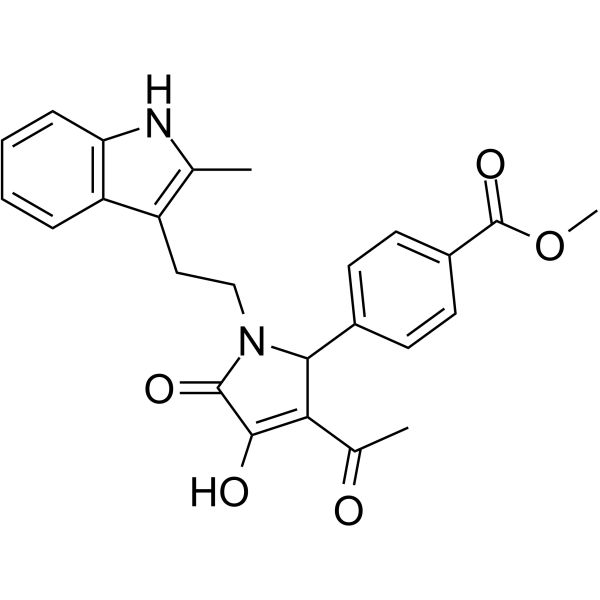 0 ImagesPYD-106 is a stereoselective pyrrolidinone (PYD) positive allosteric modulator for GluN2C-containing NMDA receptors. PYD-106 increases opening frequency and open time of single channel currents activated by maximally effective concentrations of agonist but only has modest effects on glutamate and glycine EC50. PYD-106 selectively enhances the responses of diheteromeric GluN1/GluN2C receptors but not triheteromeric GluN1/GluN2A/GluN2C receptors.
-
Bupivacaine liposome
 0 ImagesCat. No.: HY-185388Synonyms: Liposomal bupivacaineBupivacaine liposome is a liposome-encapsulated form of Bupivacaine (HY-B0405). Bupivacaine is an NMDA receptor inhibitor. During the action potential, Bupivacaine blocks sodium channels, thereby inhibiting the generation and conduction of nerve impulses induced by painful stimuli. Bupivacaine liposome reduces the release rate of Bupivacaine, thus achieving a long-lasting pain relief effect.
-
BMS-986163
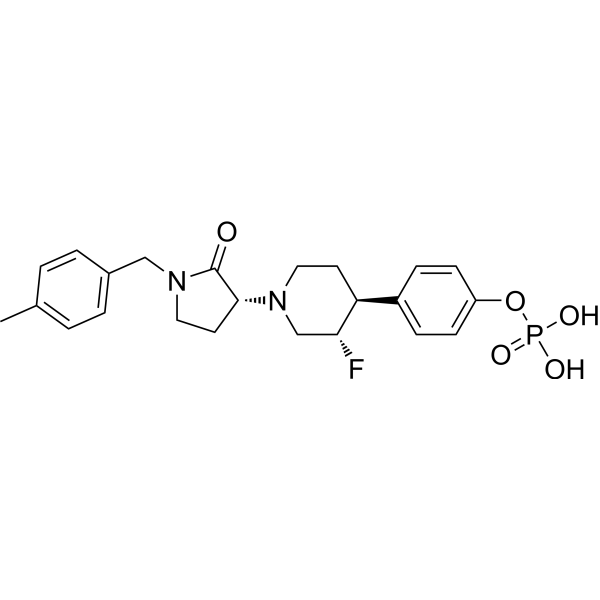 0 ImagesCat. No.: HY-107774CAS No.: 1801151-09-6BMS-986163 is a negative allosteric modulator of GluN2B. The proagent BMS-986163 rapidly converts to its active parent molecule BMS-986169 (Ki=4 nM, IC50=24 nM).
-
NMDA receptor antagonist 2
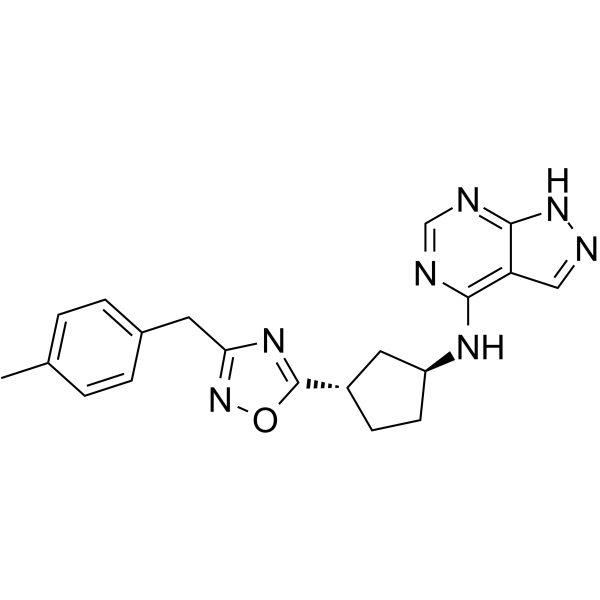 0 ImagesCat. No.: HY-136459CAS No.: 875898-41-2NMDA receptor antagonist 2 is a potent and orally active NR2B subtype-selective NMDA antagonist with an IC50 and a Ki of 1.0 nM and 0.88 nM, respectively. NMDA receptor antagonist 2 is used for the study of neuropathic pain and Parkinson’s disease.
-
Simufilam dihydrochloride
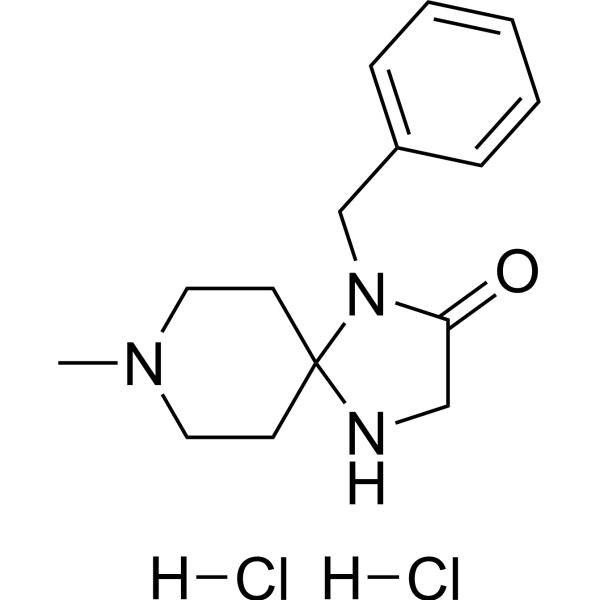 0 ImagesCat. No.: HY-139142ACAS No.: 2480226-06-8Synonyms: PTI-125 dihydrochlorideSimufilam dihydrochloride (PTI-125 dihydrochloride) is an orally active FLNA modulator. Simufilam dihydrochloride restores NMDAR signaling and Arc expression. Simufilam dihydrochloride inhibits overactive mTOR signaling by restoring the normal conformation of FLNA, improves insulin sensitivity, reduces Aβ42-induced neuroinflammation and tau protein hyperphosphorylation. Simufilam dihydrochloride can be used for research of Alzheimer's disease.
-
Creatinine-15N
 0 ImagesCat. No.: HY-B0504S5Synonyms: NSC13123-15NCreatinine-15N (NSC13123-15N) is the 15N-labeled Creatinine (HY-B0504). Creatinine (NSC13123) is an orally active, blood-brain barrier-permeable modulator of GABAA and NMDA receptors, with activities of antioxidation and metabolic regulation. Creatinine is generated via non-enzymatic conversion of creatine and phosphocreatine in muscle. Creatinine serum levels correlate with muscle mass, glomerular filtration rate, and extrarenal clearance, serving as an evaluation biomarker for renal function, muscle mass, and clinical outcomes, and used for perioperative renal risk assessment. In addition, Creatinine can induce specific Cryptococcus species to produce creatinine deiminase and act as their nitrogen source, while it can be secreted via renal tubules. Creatinine is widely used in research related to various diseases such as neurodegenerative diseases, psychiatric disorders, acute kidney injury, chronic kidney disease, and renal failure.
-
Glycine-1-13C,15N
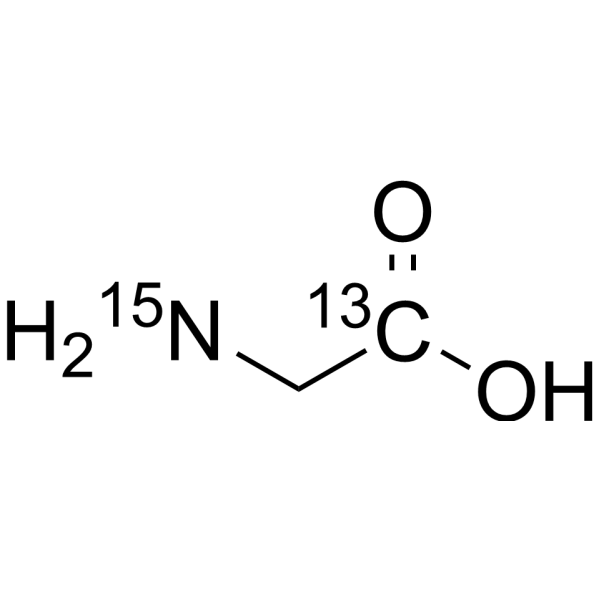 0 ImagesGlycine-1-13C,15N is the 13C- and 15N-labeled Glycine. Glycine is an inhibitory neurotransmitter in the CNS and also acts as a co-agonist along with glutamate, facilitating an excitatory potential at the glutaminergic N-methyl-D-aspartic acid (NMDA) receptors.
-
Acamprosate-d3 calcium
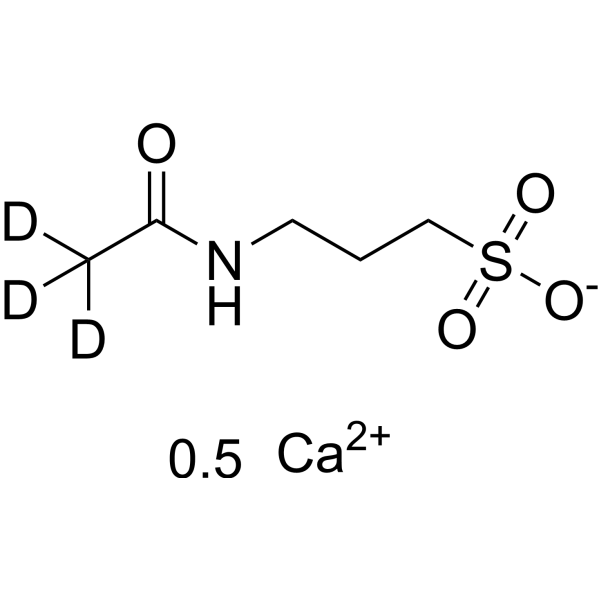 0 ImagesAcamprosate-d3 (calcium) is the deuterium labeled Acamprosate calcium. Acamprosate calcium is a GABA receptor agonist and modulator of glutamatergic systems.
-
GYKI 52466 hydrochloride
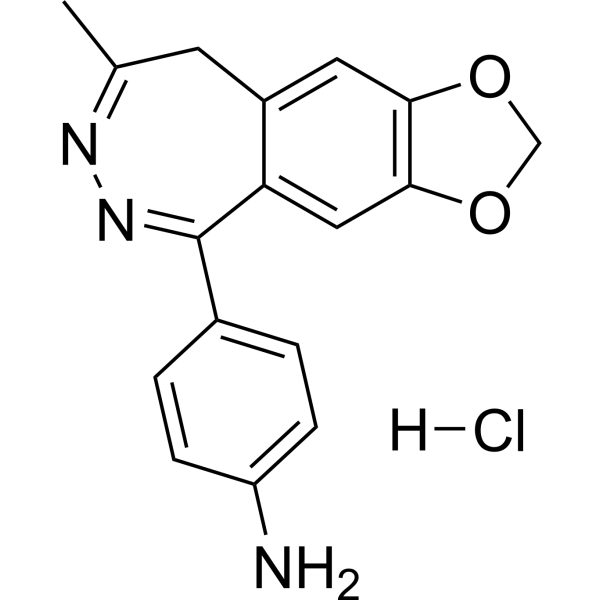 0 ImagesCat. No.: HY-103234BCAS No.: 192065-56-8GYKI 52466 hydrochloride is an orally active, highly selective and noncompetitive AMPA/kainate receptor antagonist with the IC50 values of 7.5 and 11μM, respectively. GYKI 52466 hydrochloride has good blood brain barrier permeability and anticonvulsant effect. GYKI 52466 hydrochloride can be used in Parkinson's disease research.
-
AMPA receptor modulator-1
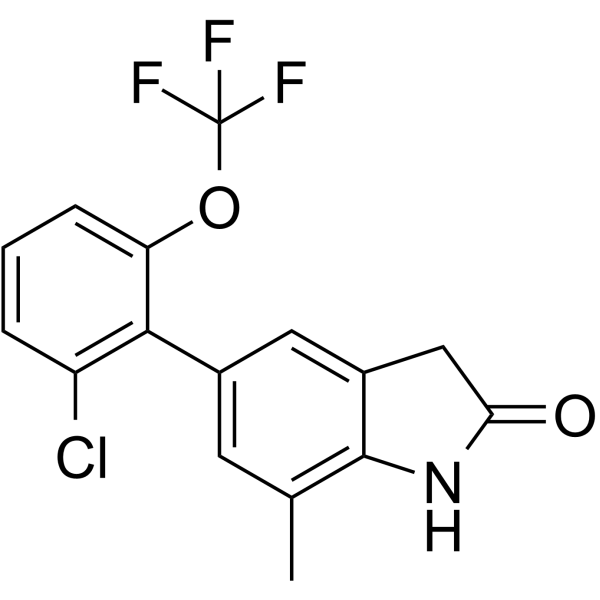 0 ImagesCat. No.: HY-112699CAS No.: 2036074-41-4AMPA receptor modulator-1 is a potent, orally active and selective AMPAR regulatory protein TARP γ-8 negative modulator with a pIC50 of 9.7, more selective over GluA1/γ-2 (pIC50=5).
-
NMDA receptor antagonist-12
 0 ImagesCat. No.: HY-184055CAS No.: 2643356-08-3NMDA receptor antagonist-12 (Example 17) is an antagonist of NMDA receptors containing the NR2B subunit. NMDA receptor antagonist-12 exerts antagonistic effects on NMDA receptors containing the NR2B subunit and blocks the intracellular Ca2+ influx mediated by these receptors. NMDA receptor antagonist-12 can be used in research related to diseases such as depression, bipolar disorder, migraine, and pain.
-
PF-06462894
 0 ImagesCat. No.: HY-103491CAS No.: 1622291-66-0PF-06462894 is an alkyne-lacking metabotropic glutamate receptor 5 (mGluR5) negative allosteric modulator profiled in both rat and nonhuman primates.
-
CGP39653
 0 ImagesCat. No.: HY-120681CAS No.: 132472-31-2CGP39653 is a competitive NMDA receptor antagonist that inhibits receptor function by competing with glutamate for the binding site.
-
Chlorphenesin carbamate (Standard)
 0 ImagesSynonyms: Maolate (Standard); U 19646 (Standard)Chlorphenesin carbamate (Standard) is the analytical standard of Chlorphenesin carbamate. This product is intended for research and analytical applications. Chlorphenesin carbamate is a centrally acting skeletal muscle relaxant. Chlorphenesin carbamate can be used for the research of pain and discomfort related to skeletal muscle trauma and inflammation. Chlorphenesin carbamate is a selective blocker of polysynaptic pathways at the spinal and supra-spinal levels. Antinociceptive effect.
-
NPEC-caged-(S)-AMPA
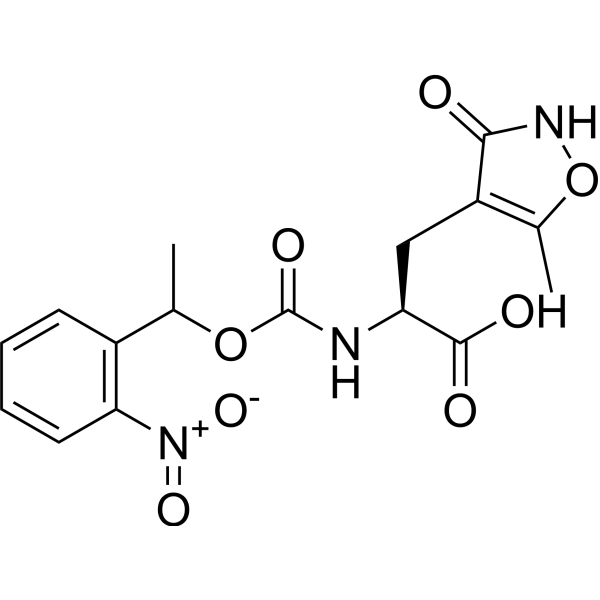 0 ImagesCat. No.: HY-103235CAS No.: 1257323-84-4NPEC- caged-(S)-AMPA, a caged neurotransmitter analog, is a NPEC photoprotecting group caged the (S)-AMPA (HY-100815A) to make caged ligands specific for glutamate receptor sub-types. NPEC- caged-(S)-AMPA selectively activates AMPA receptor.
-
AMPA receptor modulator-11
 0 ImagesCat. No.: HY-17670CAS No.: 1358751-53-7AMPA receptor modulator-11 (example 210) is a positive allosteric AMPA receptor modulator. AMPA receptor modulator-11 can be used for research on depression, schizophrenia, Alzheimer's disease or attention deficit hyperactivity disorder (ADHD).
-
NMDA receptor antagonist 9
 0 ImagesCat. No.: HY-181007NMDA receptor antagonist 9 is a selective GluN2B subunit-containing NMDA receptor antagonist with a Ki of 5.2 nM. NMDA receptor antagonist 9 exhibits 9-fold selectivity over σ1 receptors, shows poor selectivity towards σ2 receptors. NMDA receptor antagonist 9 inhibits ion flux through GluN2B subunit-containing NMDA receptors. NMDA receptor antagonist 9 can be used for the research of neurological disease, such as alzheimer’s disease and parkinson’s disease.




