



Insecticide
Insecticide
Insecticides refer to any toxic substances used to kill insects, which exert toxic effects on pests through different mechanisms, thereby achieving the purpose of controlling pest populations and protecting crops and human health. Insecticides have both chemical and biological origins and can be classified into organochlorine insecticides, organophosphorus insecticides, carbamate insecticides, and mineral insecticides based on their chemical properties. Insecticides interact with different target and non-target sites, including receptors, enzymes, and many other known and unknown molecules. Most insecticides are neurotoxicants that target the nervous system, but they can also affect other organs and body systems. Insecticides are metabolized through different metabolic pathways and often serve as biomarkers of exposure in the form of their parent compounds or metabolites. The toxicity of insecticides can be acute, subacute, or chronic, depending on the duration of exposure and the dose involved. Therefore, selecting sensitive, accurate, and validated biomarkers of exposure, effects, and susceptibility appears to be a challenging task.
Insecticides are widely used in agriculture, horticulture, forestry, gardening, homes, offices, and other fields[1][2].
All Product Categories
-
Insecticide Related Products (530)
Related Products (530)

-
Colupulone
 0 ImagesCat. No.: HY-167627CAS No.: 21621-94-3Colupulone is a β-acid resin component found in hops (Humulus lupulus) and exhibits antibacterial and anti-larval activity against Culex mosquitoes. Colupulone can be used in studies related to infectious diseases.
-
(E,E)-4,8,12-Trimethyl-1,3,7,11-tridecatetraene
 0 ImagesCat. No.: HY-W585959CAS No.: 62235-06-7(E,E)-4,8,12-Trimethyl-1,3,7,11-tridecatetraene (TMTT), a sesquiterpene, is the major herbivore-induced plant volatile that help in defense directly by acting as repellants and indirectly by recruiting insects' natural enemies. (E,E)-4,8,12-Trimethyl-1,3,7,11-tridecatetraene attractes Asian corn borer (ACB, Ostrinia furnacalis) larvae. External supplementation with (E,E)-4,8,12-Trimethyl-1,3,7,11-tridecatetraene hampered the larvae's ability to locate pre-infested maize.
-
Pirimiphos-methyl-d6
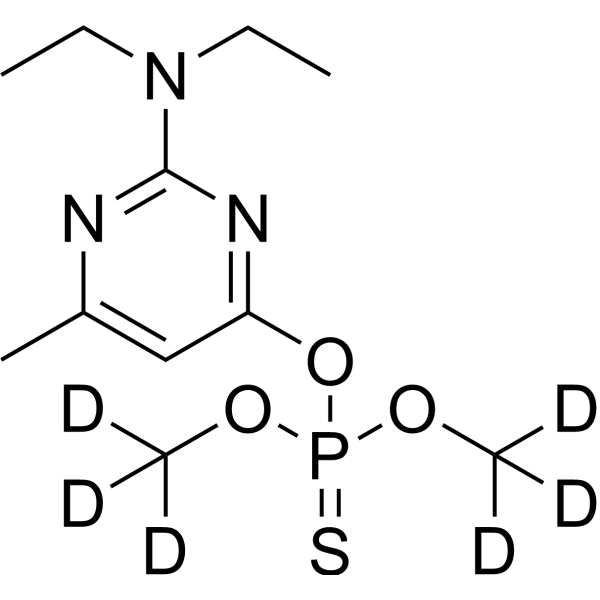 0 ImagesCat. No.: HY-B1881SCAS No.: 1793055-06-7Pirimiphos-methyl-d6 is the deuterium labeled Pirimiphos-methyl (HY-B1881). Pirimiphos-methyl is an organophosphorus insecticide and acaricide that can inhibit AChE in target organisms. Pirimiphos-methyl is often used for prevention and control of beetles, snout beetles, moths and Ephestia cautella during storage of agricultural grains.
-
Ethiprole (Standard)
 0 ImagesCat. No.: HY-120425RCAS No.: 181587-01-9Ethiprole (Standard) is the analytical standard of Ethiprole. This product is intended for research and analytical applications. Ethiprole is an insecticide.Metabolic sulfones are produced faster than Fipronil (HY-B0822) in CYP3A4-expressing cells and in vivo in mouse brain and liver.Ethiprole's sulfide, sulfoxide, sulfone and desulfinyl derivatives have better biological activity.
-
Methyl undecanoate (Standard)
 0 ImagesMethyl undecanoate (Standard) is the analytical standard of Methyl undecanoate (HY-W004285). This product is intended for research and analytical applications. Methyl undecanoate is a synthetic undecanoic acid ester analog with biting deterrent and repellent activity against Aedes aegypti mosquitoes, with a biting deterrent index (BDI) of 0.88 and minimum effective dose (MED) of 25 µg/cm2. Methyl undecanoate can be used for the research of mosquito-borne diseases transmitted by Aedes aegypti.
-
1,4-Dichlorobenzene (Standard)
 0 Images1,4-Dichlorobenzene (Standard) is the analytical standard of 1,4-Dichlorobenzene. This product is intended for research and analytical applications. 1,4-Dichlorobenzene is a non-genotoxic, orally active mitogenic/tumor-promoting carcinogen that is also widely used as a dye, resin intermediate, and deodorant, moth repellent/insecticide. 1,4-Dichlorobenzene induces liver tumors in mice and promotes the growth of spontaneous precancerous lesions, but shows no liver tumor-inducing activity in F344 rats. 1,4-Dichlorobenzene increases the levels of white blood cell count, serum alanine aminotransferase and blood urea nitrogen in occupationally exposed populations. 1,4-Dichlorobenzene is metabolized to 2,5-dichlorophenol and excreted in urine, and this metabolite can serve as a biomarker for 1,4-Dichlorobenzene exposure. Due to its specific hepatotoxic characteristics, 1,4-Dichlorobenzene is applicable to liver cancer-related research.
-
ZK-PI-9
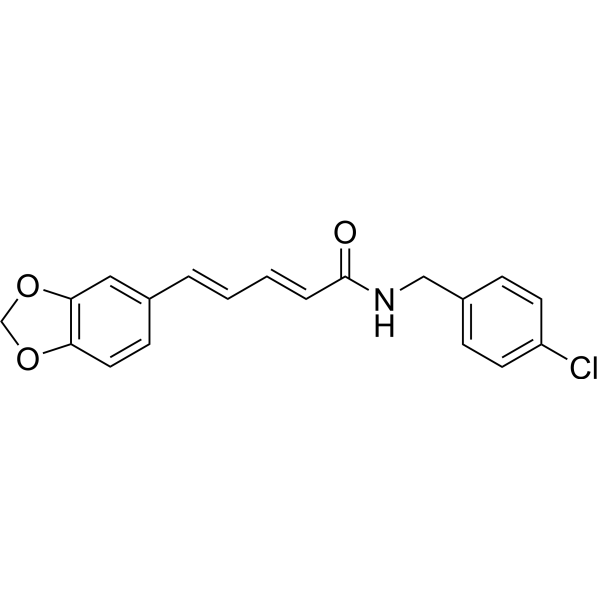 0 ImagesCat. No.: HY-155388ZK-PI-9 inhibits trehalase. ZK-PI-9 inhibits chitinase activity in female pupae. ZK-PI-9 is an insecticide.
-
Lynamicin B
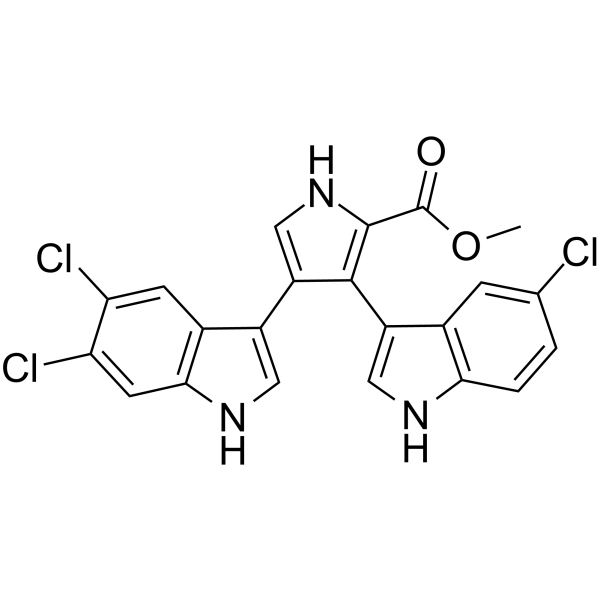 0 ImagesCat. No.: HY-141858CAS No.: 861149-19-1Lynamicin B is a potential pesticide by acting as a lepidoptera-exclusive chitinase inhibitor with a Ki value of 8.76 μM.
-
2-Nonyl acetate
 0 Images2-Nonyl acetate is an insecticide and also the main component of the essential oil extracted from the aerial parts of Ruta chalepensis. 2-Nonyl acetate exhibits biting repellent activity against Aedes aegypti and Anopheles quadrimaculatus. It can be used in insecticidal research.
-
3'-Ethoxy-5,6-dihydrospinosyn J 17-pseudoaglycone
 0 ImagesCat. No.: HY-170513CAS No.: 2055494-09-03'-Ethoxy-5,6-dihydrospinosyn J 17-pseudoaglycone is a Spinosyn derivative with potent insecticidal activity. 3'-Ethoxy-5,6-dihydrospinosyn J 17-pseudoaglycone (500mg/L) achieves a 100% mortality rate against Mythimna separata, aphids, and red spiders.
-
Spinetoram L
 0 ImagesCat. No.: HY-137031CAS No.: 187166-15-0Synonyms: XDE-175-L; 3'-O-Ethyl spinosyn LSpinetoram L (XDE-175-L) is a minor component of Spinetoram. Spinetoram is a kind of green and efficient insecticide with a broad range of action against various insects.
-
OfHex1-IN-2
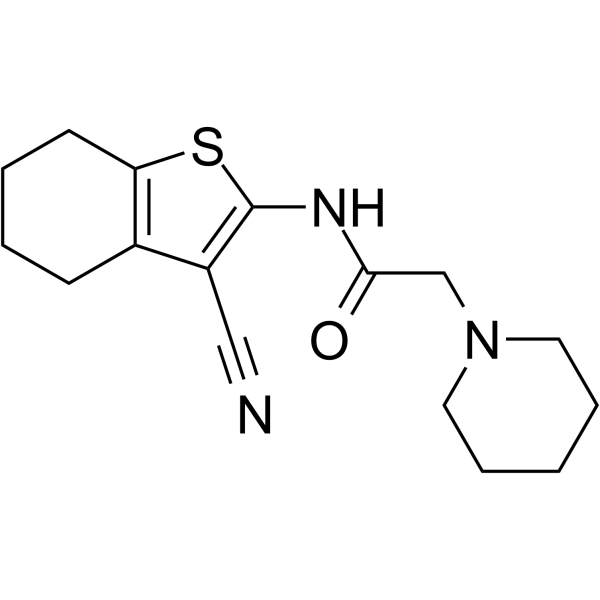 0 ImagesCat. No.: HY-147107CAS No.: 58125-33-0OfHex1-IN-2 (compound I-79) is a potent β-N-acetylhexosaminidase OfHex1 inhibitor. OfHex1-IN-2 can be used in control of insect.
-
Barthrin
 0 ImagesBarthrin is a pyrethroid insecticide. The toxicity of Barthrin to housefly (Musca domestica L.) at the 50% mortality level is 14 % of that of Barthrin (HY-B1559).
-
Methoprene (Standard)
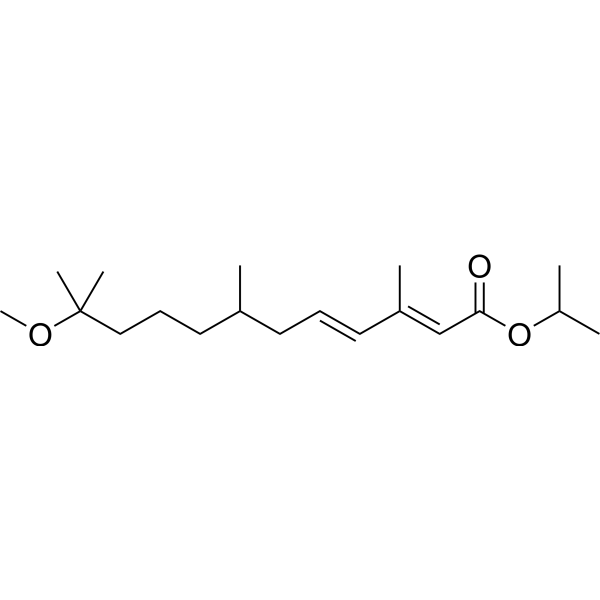 0 ImagesCat. No.: HY-B1161RCAS No.: 40596-69-8Synonyms: ZR-515 (Standard)Methoprene (Standard) is the analytical standard of Methoprene. This product is intended for research and analytical applications. Methoprene, an insect juvenile growth hormone mimic, is a growth-regulating insecticide that manifests its toxicity to target organisms by acting as a juvenile hormone agonist.
-
Genite
 0 ImagesCat. No.: HY-W488109CAS No.: 97-16-5Genite is a highly effective pesticide with strong insecticidal activity. Genite can effectively control the number of various pests and is widely used in agricultural production. The use of Genite can significantly increase the yield and quality of crops.
-
Chitin synthase-IN-15
 0 ImagesCat. No.: HY-178175Chitin synthase-IN-15 (Compound 6k) is a chitin synthase inhibitor. Chitin synthase-IN-15 has insecticidal efficacy against Plutella xylostella, with LC50 values of 0.789 and 0.951 μg/mL. Chitin synthase-IN-15 induces molting disruptions, larval mortality, and aberrant pupation, thereby effectively mitigating pest populations. Chitin synthase-IN-15 is an insecticidal agent with favorable ecological safety profiles.

-
Penfluron
 0 ImagesCat. No.: HY-W721291CAS No.: 35367-31-8Penfluron is an insect-growth regulator with chitin-inhibiting activities. Penfluron inhibits the total haemocyte count (THC) of Dysdercus koenigii.
-
SDH-IN-24
 0 ImagesCat. No.: HY-173264SDH-IN-24 (Compound 51) is an inhibitor of succinate dehydrogenase (SDH). The LC50 against the second-stage juveniles of Bursaphelenchus xylophilus (B. xylophilus) is 6.9 mg/L, and the IC50 for SDH is 15.0 μM. SDH-IN-24 exerts its nematicidal activity by inhibiting the activity of SDH to interfere with the energy metabolism of nematodes. Meanwhile, it inhibits the motility, feeding, and reproduction of nematodes, induces oxidative stress, reduces the protein content of nematodes, and impairs their antioxidant capacity. SDH-IN-24 can be used in the research related to anti-nematode fields.
-
Netobimin
 0 ImagesCat. No.: HY-164342CAS No.: 88255-01-0Synonyms: SCH 32481Netobimin is a dewormer that is effective against naturally acquired gastrointestinal nematodes in cows.



