



nAChR
Nicotinic acetylcholine receptors
nAChRs (nicotinic acetylcholine receptors) are neuron receptor proteins that signal for muscular contraction upon a chemical stimulus. They are cholinergic receptors that form ligand-gated ion channels in the plasma membranes of certain neurons and on the presynaptic and postsynaptic sides of theneuromuscular junction. Nicotinic acetylcholine receptors are the best-studied of the ionotropic receptors. Like the other type of acetylcholine receptor-the muscarinic acetylcholine receptor (mAChR)-the nAChR is triggered by the binding of the neurotransmitter acetylcholine (ACh). Just as muscarinic receptors are named such because they are also activated by muscarine, nicotinic receptors can be opened not only by acetylcholine but also by nicotine —hence the name "nicotinic".
All Product Categories
-
nAChR Related Products (477)
Related Products (477)

-
Antibodies (5)
-
Acetamiprid-d3
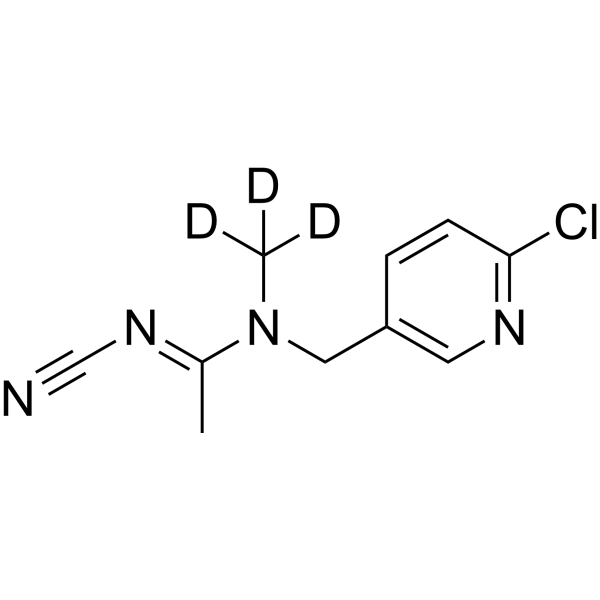 0 ImagesAcetamiprid-d3 is the deuterium labeled Acetamiprid. Acetamiprid is a neonicotinoid insecticide. Acetamiprid is a nAChR agonist.
-
nAChR-IN-2
 0 ImagesCat. No.: HY-W070884CAS No.: 3000-75-7nAChR-IN-2 (Compound 2) is an inhibitor of insect nicotinic acetylcholine receptors (nAChR). nAChR-IN-2 inhibits the binding of α-bungarotoxin (HY-P1264) to the ACh site of insect nAChR in honeybee heads, with an IC50 of 360 μM. nAChR-IN-2 also inhibits the binding of Phencyclidine to the NCB/PCP site of insect nAChR in honeybee heads, with an IC50 of 84 μM.
-
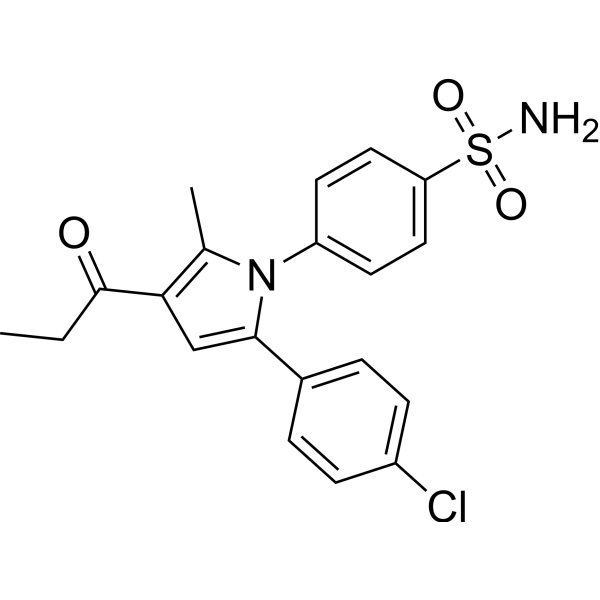
DSPE-PEG2000-RVG29
 0 ImagesCat. No.: HY-172705DSPE-PEG2000-RVG29 is a PEG conjugate composed of DSPE and rabies virus glycoprotein 29 (RVG29). RVG29 specifically binds to nicotinic acetylcholine receptors (nAChR) at the blood-brain barrier (BBB), crosses the BBB, and mediates receptor-dependent transcytosis. DSPE-PEG2000-RVG29 can be used for brain-targeted drug delivery, surface modification of nanocarriers, as well as gene and nucleic acid delivery. DSPE-PEG2000-RVG29 is applicable to research related to hypoxic-ischemic brain injury, Parkinson's disease, and other conditions.

-
Hydrodolasetron
 0 ImagesHydrodolasetron is a metabolite of Dolasetron (HY-B0750). Hydrodolasetron is more potent than Dolasetron in inhibiting nAChR. Hydrodolasetron is a 5-HT(3A)R blocker with an IC50 of 0.29 nM. Hydrodolasetron has antiemetic activity.

-
Mecamylamine
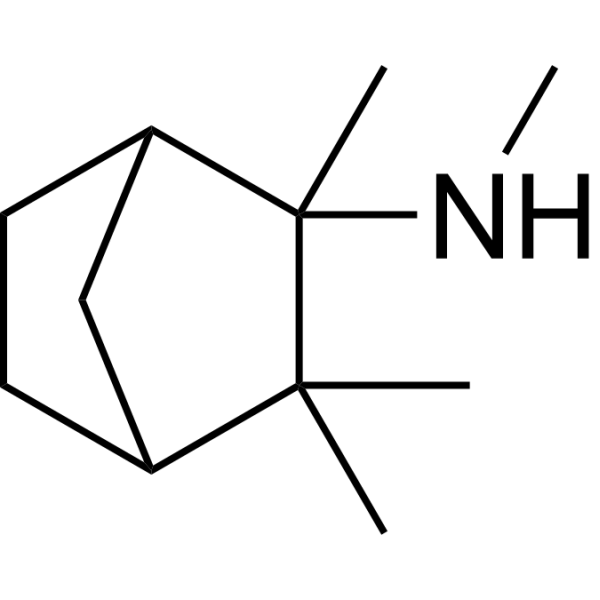 0 ImagesMecamylamine is an orally active, nonselective, noncompetitive nAChR antagonist. Mecamylamine is also a ganglionic blocker. Mecamylamine can across the blood-brain barrier. Mecamylamine can be used in the research of neuropsychiatric disorders, hypertension, antidepressant area.
-
Arecoline hydrochloride
 0 ImagesArecoline hydrochloride, a naturally brain-penetrant and orally active occurring psychoactive alkaloid, is a partial agonist of nicotinic and muscarinic acetylcholine receptor. Arecoline hydrochloride exhibits stimulation, alertness, anxiolysis and anti-parasitic effects. Arecoline hydrochloride also can induce oxidative stress.
-
PHA-543613 hydrochloride
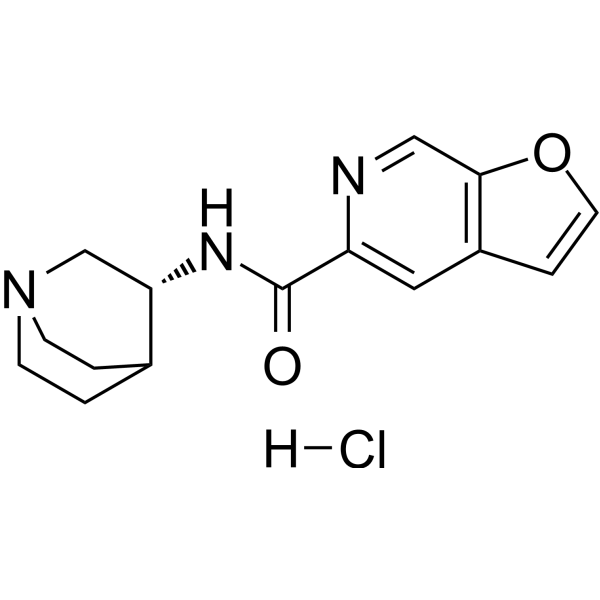 0 ImagesCat. No.: HY-105670ACAS No.: 1586767-92-1PHA-543613 hydrochloride is an oral or active α7 nAChR agonist with brain permeability, For α3β4, α1β1γδ, α4β2 and 5-HT3 receptors selective. PHA-543613 hydrochloride affects sensory gating and memory in an in vivo model of schizophrenia.
-
Ropanicant
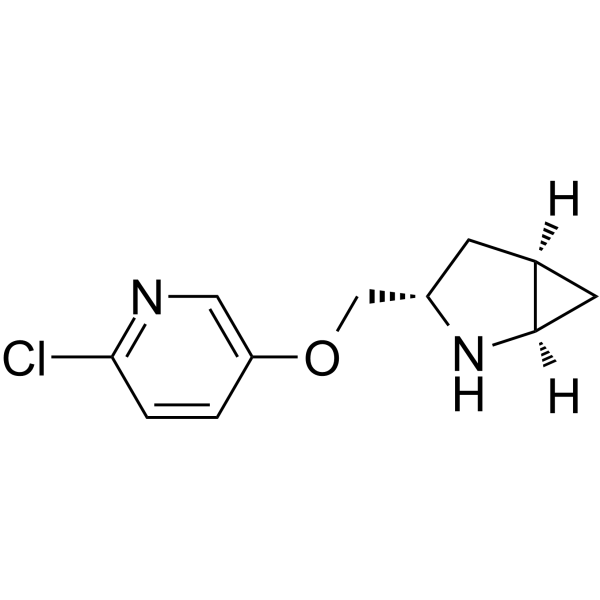 0 ImagesCat. No.: HY-139581CAS No.: 2414674-70-5Synonyms: SUVN-911 free baseRopanicant (SUVN-911 free base) is a novel, potent, selective, and orally active neuronal nicotinic acetylcholine α4β2 receptor antagonist for the research of depression.
-
PHA-543613 dihydrochloride
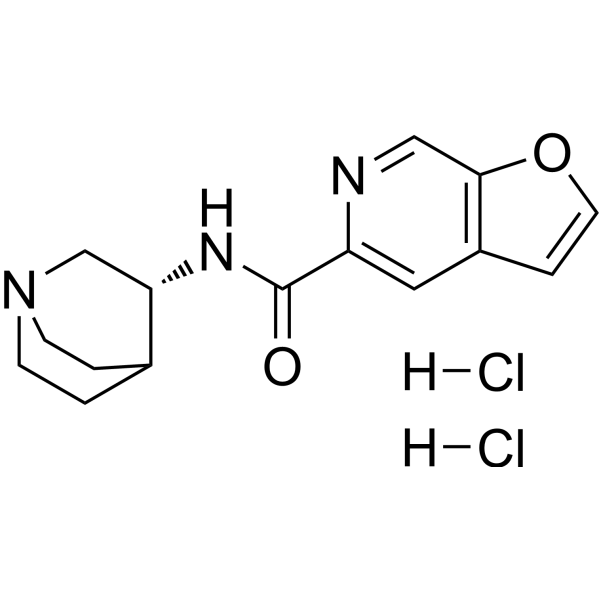 0 ImagesCat. No.: HY-105670BCAS No.: 478148-58-2PHA-543613 dihydrochloride is a potent, orally active, brain-penetrant and selective α7 nAChR agonist with a Ki value of 8.8 nM. PHA-543613 dihydrochloride displays selectivity for α7-nAChR over α3β4, α1β1γδ, α4β2 and 5-HT3 receptors. PHA-543613 dihydrochloride can be used for the cognitive deficits of Alzheimer's disease and schizophrenia research.
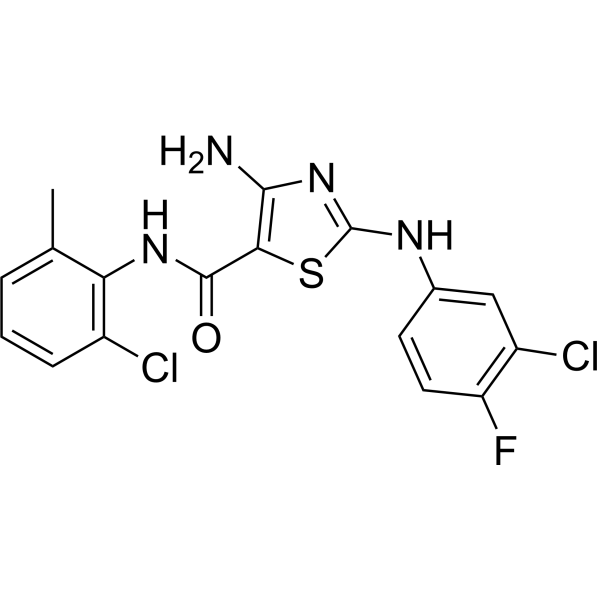

-
Bradanicline hydrochloride
 0 ImagesCat. No.: HY-18060ACAS No.: 1111941-90-2Synonyms: TC-5619 hydrochlorideBradanicline (TC-5619) tosylate is an orally active agonist of α7 nAChR with moderate blood-brain barrier penetration. Bradanicline hydrochloride exhibits high affinity and subtype selectivity for human α7 nAChR. Bradanicline hydrochloride possesses antitussive activity that depends on sustained receptor binding and activation. Bradanicline hydrochloride requires systemic administration to dose-dependently inhibit cough induced by citric acid, bradykinin and inhaled nicotine. Bradanicline hydrochloride is well tolerated in preclinical studies and is widely used in research related to chronic refractory cough.
-
Tropisetron Hydrochloride (Standard)
 0 ImagesSynonyms: SDZ-ICS-930 (Standard)Tropisetron (Hydrochloride) (Standard) is the analytical standard of Tropisetron (Hydrochloride). Tropisetron Hydrochloride (SDZ-ICS-930) is an effective neuroprotective agent that acts as a 5-HT3 receptor antagonist, a calmodulin inhibitor, and an α7-nAChRreceptor agonist, with an IC50 of 70.1 nM for the 5-HT3 receptor. Tropisetron Hydrochloride has anti-inflammatory properties and immune-regulating functions, effectively alleviating symptoms associated with chemotherapy and post-surgery. Tropisetron Hydrochloride reduces Ab (HY-P4867)-induced hippocampal neuroinflammation.
-
GSK575594A
 0 ImagesCat. No.: HY-111161CAS No.: 909418-68-4GSK575594A is a modulator of the nicotinic acetylcholine receptor (nAChR) in Ascaris suum. GSK575594A enhances muscle contractions induced by acetylcholine (ACh) by binding to the allosteric binding site between subunits within the transmembrane domain of nAChR. At a concentration of 3 μM, GSK575594A significantly increased the contraction induced by ACh in Ascaris suum (Emax increased from 1.19 g to 1.51 g). GSK575594A may be used in research within the field of antiparasitic studies.
-
α-Nicotine
 0 ImagesCat. No.: HY-W698445CAS No.: 23950-04-1α-Nicotine is the α-isomer of Nicotine. Nicotine is a nicotinic acetylcholine receptor (nAChR) agonist. Nicotine is promising for research of neuropsychiatric disorders (e.g., schizophrenia, ADHD).
-
κ-Bungarotoxin
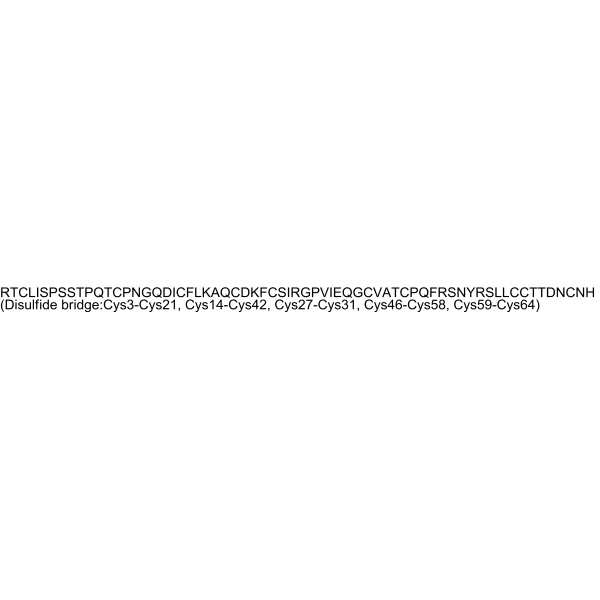 0 ImagesCat. No.: HY-P5833CAS No.: 124511-67-7Synonyms: κ-Bgtκ-Bungarotoxin (κ-Bgt) is a potent, selective, and slowly reversible antagonist of α3β2 neuronal nicotinic acetylcholine receptors with an IC50 of 2.30 nM.
-
Pyrantel hydrochloride
 0 ImagesCat. No.: HY-12641BCAS No.: 26155-20-4Pyrantel hydrochloride is an orally active antiparasitic agent. Pyrantel hydrochloride induces spastic paralysis in parasites via actions on neural and muscular cholinergic receptors as a nicotinic acetylcholine receptor (nAChR) agonist. Pyrantel hydrochloride eliminates both immature and mature endoparasites in horses. Pyrantel hydrochloride can be used in research related to parasitic infections.




