1. Metabolic Enzyme/Protease Apoptosis
  2. PAI-1 Apoptosis
  3. Tiplaxtinin

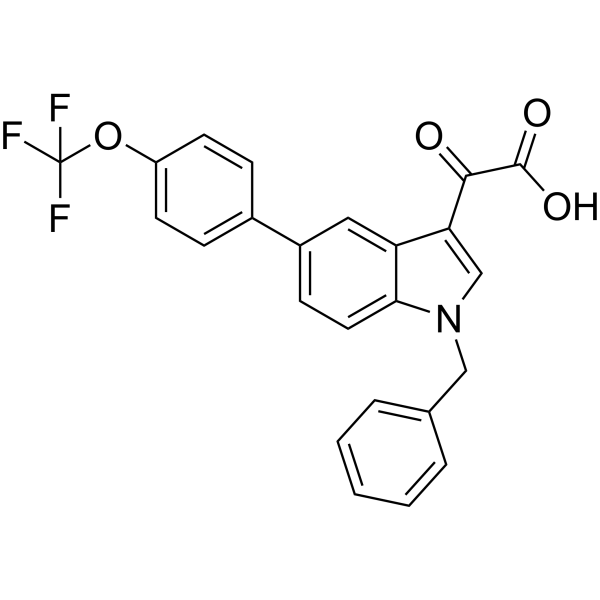
Tiplaxtinin  (Synonyms: PAI-039; Tiplasinin)

Cat. No.: HY-15253 Purity: 99.33%
Handling Instructions Technical Support

Tiplaxtinin is a selective and orally efficacious inhibitor of plasminogen activator inhibitor-1 (PAI-1) with IC50 of 2.7 μM.

For research use only. We do not sell to patients.

CAS No. : 393105-53-8

Size Price Stock Quantity
Free Sample (0.1 - 0.2 mg)   Apply Now  
Solid + Solvent (Highly Recommended)
10 mM * 1 mL in DMSO
ready for reconstitution
In-stock
Solution
10 mM * 1 mL in DMSO In-stock
Solid
5 mg In-stock
10 mg In-stock
25 mg In-stock
50 mg In-stock
100 mg In-stock
200 mg   Get quote  
500 mg   Get quote  

* Please select Quantity before adding items.

This product is a controlled substance and not for sale in your territory.

Customer Review

Based on 15 publication(s) in Google Scholar

Top Publications Citing Use of Products

    Tiplaxtinin purchased from MedChemExpress. Usage Cited in: Cancer Cell. 2025 May 12;43(5):856-874.e9.  [Abstract]

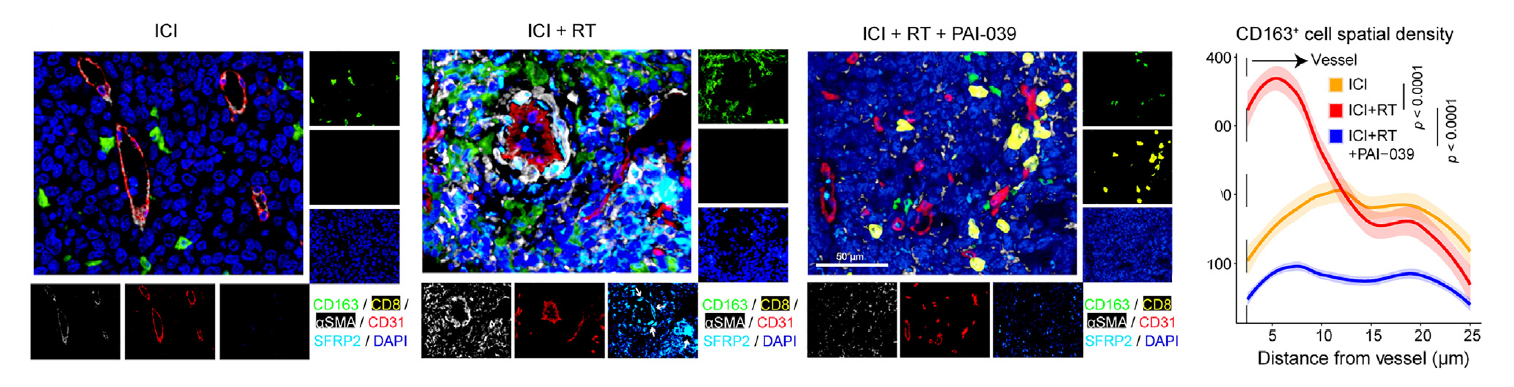
    Multiplex immunostaining demonstrated that Tiplaxtinin (PAI-039) (20 mg/kg; corn oil; gavage)decreased vessel-wrapped CD163+ TAM density and reversed the radioimmunotherapy-induced perivascular immunosuppressive niche.

    Tiplaxtinin purchased from MedChemExpress. Usage Cited in: Cancer Cell. 2025 May 12;43(5):856-874.e9.  [Abstract]

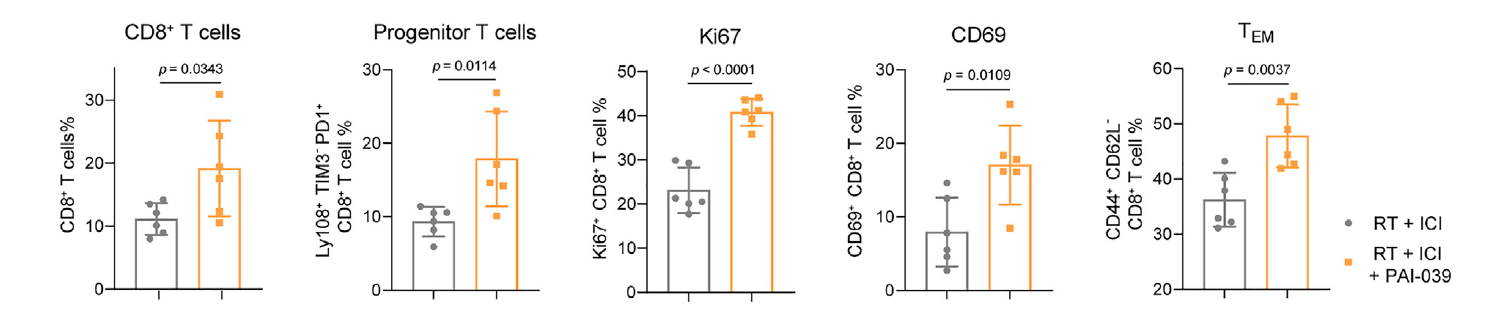
    Flow cytometric analysis of CD8+ T cell and progenitor T cell infiltration and Ki67 and CD69 expression on CD8+ T cells in distal, unirradiated LLC1-sgLkb1 tumors, as well as splenic TEMs, was performed. Tiplaxtinin (PAI-039) (20 mg/kg; corn oil; gavage) increased total CD8+ T cell and stem-like progenitor infiltration, proliferation, and activation in distant unirradiated lesions.

    Tiplaxtinin purchased from MedChemExpress. Usage Cited in: Mol Cancer. 2024 Apr 4;23(1):70.  [Abstract]

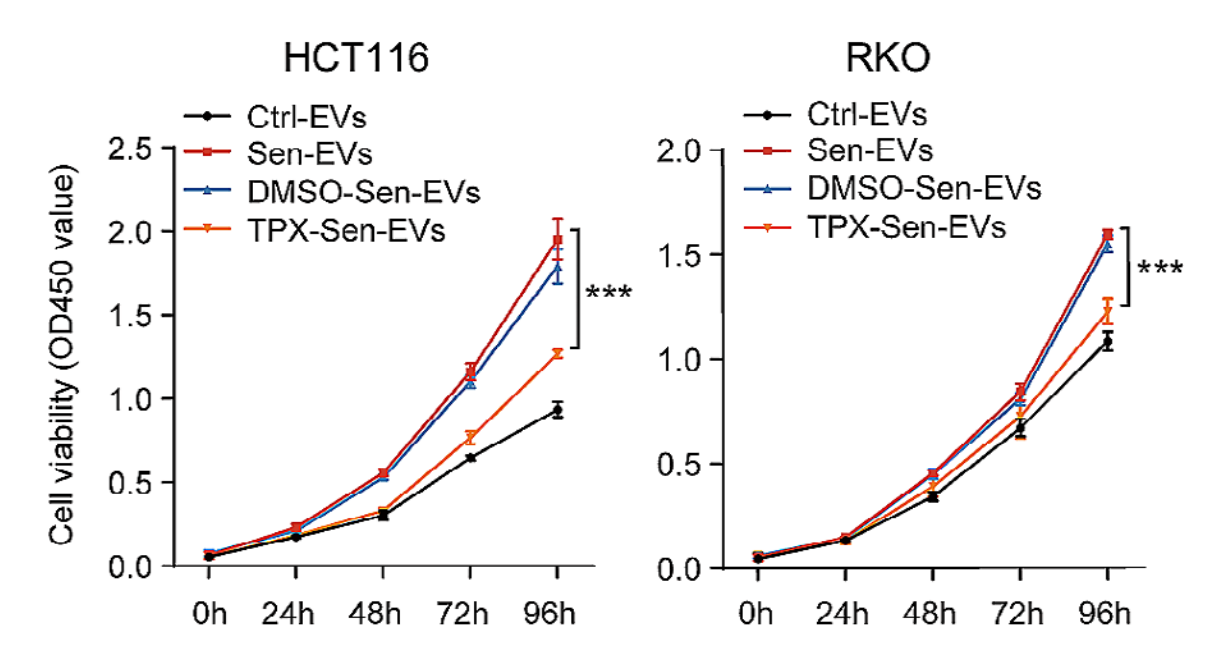
    CRC cells were treated with Tiplaxtinin (TPX) (20 μM; 96 h), a selective inhibitor of SERPINE1, to inhibit the expression of SERPINE1, and EVs were harvested (defined as TPXSen-EVs). The growth rate of CRC cells cultured with TPX-Sen-EVs was markedly reduced compared to those treated with Sen-EVs.

    Tiplaxtinin purchased from MedChemExpress. Usage Cited in: Mol Cancer. 2024 Apr 4;23(1):70.  [Abstract]

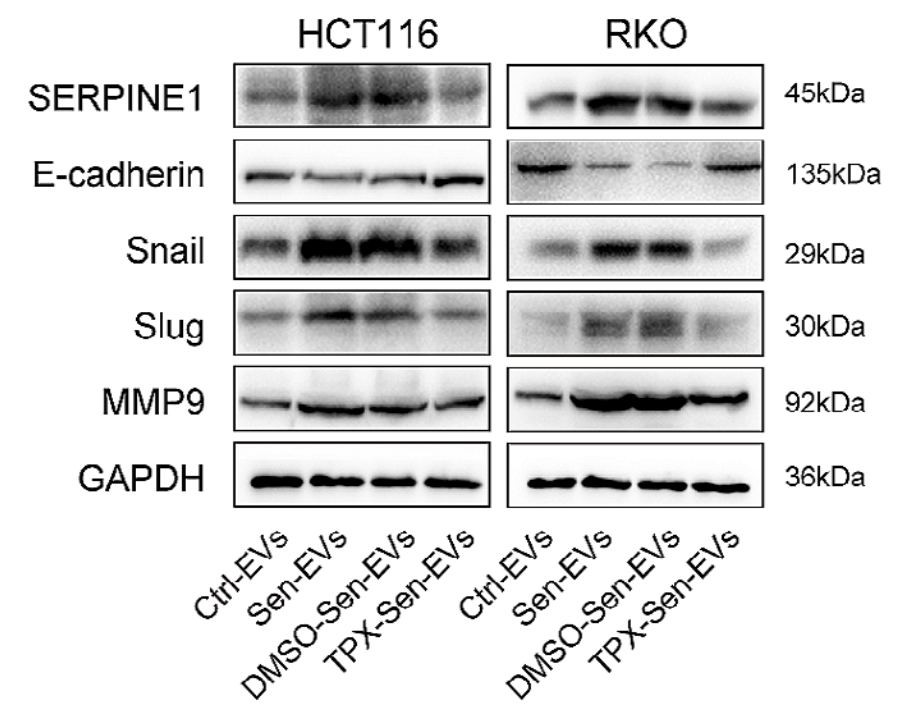
    SERPINE1, E-cadherin, Snail, Slug, and MMP9 protein levels.Changes in the expression of epithelial-to-mesenchymal transition (EMT) markers indicated that Tiplaxtinin (TPX) (20 μM; 96 h) treatment impaired the EMT-promoting ability of Sen-EVs.

    Tiplaxtinin purchased from MedChemExpress. Usage Cited in: Mol Cancer. 2024 Apr 4;23(1):70.  [Abstract]

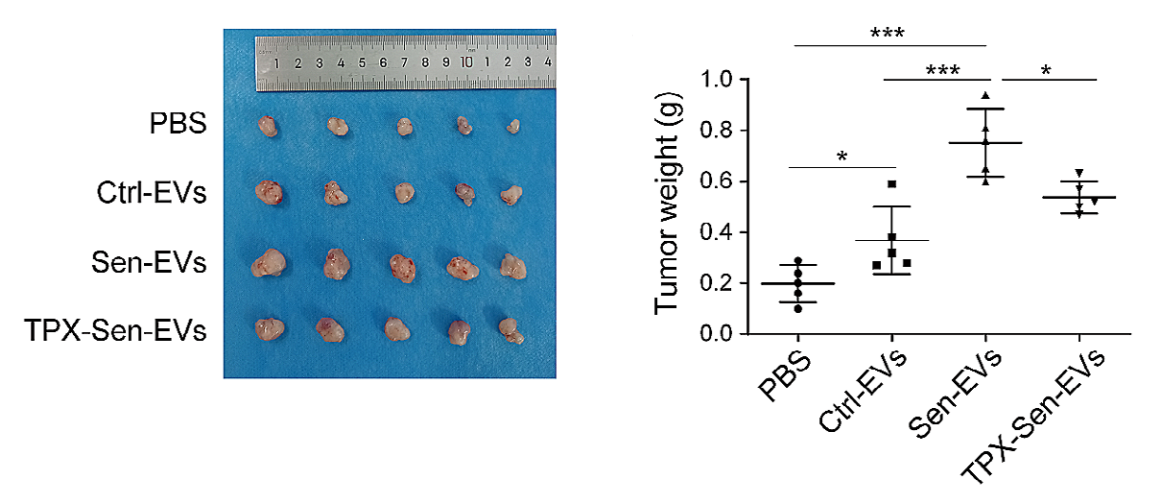
    Tiplaxtinin (TPX) (20 μM; 96 h). Images of the excised xenograft tumors and easurement of tumor weight. Compared to the Sen-EVs group, tumor growth and tumor weight of TPX-Sen-EVs (50 μg/mice) group were markedly decreased. TPX-Sen-EVs: Extracellular vesicles isolated from senescent cells after treatment with the SERPINE1 selective inhibitor Tiplaxtinin (TPX) (20 μM; 96 h).
    • Biological Activity

    • Protocol

    • Purity & Documentation

    • References

    • Customer Review

    Description

    Tiplaxtinin is a selective and orally efficacious inhibitor of plasminogen activator inhibitor-1 (PAI-1) with IC50 of 2.7 μM[1].

    IC50 & Target

    IC50: 2.7 μM (PAI-1)[1]

    In Vitro

    Tiplaxtinin (PAI-039), a small-molecule inhibitor of PAI-1 activity, on the urothelial cell lines. A significant inhibition in cellular proliferation is noted in T24 cells treated with Tiplaxtinin with the documentation of a favorable IC50 value of 43.7±6.3 μM and in UM-UC-14 cells 52.8±1.6 μM whereas the benign cell line, UROtsa, is noted to have a higher IC50 value of 70.3±0.1 μM. Notably, IC50 values of Tiplaxtinin in detached cells, 19.7±3.8 μM in T24, 44.5±6.5 μM in UM-UC-14, and 31.6±6.1 μM in UROtsa, are significantly lower than the IC50 values calculated for cells cultured in the presence of Tiplaxtinin under attached conditions[2].

    MedChemExpress (MCE) has not independently confirmed the accuracy of these methods. They are for reference only.

    In Vivo

    In the vena cava protocol, Tiplaxtinin (PAI-039) pretreatment significantly reduces thrombus weight at Tiplaxtinin doses of 3, 10 and 30 mg/kg. When Tiplaxtinin is dosed in a treatment paradigm 4 h after stable arterial and venous thrombosis, a significant reduction in thrombus weight is observed 24 h later at Tiplaxtinin doses of 3, 10 and 30 mg/kg[1].
    Tiplaxtinin (PAI-039) is administered by oral gavage to athymic mice bearing human bladder cancer cell line T24 xenografts and human cervical cancer HeLa cell xenografts. The subcutaneous tumor growth of both T24 and HeLa cell xenografts treated with Tiplaxtinin is markedly reduced compared with untreated controls. Specifically, at the end of the study, control T24 xenografts are noted to be 1,150±302 mm3 compared with 593±328 mm3 for T24 xenograft tumors treated with 5 mg/kg Tiplaxtinin (P<0.0001) and 627±248 mm3 for T24 xenografts treated with 20 mg/kg (P<0.0001)[2].
    Tiplaxtinin (1, 3, and 10 mg/kg) is subjected to electrolytic injury of the coronary artery. Tiplaxtinin (PAI-039) causes prolongation in time to coronary occlusion (control, 31.7±6.3 min; 3 mg/kg Tiplaxtinin, 66.0±6.4 min; 10 mg/kg, 56.7±7.4 min; n=5-6; p<0.05) and a reduced thrombus weight (control, 7.6±1.5 mg; 10 mg/kg Tiplaxtinin, 3.6±1.0 mg; p<0.05)[3].

    MedChemExpress (MCE) has not independently confirmed the accuracy of these methods. They are for reference only.

    Molecular Weight

    439.38

    Formula

    C24H16F3NO4

    CAS No.
    Appearance

    Solid

    Color

    Light yellow to yellow

    SMILES

    O=C(C(O)=O)C1=CN(CC2=CC=CC=C2)C(C1=C3)=CC=C3C4=CC=C(OC(F)(F)F)C=C4

    Shipping

    Room temperature in continental US; may vary elsewhere.

    Storage
    Powder -20°C 3 years
    4°C 2 years
    In solvent -80°C 2 years
    -20°C 1 year
    Solvent & Solubility
    In Vitro: 

    DMSO : 100 mg/mL (227.59 mM; Need ultrasonic; Hygroscopic DMSO has a significant impact on the solubility of product, please use newly opened DMSO)

    H2O : < 0.1 mg/mL (insoluble)

    Preparing
    Stock Solutions
    Concentration Solvent Mass 1 mg 5 mg 10 mg
    1 mM 2.2759 mL 11.3797 mL 22.7593 mL
    5 mM 0.4552 mL 2.2759 mL 4.5519 mL
    View the Complete Stock Solution Preparation Table

    * Please refer to the solubility information to select the appropriate solvent. Once prepared, please aliquot and store the solution to prevent product inactivation from repeated freeze-thaw cycles.
    Storage method and period of stock solution: -80°C, 2 years; -20°C, 1 year. When stored at -80°C, please use it within 2 years. When stored at -20°C, please use it within 1 year.

    • Molarity Calculator

    • Dilution Calculator

    Mass (g) = Concentration (mol/L) × Volume (L) × Molecular Weight (g/mol)

    Mass
    =
    Concentration
    ×
    Volume
    ×
    Molecular Weight *

    Concentration (start) × Volume (start) = Concentration (final) × Volume (final)

    This equation is commonly abbreviated as: C1V1 = C2V2

    Concentration (start)

    C1

    ×
    Volume (start)

    V1

    =
    Concentration (final)

    C2

    ×
    Volume (final)

    V2

    In Vivo:

    Select the appropriate dissolution method based on your experimental animal and administration route.

    For the following dissolution methods, please ensure to first prepare a clear stock solution using an In Vitro approach and then sequentially add co-solvents:
    To ensure reliable experimental results, the clarified stock solution can be appropriately stored based on storage conditions. As for the working solution for in vivo experiments, it is recommended to prepare freshly and use it on the same day.
    The percentages shown for the solvents indicate their volumetric ratio in the final prepared solution. If precipitation or phase separation occurs during preparation, heat and/or sonication can be used to aid dissolution.

    • Protocol 1

      Add each solvent one by one:  10% DMSO    40% PEG300    5% Tween-80    45% Saline

      Solubility: ≥ 2.5 mg/mL (5.69 mM); Clear solution

      This protocol yields a clear solution of ≥ 2.5 mg/mL (saturation unknown).

      Taking 1 mL working solution as an example, add 100 μL DMSO stock solution (25.0 mg/mL) to 400 μL PEG300, and mix evenly; then add 50 μL Tween-80 and mix evenly; then add 450 μL Saline to adjust the volume to 1 mL.

      Preparation of Saline: Dissolve 0.9 g sodium chloride in ddH₂O and dilute to 100 mL to obtain a clear Saline solution.
    • Protocol 2

      Add each solvent one by one:  10% DMSO    90% (20% SBE-β-CD in Saline)

      Solubility: 2.5 mg/mL (5.69 mM); Suspended solution; Need ultrasonic

      This protocol yields a suspended solution of 2.5 mg/mL. Suspended solution can be used for oral and intraperitoneal injection.

      Taking 1 mL working solution as an example, add 100 μL DMSO stock solution (25.0 mg/mL) to 900 μL 20% SBE-β-CD in Saline, and mix evenly.

      Preparation of 20% SBE-β-CD in Saline (4°C, storage for one week): 2 g SBE-β-CD powder is dissolved in 10 mL Saline, completely dissolve until clear.
    In Vivo Dissolution Calculator
    Please enter the basic information of animal experiments:

    Dosage

    mg/kg

    Animal weight
    (per animal)

    g

    Dosing volume
    (per animal)

    μL

    Number of animals

    Recommended: Prepare an additional quantity of animals to account for potential losses during experiments.
    Please enter your animal formula composition:
    %
    DMSO +
    +
    %
    Tween-80 +
    %
    Saline
    Recommended: Keep the proportion of DMSO in working solution below 2% if your animal is weak.
    The co-solvents required include: DMSO, . All of co-solvents are available by MedChemExpress (MCE). , Tween 80. All of co-solvents are available by MedChemExpress (MCE).
    Calculation results:
    Working solution concentration: mg/mL
    Method for preparing stock solution: mg drug dissolved in μL  DMSO (Stock solution concentration: mg/mL).
    The concentration of the stock solution you require exceeds the measured solubility. The following solution is for reference only. If necessary, please contact MedChemExpress (MCE).
    Method for preparing in vivo working solution for animal experiments: Take μL DMSO stock solution, add μL . μL , mix evenly, next add μL Tween 80, mix evenly, then add μL Saline.
     If the continuous dosing period exceeds half a month, please choose this protocol carefully.
    Please ensure that the stock solution in the first step is dissolved to a clear state, and add co-solvents in sequence. You can use ultrasonic heating (ultrasonic cleaner, recommended frequency 20-40 kHz), vortexing, etc. to assist dissolution.
    Purity & Documentation

    Purity: 99.33%

    References
    Cell Assay
    [2]

    T24, UM-UC-14, UROtsa, and HeLa cells are plated in 96-well dishes in triplicate at 1×10³ cells per well and allowed to adhere for 24 hours. Subsequently, Tiplaxtinin is added to the wells and allowed to incubate at the indicated concentrations. Cellular proliferation is determined by CellTiter-Glo Luminescent Cell Viability Assay at 24 hours, and IC50 of Tiplaxtinin is determined in Graphpad Prism. Luminescence is measured using a FLUOstar OPTIMA Reader[2].

    MCE has not independently confirmed the accuracy of these methods. They are for reference only.

    Animal Administration
    [1][2]

    Rats[1]
    Male Sprague-Dawley rats (250-350 g) are dosed orally with either vehicle or Tiplaxtinin (0.3-3 mg/kg) on the morning of the experiment, then anesthetized with sodium-pentobarbital (50 mg/kg, i.p.). A midline incision is made along the neck, and the right and left carotid arteries and jugular veins are exposed. The left jugular vein is catheterized for tPA delivery and blood sampling. The right carotid artery is cannulated with PE-60 tubing filled with 3.8% sodium citrate solution, and interfaced to a saline-filled pressure transducer for monitoring of heart rate and blood pressure. The left carotid artery is used for vascular injury induction and thrombosis. An ultrasonic flow probe is placed on the left carotid artery, and baseline blood flow is recorded. A 3-mm section of PE-60 tubing is sectioned longitudinally, and a piece of filter paper saturated with 25% FeCl3 is inserted into the tubing. Flow is monitored in the damaged vessel during tPA infusion and for an additional 20 min afterwards. At the end of the experiment, the arterial thrombus is excised and weighed.
    Mice[2]
    Mice bearing bladder xenografts and mice bearing cervical xenografts are divided randomly into three groups (control, 5 mg/kg of Tiplaxtinin, and 20 mg/kg of Tiplaxtinin) and treatment is initiated. Each group is composed of at least 10 mice. No toxicity or weight loss is noted in any of the treatment groups. Tiplaxtinin (100 μL diluted in corn oil) is administered via oral gavage daily (Monday-Friday) for 5 weeks. Control mice received vehicle alone on the same schedule. Tumor volumes are measured weekly with digital calipers and calculated. After 5 weeks, the mice are sacrificed, tumors resected, and analyzed by immunohistochemical staining.

    MCE has not independently confirmed the accuracy of these methods. They are for reference only.

    References

    Complete Stock Solution Preparation Table

    * Please refer to the solubility information to select the appropriate solvent. Once prepared, please aliquot and store the solution to prevent product inactivation from repeated freeze-thaw cycles.
    Storage method and period of stock solution: -80°C, 2 years; -20°C, 1 year. When stored at -80°C, please use it within 2 years. When stored at -20°C, please use it within 1 year.

    Optional Solvent Concentration Solvent Mass 1 mg 5 mg 10 mg 25 mg
    DMSO 1 mM 2.2759 mL 11.3797 mL 22.7593 mL 56.8984 mL
    5 mM 0.4552 mL 2.2759 mL 4.5519 mL 11.3797 mL
    10 mM 0.2276 mL 1.1380 mL 2.2759 mL 5.6898 mL
    15 mM 0.1517 mL 0.7586 mL 1.5173 mL 3.7932 mL
    20 mM 0.1138 mL 0.5690 mL 1.1380 mL 2.8449 mL
    25 mM 0.0910 mL 0.4552 mL 0.9104 mL 2.2759 mL
    30 mM 0.0759 mL 0.3793 mL 0.7586 mL 1.8966 mL
    40 mM 0.0569 mL 0.2845 mL 0.5690 mL 1.4225 mL
    50 mM 0.0455 mL 0.2276 mL 0.4552 mL 1.1380 mL
    60 mM 0.0379 mL 0.1897 mL 0.3793 mL 0.9483 mL
    80 mM 0.0284 mL 0.1422 mL 0.2845 mL 0.7112 mL
    100 mM 0.0228 mL 0.1138 mL 0.2276 mL 0.5690 mL
    • No file chosen (Maximum size is: 1024 Kb)
    • If you have published this work, please enter the PubMed ID.
    • Your name will appear on the site.
    Help & FAQs
    • Do most proteins show cross-species activity?

      Species cross-reactivity must be investigated individually for each product. Many human cytokines will produce a nice response in mouse cell lines, and many mouse proteins will show activity on human cells. Other proteins may have a lower specific activity when used in the opposite species.

    Your Recently Viewed Products:

    Inquiry Online

    Your information is safe with us. * Required Fields.

    Product Name


    Requested Quantity *

    Applicant Name *


    Salutation

    Email Address *


    Phone Number *

    Department


    Organization Name *

    City

    State

    Country or Region *


    Remarks

    Bulk Inquiry

    Inquiry Information

    Product Name:
    Tiplaxtinin
    Cat. No.:
    HY-15253
    Quantity:
    MCE Japan Authorized Agent: