



Toceranib phosphate

Based on 1 Customer Validation
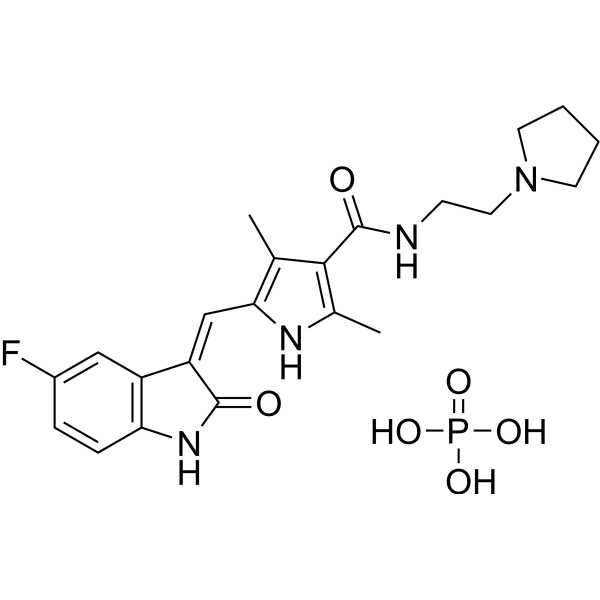
Toceranib phosphate (SU11654 phosphate) is an orally active receptor tyrosine kinase (RTK) inhibitor, and it potently inhibits PDGFR, VEGFR, and Kit with Kis of 5 and 6 nM for PDGFRβ and Flk-1/KDR, respectively. Toceranib phosphate (SU11654 phosphate) has antitumor and antiangiogenic activity, and used in the treatment of canine mast cell tumors .
For research use only. We do not sell to patients.
- Purity : 99.23%
- CAS No.: 874819-74-6
- Formula: C22H28FN4O6P
- Molecular Weight:494.45
-
Storage:
4°C, sealed storage, away from moisture
* In solvent : -80°C, 6 months; -20°C, 1 month (sealed storage, away from moisture)

To place orders, for customer services and technical support, please contact: MedChemExpress USA
Tel: 609-228-6898 E-mail: [email protected] [email protected]


-
 Biological Activity
-
Chemical Information
-
Solvent & Solubility
- Purity & Documentation
- References
-
 Help & FAQs


-
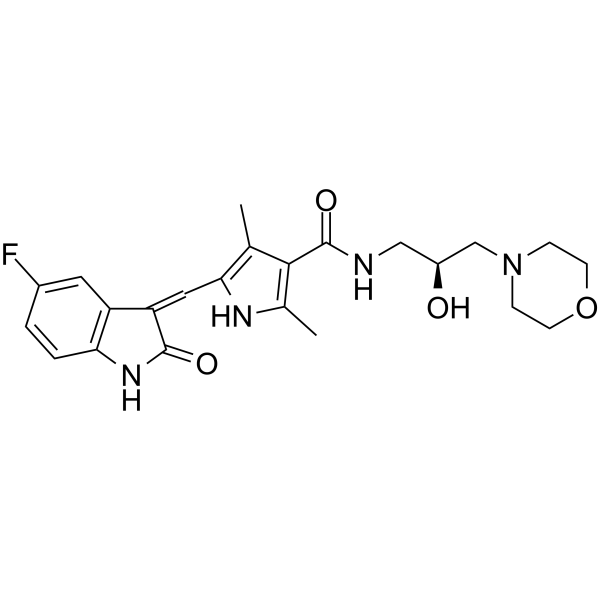
HY-10501
SU14813Multiple RTK Inhibitor -
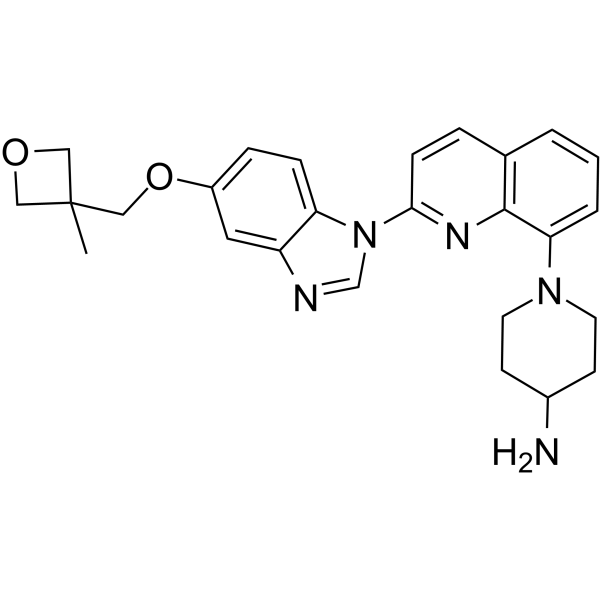
HY-13223
CrenolanibFLT3 Inhibitor -
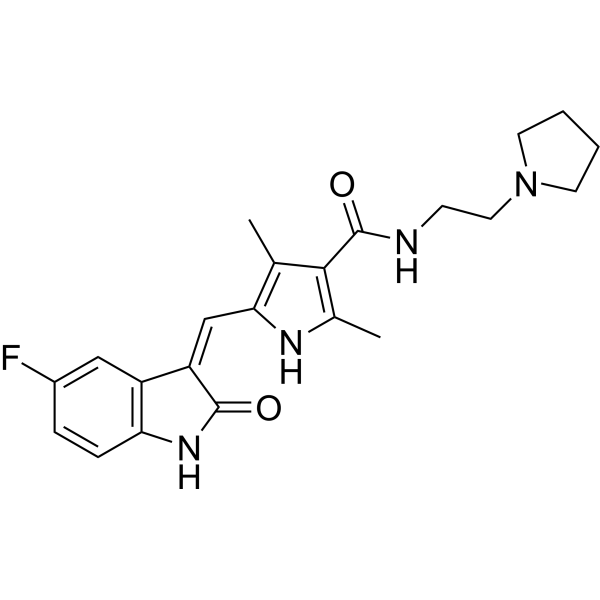
HY-10330
ToceranibRTK Inhibitor -
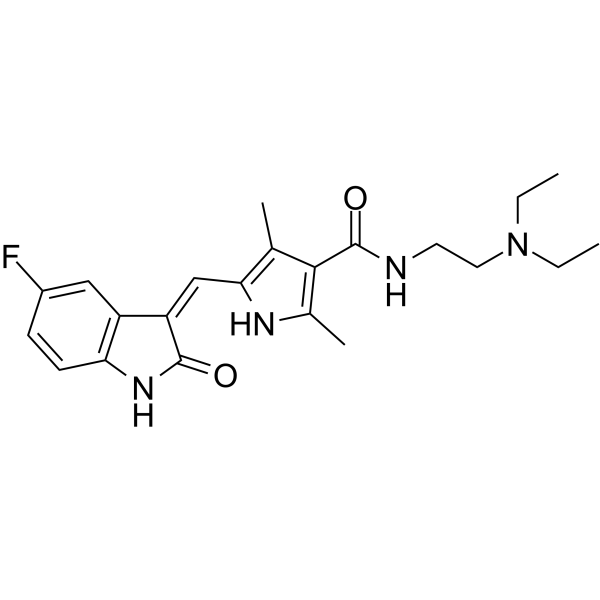
HY-10255A
SunitinibMulti-targeted RTK Inhibitor -
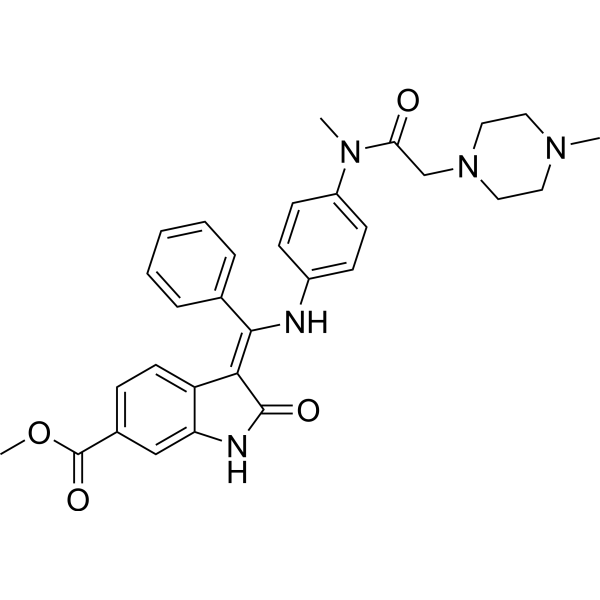
HY-50904
NintedanibPDGFR/VEGFR/FGFR Inhibitor -
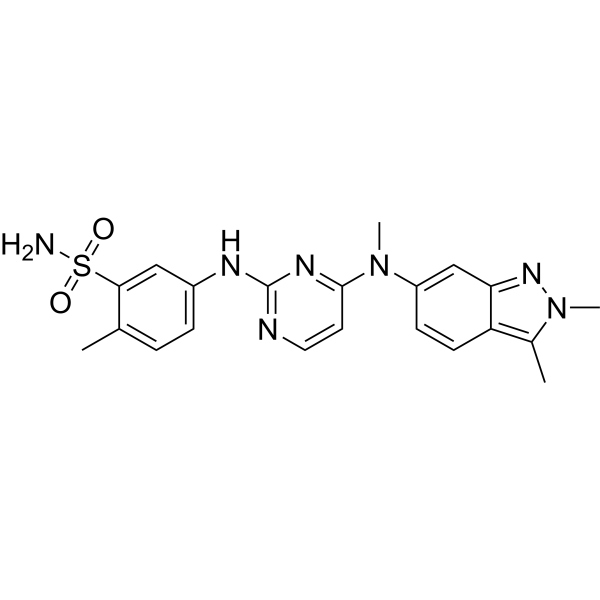
HY-10208
PazopanibVEGFR Inhibitor -
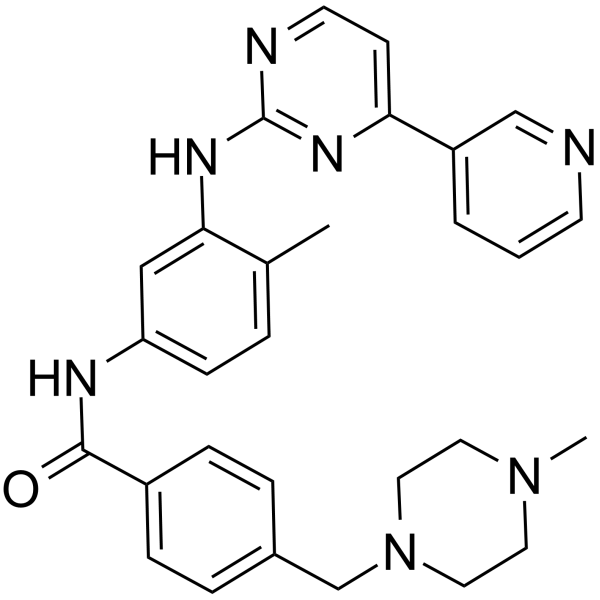
HY-15463
ImatinibTyrosine Kinases Inhibitor -
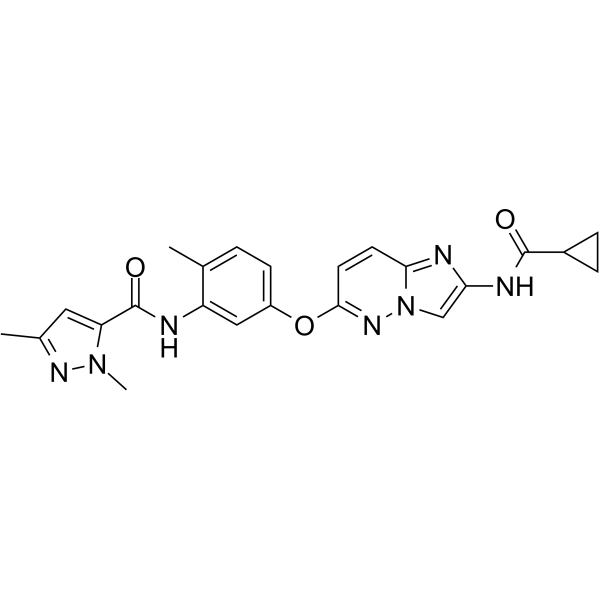
HY-15506
TAK-593VEGFR/PDGFR Inhibitor -
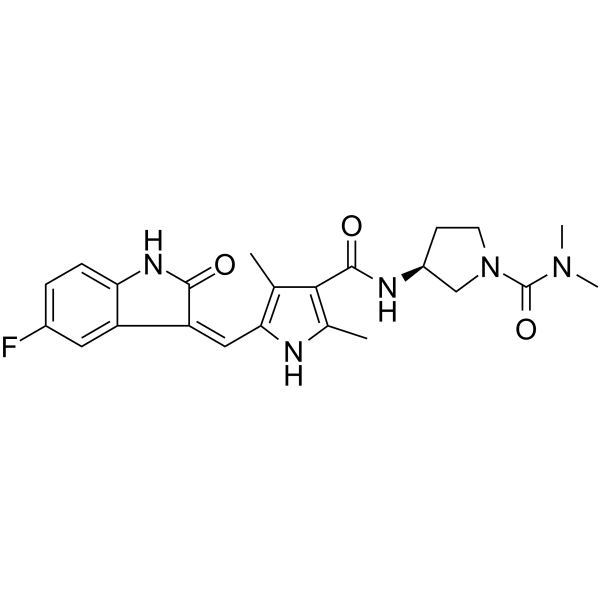
HY-109019
VorolanibVEGFR/PDGFR Inhibitor -
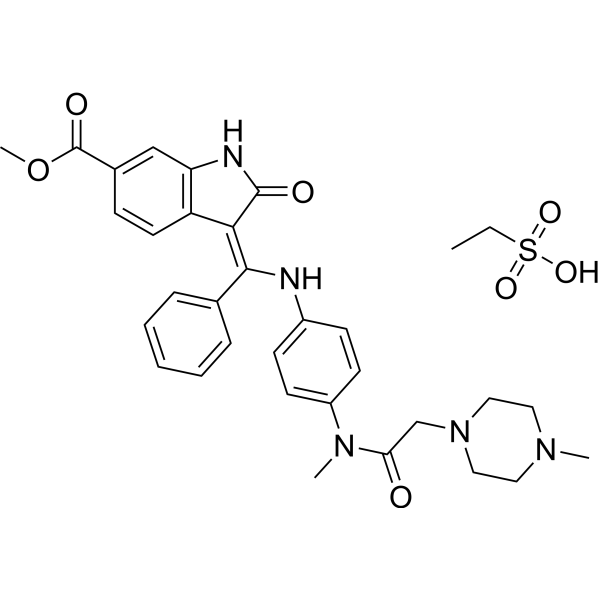
HY-11106
Nintedanib esylatePDGFR/VEGFR/FGFR Inhibitor -

HY-10330AR
Toceranib phosphate (Standard)Reference Standard -
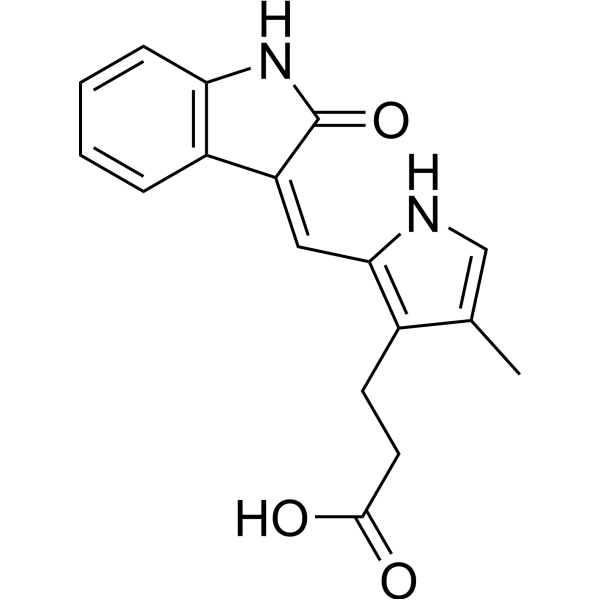
HY-10407
SU 5402Tyrosine Kinase Inhibitor
All VEGFR Isoforms
More

Biological Activity
Description
IC50 & Target
[1]|
PDGFRβ 5 nM (Ki) |
Flk-1 6 nM (Ki) |
In Vitro
Toceranib phosphate (PHA 291639 phosphate) is a selective inhibitor of the tyrosine kinase activity of several members of the split kinase RTK family, including PDGFR and Flk-1/KDR, with Kis of 5 and 6 nM, respectively[1].
To explore mechanisms of acquired Toceranib (TOC) resistance in canine MCT, three resistant sublines are generated from the Toceranib-sensitive exon 11 ITD c-kit mutant C2 cell line designated TR1, TR2, and TR3. Growth of the parental C2 cells is inhibited by Toceranib in a dose-dependent manner with an IC50 of <10 nM. In contrast, TR1, TR2, and TR3 sublines are resistant to inhibition by Toceranib (IC50> 1,000 nM). Sensitivity to three other KIT RTK inhibitors is similar to the observed resistance to Toceranib. The parental line as well as all three sublines retains sensitivity to the cytotoxic agents vinblastine (VBL) and CCNU. Following 72 hr culture in the presence of increasing concentrations of Toceranib, treatment na ve, parental C2 cells detach from the culture flask and become rounded, shrunken, and clumped with increased exposure to Toceranib. In contrast, Toceranib-induced morphologic differences are not identified in the resistant sublines[2].
MedChemExpress (MCE) has not independently confirmed the accuracy of these methods. They are for reference only.
In Vivo
MedChemExpress (MCE) has not independently confirmed the accuracy of these methods. They are for reference only.


Chemical Information
-
CAS No. 874819-74-6
-
Appearance Solid
-
Molecular Weight 494.45
-
Formula C22H28FN4O6P
-
Color Yellow to orange
-
SMILES
O=C(NCCN1CCCC1)C2=C(NC(/C=C3C(NC4=C\3C=C(C=C4)F)=O)=C2C)C.O=P(O)(O)O
-
Synonyms
SU11654 phosphate; PHA 291639E phosphate
-
Shipping
Room temperature in continental US; may vary elsewhere.
-
Storage
4°C, sealed storage, away from moisture
* In solvent : -80°C, 6 months; -20°C, 1 month (sealed storage, away from moisture)


Solvent & Solubility
In Vitro:
DMSO : 1.3 mg/mL (2.63 mM; ultrasonic and warming and adjust pH to 3 with 1 M HCl and heat to 60°C; Hygroscopic DMSO has a significant impact on the solubility of product, please use newly opened DMSO)
Please refer to the solubility information to select the appropriate solvent. Once prepared, please aliquot and store the solution to prevent product inactivation from repeated freeze-thaw cycles.
Storage method and period of stock solution: -80°C, 6 months; -20°C, 1 month (sealed storage, away from moisture). When stored at -80°C, please use it within 6 months. When stored at -20°C, please use it within 1 month.
Please refer to the solubility information to select the appropriate solvent. Once prepared, please aliquot and store the solution to prevent product inactivation from repeated freeze-thaw cycles.
Storage method and period of stock solution: -80°C, 6 months; -20°C, 1 month (sealed storage, away from moisture). When stored at -80°C, please use it within 6 months. When stored at -20°C, please use it within 1 month.
Concentration (start) × Volume (start) = Concentration (final) × Volume (final)


Purity & Documentation
-
Data Sheet (289 KB)
-
SDS (394 KB)
- English - EN (394 KB)
- Français - FR (394 KB)
- Deutsch - DE (394 KB)
- Norwegian - NO (394 KB)
- Español - ES (394 KB)
- Swedish - SV (394 KB)
- Italian - IT (394 KB)
- Korean - KR (394 KB)
- Portuguese - PT (394 KB)
-
Handling Instructions (2659 KB)
References
[1]. London CA, et al. Phase I dose-escalating study of SU11654, a small molecule receptor tyrosine kinase inhibitor, in dogs with spontaneous malignancies. Clin Cancer Res. 2003 Jul;9(7):2755-68. [Content Brief]
[2]. Halsey CH, et al. Development of an in vitro model of acquired resistance to toceranib phosphate (Palladia?) in canine mast cell tumor. BMC Vet Res. 2014 May 6;10:105. [Content Brief]
[3]. Mitchell L, et al. Clinical and immunomodulatory effects of toceranib combined with low-dose cyclophosphamide in dogs with cancer. J Vet Intern Med. 2012 Mar-Apr;26(2):355-62. [Content Brief]
[4]. London C, Mathie T, Stingle N, et al. Preliminary evidence for biologic activity of toceranib phosphate (Palladia(®)) in solid tumours. Vet Comp Oncol. 2012;10(3):194-205. [Content Brief]


Complete Stock Solution Preparation Table
Please refer to the solubility information to select the appropriate solvent. Once prepared, please aliquot and store the solution to prevent product inactivation from repeated freeze-thaw cycles.
Storage method and period of stock solution: -80°C, 6 months; -20°C, 1 month (sealed storage, away from moisture). When stored at -80°C, please use it within 6 months. When stored at -20°C, please use it within 1 month.
| Optional Solvent | Concentration Solvent Mass | 1 mg | 5 mg | 10 mg | 25 mg |
|---|---|---|---|---|---|
| DMSO | 1 mM | 2.0224 mL | 10.1122 mL | 20.2245 mL | 50.5612 mL |


Toceranib phosphate Related Classifications
HY-10330A Related Classifications
 Powered by Bioz