



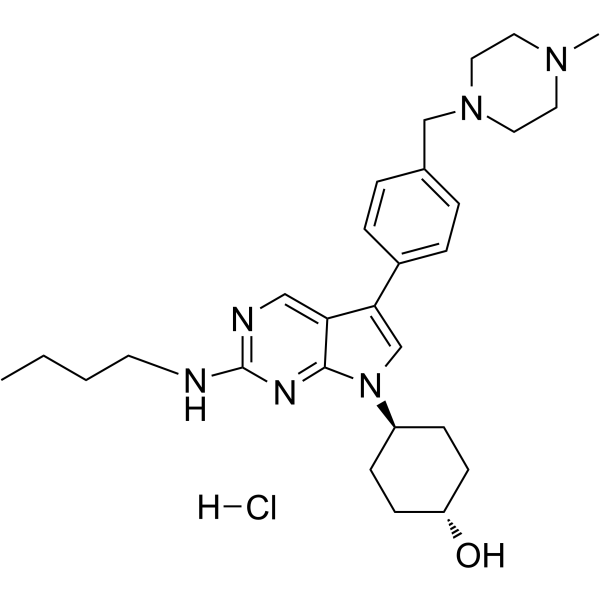
UNC2025 hydrochloride
Based on 9 publication(s) in Google Scholar
UNC2025 hydrochloride is a potent, ATP-competitive, highly orally active and BBB-permeable Mer/Flt3 inhibitor with IC50 values of 0.74 nM and 0.8 nM, respectively. UNC2025 hydrochloride is >45-fold selectivity for MERTK relative to Axl (IC50= 122 nM; Ki = 13.3 nM). UNC2025 hydrochloride exhibits an excellent PK properties, and can be used for the investigation of acute leukemia.
For research use only. We do not sell to patients.
- Purity : 99.96%
- CAS No.: 2070015-17-5
- Formula: C28H41ClN6O
- Molecular Weight:513.12
-
Storage:
4°C, sealed storage, away from moisture
* In solvent : -80°C, 6 months; -20°C, 1 month (sealed storage, away from moisture)

To place orders, for customer services and technical support, please contact: MedChemExpress USA
Tel: 609-228-6898 E-mail: [email protected] [email protected]


-
 Biological Activity
-
Chemical Information
-
Solvent & Solubility
- Protocols
- Purity & Documentation
- References
-
 Help & FAQs


-
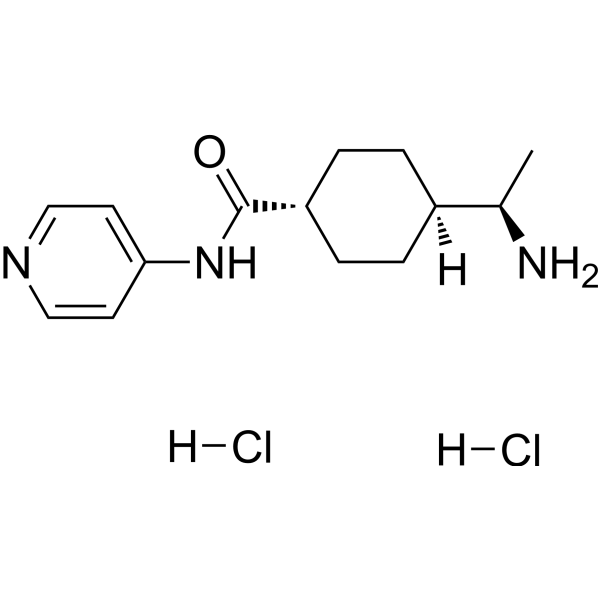
HY-10583
Y-27632 dihydrochlorideROCK Inhibitor -

HY-108841
RaleukinIL-1R Antagonist -
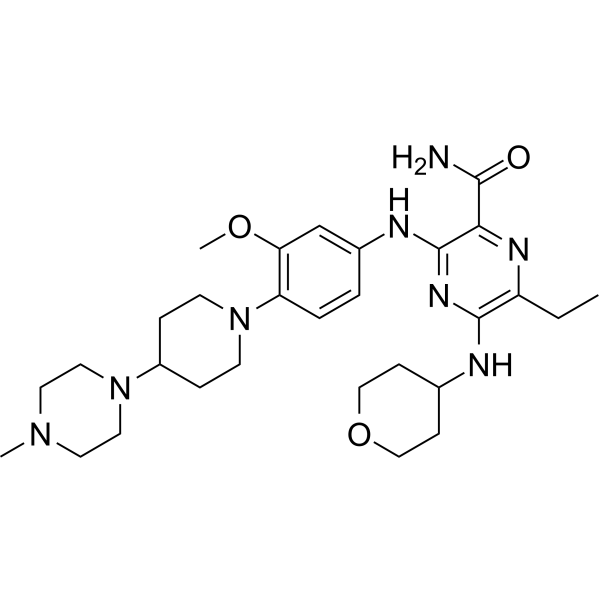
HY-12432
GilteritinibFLT3/AXL Inhibitor -
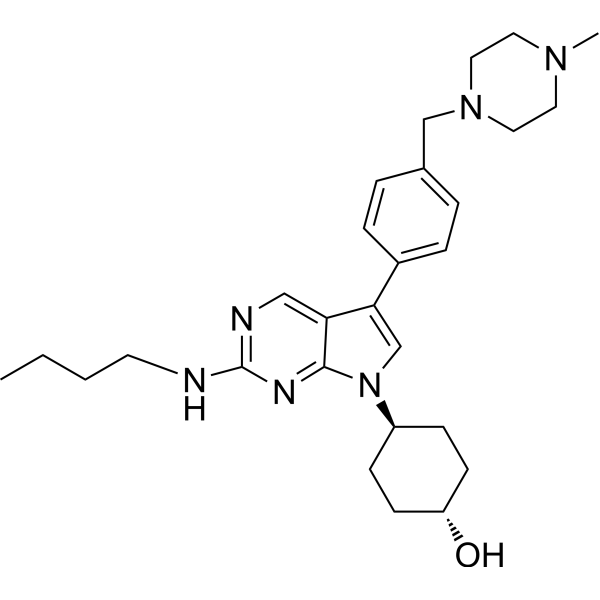
HY-12344
UNC2025MER/FLT3 Inhibitor -
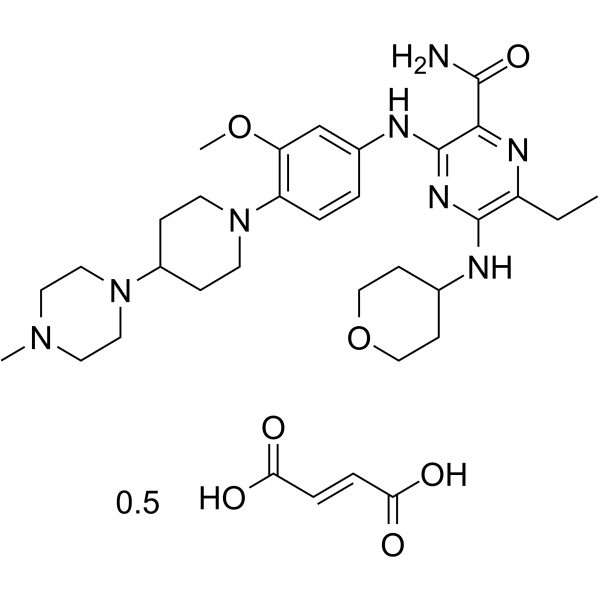
HY-12432A
Gilteritinib hemifumarateFLT3/AXL Inhibitor -
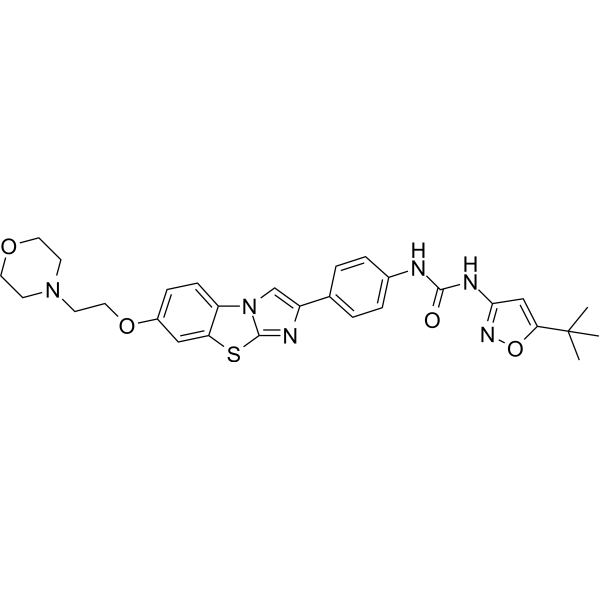
HY-13001
QuizartinibFLT3 Inhibitor -
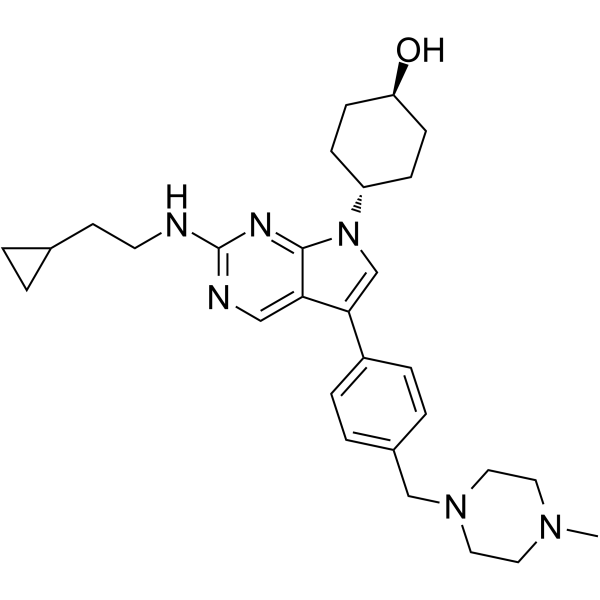
HY-101549
MRX-2843MERTK/FLT3 Inhibitor -
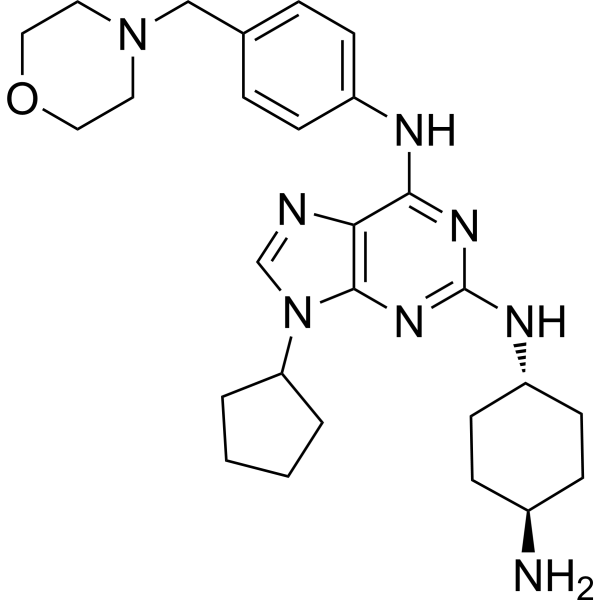
HY-112145
FLT3-IN-3FLT3 Inhibitor -
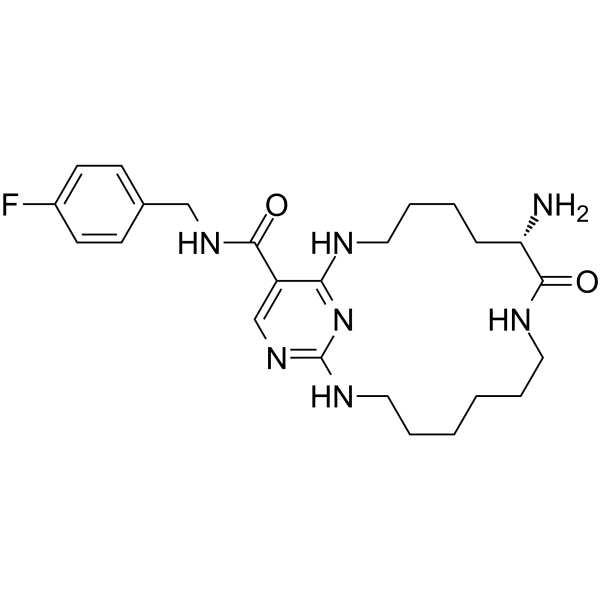
HY-125510
UNC2541Mer Inhibitor -
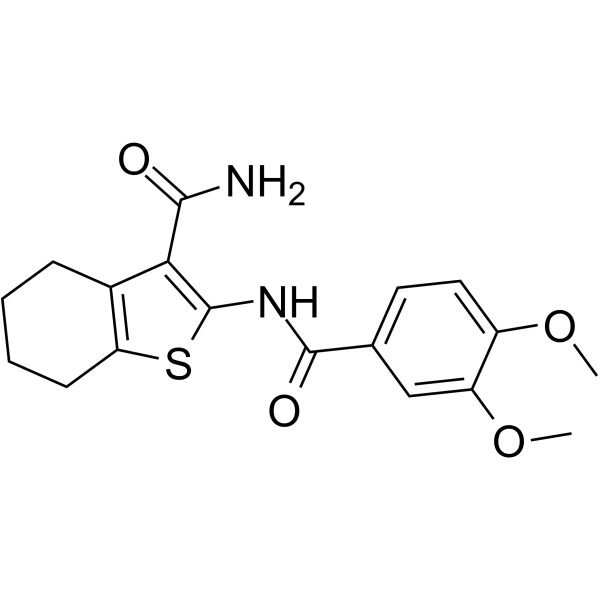
HY-13907
TCS 359FLT3 Inhibitor -

HY-12432R
Gilteritinib (Standard)FLT3/AXL Inhibitor -
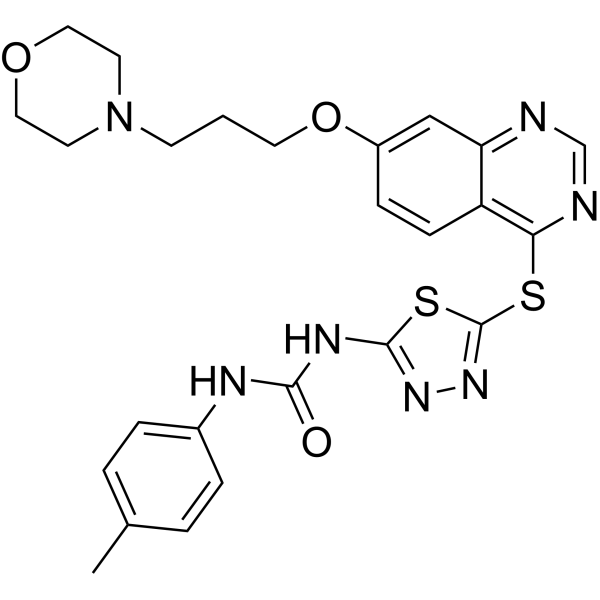
HY-12960
SKLB4771Flt3 Inhibitor
Publications Citing Use of MedChemExpress (MCE) UNC2025 hydrochloride
More- Cancer Cell. 2026 Mar 9;44(3):658-675.e12. [Abstract]
- Nat Biomed Eng. 2018 Aug;2(8):578-588. [Abstract]
- Bioact Mater. 2026 Mar 24:62:669-685. [Abstract]
- Research (Wash D C). 2025 Aug 25:8:0838. [Abstract]
- Int J Mol Med. 2026 Apr;57(4):85. [Abstract]
- Fundam Res. 2024 Apr 15.
- J Ethnopharmacol. 2024 Sep 15:331:118290. [Abstract]
- Oncol Rep. 2020 Oct;44(4):1322-1332. [Abstract]
- bioRxiv. 2026 Jun 26.
 Customer Validation & Images

-
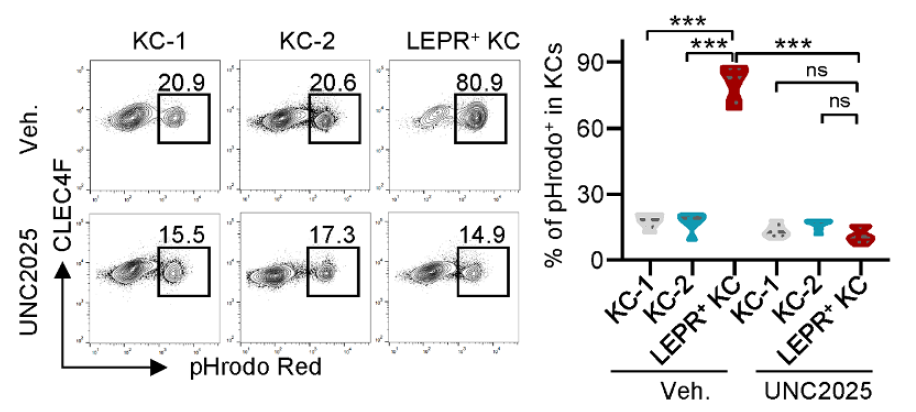
Flow Cytometry
-
In Vivo Efficacy Study
-
In Vivo Efficacy Study
-
WB
-
WB


Biological Activity
Description
IC50 & Target
IC50: 0.74 nM (Mer); 0.8 nM (Flt3)[1]
In Vitro
UNC2025 is against FLT3, MER, AXL, TRKA, TRKC, QIK, TYRO3, SLK, NuaK1, KIT and Met with IC50 values of 0.35 nM, 0.46 nM, 1.65 nM, 1.67 nM, 4.38 nM, 5.75 nM, 5.83 nM, 6.14 nM, 7.97 nM , 8.18 nM and 364 nM, respectively[1]. UNC2025 (0-60 nM; 1 hour) mediates potent inhibition of Mer phosphorylation with an IC50 of 2.7 nM in 697 B-ALL cells[1]. UNC2025 (0-60 nM; 1 hour) results in decreased phosphorylation of Flt3 with an IC50 of 14 nM in Flt3-ITD positive Molm-14 acute myeloid leukemia cells[1].UNC2025 (3 nM-3 μM; 1 hour) decreases p-MEK, p-AXL, p-TYRO3 expression as a concentration manner in 32D Cells[1]. UNC2025 (14 nM-10 μM; 48 hours) inhibits MERTK signaling and colony-forming potential in a MERTK-expressing patient sample with a 20-fold difference in sensitivity of MERTK-expressing leukemia blasts relative to normal cord or marrow blood mononuclear cells[2].UNC2025 (25-300 nM; 1 hour) mediates potent and dose-dependent decreases in MERTK phosphorylation/activation in both cell lines and inhibition of MERTK correlated with decreased phosphorylation of previously reported MERTK-dependent signaling components STAT6, AKT, and ERK1/2[2].
MedChemExpress (MCE) has not independently confirmed the accuracy of these methods. They are for reference only. Further protocols information, click here.
-
Cell Line:32D Cells
-
Concentration:0 nM, 3 nM, 10 nM, 20 nM, 30 nM, 100 nM, 1000 nM, 3000 nM
-
Incubation Time:1 hour
-
Result:Inhibited p-MEK, p-AXL, p-TYRO3 expression.
-
Cell Line:Mononuclear cells
-
Concentration:14 nM–10 μM
-
Incubation Time:48 hours
-
Result:Showed IC50 values ranged from 9.0 nM to >10 μM with a median IC50 of 2.38 μM.
-
Cell Line:Kasumi-1 AML and 697 B-ALL cells
-
Concentration:25-300 nM
-
Incubation Time:48 hours
-
Result:Decresed p-MERTK, p-STAT6, p- AKT and p-ERK1/2 expression as a dose-dependent manner.
In Vivo
MedChemExpress (MCE) has not independently confirmed the accuracy of these methods. They are for reference only.
-
Animal Model:NSG mice injected with 697 B-ALL cells[2]
-
Dosage:50 or 75 mg/kg
-
Administration:Oral adminstration
-
Result:Delayed the disease progression.


Chemical Information
-
CAS No. 2070015-17-5
-
Appearance Solid
-
Molecular Weight 513.12
-
Formula C28H41ClN6O
-
Color Light yellow to yellow
-
SMILES
CN1CCN(CC2=CC=C(C3=CN([C@@H]4CC[C@@H](O)CC4)C5=NC(NCCCC)=NC=C53)C=C2)CC1.[H]Cl
-
Shipping
Room temperature in continental US; may vary elsewhere.
-
Storage
4°C, sealed storage, away from moisture
* In solvent : -80°C, 6 months; -20°C, 1 month (sealed storage, away from moisture)


Publications (9)
-
Journal Impact Factor
-
Most Recent
-
Cancer Cell
Chemotherapy triggers immune evasion by fostering LEPR+ Kupffer cell differentiation in liver metastases. [Abstract]2026 Mar 9;44(3):658-675.e12. PMID: 41687606
UNC2025 hydrochloride purchased from MedChemExpress. Usage Cited in: Cancer Cell. 2026 Mar 9;44(3):658-675.e12. [Abstract]
UNC2025 (2 μM) abolished the effect that LEPR+ KCs engulfed more AKP-pHrodo cells.
UNC2025 hydrochloride purchased from MedChemExpress. Usage Cited in: Cancer Cell. 2026 Mar 9;44(3):658-675.e12. [Abstract]
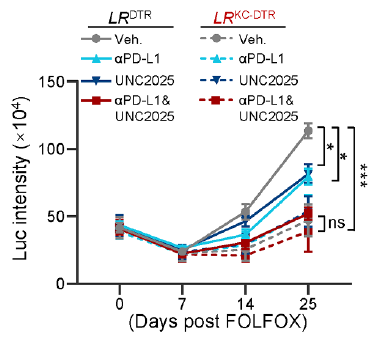
UNC2025 (10 mg/kg; i.p; once every 4 d) produced antitumor effects in mice with intact LEPR+ KCs, with tumor BLI signals similar to LRKC- DTR mice.
UNC2025 hydrochloride purchased from MedChemExpress. Usage Cited in: Cancer Cell. 2026 Mar 9;44(3):658-675.e12. [Abstract]
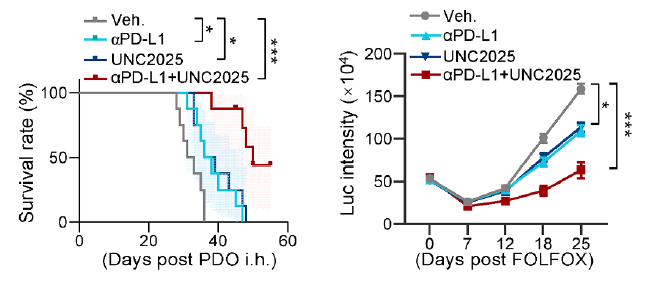
UNC2025 (10 mg/kg; i.p; once every 4 d) suppressed metastasis and prolonged survival of NSG mice with hKC reconstitution.
-
Nat Biomed Eng
TLR7/8-agonist-loaded nanoparticles promote the polarization of tumour-associated macrophages to enhance cancer immunotherapy. [Abstract]2018 Aug;2(8):578-588. PMID: 31015631 -
Bioact Mater
Activating the cellular scavenger: A bioactive hydrogel promotes diabetic wounds via plant exosome-like nanovesicles enhanced macrophage efferocytosis. [Abstract]2026 Mar 24:62:669-685. PMID: 41937946
UNC2025 hydrochloride purchased from MedChemExpress. Usage Cited in: Bioact Mater. 2026 Mar 24:62:669-685. [Abstract]
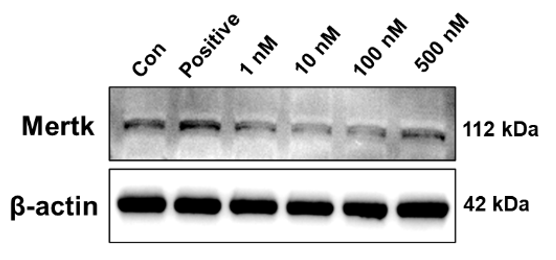
UNC2025 (10 nM) effectively inhibited MERTK protein expression in macrophages.
UNC2025 hydrochloride purchased from MedChemExpress. Usage Cited in: Bioact Mater. 2026 Mar 24:62:669-685. [Abstract]
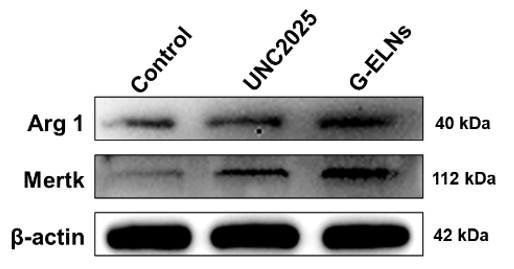
UNC2025 (10 nM; 4 h) markedly attenuated upregulated expression of MERTK and its downstream effector Arg 1 in BMDMs induced by G-ELNs.
-
Research (Wash D C)
Targeting the ANXA8-SP1-PPA1 Axis to Modulate TCA Cycle and Matrix Deposition in Diffuse-Type Gastric Cancer. [Abstract]2025 Aug 25:8:0838. PMID: 40862051 -
Int J Mol Med
Hypothermic machine perfusion protects DCD graft liver from ischemia‑reperfusion injury by enhancing macrophage efferocytosis via KLF2‑NLRP3 signaling. [Abstract]2026 Apr;57(4):85. PMID: 41645764 -
-
J Ethnopharmacol
HuoXueTongFu formula induces M2c macrophages via the MerTK/PI3K/AKT pathway to eliminate NETs in intraperitoneal adhesion in mice. [Abstract]2024 Sep 15:331:118290. PMID: 38703872 -
Oncol Rep
Modulation of protein S and growth arrest specific 6 protein signaling inhibits pancreatic cancer cell survival and proliferation. [Abstract]2020 Oct;44(4):1322-1332. PMID: 32945517 -


Solvent & Solubility
In Vitro:
H2O : 55 mg/mL (107.19 mM; Need ultrasonic)
DMSO : 10 mg/mL (19.49 mM; Need ultrasonic; Hygroscopic DMSO has a significant impact on the solubility of product, please use newly opened DMSO)
Please refer to the solubility information to select the appropriate solvent. Once prepared, please aliquot and store the solution to prevent product inactivation from repeated freeze-thaw cycles.
Storage method and period of stock solution: -80°C, 6 months; -20°C, 1 month (sealed storage, away from moisture). When stored at -80°C, please use it within 6 months. When stored at -20°C, please use it within 1 month.
* Note: If you choose water as the stock solution, please dilute it to the working solution, then filter and sterilize it with a 0.22 μm filter before use.
Please refer to the solubility information to select the appropriate solvent. Once prepared, please aliquot and store the solution to prevent product inactivation from repeated freeze-thaw cycles.
Storage method and period of stock solution: -80°C, 6 months; -20°C, 1 month (sealed storage, away from moisture). When stored at -80°C, please use it within 6 months. When stored at -20°C, please use it within 1 month.
* Note: If you choose water as the stock solution, please dilute it to the working solution, then filter and sterilize it with a 0.22 μm filter before use.
Concentration (start) × Volume (start) = Concentration (final) × Volume (final)
In Vivo:
Select the appropriate dissolution method based on your experimental animal and administration route.
- For the following dissolution methods, please ensure to first prepare a clear stock solution using an In Vitro approach and then sequentially add co-solvents:
- To ensure reliable experimental results, the clarified stock solution can be appropriately stored based on storage conditions. As for the working solution for In Vivo experiments, it is recommended to prepare freshly and use it on the same day.
- The percentages shown for the solvents indicate their volumetric ratio in the final prepared solution. If precipitation or phase separation occurs during preparation, heat and/or sonication can be used to aid dissolution.
Add each solvent one by one: 10% DMSO 40% PEG300 5% Tween-80 45% Saline
Solubility: ≥ 1 mg/mL (1.95 mM); Clear solution
This protocol yields a clear solution of ≥ 1 mg/mL (saturation unknown).
Taking 1 mL working solution as an example, add 100 μL DMSO stock solution (10.0 mg/mL) to 400 μL PEG300, and mix evenly; then add 50 μL Tween-80 and mix evenly; then add 450 μL Saline to adjust the volume to 1 mL.
Preparation of Saline: Dissolve 0.9 g sodium chloride in ddH₂O and dilute to 100 mL to obtain a clear Saline solution.
Add each solvent one by one: 10% DMSO 90% (20% SBE-β-CD in Saline)
Solubility: ≥ 1 mg/mL (1.95 mM); Clear solution
This protocol yields a clear solution of ≥ 1 mg/mL (saturation unknown).
Taking 1 mL working solution as an example, add 100 μL DMSO stock solution (10.0 mg/mL) to 900 μL 20% SBE-β-CD in Saline, and mix evenly.
Preparation of 20% SBE-β-CD in Saline (4°C, storage for one week): 2 g SBE-β-CD powder is dissolved in 10 mL Saline, completely dissolve until clear.
For the following dissolution methods, please prepare the working solution directly:
It is recommended to prepare fresh solutions and use them promptly within a short period of time.
The percentages shown for the solvents indicate their volumetric ratio in the final prepared solution. If precipitation or phase separation occurs during preparation, heat and/or sonication can be used to aid dissolution.
Add each solvent one by one: PBS
Solubility: 100 mg/mL (194.89 mM); Clear solution; Need ultrasonic
In Vivo Dissolution Calculator
Please enter the basic information of animal experiments:
-
-
-
-
Recommended: Prepare an additional quantity of animals to account for potential losses during experiments.
Working solution concentration: 0.22 mg/mL
This product has good water solubility, please refer to the measured solubility data in water/PBS/Saline for details.

Protocols
-
Cell Cytotoxicity Assay
Cytotoxicity assays are usually based on the assessment of cell membrane damage, which can also be indirectly detected by measuring cell viability. Detection methods include MTT assay, CKK-8 assay, LDH assay and ATP assay, etc.


Purity & Documentation
-
Data Sheet (280 KB)
-
SDS (252 KB)
- English - EN (252 KB)
- Français - FR (252 KB)
- Deutsch - DE (252 KB)
- Norwegian - NO (252 KB)
- Español - ES (252 KB)
- Swedish - SV (252 KB)
- Italian - IT (252 KB)
- Korean - KR (252 KB)
- Portuguese - PT (252 KB)
-
Handling Instructions (2659 KB)
References
[1]. Zhang W, et al. UNC2025, a Potent and Orally Bioavailable MER/FLT3 Dual Inhibitor. J Med Chem. 2014 Aug 28;57(16):7031-41. [Content Brief]
[2]. DeRyckere D, et al. UNC2025, a MERTK Small-Molecule Inhibitor, Is Therapeutically Effective Alone and in Combination with CL14377 in Leukemia Models.Clin Cancer Res. 2017 Mar 15;23(6):1481-1492. [Content Brief]
[3]. Wu J, et al. MerTK as a therapeutic target in glioblastoma. Neuro Oncol. 2018 Jan 10;20(1):92-102. [Content Brief]


Complete Stock Solution Preparation Table
Please refer to the solubility information to select the appropriate solvent. Once prepared, please aliquot and store the solution to prevent product inactivation from repeated freeze-thaw cycles.
Storage method and period of stock solution: -80°C, 6 months; -20°C, 1 month (sealed storage, away from moisture). When stored at -80°C, please use it within 6 months. When stored at -20°C, please use it within 1 month.
| Optional Solvent | Concentration Solvent Mass | 1 mg | 5 mg | 10 mg | 25 mg |
|---|---|---|---|---|---|
| DMSO / H2O | 1 mM | 1.9489 mL | 9.7443 mL | 19.4886 mL | 48.7215 mL |
| 5 mM | 0.3898 mL | 1.9489 mL | 3.8977 mL | 9.7443 mL | |
| 10 mM | 0.1949 mL | 0.9744 mL | 1.9489 mL | 4.8722 mL | |
| 15 mM | 0.1299 mL | 0.6496 mL | 1.2992 mL | 3.2481 mL | |
| H2O | 20 mM | 0.0974 mL | 0.4872 mL | 0.9744 mL | 2.4361 mL |
| 25 mM | 0.0780 mL | 0.3898 mL | 0.7795 mL | 1.9489 mL | |
| 30 mM | 0.0650 mL | 0.3248 mL | 0.6496 mL | 1.6241 mL | |
| 40 mM | 0.0487 mL | 0.2436 mL | 0.4872 mL | 1.2180 mL | |
| 50 mM | 0.0390 mL | 0.1949 mL | 0.3898 mL | 0.9744 mL | |
| 60 mM | 0.0325 mL | 0.1624 mL | 0.3248 mL | 0.8120 mL | |
| 80 mM | 0.0244 mL | 0.1218 mL | 0.2436 mL | 0.6090 mL | |
| 100 mM | 0.0195 mL | 0.0974 mL | 0.1949 mL | 0.4872 mL |
* Note: If you choose water as the stock solution, please dilute it to the working solution, then filter and sterilize it with a 0.22 μm filter before use.


UNC2025 hydrochloride Related Classifications
HY-12344A Related Classifications
 Powered by Bioz