Search Result
Results for "
β-D-galactopyranoside
" in MedChemExpress (MCE) Product Catalog:
57
Biochemical Assay Reagents
1
Isotope-Labeled Compounds
| Cat. No. |
Product Name |
Target |
Research Areas |
Chemical Structure |
-
- HY-126839
-
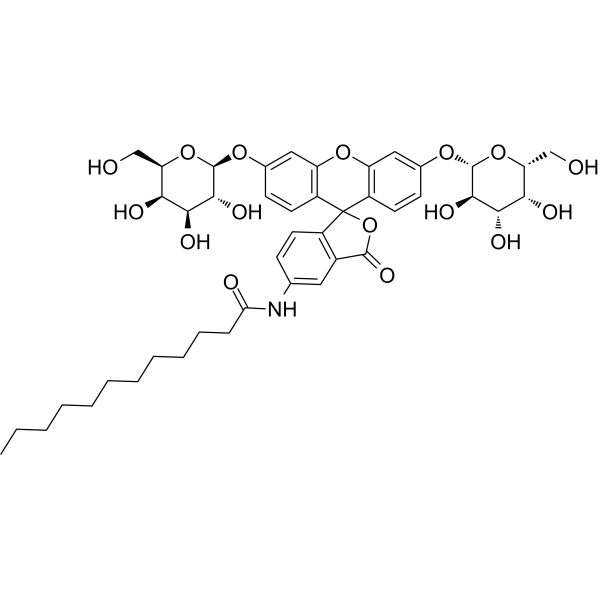
C12FDG
Maximum Cited Publications
9 Publications Verification
5-Dodecanoylaminofluorescein di-β-D-galactopyranoside
|
Fluorescent Dye
|
Others
|
|
C12FDG (5-Dodecanoylaminofluorescein di-β-D-Galactopyranoside) is a lipophilic green fluorescent substrate for β-galactosidase detection. C12-FDG is more sensitive than Fluorescein di(β-D-galactopyranoside) (HY-101895) for beta-galactosidase activity determinations in animal cells (Ex/Em = 488/523 nm) .
|
-
-
- HY-N0452
-
-
-
- HY-137276
-
|
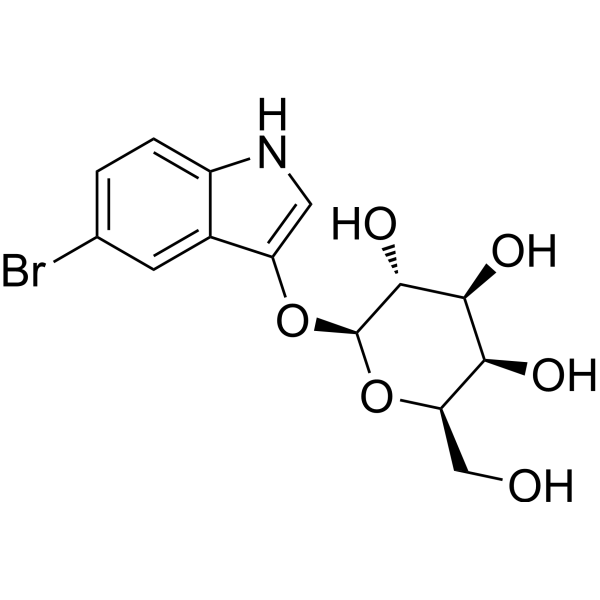
Bluo-Gal
|
Fluorescent Dye
Glycosidase
|
Others
|
|
5-Bromo-3-indolyl β-D-galactopyranoside (Bluo-Gal) is a chromogenic substrate for β-galactosidase. 5-Bromo-3-indolyl β-D-galactopyranoside is hydrolyzed by the enzyme to generate a 5-bromoindole intermediate, which is further oxidized to form an insoluble blue precipitate. 5-Bromo-3-indolyl β-D-galactopyranoside can specifically recognize bacterial β-galactosidases (such as the product of the Escherichia coli lacZ gene) and reacts at pH 7.4, making it suitable for light and electron microscopic observations. 5-Bromo-3-indolyl β-D-galactopyranoside can be used in histochemical detection of reporter gene expression in transgenic organisms, such as the localization analysis of β-galactosidase activity in mouse embryos or muscle tissues .
|
-
-
- HY-101895
-
|
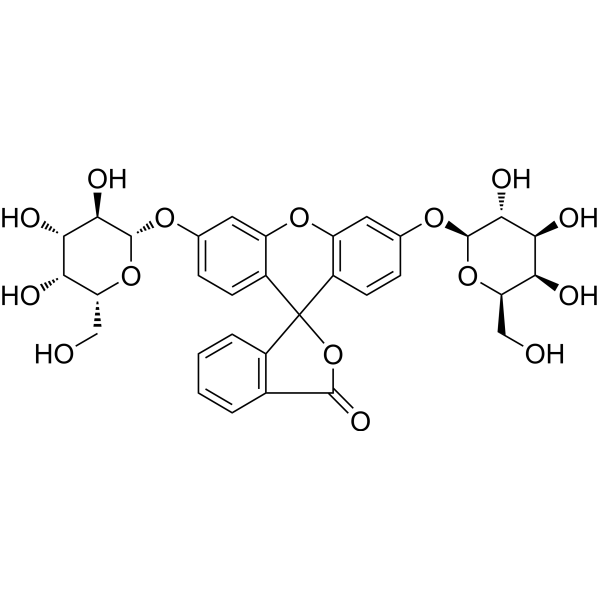
FDG
|
Fluorescent Dye
|
Others
|
|
Fluorescein di(β-D-galactopyranoside) is a fluorogenic substrate for β-galactosidase (λex=485 nm, λem=535 nm).
|
-
-
- HY-15926
-
|
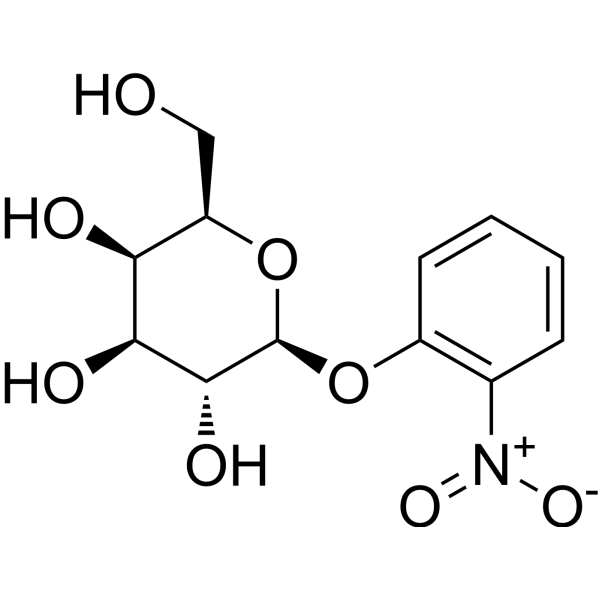
2-Nitrophenyl β-D-galactopyranoside
|
Biochemical Assay Reagents
|
Others
|
|
ONPG is a colorimetric and spectrophotometric substrate for detection of β-galactosidase activity.
|
-
-
- HY-D1224
-
|
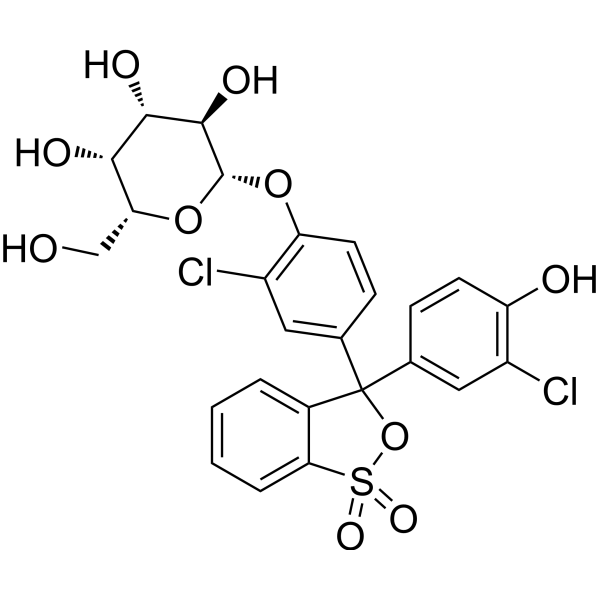
CPRG
|
Biochemical Assay Reagents
|
Others
|
|
Chlorophenol red-β-D-galactopyranoside (CPRG) is an efficient and sensitive chromogenic substrate for β-galactosidase (HY-P2869), widely used in colorimetric assays. Chlorophenol red-β-D-galactopyranoside itself appears pale yellow. When it is specifically hydrolyzed by β-galactosidase, it releases chlorophenol red. The released chlorophenol red turns purple-red under alkaline or neutral pH conditions. This color change from yellow to red can be quantitatively detected at wavelengths of 540-572 nm using visible spectrophotometry .
|
-
-
- HY-N6605
-
|
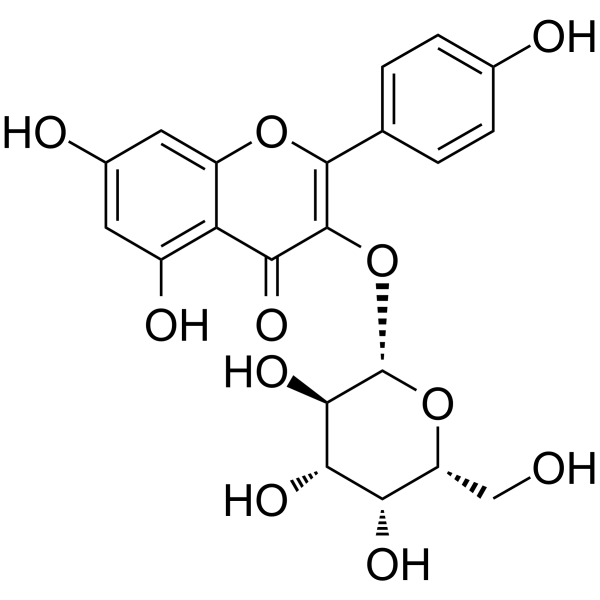
Trifolin
|
Apoptosis
|
Cardiovascular Disease
Cancer
|
|
Kaempferol 3-O-β-D-galactopyranoside (Trifolin) is an orally active flavonoid derivative that can be found in the aerial parts of Consolida oliverana. Kaempferol 3-O-β-D-galactopyranoside exhibits antitumor and cardioprotective effects .
|
-
-
- HY-137550
-
|
|
Biochemical Assay Reagents
|
Others
|
|
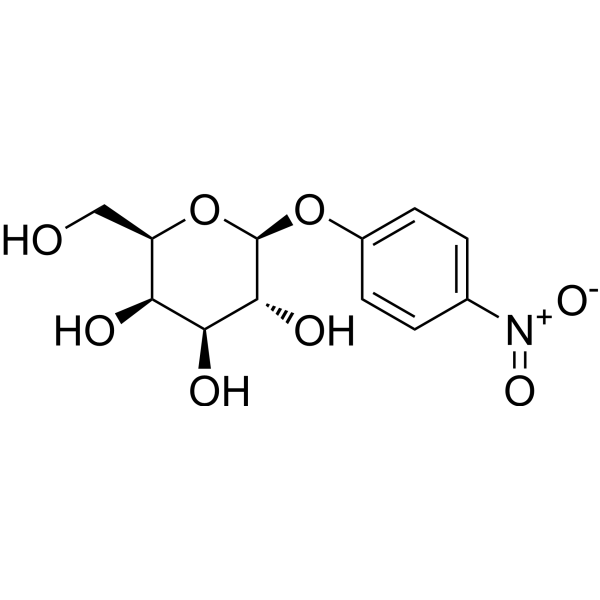
4-Nitrophenyl β-D-galactopyranoside is a derivative of beta-D-galactoside and monosaccharide. 4-Nitrophenyl β-D-galactopyranoside can be used for affinity label .
|
-
-
- HY-137845
-
|
|
Fluorescent Dye
|
Others
|
|
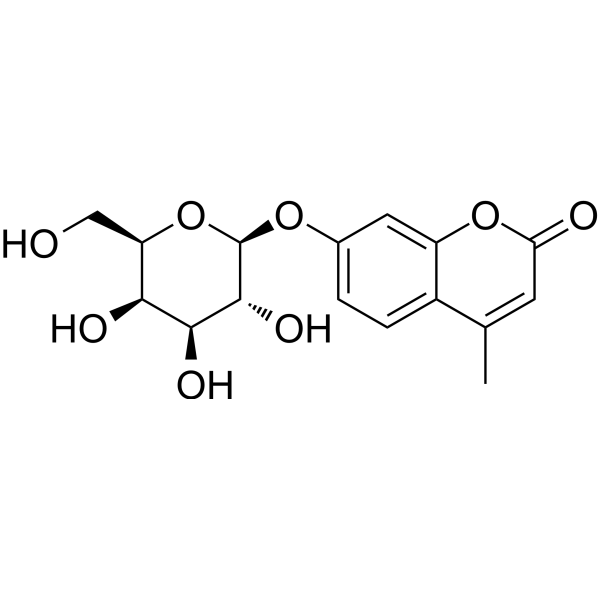
4-Methylumbelliferyl β-D-galactopyranoside is a fluorescent substrate for β-galactosidase which, when cleaved, produces a water-soluble blue fluorescent coumarin fluorophore that can be detected using a fluoroenzymeter or fluorometer .
|
-
-
- HY-W011654
-
|
4-Aminophenyl-beta-D-galactopyranoside, 98%
|
Glycosidase
|
Inflammation/Immunology
Cancer
|
|
4-Aminophenyl-β-D-galactopyranoside, 98% is a highly efficient substrate for β-galactosidase. It is specifically hydrolyzed by this enzyme to release galactose and electroactive p-aminophenol. 4-Aminophenyl-β-D-galactopyranoside, 98% is widely used in colorimetric and electrochemical assays for detecting β-galactosidase activity and determining enzyme kinetics, such as in biosensing fields including cellular senescence, pathogen and contaminant detection. In addition, since β-galactosidase is often overexpressed in primary ovarian cancer, 4-Aminophenyl-β-D-galactopyranoside, 98% can also be applied to related research on primary ovarian cancer .
|
-

-
- HY-DY1033
-
|
|
Fluorescent Dye
|
Others
|
C12FDG (5-Dodecanoylaminofluorescein di-β-D-Galactopyranoside) (solution) is a lipophilic green fluorescent substrate for β-galactosidase detection. C12-FDG is more sensitive than Fluorescein di (β-D-galactopyranoside) (HY-101895) for beta-galactosidase activity determinations in animal cells (Ex/Em = 488/523 nm) .
Solvent and concentration: DMSO: 10 mM
|
-

-
- HY-137249
-
|
|
Biochemical Assay Reagents
|
Others
|
|
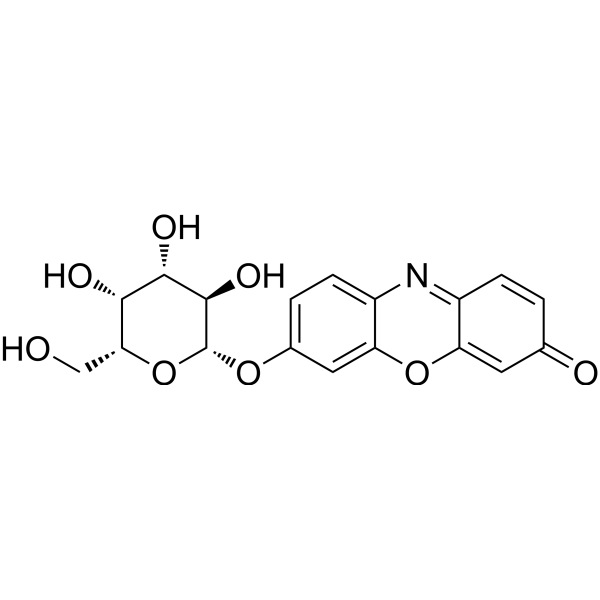
Resorufin-β-D-galactopyranoside is a commonly used substrate in various biochemical assays to measure the activity of β-galactosidase, an important enzyme involved in lactose metabolism and regulation of gene expression. Resorufin-β-D-galactopyranoside has unique chemical properties and can be hydrolyzed by β-galactosidase to form a red fluorescent product called resorufin. This makes it a useful tool for detecting and quantifying β-galactosidase activity in biological samples such as bacteria or mammalian cells.
|
-
-
- HY-N7024
-
|
|
Others
|
Metabolic Disease
|
|
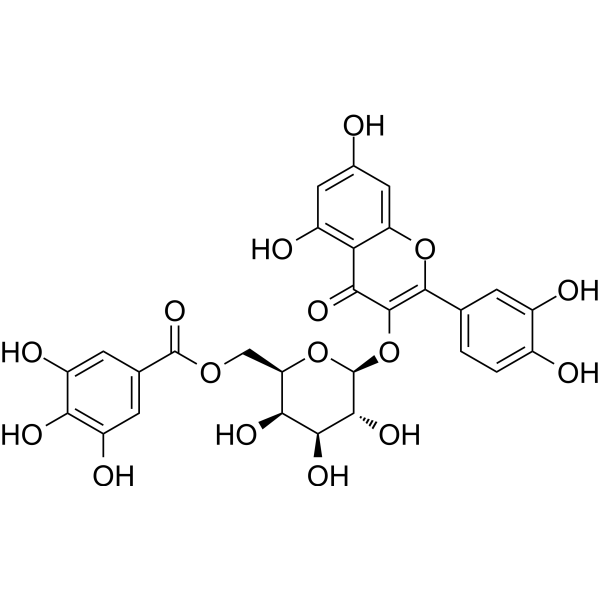
Quercetin 3-O-(6''-galloyl)-β-D-galactopyranoside is from the fresh leaves of Psidium Guajava L. .
|
-
-
- HY-N0452R
-
|
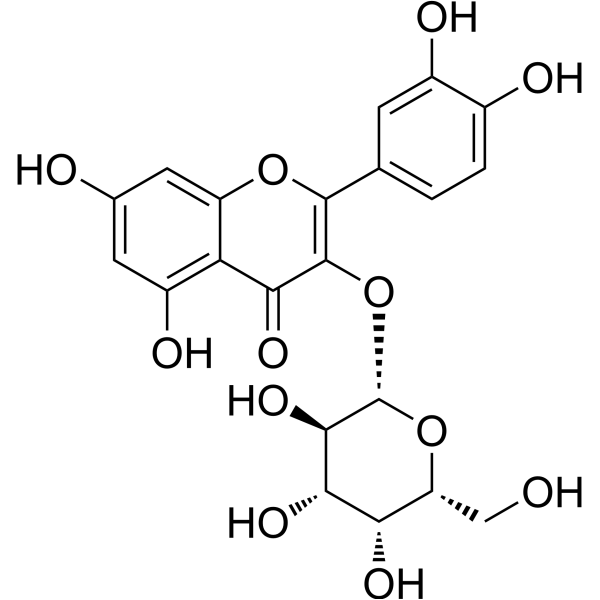
Quercetin 3-O-galactoside (Standard); Quercetin 3-O-β-D-galactopyranoside (Standard)
|
Reference Standards
Influenza Virus
Fungal
NF-κB
Apoptosis
|
Infection
Inflammation/Immunology
Cancer
|
|
Hyperoside (Standard) is the analytical standard of Hyperoside. This product is intended for research and analytical applications. Hyperoside is a NF-κB inhibitor, found from Hypericum monogynum. Hyperoside shows anti-tumor, antifungal, anti-inflammatory, anti-viral, and anti-oxidative activities, and can induce apoptosis .
|
-

-
- HY-128737
-
-
-
- HY-117266
-
|
beta-D-galactopyranoside, 98%
|
Biochemical Assay Reagents
|
Others
|
|
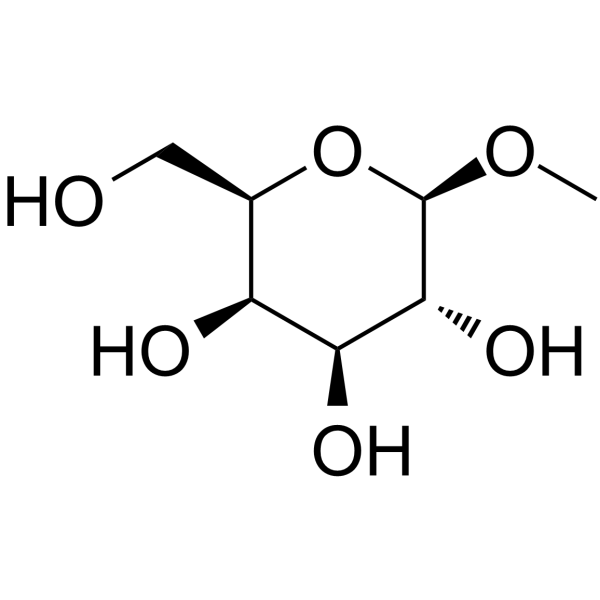
β-D-Galactopyranoside, 98% (beta-D-Galactopyranoside, 98%) can be used in glycobiology research.
|
-

-
- HY-D1633A
-
|
|
Fluorescent Dye
|
Others
|
|
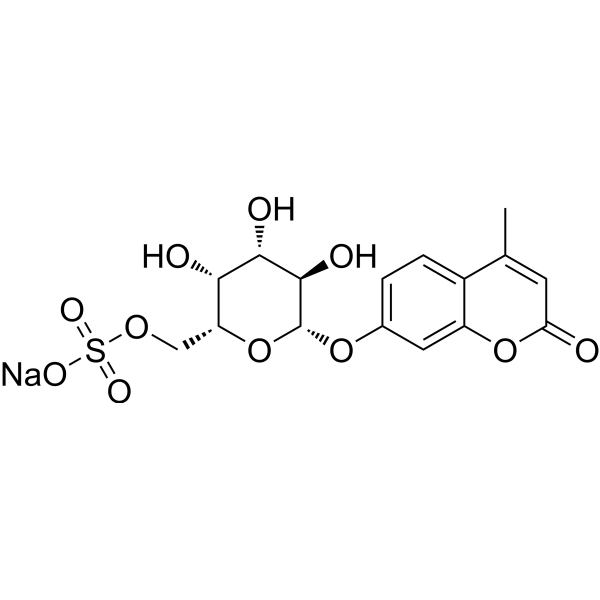
4-Methylumbelliferyl-β-D-galactopyranoside 6-sulfate sodium is a fluorescent dye. 4-Methylumbelliferyl-β-D-galactopyranoside 6-sulfate sodium undergoes desulphation by galactose-6-sulphate sulphatase to form 4-methylumbelliferyl-β-D-galactopyranoside, which is cleaved by β-galactosidase to release fluorescent 4-methylumbelliferone. 4-Methylumbelliferyl-β-D-galactopyranoside 6-sulfate sodium interacts with N-acetylgalactosamine-6-sulfate sulfatase (GALNS) via hydrogen bonds, electrostatic interactions, and steric interactions. 4-Methylumbelliferyl-β-D-galactopyranoside 6-sulfate sodium serves as a substrate in assays measuring galactose-6-sulphate sulphatase and GALNS activity. 4-Methylumbelliferyl-β-D-galactopyranoside 6-sulfate sodium can be used for the research of Morquio disease type A (mucopolysaccharidosis IV A) .
|
-
-
- HY-D1633
-
|
|
Fluorescent Dye
|
Metabolic Disease
|
|
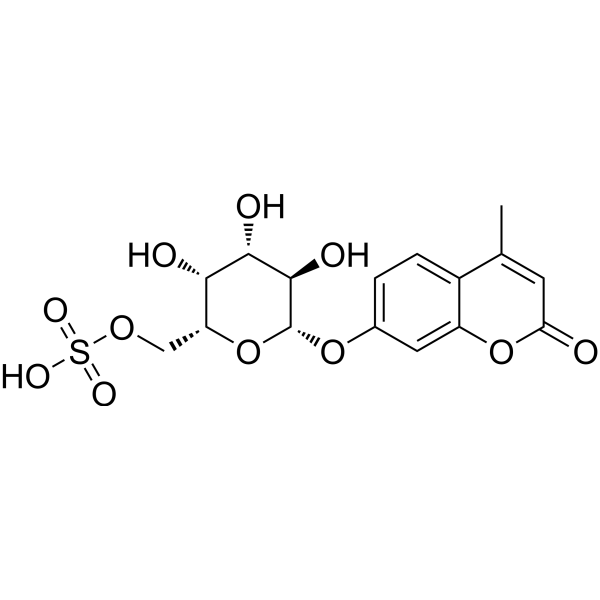
4-Methylumbelliferyl-β-D-galactopyranoside 6-sulfate is a fluorescent dye. 4-Methylumbelliferyl-β-D-galactopyranoside 6-sulfate undergoes desulphation by galactose-6-sulphate sulphatase to form 4-methylumbelliferyl-β-D-galactopyranoside, which is cleaved by β-galactosidase to release fluorescent 4-methylumbelliferone. 4-Methylumbelliferyl-β-D-galactopyranoside 6-sulfate interacts with N-acetylgalactosamine-6-sulfate sulfatase (GALNS) via hydrogen bonds, electrostatic interactions, and steric interactions. 4-Methylumbelliferyl-β-D-galactopyranoside 6-sulfate serves as a substrate in assays measuring galactose-6-sulphate sulphatase and GALNS activity. 4-Methylumbelliferyl-β-D-galactopyranoside 6-sulfate can be used for the research of Morquio disease type A (mucopolysaccharidosis IV A) .
|
-
-
- HY-D1224A
-
|
CPRG sodium
|
Biochemical Assay Reagents
|
Others
|
|
Chlorophenol red-β-D-galactopyranoside (CPRG) sodium is an efficient and sensitive chromogenic substrate for β-galactosidase (HY-P2869), widely used in colorimetric assays. Chlorophenol red-β-D-galactopyranoside sodium itself appears pale yellow. When it is specifically hydrolyzed by β-galactosidase, it releases chlorophenol red. The released chlorophenol red turns purple-red under alkaline or neutral pH conditions. This color change from yellow to red can be quantitatively detected at wavelengths of 540-572 nm using visible spectrophotometry .
|
-

-
- HY-D1026
-
|
3-Carboxyumbelliferyl-β-D-galactopyranoside
|
Fluorescent Dye
|
Others
|
|
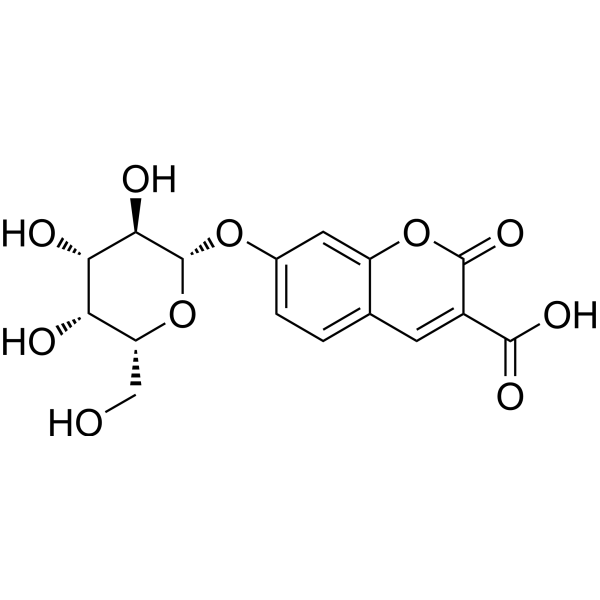
CUG (3-Carboxyumbelliferyl-β-D-galactopyranoside) is a fluorogenic substrate (λex=386, λem=445 nm, ε=32K).
|
-
-
- HY-W011445
-
-

-
- HY-W328332
-
-

-
- HY-W008741
-
-

-
- HY-W013815
-
-

-
- HY-W747445
-
-

-
- HY-W777640
-
|
|
Biochemical Assay Reagents
|
|
|
6-Hexadecanoylamino-4-methylumbelliferyl β-D-galactopyranoside is a specific fluorescent substrate with the function of detecting galactosidase activity. 6-Hexadecanoylamino-4-methylumbelliferyl β-D-galactopyranoside can be used in biomedical research to observe the efficiency of enzyme-catalyzed reactions. 6-Hexadecanoylamino-4-methylumbelliferyl β-D-galactopyranoside is also widely used in the analysis of polysaccharides and carbohydrate enzymology.
|
-

-
- HY-W351849
-
-

-
- HY-W039919
-
-

-
- HY-W357146
-
|
Phenethyl β-D-galactoside
|
Others
|
Others
|
|
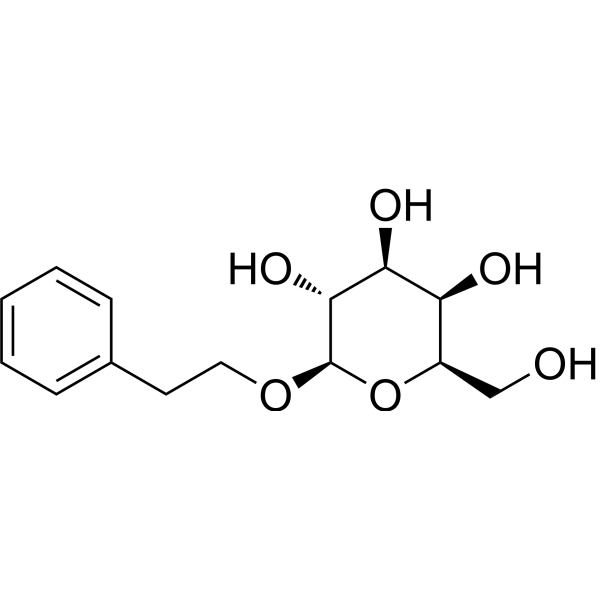
2-Phenylethyl β-D-galactopyranoside (Phenethyl β-D-galactoside) can be synthesized catalyzed by Aspergillus oryzae β-galactosidase .
|
-
-
- HY-W739420
-
|
|
Biochemical Assay Reagents
|
Others
|
|
4-Chloro-2-cyclopentylphenyl β-D-galactopyranoside is a class of biochemical reagents used in glycobiology research. Glycobiology studies the structure, synthesis, biology, and evolution of sugars. It involves carbohydrate chemistry, enzymology of glycan formation and degradation, protein-glycan recognition, and the role of glycans in biological systems. This field is closely related to basic research, biomedicine, and biotechnology .
|
-

-
- HY-W742564
-
|
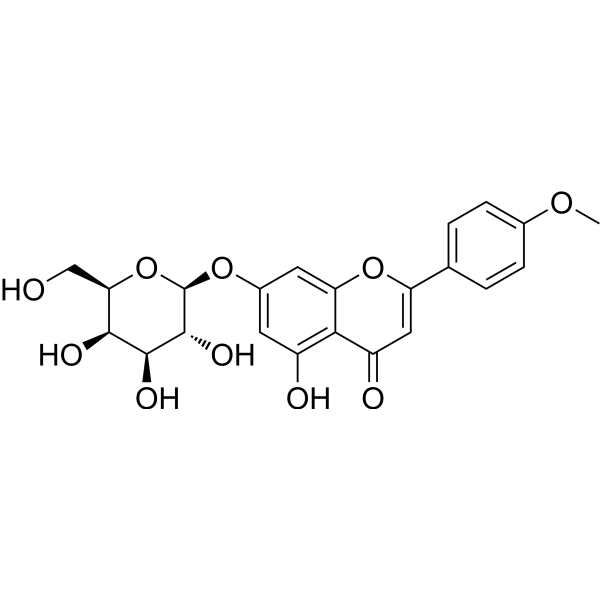
|
Cholinesterase (ChE)
|
Neurological Disease
|
|
Acacetin-7-O-β-D-galactopyranoside is a flavonoid that can be isolated from flower heads of Chrysanthemum morifolium. Acacetin-7-O-β-D-galactopyranoside inhibits AChE activity and can be used for research of Alzheimer’s disease .
|
-
-
- HY-15926S
-
|
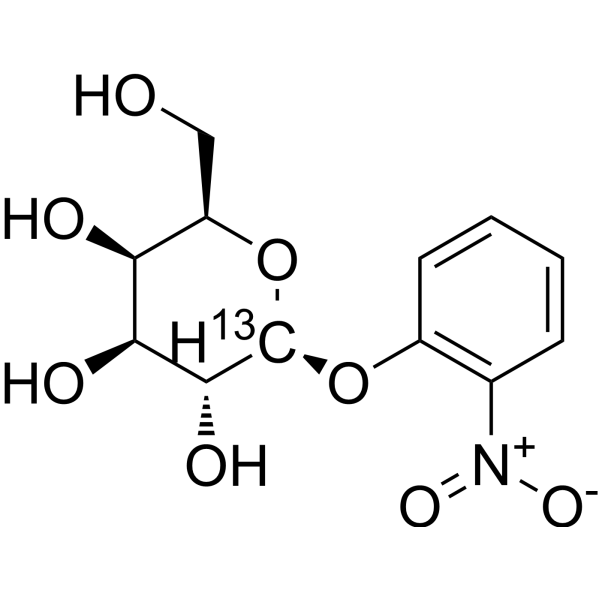
2-Nitrophenyl β-D-galactopyranoside-13C
|
Isotope-Labeled Compounds
|
Others
|
|
ONPG- 13C is the 13C labeled ONPG. ONPG is a colorimetric and spectrophotometric substrate for detection of β-galactosidase activit .
|
-
-
- HY-W661016
-
|
1-Azido-1-deoxy-beta-D-galactopyranoside, 97%
|
Biochemical Assay Reagents
|
Others
|
|
1-Azido-1-deoxy-β-D-galactopyranoside, 97% is extensively used in research on glycosylation processes and enzyme mechanisms.
|
-

-
- HY-W145560
-
|
|
Biochemical Assay Reagents
|
Others
|
|
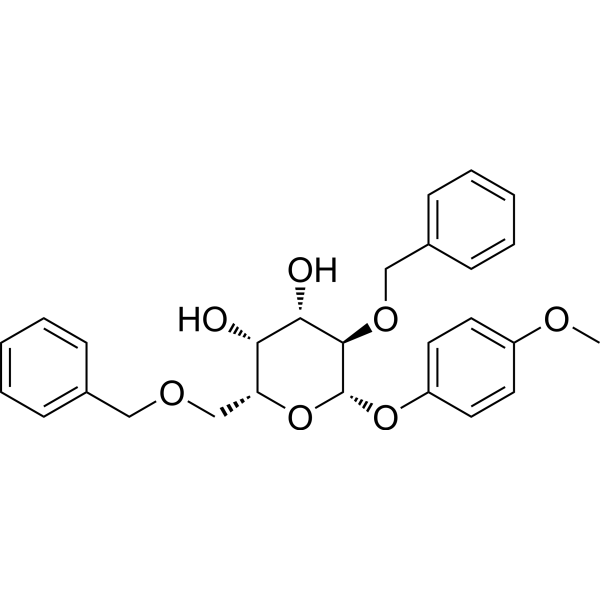
4-Methoxyphenyl 2,6-Di-O-benzyl-β-D-galactopyranoside is a biochemical reagent that can be used as a biological material or organic compound for life science related research.
|
-
-
- HY-W341133
-
-

-
- HY-W145582
-
|
|
Biochemical Assay Reagents
|
Others
|
|
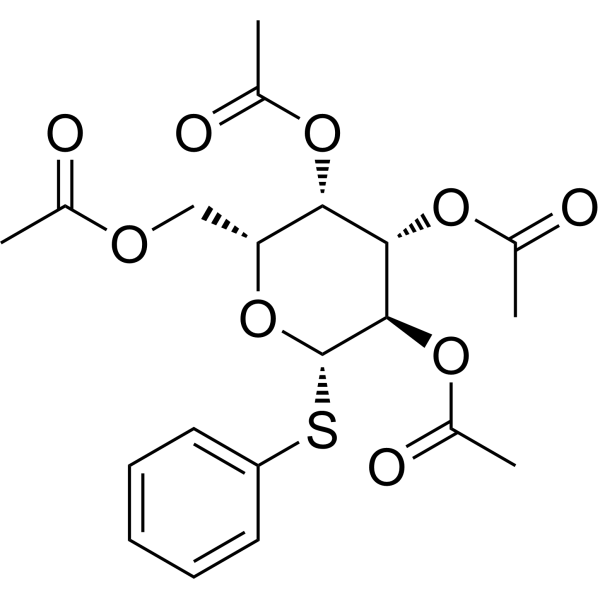
Phenyl 2,3,4,6-tetra-O-acetyl-1-thio-β-D-galactopyranoside is a biochemical reagent that can be used as a biological material or organic compound for life science related research.
|
-
-
- HY-W554423
-
-

-
- HY-116055
-
|
3-O-β-D-Galactopyranosyl-sn-glycerol
|
Biochemical Assay Reagents
|
Others
|
|
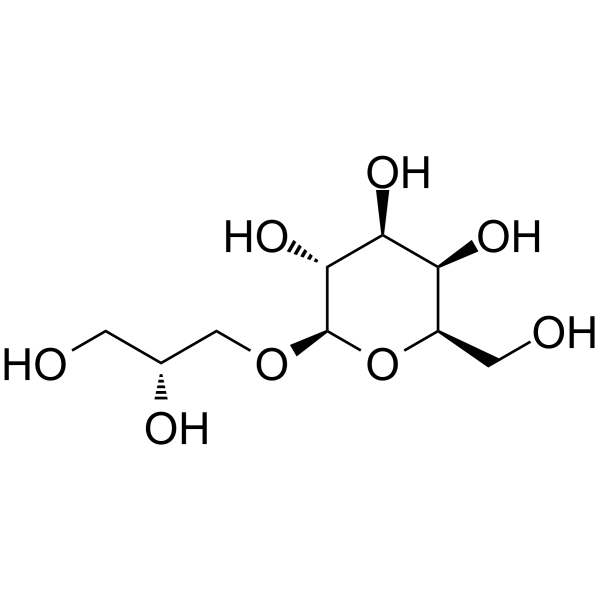
(2R)-Glycerol-O-β-D-galactopyranoside (3-O-β-D-Galactopyranosyl-sn-glycerol) is a good substrate for all three components of the lac operon, i.e. β-galactosidase, the lactose transporter and thiogalactoside transacetylase .
|
-
-
- HY-132239
-
|
5-Bromo-6-chloro-3-indolyl-beta-D-galactoside
|
Biochemical Assay Reagents
|
Others
|
|
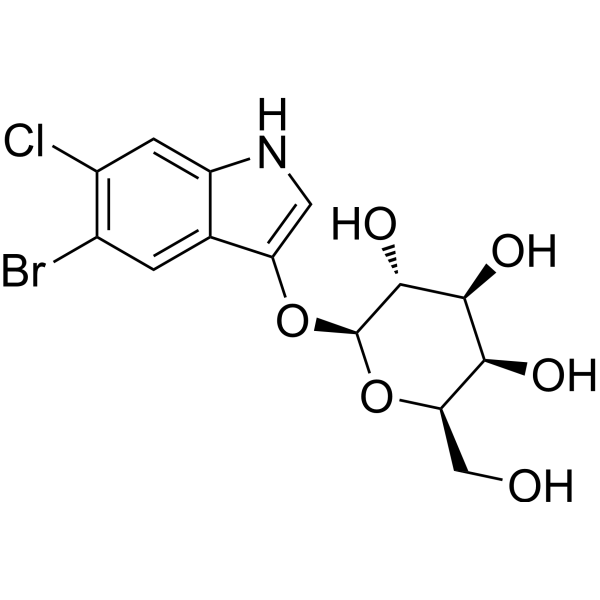
5-Bromo-6-chloro-3-indolyl β-D-Galactopyranoside (contains ca. 10% Ethyl Acetate) (5-Bromo-6-chloro-3-indolyl-beta-D-galactoside) is a chromogenic substrate of β-galactosidase (β-gal) .
|
-
-
- HY-W416350
-
|
|
Biochemical Assay Reagents
|
Others
|
|
β-D-Galactopyranoside, methyl 4,6-O-(phenylmethylene)-, dibenzoate is a class of biochemical reagents used in glycobiology research. Glycobiology studies the structure, synthesis, biology, and evolution of sugars. It involves carbohydrate chemistry, enzymology of glycan formation and degradation, protein-glycan recognition, and the role of glycans in biological systems. This field is closely related to basic research, biomedicine, and biotechnology .
|
-

-
- HY-N11809
-
|
|
Others
|
Others
|
|
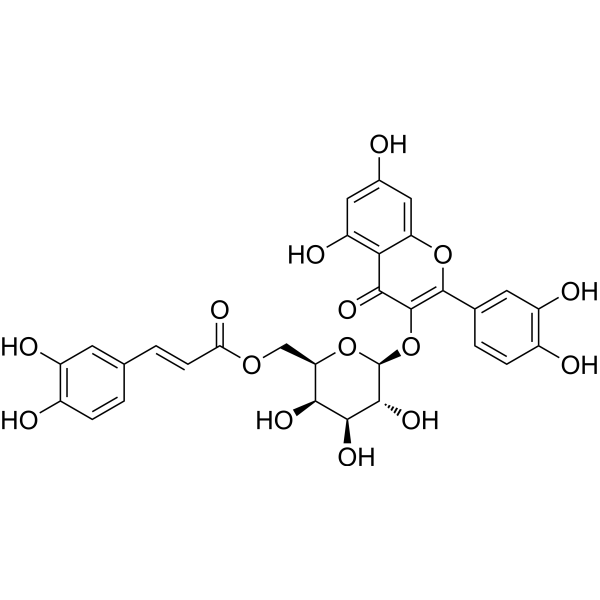
Quercetin-3-O-(6 "-o-ecaffeoyl) -β-d-Galactopyranoside is a flavonoid glycoside, that can be isolated from Polygonum viscosum.
|
-
-
- HY-N12742
-
|
|
Others
|
Inflammation/Immunology
|
|
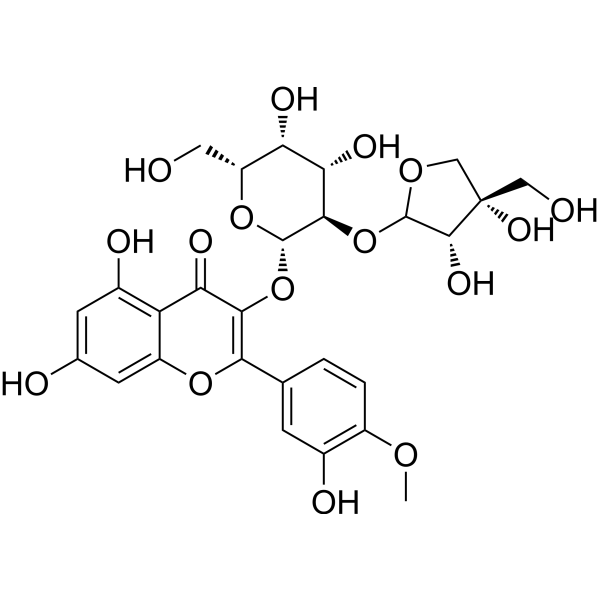
Tamarixetin 3-O-β-d-apiofuranosyl-(1 → 2)-β-d-galactopyranoside (compound 4) is an inhibitor of collagenase and elastase with potential anti-inflammatory activity. Tamarixetin 3-O-β-d-apiofuranosyl-(1 → 2)-β-d-galactopyranoside can be isolated from the methanol extract of the Balkan endemic species Astragalus thracicus Griseb .
|
-
-
- HY-139138
-
-

-
- HY-W399633
-
-

-
- HY-W317473
-
-

-
- HY-W416364
-
|
|
Biochemical Assay Reagents
|
Others
|
|
β-D-Galactopyranoside,2-nitrophenyl,2,3,4,6-tetraacetate is a class of biochemical reagents used in glycobiology research. Glycobiology studies the structure, synthesis, biology, and evolution of sugars. It involves carbohydrate chemistry, enzymology of glycan formation and degradation, protein-glycan recognition, and the role of glycans in biological systems. This field is closely related to basic research, biomedicine, and biotechnology .
|
-

-
- HY-W338150
-
-

-
- HY-W145598
-
|
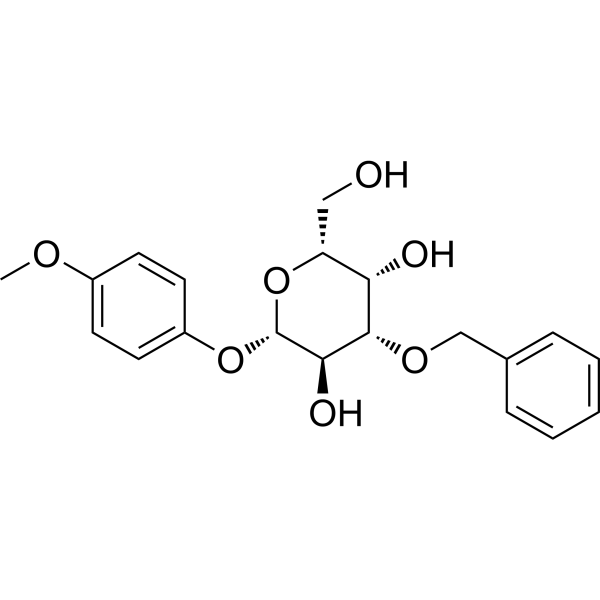
4-Methoxyphenyl 3-O-Benzyl-beta-D-galactopyranoside
|
Biochemical Assay Reagents
|
Others
|
|
4-Methoxyphenyl 3-O-Benzyl-β-D-galactopyranoside is a biochemical reagent that can be used as a biological material or organic compound for life science related research.
|
-
-
- HY-W145552
-
|
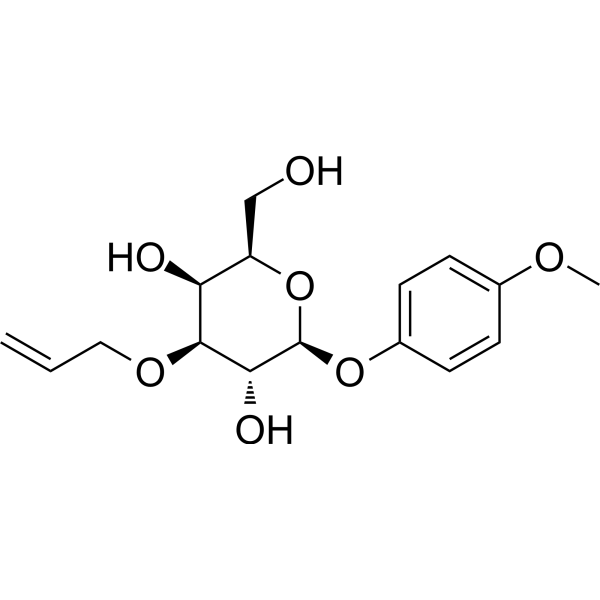
4-Methoxyphenyl 3-O-allyl-beta-D-galactopyranoside
|
Biochemical Assay Reagents
|
Others
|
|
4-Methoxyphenyl 3-O-Allyl-β-D-galactopyranoside is an organic compound belonging to the family of galactopyranosides. It is often used as a building block for the synthesis of more complex glycosides and glycoconjugates. 4-Methoxyphenyl 3-O-Allyl-β-D-galactopyranoside has various applications in biochemical research, especially in the study of carbohydrate metabolism and protein-carbohydrate interactions. This compound contains an allyl protecting group that can be selectively removed using palladium-catalyzed conditions to reveal hydroxyl functionality for further chemical modification.
|
-
-
- HY-W293502
-
|
2-Chloro-4-nitrophenyl-beta-D-galactopyranoside
|
Biochemical Assay Reagents
|
Others
|
|
2-Chloro-4-nitrophenyl-β-D-galactopyranoside is a chromogenic substrate used for testing enzyme activity. It is commonly used in molecular biology research to detect and measure the activity of β-galactosidase (biosynth: EC03318).
|
-

- HY-W288676
-
|
|
Biochemical Assay Reagents
|
Others
|
|
6-Fluoro-3-indolyl-β-D-galactopyranoside is a chromogenic enzyme substrate commonly used in microbiology to detect the expression of β-galactosidase in bacterial colonies.
|
-

- HY-W104635
-
|
6-Bromo-2-naphthyl-beta-D-galactopyranoside
|
Biochemical Assay Reagents
|
Others
|
|
6-Bromo-2-naphthyl-β-D-galactopyranoside is a chromogenic substrate commonly used to measure β-galactosidase enzyme activity in food, enzyme substrates, and culture media. Upon hydrolysis by β-galactosidase, it generates a yellow precipitate indicating the enzyme's presence.
|
-

- HY-W701360
-
|
|
Biochemical Assay Reagents
|
Others
|
|
β-D-Galactopyranoside,2-phenyl-1,3-dioxan-5-yl,2,3,4,6-tetraacetate is a class of biochemical reagents used in glycobiology research. Glycobiology studies the structure, synthesis, biology, and evolution of sugars. It involves carbohydrate chemistry, enzymology of glycan formation and degradation, protein-glycan recognition, and the role of glycans in biological systems. This field is closely related to basic research, biomedicine, and biotechnology .
|
-

- HY-138943
-
|
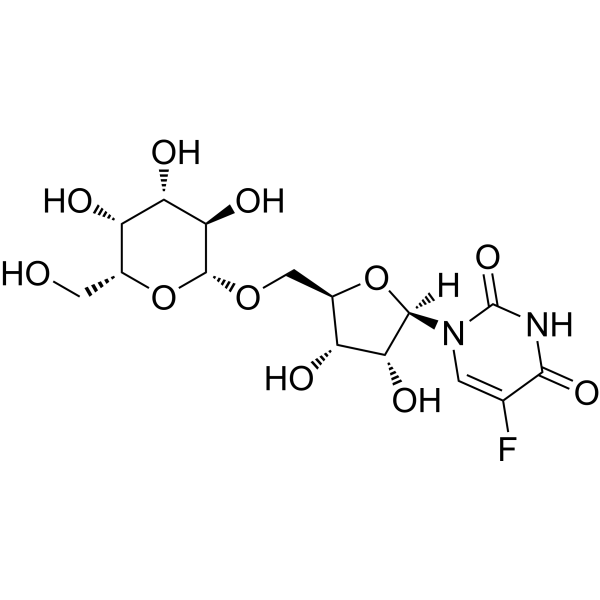
5'-O-β-D-galactosyl-5-fluorouridine
|
Drug Intermediate
|
Cancer
|
|
5-Fluorouridine 5'-O-β-D-galactopyranoside (5'-O-β-D-galactosyl-5-fluorouridine) is a 5-Fluorouridine proagent. 5-Fluorouridine 5'-O-β-D-galactopyranoside can be converted by the enzyme β-D-galactosidase to the potent antineoplastic agent 5-Fluorouridine .
|
-
- HY-W143205
-
|
Cyanomethyl 2,3,4,6-tetra-O-acetyl-1-thio-beta-D-galactopyranoside
|
Biochemical Assay Reagents
|
Others
|
|
Cyanomethyl 2,3,4,6-tetra-O-acetyl-1-thio-β-D-galactopyranoside is a synthetic glycosylating agent that can be used to modify sugars in various ways.
|
-

- HY-W145551
-
|
|
Biochemical Assay Reagents
|
Others
|
|
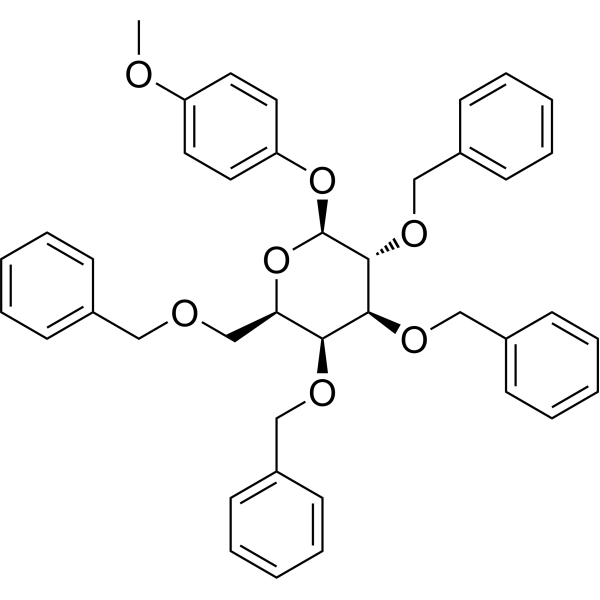
4-Methoxyphenyl 2,3,4,6-tetra-O-benzyl-β-D-galactopyranoside is a biochemical reagent that can be used as a biological material or organic compound for life science related research.
|
-
- HY-W357145
-
|
|
Biochemical Assay Reagents
|
Others
|
|
(4-Nitrophenyl)methyl 1-thio-β-D-galactopyranoside is a class of biochemical reagents used in glycobiology research. Glycobiology studies the structure, synthesis, biology, and evolution of sugars. It involves carbohydrate chemistry, enzymology of glycan formation and degradation, protein-glycan recognition, and the role of glycans in biological systems. This field is closely related to basic research, biomedicine, and biotechnology .
|
-

- HY-W145557
-
-

- HY-W416257
-
|
|
Biochemical Assay Reagents
|
|
|
Methyl 3-O-β-D-galactopyranosyl-β-D-galactopyranoside is a class of biochemical reagent used in glycobiology research. Glycobiology studies the structure, synthesis, biology, and evolution of sugars. It deals with carbohydrate chemistry, glycan formation and degradation enzymology, protein-glycan recognition, and the role of glycans in biological systems. The field is closely related to basic research, biomedicine and biotechnology .
|
-

- HY-D1510
-
|
|
Biochemical Assay Reagents
|
Others
|
|
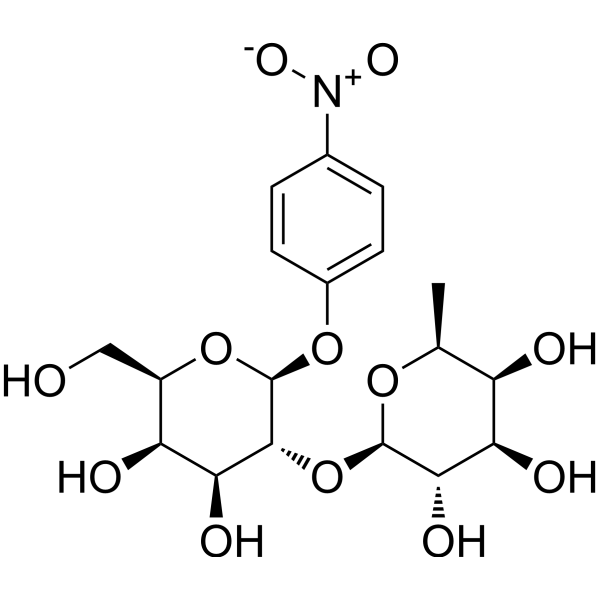
4-Nitrophenyl 2-O-(β-L-Fucopyranosyl)-β-D-Galactopyranoside is a synthetic chromogenic substrate and can be used in the assay of α-fucosidases which hydrolyze the glycosidic linkage Fuc α1-2Gal. The assay is based on the sequential action of α-fucosidase and an exogenously added exo-β-d-galactosidase to release the easily measurable p-nitrophenol moiety .
|
-
- HY-W145601
-
|
|
Biochemical Assay Reagents
|
Others
|
|
4-Methoxyphenyl 3-O-Allyl-4,6-O-benzylidene-β-D-galactopyranoside is a class of biochemical reagents used in glycobiology research. Glycobiology studies the structure, synthesis, biology, and evolution of sugars. It involves carbohydrate chemistry, enzymology of glycan formation and degradation, protein-glycan recognition, and the role of glycans in biological systems. This field is closely related to basic research, biomedicine, and biotechnology .
|
-

- HY-W587779
-
|
|
Biochemical Assay Reagents
|
|
|
o-Nitrophenyl β-D-galactopyranoside-6-phosphate cyclohexylammonium is a chromogenic substrate with activity for β-galactosidase detection. The use of o-Nitrophenyl β-D-galactopyranoside-6-phosphate cyclohexylammonium can help researchers quickly identify and quantify β-galactosidase activity.
|
-

- HY-W698542
-
|
|
Biochemical Assay Reagents
|
Others
|
|
β-D-Galactopyranoside, phenylmethyl 3,4,6-tris-O-(phenylmethyl)-, acetate is a class of biochemical reagents used in glycobiology research. Glycobiology studies the structure, synthesis, biology, and evolution of sugars. It involves carbohydrate chemistry, enzymology of glycan formation and degradation, protein-glycan recognition, and the role of glycans in biological systems. This field is closely related to basic research, biomedicine, and biotechnology .
|
-

- HY-W416285
-
-

- HY-W701864
-
-

- HY-W416327
-
|
|
Biochemical Assay Reagents
|
Others
|
|
β-D-Galactopyranoside,4-nitrophenyl,3,4,6-triacetate is a class of biochemical reagents used in glycobiology research. Glycobiology studies the structure, synthesis, biology, and evolution of sugars. It involves carbohydrate chemistry, enzymology of glycan formation and degradation, protein-glycan recognition, and the role of glycans in biological systems. This field is closely related to basic research, biomedicine, and biotechnology .
|
-

- HY-W357132
-
-

- HY-W416111
-
-

- HY-W039913
-
-

- HY-W699186
-
-

- HY-N17223
-
|
|
Others
|
Others
|
|
1,2-Di-O-linolenoylglycerol 3-O-β-D-galactopyranoside is a monogalactosyl diacylglycerol that can be found in the axenic cyanobacterium Phormidium tenue. 1,2-Di-O-linolenoylglycerol 3-O-β-D-galactopyranoside can induce lysis of Phormidium tenue .
|
-

- HY-W776848
-
-

- HY-W145524
-
|
Phenyl 3-O-allyl-2,4,6-tri-O-benzyl-1-thio-β-D-galactopyranoside
|
Biochemical Assay Reagents
|
Others
|
|
Gal[246Bn,3All]-β-SPh is a biochemical reagent that can be used as a biological material or organic compound for life science related research.
|
-
![Gal[246Bn,3All]-β-SPh](//file.medchemexpress.com/product_pic/hy-w145524.gif)
- HY-W145662
-
|
|
Biochemical Assay Reagents
|
Others
|
|
Octadecylthioethyl 4-O-α-D-galactopyranosyl-β-D-galactopyranoside is a glycolipid receptor that can be used to study lipid regulation mechanisms .
|
-

- HY-W793474
-
|
|
Biochemical Assay Reagents
|
Others
|
|
2-Naphthyl-β-D-galactopyranoside hydrate is a class of biochemical reagents used in glycobiology research. Glycobiology studies the structure, synthesis, biology, and evolution of sugars. It involves carbohydrate chemistry, enzymology of glycan formation and degradation, protein-glycan recognition, and the role of glycans in biological systems. This field is closely related to basic research, biomedicine, and biotechnology .
|
-

- HY-W049713
-
|
|
Biochemical Assay Reagents
|
|
|
4-Methoxyphenyl 3, 4-O-isopropylidene-β-d-Galactopyranoside is a class of biochemical reagents used for the study of glycobiology. Glycobiology studies the structure, synthesis, biology, and evolution of sugars. It deals with carbohydrate chemistry, glycan formation and degradation enzymology, protein-glycan recognition, and the role of glycans in biological systems. The field is closely related to basic research, biomedicine and biotechnology .
|
-

- HY-W039926
-
-

- HY-W416107
-
|
|
Biochemical Assay Reagents
|
Others
|
|
Phenylmethyl 3,4,6-tris-O-(phenylmethyl)-β-D-galactopyranoside is a class of biochemical reagents used in glycobiology research. Glycobiology studies the structure, synthesis, biology, and evolution of sugars. It involves carbohydrate chemistry, enzymology of glycan formation and degradation, protein-glycan recognition, and the role of glycans in biological systems. This field is closely related to basic research, biomedicine, and biotechnology .
|
-

- HY-W552594
-
|
|
Biochemical Assay Reagents
|
Others
|
|
Octylβ-D-galactopyranoside, 98% is a non-ionic detergent commonly used in scientific research for its ability to dissolve and stabilize membrane proteins.
|
-

- HY-W701787
-
|
|
Biochemical Assay Reagents
|
Others
|
|
Phenyl-2,3,4,6-tetra-O-acetyl-β-D-galactopyranoside is a class of biochemical reagents used in glycobiology research. Glycobiology studies the structure, synthesis, biology, and evolution of sugars. It involves carbohydrate chemistry, enzymology of glycan formation and degradation, protein-glycan recognition, and the role of glycans in biological systems. This field is closely related to basic research, biomedicine, and biotechnology .
|
-

- HY-141413
-
|
|
Biochemical Assay Reagents
|
Others
|
|
Benzyl 2,3-Di-O-benzyl-4-O-benzoyl-β-D-galactopyranoside is a class of biochemical reagents used in glycobiology research. Glycobiology studies the structure, synthesis, biology, and evolution of sugars. It involves carbohydrate chemistry, enzymology of glycan formation and degradation, protein-glycan recognition, and the role of glycans in biological systems. This field is closely related to basic research, biomedicine, and biotechnology .
|
-

- HY-W739878
-
-

- HY-N17303
-
|
|
Drug Derivative
|
Others
|
|
Capilliposide II is a flavonol glycoside found in the whole herbs of Lysimachia capillipes. Capilliposide II has the structure kaempferol-3-O---β-D-galactopyranoside .
|
-

- HY-N17301
-
|
|
Others
|
Others
|
|
Capilliposide I is a tetrasaccharide flavonol glycoside found in the whole herbs of Lysimachia capillipes .
|
-

| Cat. No. |
Product Name |
Type |
-
- HY-126839
-
C12FDG
Maximum Cited Publications
9 Publications Verification
5-Dodecanoylaminofluorescein di-β-D-galactopyranoside
|
Fluorescent Dyes
|
|
C12FDG (5-Dodecanoylaminofluorescein di-β-D-Galactopyranoside) is a lipophilic green fluorescent substrate for β-galactosidase detection. C12-FDG is more sensitive than Fluorescein di(β-D-galactopyranoside) (HY-101895) for beta-galactosidase activity determinations in animal cells (Ex/Em = 488/523 nm) .
|
-
- HY-101895
-
|
FDG
|
Fluorescent Dyes
|
|
Fluorescein di(β-D-galactopyranoside) is a fluorogenic substrate for β-galactosidase (λex=485 nm, λem=535 nm).
|
-
- HY-D1224
-
|
CPRG
|
Fluorescent Dyes
|
|
Chlorophenol red-β-D-galactopyranoside (CPRG) is an efficient and sensitive chromogenic substrate for β-galactosidase (HY-P2869), widely used in colorimetric assays. Chlorophenol red-β-D-galactopyranoside itself appears pale yellow. When it is specifically hydrolyzed by β-galactosidase, it releases chlorophenol red. The released chlorophenol red turns purple-red under alkaline or neutral pH conditions. This color change from yellow to red can be quantitatively detected at wavelengths of 540-572 nm using visible spectrophotometry .
|
-
- HY-137845
-
|
|
Fluorescent Dyes
|
|
4-Methylumbelliferyl β-D-galactopyranoside is a fluorescent substrate for β-galactosidase which, when cleaved, produces a water-soluble blue fluorescent coumarin fluorophore that can be detected using a fluoroenzymeter or fluorometer .
|
-
- HY-DY1033
-
|
|
Fluorescent Dyes
|
C12FDG (5-Dodecanoylaminofluorescein di-β-D-Galactopyranoside) (solution) is a lipophilic green fluorescent substrate for β-galactosidase detection. C12-FDG is more sensitive than Fluorescein di (β-D-galactopyranoside) (HY-101895) for beta-galactosidase activity determinations in animal cells (Ex/Em = 488/523 nm) .
Solvent and concentration: DMSO: 10 mM
|
-
- HY-D1633A
-
|
|
Fluorescent Dyes
|
|
4-Methylumbelliferyl-β-D-galactopyranoside 6-sulfate sodium is a fluorescent dye. 4-Methylumbelliferyl-β-D-galactopyranoside 6-sulfate sodium undergoes desulphation by galactose-6-sulphate sulphatase to form 4-methylumbelliferyl-β-D-galactopyranoside, which is cleaved by β-galactosidase to release fluorescent 4-methylumbelliferone. 4-Methylumbelliferyl-β-D-galactopyranoside 6-sulfate sodium interacts with N-acetylgalactosamine-6-sulfate sulfatase (GALNS) via hydrogen bonds, electrostatic interactions, and steric interactions. 4-Methylumbelliferyl-β-D-galactopyranoside 6-sulfate sodium serves as a substrate in assays measuring galactose-6-sulphate sulphatase and GALNS activity. 4-Methylumbelliferyl-β-D-galactopyranoside 6-sulfate sodium can be used for the research of Morquio disease type A (mucopolysaccharidosis IV A) .
|
-
- HY-D1633
-
|
|
Fluorescent Dyes
|
|
4-Methylumbelliferyl-β-D-galactopyranoside 6-sulfate is a fluorescent dye. 4-Methylumbelliferyl-β-D-galactopyranoside 6-sulfate undergoes desulphation by galactose-6-sulphate sulphatase to form 4-methylumbelliferyl-β-D-galactopyranoside, which is cleaved by β-galactosidase to release fluorescent 4-methylumbelliferone. 4-Methylumbelliferyl-β-D-galactopyranoside 6-sulfate interacts with N-acetylgalactosamine-6-sulfate sulfatase (GALNS) via hydrogen bonds, electrostatic interactions, and steric interactions. 4-Methylumbelliferyl-β-D-galactopyranoside 6-sulfate serves as a substrate in assays measuring galactose-6-sulphate sulphatase and GALNS activity. 4-Methylumbelliferyl-β-D-galactopyranoside 6-sulfate can be used for the research of Morquio disease type A (mucopolysaccharidosis IV A) .
|
-
- HY-D1026
-
|
3-Carboxyumbelliferyl-β-D-galactopyranoside
|
Fluorescent Dyes
|
|
CUG (3-Carboxyumbelliferyl-β-D-galactopyranoside) is a fluorogenic substrate (λex=386, λem=445 nm, ε=32K).
|
| Cat. No. |
Product Name |
Type |
-
- HY-15926
-
|
2-Nitrophenyl β-D-galactopyranoside
|
Biochemical Assay Reagents
|
|
ONPG is a colorimetric and spectrophotometric substrate for detection of β-galactosidase activity.
|
-
- HY-137550
-
|
|
Biochemical Assay Reagents
|
|
4-Nitrophenyl β-D-galactopyranoside is a derivative of beta-D-galactoside and monosaccharide. 4-Nitrophenyl β-D-galactopyranoside can be used for affinity label .
|
-
- HY-W011654
-
|
4-Aminophenyl-beta-D-galactopyranoside, 98%
|
Biochemical Assay Reagents
|
|
4-Aminophenyl-β-D-galactopyranoside, 98% is a highly efficient substrate for β-galactosidase. It is specifically hydrolyzed by this enzyme to release galactose and electroactive p-aminophenol. 4-Aminophenyl-β-D-galactopyranoside, 98% is widely used in colorimetric and electrochemical assays for detecting β-galactosidase activity and determining enzyme kinetics, such as in biosensing fields including cellular senescence, pathogen and contaminant detection. In addition, since β-galactosidase is often overexpressed in primary ovarian cancer, 4-Aminophenyl-β-D-galactopyranoside, 98% can also be applied to related research on primary ovarian cancer .
|
-
- HY-137249
-
|
|
Biochemical Assay Reagents
|
|
Resorufin-β-D-galactopyranoside is a commonly used substrate in various biochemical assays to measure the activity of β-galactosidase, an important enzyme involved in lactose metabolism and regulation of gene expression. Resorufin-β-D-galactopyranoside has unique chemical properties and can be hydrolyzed by β-galactosidase to form a red fluorescent product called resorufin. This makes it a useful tool for detecting and quantifying β-galactosidase activity in biological samples such as bacteria or mammalian cells.
|
-
- HY-117266
-
|
beta-D-galactopyranoside, 98%
|
Biochemical Assay Reagents
|
|
β-D-Galactopyranoside, 98% (beta-D-Galactopyranoside, 98%) can be used in glycobiology research.
|
-
- HY-D1224A
-
|
CPRG sodium
|
Biochemical Assay Reagents
|
|
Chlorophenol red-β-D-galactopyranoside (CPRG) sodium is an efficient and sensitive chromogenic substrate for β-galactosidase (HY-P2869), widely used in colorimetric assays. Chlorophenol red-β-D-galactopyranoside sodium itself appears pale yellow. When it is specifically hydrolyzed by β-galactosidase, it releases chlorophenol red. The released chlorophenol red turns purple-red under alkaline or neutral pH conditions. This color change from yellow to red can be quantitatively detected at wavelengths of 540-572 nm using visible spectrophotometry .
|
-
- HY-W011445
-
-
- HY-W328332
-
-
- HY-W008741
-
-
- HY-W013815
-
-
- HY-W747445
-
-
- HY-W777640
-
|
|
Biochemical Assay Reagents
|
|
6-Hexadecanoylamino-4-methylumbelliferyl β-D-galactopyranoside is a specific fluorescent substrate with the function of detecting galactosidase activity. 6-Hexadecanoylamino-4-methylumbelliferyl β-D-galactopyranoside can be used in biomedical research to observe the efficiency of enzyme-catalyzed reactions. 6-Hexadecanoylamino-4-methylumbelliferyl β-D-galactopyranoside is also widely used in the analysis of polysaccharides and carbohydrate enzymology.
|
-
- HY-W351849
-
-
- HY-W039919
-
-
- HY-W739420
-
|
|
Biochemical Assay Reagents
|
|
4-Chloro-2-cyclopentylphenyl β-D-galactopyranoside is a class of biochemical reagents used in glycobiology research. Glycobiology studies the structure, synthesis, biology, and evolution of sugars. It involves carbohydrate chemistry, enzymology of glycan formation and degradation, protein-glycan recognition, and the role of glycans in biological systems. This field is closely related to basic research, biomedicine, and biotechnology .
|
-
- HY-W661016
-
|
1-Azido-1-deoxy-beta-D-galactopyranoside, 97%
|
Biochemical Assay Reagents
|
|
1-Azido-1-deoxy-β-D-galactopyranoside, 97% is extensively used in research on glycosylation processes and enzyme mechanisms.
|
-
- HY-W145560
-
|
|
Biochemical Assay Reagents
|
|
4-Methoxyphenyl 2,6-Di-O-benzyl-β-D-galactopyranoside is a biochemical reagent that can be used as a biological material or organic compound for life science related research.
|
-
- HY-W341133
-
-
- HY-W145582
-
|
|
Biochemical Assay Reagents
|
|
Phenyl 2,3,4,6-tetra-O-acetyl-1-thio-β-D-galactopyranoside is a biochemical reagent that can be used as a biological material or organic compound for life science related research.
|
-
- HY-W554423
-
-
- HY-W416350
-
|
|
Biochemical Assay Reagents
|
|
β-D-Galactopyranoside, methyl 4,6-O-(phenylmethylene)-, dibenzoate is a class of biochemical reagents used in glycobiology research. Glycobiology studies the structure, synthesis, biology, and evolution of sugars. It involves carbohydrate chemistry, enzymology of glycan formation and degradation, protein-glycan recognition, and the role of glycans in biological systems. This field is closely related to basic research, biomedicine, and biotechnology .
|
-
- HY-139138
-
-
- HY-W399633
-
-
- HY-W317473
-
-
- HY-W416364
-
|
|
Biochemical Assay Reagents
|
|
β-D-Galactopyranoside,2-nitrophenyl,2,3,4,6-tetraacetate is a class of biochemical reagents used in glycobiology research. Glycobiology studies the structure, synthesis, biology, and evolution of sugars. It involves carbohydrate chemistry, enzymology of glycan formation and degradation, protein-glycan recognition, and the role of glycans in biological systems. This field is closely related to basic research, biomedicine, and biotechnology .
|
-
- HY-W338150
-
-
- HY-W145598
-
|
4-Methoxyphenyl 3-O-Benzyl-beta-D-galactopyranoside
|
Biochemical Assay Reagents
|
|
4-Methoxyphenyl 3-O-Benzyl-β-D-galactopyranoside is a biochemical reagent that can be used as a biological material or organic compound for life science related research.
|
-
- HY-W145552
-
|
4-Methoxyphenyl 3-O-allyl-beta-D-galactopyranoside
|
Biochemical Assay Reagents
|
|
4-Methoxyphenyl 3-O-Allyl-β-D-galactopyranoside is an organic compound belonging to the family of galactopyranosides. It is often used as a building block for the synthesis of more complex glycosides and glycoconjugates. 4-Methoxyphenyl 3-O-Allyl-β-D-galactopyranoside has various applications in biochemical research, especially in the study of carbohydrate metabolism and protein-carbohydrate interactions. This compound contains an allyl protecting group that can be selectively removed using palladium-catalyzed conditions to reveal hydroxyl functionality for further chemical modification.
|
-
- HY-W293502
-
|
2-Chloro-4-nitrophenyl-beta-D-galactopyranoside
|
Biochemical Assay Reagents
|
|
2-Chloro-4-nitrophenyl-β-D-galactopyranoside is a chromogenic substrate used for testing enzyme activity. It is commonly used in molecular biology research to detect and measure the activity of β-galactosidase (biosynth: EC03318).
|
-
- HY-W288676
-
|
|
Biochemical Assay Reagents
|
|
6-Fluoro-3-indolyl-β-D-galactopyranoside is a chromogenic enzyme substrate commonly used in microbiology to detect the expression of β-galactosidase in bacterial colonies.
|
-
- HY-W104635
-
|
6-Bromo-2-naphthyl-beta-D-galactopyranoside
|
Biochemical Assay Reagents
|
|
6-Bromo-2-naphthyl-β-D-galactopyranoside is a chromogenic substrate commonly used to measure β-galactosidase enzyme activity in food, enzyme substrates, and culture media. Upon hydrolysis by β-galactosidase, it generates a yellow precipitate indicating the enzyme's presence.
|
-
- HY-W701360
-
|
|
Biochemical Assay Reagents
|
|
β-D-Galactopyranoside,2-phenyl-1,3-dioxan-5-yl,2,3,4,6-tetraacetate is a class of biochemical reagents used in glycobiology research. Glycobiology studies the structure, synthesis, biology, and evolution of sugars. It involves carbohydrate chemistry, enzymology of glycan formation and degradation, protein-glycan recognition, and the role of glycans in biological systems. This field is closely related to basic research, biomedicine, and biotechnology .
|
-
- HY-W143205
-
|
Cyanomethyl 2,3,4,6-tetra-O-acetyl-1-thio-beta-D-galactopyranoside
|
Biochemical Assay Reagents
|
|
Cyanomethyl 2,3,4,6-tetra-O-acetyl-1-thio-β-D-galactopyranoside is a synthetic glycosylating agent that can be used to modify sugars in various ways.
|
-
- HY-W145551
-
|
|
Biochemical Assay Reagents
|
|
4-Methoxyphenyl 2,3,4,6-tetra-O-benzyl-β-D-galactopyranoside is a biochemical reagent that can be used as a biological material or organic compound for life science related research.
|
-
- HY-W357145
-
|
|
Biochemical Assay Reagents
|
|
(4-Nitrophenyl)methyl 1-thio-β-D-galactopyranoside is a class of biochemical reagents used in glycobiology research. Glycobiology studies the structure, synthesis, biology, and evolution of sugars. It involves carbohydrate chemistry, enzymology of glycan formation and degradation, protein-glycan recognition, and the role of glycans in biological systems. This field is closely related to basic research, biomedicine, and biotechnology .
|
-
- HY-W145557
-
|
|
Biochemical Assay Reagents
|
|
4-Methoxyphenyl 3,4-O-isopropylidene-2,6-bis-O-(4-methylbenzoyl)-β-D-galactopyranoside is a biochemical reagent.
|
-
- HY-W416257
-
|
|
Biochemical Assay Reagents
|
|
Methyl 3-O-β-D-galactopyranosyl-β-D-galactopyranoside is a class of biochemical reagent used in glycobiology research. Glycobiology studies the structure, synthesis, biology, and evolution of sugars. It deals with carbohydrate chemistry, glycan formation and degradation enzymology, protein-glycan recognition, and the role of glycans in biological systems. The field is closely related to basic research, biomedicine and biotechnology .
|
-
- HY-W145601
-
|
|
Biochemical Assay Reagents
|
|
4-Methoxyphenyl 3-O-Allyl-4,6-O-benzylidene-β-D-galactopyranoside is a class of biochemical reagents used in glycobiology research. Glycobiology studies the structure, synthesis, biology, and evolution of sugars. It involves carbohydrate chemistry, enzymology of glycan formation and degradation, protein-glycan recognition, and the role of glycans in biological systems. This field is closely related to basic research, biomedicine, and biotechnology .
|
-
- HY-W587779
-
|
|
Biochemical Assay Reagents
|
|
o-Nitrophenyl β-D-galactopyranoside-6-phosphate cyclohexylammonium is a chromogenic substrate with activity for β-galactosidase detection. The use of o-Nitrophenyl β-D-galactopyranoside-6-phosphate cyclohexylammonium can help researchers quickly identify and quantify β-galactosidase activity.
|
-
- HY-W698542
-
|
|
Biochemical Assay Reagents
|
|
β-D-Galactopyranoside, phenylmethyl 3,4,6-tris-O-(phenylmethyl)-, acetate is a class of biochemical reagents used in glycobiology research. Glycobiology studies the structure, synthesis, biology, and evolution of sugars. It involves carbohydrate chemistry, enzymology of glycan formation and degradation, protein-glycan recognition, and the role of glycans in biological systems. This field is closely related to basic research, biomedicine, and biotechnology .
|
-
- HY-W416285
-
-
- HY-W701864
-
-
- HY-W416327
-
|
|
Biochemical Assay Reagents
|
|
β-D-Galactopyranoside,4-nitrophenyl,3,4,6-triacetate is a class of biochemical reagents used in glycobiology research. Glycobiology studies the structure, synthesis, biology, and evolution of sugars. It involves carbohydrate chemistry, enzymology of glycan formation and degradation, protein-glycan recognition, and the role of glycans in biological systems. This field is closely related to basic research, biomedicine, and biotechnology .
|
-
- HY-W357132
-
-
- HY-W416111
-
-
- HY-W039913
-
-
- HY-W699186
-
-
- HY-W776848
-
-
- HY-W145524
-
|
Phenyl 3-O-allyl-2,4,6-tri-O-benzyl-1-thio-β-D-galactopyranoside
|
Biochemical Assay Reagents
|
|
Gal[246Bn,3All]-β-SPh is a biochemical reagent that can be used as a biological material or organic compound for life science related research.
|
-
- HY-W145662
-
|
|
Biochemical Assay Reagents
|
|
Octadecylthioethyl 4-O-α-D-galactopyranosyl-β-D-galactopyranoside is a glycolipid receptor that can be used to study lipid regulation mechanisms .
|
- HY-W793474
-
|
|
Biochemical Assay Reagents
|
|
2-Naphthyl-β-D-galactopyranoside hydrate is a class of biochemical reagents used in glycobiology research. Glycobiology studies the structure, synthesis, biology, and evolution of sugars. It involves carbohydrate chemistry, enzymology of glycan formation and degradation, protein-glycan recognition, and the role of glycans in biological systems. This field is closely related to basic research, biomedicine, and biotechnology .
|
- HY-W049713
-
|
|
Biochemical Assay Reagents
|
|
4-Methoxyphenyl 3, 4-O-isopropylidene-β-d-Galactopyranoside is a class of biochemical reagents used for the study of glycobiology. Glycobiology studies the structure, synthesis, biology, and evolution of sugars. It deals with carbohydrate chemistry, glycan formation and degradation enzymology, protein-glycan recognition, and the role of glycans in biological systems. The field is closely related to basic research, biomedicine and biotechnology .
|
- HY-W039926
-
|
|
Biochemical Assay Reagents
|
|
Ethyl 2-acetamido-3,4,6-tri-O-acetyl-2-deoxy-1-thio-β-D-galactopyranoside can be used in glycobiology research.
|
- HY-W416107
-
|
|
Biochemical Assay Reagents
|
|
Phenylmethyl 3,4,6-tris-O-(phenylmethyl)-β-D-galactopyranoside is a class of biochemical reagents used in glycobiology research. Glycobiology studies the structure, synthesis, biology, and evolution of sugars. It involves carbohydrate chemistry, enzymology of glycan formation and degradation, protein-glycan recognition, and the role of glycans in biological systems. This field is closely related to basic research, biomedicine, and biotechnology .
|
- HY-W701787
-
|
|
Biochemical Assay Reagents
|
|
Phenyl-2,3,4,6-tetra-O-acetyl-β-D-galactopyranoside is a class of biochemical reagents used in glycobiology research. Glycobiology studies the structure, synthesis, biology, and evolution of sugars. It involves carbohydrate chemistry, enzymology of glycan formation and degradation, protein-glycan recognition, and the role of glycans in biological systems. This field is closely related to basic research, biomedicine, and biotechnology .
|
- HY-141413
-
|
|
Biochemical Assay Reagents
|
|
Benzyl 2,3-Di-O-benzyl-4-O-benzoyl-β-D-galactopyranoside is a class of biochemical reagents used in glycobiology research. Glycobiology studies the structure, synthesis, biology, and evolution of sugars. It involves carbohydrate chemistry, enzymology of glycan formation and degradation, protein-glycan recognition, and the role of glycans in biological systems. This field is closely related to basic research, biomedicine, and biotechnology .
|
- HY-W739878
-
| Cat. No. |
Product Name |
Category |
Target |
Chemical Structure |
| Cat. No. |
Product Name |
Chemical Structure |
-
- HY-15926S
-
|
|
|
ONPG- 13C is the 13C labeled ONPG. ONPG is a colorimetric and spectrophotometric substrate for detection of β-galactosidase activit .
|
-
Your information is safe with us. * Required Fields.
Inquiry Information
- Product Name:
- Cat. No.:
- Quantity:
- MCE Japan Authorized Agent:





![Gal[246Bn,3All]-β-SPh](http://file.medchemexpress.com/product_pic/hy-w145524.gif)





