1. Search Result
Search Result
Results for "

β-galactosidase substrate

" in MedChemExpress (MCE) Product Catalog:

45

阻害剤およびアゴニスト

17

蛍光色素

13

生化学アッセイ試薬

1

同位体標識化合物

Targets Recommended:
製品番号 製品名 Target 研究分野 構造式
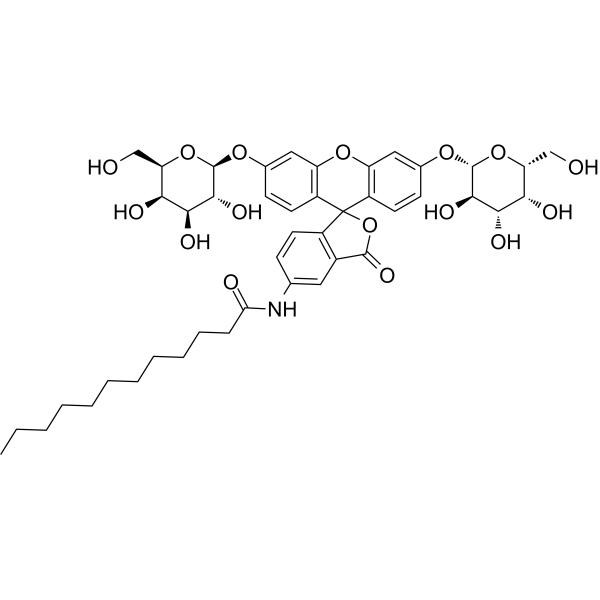
  • HY-126839
    C12FDG
    Maximum Cited Publications
    9 Publications Verification

    5-Dodecanoylaminofluorescein di-β-D-Galactopyranoside

    Fluorescent Dye Others
    C12FDG (5-Dodecanoylaminofluorescein di-β-D-Galactopyranoside) is a lipophilic green fluorescent substrate for β-galactosidase detection. C12-FDG is more sensitive than Fluorescein di(β-D-galactopyranoside) (HY-101895) for beta-galactosidase activity determinations in animal cells (Ex/Em = 488/523 nm) .
    C12FDG
  • HY-15934
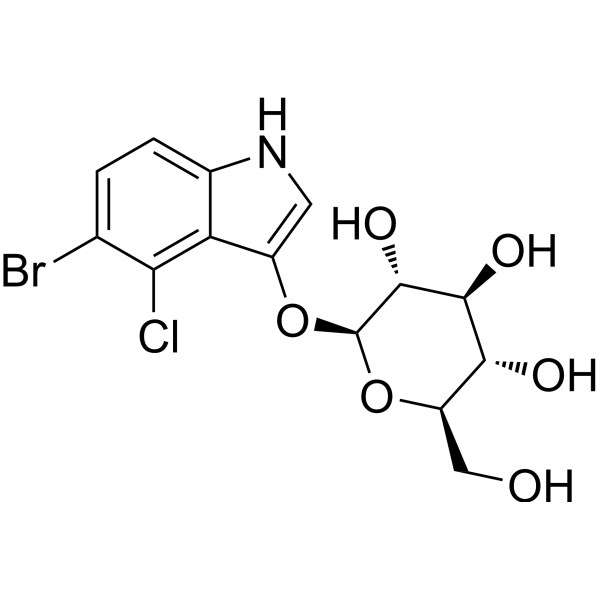
    X-GAL
    5 Publications Verification

    BCIG

    Fluorescent Dye Glycosidase Others
    X-GAL (BCIG) is a widely used chromogenic β-galactosidase substrate. X-GAL is a colorless compound until cleaved by β-galactosidase, at which point X-GAL turns to an insoluble and detectable blue compound, making X-GAL particularly useful in techniques such as blue-white screening for cloning in bacteria. X-GAL can also be used for detection of β-galactosidase activity .
    X-GAL
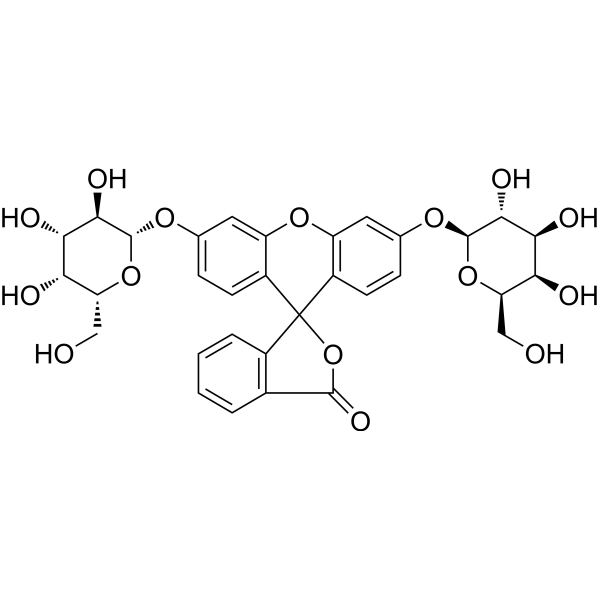
  • HY-101895

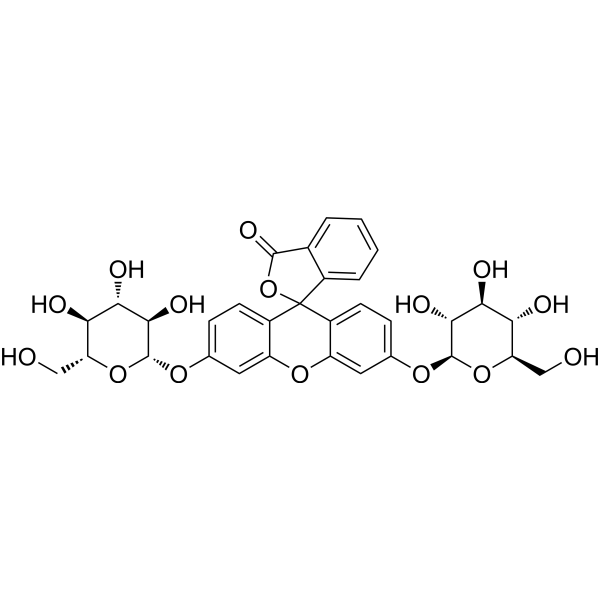
    FDG

    Fluorescent Dye Others
    Fluorescein di(β-D-galactopyranoside) is a fluorogenic substrate for β-galactosidaseex=485 nm, λem=535 nm).
    Fluorescein di(β-D-galactopyranoside)
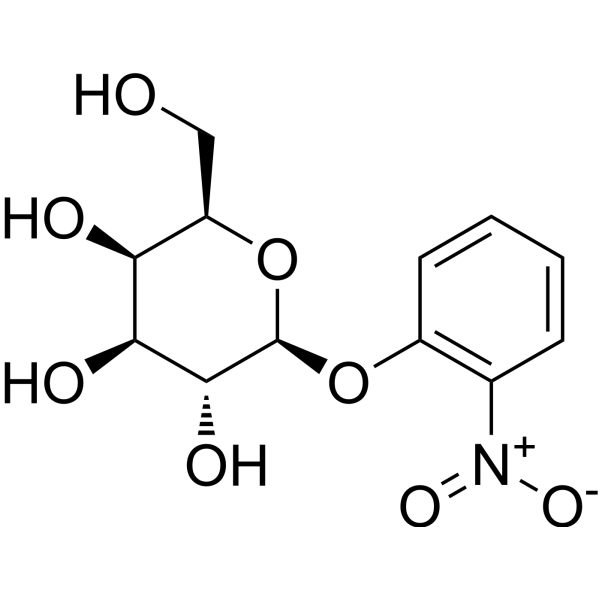
  • HY-15926
    ONPG
    5+ Cited Publications

    2-Nitrophenyl β-D-galactopyranoside

    Biochemical Assay Reagents Others
    ONPG is a colorimetric and spectrophotometric substrate for detection of β-galactosidase activity.
    ONPG
  • HY-137276

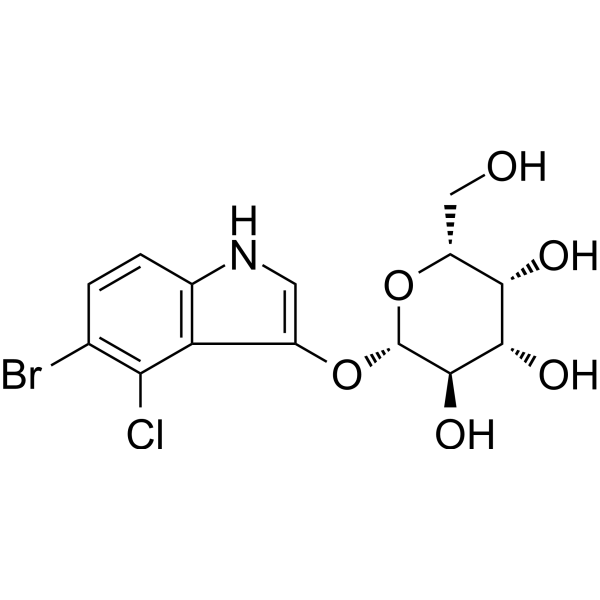
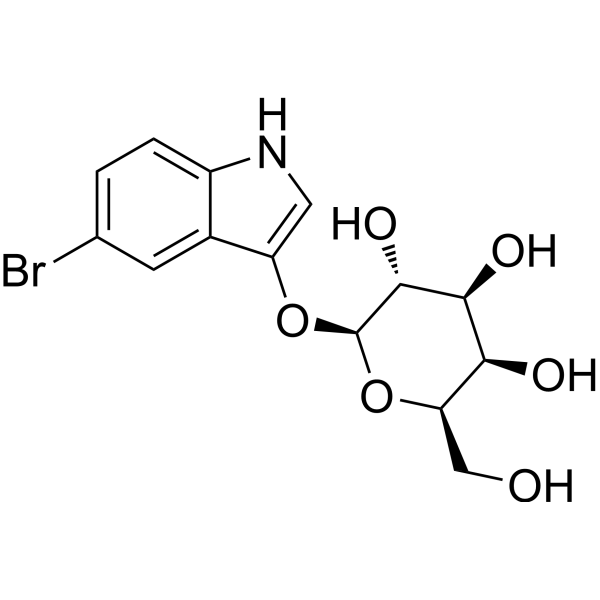
    Bluo-Gal

    Fluorescent Dye Glycosidase Others
    5-Bromo-3-indolyl β-D-galactopyranoside (Bluo-Gal) is a chromogenic substrate for β-galactosidase. 5-Bromo-3-indolyl β-D-galactopyranoside is hydrolyzed by the enzyme to generate a 5-bromoindole intermediate, which is further oxidized to form an insoluble blue precipitate. 5-Bromo-3-indolyl β-D-galactopyranoside can specifically recognize bacterial β-galactosidases (such as the product of the Escherichia coli lacZ gene) and reacts at pH 7.4, making it suitable for light and electron microscopic observations. 5-Bromo-3-indolyl β-D-galactopyranoside can be used in histochemical detection of reporter gene expression in transgenic organisms, such as the localization analysis of β-galactosidase activity in mouse embryos or muscle tissues .
    5-Bromo-3-indolyl β-D-galactopyranoside
  • HY-D1224
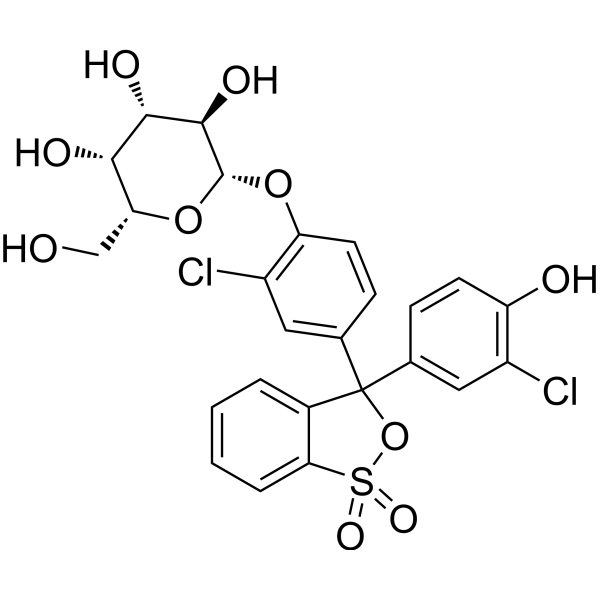
    Chlorophenol red-β-D-galactopyranoside
    2 Publications Verification

    CPRG

    Biochemical Assay Reagents Others
    Chlorophenol red-β-D-galactopyranoside (CPRG) is an efficient and sensitive chromogenic substrate for β-galactosidase (HY-P2869), widely used in colorimetric assays. Chlorophenol red-β-D-galactopyranoside itself appears pale yellow. When it is specifically hydrolyzed by β-galactosidase, it releases chlorophenol red. The released chlorophenol red turns purple-red under alkaline or neutral pH conditions. This color change from yellow to red can be quantitatively detected at wavelengths of 540-572 nm using visible spectrophotometry .
    Chlorophenol red-β-D-galactopyranoside
  • HY-DY2002

    Fluorescent Dye Glycosidase Others
    X-GAL (BCIG) (solution) is a widely used chromogenic β-galactosidase substrate. X-GAL is a colorless compound until cleaved by β-galactosidase, at which point X-GAL turns to an insoluble and detectable blue compound, making X-GAL particularly useful in techniques such as blue-white screening for cloning in bacteria. X-GAL can also be used for detection of β-galactosidase activity .
    Solvent and Concentration: DMF: 20 mg/mL
    X-GAL (solution)
  • HY-P3185

    Biochemical Assay Reagents Metabolic Disease
    Beta-galactose dehydrogenase is a selective catalyst for β-galactose. Under pH 8.6 conditions, beta-galactose dehydrogenase catalyzes the oxidation of β-galactose, produced by the hydrolysis of lactose by β-galactosidase, with nicotinamide adenine dinucleotide (NAD) to produce reduced nicotinamide adenine dinucleotide (NADH). Beta-galactose dehydrogenase specifically mediates this oxidation reaction for the quantitative detection of the substrate, used in the analysis of lactose concentration in samples such as breast milk .
    beta-Galactose dehydrogenase
  • HY-W011654

    4-Aminophenyl-beta-D-galactopyranoside, 98%

    Glycosidase Inflammation/Immunology Cancer
    4-Aminophenyl-β-D-galactopyranoside, 98% is a highly efficient substrate for β-galactosidase. It is specifically hydrolyzed by this enzyme to release galactose and electroactive p-aminophenol. 4-Aminophenyl-β-D-galactopyranoside, 98% is widely used in colorimetric and electrochemical assays for detecting β-galactosidase activity and determining enzyme kinetics, such as in biosensing fields including cellular senescence, pathogen and contaminant detection. In addition, since β-galactosidase is often overexpressed in primary ovarian cancer, 4-Aminophenyl-β-D-galactopyranoside, 98% can also be applied to related research on primary ovarian cancer .
    4-Aminophenyl-β-D-galactopyranoside, 98%
  • HY-137845

    Fluorescent Dye Others
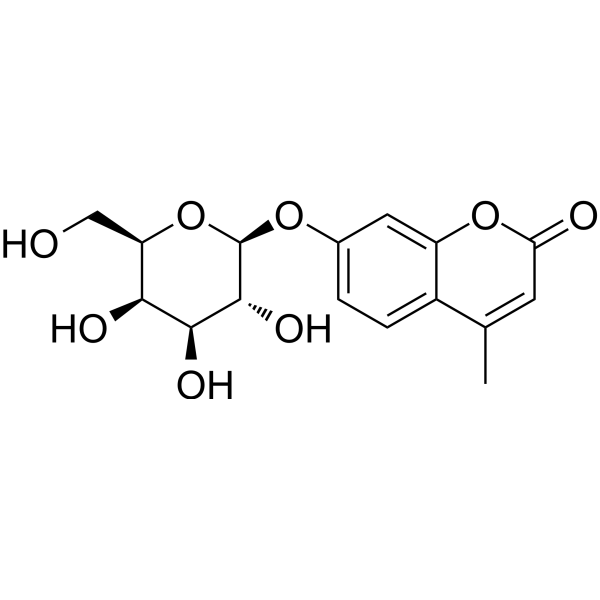
    4-Methylumbelliferyl β-D-galactopyranoside is a fluorescent substrate for β-galactosidase which, when cleaved, produces a water-soluble blue fluorescent coumarin fluorophore that can be detected using a fluoroenzymeter or fluorometer .
    4-Methylumbelliferyl β-D-galactopyranoside
  • HY-DY1033

    Fluorescent Dye Others
    C12FDG (5-Dodecanoylaminofluorescein di-β-D-Galactopyranoside) (solution) is a lipophilic green fluorescent substrate for β-galactosidase detection. C12-FDG is more sensitive than Fluorescein di (β-D-galactopyranoside) (HY-101895) for beta-galactosidase activity determinations in animal cells (Ex/Em = 488/523 nm) .
    Solvent and concentration: DMSO: 10 mM
    C12FDG (solution)
  • HY-W127769

    Salmon-Gal

    Fluorescent Dye Others
    Rose-β-D-Gal is a chromogenic substrate, is also a β-galactosidase substrate. Rose-β-D-Gal creates a pink/magenta color after the reaction and has been used for detection of β-gal activity .
    Rose-β-D-Gal
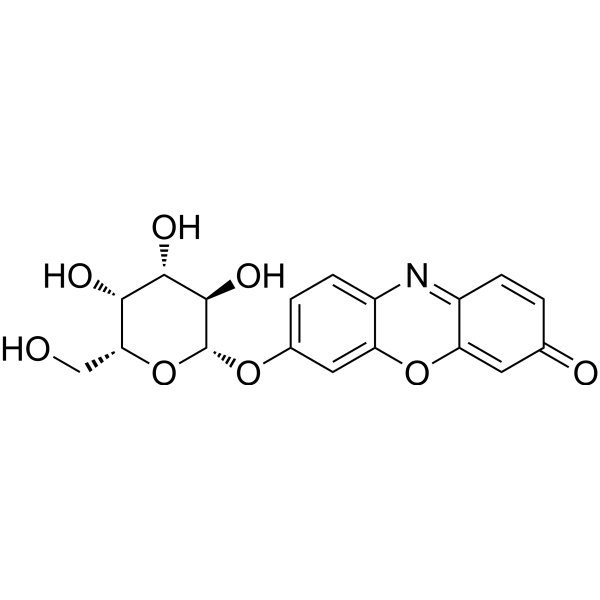
  • HY-137249

    Biochemical Assay Reagents Others
    Resorufin-β-D-galactopyranoside is a commonly used substrate in various biochemical assays to measure the activity of β-galactosidase, an important enzyme involved in lactose metabolism and regulation of gene expression. Resorufin-β-D-galactopyranoside has unique chemical properties and can be hydrolyzed by β-galactosidase to form a red fluorescent product called resorufin. This makes it a useful tool for detecting and quantifying β-galactosidase activity in biological samples such as bacteria or mammalian cells.
    Resorufin-β-D-galactopyranoside
  • HY-137779

    Biochemical Assay Reagents Others
    5-Bromo-4-chloro-3-indolyl β-D-glucopyranoside, a chromogenic substrate for the detection of β-galactosidase activity. It is commonly used in molecular biology techniques such as gene expression analysis and reporter gene analysis. When β-galactosidase cleaves X-Gluc, a blue precipitate is produced, which can be observed by microscopy or other detection methods. X-Gluc has high sensitivity and specificity for the detection of β-galactosidase activity, making it a widely used tool in molecular biology research.
    5-Bromo-4-chloro-3-indolyl β-D-glucopyranoside
  • HY-D1461

    Fluorescent Dye Cancer
    Fluorescein Di-β-D-Glucopyranoside is a specific β-glucocerebrosidase substrate that can be used for the intralysosomal β-galactosidase .
    Fluorescein Di-β-D-Glucopyranoside
  • HY-15926S

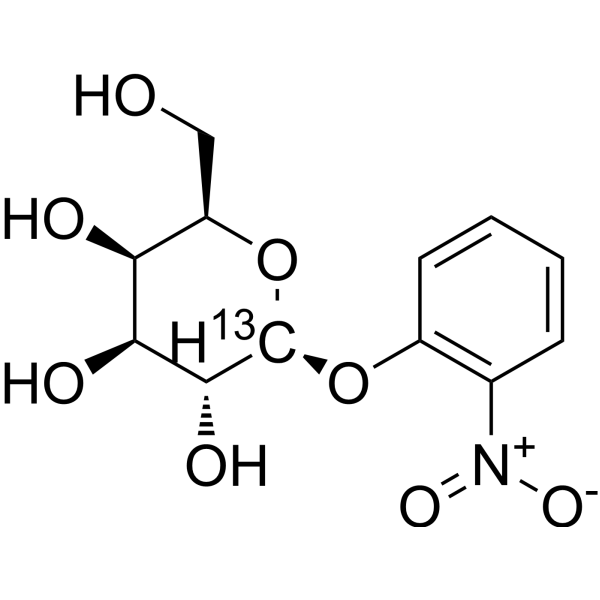
    2-Nitrophenyl β-D-galactopyranoside-13C

    Isotope-Labeled Compounds Others
    ONPG- 13C is the 13C labeled ONPG. ONPG is a colorimetric and spectrophotometric substrate for detection of β-galactosidase activit .
    ONPG-13C
  • HY-D1699

    Fluorescent Dye Others
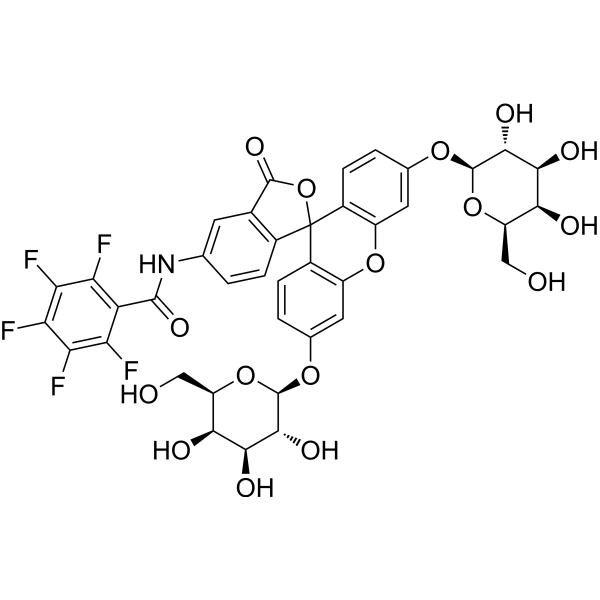
    PFB-FDG is a non-fluorescent galactosidase substrate that can be hydrolysed to green fluorescent PFB-F (Ex=485 nm, Em=535 nm). PFB-FDG can be used for the determination of β-galactosidase activity .
    PFB-FDG
  • HY-114958

    Fluorescent Dye Others
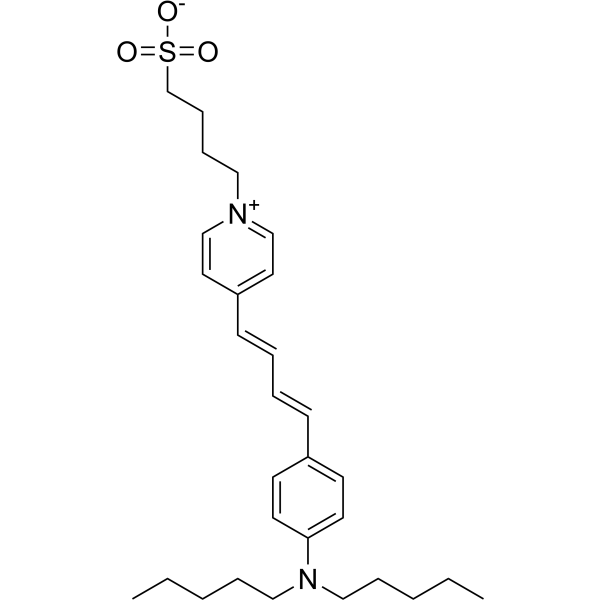
    RH 421 is a voltage-sensitive styryl dye that can penetrate through the lipid bilayers. RH 421 is a chromogenic substrate for β-galactosidase .
    RH 421
  • HY-116055

    3-O-β-D-Galactopyranosyl-sn-glycerol

    Biochemical Assay Reagents Others
    (2R)-Glycerol-O-β-D-galactopyranoside (3-O-β-D-Galactopyranosyl-sn-glycerol) is a good substrate for all three components of the lac operon, i.e. β-galactosidase, the lactose transporter and thiogalactoside transacetylase .
    (2R)-Glycerol-O-β-D-galactopyranoside
  • HY-D1633A

    Fluorescent Dye Others
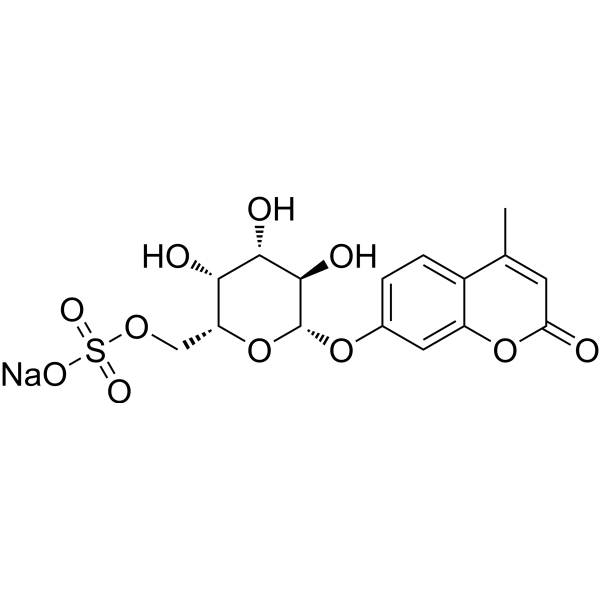
    4-Methylumbelliferyl-β-D-galactopyranoside 6-sulfate sodium is a fluorescent dye. 4-Methylumbelliferyl-β-D-galactopyranoside 6-sulfate sodium undergoes desulphation by galactose-6-sulphate sulphatase to form 4-methylumbelliferyl-β-D-galactopyranoside, which is cleaved by β-galactosidase to release fluorescent 4-methylumbelliferone. 4-Methylumbelliferyl-β-D-galactopyranoside 6-sulfate sodium interacts with N-acetylgalactosamine-6-sulfate sulfatase (GALNS) via hydrogen bonds, electrostatic interactions, and steric interactions. 4-Methylumbelliferyl-β-D-galactopyranoside 6-sulfate sodium serves as a substrate in assays measuring galactose-6-sulphate sulphatase and GALNS activity. 4-Methylumbelliferyl-β-D-galactopyranoside 6-sulfate sodium can be used for the research of Morquio disease type A (mucopolysaccharidosis IV A) .
    4-Methylumbelliferyl-β-D-galactopyranoside 6-sulfate sodium
  • HY-D1633

    Fluorescent Dye Metabolic Disease
    4-Methylumbelliferyl-β-D-galactopyranoside 6-sulfate is a fluorescent dye. 4-Methylumbelliferyl-β-D-galactopyranoside 6-sulfate undergoes desulphation by galactose-6-sulphate sulphatase to form 4-methylumbelliferyl-β-D-galactopyranoside, which is cleaved by β-galactosidase to release fluorescent 4-methylumbelliferone. 4-Methylumbelliferyl-β-D-galactopyranoside 6-sulfate interacts with N-acetylgalactosamine-6-sulfate sulfatase (GALNS) via hydrogen bonds, electrostatic interactions, and steric interactions. 4-Methylumbelliferyl-β-D-galactopyranoside 6-sulfate serves as a substrate in assays measuring galactose-6-sulphate sulphatase and GALNS activity. 4-Methylumbelliferyl-β-D-galactopyranoside 6-sulfate can be used for the research of Morquio disease type A (mucopolysaccharidosis IV A) .
    4-Methylumbelliferyl-β-D-galactopyranoside 6-sulfate
  • HY-D1224A

    CPRG sodium

    Biochemical Assay Reagents Others
    Chlorophenol red-β-D-galactopyranoside (CPRG) sodium is an efficient and sensitive chromogenic substrate for β-galactosidase (HY-P2869), widely used in colorimetric assays. Chlorophenol red-β-D-galactopyranoside sodium itself appears pale yellow. When it is specifically hydrolyzed by β-galactosidase, it releases chlorophenol red. The released chlorophenol red turns purple-red under alkaline or neutral pH conditions. This color change from yellow to red can be quantitatively detected at wavelengths of 540-572 nm using visible spectrophotometry .
    Chlorophenol red β-D-galactopyranoside sodium
  • HY-D1739

    Fluorescent Dye Carboxylesterase (CES) Others
    DDAO phosphate diammonium is a fluorescent phosphatase substrate. DDAO phosphate diammonium has tunable excitation wavelength (600-650nm) and long emission wavelength (λem=656nm). DDAO phosphate diammonium can be used to detect the activity of different enzymes such as β-galactosidase, sulfatase, protein phosphatase 2A, carboxylesterase 2, human albumin and esterase.
    DDAO phosphate diammonium
  • HY-W104635

    6-Bromo-2-naphthyl-beta-D-galactopyranoside

    Biochemical Assay Reagents Others
    6-Bromo-2-naphthyl-β-D-galactopyranoside is a chromogenic substrate commonly used to measure β-galactosidase enzyme activity in food, enzyme substrates, and culture media. Upon hydrolysis by β-galactosidase, it generates a yellow precipitate indicating the enzyme's presence.
    6-Bromo-2-naphthyl-β-D-galactopyranoside
  • HY-137382

    Biochemical Assay Reagents Others
    4-Methylumbelliferyl-N-acetyl-β-D-galactosaminide is a substrate for detecting β-galactosidase activity.
    4-Methylumbelliferyl-N-acetyl-β-D-galactosaminide
  • HY-W154295

    Fluorescent Dye Others
    Purple-β-D-Gal is a chromogenic β-galactosidase substrate. Intracellular enzymatic hydrolysis of Purple-β-D-Gal generates free indoxyl molecules, which undergo in situ oxidation and subsequent dimerization to produce chromogenic, water-insoluble, indigo precipitates. Purple-β-D-Gal can be used for the detection of β-galactosidase activity .
    Purple-β-D-Gal
  • HY-W288676

    Biochemical Assay Reagents Others
    6-Fluoro-3-indolyl-β-D-galactopyranoside is a chromogenic enzyme substrate commonly used in microbiology to detect the expression of β-galactosidase in bacterial colonies.
    6-Fluoro-3-indolyl-β-D-galactopyranoside
  • HY-W101382

    Biochemical Assay Reagents Others
    5-Bromo-6-chloro-3-indolyl-N-acetyl-β-D-glucosaminide, 98% is a chromogenic substrate used to measure β-galactosidase activity in food, enzyme substrates, and culture media.
    5-Bromo-6-chloro-3-indolyl-N-acetyl-β-D-glucosaminide, 98%
  • HY-W293502

    2-Chloro-4-nitrophenyl-beta-D-galactopyranoside

    Biochemical Assay Reagents Others
    2-Chloro-4-nitrophenyl-β-D-galactopyranoside is a chromogenic substrate used for testing enzyme activity. It is commonly used in molecular biology research to detect and measure the activity of β-galactosidase (biosynth: EC03318).
    2-Chloro-4-nitrophenyl-β-D-galactopyranoside
  • HY-W283888

    Biochemical Assay Reagents β-glucuronidase Others
    5-Bromo-4-chloro-1H-indol-3-yl nonanoate is a fluorescent substrate used to detect enzymes. The substrate reacts with various enzymes to produce a fluorescent product, which has been shown to be active against β-galactosidase, α-chymotrypsin, and β-glucuronidase.
    5-Bromo-4-chloro-1H-indol-3-yl nonanoate
  • HY-132239

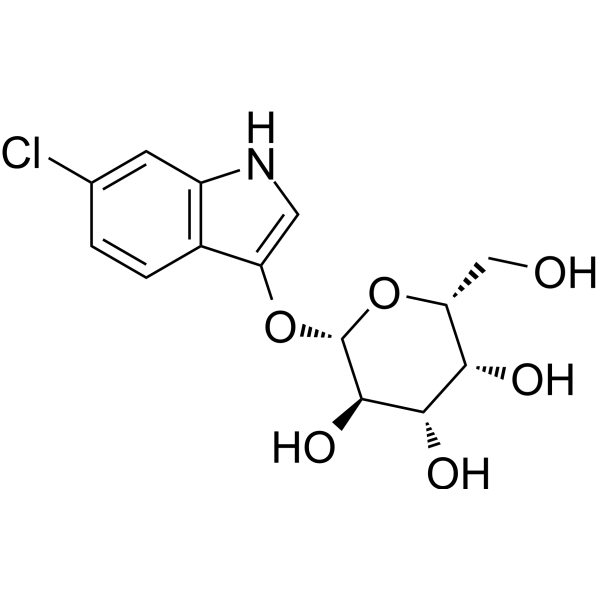
    5-Bromo-6-chloro-3-indolyl-beta-D-galactoside

    Biochemical Assay Reagents Others
    5-Bromo-6-chloro-3-indolyl β-D-Galactopyranoside (contains ca. 10% Ethyl Acetate) (5-Bromo-6-chloro-3-indolyl-beta-D-galactoside) is a chromogenic substrate of β-galactosidase (β-gal) .
    5-Bromo-6-chloro-3-indolyl β-D-Galactopyranoside contains ca. 10% Ethyl Acetate
  • HY-W116594

    Fluorescent Dye Infection
    X-GalNAc is a chromogenic substrate for for N-acetyl-β-galactosidase, used to determine the presence or absence of a cloned DNA insert in bacteria growing on agar plates .
    X-GalNAc
  • HY-W587779

    Biochemical Assay Reagents
    o-Nitrophenyl β-D-galactopyranoside-6-phosphate cyclohexylammonium is a chromogenic substrate with activity for β-galactosidase detection. The use of o-Nitrophenyl β-D-galactopyranoside-6-phosphate cyclohexylammonium can help researchers quickly identify and quantify β-galactosidase activity.
    o-Nitrophenyl β-D-galactopyranoside-6-phosphate cyclohexylammonium
  • HY-P2869J

    Biochemical Assay Reagents Metabolic Disease
    β-Galactosidase, Kluyveromyces lactis is a hydrolase enzyme that catalyzes the hydrolysis of β-galactosides into monosaccharides. SubstRates of different β-galactosidases include ganglioside GM1, lactosylceramides, lactose, and various glycoproteins.
    β-Galactosidase, Kluyveromyces lactis
  • HY-E70890

    Glycosidase Metabolic Disease
    β-Galactosidase Mutein, E. coli is a hydrolase enzyme that catalyzes the hydrolysis of β-galactosides into monosaccharides. Substrates of different β-galactosidases include ganglioside GM1, lactosylceramides, lactose, and various glycoproteins.
    β-Galactosidase Mutein, E. coli
  • HY-E71299

    Glycosidase Others
    β-Galactosidase 42A, Bifidobacterium longum (EC 3.2.1.23) is a hydrolase enzyme that catalyzes the hydrolysis of β-galactosides into monosaccharides. Substrates of different β-galactosidases include ganglioside GM1, lactosylceramides, lactose, and various glycoproteins.
    β-Galactosidase 42A, Bifidobacterium longum
  • HY-E71299B

    Glycosidase Others
    β-Galactosidase 42A, Thermotoga maritima (EC 3.2.1.23) is a hydrolase enzyme that catalyzes the hydrolysis of β-galactosides into monosaccharides. Substrates of different β-galactosidases include ganglioside GM1, lactosylceramides, lactose, and various glycoproteins.
    β-Galactosidase 42A, Thermotoga maritima
  • HY-E71297

    Glycosidase Others
    β-Galactosidase 2A, Bacteroides thetaiotaomicron (EC 3.2.1.23) is a hydrolase enzyme that catalyzes the hydrolysis of β-galactosides into monosaccharides. Substrates of different β-galactosidases include ganglioside GM1, lactosylceramides, lactose, and various glycoproteins.
    β-Galactosidase 2A, Bacteroides thetaiotaomicron
  • HY-E71296

    Glycosidase Others
    β-Galactosidase 1A, Sulfolobus solfataricus (EC 3.2.1.23) is a hydrolase enzyme that catalyzes the hydrolysis of β-galactosides into monosaccharides. Substrates of different β-galactosidases include ganglioside GM1, lactosylceramides, lactose, and various glycoproteins.
    β-Galactosidase 1A, Sulfolobus solfataricus
  • HY-E71299A

    Glycosidase Others
    β-Galactosidase 42A, Caldicellulosiruptor saccharolyticus (EC 3.2.1.23) is a hydrolase enzyme that catalyzes the hydrolysis of β-galactosides into monosaccharides. Substrates of different β-galactosidases include ganglioside GM1, lactosylceramides, lactose, and various glycoproteins.
    β-Galactosidase 42A, Caldicellulosiruptor saccharolyticus
  • HY-E71298

    Glycosidase Others
    β-Galactosidase 2B, Bacteroides thetaiotaomicron (EC 3.2.1.23) is a hydrolase enzyme that catalyzes the hydrolysis of β-galactosides into monosaccharides. Substrates of different β-galactosidases include ganglioside GM1, lactosylceramides, lactose, and various glycoproteins.
    β-Galactosidase 2B, Bacteroides thetaiotaomicron
  • HY-134448

    Biochemical Assay Reagents Others
    5-Bromo-4-chloro-3-indolyl β-D-fucopyranoside is a substrate of β-Galactosidase .
    5-Bromo-4-chloro-3-indolyl β-D-fucopyranoside
  • HY-D3186

    Fluorescent Dye Glycosidase Cancer
    HMRef-βGal is a fluorescent probe and a substrate responsive to β-galactosidase (β-galactosidase) (Ex/Em=498 nm/505-600 nm). After being cleaved by β-galactosidase, HMRef-βGal triggers significant fluorescence enhancement via intramolecular spirocyclic function regulation. HMRef-βGal generates bright fluorescence in cancer cells with elevated β-galactosidase activity, enabling visualization of tiny peritoneal metastases in mouse models. HMRef-βGal exhibits low in vitro cytotoxicity and low acute in vivo toxicity in mice. HMRef-βGal can be used for preclinical fluorescence-guided diagnosis and cytoreductive surgery of peritoneal metastases, including compatibility with real-time naked-eye detection and endoscopic imaging, as well as for studies related to peritoneal metastases of ovarian cancer .
    HMRef-βGal
  • HY-E71027

    Biochemical Assay Reagents Metabolic Disease
    β-Galactosidase-biotin labeled, Escherichia coli is a hydrolase enzyme that catalyzes the hydrolysis of β-galactosides into monosaccharides. SubstRates of different β-galactosidases include ganglioside GM1, lactosylceramides, lactose, and various glycoproteins.
    β-Galactosidase-biotin labeled, Escherichia coli
  • HY-E71025

    Biochemical Assay Reagents Metabolic Disease
    β 1-4,6-Galactosidase, Jack bean (EC 3.2.1.23) is a hydrolase enzyme that catalyzes the hydrolysis of β-galactosides into monosaccharides. Substrates of different β-galactosidases include ganglioside GM1, lactosylceramides, lactose, and various glycoproteins.
    β 1-4,6-Galactosidase, Jack bean

オンラインお問い合わせ

入力情報は安全に管理されます. 必須入力項目.

タイトル


国或いは地域 *

お名前 *


組纖名 *

デパートメント *


メールアドレス *


製品名 *

製品番号


カスタマ需要量 *

電話番号 *


必ず会社名を記載ください。個人への返信は行いません。

備考

バルクお問い合わせ

Inquiry Information

製品名:
製品番号:
数量:
MCE 日本正規代理店:

