1. Search Result
Search Result
Results for "

Cytochrome P450 inhibition

" in MedChemExpress (MCE) Product Catalog:

28

Inhibitors & Agonists

1

Screening Libraries

2

Natural
Products

1

Isotope-Labeled Compounds

1

Click Chemistry

Targets Recommended:
Cat. No. Product Name Target Research Areas Chemical Structure
  • HY-76200
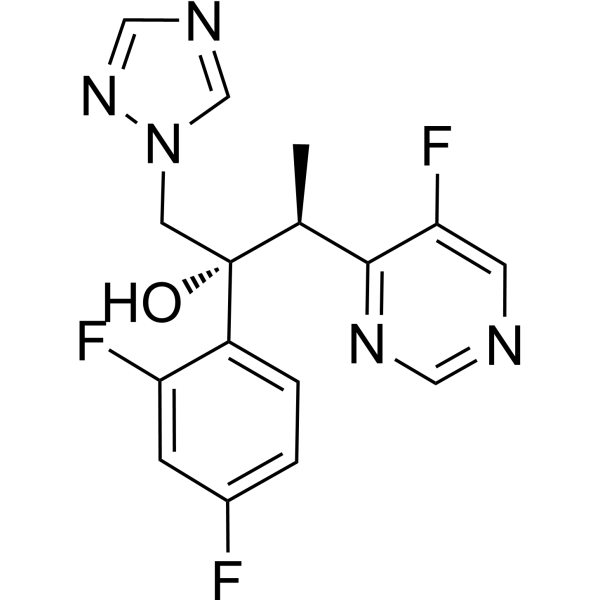
    Voriconazole
    Maximum Cited Publications
    11 Publications Verification

    UK-109496

    Fungal Bacterial Infection Neurological Disease Cancer
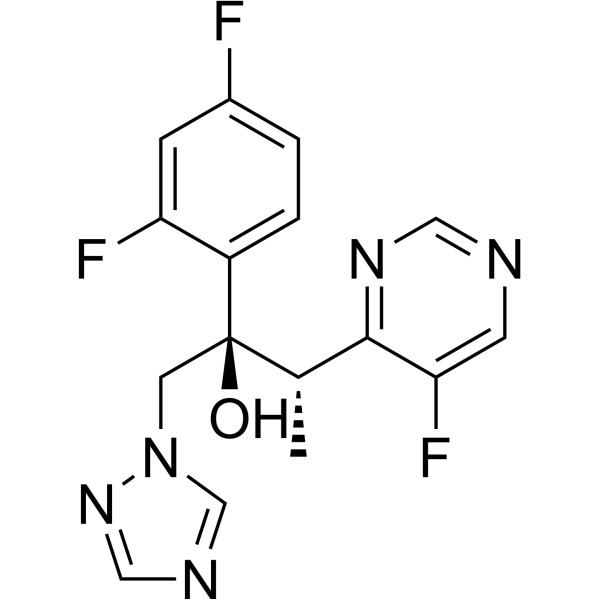
    Voriconazole (UK-109496) is a second-generation, broad-spectrum triazole antifungal agent that inhibits fungal ergosterol biosynthesis. Voriconazole exerts its antifungal activity by inhibition of 14-α-lanosterol demethylation, which is mediated by fungal cytochrome P450 enzymes. Voriconazole can penetrate the blood brain barrier (BBB) .
    Voriconazole
  • HY-157421

    NAMPT Metabolic Disease
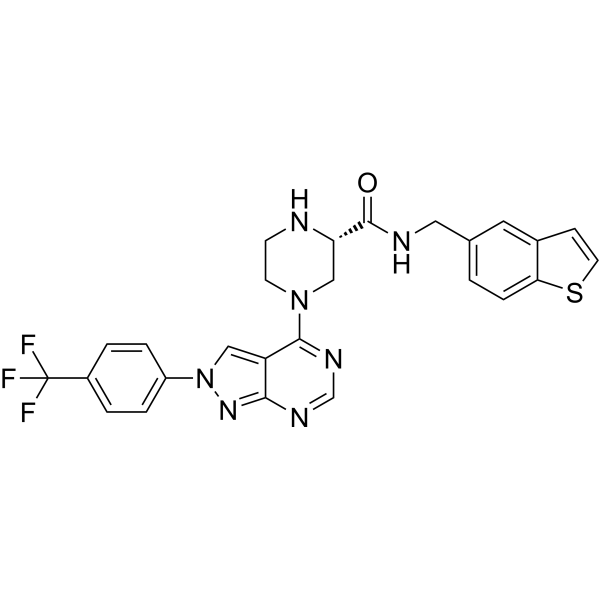
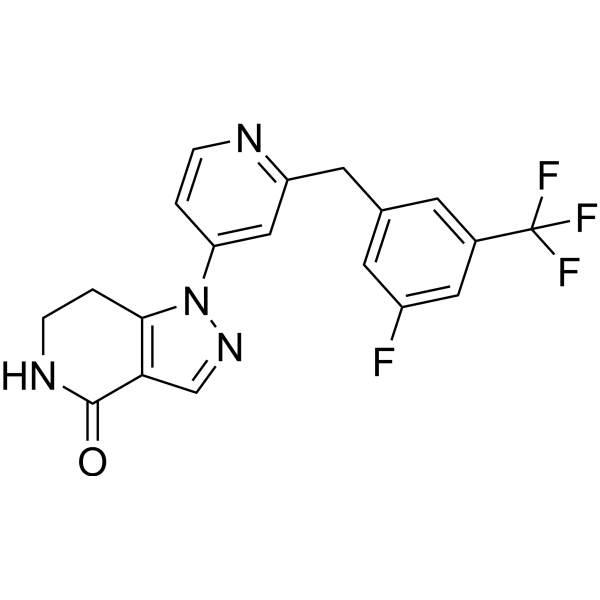
    Nampt activator-4 is an orally active NAMPT activator, with an EC50 of 58 nM and a Ka of 85.38 nM against human NAMPT. Nampt activator-4 effectively relieves the feedback inhibition of nicotinamide and NAD +, thereby enhancing enzymatic activity and significantly increasing intracellular NAD + levels. Nampt activator-4 exhibits moderate stability in human and mouse liver microsomes. Nampt activator-4 shows low to moderate inhibitory effects on cytochrome P450 (especially CYP3A4). Nampt activator-4 can be used for the research of type 2 diabetes and related metabolic disorders .
    Nampt activator-4
  • HY-154980

    GPR52 Neurological Disease
    NXE0041178 is an orally active and BBB-penetrant full GPR52 agonist, with a pEC50 of 7.5 for human GPR52 and an EC50 of 27.5 nM (pEC50 = 7.55) for rat GPR52. NXE0041178 shows no significant inhibition on hERG, hNaV1.5 and cytochrome P450 isoforms. NXE0041178 can reduce d-amphetamine-induced hyperactivity in rats. NXE0041178 can be used for research of Neurological disease .
    NXE0041178
  • HY-76200S
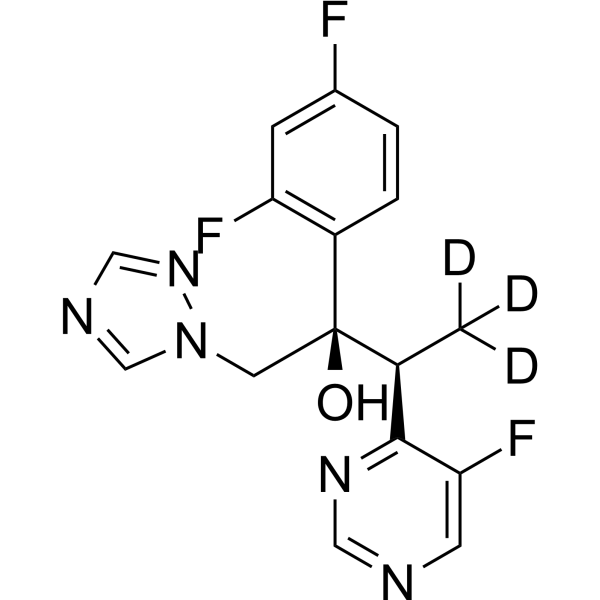
    Voriconazole-d3
    2 Publications Verification

    UK-109496-d3

    Fungal Infection
    Voriconazole-d3 is the deuterium labeled Voriconazole. Voriconazole (UK-109496) is a second-generation, broad-spectrum triazole antifungal agent that inhibits fungal ergosterol biosynthesis. Voriconazole exerts its antifungal activity by inhibition of 14-α-lanosterol demethylation, which is mediated by fungal cytochrome P450 enzymes .
    Voriconazole-d3
  • HY-N2045
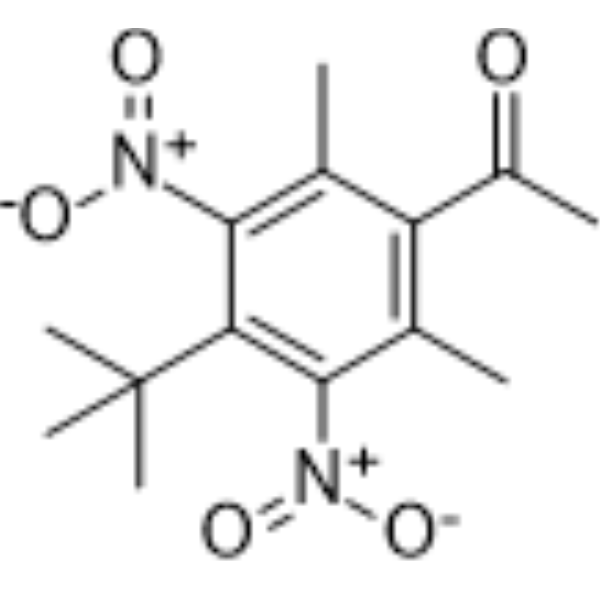
    Musk ketone
    1 Publications Verification

    Environmental Pollutants Apoptosis Akt Cytochrome P450 PI3K Neurological Disease
    Musk ketone is a widely used artificial fragrance. Musk ketone is also a cytochrome P450 enzyme inducer. Musk ketone shows mutagenic and comutagenic effects in Hep G2 cells and induces neural stem cell proliferation and differentiation in cerebral ischemia via activation of the PI3K/Akt signaling pathway. In the brain, musk ketone is neuroprotective against stroke injury through inhibition of cell apoptosis .
    Musk ketone
  • HY-135560

    Nicotellin

    Cytochrome P450 Neurological Disease
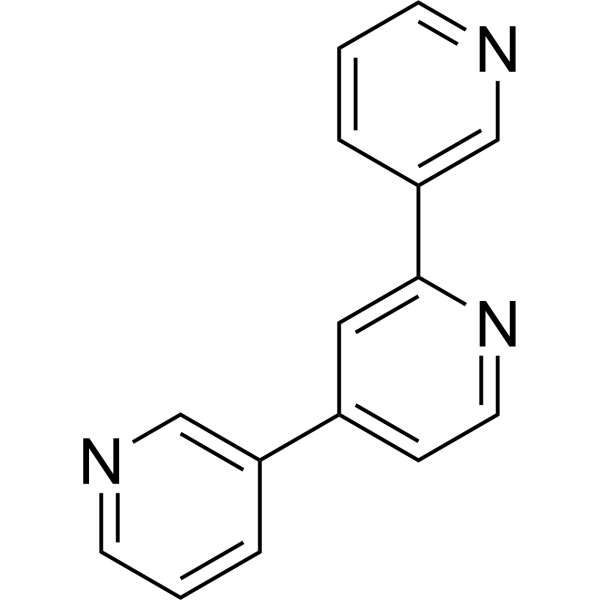
    Nicotelline (Nicotellin) is a nicotine-related alkaloid, as well as a weak inhibitor of human cDNA-expressed cytochrome P-450 2A6 (CYP2A6). CYP2A6 mediates coumarin 7-hydroxylation, while Nicotelline fails to exhibit inhibition at 300 μM. Nicotelline can be used as a tracer and biomarker of particulate matter (PM) derived from tobacco smoke .
    Nicotelline
  • HY-133116

    Adrenergic Receptor Neurological Disease
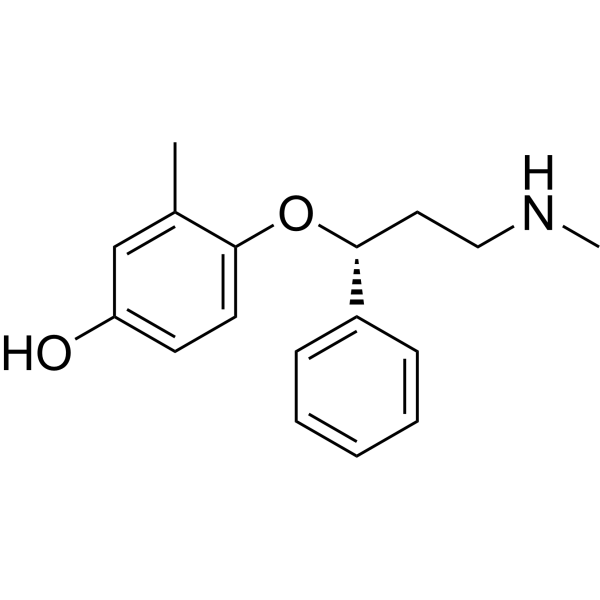
    4-Hydroxyatomoxetine is an active metabolite of Atomoxetine. 4-Hydroxyatomoxetine is metabolized by the enzyme cytochrome P450 2D6 (CYP2D6). Atomoxetine hydrochloride is a potent and selective noradrenalin re-uptake inhibitor (Ki values are 5 nM, 77 nM and 1451 nM for inhibition of radioligand binding to human NET, SERT and DAT respectively) .
    4-Hydroxyatomoxetine
  • HY-76200R

    UK-109496 (Standard)

    Reference Standards Fungal Bacterial Infection Cancer
    Voriconazole (Standard) is the analytical standard of Voriconazole. This product is intended for research and analytical applications. Voriconazole (UK-109496) is a second-generation, broad-spectrum triazole antifungal agent that inhibits fungal ergosterol biosynthesis. Voriconazole exerts its antifungal activity by inhibition of 14-α-lanosterol demethylation, which is mediated by fungal cytochrome P450 enzymes .
    Voriconazole (Standard)
  • HY-164793

    TGF-β Receptor Cytochrome P450 Bacterial Infection
    TGFBR1-IN-2 (Compound AQA) is a TGFBR1 inhibitor and an antibacterial agent. TGFBR1-IN-2 is a substrate for cytochrome P450s. TGFBR1-IN-2 contains the pyridyl-6-methyl moiety necessary for Mycobacterium tuberculosis inhibition and has potent inhibitory activity against non-replicating and persistent Mycobacterium tuberculosis .
    TGFBR1-IN-2
  • HY-129923

    Cytochrome P450 Neurological Disease
    (R)-Omeprazole sodium is a gastric acid resistant compound with activity to inhibit gastric acid secretion. (R)-Omeprazole sodium is metabolized in vivo, and its metabolism is primarily affected by cytochrome P450 enzymes. The interaction between (R)-Omeprazole sodium and mannitol may affect its bioavailability in formulations. (R)-Omeprazole sodium exhibits reversible direct and metabolism-dependent inhibition of CYP2C19 .
    (R)-Omeprazole sodium
  • HY-126983

    Epoxybergamottin

    Cytochrome P450 Others
    6',7'-Epoxybergamottin is a metabolism of Penicillium digitatum. 6',7'-Epoxybergamottin can be used in study the cytochrome P450 3A4 inhibitory activity .
    6',7'-Epoxybergamottin
  • HY-W064918

    Bacterial Infection
    NITD-304 is an orally active anti-tuberculosis agent. NITD-304 exerts inhibitory and bactericidal activities gainst Mycobacterium tuberculosis and multidrug-resistant Mycobacterium tuberculosis. NITD-304 inhibits mycobacterial cell wall biosynthesis and demonstrates synergistic or additive growth inhibitory activity with select antibacterial agents. NITD-304 shows low risk of cardiotoxicity and drug-drug interactions, with no inhibition of major cytochrome P-450 enzymes or hERG channel. NITD-304 can be used for the research of tuberculosis and multidrug-resistant tuberculosis .
    NITD-304
  • HY-76200B

    UK-109496 camphorsulfonate

    Fungal Bacterial Infection Cancer
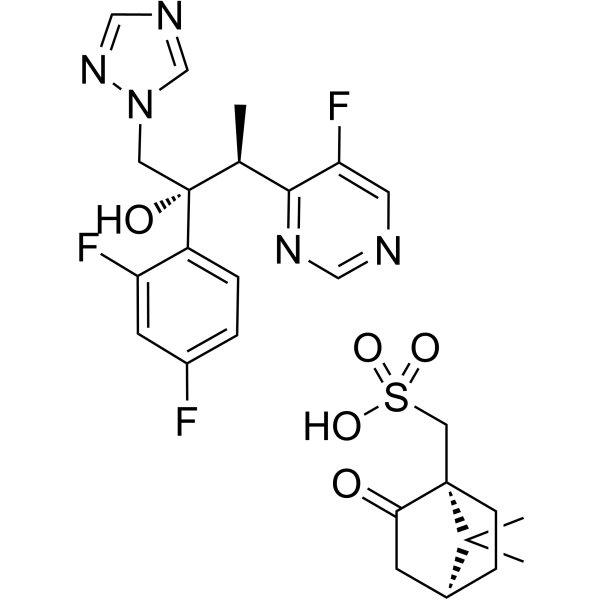
    Voriconazole (UK-109496) camphorsulfonate is a second-generation, broad-spectrum triazole antifungal agent that inhibits fungal ergosterol biosynthesis. Voriconazole camphorsulfonate exerts its antifungal activity by inhibition of 14-α-lanosterol demethylation, which is mediated by fungal cytochrome P450 enzymes .
    Voriconazole camphorsulfonate
  • HY-167872

    Cytochrome P450 Others
    Bifeprofen, a cytochrome P450 2C9 (CYP2C9) inhibitor, exhibits dose-dependent inhibition (75 μM, 50%) .
    Bifeprofen
  • HY-133078

    Cytochrome P450 Cancer
    Thienyldecyl isothiocyanate is an analog of thienylbutyl isothiocyanate that, like many isothiocyanates, demonstrates antiproliferative activity against cancer cells presumably by modulation of xenobiotic-metabolizing enzymes, such as by inhibition of cytochrome P450, and/or by induction of phase II detoxifying enzymes.
    Thienyldecyl Isothiocyanate
  • HY-136818

    Histamine Receptor Endocrinology
    DA 4643 (hydrochloride) is an H2 receptor antagonist with the chemical name 2-guanidino-4 (3-methylaminomethyleneiminophenyl) thiazole dihydrochloride. It has a weak interaction with cytochrome P-450 and has a less inhibitory effect on P-450 than cimetidine and tiotidine. DA 4643 (hydrochloride) is able to inhibit both enzymatic and non-enzymatic lipid peroxidation reactions. This inhibition may not be achieved by inhibiting agent metabolizing enzymes, but rather due to the antioxidant properties of the compound itself. Compared with other H2 receptor antagonists such as cimetidine, ranitidine and tiotidine, DA 4643 (hydrochloride) shows a unique effect in lipid peroxidation inhibition. These properties make DA 4643 (hydrochloride) a potential H2 receptor antagonist with multiple mechanisms of action.
    DA 4643 dihydrochloride
  • HY-125068

    Cytochrome P450 p38 MAPK Inflammation/Immunology
    RPR203494 is a potent inhibitor against CYP isozymes. RPR203494 shows inhibition against p38 kinase with an IC50 value of 9 nM and an EC50 value of 60 nM. RPR203494 demonstrates an inhibition of hepatic Cytochrome P450. RPR203494 is promising for research of rheumatoid arthritis (RA) .
    RPR203494
  • HY-W422288

    (Rac)-Ketoconazol; (Rac)-R 41400

    Fungal Cytochrome P450 Infection
    (Rac)-Ketoconazole ((Rac)-R 41400) is an antifungal imidazole compound with oral activity. (Rac)-Ketoconazole interferes with ergosterol synthesis by inhibiting cytochrome P450-dependent 14α-sterol demethylase (CYP51), a key enzyme on the fungal cell membrane, leading to membrane dysfunction and ultimately inhibition of fungal growth and reproduction. (Rac)-Ketoconazole is indicated for studies of fungal infections .
    (Rac)-Ketoconazole
  • HY-147720

    γ-secretase Neurological Disease
    γ-Secretase modulator 11 (1o) showed high potency in vitro and brain exposure, inducing brain a β 42 levels were significantly reduced and showed undetectable inhibition of cytochrome P450 enzymes. In addition, compound 1o showed excellent anti cognitive deficit effect in AD model mice.
    γ-Secretase modulator 11
  • HY-119879

    CP-73049

    Antibiotic Bacterial Infection
    Binfloxacin (CP-73049) is a fluoroquinolone antibiotic. Binfloxacin does not inhibit the metabolism of theophylline, so it is safer to be used in combination with theophylline and other drugs metabolized by P450 1A2. Binfloxacin can be used in studies of bacterial infections .
    Binfloxacin
  • HY-129923R

    HBV Reference Standards Neurological Disease
    (R)-Omeprazole (sodium) (Standard) is the analytical standard of (R)-Omeprazole (sodium). This product is intended for research and analytical applications. (R)-Omeprazole sodium is a gastric acid resistant compound with activity to inhibit gastric acid secretion. (R)-Omeprazole sodium is metabolized in vivo, and its metabolism is primarily affected by cytochrome P450 enzymes. The interaction between (R)-Omeprazole sodium and mannitol may affect its bioavailability in formulations. (R)-Omeprazole sodium exhibits reversible direct and metabolism-dependent inhibition of CYP2C19 .
    (R)-Omeprazole sodium (Standard)
  • HY-134338R

    Reference Standards Parasite Others
    (R)-Omeprazole (sodium) (Standard) is the analytical standard of (R)-Omeprazole (sodium). This product is intended for research and analytical applications. (R)-Omeprazole sodium is a gastric acid resistant compound with activity to inhibit gastric acid secretion. (R)-Omeprazole sodium is metabolized in vivo, and its metabolism is primarily affected by cytochrome P450 enzymes. The interaction between (R)-Omeprazole sodium and mannitol may affect its bioavailability in formulations. (R)-Omeprazole sodium exhibits reversible direct and metabolism-dependent inhibition of CYP2C19 .
    Ipflufenoquin (Standard)
  • HY-161649

    Cytochrome P450 Aryl Hydrocarbon Receptor Cancer
    hCYP1B1-IN-2 (compound 3n) is a potent human cytochrome P450 1B1 enzyme hCYP1B1 inhibitor. hCYP1B1-IN-2 shows the extremely potent anti-hCYP1B1 activity (IC50=0.040 nM) and blocks AhR transcription activity. hCYP1B1-IN-2 potently inhibits hCYP1B1 via a mix inhibition manner, showing a Ki value of 21.71 pM .
    hCYP1B1-IN-2
  • HY-14205

    Monoamine Oxidase Neurological Disease
    NW-1772 (methanesulfonate) (compound 22b) is a potent and selective monoamine oxidase (MAO) B inhibitor. NW-1772 has some advantages, such as rapid blood-brain barrier penetration, short-acting and reversible inhibitory activity, slight inhibition of selected cytochrome P450s, and low in vitro toxicity. NW-1772 can be used for the research of neurodegenerative diseases .
    NW-1772
  • HY-115824

    Cytochrome P450 Others
    7ETMC is a cytochrome P450 inhibitor with selective inhibition of human cytochrome P450s 1A1 and 1A2. 7ETMC has inhibitory effects on P450s 1A1 and 1A2 with IC?? values of 0.46μM and 0.50μM, respectively, within the first six minutes, and has no inhibitory activity against P450s 2A6 and 2B1. Except for 7-ethynyl-3-methyl-4-phenylcoumarin, the remaining inhibitors show mechanism-based inhibition of P450s 1A1 and 1A2.
    7ETMC
  • HY-175804

    SARS-CoV Infection
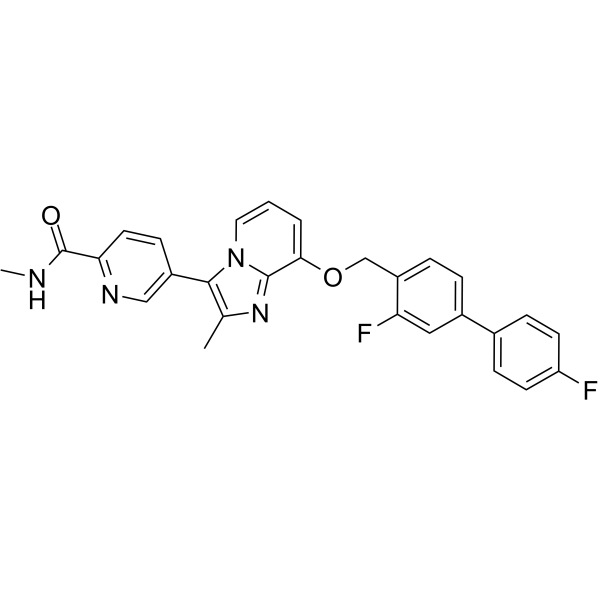
    M2 ion channel blocker-2 (Compound 10) is a M2 channel blocker. M2 ion channel blocker-2 significantly blocks wild-type and mutant M2 (L27F and V27A) ion channels. M2 ion channel blocker-2 has potent antiviral activity against HCoV-229E (EC50: 4.7  μM in cytopathic effect) but not against influenza A virus. M2 ion channel blocker-2 has no significant inhibition of hERG and cytochrome P450 (CYP1A2, CYP2C19, and CYP3A4) activity .
    M2 ion channel blocker-2
  • HY-175064

    3,4-MDPM hydrochloride

    Cytochrome P450 Neurological Disease
    3,4-Methylenedioxyphenmetrazine (3,4-MDPM) hydrochloride is a psychoactive substance. 3,4-Methylenedioxyphenmetrazine exhibits strong CYP2D6 inhibition and moderate inhibition of CYP3A4 and CYP1A2 .
    3,4-Methylenedioxyphenmetrazine hydrochloride
  • HY-W879508

    BXT-51072

    Cytochrome P450 Glutathione Peroxidase Inflammation/Immunology
    ALT-2074 (BXT-51071) is an orally active catalytic analogue of glutathione peroxidase. ALT-2074 is an inhibitor of human CYP3A, with its IC50 value ranging from 2.0 to 2.6 μM. ALT-2074 shows only a weak inhibitory effect on CYP3A in vivo, suggesting that it may not significantly affect the metabolism of CYP3A substrate drugs. ALT-2074 can be used to study inflammatory diseases characterized by reactive oxygen species, such as acute coronary syndrome .
    ALT-2074

Inquiry Online

Your information is safe with us. * Required Fields.

Salutation


Country or Region *

Applicant Name *


Organization Name *

Department *


Email Address *


Product Name *

Cat. No.


Requested quantity *

Phone Number *


Remarks

Inquiry Online

Inquiry Information

Product Name:
Cat. No.:
Quantity:
MCE Japan Authorized Agent:

