
1. Search Result
Search Result
Pathways Recommended: Antibody-drug Conjugate/ADC Related
Results for "

Drug addiction

" in MedChemExpress (MCE) Product Catalog:

22

Inhibitors & Agonists

1

Screening Libraries

2

Peptides

Cat. No. Product Name Target Research Areas Chemical Structure
  • HY-111308

    Neuropeptide Y Receptor Neurological Disease
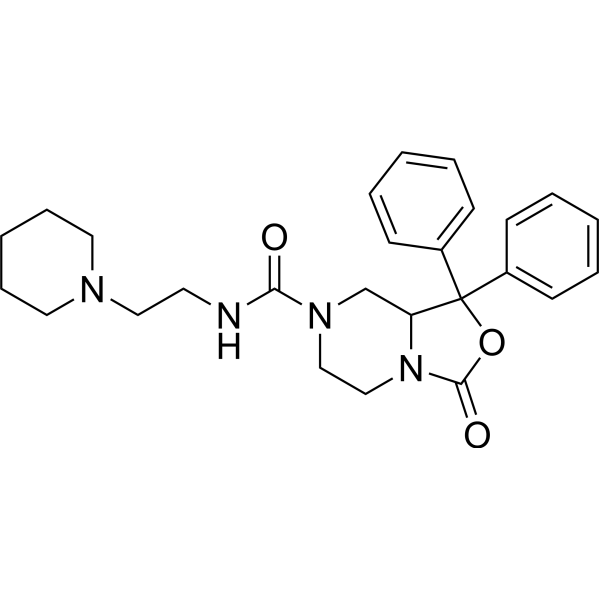
    RTI-118 is a novel small-molecule neuropeptide S receptor (NPSR) antagonist. RTI-118 can relieve agent addiction including selectively decrease self-administration .
    RTI-118
  • HY-101478

    mGluR Apoptosis Neurological Disease Cancer
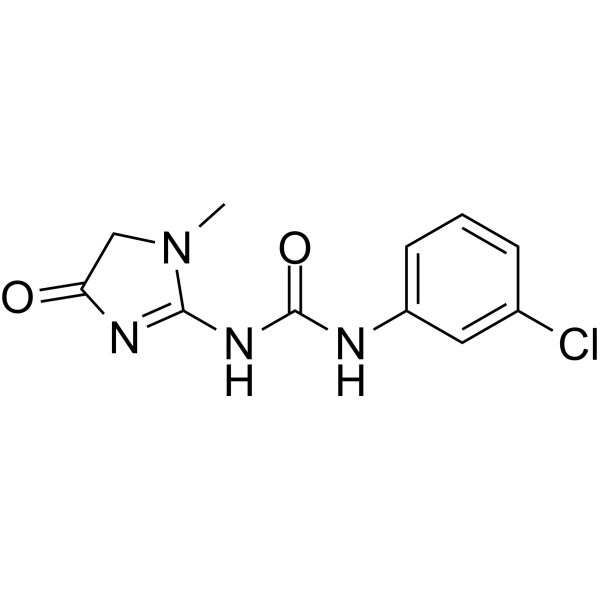
    Fenobam is a selective and orally active mGluR5 antagonist (IC50=84 nM) that can penetrate the blood-brain barrier. Fenobam shows the Kd values of 54 nM and 31 nM on rat and human recombinant mGlu5 receptors, respectively. Fenobam has anxiolytic activity, inhibits self-administration behavior in mice, and induces apoptosis in cancer cells. Fenobam can be used for research on neurological diseases, cancer and drug addiction .
    Fenobam
  • HY-P2259
    TAT-GluA2 3Y
    2 Publications Verification

    iGluR HIV Integrase Adenosine Receptor Cardiovascular Disease Neurological Disease
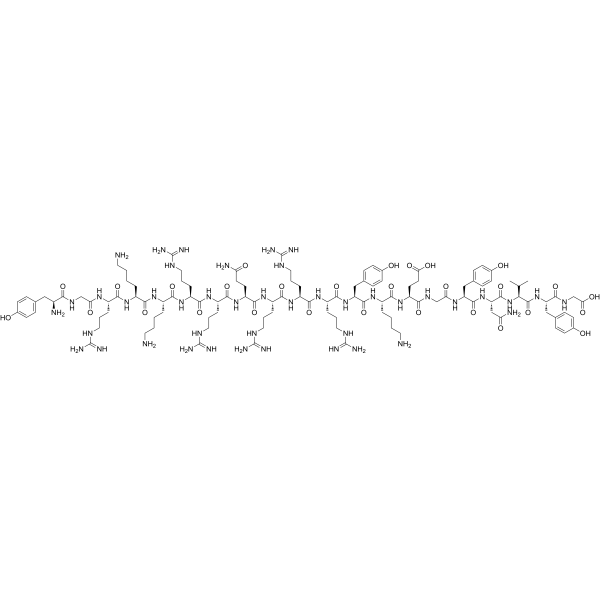
    TAT-GluA2 3Y is a blood-brain barrier-permeable AMPA receptor inhibitory peptide that crosses cell membranes via the HIV-1 TAT protein domain. TAT-GluA2 3Y blocks the endocytosis of AMPA receptors, including the internalization of GluA1/GluA2 subunits, by disrupting interactions with the AP2, Brag2 and Syt3-GluA2 complexes, while also inhibiting long-term depression. TAT-GluA2 3Y blocks hypoxia-mediated AMPAR internalization, alleviates A1R-induced persistent synaptic inhibition, and reduces cerebral ischemic volume, neurological deficits and spatial memory deficits. TAT-GluA2 3Y blocks the effect of NLRP3 deficiency on fear generalization, inhibits amphetamine-induced behavioral/neurochemical sensitization, weakens the unconditioned stimulus-conditioned stimulus association of morphine, and promotes the extinction of morphine CPP. TAT-GluA2 3Y can be used in studies related to fear generalization, ischemic stroke, hypoxia, drug addiction and opioid addiction .
    TAT-GluA2 3Y
  • HY-139178

    Phosphodiesterase (PDE) Neurological Disease
    KVA-D-88 is a blood-brain barrier-permeable PDE4 inhibitor with IC50 values of 140 and 880 nM for PDE4B and PDE4D, respectively. KVA-D-88 induces cAMP accumulation and inhibits neuroactive substance-mediated hyperlocomotion, locomotor sensitization. KVA-D-88 can be used for the research of drug addiction .
    KVA-D-88
  • HY-147319

    Trace Amine-associated Receptor (TAAR) Neurological Disease
    RTI-7470-44 is a potent, selective and blood-brain barrier (BBB) penetrant human trace amine-associated receptor subtype 1 (hTAAR1) antagonist with an IC50 value of 8.4 nM and a Ki value of 0.3 nM. RTI-7470-44 has moderate metabolic stability, and a favorable preliminary off-target profile. RTI-7470-44 can increase the spontaneous firing rate of mouse ventral tegmental area (VTA) dopaminergic neurons. RTI-7470-44 can be used for researching schizophrenia, agent addiction, and Parkinson’s disease (PD) .
    RTI-7470-44
  • HY-116910

    GABA Receptor Neurological Disease
    CPP-115 is a GABA transaminase inactivator with higher affinity and lower retinal toxicity than Vigabatrin (HY-15399). CPP-115 increases brain GABA levels by inhibiting GABA transaminase catabolism. CPP-115 can be used in the study of drug addiction and infantile spasms .
    CPP-115
  • HY-P2046

    Opioid Receptor Neurological Disease
    β-Endorphin (rat) is an endogenous opioid neuropeptide and peptide hormone. β-Endorphin (rat) has analgesic activity and also contributes to food intake in satiated rats. β-Endorphin (rat) can be used in the research of neurological diseases such as analgesia and drug addiction .
    β-Endorphin (rat)
  • HY-158014

    Dopamine Transporter Neurological Disease
    JJC8-089 is a dopamine transporter (DAT) inhibitor that may improve motivational dysfunction and increase effortful behavior in goal-directed activities. JJC8-089 significantly reversed the low-effort effects induced by the VMAT-2 inhibitor Tetrabenazine (HY-B0590) in rats and increased the choice of high-effort fixed-ratio 5-bar presses versus food intake. .
    JJC8-089
  • HY-124446

    Carboxylesterase (CES) Metabolic Disease
    Dibromsalicil (Compound 31) is a carboxylesterase (CES) inhibitor with activity of 72.7 nM against hiCE (human intestinal carboxylesterase) and 53.5 nM against rCE (rabbit liver carboxylesterase). Dibromsalicil has almost no activity against hCE1 (human liver carboxylesterase) and cholinesterase .
    Dibromsalicil
  • HY-101478A

    mGluR Apoptosis Neurological Disease Cancer
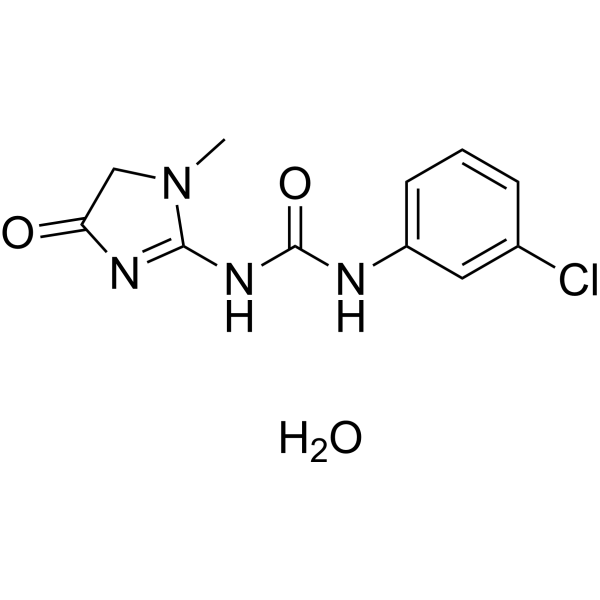
    Fenobam hydrate is a selective and orally active mGluR5 antagonist (IC50=84 nM) that can penetrate the blood-brain barrier. Fenobam hydrate shows the Kd values of 54 nM and 31 nM on rat and human recombinant mGlu5 receptors, respectively. Fenobam hydrate has anxiolytic activity, inhibits self-administration behavior in rat, and induces apoptosis in cancer cells. Fenobam hydrate can be used for research on neurological diseases, cancer and drug addiction .
    Fenobam hydrate
  • HY-174898

    5-HT Receptor Neurological Disease
    5-HT2C agonist-9 (Compound 33) is a 5-HT2C agonist with an EC50 of 1.4 nM for h5-HT2C. 5-HT2C agonist-9 can be used in the research of diseases such as depression, drug addiction, alcoholism, PTSD and neuropathic pain .
    5-HT2C agonist-9
  • HY-175191

    5-HT Receptor Neurological Disease
    5-HT2A agonist 4 (Compound 70) is a 5-HT2A agonist with an EC50 of 0.30  nM for h5-HT2A. 5-HT2A agonist 4 can be used for depression, drug addiction, alcoholism, post-traumatic stress disorder (PTSD), and neuropathic pain research .
    5-HT2A agonist 4
  • HY-175192

    5-HT Receptor Neurological Disease
    5-HT2A agonist 5 (Compound 88) is a 5-HT2A agonist with an EC50 of 0.01  nM for h5-HT2A. 5-HT2A agonist 5 can be used for depression, drug addiction, alcoholism, post-traumatic stress disorder (PTSD), and neuropathic pain research .
    5-HT2A agonist 5
  • HY-103573

    mGluR Neurological Disease
    VU 0360223 is a potent metabotropic glutamate receptors (mGluR) negative allosteric modulator with an IC50 of 61 nM .
    VU 0360223
  • HY-12698

    Opioid Receptor Neurological Disease
    NNC63-0532 is a novel non-peptide nociceptin receptor (ORL1) agonist, with EC50s of 305 nM. NNC63-0532 plays important roles in many disorders such as pain, drug addiction .
    NNC 63-0532
  • HY-11056

    Dopamine Receptor Neurological Disease
    PF-04363467 is a highly preferring D3R antagonist. PF-04363467 produces dose-dependent changes in the EEG profile of freely moving rats. PF-4363467 attenuates opioid drug-seeking behavior without concomitant D2 side effects. PF-04363467 can be used for the study of addiction, cognitive and mental illness .
    PF-04363467
  • HY-101478R

    Reference Standards mGluR Apoptosis Neurological Disease Cancer
    Fenobam (Standard) is the analytical standard of Fenobam. This product is intended for research and analytical applications. Fenobam is a selective and orally active mGluR5 antagonist (IC50=84 nM) that can penetrate the blood-brain barrier. Fenobam shows the Kd values of 54 nM and 31 nM on rat and human recombinant mGlu5 receptors, respectively. Fenobam has anxiolytic activity, inhibits self-administration behavior in mice, and induces apoptosis in cancer cells. Fenobam can be used for research on neurological diseases, cancer and drug addiction .
    Fenobam (Standard)
  • HY-124907

    OMS-403

    PPAR Neurological Disease
    AI 3-25755 (OMS-403) is a peroxisome proliferator-activated receptor gamma (PPARγ) agonist. AI 3-25755 can be used for research on opioid abuse and smoking cessation .
    AI 3-25755
  • HY-179594

    AP-1 Neurological Disease
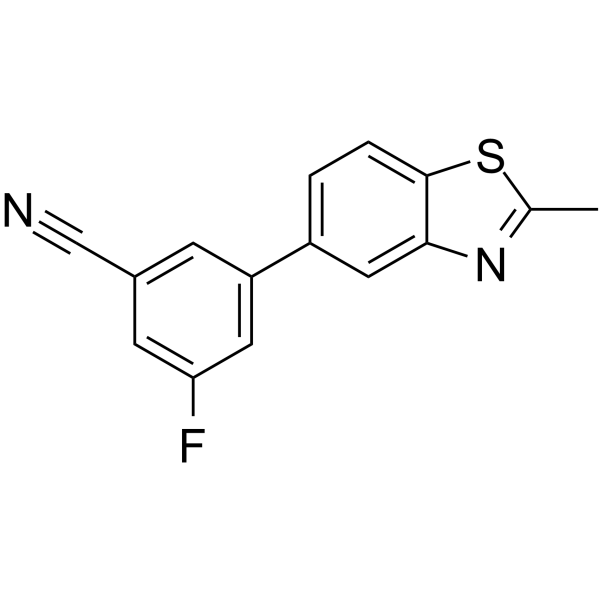
    HTS10307 is a small molecule AP1 Transcription Factor ΔFOSB inhibitor. HTS10307 inhibits the binding of ΔFOSB/JUND and ΔFOSB to DNA with IC50 values of ~3 μM and ~7 μM, respectively. HTS10307 can be used as a chemical probe for investigating the role of ΔFOSB in pathological conditions such as drug addiction, Alzheimer’s disease, and Parkinson’s disease .
    HTS10307
  • HY-182551

    Neurotensin Receptor Others Neurological Disease
    SR-12062 is a Neurotensin receptor 1 (NTSR1) full agonist that modulates NTSR1 to trigger intracellular Ca 2+ mobilization. SR-12062 can be used for the research of schizophrenia, parkinson’s disease, drug addiction .
    SR-12062
  • HY-179646

    Toll-like Receptor (TLR) NO Synthase NF-κB TNF Receptor Interleukin Related Neurological Disease
    CIAC101 is a potent and brain-penetrant TLR4 antagonist with an IC50 of 17.0 nM in NO assay. CIAC101 blocks Lipopolysaccharides (HY-D1056) (LPS)-induced NF-κB activation and reduces the expression of pro-inflammatory mediators (iNOS, IL-1β, TNF-α, and IL-6). CIAC101 robust antineuroinflammatory activity with efficacy against drug-evoked neurobehavioral adaptations. CIAC101 can be used for the research of addiction and neurological disease .
    CIAC101
  • HY-182011

    GPR6 Neurological Disease
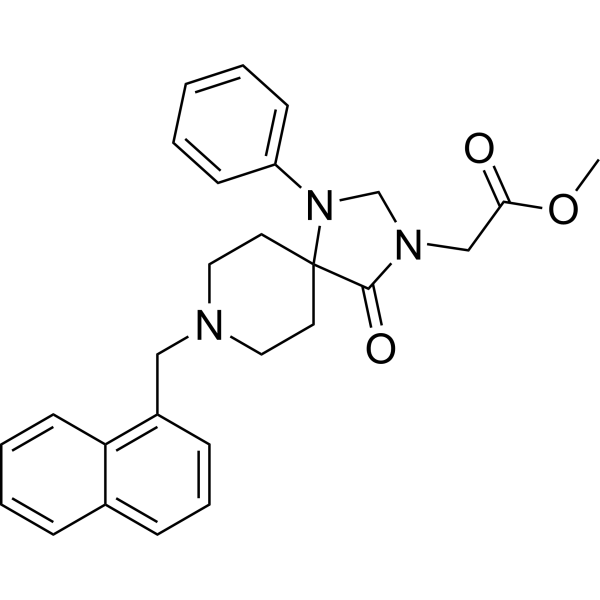
    GPR6 inverse agonist 2 (Compound 575) is a selective GPR6 inverse agonist, with IC50 values of < 0.1 μM and 1~30 μM against GPR6 and GPR3, respectively. GPR6 inverse agonist 2 exhibits preliminary cardiac safety, with an IC50 of 21.71 μM for hERG. GPR6 inverse agonist 2 can be used in the research of movement disorders such as Parkinson's disease .
    GPR6 inverse agonist 2

Inquiry Online

Your information is safe with us. * Required Fields.

Salutation


Country or Region *

Applicant Name *


Organization Name *

Department *


Email Address *


Product Name *

Cat. No.


Requested quantity *

Phone Number *


Remarks

Inquiry Online

Inquiry Information

Product Name:
Cat. No.:
Quantity:
MCE Japan Authorized Agent:

