1. Search Result
Search Result
Results for "

Fabry disease

" in MedChemExpress (MCE) Product Catalog:

19

Inhibitors & Agonists

1

Natural
Products

1

Isotope-Labeled Compounds

Cat. No. Product Name Target Research Areas Chemical Structure
  • HY-16743
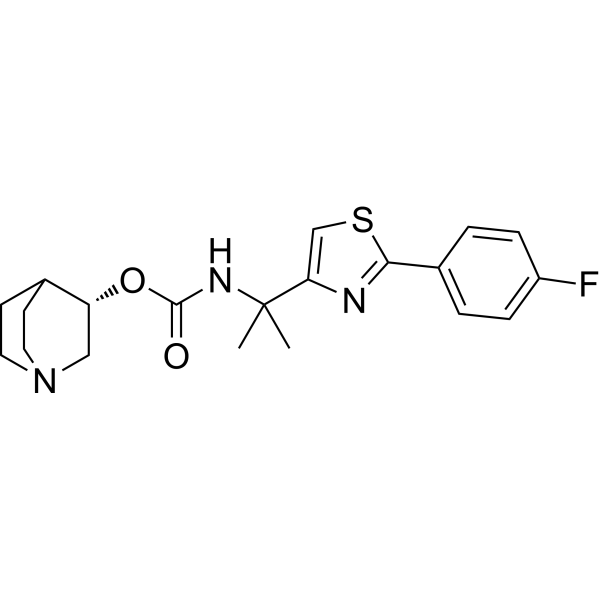
    Ibiglustat
    3 Publications Verification

    Venglustat; SAR402671; GZ402671

    Glucosylceramide Synthase (GCS) Metabolic Disease
    Ibiglustat (Venglustat) is an orally active, brain-penetrant glucosylceramide synthase (GCS) inhibitor. Ibiglustat can be used for the research of Gaucher disease type 3, Parkinson's disease associated with GBA mutations, Fabry disease, GM2 gangliosidosis, and autosomal dominant polycystic kidney disease .
    Ibiglustat
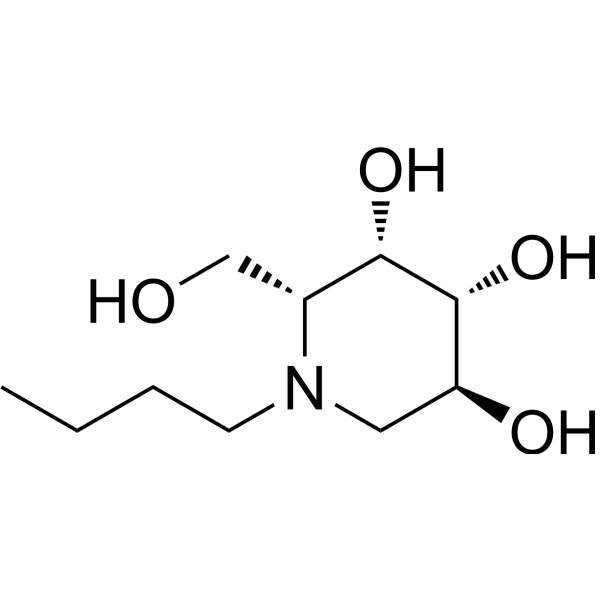
  • HY-106392

    NB-DGJ; N-(n-Butyl)deoxygalactonojirimycin

    Glucosylceramide Synthase (GCS) Metabolic Disease
    Lucerastat, the galactose form of Miglustat, is an orally-available inhibitor of glucosylceramide synthase (GCS). Lucerastat has the potential for Fabry disease study .
    Lucerastat
  • HY-14929A
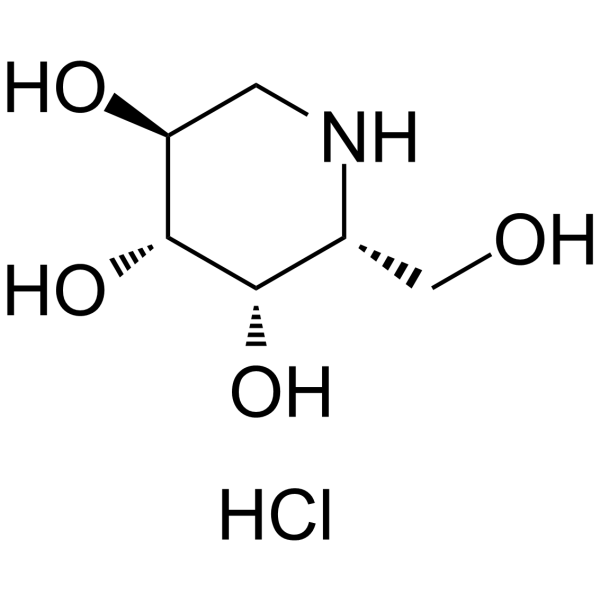
    Migalastat hydrochloride
    1 Publications Verification

    GR181413A

    Glycosidase Others
    Migalastat (GR181413A free base) hydrochloride is an orally active α-galactosidase A molecular chaperone, with an IC50 value of 0.04 μM for human α-Gal A. Migalastat binds to the active site of certain unstable mutant forms of α-galactosidase A, facilitating their transport to the lysosome. After dissociation in the acidic environment, Migalastat enables the mutant α-galactosidase A to exhibit biological activity .
    Migalastat hydrochloride
  • HY-N12408

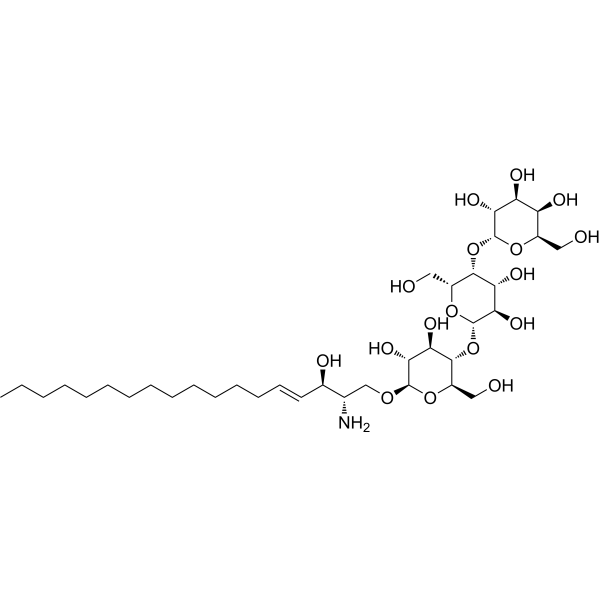
    Lyso-Gb3; Lyso-GL3

    Calcium Channel Cancer
    Globotriaosylsphingosine (Lyso-Gb3) inhibits the growth of fibroblasts, as well as their differentiation into myofibroblasts, and collagen expression. Globotriaosylsphingosine can be used for Fabry disease research .
    Globotriaosylsphingosine
  • HY-137873

    4-Methylumbelliferyl-α-D-Glucose; 4-Methylumbelliferyl-α-D-Glucoside; 4-MU-α-D-Glucopyranoside

    Fluorescent Dye Glycosidase Others
    4-Methylumbelliferyl-α-D-Glucopyranoside (4-Methylumbelliferyl-α-D-Glucose) is a fluorescent substrate for α-glucosidase, which releases the fluorescent moiety 4-methylumbelliferyl (4-MU) upon cleavage. 4-MU has pH-dependent fluorescence excitation activity, with excitation wavelengths of 320 nm at low pH (1.97-6.72) and 360 nm at high pH (7.12-10.3), respectively. The emission wavelength of 4-Methylumbelliferyl-α-D-Glucopyranoside increases with decreasing pH, ranging from 445-455 nm. 4-Methylumbelliferyl-α-D-Glucopyranoside can be used as a biomarker for Fabry and Pompe diseases to quantify α-glucosidase activity in infant blood spot samples.
    4-Methylumbelliferyl-α-D-Glucopyranoside
  • HY-16743A
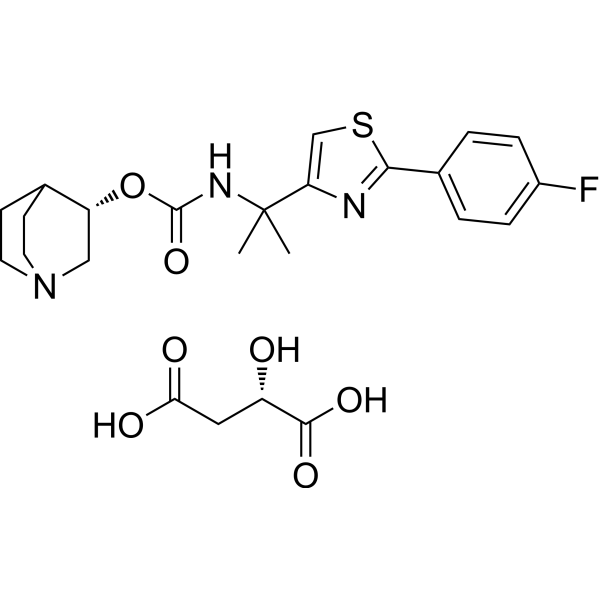
    Ibiglustat (L-Malic acid)
    3 Publications Verification

    Venglustat (L-Malic acid); SAR402671 (L-Malic acid); GZ402671 (L-Malic acid)

    Glucosylceramide Synthase (GCS) Metabolic Disease
    Ibiglustat (Venglustat) L-Malic acid is an orally active, brain-penetrant glucosylceramide synthase (GCS) inhibitor. Ibiglustat L-Malic acid can be used for the research of Gaucher disease type 3, Parkinson's disease associated with GBA mutations, Fabry disease, GM2 gangliosidosis, and autosomal dominant polycystic kidney disease .
    Ibiglustat (L-Malic acid)
  • HY-16743B
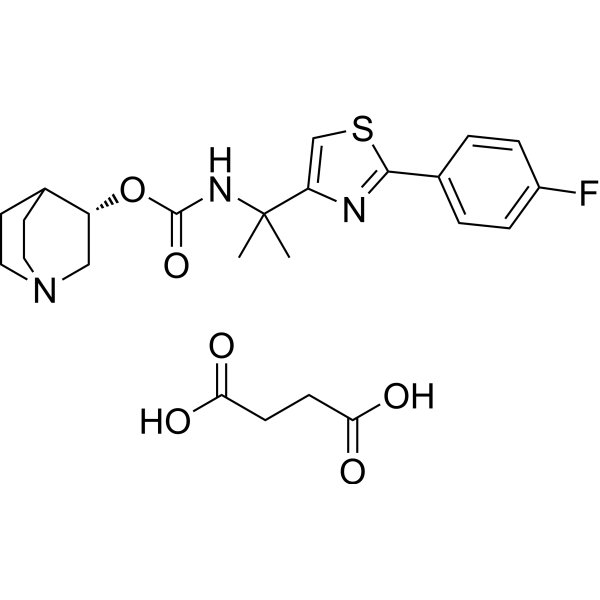
    Ibiglustat succinate
    3 Publications Verification

    Venglustat succinate; SAR402671 succinate; GZ402671 succinate

    Glucosylceramide Synthase (GCS) Neurological Disease
    Ibiglustat (Venglustat) succinate is an orally active, brain-penetrant glucosylceramide synthase (GCS) inhibitor. Ibiglustat succinate can be used for the research of Gaucher disease type 3, Parkinson's disease associated with GBA mutations, Fabry disease, GM2 gangliosidosis, and autosomal dominant polycystic kidney disease .
    Ibiglustat succinate
  • HY-156209

    Biochemical Assay Reagents Cardiovascular Disease Cancer
    Gb3 (d18:1/16:0) (Compound 1) is the P k antigen of the P blood group system. Gb3 (d18:1/16:0) acts as a cell surface receptor. Gb3 (d18:1/16:0) is used for research on Burkitt's lymphoma, teratocarcinoma, embryonal carcinoma, and Fabry's disease .
    Gb3(d18:1/16:0)
  • HY-156155

    Glycosyltransferase Metabolic Disease
    GYS1-IN-1 (compound 783) is a glycogen synthase 1(GYS1) inhibitor. GYS1-IN-1 can be used for the study of GYS1 -mediated disease, such as Gaucher and Fabry diseases .
    GYS1-IN-1
  • HY-172552

    DNA/RNA Synthesis Metabolic Disease
    RECTAS-2.0 is a small molecule designed to correct RNA mis-splicing caused by the GLA c.639+919G>A mutation, used for the research of Fabry disease .
    RECTAS-2.0
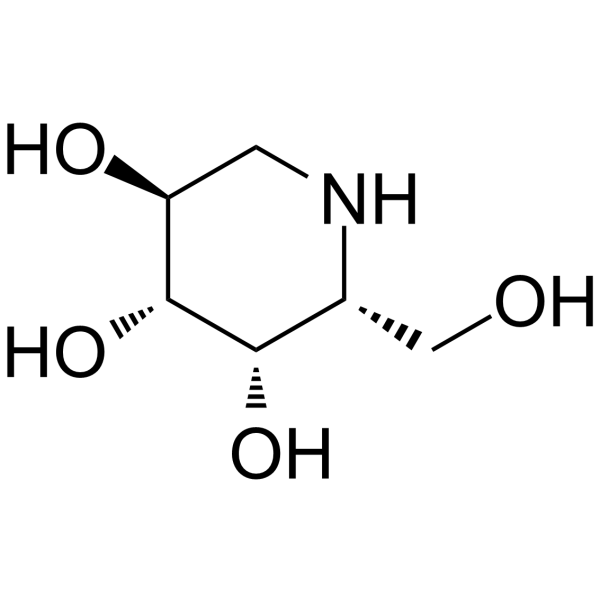
  • HY-14929

    GR181413A free base; 1-Deoxygalactonojirimycin

    Glycosidase Others
    Migalastat (GR181413A free base) is an orally active α-galactosidase A molecular chaperone, with an IC50 value of 0.04 μM for human α-Gal A. Migalastat binds to the active site of certain unstable mutant forms of α-galactosidase A, facilitating their transport to the lysosome. After dissociation in the acidic environment, Migalastat enables the mutant α-galactosidase A to exhibit biological activity .
    Migalastat
  • HY-172546

    LysoGM2 ammonium

    PKC Metabolic Disease
    Lyso-monosialoganglioside GM2 (LysoGM2) ammonium is a lysosphingolipid and protein kinase C inhibitor (IC50: 50 μM). Lyso-monosialoganglioside GM2 ammonium can inhibit the binding of protein kinase C to Phorbol 12,13-dibutyrate (HY-18985). Lyso-monosialoganglioside GM2 ammonium is a specific biomarker for GM2 gangliosidosis. Lyso-monosialoganglioside GM2 ammonium can be used in the research of sphingolipidoses .
    Lyso-monosialoganglioside GM2 ammonium
  • HY-156209S

    Isotope-Labeled Compounds Biochemical Assay Reagents Cardiovascular Disease Cancer
    Gb3(d18:1/16:0)-d9 is deuterium labeled Gb3(d18:1/16:0) (HY-156209). Gb3 (d18:1/16:0) (Compound 1) is the P k antigen of the P blood group system. Gb3 (d18:1/16:0) acts as a cell surface receptor. Gb3 (d18:1/16:0) is used for research on Burkitt's lymphoma, teratocarcinoma, embryonal carcinoma, and Fabry's disease .
    Gb3(d18:1/16:0)-d9
  • HY-106392R

    NB-DGJ (Standard); N-(n-Butyl)deoxygalactonojirimycin (Standard)

    Reference Standards Glucosylceramide Synthase (GCS) Metabolic Disease
    Lucerastat (Standard) is the analytical standard of Lucerastat. This product is intended for research and analytical applications. Lucerastat, the galactose form of Miglustat, is an orally-available inhibitor of glucosylceramide synthase (GCS). Lucerastat has the potential for Fabry disease study .
    Lucerastat (Standard)
  • HY-155789

    Ceramide trihexoside (d18:1/17:0); Gb3(d18:1)(C17:0)

    Biochemical Assay Reagents Others
    C17 Globotriaosylceramide (d18:1/17:0) is a sphygosine lipid that can be used to quantify Globotriaosylceramide in plasma and urine of patients with Fabry disease by gas chromatography-mass spectrometry (GC-MS) .
    C17 Globotriaosylceramide (d18:1/17:0)
  • HY-16743C

    Venglustat hydrochloride; SAR402671 hydrochloride; GZ402671 hydrochloride

    Glucosylceramide Synthase (GCS) Metabolic Disease
    Ibiglustat hydrochloride is an orally active, brain-penetrant glucosylceramide synthase (GCS) inhibitor. Ibiglustat hydrochloride can be used for the research of Gaucher disease type 3, Parkinson's disease associated with GBA mutations, Fabry disease, GM2 gangliosidosis, and autosomal dominant polycystic kidney disease .
    Ibiglustat hydrochloride
  • HY-156208

    AdaGalCer(d18:1/2:0); Admantanyl galactosylceramide (d18:1/2:0); Admantanyl galCer(d18:1/2:0)

    Glycosidase Glucosylceramide Synthase (GCS) Glycosyltransferase Metabolic Disease
    C2 Adamantanyl galactosylceramide (AdaGalCer) (d18:1/2:0) is a bioactive sphingolipid. C2 Adamantanyl galactosylceramide (d18:1/2:0) stimulates glucocerebrosidase activity in vitro. C2 Adamantanyl galactosylceramide (d18:1/2:0) inhibits microsomal LacCer and Gb3 synthase, and inhibits cell sulfatide synthesis. C2 Adamantanyl galactosylceramide (d18:1/2:0) reduces glucosylceramide (GlcCer) levels in normal and lysosomal storage disease (LSD) cells. C2 Adamantanyl galactosylceramide (d18:1/2:0) acts as a substrate for A4GALT and is able to lower Gb3 levels with an IC50 concentration of 40 μM in fabry disease cells .
    C2 Adamantanyl galactosylceramide (d18:1/2:0)
  • HY-181469

    Adamantanyl GluCer (d18:1/2:0); Adamantanyl glucosylceramide (d18:1/2:0); AdaGluCer (d18:1/2:0)

    Glycosidase Metabolic Disease
    C2 Adamantanyl glucosylceramide (d18:1/2:0) (Adamantanyl GluCer (d18:1/2:0)) is an inhibitor of glucocerebrosidase (GCC) and LacCer synthase. At low doses, C2 Adamantanyl glucosylceramide (d18:1/2:0) increases intracellular glycolipid levels by inhibiting glucocerebrosidase. C2 Adamantanyl glucosylceramide (d18:1/2:0) alters glycolipid metabolism. C2 Adamantanyl glucosylceramide (d18:1/2:0) can be used for the research of Gaucher disease and Fabry disease .
    C2 Adamantanyl glucosylceramide (d18:1/2:0)
  • HY-175076

    Endogenous Metabolite Metabolic Disease Inflammation/Immunology
    Globotriaosylceramide (non-hydroxy) (porcine RBC) is a glycosphingolipid found in the cell membranes of mammals. Globotriaosylceramide (non-hydroxy) (porcine RBC) is the core pathogenic molecule of Fabry disease, and its level can be downregulated by supplementing α-galactosidase A. Globotriaosylceramide (non-hydroxy) (porcine RBC) amplifies B-cell receptor signals by regulating the localization of co-receptor CD19, and can be used as a vaccine adjuvant, capable of guiding the generation of broad-spectrum and cross-protective antibody responses. Globotriaosylceramide (non-hydroxy) (porcine RBC) promotes wound healing and reduces scar formation by regulating fibroblast heterogeneity .
    Globotriaosylceramide (non-hydroxy) (porcine RBC)

Inquiry Online

Your information is safe with us. * Required Fields.

Salutation


Country or Region *

Applicant Name *


Organization Name *

Department *


Email Address *


Product Name *

Cat. No.


Requested quantity *

Phone Number *


Remarks

Inquiry Online

Inquiry Information

Product Name:
Cat. No.:
Quantity:
MCE Japan Authorized Agent:

