



Ibiglustat
Based on 4 publication(s) in Google Scholar
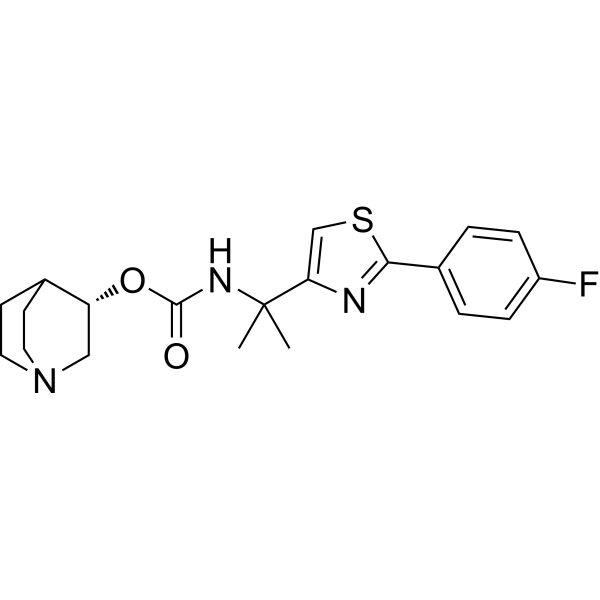
Ibiglustat (Venglustat) is an orally active, brain-penetrant glucosylceramide synthase (GCS) inhibitor. Ibiglustat can be used for the research of Gaucher disease type 3, Parkinson's disease associated with GBA mutations, Fabry disease, GM2 gangliosidosis, and autosomal dominant polycystic kidney disease.
Nos produits utilisent uniquement pour la recherche. Nous ne vendons pas aux patients.
- Pureté : 99.86%
- CAS No.: 1401090-53-6
- Formule: C20H24FN3O2S
- Masse moléculaire:389.49
-
Stockage:Powder -20°C, 3 years , 4°C, 2 years ; In solvent -80°C, 1 year , -20°C, 6 months

To place orders, for customer services and technical support, please contact: MedChemExpress USA
Tel: 609-228-6898 E-mail: [email protected] [email protected]


-
 Activité biologique
-
Chemical Information
-
Solvant et solubilité
- Protocole
- Pureté et documentation
- Références
-
 Help & FAQs


-
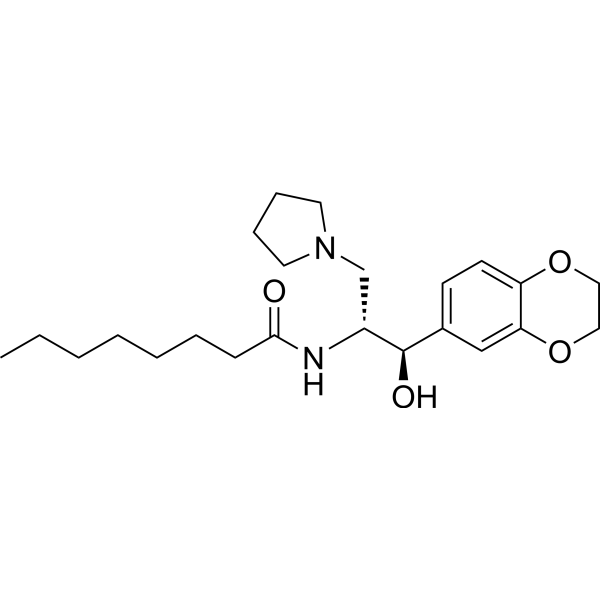
HY-14885
EliglustatGlucocerebroside Synthase Inhibitor -
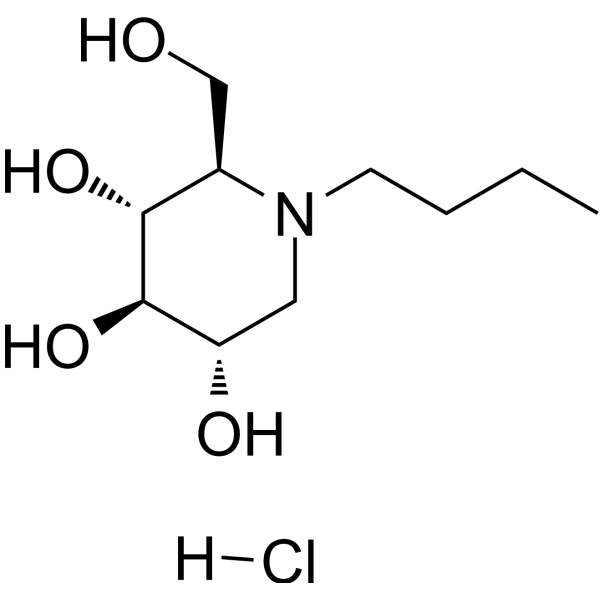
HY-17020A
Miglustat hydrochlorideGlucosylceramide Synthase Inhibitor -
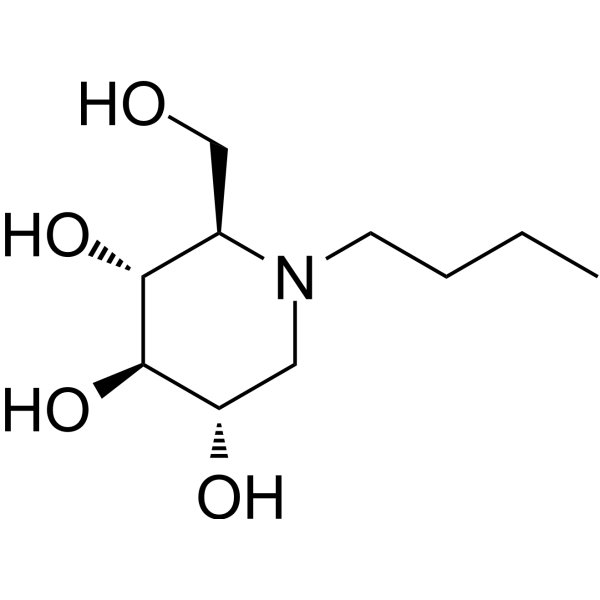
HY-17020
MiglustatCeramide Glucosyltransferase Inhibitor -
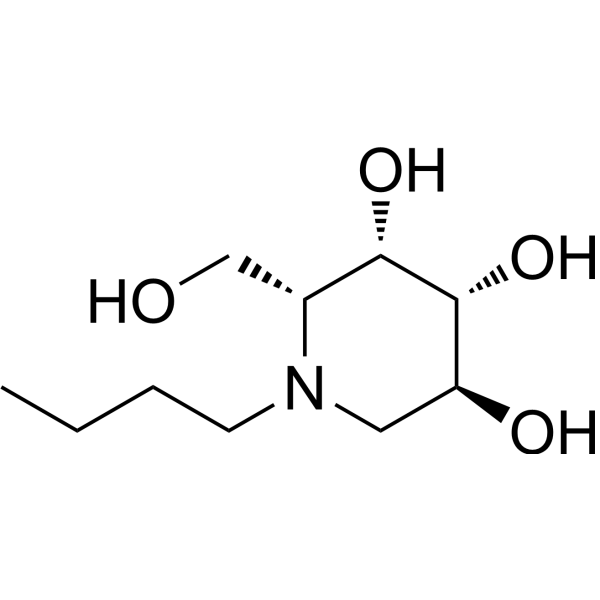
HY-106392
LucerastatGlucosylceramide Synthase Inhibitor -
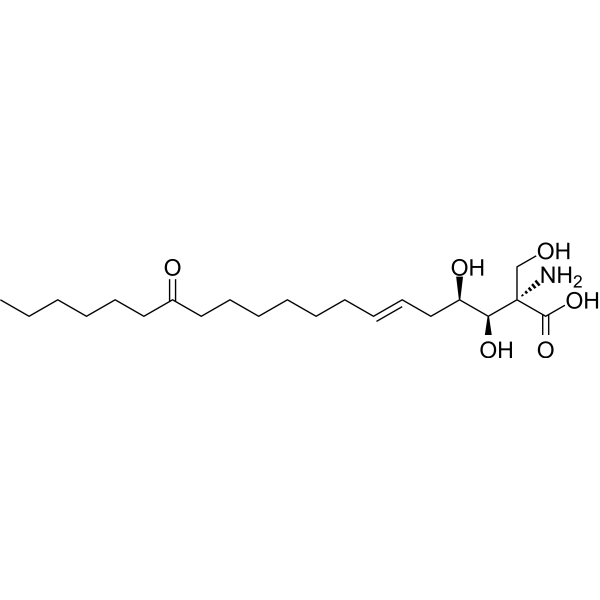
HY-N6798
MyriocinSPT Inhibitor -
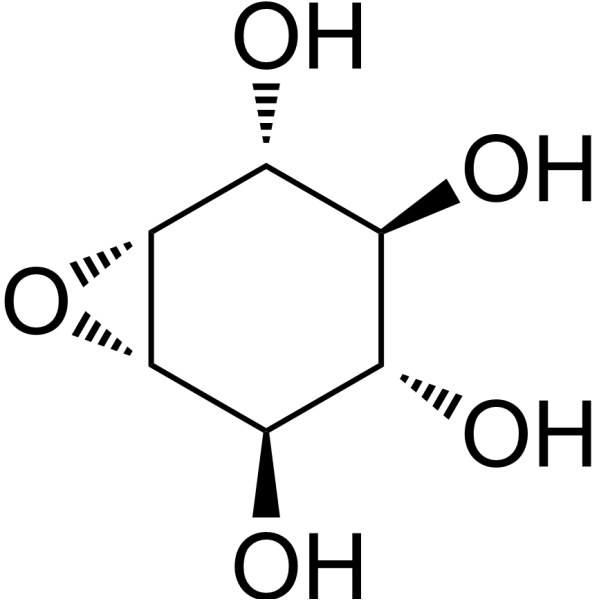
HY-100944
Conduritol B epoxideGcase Inhibitor -
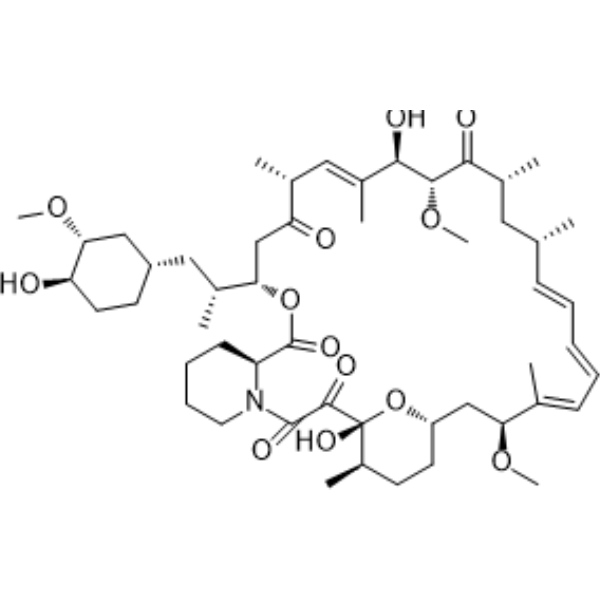
HY-10219
RapamycinmTOR Inhibitor -
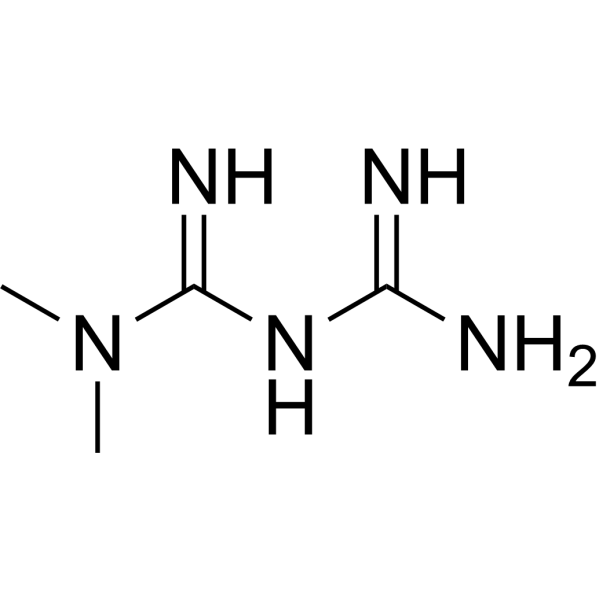
HY-B0627
MetforminAntihyperglycemic Agent -
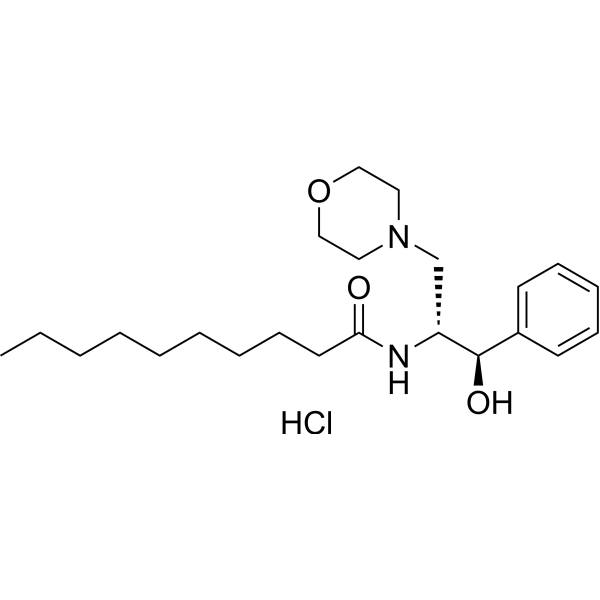
HY-116392B
DL-threo-PDMP hydrochlorideGlucosylceramide Synthase Inhibitor -
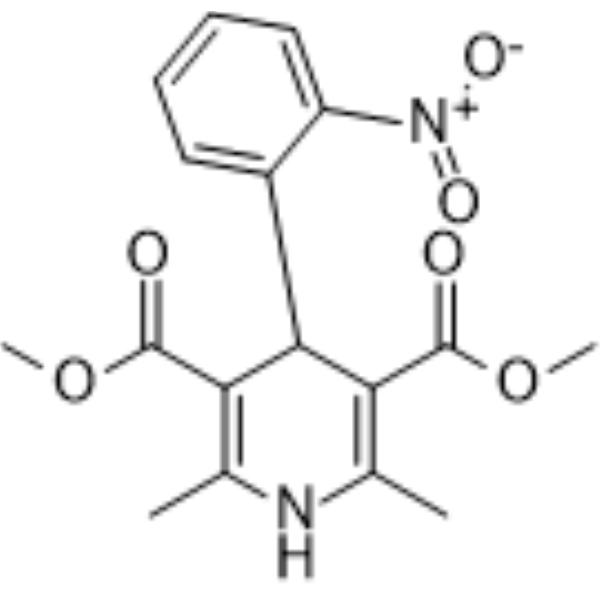
HY-B0284
NifedipineCalcium Channel Antagonist -
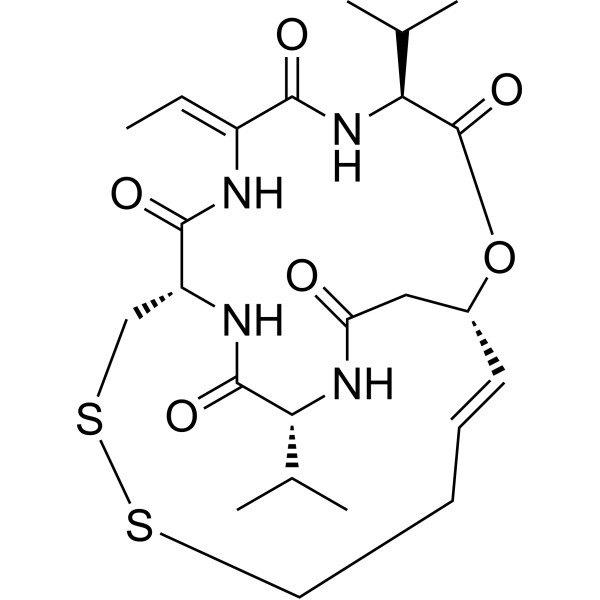
HY-15149
RomidepsinHDAC Inhibitor -
HY-13259
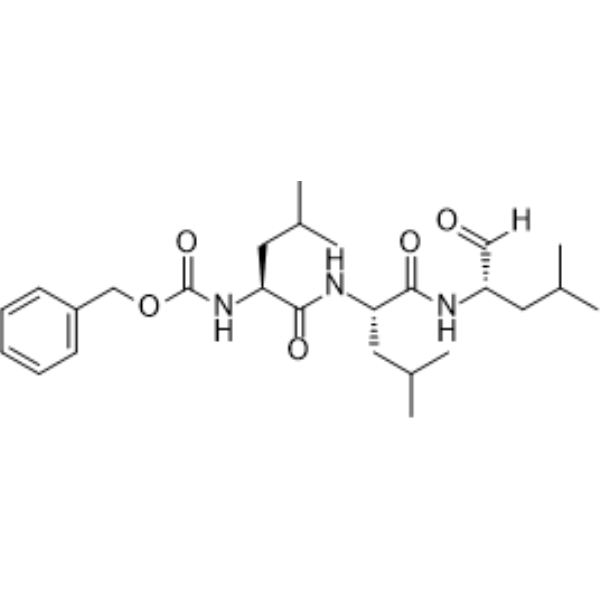
MG-132Proteasome Inhibitor
Publications Citing Use of MedChemExpress (MCE) Ibiglustat
More Customer Validation & Images

-
Cell Proliferation/Viability Assay
-
Flow Cytometry
-
WB
-
IF
-
Histological Imaging/Staining


Activité biologique
Description
IC50 & Target
Glucosylceramide synthase[1].
In Vitro
Ibiglustat (SAR402671) (1 μM, 15 days; Fabry disease (FD) cells) is close to the physiological level in untreated WT cells in GL-3 levels, suggesting that Ibiglustat can prevent additional GL-3 accumulation and could serve to ameliorate the abundant levels of this sphingolipid in FD cardiomyocytes[4]
MedChemExpress (MCE) has not independently confirmed the accuracy of these methods. They are for reference only.
Essai clinique
| NCT Number | Sponsor | Condition | Start Date |
Phase

|
|---|---|---|---|---|
| NCT01329991 | Plexxikon| | 2011-05 | PHASE1 |


Chemical Information
-
CAS No. 1401090-53-6
-
Appearance Solid
-
Masse moléculaire 389.49
-
Formule C20H24FN3O2S
-
Color White to off-white
-
SMILES
O=C(O[C@@H]1CN2CCC1CC2)NC(C)(C3=CSC(C4=CC=C(F)C=C4)=N3)C
-
Synonyms
Venglustat; SAR402671; GZ402671
-
Livraison
Room temperature in continental US; may vary elsewhere.
-
Stockage
Powder -20°C 3 years 4°C 2 years In solvent -80°C 1 year -20°C 6 months


Publications (4)
-
Journal Impact Factor
-
Most Recent
-
-
Int J Biol Macromol
2025 Jan:285:138303. PMID: 39631580
Ibiglustat purchased from MedChemExpress. Usage Cited in: Int J Biol Macromol. 2025 Jan:285:138303. [Abstract]
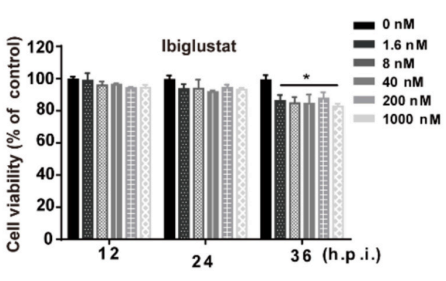
CCK-8 assay evaluating the proliferation of PK-15 cells treated with UGCG inhibitors Ibiglustat (1.6-1000 nM) over 12-36 h.
Ibiglustat purchased from MedChemExpress. Usage Cited in: Int J Biol Macromol. 2025 Jan:285:138303. [Abstract]
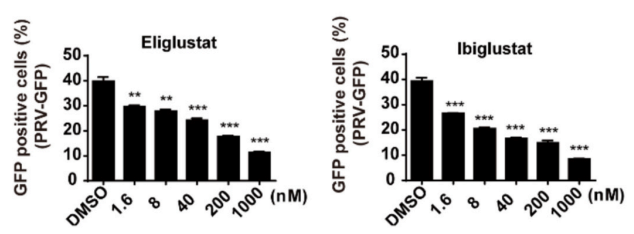
Flow cytometry analysis of PRV-GFP infection in PK-15 cells pretreated with UGCG inhibitors Eliglustat hemitartrate (1.6–1000 nM) and Ibiglustat (1.6–1000 nM) for 3 h, followed by GFP fluorescence intensity measurement 24 h post-infection to assess viral replication. The results showed that Ibiglustat significantly reduced PRV-GFP fluorescence signals in a dose-dependent manner.
Ibiglustat purchased from MedChemExpress. Usage Cited in: Int J Biol Macromol. 2025 Jan:285:138303. [Abstract]
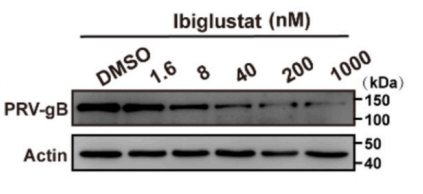
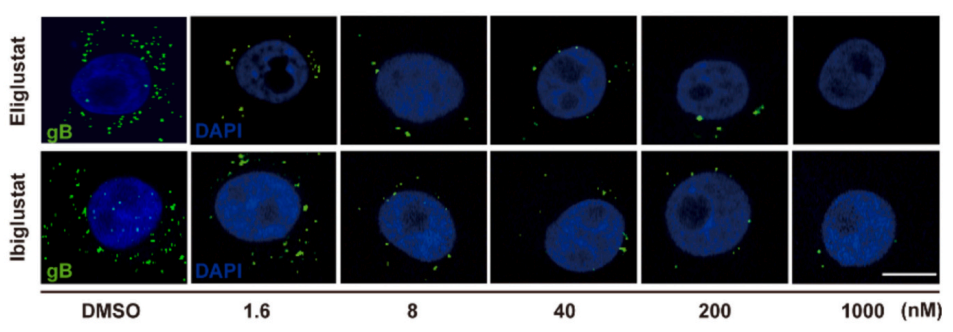
Ibiglustat (1.6–1000 nM; pretreated 3 h) reduced PRV-gB protein levels in a dose-dependent manner in PRV-QXX-infected PK-15 cells.
Ibiglustat purchased from MedChemExpress. Usage Cited in: Int J Biol Macromol. 2025 Jan:285:138303. [Abstract]
Ibiglustat (1.6–1000 nM; 3 h) reduced PRV-gB protein levels in a dose-dependent manner in PRV-QXX-infected PK-15 cells.
Ibiglustat purchased from MedChemExpress. Usage Cited in: Int J Biol Macromol. 2025 Jan:285:138303. [Abstract]
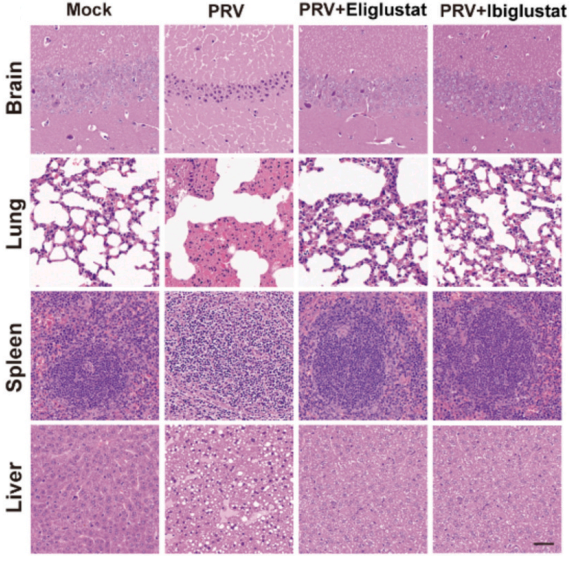
Brain, lung, liver, and spleen injury were assessed using hematoxylin and eosin staining 3 days post-infection (n = 3 per group). Histopathological examination revealed that PRV infection in mice induced proliferation of brain microglial cells, inflammatory cell infiltration in the lungs, significant thickening of alveolar septa, vacuolar degeneration of liver cells, and inflammatory tissue damage in the spleen. These pathological changes were attenuated by treatment with the UGCG inhibitors, Eliglustat hemitartrate or Ibiglustat ((2.5 mg/kg); s.c.; once daily for the first 3 days of PRV infection). Scale bar = 50 μm.
-
FASEB J
Glucosylceramide production maintains colon integrity in response to Bacteroides fragilis toxin-induced colon epithelial cell signaling. [Abstract]2020 Dec;34(12):15922-15945. PMID: 33047400 -


Solvant et solubilité
In Vitro:
DMSO : 50 mg/mL (128.37 mM; Need ultrasonic; Hygroscopic DMSO has a significant impact on the solubility of product, please use newly opened DMSO)
Please refer to the solubility information to select the appropriate solvent. Once prepared, please aliquot and store the solution to prevent product inactivation from repeated freeze-thaw cycles.
Storage method and period of stock solution: -80°C, 1 year; -20°C, 6 months. When stored at -80°C, please use it within 1 year. When stored at -20°C, please use it within 6 months.
Please refer to the solubility information to select the appropriate solvent. Once prepared, please aliquot and store the solution to prevent product inactivation from repeated freeze-thaw cycles.
Storage method and period of stock solution: -80°C, 1 year; -20°C, 6 months. When stored at -80°C, please use it within 1 year. When stored at -20°C, please use it within 6 months.
Concentration (start) × Volume (start) = Concentration (final) × Volume (final)
In Vivo:
Select the appropriate dissolution method based on your experimental animal and administration route.
- For the following dissolution methods, please ensure to first prepare a clear stock solution using an In Vitro approach and then sequentially add co-solvents:
- To ensure reliable experimental results, the clarified stock solution can be appropriately stored based on storage conditions. As for the working solution for In Vivo experiments, it is recommended to prepare freshly and use it on the same day.
- The percentages shown for the solvents indicate their volumetric ratio in the final prepared solution. If precipitation or phase separation occurs during preparation, heat and/or sonication can be used to aid dissolution.
Add each solvent one by one: 10% DMSO 40% PEG300 5% Tween-80 45% Saline
Solubility: ≥ 2.5 mg/mL (6.42 mM); Clear solution
This protocol yields a clear solution of ≥ 2.5 mg/mL (saturation unknown).
Taking 1 mL working solution as an example, add 100 μL DMSO stock solution (25.0 mg/mL) to 400 μL PEG300, and mix evenly; then add 50 μL Tween-80 and mix evenly; then add 450 μL Saline to adjust the volume to 1 mL.
Preparation of Saline: Dissolve 0.9 g sodium chloride in ddH₂O and dilute to 100 mL to obtain a clear Saline solution.
Add each solvent one by one: 10% DMSO 90% (20% SBE-β-CD in Saline)
Solubility: ≥ 2.5 mg/mL (6.42 mM); Clear solution
This protocol yields a clear solution of ≥ 2.5 mg/mL (saturation unknown).
Taking 1 mL working solution as an example, add 100 μL DMSO stock solution (25.0 mg/mL) to 900 μL 20% SBE-β-CD in Saline, and mix evenly.
Preparation of 20% SBE-β-CD in Saline (4°C, storage for one week): 2 g SBE-β-CD powder is dissolved in 10 mL Saline, completely dissolve until clear.
In Vivo Dissolution Calculator
Please enter the basic information of animal experiments:
-
-
-
-
Recommended: Prepare an additional quantity of animals to account for potential losses during experiments.
Please enter your animal formula composition:
-
%DMSO +
Recommended: Keep the proportion of DMSO in working solution below 2% if your animal is weak.
-
%+
-
+%Tween-80 + +
-
%Saline +
The co-solvents required include: DMSO, . All of co-solvents are available by MedChemExpress (MCE). , Tween 80. All of co-solvents are available by MedChemExpress (MCE).
Working solution concentration: 0.22 mg/mL
Method for preparing stock solution: mg drug dissolved in μL DMSO. Stock solution concentration: mg/mL.
1. Take μL DMSO stock solution;
2. Add μL .
μL , mix evenly;
3. Then add μL Tween 80, mix evenly;
4. Then add μL
Please ensure that the stock solution in the first step is dissolved to a clear state, and add co-solvents in sequence. You can use ultrasonic heating (ultrasonic cleaner, recommended frequency 20-40 kHz), vortexing, etc. to assist dissolution.


Pureté et documentation
-
Fiche technique (274 KB)
-
SDS (396 KB)
- English - EN (396 KB)
- Français - FR (396 KB)
- Deutsch - DE (396 KB)
- Norwegian - NO (396 KB)
- Español - ES (396 KB)
- Swedish - SV (396 KB)
- Italian - IT (396 KB)
- Korean - KR (396 KB)
- Portuguese - PT (396 KB)
-
Instruction de manipulation (2659 KB)
Références
[1]. Viel C, et al. Preclinical pharmacology of glucosylceramide synthase inhibitor venglustat in a GBA-related synucleinopathy model. Sci Rep. 2021;11(1):20945. Published 2021 Oct 22. [Content Brief]
[2]. Peterschmitt MJ, et al. Pharmacokinetics, Pharmacodynamics, Safety, and Tolerability of Oral Venglustat in Healthy Volunteers. Clin Pharmacol Drug Dev. 2021;10(1):86-98. [Content Brief]
[3]. Stojkovska I, et al. Molecular mechanisms of α-synuclein and GBA1 in Parkinson's disease. Cell Tissue Res. 2018;373(1):51-60. doi:10.1007/s00441-017-2704-y [Content Brief]
[4]. Itier JM, et al. Effective clearance of GL-3 in a human iPSC-derived cardiomyocyte model of Fabry disease. J Inherit Metab Dis. 2014 Nov;37(6):1013-22. [Content Brief]


Complete Stock Solution Preparation Table
Please refer to the solubility information to select the appropriate solvent. Once prepared, please aliquot and store the solution to prevent product inactivation from repeated freeze-thaw cycles.
Storage method and period of stock solution: -80°C, 1 year; -20°C, 6 months. When stored at -80°C, please use it within 1 year. When stored at -20°C, please use it within 6 months.
| Optional Solvent | Concentration Solvent Mass | 1 mg | 5 mg | 10 mg | 25 mg |
|---|---|---|---|---|---|
| DMSO | 1 mM | 2.5675 mL | 12.8373 mL | 25.6746 mL | 64.1865 mL |
| 5 mM | 0.5135 mL | 2.5675 mL | 5.1349 mL | 12.8373 mL | |
| 10 mM | 0.2567 mL | 1.2837 mL | 2.5675 mL | 6.4187 mL | |
| 15 mM | 0.1712 mL | 0.8558 mL | 1.7116 mL | 4.2791 mL | |
| 20 mM | 0.1284 mL | 0.6419 mL | 1.2837 mL | 3.2093 mL | |
| 25 mM | 0.1027 mL | 0.5135 mL | 1.0270 mL | 2.5675 mL | |
| 30 mM | 0.0856 mL | 0.4279 mL | 0.8558 mL | 2.1396 mL | |
| 40 mM | 0.0642 mL | 0.3209 mL | 0.6419 mL | 1.6047 mL | |
| 50 mM | 0.0513 mL | 0.2567 mL | 0.5135 mL | 1.2837 mL | |
| 60 mM | 0.0428 mL | 0.2140 mL | 0.4279 mL | 1.0698 mL | |
| 80 mM | 0.0321 mL | 0.1605 mL | 0.3209 mL | 0.8023 mL | |
| 100 mM | 0.0257 mL | 0.1284 mL | 0.2567 mL | 0.6419 mL |


Ibiglustat Related Classifications
HY-16743 Related Classifications
 Powered by Bioz