



Ibiglustat (L-Malic acid)
Based on 3 publication(s) in Google Scholar
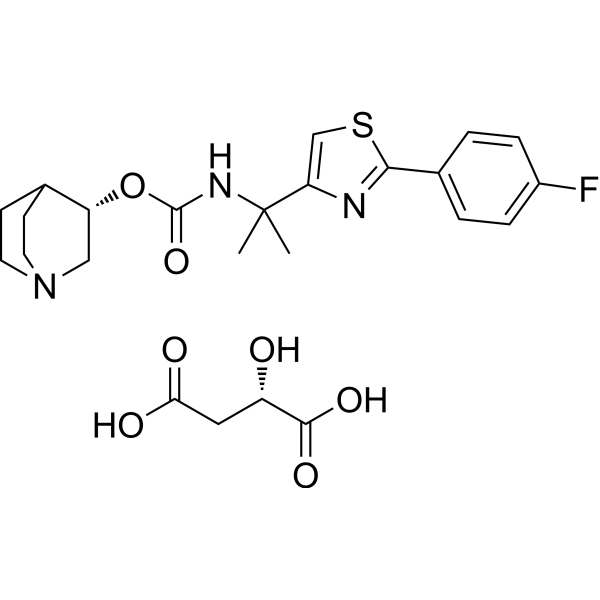
Ibiglustat (Venglustat) L-Malic acid is an orally active, brain-penetrant glucosylceramide synthase (GCS) inhibitor. Ibiglustat L-Malic acid can be used for the research of Gaucher disease type 3, Parkinson's disease associated with GBA mutations, Fabry disease, GM2 gangliosidosis, and autosomal dominant polycystic kidney disease.
For research use only. We do not sell to patients.
- Purity : 98.65%
- CAS No.: 1629063-78-0
- Formula: C24H30FN3O7S
- Molecular Weight:523.57
-
Storage:Powder -20°C, 3 years , 4°C, 2 years ; In solvent -80°C, 6 months , -20°C, 1 month

To place orders, for customer services and technical support, please contact: MedChemExpress USA
Tel: 609-228-6898 E-mail: [email protected] [email protected]


-
 Biological Activity
-
Chemical Information
-
Solvent & Solubility
- Protocols
- Purity & Documentation
- References
-
 Help & FAQs


-
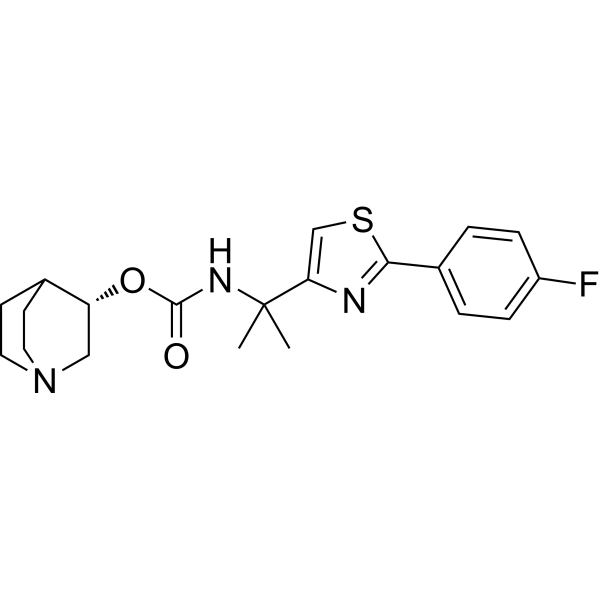
HY-16743
IbiglustatGlucosylceramide Synthase Inhibitor -
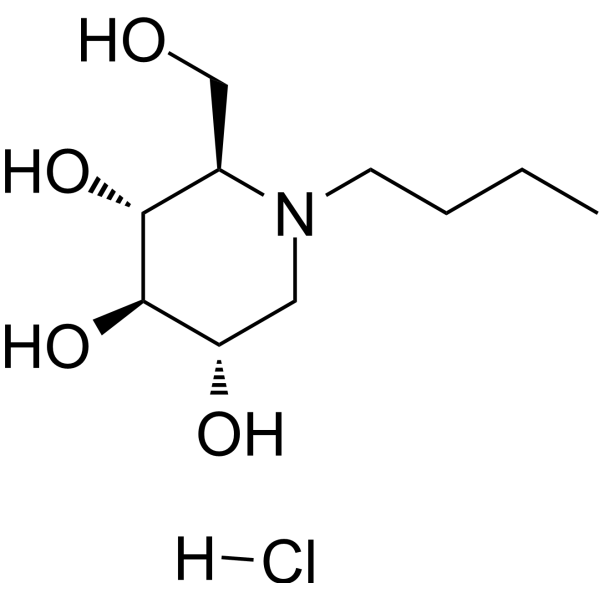
HY-17020A
Miglustat hydrochlorideGlucosylceramide Synthase Inhibitor -
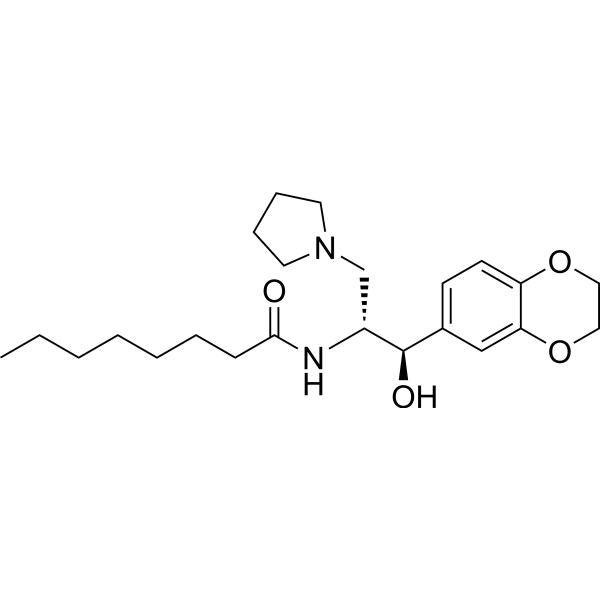
HY-14885
EliglustatGlucocerebroside Synthase Inhibitor -
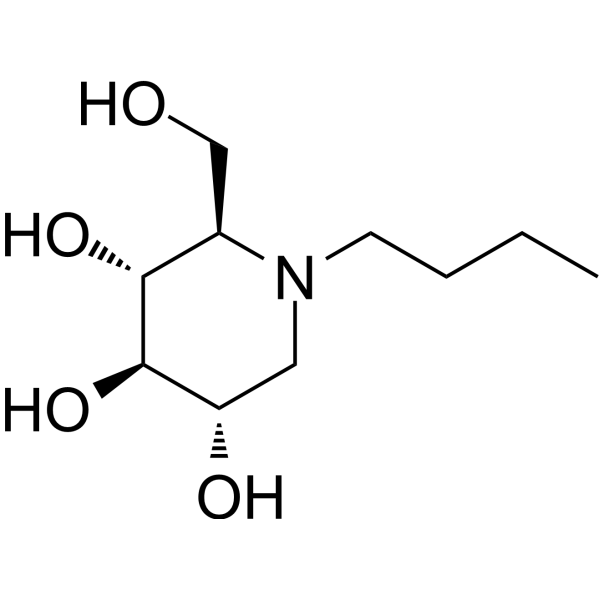
HY-17020
MiglustatCeramide Glucosyltransferase Inhibitor -
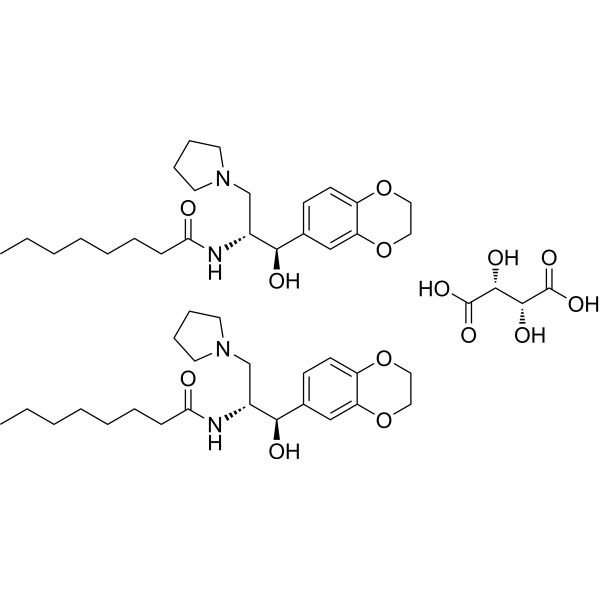
HY-14885A
Eliglustat hemitartrateGlucocerebroside Synthase Inhibitor -
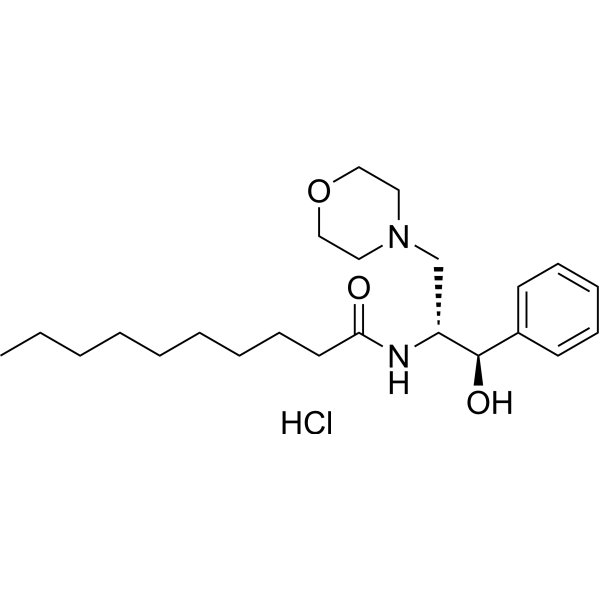
HY-116392B
DL-threo-PDMP hydrochlorideGlucosylceramide Synthase Inhibitor -

HY-17020AR
Miglustat hydrochloride (Standard)Glucosylceramide Synthase Inhibitor -

HY-14885R
Eliglustat (Standard)Glucocerebroside Synthase Inhibitor -

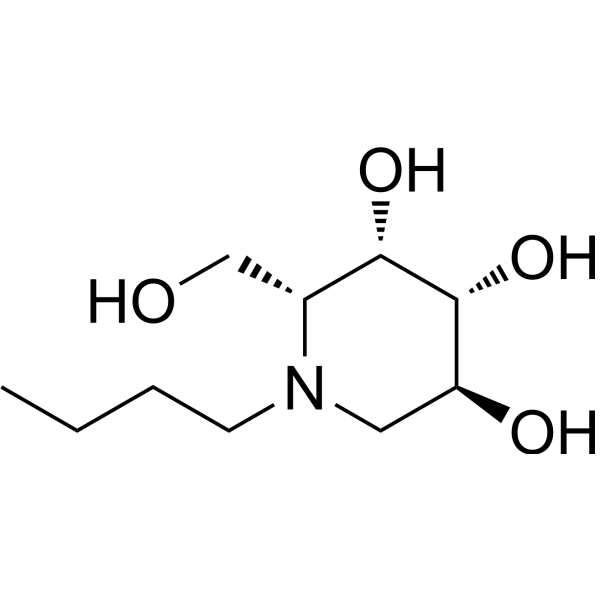
HY-17020R
Miglustat (Standard)Ceramide Glucosyltransferase Inhibitor -
HY-106392
LucerastatGlucosylceramide Synthase Inhibitor -
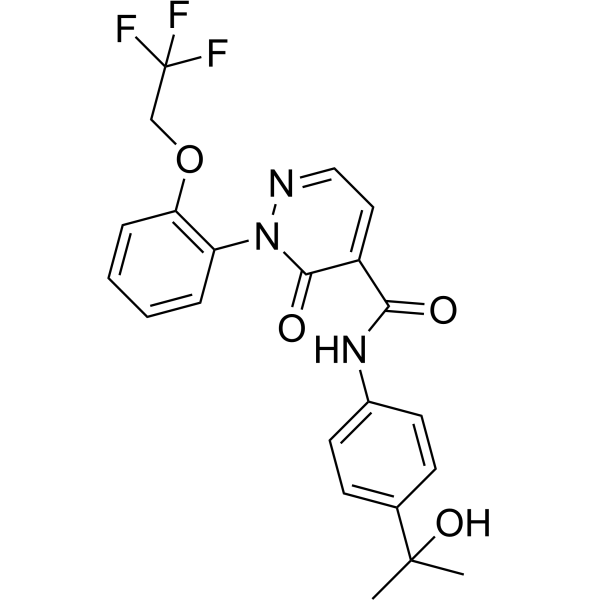
HY-144267
Glucosylceramide synthase-IN-2GCS Inhibitor -
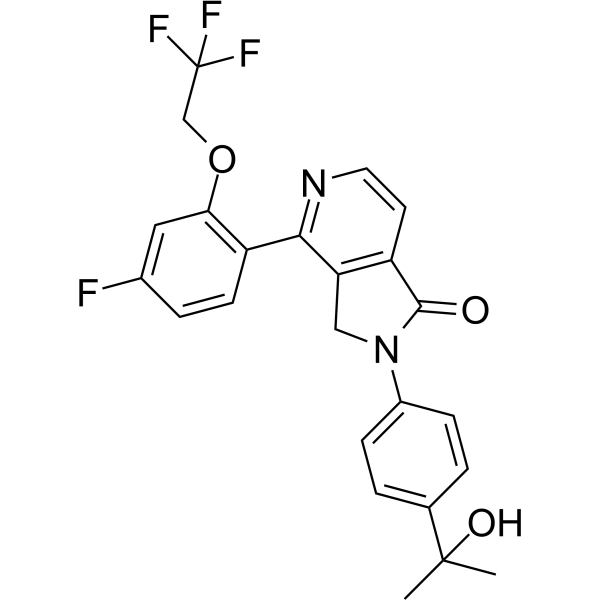
HY-144266
TP-060GCS Inhibitor
Publications Citing Use of MedChemExpress (MCE) Ibiglustat (L-Malic acid)
More Customer Validation & Images

-
Cell Proliferation/Viability Assay
-
Flow Cytometry
-
WB
-
IF
-
Histological Imaging/Staining


Biological Activity
Description
IC50 & Target
Glucosylceramide synthase[1].
In Vitro
Ibiglustat (SAR402671) (1 μM, 15 days) L-Malic acid treated Fabry disease (FD) cells are close to the physiological level in untreated WT cells in GL-3 levels, suggesting that Ibiglustat L-Malic acid can prevent additional GL-3 accumulation and could serve to ameliorate the abundant levels of this sphingolipid in FD cardiomyocytes[4].
MedChemExpress (MCE) has not independently confirmed the accuracy of these methods. They are for reference only. Further protocols information, click here.


Chemical Information
-
CAS No. 1629063-78-0
-
Appearance Solid
-
Molecular Weight 523.57
-
Formula C24H30FN3O7S
-
Color White to off-white
-
SMILES
O=C(O[C@@H]1CN2CCC1CC2)NC(C)(C3=CSC(C4=CC=C(F)C=C4)=N3)C.OC(C[C@H](O)C(O)=O)=O
-
Synonyms
Venglustat (L-Malic acid); SAR402671 (L-Malic acid); GZ402671 (L-Malic acid)
-
Shipping
Room temperature in continental US; may vary elsewhere.
-
Storage
Powder -20°C 3 years 4°C 2 years In solvent -80°C 6 months -20°C 1 month


Publications (3)
-
Journal Impact Factor
-
Most Recent
-
Int J Biol Macromol
2025 Jan:285:138303. PMID: 39631580
Ibiglustat (L-Malic acid) purchased from MedChemExpress. Usage Cited in: Int J Biol Macromol. 2025 Jan:285:138303. [Abstract]
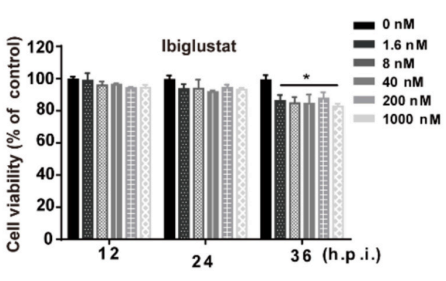
CCK-8 assay evaluating the proliferation of PK-15 cells treated with UGCG inhibitors Ibiglustat (1.6-1000 nM) over 12-36 h.
Ibiglustat (L-Malic acid) purchased from MedChemExpress. Usage Cited in: Int J Biol Macromol. 2025 Jan:285:138303. [Abstract]
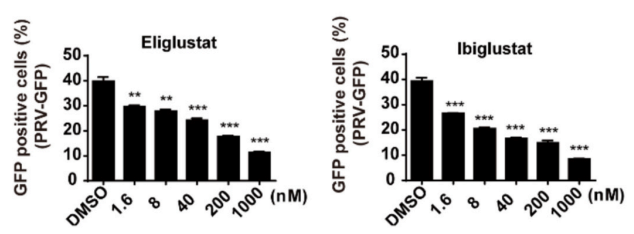
Flow cytometry analysis of PRV-GFP infection in PK-15 cells pretreated with UGCG inhibitors Eliglustat hemitartrate (1.6–1000 nM) and Ibiglustat (1.6–1000 nM) for 3 h, followed by GFP fluorescence intensity measurement 24 h post-infection to assess viral replication. The results showed that Ibiglustat significantly reduced PRV-GFP fluorescence signals in a dose-dependent manner.
Ibiglustat (L-Malic acid) purchased from MedChemExpress. Usage Cited in: Int J Biol Macromol. 2025 Jan:285:138303. [Abstract]
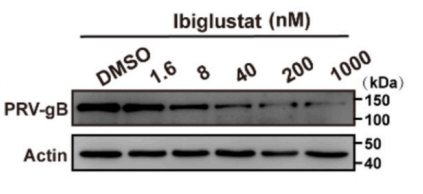
Ibiglustat (1.6–1000 nM; pretreated 3 h) reduced PRV-gB protein levels in a dose-dependent manner in PRV-QXX-infected PK-15 cells.
Ibiglustat (L-Malic acid) purchased from MedChemExpress. Usage Cited in: Int J Biol Macromol. 2025 Jan:285:138303. [Abstract]
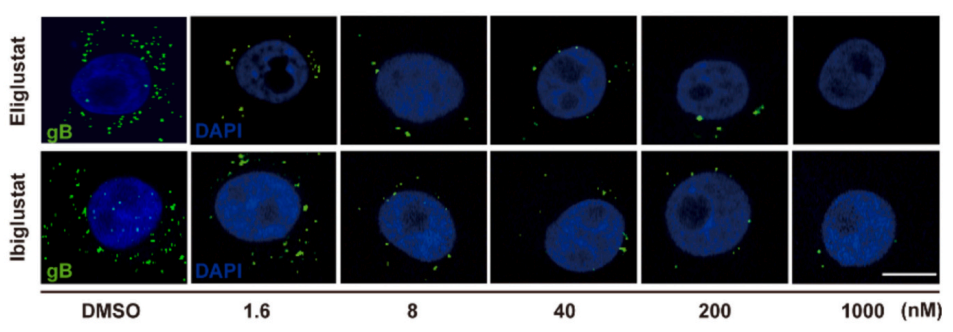
Ibiglustat (1.6–1000 nM; 3 h) reduced PRV-gB protein levels in a dose-dependent manner in PRV-QXX-infected PK-15 cells.
Ibiglustat (L-Malic acid) purchased from MedChemExpress. Usage Cited in: Int J Biol Macromol. 2025 Jan:285:138303. [Abstract]
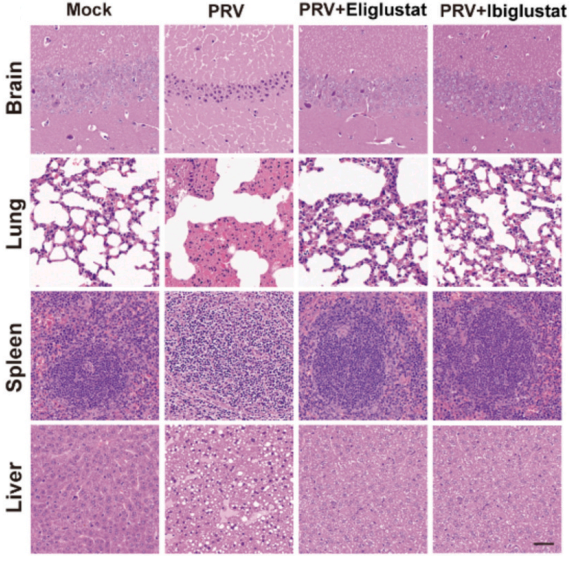
Brain, lung, liver, and spleen injury were assessed using hematoxylin and eosin staining 3 days post-infection (n = 3 per group). Histopathological examination revealed that PRV infection in mice induced proliferation of brain microglial cells, inflammatory cell infiltration in the lungs, significant thickening of alveolar septa, vacuolar degeneration of liver cells, and inflammatory tissue damage in the spleen. These pathological changes were attenuated by treatment with the UGCG inhibitors, Eliglustat hemitartrate or Ibiglustat ((2.5 mg/kg); s.c.; once daily for the first 3 days of PRV infection). Scale bar = 50 μm.
-
FASEB J
Glucosylceramide production maintains colon integrity in response to Bacteroides fragilis toxin-induced colon epithelial cell signaling. [Abstract]2020 Dec;34(12):15922-15945. PMID: 33047400 -


Solvent & Solubility
In Vitro:
DMSO : ≥ 100 mg/mL (191.00 mM; Hygroscopic DMSO has a significant impact on the solubility of product, please use newly opened DMSO)
* "≥" means soluble, but saturation unknown.
Please refer to the solubility information to select the appropriate solvent. Once prepared, please aliquot and store the solution to prevent product inactivation from repeated freeze-thaw cycles.
Storage method and period of stock solution: -80°C, 6 months; -20°C, 1 month. When stored at -80°C, please use it within 6 months. When stored at -20°C, please use it within 1 month.
Please refer to the solubility information to select the appropriate solvent. Once prepared, please aliquot and store the solution to prevent product inactivation from repeated freeze-thaw cycles.
Storage method and period of stock solution: -80°C, 6 months; -20°C, 1 month. When stored at -80°C, please use it within 6 months. When stored at -20°C, please use it within 1 month.
Concentration (start) × Volume (start) = Concentration (final) × Volume (final)
In Vivo:
Select the appropriate dissolution method based on your experimental animal and administration route.
- For the following dissolution methods, please ensure to first prepare a clear stock solution using an In Vitro approach and then sequentially add co-solvents:
- To ensure reliable experimental results, the clarified stock solution can be appropriately stored based on storage conditions. As for the working solution for In Vivo experiments, it is recommended to prepare freshly and use it on the same day.
- The percentages shown for the solvents indicate their volumetric ratio in the final prepared solution. If precipitation or phase separation occurs during preparation, heat and/or sonication can be used to aid dissolution.
Add each solvent one by one: 10% DMSO 40% PEG300 5% Tween-80 45% Saline
Solubility: ≥ 2.5 mg/mL (4.77 mM); Clear solution
This protocol yields a clear solution of ≥ 2.5 mg/mL (saturation unknown).
Taking 1 mL working solution as an example, add 100 μL DMSO stock solution (25.0 mg/mL) to 400 μL PEG300, and mix evenly; then add 50 μL Tween-80 and mix evenly; then add 450 μL Saline to adjust the volume to 1 mL.
Preparation of Saline: Dissolve 0.9 g sodium chloride in ddH₂O and dilute to 100 mL to obtain a clear Saline solution.
Add each solvent one by one: 10% DMSO 90% (20% SBE-β-CD in Saline)
Solubility: ≥ 2.5 mg/mL (4.77 mM); Clear solution
This protocol yields a clear solution of ≥ 2.5 mg/mL (saturation unknown).
Taking 1 mL working solution as an example, add 100 μL DMSO stock solution (25.0 mg/mL) to 900 μL 20% SBE-β-CD in Saline, and mix evenly.
Preparation of 20% SBE-β-CD in Saline (4°C, storage for one week): 2 g SBE-β-CD powder is dissolved in 10 mL Saline, completely dissolve until clear.
In Vivo Dissolution Calculator
Please enter the basic information of animal experiments:
-
-
-
-
Recommended: Prepare an additional quantity of animals to account for potential losses during experiments.
Please enter your animal formula composition:
-
%DMSO +
Recommended: Keep the proportion of DMSO in working solution below 2% if your animal is weak.
-
%+
-
+%Tween-80 + +
-
%Saline +
The co-solvents required include: DMSO, . All of co-solvents are available by MedChemExpress (MCE). , Tween 80. All of co-solvents are available by MedChemExpress (MCE).
Working solution concentration: 0.22 mg/mL
Method for preparing stock solution: mg drug dissolved in μL DMSO. Stock solution concentration: mg/mL.
1. Take μL DMSO stock solution;
2. Add μL .
μL , mix evenly;
3. Then add μL Tween 80, mix evenly;
4. Then add μL
Please ensure that the stock solution in the first step is dissolved to a clear state, and add co-solvents in sequence. You can use ultrasonic heating (ultrasonic cleaner, recommended frequency 20-40 kHz), vortexing, etc. to assist dissolution.

Protocols
-
Human pluripotent stem cell midbrain dopaminergic neuron differentiation
Human pluripotent stem cells are directed toward midbrain dopaminergic neurons by first inducing a neural floor-plate-like progenitor state, then patterning cells with ventralizing SHH signaling and midbrain/WNT-FGF cues, and finally maturing progenitors into neurons expressing dopaminergic markers such as TH, NURR1/NR4A2, PITX3, DAT/SLC6A3, VMAT2/SLC18A2, GIRK2/KCNJ6, FOXA2, LMX1A, and EN1. The main readouts are loss of pluripotency, acquisition of FOXA2+/LMX1A+ midbrain floor-plate progenitors, emergence of βIII-tubulin+/MAP2+ neurons, and production of TH+ dopaminergic neurons with molecular, dopamine-release, and electrophysiological features of midbrain dopaminergic identity.


Purity & Documentation
-
Data Sheet (278 KB)
-
SDS (557 KB)
- English - EN (557 KB)
- Français - FR (557 KB)
- Deutsch - DE (557 KB)
- Norwegian - NO (557 KB)
- Español - ES (557 KB)
- Swedish - SV (557 KB)
- Italian - IT (557 KB)
- Korean - KR (557 KB)
- Portuguese - PT (557 KB)
-
Handling Instructions (2659 KB)
References
[1]. Viel C, et al. Preclinical pharmacology of glucosylceramide synthase inhibitor venglustat in a GBA-related synucleinopathy model. Sci Rep. 2021;11(1):20945. Published 2021 Oct 22. [Content Brief]
[2]. Peterschmitt MJ, et al. Pharmacokinetics, Pharmacodynamics, Safety, and Tolerability of Oral Venglustat in Healthy Volunteers. Clin Pharmacol Drug Dev. 2021;10(1):86-98. [Content Brief]
[4]. Itier JM, et al. Effective clearance of GL-3 in a human iPSC-derived cardiomyocyte model of Fabry disease. J Inherit Metab Dis. 2014 Nov;37(6):1013-22. [Content Brief]


Complete Stock Solution Preparation Table
Please refer to the solubility information to select the appropriate solvent. Once prepared, please aliquot and store the solution to prevent product inactivation from repeated freeze-thaw cycles.
Storage method and period of stock solution: -80°C, 6 months; -20°C, 1 month. When stored at -80°C, please use it within 6 months. When stored at -20°C, please use it within 1 month.
| Optional Solvent | Concentration Solvent Mass | 1 mg | 5 mg | 10 mg | 25 mg |
|---|---|---|---|---|---|
| DMSO | 1 mM | 1.9100 mL | 9.5498 mL | 19.0996 mL | 47.7491 mL |
| 5 mM | 0.3820 mL | 1.9100 mL | 3.8199 mL | 9.5498 mL | |
| 10 mM | 0.1910 mL | 0.9550 mL | 1.9100 mL | 4.7749 mL | |
| 15 mM | 0.1273 mL | 0.6367 mL | 1.2733 mL | 3.1833 mL | |
| 20 mM | 0.0955 mL | 0.4775 mL | 0.9550 mL | 2.3875 mL | |
| 25 mM | 0.0764 mL | 0.3820 mL | 0.7640 mL | 1.9100 mL | |
| 30 mM | 0.0637 mL | 0.3183 mL | 0.6367 mL | 1.5916 mL | |
| 40 mM | 0.0477 mL | 0.2387 mL | 0.4775 mL | 1.1937 mL | |
| 50 mM | 0.0382 mL | 0.1910 mL | 0.3820 mL | 0.9550 mL | |
| 60 mM | 0.0318 mL | 0.1592 mL | 0.3183 mL | 0.7958 mL | |
| 80 mM | 0.0239 mL | 0.1194 mL | 0.2387 mL | 0.5969 mL | |
| 100 mM | 0.0191 mL | 0.0955 mL | 0.1910 mL | 0.4775 mL |


Ibiglustat (L-Malic acid) Related Classifications
HY-16743A Related Classifications
 Powered by Bioz