

1. Search Result
Search Result
Results for "

IL-6 ligand

" in MedChemExpress (MCE) Product Catalog:

14

Inhibitors & Agonists

1

Screening Libraries

1

Peptides

2

Inhibitory Antibodies

1

Natural
Products

Cat. No. Product Name Target Research Areas Chemical Structure
  • HY-15614
    SC144
    Maximum Cited Publications
    10 Publications Verification

    Interleukin Related Apoptosis Cancer
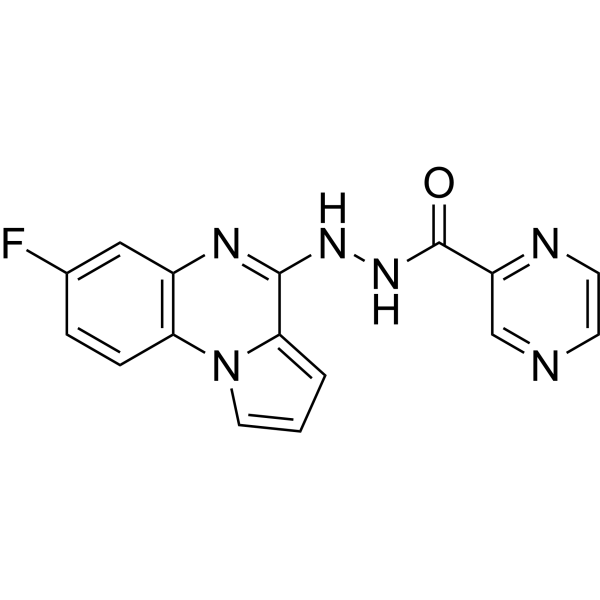
    SC144 is a first-in-class, orally active gp130 (IL6-beta) inhibitor. SC144 binds gp130, induces gp130 phosphorylation (S782) and deglycosylation, abrogates Stat3 phosphorylation and nuclear translocation, and further inhibits the expression of downstream target genes. SC144 shows potent inhibition of gp130 ligand-triggered signaling. SC144 induces apoptosis in human ovarian cancer cells .
    SC144
  • HY-P99165
    Teprotumumab
    1 Publications Verification

    IGF-1R TSH Receptor Endocrinology
    Teprotumumab is an IGF-1 receptor (IGF-1R) blocking human monoclonal antibody. Teprotumumab binds to the ligand binding extracellular α-subunit domain of IGF-1R. Teprotumumab inhibits TSH and IGF-1 action in fibrocytes. Teprotumumab attenuates TSH-dependent IL-6 and IL-8 expression and Akt phosphorylation. Teprotumumab can be used for thyroid-associated ophthalmopathy research .
    Teprotumumab
  • HY-15614A
    SC144 hydrochloride
    Maximum Cited Publications
    10 Publications Verification

    Interleukin Related Apoptosis Cancer
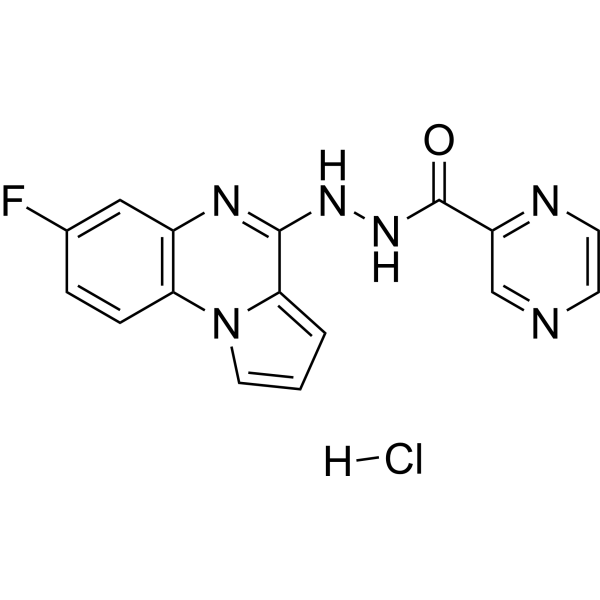
    SC144 hydrochloride is a first-in-class, orally active gp130 (IL6-beta) inhibitor. SC144 hydrochloride binds gp130, induces gp130 phosphorylation (S782) and deglycosylation, abrogates Stat3 phosphorylation and nuclear translocation, and further inhibits the expression of downstream target genes. SC144 hydrochloride shows potent inhibition of gp130 ligand-triggered signaling. SC144 hydrochloride induces apoptosis in human ovarian cancer cells .
    SC144 hydrochloride
  • HY-P99505

    COR-001; MEDI-5117; MEDI-5117; NN-6018; WBP-216

    Interleukin Related LDLR Inflammation/Immunology Endocrinology
    Ziltivekimab (COR-001) is a fully human monoclonal antibody and also an IL-6 inhibitor. Ziltivekimab significantly reduces inflammatory biomarkers and Lipoprotein (a) in chronic kidney disease patients with systemic inflammation. Ziltivekimab does not increase pro-atherosclerotic lipid levels. Ziltivekimab is used in studies related to atherosclerotic thrombotic diseases and chronic kidney disease .
    Ziltivekimab
  • HY-P10086
    TREM-1 inhibitory peptide GF9
    1 Publications Verification

    Human TREM-1(213-221)

    TREM receptor TNF Receptor Interleukin Related c-Fms Neurological Disease Inflammation/Immunology Cancer
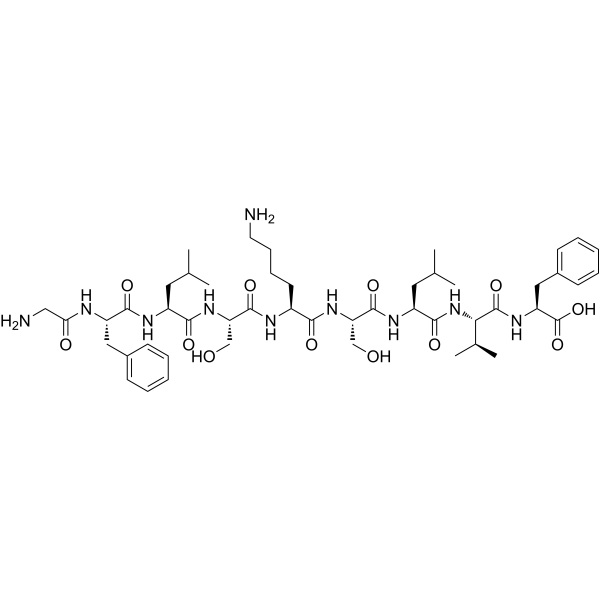
    TREM-1 inhibitory peptide GF9 (Human TREM-1 (213-221)) is a TREM-1 inhibitor. TREM-1 inhibitory peptide GF9 blocks the TREM-1 signaling pathway via a ligand-independent mechanism, spontaneously inserts into the cell membrane to dissociate TREM-1 from DAP-12, and functions through the Signaling Chain Homooligomerization (SCHOOL) model. TREM-1 inhibitory peptide GF9 reduces the levels of TNFα, IL-1β, IL-6, and M-CSF. TREM-1 inhibitory peptide GF9 inhibits tumor growth, prolongs the survival of mice with pancreatic cancer models, ameliorates collagen-induced arthritis, and exerts protective effects on bone and cartilage simultaneously. TREM-1 inhibitory peptide GF9 can be used in research related to arthritis, pancreatic cancer, retinopathy, alcoholic liver disease, and liver cancer .
    TREM-1 inhibitory peptide GF9
  • HY-113330
    12S-HHT
    1 Publications Verification

    12(S)-HHTrE

    Leukotriene Receptor Endogenous Metabolite Inflammation/Immunology
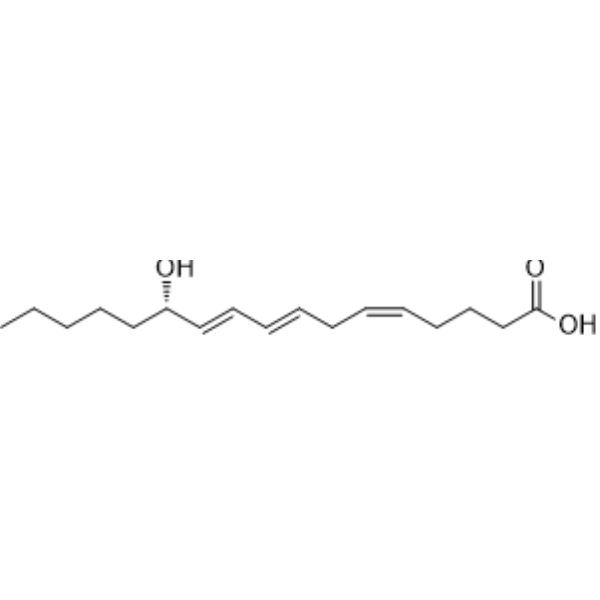
    12S-HHT (12(S)-HHTrE) is an enzymatic product of prostaglandin H2 (PGH2) derived from cyclooxygenase (COX)-mediated arachidonic acid metabolism. 12S-HHT is an endogenous ligand for BLT2 that fully activates BLT2 in vivo. 12S-HHT suppresses UV-induced IL-6 synthesis in keratinocytes, exerting an anti-inflammatory activity .
    12S-HHT
  • HY-176555

    Interleukin Related STAT Inflammation/Immunology
    Z169667518 is a ligand of IL-6. Z169667518 can inhibit IL-6-induced STAT3 reporter activity with an IC50 of 2.7 µM. Z169667518 can be used in the research of IL-6-related diseases .
    Z169667518
  • HY-172590

    PROTACs IRAK Interleukin Related TNF Receptor Inflammation/Immunology
    LZ-07 is a IRAK4 PROTAC degrader (DC50 = 1.14 nM). LZ-07 leads to marked suppression of cytokines including IL-6, IL-1β, TNF-α, and IL-10 upon degradation of IRAK4. LZ-07 can be studied in research for autoimmune diseases (Pink: IRAK4 ligand (HY-172591); Blue: CRBN ligand (HY-34590); Black: linker (HY-B0149); CRBN ligand + linker: HY-172593) .
    LZ-07
  • HY-174465

    Toll-like Receptor (TLR) Interleukin Related Inflammation/Immunology
    TLR4L 10 is a TLR4 ligand. TLR4L 10 induces cells to produce IL-6. TLR4L 10 has immunostimulatory activity .
    TLR4L 10
  • HY-120510

    PF 4308515

    Glucocorticoid Receptor Interleukin Related PGC-1α Inflammation/Immunology
    PF-04308515 is a glucocorticoid receptor ligand. PF-04308515 inhibits IL-6, IFNγ production. PF-04308515 induces weak PGC1α interaction. PF-04308515 has antiinflammatory activities .
    PF-04308515
  • HY-174405

    PROTACs Phosphodiesterase (PDE) TNF Receptor Interleukin Related Inflammation/Immunology
    PROTAC PDE4 degrader-1 (Compound 9m) is a selective and orally active PDE4 PROTAC degrader with a DC50 of 41.98 μM. PROTAC PDE4 degrader-1 potently inhibits the secretion of pro-inflammatory cytokines such as TNF-α and IL-6. PROTAC PDE4 degrader-1 significantly alleviates pulmonary inflammation in LPS (HY-D1056)-induced acute lung injury (ALI) mice Model . Pink: PDE4 ligand (HY-174410); Blue: CRBN ligase ligand (HY-10984); Black: linker
    PROTAC PDE4 degrader-1
  • HY-172934

    Toll-like Receptor (TLR) NO Synthase PROTACs Inflammation/Immunology Cancer
    FGT-4 is a folate receptor β (FR-β) targeting chimeric molecule. FGT-4 is a TLR7 agonist. FGT-4 facilitates the secretion of iNOS and proinflammatory cytokine IL-6 associated with M1 macrophages and enhances the proliferation of cytotoxic CD8 + T cells. FGT-4 has anti-tumor activity in the 4T1 breast cancer mouse model. FGT-4 can be used for the study of cancer immunity. (Pink: target protein TLR7/8 agonist 1 ligand (HY-103698); black: linker (HY-172936); blue: FR-β ligand (HY-172935)) .
    FGT-4
  • HY-168782

    TNF Receptor Interleukin Related Inflammation/Immunology
    Resolvin D2 n-3 DPA is a specialized proresolving mediator (SPM). Resolvin D2 n-3 DPA (1 nM) can reduce the chemotaxis and adhesion of human neutrophils induced by TNF-α. Resolvin D2 n-3 DPA (100 ng/mouse; intravenous injection) can reduce neutrophil infiltration in the peritoneum and the levels of IL-6 and the chemokine (C-C motif) ligand 2 (CCL2) in a mouse model of inflammation induced by zinc oxide .
    Resolvin D2 n-3 DPA
  • HY-179715

    PROTACs JAK TNF Receptor Interleukin Related STAT Inflammation/Immunology
    PROTAC JAK1/2 degrader-1 (Compound A8) is a selective JAK1/2 PROTAC degrader, with DC50 values of 1.4 μM for JAK1 and 0.92 μM for JAK2. PROTAC JAK1/2 degrader-1 significantly inhibits the release of NO, IL-6 (IC50 = 12.89 μM) and TNF-α (IC50 = 17.17 μM). PROTAC JAK1/2 degrader-1 significantly alleviates inflammatory responses and colonic damage by inhibiting the JAK/STAT3 signaling pathway. PROTAC JAK1/2 degrader-1 can be used for research on colitis. (Pink: JAK1/2 ligand (HY-179716); Blue: CRBN ligand (HY-10984); Black: linker; CRBN ligand + linker (HY-131888A)) .
    PROTAC JAK1/2 degrader-1

Inquiry Online

Your information is safe with us. * Required Fields.

Salutation


Country or Region *

Applicant Name *


Organization Name *

Department *


Email Address *


Product Name *

Cat. No.


Requested quantity *

Phone Number *


Remarks

Inquiry Online

Inquiry Information

Product Name:
Cat. No.:
Quantity:
MCE Japan Authorized Agent:

