

1. Search Result
Search Result
Results for "

Relaxin

" in MedChemExpress (MCE) Product Catalog:

13

Inhibitors & Agonists

5

Peptides

2

Inhibitory Antibodies

3

Recombinant Proteins

4

Antibodies

Targets Recommended:
Cat. No. Product Name Target Research Areas Chemical Structure
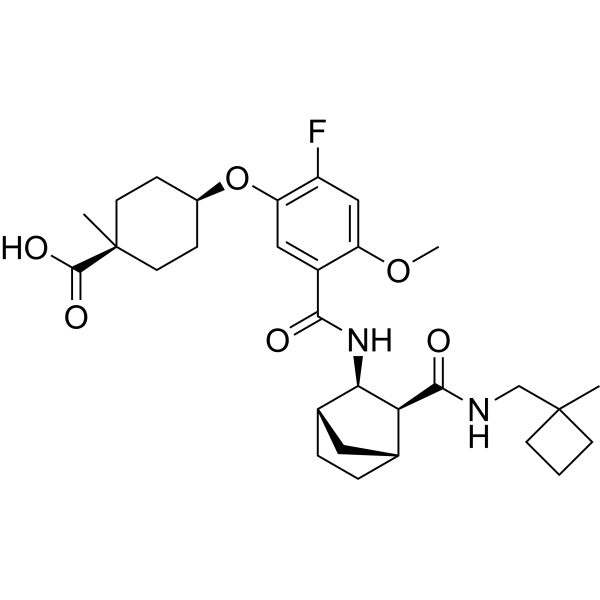
  • HY-148087
    AZD5462
    1 Publications Verification

    RXFP Receptor Cardiovascular Disease
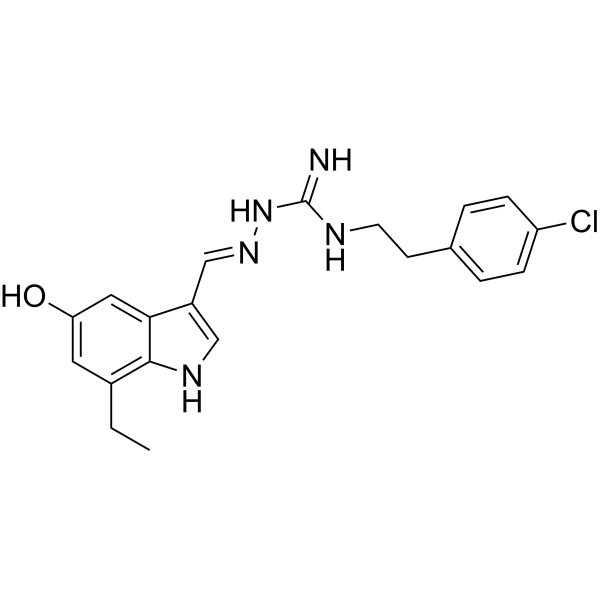
    AZD5462 is a RXFP1 modulator, can be used for heart failure research. RXFP1 is the cognate receptor for human relaxin, belongs to GPCR family 1c number with anti-fibrotic and anti-inflammatory properties .
    AZD5462
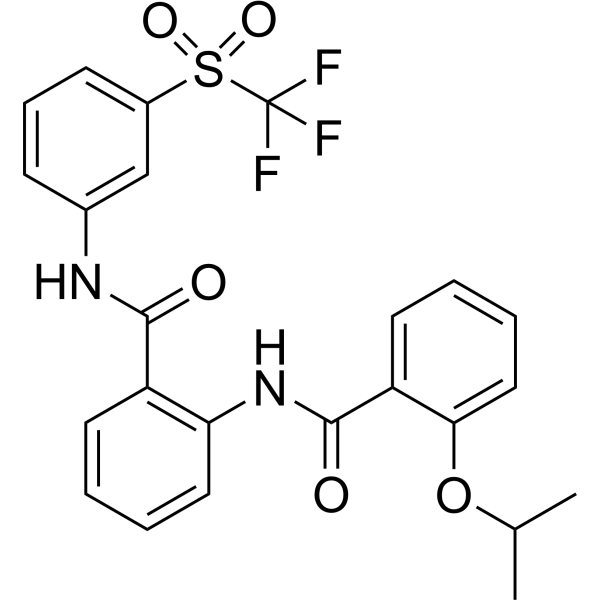
  • HY-112606

    RXFP Receptor Others
    ML-290 is a first-in-class and potent relaxin/insulin-like family peptide receptor (RXFP1) agonist and activator of anti-fibrotic genes, with an EC50 of 94 nM . ML290 is a biased allosteric agonist at the relaxin receptor RXFP1.
    ML-290
  • HY-P10728

    RXFP Receptor ERK Cardiovascular Disease Inflammation/Immunology
    B7-33 is a single-chain relaxin mimetic and a selective relaxin receptor 1 (RXFP1) agonist. B7-33 phosphorylates ERK1/2 without inducing activation of the cAMP signaling pathway. B7-33 exhibits anti-fibrotic and cardioprotective activities. B7-33 can be used in the research of vascular diseases such as cardiomyopathy, myocardial infarction and fibrosis .
    B7-33
  • HY-150700

    ERK Metabolic Disease
    RLX-33 is a potent, selective and blood-brain barrier (BBB) penetrant relaxin family peptide 3 (RXFP3) antagonist, also blocks relaxin-3-induced ERK1/2 phosphorylation, with IC50 values of 2.36 μM for RXFP3, 7.82 and 13.86 μM for ERK1 and ERK2 phosphorylation, respectively. RLX-33 can block the stimulation of food intake induced by the RXFP3-selective agonist R3/I5 in rats. RLX-33 can be used for the research of metabolic syndrome .
    RLX-33
  • HY-P4890

    RXFP Receptor Neurological Disease
    Relaxin H3 (human) is a kind of relaxin peptide. Relaxin H3 (human) exerts antifibrotic actions via RXFP1 .
    Relaxin H3 (human)
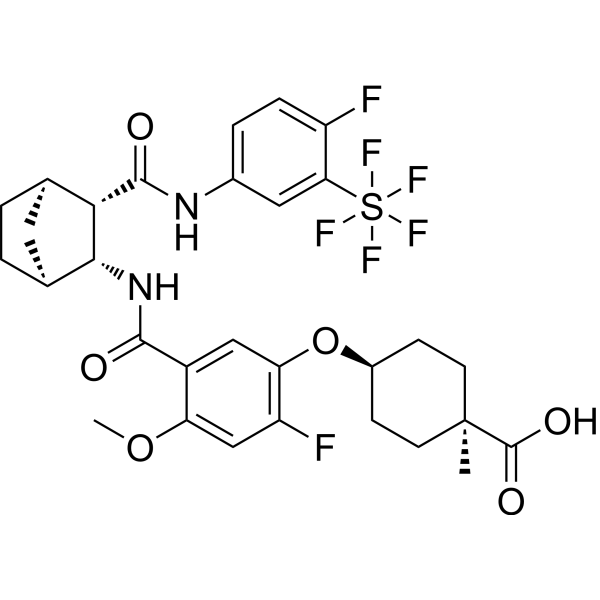
  • HY-162401

    RXFP Receptor Cardiovascular Disease
    AZ7976 (Compound 42) is a highly selective agonist for the Relaxin Family Peptide Receptor 1 (RXFP1) (pEC50 > 10.5). AZ7976 enhances RXFP1's cAMP signaling through an allosteric mechanism, thereby physiologically increasing heart rate. AZ7976 can be used in the field of cardiovascular disease research .
    AZ7976
  • HY-P4890A

    RXFP Receptor Neurological Disease
    Relaxin H3 (human) (TFA) is a kind of relaxin peptide. Relaxin H3 (human) (TFA) exerts antifibrotic actions via RXFP1 .
    Relaxin H3 (human) TFA
  • HY-111583

    RXFP Receptor Metabolic Disease
    RXFP3/4 agonist 1 is an agonist of relaxin family peptide 3/4 receptor (RXFP3/4), with EC50s of 82/2 nM, respectivley. RXFP3/4 agonist 1 increases food intake in rats .
    RXFP3/4 agonist 1
  • HY-P991133

    RXFP Receptor Cardiovascular Disease
    Efranarelaxin alfa is a relaxin receptor agonist. Efranarelaxin alfa is promising for research of cardiovascular diseases and tissue repair .
    Efranarelaxin alfa
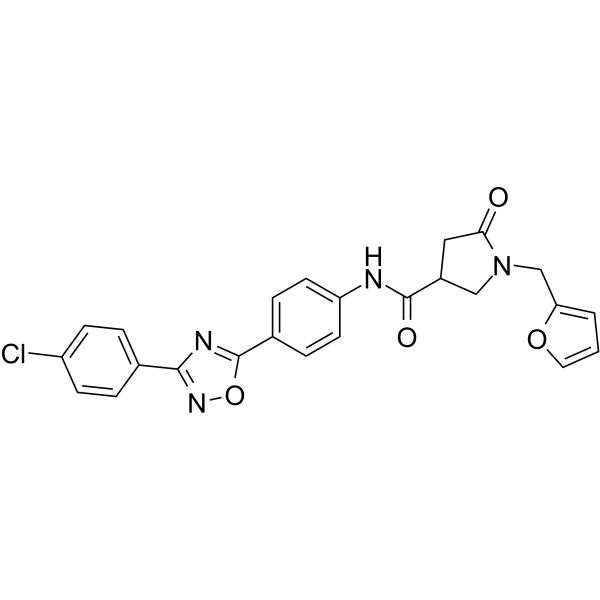
  • HY-174334

    RXFP Receptor Cardiovascular Disease
    RXFP1 receptor agonist-9 is a potent RXFP1 agonist with an EC50 of 2.5 μM and Ymax of 65%. RXFP1 receptor agonist-9 exhibits good microsomal stability, reasonable PK and pharmacological activity. RXFP1 receptor agonist-9 can be used to the study of heart failure .
    RXFP1 receptor agonist-9
  • HY-P11619

    RXFP Receptor Cardiovascular Disease
    R2R01 is a potent and selective relaxin family peptide receptor 1 (RXFP1) agonist with an EC50 of 0.34 nM. R2R01 activates RXFP1 to induce relaxin-like biological responses. R2R01 can increase heart rate in pithed and conscious rats. R2R01 can be used for the research of cardiovascular diseases .
    R2R01
  • HY-P11625

    RXFP Receptor Cardiovascular Disease
    R9-13 is a fatty acid-conjugated relaxin and an agonist of LGR7 (RXFP1). R9-13 induces sustained pubic symphysis elongation in estrogen-pretreated mice. R9-13 exhibits long-acting pharmacokinetic profiles in rodents, with in vivo activity lasting up to one week after administration. R9-13 can be used in studies related to acute heart failure .
    R9-13
  • HY-P992108

    RELAX10

    RXFP Receptor Akt NO Synthase VEGFR Cardiovascular Disease
    Efadirelaxin alfa (RELAX10) is a highly selective agonist of relaxin/insulin-like family peptide receptor RXFP1. After subcutaneous administration in animal experiments, Efadirelaxin alfa exhibits a significantly prolonged terminal half-life (7 days in mice, 3.75 days in rats), and shows no activity against related receptors such as RXFP2 and RXFP3. Efadirelaxin alfa has significant anti-cardiac hypertrophy and anti-fibrotic effects. Efadirelaxin alfa effectively attenuates and reverses cardiac hypertrophy and collagen deposition by regulating the TGF-β1/Smad2 and AKT/eNOS signaling pathways. Efadirelaxin alfa improves cardiac systolic function without causing fluctuations in blood pressure or heart rate, demonstrating favorable safety. Efadirelaxin alfa is currently mainly used in studies related to heart failure .
    Efadirelaxin alfa

Inquiry Online

Your information is safe with us. * Required Fields.

Salutation


Country or Region *

Applicant Name *


Organization Name *

Department *


Email Address *


Product Name *

Cat. No.


Requested quantity *

Phone Number *


Remarks

Inquiry Online

Inquiry Information

Product Name:
Cat. No.:
Quantity:
MCE Japan Authorized Agent:

