
1. Search Result
Search Result
Results for "

TGF-β inhibition

" in MedChemExpress (MCE) Product Catalog:

22

Inhibitors & Agonists

2

Peptides

1

Inhibitory Antibodies

8

Natural
Products

2

Oligonucleotides

Cat. No. Product Name Target Research Areas Chemical Structure
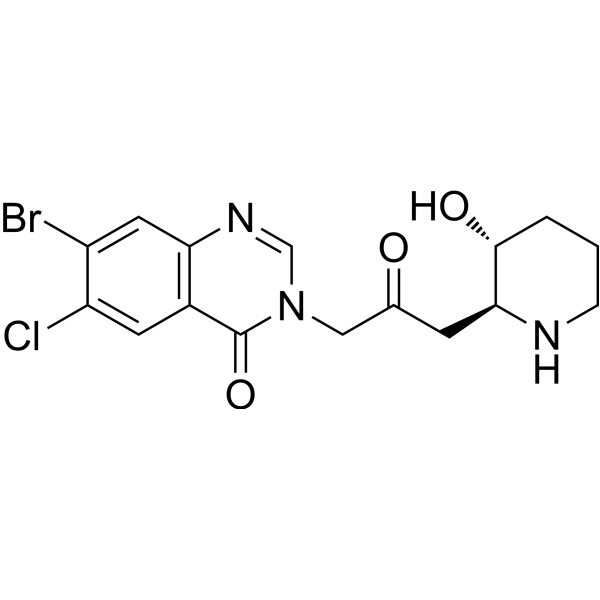
  • HY-N1584
    Halofuginone
    Maximum Cited Publications
    20 Publications Verification

    RU-19110

    DNA/RNA Synthesis TGF-beta/Smad Parasite Sodium Channel Calcium Channel Infection Cardiovascular Disease Inflammation/Immunology Cancer
    Halofuginone (RU-19110), a Febrifugine derivative, is a competitive prolyl-tRNA synthetase inhibitor with a Ki of 18.3 nM . Halofuginone is a specific inhibitor of type-I collagen synthesis and attenuates osteoarthritis (OA) by inhibition of TGF-β activity . Halofuginone is also a potent pulmonary vasodilator by activating Kv channels and blocking voltage-gated, receptor-operated and store-operated Ca 2+ channels. Halofuginone has anti-malaria, anti-inflammatory, anti-cancer, anti-fibrosis effects .
    Halofuginone
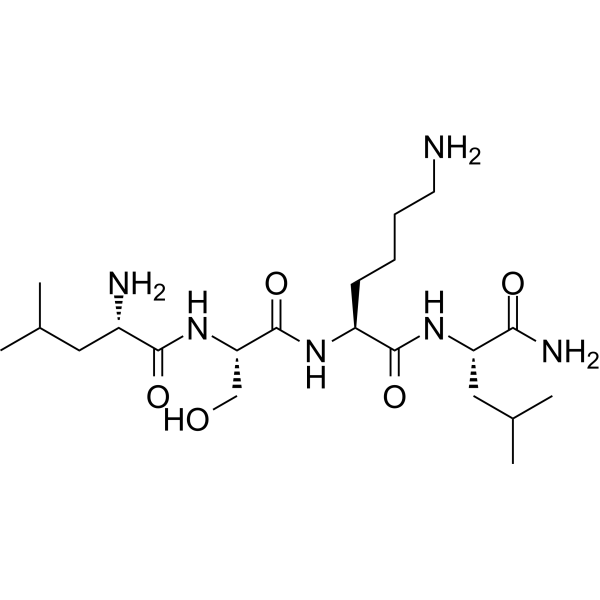
  • HY-P0299

    TGF-β Receptor Cancer
    LSKL, Inhibitor of Thrombospondin (TSP-1) is a latency-associated protein (LAP)-TGFβ derived tetrapeptide and a competitive TGF-β1 antagonist. LSKL, Inhibitor of Thrombospondin (TSP-1) inhibits the binding of TSP-1 to LAP and alleviates renal interstitial fibrosis and hepatic fibrosis. LSKL, Inhibitor of Thrombospondin (TSP-1) suppresses subarachnoid fibrosis via inhibition of TSP-1-mediated TGF-β1 activity, prevents the development of chronic hydrocephalus and improves long-term neurocognitive defects following subarachnoid hemorrhage (SAH). LSKL, Inhibitor of Thrombospondin (TSP-1) can readily crosse the blood-brain barrier .
    LSKL, Inhibitor of Thrombospondin (TSP-1)
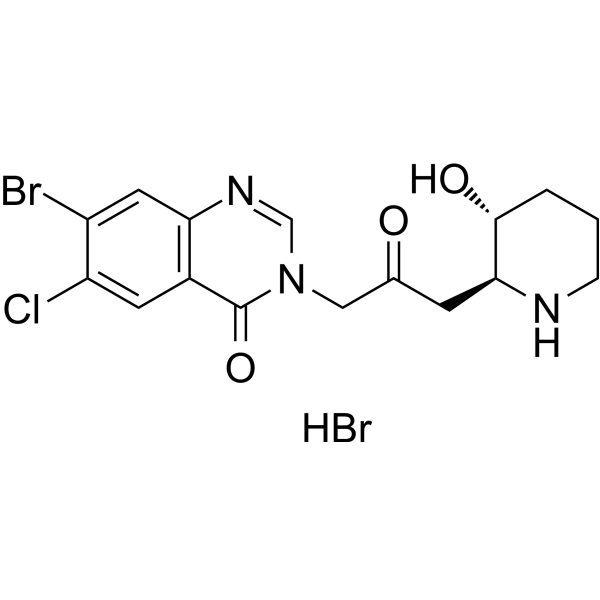
  • HY-N1584A
    Halofuginone hydrobromide
    Maximum Cited Publications
    20 Publications Verification

    RU-19110 hydrobromide

    DNA/RNA Synthesis TGF-beta/Smad Parasite Sodium Channel Calcium Channel Infection Cardiovascular Disease Inflammation/Immunology Cancer
    Halofuginone (RU-19110) hydrobromid, a Febrifugine derivative, is a competitive prolyl-tRNA synthetase inhibitor with a Ki of 18.3 nM . Halofuginone hydrobromid is a specific inhibitor of type-I collagen synthesis and attenuates osteoarthritis (OA) by inhibition of TGF-β activity . Halofuginone hydrobromid is also a potent pulmonary vasodilator by activating Kv channels and blocking voltage-gated, receptor-operated and store-operated Ca 2+ channels. Halofuginone hydrobromid has anti-malaria, anti-inflammatory, anti-cancer, anti-fibrosis effects .
    Halofuginone hydrobromide
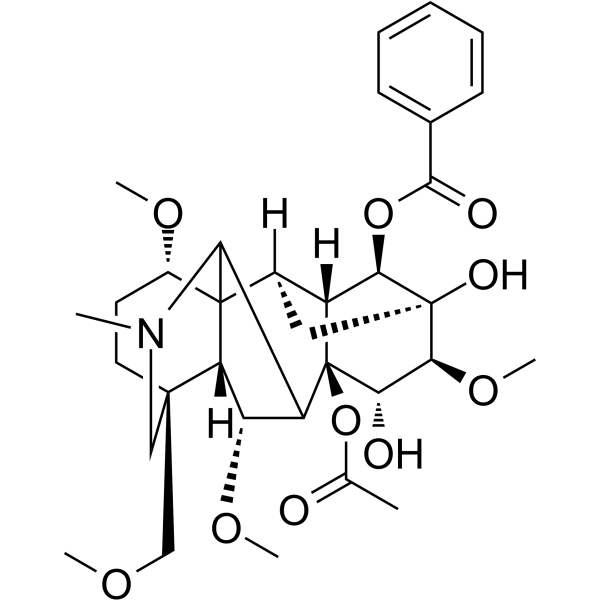
  • HY-N0267
    Hypaconitine
    2 Publications Verification

    NF-κB Potassium Channel Calcium Channel Cardiovascular Disease Neurological Disease Inflammation/Immunology Cancer
    Hypaconitine inhibits the KCNH2 current with an IC50 of 8.1 nM, and exhibits cardiotoxicity. Hypaconitine inhibits TGF-β1-induced epithelial-mesenchymal transition (EMT) in A549 cell through the inhibition of NF-κB nuclear translocation. Hypaconitine acts as the neuromuscular blocker. Hypaconitine is orally active .
    Hypaconitine
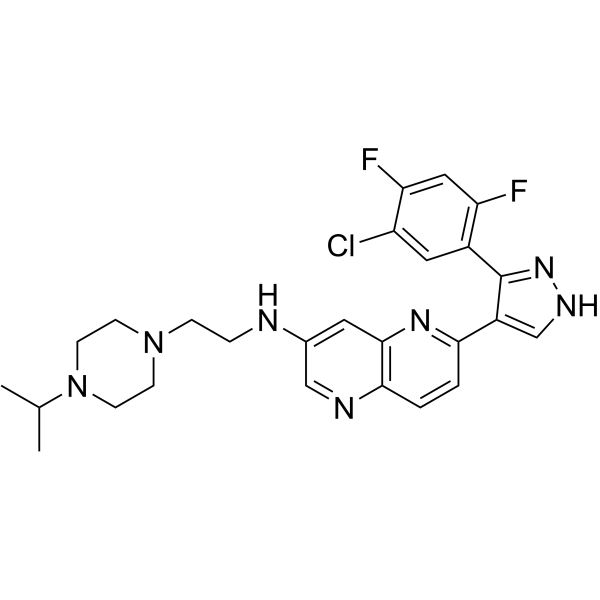
  • HY-150169

    TGF-β Receptor Cancer
    THRX-144644 is a Lung-restricted ALK5 inhibitor with an IC50 value of 0.14 nM. THRX-144644 avoids systemic toxicities associated with TGFβ pathway inhibition .
    THRX-144644
  • HY-P0299A

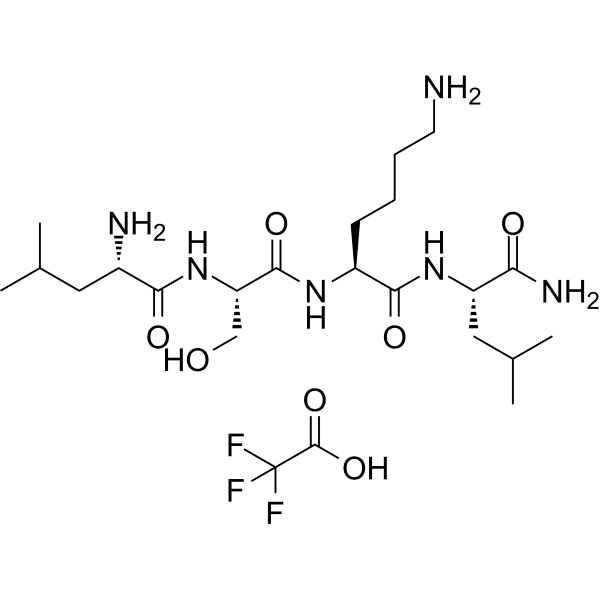
    TGF-β Receptor Cancer
    LSKL, Inhibitor of Thrombospondin (TSP-1) TFA is a latency-associated protein (LAP)-TGFβ derived tetrapeptide and a competitive TGF-β1 antagonist. LSKL, Inhibitor of Thrombospondin (TSP-1) TFA inhibits the binding of TSP-1 to LAP and alleviates renal interstitial fibrosis and hepatic fibrosis. LSKL, Inhibitor of Thrombospondin (TSP-1) TFA suppresses subarachnoid fibrosis via inhibition of TSP-1-mediated TGF-β1 activity, prevents the development of chronic hydrocephalus and improves long-term neurocognitive defects following subarachnoid hemorrhage (SAH). LSKL, Inhibitor of Thrombospondin (TSP-1) TFA can readily crosse the blood-brain barrier .
    LSKL, Inhibitor of Thrombospondin (TSP-1) TFA
  • HY-16363

    PG 490-88

    Apoptosis TGF-β Receptor NF-κB Interleukin Related IFNAR TNF Receptor Inflammation/Immunology
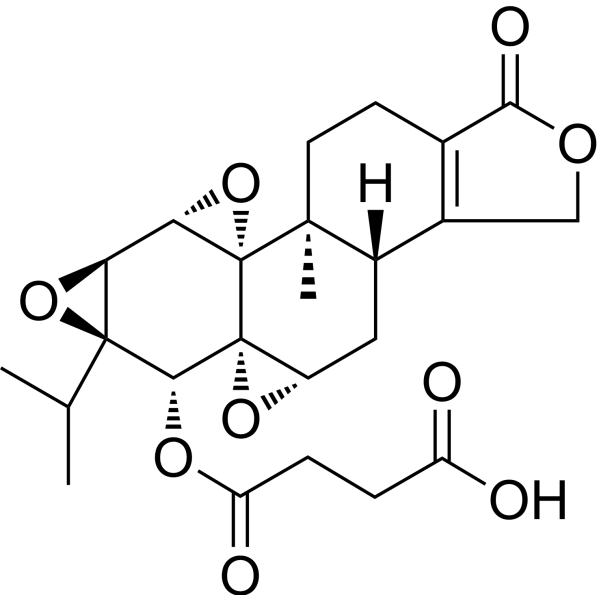
    Omtriptolide (PG490-88) is a derivative proagent of triptolide purified from the Chinese herb.
    Omtriptolide
  • HY-N1584C
    Halofuginone lactate
    Maximum Cited Publications
    20 Publications Verification

    RU-19110 lactate

    DNA/RNA Synthesis TGF-beta/Smad Parasite Sodium Channel Calcium Channel Infection Cardiovascular Disease Inflammation/Immunology Cancer
    Halofuginone lactate, a Febrifugine derivative, is a competitive prolyl-tRNA synthetase inhibitor with a Ki of 18.3 nM . Halofuginone lactate is a specific inhibitor of type-I collagen synthesis and attenuates osteoarthritis (OA) by inhibition of TGF-β activity . Halofuginone lactate is also a potent pulmonary vasodilator by activating Kv channels and blocking voltage-gated, receptor-operated and store-operated Ca 2+ channels. Halofuginone lactate has anti-malaria, anti-inflammatory, anti-cancer, anti-fibrosis effects .
    Halofuginone lactate
  • HY-145721A

    GED-0301 sodium

    TGF-beta/Smad Inflammation/Immunology
    Mongersen sodium is a specific and orally active SMAD7 antisense oligonucleotide. Mongersen sodium restores TGF-β1 activity leading to inhibition of inflammatory signals. Mongersen sodium can attenuate Crohn's disease-like experimental colitis in mice .
    Mongersen sodium
  • HY-145721

    GED-0301

    TGF-beta/Smad Inflammation/Immunology
    Mongersen (GED-0301) is a specific and orally active SMAD7 antisense oligonucleotide. Mongersen restores TGF-β1 activity leading to inhibition of inflammatory signals. Mongersen can attenuate Crohn's disease-like experimental colitis in mice .
    Mongersen
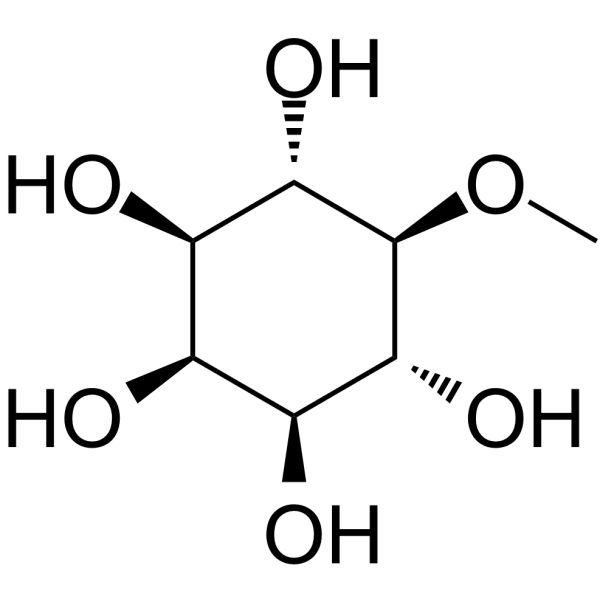
  • HY-N2421
    Sequoyitol
    1 Publications Verification

    5-O-Methyl-myo-inositol

    NF-κB TGF-β Receptor Reactive Oxygen Species (ROS) Insulin Receptor Akt Parasite Infection Metabolic Disease Endocrinology
    Sequoyitol (5-O-Methyl-myo-inositol) is an orally active hypoglycemic agent and antioxidant. Sequoyitol can be isolated from herbaceous plants. Sequoyitol downregulates the expression of NF-κB and TGF-β1, reduces ROS production and malondialdehyde levels, and enhances total antioxidant capacity. Sequoyitol activates the insulin signaling pathway, including the phosphorylation of IR, IRS1 and Akt. Sequoyitol increases serum insulin levels, inhibits hepatic glucose production, and promotes cellular glucose uptake. Sequoyitol antagonizes TNFα-induced inhibition of the insulin signaling pathway, and decreases blood urea nitrogen and serum creatinine levels. Sequoyitol elicits potential peaks in the chemosensors of adult and larval Atrophaneura alcinous, and acts as an oviposition stimulant for female Atrophaneura alcinous. Sequoyitol can be used in research related to type 2 diabetes, insulin resistance, hyperglycemia, impaired glucose tolerance and diabetic nephropathy .
    Sequoyitol
  • HY-N1584R

    RU-19110 (Standard)

    Reference Standards DNA/RNA Synthesis TGF-beta/Smad Parasite Sodium Channel Calcium Channel Infection Cardiovascular Disease Inflammation/Immunology Cancer
    Halofuginone (Standard) is the analytical standard of Halofuginone. This product is intended for research and analytical applications. Halofuginone (RU-19110), a Febrifugine derivative, is a competitive prolyl-tRNA synthetase inhibitor with a Ki of 18.3 nM . Halofuginone is a specific inhibitor of type-I collagen synthesis and attenuates osteoarthritis (OA) by inhibition of TGF-β activity . Halofuginone is also a potent pulmonary vasodilator by activating Kv channels and blocking voltage-gated, receptor-operated and store-operated Ca2+ channels. Halofuginone has anti-malaria, anti-inflammatory, anti-cancer, anti-fibrosis effects .
    Halofuginone (Standard)
  • HY-N1584AR

    RU-19110 hydrobromide (Standard)

    Reference Standards DNA/RNA Synthesis TGF-beta/Smad Parasite Sodium Channel Calcium Channel Infection Cardiovascular Disease Inflammation/Immunology Cancer
    Halofuginone (hydrobromide) (Standard) is the analytical standard of Halofuginone (hydrobromide). This product is intended for research and analytical applications. Halofuginone (RU-19110) hydrobromid, a Febrifugine derivative, is a competitive prolyl-tRNA synthetase inhibitor with a Ki of 18.3 nM . Halofuginone hydrobromid is a specific inhibitor of type-I collagen synthesis and attenuates osteoarthritis (OA) by inhibition of TGF-β activity . Halofuginone hydrobromid is also a potent pulmonary vasodilator by activating Kv channels and blocking voltage-gated, receptor-operated and store-operated Ca 2+ channels. Halofuginone hydrobromid has anti-malaria, anti-inflammatory, anti-cancer, anti-fibrosis effects .
    Halofuginone hydrobromide (Standard)
  • HY-156512

    TGF-beta/Smad Cancer
    DT-6 is an effective TGF-β1 inhibitor. DT-6 inhibits M2 macrophage induced epithelial to mesenchymal transition and invasive migration of cancer cells. DT-6 can be used for cancer diseases research .
    DT-6
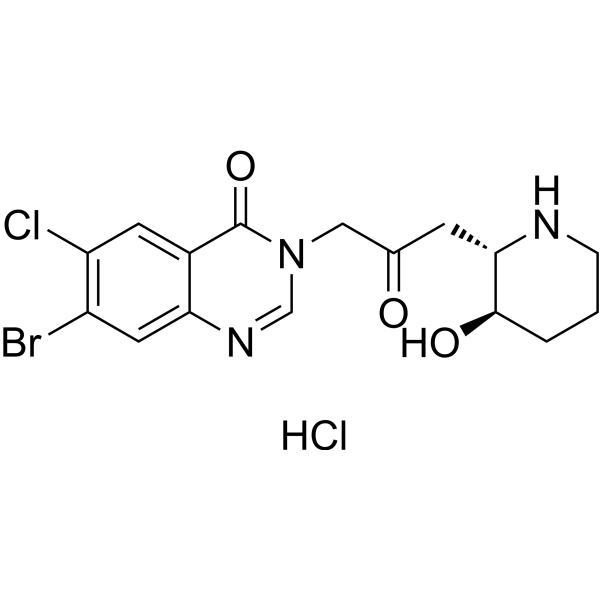
  • HY-N1584B
    Halofuginone hydrochloride
    15+ Cited Publications

    RU-19110 hydrochloride

    Calcium Channel DNA/RNA Synthesis Parasite Sodium Channel TGF-beta/Smad Infection Cardiovascular Disease Inflammation/Immunology Cancer
    Halofuginone (RU-19110) hydrobromid, a Febrifugine derivative, is a competitive prolyl-tRNA synthetase inhibitor with a Ki of 18.3 nM. Halofuginone hydrobromid is a specific inhibitor of type-I collagen synthesis and attenuates osteoarthritis (OA) by inhibition of TGF-β activity. Halofuginone hydrobromid is also a potent pulmonary vasodilator by activating Kv channels and blocking voltage-gated, receptor-operated and store-operated Ca 2+ channels. Halofuginone hydrobromid has anti-malaria, anti-inflammatory, anti-cancer, anti-fibrosis effects .
    Halofuginone hydrochloride
  • HY-W105272R

    Reference Standards Endogenous Metabolite Metabolic Disease
    Halofuginone (Standard) is the analytical standard of Halofuginone. This product is intended for research and analytical applications. Halofuginone (RU-19110), a Febrifugine derivative, is a competitive prolyl-tRNA synthetase inhibitor with a Ki of 18.3 nM . Halofuginone is a specific inhibitor of type-I collagen synthesis and attenuates osteoarthritis (OA) by inhibition of TGF-β activity . Halofuginone is also a potent pulmonary vasodilator by activating Kv channels and blocking voltage-gated, receptor-operated and store-operated Ca2+ channels. Halofuginone has anti-malaria, anti-inflammatory, anti-cancer, anti-fibrosis effects .
    2′-Deoxyadenosine 5′-monophosphate disodium (Standard)
  • HY-N1584BR

    RU-19110 hydrochloride (Standard)

    Reference Standards Calcium Channel DNA/RNA Synthesis Parasite Sodium Channel TGF-beta/Smad Infection Cardiovascular Disease Inflammation/Immunology Cancer
    Halofuginone (hydrochloride) (Standard) is the analytical standard of Halofuginone (hydrochloride). This product is intended for research and analytical applications. Halofuginone (RU-19110) hydrobromid, a Febrifugine derivative, is a competitive prolyl-tRNA synthetase inhibitor with a Ki of 18.3 nM. Halofuginone hydrobromid is a specific inhibitor of type-I collagen synthesis and attenuates osteoarthritis (OA) by inhibition of TGF-β activity. Halofuginone hydrobromid is also a potent pulmonary vasodilator by activating Kv channels and blocking voltage-gated, receptor-operated and store-operated Ca2+ channels. Halofuginone hydrobromid has anti-malaria, anti-inflammatory, anti-cancer, anti-fibrosis effects [4] .
    Halofuginone hydrochloride (Standard)
  • HY-170227

    Phosphodiesterase (PDE) TGF-β Receptor Inflammation/Immunology
    Autotaxin-IN-7 (45), a pyridine-2-carboxylic derivative, demonstrates subnanomolar ATX inhibition (IC50 = 0.086 nM), with a favorable heart safety profile (hERG > 30 μM) and minimal fibroblast toxicity. Autotaxin-IN-7 (45) suppresses the TGF-β/Smad signaling pathway, downregulating α-smooth muscle actin (α-SMA) and extracellular matrix components (ECM). Autotaxin-IN-7 (45) is used in the research for pulmonary fibrosis .
    Autotaxin-IN-7
  • HY-N0267R

    Reference Standards NF-κB Potassium Channel Calcium Channel Cardiovascular Disease Neurological Disease Inflammation/Immunology Cancer
    Hypaconitine (Standard) is the analytical standard of Hypaconitine. This product is intended for research and analytical applications. Hypaconitine inhibits the KCNH2 current with an IC50 of 8.1 nM, and exhibits cardiotoxicity. Hypaconitine inhibits TGF-β1-induced epithelial-mesenchymal transition (EMT) in A549 cell through the inhibition of NF-κB nuclear translocation. Hypaconitine acts as the neuromuscular blocker. Hypaconitine is orally active .
    Hypaconitine (Standard)
  • HY-179572

    EGFR Akt Mitochondrial Metabolism Metabolic Disease
    STA-013 is a EphB tyrosine kinase inhibitor. STA-013 shows promising potency against EphB1 (IC50 = 0.69 µM), EphB2 (IC50 = 1.73 µM), and EphB4 (IC50 = 1.02 µM) tyrosine kinases. STA-013 results a inhibition of the EphB phosphorylated signal, coupled with increased p-AKT/AKT signaling, to suggest insulin signaling activation. STA-013 inhibits EphB tyrosine kinase by enhancing insulin receptor beta (IRβ) signaling, and decreasing TGF-β levels in the heart. STA-013 can be used for the study of type 2 diabetes and cardiac complications (diabetic cardiomyopathy) .
    STA-013
  • HY-16362

    PG 490-88Na

    Apoptosis TGF-β Receptor NF-κB Interleukin Related IFNAR TNF Receptor Inflammation/Immunology
    Omtriptolide sodium (PG490-88Na) is a derivative of Triptolide (HY-32735). Omtriptolide sodium exhibits significant immunosuppressive, anti-fibrotic and anti-inflammatory properties. The mechanism of action of Omtriptolide sodium is diverse, including inhibiting T cell activation and proliferation, inducing T cell apoptosis (apoptosis), blocking fibroblast maturation/proliferation, inhibiting TGF-β mRNA expression, and suppressing pro-inflammatory cytokines (such as IL-2, IFN-γ, TNF-α) by blocking transcription factors such as NF-κB. Omtriptolide sodium can be used for research on obstructive airway diseases, pulmonary fibrosis and graft-versus-host disease .
    Omtriptolide sodium
  • HY-P991950

    TGF-beta/Smad Inflammation/Immunology
    SHR-1906 is a selective fully humanized monoclonal IgG1 inhibitory antibody targeting CTGF. SHR-1906 specifically binds to CTGF, thereby blocking the interaction between CTGF and TGF-B1 with an inhibition rate of 55%. SHR-1906increases the survival rate in a pulmonary fibrosis model by reducing TGF-β1 levels and inhibiting fibrotic lesions in lung tissue in Bleomycin (HY-108345)-induced pulmonary fibrosis.SHR-1906 can be used for pulmonary fibrosis (IPF) research. Recommend Isotype Controls: Human IgG1 kappa, Isotype Control (HY-P99001) .
    SHR-1906

Inquiry Online

Your information is safe with us. * Required Fields.

Salutation


Country or Region *

Applicant Name *


Organization Name *

Department *


Email Address *


Product Name *

Cat. No.


Requested quantity *

Phone Number *


Remarks

Inquiry Online

Inquiry Information

Product Name:
Cat. No.:
Quantity:
MCE Japan Authorized Agent:

